Quick Answer
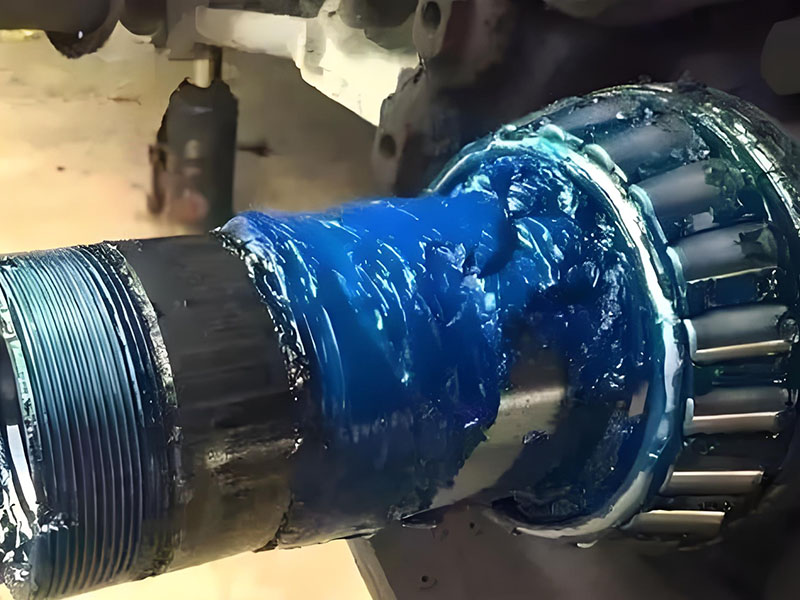
A wheel bearing is a precision component that connects your vehicle’s wheel to the axle, supporting the full weight of the vehicle while enabling smooth, low-friction rotation. It uses rolling elements – balls or rollers – between hardened inner and outer rings to convert sliding friction into rolling friction. A quality wheel bearing in a modern hub assembly typically lasts 85,000 to 150,000 miles under normal driving conditions. The most common warning sign of failure is a growling or rumbling noise that changes with vehicle speed and turning direction.
A wheel bearing is a mechanical component installed at each corner of a vehicle, forming the critical connection between the rotating wheel and the stationary suspension. It allows the wheel to spin freely with minimal friction while supporting the vehicle’s static weight and the dynamic loads generated during acceleration, braking, and cornering.
All modern wheel bearings are antifriction bearings, using rolling elements instead of sliding surfaces to reduce resistance and heat generation. Without properly functioning wheel bearings, wheels would grind against the axle, generating massive friction and making driving impossible within minutes.
But wheel bearings wear over time – and when they fail, the consequences range from uneven tire wear to complete wheel separation. Knowing what is inside a bearing, how different types compare, and how to spot early warning signs is the difference between a simple replacement and a catastrophic breakdown. This guide covers exactly that.
Key Components of a Wheel Bearing
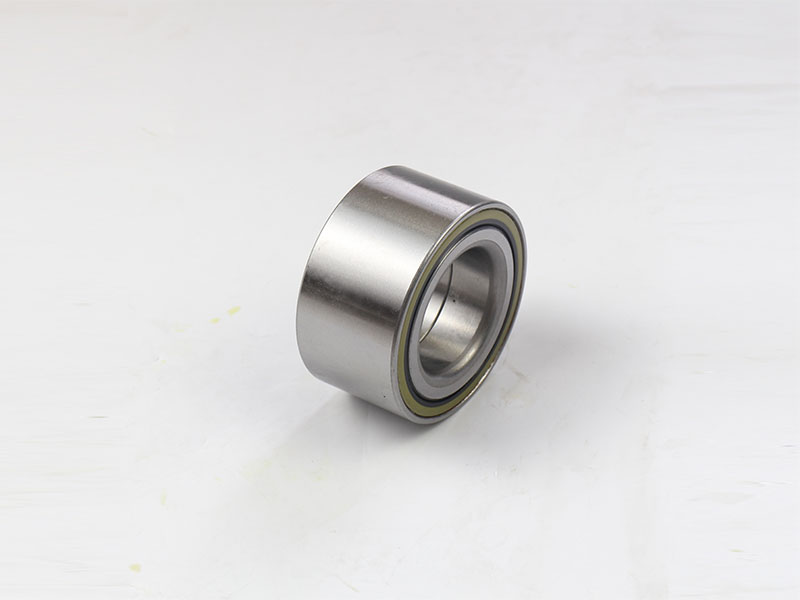
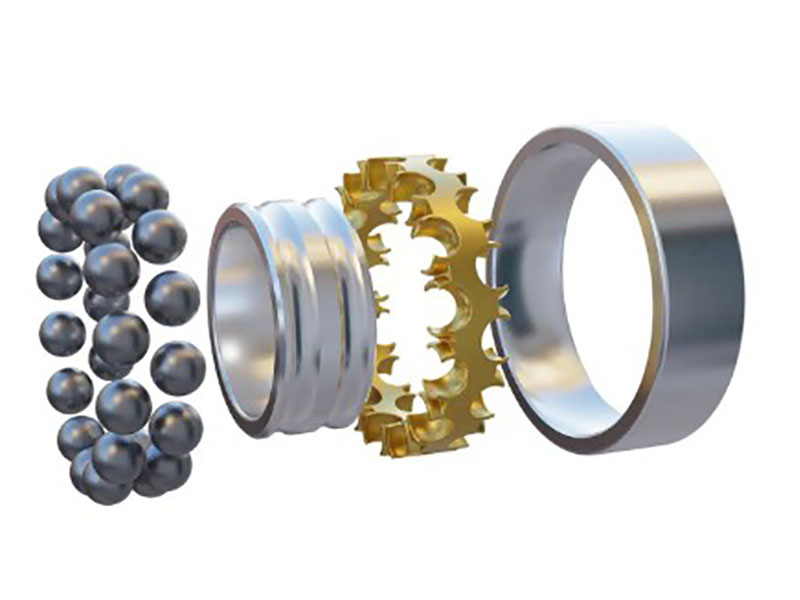
A wheel bearing consists of four essential parts working together as a single unit. Each component plays a specific role, and weakness in any one part compromises the efficiency and durability of the entire system.
Inner Ring
The inner ring fits onto the axle or spindle. Its bore is precision-machined to create an interference fit with the axle – meaning it grips firmly in place without play. The outer surface of the inner ring is hardened and precision-ground to serve as a smooth raceway for the rolling elements.
In modern hub assemblies, the inner ring is often integrated with the wheel hub itself, complete with wheel studs for mounting the tire. This ring experiences extreme conditions: high rotational speeds, intense heat from braking (which can exceed 300°F / 150°C at the hub), and repeated pressure cycling. Proper heat treatment of the metal – typically through induction hardening to 58-62 HRC – is essential to prevent micro-cracking and premature structural failure, ensuring long-term durability under repeated stress cycles.
Outer Ring
The outer ring is the stationary raceway that fits into the steering knuckle (front wheels) or axle housing (rear wheels). It provides the outer contact surface for the rolling elements. The fit is typically an interference fit as well – pressed firmly into the knuckle to prevent any movement that could cause fretting wear and unwanted noise.
The profile of the outer ring’s raceway determines the bearing’s load characteristics. In ball bearings, the raceway has a rounded groove; in tapered roller bearings, it features an angled profile. This geometry directly affects how much radial and axial load the bearing can handle. High-precision CNC grinding is employed to achieve the necessary surface finish (typically 0.2-0.4 μm Ra) and geometric accuracy within micron-level tolerances, ensuring smooth operation and optimal load distribution across the raceway.
Rolling Elements
Rolling elements are the actual moving parts that carry the load. They circulate between the inner and outer raceways, converting sliding friction into rolling friction. There are two primary types:
Ball bearings use spherical balls. They generate less friction and perform well at high speeds, but their point contact with the raceway limits their overall load-carrying capacity. They are best suited for moderate radial loads and are commonly found in older vehicles or non-driven hubs.
Roller bearings use cylindrical or tapered rollers. The line contact between rollers and raceways provides a significantly larger contact area – typically 10-20 times greater than ball bearings – enabling these bearings to handle higher radial and thrust loads simultaneously. This makes tapered roller bearings the dominant choice for modern vehicles, especially at the corners where braking and cornering forces are highest.
All rolling elements must be perfectly symmetrical and have a mirror-like surface finish (typically 0.1-0.2 μm Ra). Even a microscopic defect – as small as 10 microns – creates stress concentration points that lead to harmonic vibration, the familiar rumbling sound of a failing bearing. Rigorous quality control, including 100% automatic optical inspection, is essential to eliminate defective elements before assembly.
Bearing Cage
The cage – also called a retainer – holds the rolling elements in equally spaced positions around the bearing. Without it, the balls or rollers would bunch together, causing direct metal-to-metal contact, instantaneous friction, rapid overheating, and catastrophic wear.
Cages are typically manufactured from stamped steel, machined steel, or high-performance polymers such as PA66-GF25 (glass-fiber-reinforced nylon with 25% glass content by weight). The material choice depends on the bearing’s speed and load requirements. A well-designed cage maintains its shape and strength even under high centrifugal forces (which can exceed 10,000 G at the rolling element level) and extreme temperatures ranging from -40°F to 300°F (-40°C to 150°C), ensuring the rolling elements stay properly aligned and spaced throughout the bearing’s service life.
Types of Wheel Bearings
Wheel bearings can be classified in two ways: by the type of rolling elements they use, and by their design evolution.
By Rolling Elements: Ball Bearings vs. Roller Bearings
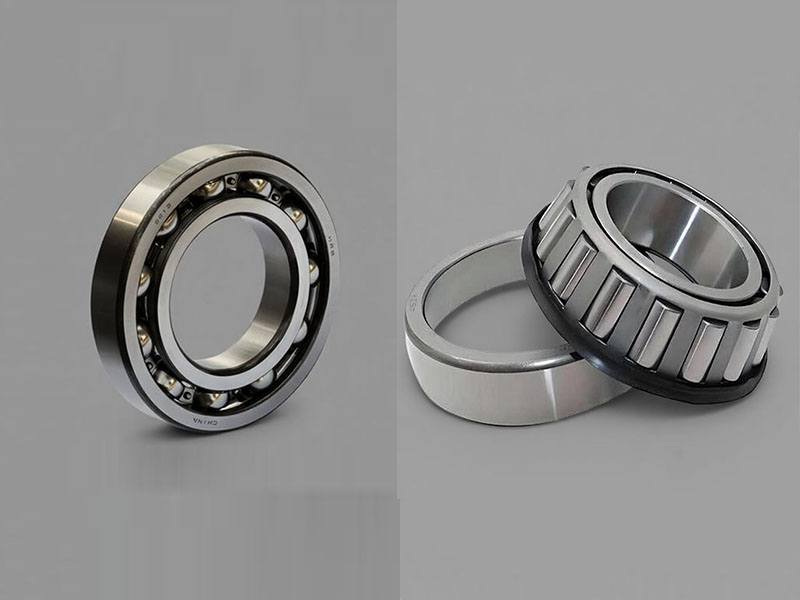
Ball Bearings use spherical rolling elements. Their key advantage is low friction and excellent high-speed performance, making them suitable for applications where speeds exceed 3,000 RPM. However, the point contact between balls and raceways limits their load-carrying capacity. You will typically find ball bearings in older vehicles or in non-driven hubs where loads are moderate.
Roller Bearings use cylindrical or tapered rollers. The line contact distributes loads over a larger area – typically 10-20 times greater contact surface than ball bearings – enabling these bearings to handle heavier radial and axial forces simultaneously. Tapered roller bearings are particularly common in modern vehicles because they can be preloaded during installation to eliminate play and provide rigid wheel positioning, which is critical for precise braking, steering response, and handling stability.
By Design Evolution: Gen1, Gen2, and Beyond
First Generation (Gen1): These are individual components – cones and cups – that must be pressed, adjusted, and packed with grease during installation. They are labor-intensive and prone to installation errors. Typical installation time for a Gen1 bearing is 60-90 minutes per wheel, compared to 20-30 minutes for Gen2. While still used in heavy-duty truck applications, Gen1 bearings represent a shrinking share of the passenger vehicle aftermarket – now less than 15% of new passenger vehicle applications.
Second Generation (Gen2): This is the industry standard today, accounting for approximately 80% of new passenger vehicle wheel bearing applications. Gen2 bearings are pre-assembled, pre-adjusted, pre-sealed, and pre-greased units that integrate the bearing with the hub flange. Installation is straightforward: unbolt the old unit, bolt in the new one, and torque to specification. This design dramatically reduces installation errors and comebacks, making it the preferred choice for both manufacturers and repair shops.
Gen3 and beyond: Newer generations continue to integrate more functions – such as ABS sensor rings, integrated brake rotors, and lightweight aluminum hub designs – while further simplifying installation. The industry trend is clear: the market is moving toward fully integrated, maintenance-free hub assemblies that improve reliability and reduce repair time.
Functions of a Wheel Bearing
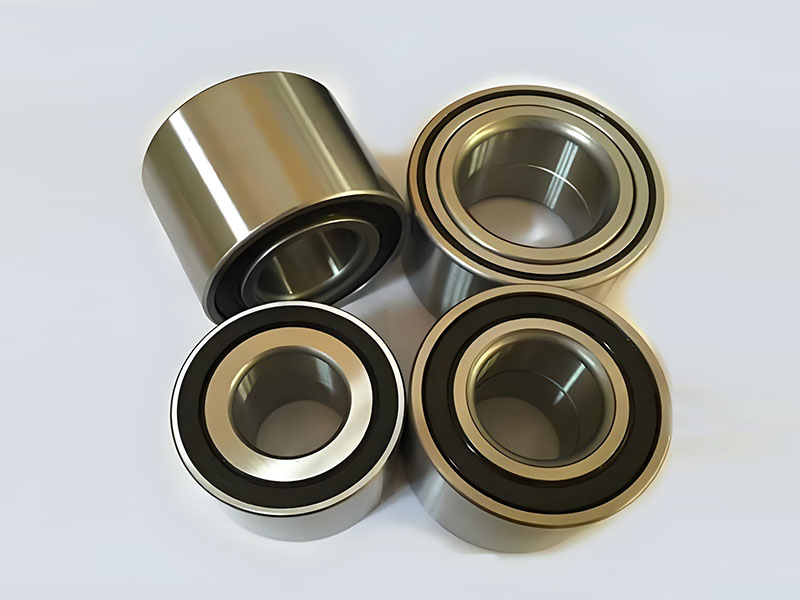
Wheel bearings perform three primary functions, each critical to vehicle safety and performance.
Supporting Vehicle Weight (Static and Dynamic Loads)
The wheel bearing supports the entire weight of the vehicle when stationary – that is the static load. For a typical passenger vehicle weighing 3,500-4,500 lbs (1,600-2,000 kg), each bearing supports approximately 875-1,125 lbs (400-500 kg) at rest. But more importantly, it handles dynamic loads during driving: the extra force from acceleration (which can increase load by 30-50%), the weight transfer during braking (up to 60-80% of vehicle weight shifting to the front axle), the lateral forces during cornering (which can exceed 0.8-1.0 G in passenger vehicles), and the impact loads from potholes and road irregularities (which can momentarily exceed 3-5 times static load). A bearing’s ability to manage these fluctuating loads without deformation or premature wear is what distinguishes quality components from inferior alternatives.
Enabling Smooth Rotation with Minimal Friction
By using rolling elements between the inner and outer raceways, the bearing converts sliding friction (coefficient of friction – 0.1-0.2 for sliding contact) into rolling friction (- 0.001-0.002). This dramatically reduces rotational resistance, which directly improves fuel efficiency by an estimated 0.5-1.5% per wheel bearing assembly and provides a smoother, quieter driving experience. The precision of the raceway finish and the roundness of the rolling elements – typically held to tolerances within 2-5 microns – determine how smooth that rotation feels.
Connecting Rotating and Stationary Parts with Precise Alignment
The wheel bearing is the primary connection point between rotating components (the wheel and hub) and stationary components (the steering knuckle and suspension). It must maintain precise alignment so the wheel spins exactly on its axis without wobble – typically holding runout within 0.002-0.005 inches (0.05-0.13 mm). Any excess play – axial or radial – affects handling precision, causes uneven tire wear, and can trigger ABS or traction control warning lights.
Where Is the Wheel Bearing Located?
The wheel bearing is housed inside the wheel hub assembly at each corner of the vehicle. It is positioned behind the brake rotor (or drum) and mounted directly to the steering knuckle at the front or the axle flange at the rear.
In practical terms, it sits at the center of the wheel, right where the wheel attaches to the vehicle. This location means it is exposed to everything the road throws at it: water, dirt, road salt, extreme heat from braking (which can reach 400-600°F / 200-315°C at the rotor, transferring significant heat to the bearing), and repeated impact loads. That is why sealing and material quality are so critical – contamination is one of the leading causes of premature bearing failure, accounting for an estimated 30-40% of all bearing failures according to industry analysis.
Common Symptoms of a Failing Wheel Bearing
Recognizing the signs of a failing wheel bearing early can prevent a dangerous breakdown and save you from more expensive repairs. Here are the most common symptoms:
Symptom 1: Growling or Rumbling Noise
This is the most reliable indicator, present in approximately 80-85% of failing bearing cases. You will hear a low-frequency growling, rumbling, or humming sound that intensifies as vehicle speed increases – typically becoming noticeable above 20-30 mph (30-50 km/h). The noise often changes pitch when you turn: it gets louder when you turn toward the side with the bad bearing (loading it) and quieter when you turn away (unloading it).
Symptom 2: Steering Wheel Vibration
A worn bearing introduces play in the hub, which translates to vibration felt through the steering wheel. The vibration typically changes with vehicle speed and becomes more noticeable during turns. Vibration frequency usually correlates with wheel rotation speed – about 1-2 Hz per 10 mph.
Symptom 3: Uneven or Accelerated Tire Wear
When the wheel does not spin perfectly true due to bearing wear (runout exceeding 0.010 inches / 0.25 mm), tire wear patterns become uneven. You might notice cupping, feathering, or accelerated wear on one side of the tire. In severe cases, tire life can be reduced by 30-50%.
Symptom 4: ABS or Traction Control Warning Light
Modern wheel bearings often include a magnetic encoder ring for the ABS sensor (typically 48-100 poles). If the bearing wears and introduces play (exceeding 0.002 inches / 0.05 mm of axial play), or if the encoder ring gets damaged, the sensor gap changes from the optimal 0.020-0.040 inches (0.5-1.0 mm) and can trigger the ABS or traction control warning light on your dashboard.
Symptom 5: Wheel Wobble or Play
If you jack up the vehicle and grasp the tire at the top and bottom, excessive movement (play) indicates a worn bearing. As a general rule, any detectable play at the wheel – typically more than 0.005-0.010 inches (0.13-0.25 mm) at the bearing – indicates immediate replacement is needed. Any noticeable wobble is a red flag – do not drive on it.
How to Replace a Press-In Wheel Bearing
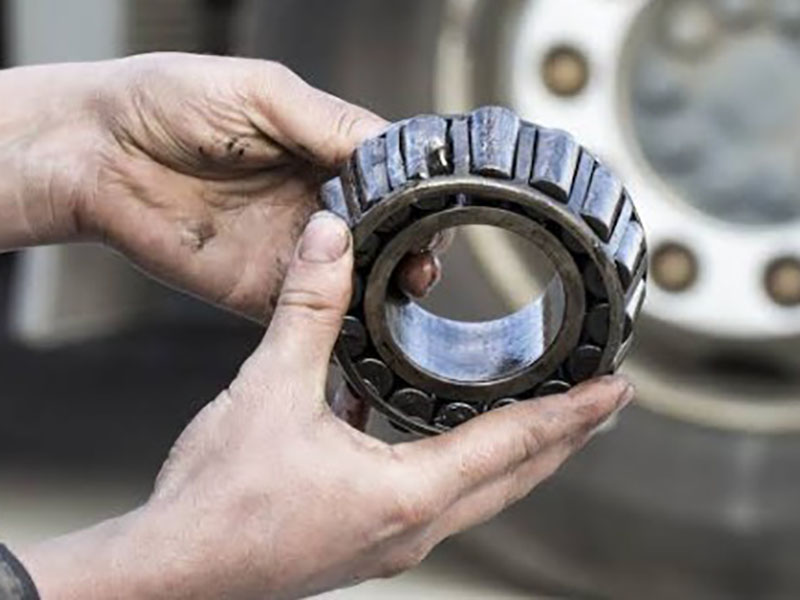
Press-in Wheel Bearing – typically Gen1 designs – require specialized tools and skills. Understanding the process helps you appreciate why professional installation matters and what can go wrong if proper procedures are not followed.
Removal Process
- Safety and Disassembly: Lift the vehicle securely and remove the wheel. Remove the brake caliper (hang it without stressing the brake hose) and remove the brake rotor or drum.
- Remove the Hub: On drive wheels, remove the large axle hub nut – typically torqued to 150-250 ft-lbs (200-340 Nm) depending on the vehicle. Use a hub puller to extract the hub from the bearing’s inner race. Never strike the hub directly – this can damage wheel studs, axle threads, or integrated tone rings.
- Extract the Old Bearing: The outer race remains pressed into the steering knuckle or axle housing. Use a bearing puller with the correct jaws to grip behind the outer race and extract it. On some designs, you will need to remove a retaining circlip first. Typical press-fit force required is 5,000-15,000 lbs (22-67 kN) depending on the bearing size and housing material.
- Thorough Cleaning: This is the most critical step for the new bearing’s longevity. Clean the bearing bore in the knuckle or housing meticulously using solvent and appropriate tools to remove all rust, old sealant, and debris. Even residue as thin as 0.001 inches (0.025 mm) prevents the new bearing from seating squarely and leads to premature failure.
Installation Process
- Preparation: Verify the new bearing is properly sealed and pre-lubricated with high-temperature grease (typically lithium-complex or polyurea-based, rated for -40°F to 350°F / -40°C to 175°C). Inspect and prepare a new retaining circlip if required.
- Orientation Check: Ensure the bearing is oriented correctly – some seals must face outward or inward depending on the application. The ABS encoder ring (if present) must face the ABS sensor.
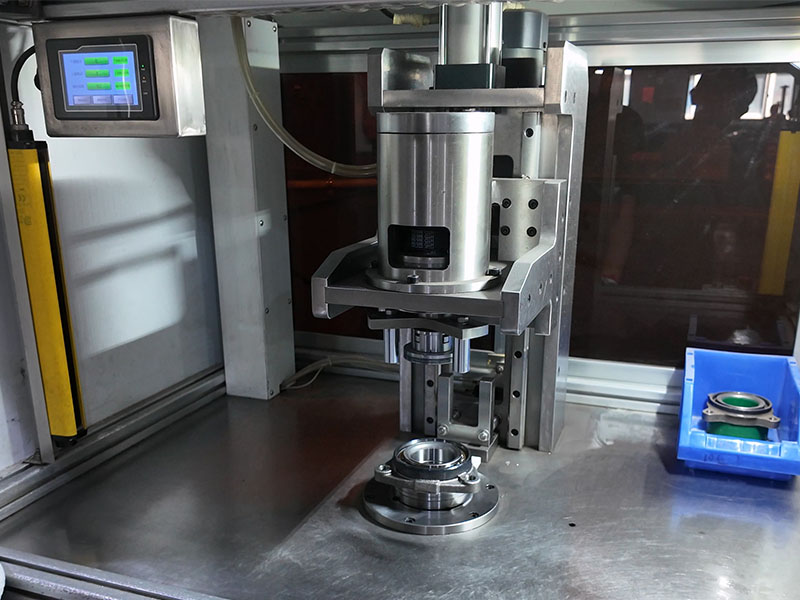
- Even Pressing: Align the bearing’s outer race with the clean bore. Use a driver socket that matches the outer race diameter exactly, and apply pressure with a hydraulic press. Pressure must be applied evenly to the outer race only – never to the inner race, rolling elements, or cage, as this instantly damages the bearing. Typical press force for installation is 3,000-10,000 lbs (13-44 kN).
- Seat the Bearing: Press smoothly until the bearing is fully seated against the shoulder in the bore – you should hear a solid “thunk” indicating it is home. Install the retaining circlip and verify it is fully seated in its groove.
- Install the Hub: Clean the hub spindle. Using a dedicated socket that contacts only the inner race, press the hub into the bearing. Again, force must be applied exclusively to the inner race – typically requiring 5,000-12,000 lbs (22-53 kN) of press force.
- Final Torque and Assembly: Torque the axle nut to manufacturer specification – typically 150-250 ft-lbs (200-340 Nm) for most passenger vehicles. Reinstall the brake rotor, caliper, and wheel.
- Final Check: Spin the hub by hand – it should rotate smoothly, silently, and without friction. A road test confirms a successful repair.
Key takeaway: Press-in bearing replacement requires specialized equipment and precision. Incorrect installation – especially applying pressure to the wrong component – is a leading cause of premature bearing failure. For workshops, providing clear installation guidance to your customers adds real value and reduces costly comebacks.
Conclusion
Understanding wheel bearings – what they are, how they work, how to identify failure, and how to replace them correctly – is essential for vehicle owners and automotive professionals alike.
Here are the key takeaways:
- A wheel bearing supports vehicle weight (875-1,125 lbs / 400-500 kg per corner), enables smooth rotation (coefficient of friction – 0.001-0.002), and maintains precise alignment between rotating and stationary parts (runout within 0.002-0.005 inches / 0.05-0.13 mm).
- It consists of four components: inner ring, outer ring, rolling elements (balls or rollers), and a cage that spaces them evenly.
- Modern vehicles primarily use Gen2 sealed hub assemblies with tapered roller bearings, accounting for approximately 80% of new passenger vehicle applications, designed to last 85,000 to 150,000 miles.
- Common failure symptoms include growling noise (present in 80-85% of cases), steering vibration, uneven tire wear (reducing tire life by 30-50% in severe cases), ABS warning lights, and wheel wobble.
- Replacement costs range from $350 to $900 per wheel in 2026, with labor being the primary expense (60-70% of total cost).
- Proper installation – correct torque (150-250 ft-lbs / 200-340 Nm), clean surfaces, and pressure applied to the right components – is critical for bearing longevity. Improper installation accounts for 10-15% of all bearing failures.
For vehicle owners, regular inspection (at least monthly checks for unusual noises) and prompt attention to unusual sounds are the best defenses against bearing-related failures. For automotive professionals and parts distributors, sourcing from manufacturers with robust quality control systems – including IATF 16949 certification, SPC processes, and comprehensive testing – ensures consistent product reliability and fewer comebacks. A quality bearing does not just keep wheels turning – it keeps vehicles safe and repairs profitable.
Frequently Asked Questions
Q1: Can you drive a car with a bad wheel bearing?
A: No. This is a severe safety hazard. A compromised bearing can overheat and seize, causing sudden wheel lockup at highway speeds. Alternatively, it can disintegrate completely, allowing the wheel to separate from the vehicle. According to automotive safety data, bearing-related wheel separation accidents occur in approximately 0.5-1% of severe bearing failure cases. The risk to safety is far too great – replace it immediately.
Q2: Do wheel bearings affect brakes?
A: Yes, significantly. A worn bearing introduces axial play (wobble) to the hub – typically 0.002-0.010 inches (0.05-0.25 mm) in failing bearings. Since the brake rotor bolts directly to the hub, this wobble transfers to the braking system. It causes uneven pad deposition on the rotor, leading to pulsation or vibration felt in the brake pedal during stops – typically noticeable at speeds above 30 mph (50 km/h). It can also cause uneven pad wear and, in severe cases, reduce braking efficiency by 10-15%.
Q3: How long do wheel bearings last?
A: Under normal driving conditions, a quality wheel bearing typically lasts 85,000 to 150,000 miles (approximately 136,000 to 240,000 kilometers). However, actual lifespan depends on bearing quality and operating conditions. Impact damage (potholes, curbs), environmental contamination (failed seals allowing water and grit intrusion), and improper installation are the primary causes of premature failure. Industry data suggests that approximately 60-70% of bearings reach their full expected service life.
Q4: Why does a wheel bearing fail?
A: The main causes include:
- Fatigue spalling (approximately 40-50% of failures): Small cracks develop on raceway surfaces from repeated stress cycles. This is more common with lower-quality steel containing higher non-metallic inclusion content.
- Contamination wear (approximately 20-30% of failures): Abrasive particles enter through damaged seals and act like sandpaper inside the bearing.
- Impact brinelling (approximately 10-15% of failures): Static dents in the raceways from shock loads (like hitting potholes) create vibration points.
- False brinelling (less than 5% of failures): Wear from micro-vibrations during transport or storage (less common in sealed hub units).
- Improper installation (approximately 10-15% of failures): Incorrect torque or pressing force application.
Q5: What does a bad wheel bearing sound like?
A: The classic symptom is a continuous low-frequency growling, rumbling, or grumbling noise that intensifies with vehicle speed – typically becoming audible above 20-30 mph (30-50 km/h) and increasing in pitch with speed. The tone often changes when you turn: it is louder when turning toward the bad bearing (loading it) and quieter when turning away. A clicking sound is less common and usually indicates a CV joint issue instead, which produces a rhythmic clicking during turns rather than a continuous rumble.
Q6: What are the symptoms of a bad wheel bearing?
A: The symptoms include:
- Growling or rumbling noise that changes with speed and turning direction (present in 80-85% of cases).
- Steering wheel vibration that changes with vehicle speed.
- Uneven or accelerated tire wear from improper wheel alignment (tire life reduced by 30-50% in severe cases).
- ABS or traction control warning light due to encoder ring or sensor gap issues.
- Wheel wobble or play when rocking the tire at the top and bottom (detectable play indicates immediate replacement needed).
Q7: What does a wheel bearing do?
A: A wheel bearing allows the wheel to rotate smoothly with minimal friction (coefficient of friction – 0.001-0.002) while supporting the vehicle’s weight (approximately 875-1,125 lbs / 400-500 kg per corner at rest). It maintains precise clearance between the wheel hub and spindle, ensuring stable wheel alignment and safe handling. In modern vehicles, the bearing is typically integrated into a sealed hub assembly that also houses the ABS sensor ring (48-100 poles depending on the vehicle manufacturer).
Q8: Can I replace a wheel bearing myself?
A: Technically possible for an experienced DIY mechanic, but it requires specialized tools: a hydraulic press (capable of 5,000-15,000 lbs / 22-67 kN force), torque wrenches (accurate to within +/-5%), and pullers. Incorrect installation – improper torque or contamination during pressing – is a leading cause of premature failure, accounting for 10-15% of all bearing failures. For sealed hub assemblies, the process involves removing the axle nut, brake caliper, and steering knuckle – which demands mechanical expertise. Professional installation is strongly recommended unless you have the right tools and experience.
Q9: How much does a wheel bearing replacement cost?
A: In 2026, the average cost for a single wheel bearing replacement ranges from $350 to $900, including parts and labor. If multiple bearings are failing – common on higher-mileage vehicles (over 100,000 miles / 160,000 km) – the total can exceed $1,500. On higher-end, AWD, or heavy-duty vehicles, expect $400 to $800 per wheel, with complex jobs reaching $1,000 or more if components are seized or sensors need replacement. Labor typically accounts for 60-70% of the total cost, with parts accounting for the remainder.
Q10: How to prevent wheel bearing failure?
A: Preventive maintenance focuses on reducing mechanical stress and ensuring proper installation:
- Proper installation torque: Use a torque wrench to manufacturer specifications – typically 150-250 ft-lbs (200-340 Nm) for the axle nut. Over-tightening causes internal overheating; under-tightening leads to excessive play (exceeding 0.002 inches / 0.05 mm).
- Avoid overloading: Do not exceed the vehicle’s Gross Vehicle Weight Rating (GVWR) – excessive weight places extreme stress on bearings, potentially reducing bearing life by 30-50%.
- Regular inspection: Listen for unusual noises during driving (at least monthly) and address any looseness promptly.
- Maintain proper tire pressure and alignment: This minimizes uneven load distribution that stresses bearings – improper alignment can reduce bearing life by 20-30%.
- Replace seals promptly: If you notice grease leakage around the hub (visible as dark, greasy residue on the wheel or brake components), replace the seal before contamination destroys the bearing.