
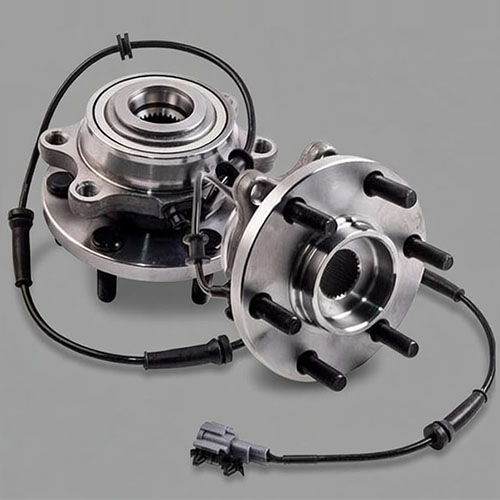
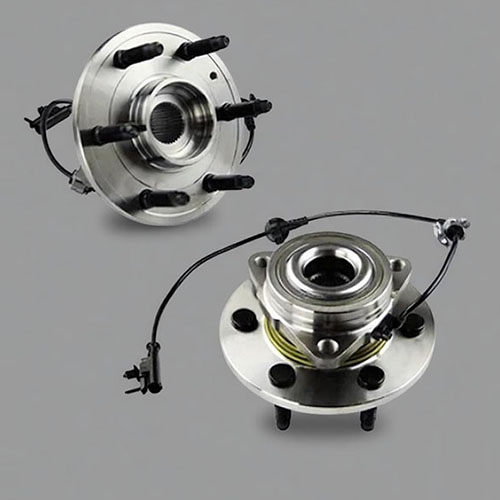
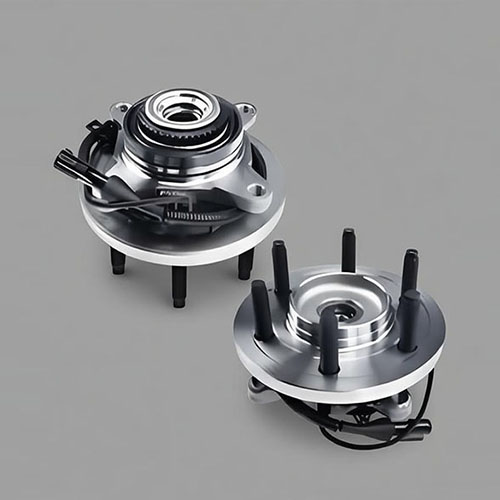
Pre-assembled & Integrated Design
A wheel hub bearing (also called wheel hub assembly, hub bearing unit, or hub assembly) is a pre-assembled component that mounts between the suspension and the wheel. It enables smooth wheel rotation while supporting vehicle weight and dynamic loads.
The hub assembly includes an outer ring with mounting flange, an inner ring with wheel studs, two rows of rolling elements (balls or tapered rollers), a cage, and sealing systems. Many units also integrate an ABS encoder ring. Modern hub bearings are factory-sealed, pre-greased, and require no adjustment during installation.
Key Features & Advantages
- Double-row bearing design handles radial and axial loads simultaneously.
- Factory pre-set preload eliminates manual adjustment, saving labor time.
- Integrated ABS sensor or encoder ring provides accurate wheel speed signals.
- Multi-lip sealing keeps grease in and contaminants out for longer service life.
- Bolt-on flange design requires no hydraulic press, simplifying replacement.
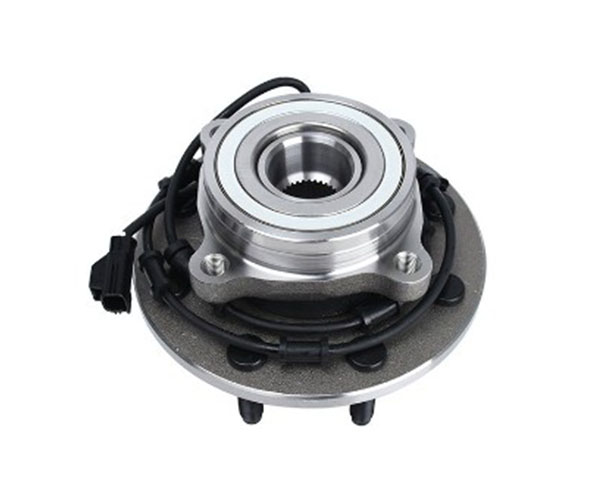
Your Professional Wheel Hub Assembly Manufacturer
DUHUI has specialized in wheel hub bearings for over 20 years. We operate 39 wheel hub processing machines and 4 fully automated production lines from Germany. Monthly capacity reaches 100,000 high‑quality wheel hub assemblies. Our factory supplies replacement and custom hub units to distributors, fleets, and OEM‑tier partners across North America, Europe, and Southeast Asia.
Product Range: 4,000+ Models for Global Car Parc
We offer more than 4,000 wheel hub SKUs covering Gen I, Gen II, and Gen III designs. These fit Honda, Toyota, Ford, Volkswagen, BMW, and over 30 other brands. We also develop custom hub bearing units for new or low‑volume car models. All dimensions and mounting interfaces follow OE specifications.
- Gen I – Standard double‑row angular contact ball bearing, for non‑drive wheels and light vehicles.
- Gen II – Integrated flange and bearing, supports ABS sensor mounting.
- Gen III – Flange on both hub and bearing, includes bolt holes for simplified knuckle assembly.
Materials and Process Control
Every wheel hub bearing is built for high loads, temperature variation, and moisture exposure.
- Flange: 65MN manganese steel – impact resistance tested to 1,000+ hours of dynamic load.
- Bolts: Grade 10.9 alloy steel – tensile strength ≥1,040 MPa, meeting passenger car safety standards.
- ABS sensor technology: Derived from NSK platform – reliable signal output under wheel speed up to 180 km/h.
- Raceway: G10 grade precision grinding + surface finishing. Raceway contact angle optimized to reduce friction by approx. 15% compared to standard finishes.
- Sealing: Multi‑lip nitrile rubber seal – salt spray test passed 240+ hours (ASTM B117).
Certifications and Lab Verification
We hold ISO9001, IATF 16949, and SGS factory verification. Our testing laboratory is CNAS‑accredited and equipped with ABS signal testers, radial‑axial clearance testers, and high‑temperature endurance rigs. Raw material batches are certified by STQ testing. CNAS fatigue and durability test reports are available per order.
Targeted Testing for Real‑World Conditions
Beyond standard hardness, roundness, roughness and clearance checks, we perform three additional tests that matter to fleet operators and part distributors.
- ABS sensor performance – dynamic waveform test at varying wheel speeds.
- Bolt tensile strength – breakaway torque validation per vehicle manufacturer specs.
- Contaminant simulation – salt spray (240h) and mud slurry tests. The open structure of wheel hub assemblies makes them vulnerable to road debris and moisture. Our test data shows complaint rate below 0.4% in aftermarket use.
Customization and After‑Sales Support
We provide custom hub bearing units for new models within 25–35 days from design confirmation. Minimum order quantity for custom development starts from 500 units. Standard replacement hubs are available from 200 units. Global shipment via sea or air. 12‑month warranty against manufacturing defects. Technical support includes installation torque specs and ABS signal troubleshooting.
For bulk pricing and certification package (including IATF 16949 and CNAS test reports), contact our sales team directly.
Wheel Hub Bearing Series by Vehicle Origin
Our product range covers wheel hub bearing applications for passenger vehicles from all major automotive manufacturing regions. Each vehicle origin section below lists the specific brands we support, with detailed information on hub bearing types, generations, typical fitments, and technical specifications. Whether you need a Gen 2 hub assembly for a non-driven rear axle, a Gen 3 wheel hub bearing with integrated ABS sensor for a front-wheel drive sedan, a pressed-in wheel bearing for an older European model, or a heavy-duty tapered roller hub unit for an American pickup truck, this guide helps you locate the correct product.
- American Vehicle Series
- Chinese Domestic Vehicle Series
- Japanese Vehicle Series
- Korean Vehicle Series
- Italian Vehicle Series
- French Vehicle Series
- German Vehicle Series
- British Vehicle Series
- Swedish Vehicle Series
American Vehicle Series
Wheel hub bearings for American passenger, SUV, and light truck vehicles. American pickup trucks and large SUVs often use tapered roller hub bearings for higher load capacity. Passenger cars and crossovers typically use double-row ball bearing designs. ABS sensor types vary widely by model year.
Hub assemblies for Ford F-Series (F-150, Super Duty), Explorer, Escape, Focus, Fusion, Edge, Expedition. F-150 pickup trucks use tapered roller wheel hub bearings on 4WD models (with integrated ABS sensor) and ball bearing designs on 2WD models depending on year. Explorer (2011+ U502) uses Gen 3 hub assemblies with active ABS sensors. Escape (2013+) uses ball bearing Gen 3 designs. Focus (2012+) shares Mazda-based hub bearings (pre-2018) or Ford C2 platform bearings. Edge uses crossover-grade Gen 3 hub bearings. Expedition (full-size SUV) uses heavy-duty bearings similar to F-150. Ford uses various bolt patterns (5×114.3, 5×135, 6×135) depending on model.
Wheel hub bearings for Chevrolet Silverado, Equinox, Malibu, Cruze, Tahoe, Suburban, Traverse. Silverado (pickup) uses tapered roller hub bearings on 4WD models (similar to GMC Sierra). Equinox (crossover) uses Gen 3 hub assemblies with active sensors. Malibu and Cruze (sedans) use standard double-row ball Gen 3 hub bearings. Tahoe and Suburban (large SUVs) use heavy-duty hub bearings shared with Silverado platform. Traverse (large crossover) uses SUV-grade hub bearings. Chevrolet uses various bolt patterns: 5×120 (Silverado 1500), 5×114.3 (Equinox), 5×10⁵ (older Malibu/Cruze).

Hub assemblies for Dodge Ram (pickup), Charger, Challenger, Caravan, Durango, Journey. Dodge Ram (1500, 2500, 3500) uses heavy-duty tapered roller hub bearings on 4WD models; 2WD models may use ball bearing designs. Ram 2500/3500 (heavy duty) use very large tapered roller bearings with high static load ratings. Charger and Challenger (sedans/coupes) use sedan-type Gen 3 hub bearings shared with Chrysler 300. Caravan (minivan) uses rear non-driven Gen 2 or Gen 3 depending on year. Durango (SUV) uses heavy-duty Gen 3 hub bearings with reinforced flanges.
Wheel hub bearings for Jeep Wrangler (TJ, JK, JL), Grand Cherokee (WK, WK2, WL), Cherokee (KL, XJ), Compass, Renegade, Gladiator. Wrangler requires off-road rated wheel hub bearings with heavy-duty seals to resist mud, water, and dust. JK (2007-2018) uses Gen 3 front hub assemblies with unitized bearings; JL (2018+) uses updated design. Grand Cherokee (WK2, 2011-2022) uses SUV-grade Gen 3 hub bearings. Cherokee KL (2014-2022) uses lighter-duty passenger car based bearings but with enhanced seals. Gladiator (pickup) uses Wrangler-based heavy-duty hub bearings. All Jeep hub bearings should have robust multi-lip sealing. ABS sensors are active on most 2010+ models.
Hub bearing units for GMC Sierra, Terrain, Yukon, Acadia, Canyon. Sierra shares wheel hub bearings with Chevrolet Silverado. Yukon (large SUV) shares with Chevrolet Tahoe/Suburban. Terrain (compact crossover) shares with Chevrolet Equinox. Acadia (large crossover) uses heavy-duty Gen 3 hub bearings. Canyon (mid-size pickup) uses truck-type hub bearings with tapered rollers on 4WD models. All GMC hub bearings are mechanically identical to Chevrolet equivalents for the same platform and model year.
Hub assemblies for Cadillac Escalade, CTS, SRX, XT5, CT6, XT4. Escalade (full-size luxury SUV) uses heavy-duty hub bearings shared with Chevrolet Tahoe/GMC Yukon. CTS (sports sedan) uses performance-oriented hub bearings with tighter raceway tolerances and reduced bearing play for sharper handling. SRX and XT5 (crossovers) use SUV-grade Gen 3 hub bearings. CT6 (flagship sedan) uses premium hub bearings with NVH optimization. Cadillac hub bearings often include active ABS sensors with higher resolution for performance stability systems.
Wheel hub bearings for Buick Encore, Enclave, LaCrosse, Regal. Encore (small crossover) uses compact SUV hub bearings shared with Chevrolet Trax. Enclave (large three-row crossover) uses heavy-duty Gen 3 hub bearings with reinforced flanges for vehicle weight exceeding 2,000 kg. LaCrosse and Regal (sedans) use sedan-type Gen 3 hub bearings shared with Chevrolet Malibu and Opel Insignia platforms. Buick hub bearings typically feature enhanced sound-deadening features for premium brand positioning.
Wheel hub bearings for Opel Astra, Corsa, Insignia, Zafira, Mokka. Opel (GM Europe, now Stellantis) uses specific hub bearing designs. Astra (2004+ H, J, K series) uses Gen 2 on rear wheels (non-driven) and Gen 3 on front driven wheels. Corsa (small hatchback) uses compact hub bearings. Insignia (large sedan/combi) uses larger bearings similar to Buick Regal. Mokka (small SUV) uses SUV-grade hub bearings. Many Opel models use pressed-in wheel bearings on older generations (pre-2004). Vauxhall (UK) is identical to Opel.
Chinese Domestic Vehicle Series
Wheel hub bearings for Chinese domestic passenger vehicles. The Chinese automotive market has grown rapidly, with many manufacturers using Gen 3 designs on recent models. Chinese hub bearings often follow global OE standards but may have unique flange patterns or bolt configurations.
Hub assemblies for BYD Qin, Tang, Han, Song, Yuan, Dolphin, Seal. BYD electric and hybrid vehicles use wheel hub bearings optimized for EV loads and lower rolling resistance to maximize range. Tang (large SUV) uses heavy-duty Gen 3 hub bearings with reinforced flanges. Han (flagship sedan) uses standard Gen 3 designs with active sensors. Song (compact SUV) uses mid-weight hub bearings. EV-specific features include low-friction seals and grease formulations that reduce parasitic drag. ABS sensors are active type on most 2020+ BYD models.
Wheel hub bearings for Geely Boyue (Atlas), Emgrand (EC7, GL, GS), Binrui, Xingyue, Preface. Geely (owner of Volvo) uses some Volvo-sourced hub bearing designs on newer models (CMA platform). Boyue (compact SUV, export name Atlas) uses Gen 3 hub assemblies with active sensors. Emgrand series (sedans) uses standard double-row ball Gen 3 hub bearings. Preface (mid-size sedan on CMA platform) uses Volvo-derived hub bearings with higher precision. Geely hub bearings on CMA platform are not interchangeable with older Geely platforms — verify by model year.
Wheel hub bearings for Chery Tiggo (Tiggo 3, 5, 7, 8), Arrizo (5, 7, 8), eQ electric. Tiggo SUVs (Chery’s best-selling line) use Gen 3 hub assemblies with active sensors on newer models (2018+). Arrizo sedans use standard passenger car Gen 3 hub bearings. eQ electric models use EV-optimized bearings with lower rolling resistance. Chery exports to many markets (South America, Middle East, Russia), so hub bearings must meet regional road condition requirements. Verify ABS sensor type (passive or active) by VIN.

Hub bearing units for Haval H6, H9, H2, F7, Jolion. Haval (Great Wall subsidiary) produces SUVs only. H6 (China’s best-selling SUV) uses Gen 3 wheel hub bearings with active ABS sensors and 5×114.3 PCD. H9 (large off-road SUV) uses heavy-duty Gen 3 hub bearings with tapered rollers on some configurations, plus enhanced sealing for off-road use. H2 (compact SUV) uses smaller hub bearings. All Haval hub bearings are designed for SUV duty cycles with higher static load ratings than passenger car bearings.
Wheel hub bearings for Great Wall Wingle, Steed (pickup trucks), and early SUV models (H3, H5). Great Wall pickup trucks use heavy-duty hub bearings with tapered rollers on some 4WD models. Wingle and Steed (work trucks) require robust sealing for construction and farm use. Older Great Wall SUVs (H3, H5) use body-on-frame designs with truck-derived hub bearings. Verify by original part number; many Great Wall commercial hub bearings are cross-compatible with Isuzu or Toyota Hilux components.
Hub assemblies for ChangAn Eado (Eado, Eado XT, Eado DT), CS series (CS35, CS55, CS75, CS95), UNI series (UNI-T, UNI-K, UNI-V). ChangAn is one of China’s largest manufacturers. CS35 and CS55 (compact SUVs) use Gen 3 wheel hub bearings with active sensors and 5×114.3 or 5×110 PCD. CS75 (mid-size SUV) uses larger hub bearings with higher load ratings. CS95 (large SUV) uses heavy-duty Gen 3 bearings. UNI series (premium designs) use upgraded hub bearings with tighter tolerances. ChangAn also produces Ford and Mazda vehicles for China, but ChangAn-branded hub bearings are specific to the Changan Auto brand. EV models (Eado EV, CS15 EV) use EV-optimized low-friction hub bearings.
Hub assemblies for Roewe RX5, i5, i6, RX3, Marvel X. Roewe (SAIC) uses platforms shared with MG. RX5 (compact SUV, high volume) uses Gen 3 wheel hub bearings with active ABS sensors and 5×112 PCD (shared with VW group patterns). i5 and i6 (sedans) use standard passenger car Gen 3 hub bearings. Marvel X (electric SUV) uses EV-optimized low-friction hub bearings. Most Roewe hub bearings are cross-compatible with MG equivalents for the same platform.
Hub assemblies for MG5, MG6, MG ZS, MG HS, MG Marvel R. MG (owned by SAIC) uses modern Gen 3 designs shared with Roewe. MG ZS (compact SUV, exported globally) uses Gen 3 wheel hub bearings with active sensors and 5×112 PCD. MG HS (mid-size SUV) uses heavier hub bearings. MG5 and MG6 (sedans/hatchbacks) use standard passenger car Gen 3 bearings. MG Marvel R (electric SUV) uses EV-optimized low-friction hub bearings. MG hub bearings are designed to meet European and Australian market standards.
Wheel hub bearings for BAIC Beijing brand passenger vehicles (BJ series, EU series electric). BAIC uses Gen 3 wheel hub assemblies on most recent models (2018+). Some older BAIC models (BJ40 off-road SUV) use body-on-frame construction with heavier hub bearings. Electric EU series use EV-optimized bearings. Verify bolt pattern (typically 5×114.3 or 5×10⁸) before ordering.
Hub assemblies for DongFeng Aeolus (AX7, AX4, Yixuan, Shine). DongFeng uses various platforms (some from PSA, some in-house). Aeolus AX7 (compact SUV) uses Gen 3 wheel hub bearings with active sensors on newer models. Yixuan (sedan) uses standard Gen 3 bearings. DongFeng also produces Honda, Nissan, and PSA vehicles for China (joint ventures), but DongFeng-branded hub bearings are specific to the Aeolus and Fengon lines. Verify by VIN and model year.
Wheel hub bearings for FAW Bestune (B70, T77, T99, X80). FAW (First Automotive Works) produces Bestune SUVs and sedans using modern Gen 3 designs. T77 (compact SUV) uses Gen 3 hub assemblies with active sensors. B70 (sedan) uses standard Gen 3 bearings. FAW also produces Volkswagen and Toyota vehicles for China, but Bestune hub bearings are specific to FAW’s own brand. Some early FAW models may use pressed-in wheel bearings.

Hub bearing units for JMC Yusheng (S350, S330) and JMC pickup trucks (Baodian, Yuhu). JMC (Jiangling Motors) has a partnership with Ford. Yusheng S350 (SUV) uses heavy-duty Gen 3 hub bearings with reinforced flanges. JMC pickup trucks use truck-type hub bearings (some with tapered rollers). JMC also produces Ford Transit vans under license; Ford Transit hub bearings for JMC-built vans may differ from European Transit bearings.
Wheel hub bearings for JAC Refine (M-series MPVs), J-series (J3, J4, J5, J6, J7 sedans), and T-series pickup trucks. JAC Refine MPVs (M3, M4, M5) use commercial-grade hub bearings with higher load ratings for passenger/cargo use. J-series sedans use standard Gen 3 hub bearings. T-series pickups (T6, T8, T9) use heavy-duty hub bearings similar to Great Wall pickups. JAC exports to many markets; hub bearings meet applicable regional standards.
Hub bearing units for Zotye T600, Z300, Z500, T700, SR9. Zotye uses various platforms (some derived from other manufacturers). T600 (mid-size SUV) uses Gen 3 wheel hub bearings with 5-bolt flanges. Z300 (sedan) uses smaller hub bearings. Quality and sensor types vary by production year. Always verify by original Zotye part number or take a sample for measurement. Many Zotye models use passive ABS sensors.
Wheel hub bearings for Baojun 510, 530, 730, 310, 360. Baojun (SAIC-GM-Wuling joint venture) uses GM-derived hub bearing platforms. 510 (compact SUV, very high volume) uses Gen 3 wheel hub assemblies with 4-bolt flanges (4×114.3) on some models, 5-bolt on others. 730 (MPV) uses larger hub bearings with higher load ratings for passenger/cargo combination use. Baojun hub bearings are cost-effective but maintain OE fitment and sensor compatibility.
Japanese Vehicle Series
Wheel hub bearings for Japanese passenger vehicles represent the largest segment of the global aftermarket. This series covers Gen 2 and Gen 3 hub assemblies, both double-row ball bearing and tapered roller bearing designs, with and without integrated ABS encoder rings or active wheel speed sensors. Most Japanese vehicles manufactured after 2005 use bolt-on Gen 3 wheel hub bearings with factory pre-set preload.
Hub bearing units for Honda Civic, Accord, CR-V, Pilot, and Fit. Honda uses pressed-in wheel bearings on some older models (pre-2005 Civic, pre-2003 Accord) and bolt-on Gen 3 hub assemblies on newer vehicles. Front wheel hub bearings for Civic and Accord are typically double-row ball type with integrated ABS encoder. CR-V and Pilot use heavier-duty hub bearings with reinforced flanges to support SUV weight. Honda Fit uses compact hub bearings with smaller bolt patterns (4×100). ABS sensor types vary by generation: passive sensors on models up to 2010, active sensors on newer models. Replacement requires correct matching of sensor type for proper electronic stability control operation.
Wheel hub assemblies for Toyota Camry, Corolla, RAV4, Highlander, and other models. Front driven hub bearings feature splined bores for axle shafts. Rear non-driven units use Gen 2 or Gen 3 hub bearings depending on model year. 2000-2010 models (Camry XV30, XV40) often use Gen 2 on rear wheels. 2010+ models (Camry XV50, RAV4 XA40) use Gen 3 on all four corners. ABS sensor types include passive magnetic encoder rings on older models (pre-2008) and active Hall effect sensors on newer platforms. RAV4 and Highlander SUV hub bearings have higher load ratings than sedan applications.
Wheel hub bearings for Nissan Altima, Sentra, Rogue, Pathfinder, Murano, and Maxima. Nissan switched to Gen 3 bolt-on hub assemblies across most models after 2007. Altima (L32, L33) uses Gen 3 front hub bearings with four-bolt flange and integrated active sensor. Sentra uses similar design. Pathfinder and Murano (large SUVs) use larger tapered roller hub bearings on some model years for increased load capacity. Rogue (J10, J11) uses Gen 3 wheel hub assemblies with active ABS sensor. Front hub bearings are driven type with splined bores. Rear hub bearings on front-wheel drive Nissans are non-driven Gen 2 or Gen 3 depending on year.
Hub assemblies for Mazda3, Mazda6, CX-5, CX-9, MX-5. Mazda shared platforms with Ford for some models (pre-2013 Mazda3, first-gen CX-9). CX-5 and newer Mazda6 (2014+) use Gen 3 wheel hub bearings with integrated active speed sensors. Older Mazda3 (BK series, 2004-2009) uses Gen 2 hub bearings on rear non-driven wheels and Gen 3 on front driven wheels. MX-5 Miata uses lightweight compact hub bearings with lower rolling resistance for performance driving. ABS encoder rings are integrated on most 2005+ models.
Wheel hub bearings for Subaru Impreza, Outback, Forester, Legacy, Crosstrek, Ascent. Subaru all-wheel drive means all four wheels are driven. All hub bearings are driven type with splined bores and axle retention provisions. Forester and Outback use Gen 3 hub assemblies with dual flanges. Pre-2010 models (Impreza GD, Legacy BL) may use pressed wheel bearings on rear corners. ABS sensors are active type on most 2008+ Subaru models. Ascent (three-row SUV) uses heavy-duty Gen 3 hub bearings with larger rolling elements for increased static load rating. Subaru hub bearings are known for requiring careful torque specification adherence during installation.

Hub bearing units for Mitsubishi Lancer, Outlander, Eclipse Cross, Pajero, Montero. Outlander (2006+) uses Gen 3 hub assemblies on all four corners with active ABS sensors. Lancer (2008-2017) uses Gen 3 front wheel hub bearings and Gen 2 rear hub bearings on non-EVO models. EVO models use upgraded performance hub bearings with tighter raceway tolerances. Pajero and Montero (body-on-frame SUVs) use tapered roller hub bearings with very high load capacities and enhanced sealing for off-road use.
Wheel hub bearings for Suzuki Swift, Vitara, SX4, Ignis. Vitara (2015+) uses Gen 3 hub assemblies with active ABS sensors and four-bolt flanges. Swift (2010+) uses compact Gen 2 rear hub bearings and Gen 3 front hub bearings depending on market and model year. SX4 (crossover) uses SUV-grade wheel hub bearings with reinforced seal designs. Suzuki’s smaller vehicles (Ignis, Alto) use miniaturized hub bearings with reduced bolt circle diameters.
Premium hub assemblies for Lexus IS, ES, RX, NX, LS, GX, LX. Lexus shares platforms with Toyota but often uses upgraded bearing materials (higher-grade steel, precision-ground raceways) and tighter dimensional tolerances. RX (two-row luxury SUV) uses front driven hub bearings with larger ball sets than standard Toyota RAV4. GX and LX (body-on-frame SUVs) use heavy-duty tapered roller hub bearings similar to Land Cruiser. ES sedan uses standard Toyota-platform wheel hub bearings with premium sealing. All Lexus hub bearings feature multi-lip seals for extended service life.
Hub bearings for Acura TL, MDX, RDX, RLX, ILX. MDX (three-row luxury SUV) uses heavy-duty Gen 3 hub assemblies on front and Gen 2 or Gen 3 on rear depending on generation. TL (sedan) uses Honda-platform wheel hub bearings with performance-oriented specifications, including stiffer flanges for better handling response. RDX (compact luxury SUV) uses upgraded bearings with higher load ratings than standard Honda CR-V. Acura hub bearings often include active ABS sensors with higher resolution for Acura’s torque vectoring systems.
Wheel hub assemblies for Infiniti G series (G35, G37), Q50, Q60, QX50, QX60, QX80. Infiniti uses Nissan-platform hub bearings with premium seals, lower-friction designs, and enhanced corrosion protection. QX60 (three-row luxury crossover) uses larger wheel hub bearings suitable for vehicle weights exceeding 2,000 kg. QX80 (full-size SUV) uses heavy-duty tapered roller hub bearings shared with Nissan Armada. G series and Q50 performance sedans use sport-tuned hub bearings with reduced bearing play for sharper steering feel.

Hub bearing units for Isuzu SUV and light commercial vehicles including Trooper, Rodeo, and D-Max based SUVs. Many Isuzu platforms share components with GM (Chevrolet, GMC) from the 1990s and 2000s. Verify fitment by original equipment part number. Isuzu truck-based SUVs use tapered roller hub bearings with higher load capacities than passenger car bearings.
Korean Vehicle Series
Wheel hub bearings for Korean passenger vehicles have evolved from Gen 2 to Gen 3 designs over the past two decades. Korean manufacturers standardized on bolt-on hub assemblies earlier than many other markets. Most 2010+ Hyundai and Kia models use Gen 3 wheel hub bearings with integrated active ABS sensors on all four corners.
Hub assemblies for Hyundai Elantra, Sonata, Tucson, Santa Fe, Kona, Palisade. Elantra (MD, AD series, 2011+) uses Gen 3 front and rear hub bearings with four-bolt flanges. Sonata (YF, LF series) uses similar sedan-type double-row ball bearings. Tucson and Santa Fe (SUV platforms) use larger wheel hub bearings with higher static load ratings — Santa Fe (DM, TM) uses Gen 3 with active sensors. Palisade (large three-row SUV) uses heavy-duty Gen 3 hub assemblies with reinforced mounting flanges. Front bearings on all Hyundai front-wheel drive models are driven type with splined bores. Rear bearings are non-driven on FWD models but driven on HTRAC all-wheel drive versions.
Wheel hub bearings for Kia Forte (Cerato), Optima (K5), Sportage, Sorento, Soul, Telluride. Kia shares platforms with Hyundai. Forte (2010+) uses Gen 3 wheel hub bearings with integrated ABS sensors. Sportage (SL, QL series, 2011+) uses SUV-grade Gen 3 hub assemblies with reinforced flanges and larger rolling elements than sedan bearings. Sorento (UM, MQ4) uses heavy-duty hub bearings with tapered roller designs on some all-wheel drive configurations. Telluride (large SUV) uses very heavy Gen 3 hub bearings with high static load ratings exceeding 3,000 kg per corner. Optima sedan uses standard double-row ball hub bearings similar to Hyundai Sonata.
Hub bearing units for Daewoo Lacetti (Nubira), Matiz (Spark), Kalos, Tosca, and other Daewoo models. Most Daewoo platforms are now under GM branding (Chevrolet, GM Korea). Verify fitment by original GM part number. Daewoo Lacetti uses Gen 2 rear hub bearings (non-driven) and Gen 3 front hub bearings. Matiz (city car) uses compact wheel hub bearings with 3-bolt or 4-bolt 100mm PCD. Many Daewoo hub bearings are cross-compatible with Opel/Vauxhall models of similar years.

Wheel hub bearings for SsangYong Korando, Rexton, Tivoli, Rodius, Kyron. SsangYong produces SUVs and light commercial vehicles. Rexton (large body-on-frame SUV) uses heavy-duty Gen 3 hub bearings with tapered rollers on many model years, similar to Mercedes-Benz ML-class platforms (SsangYong had technology agreements with Mercedes). Korando (compact to mid-size SUV) uses Gen 3 wheel hub assemblies with double-row ball bearings. Tivoli (small crossover) uses compact hub bearings with 4-bolt flanges. All SsangYong hub bearings require robust sealing for off-road capable models.
Italian Vehicle Series
Wheel hub bearings for Italian passenger and commercial vehicles. Italian platforms sometimes use unique flange patterns, bolt dimensions, and bearing sizes that differ from German or French specifications.
Hub assemblies for Fiat 500, Panda, Tipo, Punto, Doblo, Ducato. Fiat 500 (2007+) uses compact Gen 2 hub bearings on rear non-driven wheels (with 3-bolt flanges) and Gen 3 front hub bearings (with 4-bolt flanges). Panda uses similar design. Tipo (2015+) uses Gen 3 hub assemblies on all four corners. Doblo (light van) uses commercial-grade wheel hub bearings with higher load ratings. Ducato (large van) uses heavy-duty Gen 3 or tapered roller hub bearings depending on gross vehicle weight. ABS sensor type on most Fiat models is passive magnetic encoder.

Wheel hub bearings for Alfa Romeo Giulia, Stelvio, Giulietta, MiTo. Giulia (2016+) uses premium Gen 3 hub assemblies with high-precision active wheel speed sensors for performance stability systems (Alfa DNA, chassis control). Stelvio (SUV) uses SUV-rated Gen 3 hub bearings with reinforced flanges and larger ball diameters. Giulietta (2010-2020) uses standard Gen 3 front hub bearings and Gen 2 rear hub bearings. MiTo (compact) uses smaller hub bearings. Alfa Romeo hub bearings often require specific torque values for the axle nut to maintain correct bearing preload.

Hub bearing units for Iveco Daily commercial vans, light trucks, and buses. Daily (third generation onward) uses heavy-duty Gen 3 hub assemblies or tapered roller bearings depending on model year and GVW rating. These commercial-grade wheel hub bearings are designed for frequent stop-start delivery cycles and high mileage. Iveco hub bearings feature reinforced seals to resist dust and debris from loading dock environments. Some Iveco applications use separate wheel bearing kits (bearing + seals + retaining rings) rather than complete hub assemblies.
French Vehicle Series
Wheel hub bearings for French passenger vehicles. French manufacturers (Renault, Peugeot, Citroën) often used pressed-in wheel bearings on older models and bolt-on Gen 3 hub assemblies on newer ones. The transition year varies by model and platform.
Hub assemblies for Renault Clio, Megane, Captur, Scenic, Kadjar, Espace. Clio (IV, V generations, 2012+) uses Gen 3 wheel hub bearings on front driven wheels and Gen 2 on rear non-driven wheels. Megane (III, IV) uses similar configuration. Captur (small SUV) uses heavier Gen 3 hub bearings with reinforced flanges. Kadjar (compact SUV, shared with Nissan Qashqai) uses Gen 3 hub assemblies with active ABS sensors. Espace (large MPV) uses commercial-grade hub bearings. Some Renault models use a separate bolt-on ABS sensor rather than an integrated encoder ring — verify sensor configuration when ordering.
Wheel hub bearings for Peugeot 208, 308, 3008, 5008, 508, Partner. 208 (2012+) uses Gen 3 front hub bearings and Gen 2 rear hub bearings. 308 (T9) uses similar. 3008 and 5008 (SUVs) use SUV-grade Gen 3 hub assemblies with larger flanges and higher load ratings. Older Peugeot models (pre-2008 206, 307, 406) often use pressed-in wheel bearings that require a hydraulic press for removal and installation. Partner (light van) uses commercial-grade wheel hub bearings. ABS sensors on 2010+ Peugeot models are typically active type.
Hub bearing units for Citroën C3, C4, C5 Aircross, Berlingo, Picasso. C3 (2010+) uses compact Gen 3 front hub bearings and Gen 2 rear hub bearings. C4 uses similar to Peugeot 308. C5 Aircross (SUV) uses SUV-grade Gen 3 hub assemblies with integrated active sensors. Berlingo (light van / MPV) uses commercial-grade hub bearings shared with Peugeot Partner. Citroën models based on PSA EMP2 platform (2013+) use Gen 3 wheel hub bearings with bolt-on flanges. Verify ABS sensor type (passive vs active) by VIN before ordering.
Wheel hub bearings for Dacia Sandero, Duster, Logan, Lodgy, Dokker. Dacia uses simplified Renault platforms. Duster (first and second generation, compact SUV) uses heavier Gen 3 hub assemblies with reinforced flanges suitable for light off-road use. Sandero and Logan (budget sedans/hatchbacks) use standard passenger car wheel hub bearings shared with Renault Clio/Megane of similar years. Most Dacia models use passive ABS sensors (magnetic encoder rings). Some newer Duster models (2018+) use active sensors. Dacia hub bearings are cost-optimized but maintain OE fitment.
German Vehicle Series
Wheel hub bearings for German passenger and commercial vehicles. German engineering demands high precision, tight tolerances, and robust sealing. Most German vehicles manufactured after 2005 use Gen 3 hub assemblies with active wheel speed sensors. German hub bearings often include the ABS sensor as an integral part of the assembly rather than a separate component.
Hub assemblies for Volkswagen Golf, Passat, Tiguan, Touareg, Jetta, Polo. Golf (Mk5, Mk6, Mk7, Mk8, 2004+) uses Gen 3 wheel hub bearings with dual flanges and active ABS sensors. Passat (B6, B7, B8) uses similar sedan/combi hub bearings. Tiguan (first and second generation, compact SUV) uses SUV-grade Gen 3 hub bearings with reinforced flanges and larger ball sets. Touareg (large SUV) uses heavy-duty Gen 3 or tapered roller hub bearings depending on model year and towing package. Most VW models use 4-bolt or 5-bolt flanges (5×112 PCD common on MQB platform). Jetta (A6, A7) uses Golf-based hub bearings. Polo (small hatchback) uses compact hub bearings with 4×100 PCD.
Wheel hub bearings for Audi A3, A4, Q5, Q7, A6, Q3, A8. A3 shares MQB platform with VW Golf, uses compatible Gen 3 hub bearings with active sensors. A4 (B8, B9) uses larger wheel hub bearings with higher load ratings than Golf/A3. Q5 (mid-size SUV) uses SUV-grade Gen 3 hub assemblies. Q7 (large SUV) uses very heavy Gen 3 hub bearings with tapered rollers on some configurations, especially for towing packages. A8 (flagship sedan) uses premium hub bearings with additional sound-deadening features. Audi generally uses 5×112 PCD flanges. Active wheel speed sensors are standard on all 2010+ Audi models.
Hub bearing units for BMW 3 Series, 5 Series, X3, X5, X1, 7 Series. BMW uses Gen 3 hub assemblies on all modern models. 3 Series (E90, F30, G20) uses bolt-on wheel hub bearings with active sensors and 5×120 PCD flanges. 5 Series (E60, F10, G30) uses larger bearings with higher load capacities. X3 and X5 (SUVs) use heavy-duty Gen 3 hub bearings with reinforced flanges and upgraded sealing for off-pavement use. BMW hub bearings typically include the wheel speed sensor as part of the hub assembly — not separately replaceable. Axle nut torque is critical on BMW applications; always use a new nut and torque to specification.
Wheel hub bearings for Mercedes-Benz C-Class, E-Class, GLC, GLE, GLA, S-Class. Mercedes uses Gen 3 on all recent models (2010+). C-Class (W204, W205, W206) uses front and rear bolt-on hub units with active sensors and 5×112 PCD. E-Class (W212, W213) uses similar but with higher load ratings. GLC (compact SUV) and GLE (mid-size SUV) use SUV-grade Gen 3 hub assemblies with reinforced flanges. G-Class (Gelandewagen) uses heavy-duty off-road hub bearings with very robust seals and tapered rollers. S-Class (flagship) uses premium hub bearings with noise-vibration-harshness optimization. Active sensors are standard on all 2010+ Mercedes models.
Hub bearing units for Skoda Octavia, Superb, Kodiaq, Karoq, Fabia. Octavia (third generation, 2013+) uses Golf-compatible Gen 3 hub assemblies with active sensors. Superb (B8) uses Passat-based larger bearings. Kodiaq (large SUV) uses SUV-grade Gen 3 hub bearings with heavy-duty flanges. Karoq (compact SUV) uses Ateca-based bearings. Fabia (small hatchback) uses Polo-based compact hub bearings. Skoda hub bearings are mechanically identical to VW equivalents for the same MQB platform.
Wheel hub bearings for Seat Leon, Ibiza, Ateca, Tarraco. Seat shares VW group MQB and PQ platforms. Leon (third generation, 2012+) uses Golf-compatible Gen 3 hub bearings with active sensors. Ibiza (small hatchback) uses Polo-based compact hub bearings. Ateca (compact SUV) uses Tiguan-based Gen 3 hub assemblies with reinforced flanges. Tarraco (mid-size SUV) uses SUV-grade bearings. All Seat hub bearings are interchangeable with VW equivalents for the same platform year.
Hub assemblies for MINI Cooper, Cooper S, Countryman, Clubman. MINI (BMW group) uses Gen 3 wheel hub bearings with active sensors. Countryman (larger MINI SUV) uses slightly larger hub bearings than standard Cooper. MINI hub bearings share some components with BMW 1 Series and 2 Series. Bolt pattern is typically 4×100 (first generation) or 5×112 (newer models). Axle nut torque specifications are lower than full-size BMW due to lighter vehicle weight.

Heavy-duty wheel hub bearings for MAN trucks (TG series) and buses. MAN commercial vehicles use large tapered roller hub bearings with very high load ratings (often exceeding 8,000 kg per axle end). These wheel hub bearings are designed for commercial vehicle duty cycles exceeding 500,000 km. MAN bearings typically require specialized installation tools and precise preload measurement. Sealing systems are heavy-duty with multiple lips to exclude dust and water in construction environments.
British Vehicle Series
Wheel hub bearings for British passenger and off-road vehicles. Many British brands are now owned by larger automotive groups (Tata, BMW, Geely) but retain specific bearing requirements, especially for off-road capable models.
Hub assemblies for Land Rover Range Rover, Discovery, Defender, Evoque, Velar. Land Rover vehicles require heavy-duty wheel hub bearings capable of off-road use, water wading (up to 900mm on some models), and towing. Range Rover (L405, L460) uses Gen 3 hub assemblies with reinforced flanges, multi-lip seals, and active ABS sensors. Discovery (L462, LR4) uses similar heavy-duty designs. Defender (old model L316) uses pressed-in tapered roller bearings; new Defender (L663, 2020+) uses Gen 3 bolt-on hub assemblies with off-road optimized sealing. Evoque and Velar (compact SUVs) use slightly lighter hub bearings but still with enhanced seals. All Land Rover hub bearings must resist mud, water, and salt intrusion.
Hub bearing units for Rover 200, 400, 600, 800 series, and Rover 75. Rover models (pre-2005, now discontinued) may use pressed-in wheel bearings or Gen 2 bolt-on hub assemblies depending on model year. Rover 75 (1998-2005) uses BMW-sourced hub bearings (shared with BMW 3 Series E46). Older Rover models (200, 400) use Honda-sourced hub bearings (Rover-Honda collaboration). Replacement requires correct cross-reference to original part numbers. Many Rover hub bearings are no longer available from original suppliers; aftermarket equivalents must match dimensions and sensor type.
Wheel hub bearings for Jaguar XF, F-Pace, E-Pace, XE, XJ, I-Pace. Jaguar uses Gen 3 hub assemblies with high-precision active sensors for performance handling and stability systems. F-Pace (SUV) uses heavier hub bearings than sedan models, with reinforced flanges for SUV weight. I-Pace (electric SUV) uses EV-optimized hub bearings with lower rolling resistance and special sealing for battery electric vehicle platforms. XF and XE use standard sedan-grade Gen 3 hub bearings. Jaguar hub bearings often have unique bolt patterns; always verify by VIN.
Swedish Vehicle Series
Wheel hub bearings for Swedish passenger and commercial vehicles. Swedish vehicles place emphasis on corrosion resistance for winter road salt conditions, as well as durability in cold climates.
Hub assemblies for Volvo S60, V60, XC60, XC90, S90, V90, XC40. Volvo uses Gen 3 wheel hub bearings on all modern platforms (SPA, CMA). XC90 (large SUV) uses heavy-duty Gen 3 hub bearings with high static load capacity, reinforced flanges, and multi-lip seals with enhanced corrosion-resistant coatings. XC60 and S60/V60 use medium-duty SUV/sedan bearings. XC40 (compact SUV on CMA platform) uses smaller hub bearings but still with robust sealing. Volvo hub bearings are designed for operation at temperatures down to -40°C, with special grease formulation. Active ABS sensors are standard on all 2010+ Volvo models. Corrosion-resistant flange coatings are standard.

Wheel hub bearings for Saab 9-3, 9-5, 9-2X, 9-7X. Saab (now discontinued) used GM-sourced hub bearings on most models (2000+). Saab 9-3 (1998-2011) shares wheel hub bearings with Opel Vectra and Chevrolet Malibu of similar years. Saab 9-5 (1997-2010) shares with Opel Insignia. Saab 9-2X (Saabaru) is a Subaru Impreza rebadge — uses Subaru hub bearings. Saab 9-7X (SUV) is a Chevrolet TrailBlazer rebadge — uses GM truck hub bearings. Always verify by original Saab or GM part number.
Heavy-duty hub bearings for Scania trucks (P, G, R, S series) and buses. Scania uses large tapered roller hub bearings with very long service intervals (often 500,000 km between replacements). These wheel hub bearings are designed for high-mileage commercial operation with minimal maintenance. Scania bearings feature advanced sealing systems to retain grease and exclude contaminants. Replacement typically requires specialized press tools and precise torque procedures. Some Scania hub bearings are oil-lubricated from the axle rather than grease-packed — verify specification.
Wheel Hub Bearing Types
The aftermarket categorizes hub bearings by generation and integration level. Understanding these distinctions ensures correct product selection for each application.
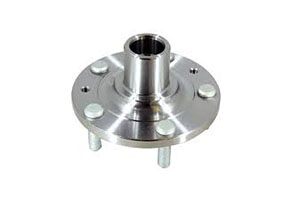
A bare hub is the flange-only component without integrated bearing. The bearing is pressed into the hub separately. Bare hubs are used on some older vehicle platforms and certain heavy-duty applications. Replacement requires a hydraulic press and proper bearing installation tools. Preload adjustment is performed by the technician rather than factory-set.
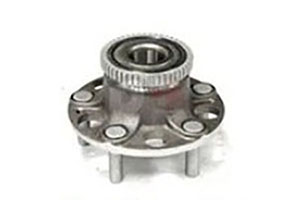
Second-generation hub bearings integrate the bearing and one mounting flange into a single unit. The outer ring includes the flange that bolts to the steering knuckle. The inner ring carries the wheel studs. Gen 2 units are commonly used on non-driven wheels but some designs accommodate driven applications. ABS encoder rings may be present depending on the vehicle specification.
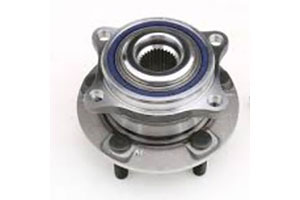
Third-generation hub bearings integrate both mounting flanges — one for the steering knuckle and one for the wheel — plus the bearing and often the ABS sensor. Gen 3 units are bolt-on replacements requiring no pressing operations. Preload is factory-set. Most passenger vehicles manufactured after 2010 use Gen 3 hub bearings on both front and rear positions.
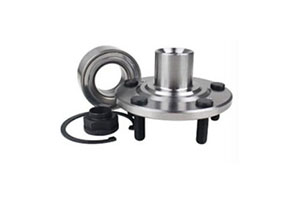
Wheel bearing kits provide the individual components needed to replace bearings in applications where the hub is reused. A kit typically includes the bearing itself, grease seals, retaining rings, and sometimes an ABS encoder ring. Kits are suitable for older vehicles with separable hub and bearing designs or for situations where the hub body remains serviceable.
Wheel Hub Bearing Applications
Wheel hub bearings are used in every motor vehicle that carries passengers or cargo. Different vehicle categories place different demands on bearing design.

Standard passenger cars use double-row ball bearing hub assemblies. Front-wheel drive cars require driven wheel hub bearings with splined inner rings on the front axle. Rear-wheel drive cars may use different configurations front to rear. Gen 3 units are standard on most cars manufactured after 2010.
SUV and crossover applications require higher load capacity than sedans due to greater vehicle weight. Many SUVs use Gen 3 hub bearings with upgraded ball designs or tapered rollers on heavier models. Off-road capable SUVs need enhanced sealing to resist mud and water intrusion during trail use.
Pickup trucks and delivery vans place the highest demands on wheel hub bearings. Heavy loads, frequent stopping and starting, and varied road surfaces all contribute to stress. Tapered roller bearings are common in this category. Sealing systems must resist dust on construction sites and road salt in winter.
Driven wheel hub bearings include a splined bore that accepts the axle shaft. These units transmit engine torque to the wheel while supporting vehicle weight. Non-driven wheel bearings — used on trailer axles or the rear of some front-wheel drive vehicles — have no splined connection. They support weight only and do not transmit torque.

Electric vehicles place different demands on hub bearings. Regenerative braking loads bearings in reverse compared to conventional braking. Higher torque at low speeds increases initial stress. EV manufacturers often specify hub bearings with lower rolling resistance to maximize range. Sensor accuracy requirements are also higher for EV traction control systems.
Wheel Hub Bearing Comparison Guides
Technical comparison articles help customers understand product differences and select correctly. The following articles are available on our website with detailed specifications and application data.
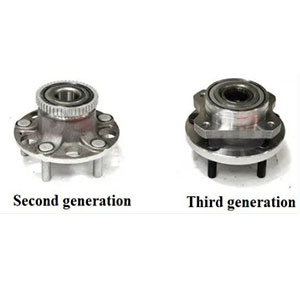
This article compares second-generation and third-generation hub bearings across ten parameters including flange configuration, sensor integration, preload method, installation procedure, and typical applications. Read this guide to determine which generation your vehicle requires based on model year and platform.
For more details, please read “What is a Wheel Hub Assembly?”.
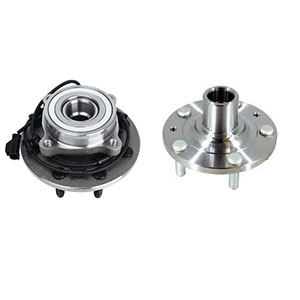
This comparison examines the serviceability, cost, and installation complexity of replacing only the bearing versus replacing the complete hub assembly. Application coverage for older vehicles versus modern platforms is also discussed.
For more details, please read “Bare Hub vs Wheel Hub Assembly”.
Popular Wheel Hub Bearing Part Numbers
The following part numbers represent wheel hub bearing applications commonly requested in the global aftermarket. Each number is listed with a detailed description including bearing type, generation, ABS sensor configuration, driven/non-driven application, typical vehicle fitments, and key technical features. These descriptions incorporate keyword variations such as wheel hub bearing, hub assembly, hub bearing unit, wheel hub unit, Gen 2, Gen 3, front hub bearing, rear hub bearing, with or without ABS sensor, double-row ball bearing, and tapered roller bearing.
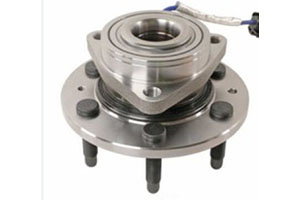
402023XA0A — Front wheel hub bearing assembly for Nissan Altima, Sentra, Rogue, and other Nissan models. Gen 3 design with dual mounting flanges. Integrated active ABS sensor for electronic stability control. Double-row ball bearing configuration. Factory pre-set preload. Four-bolt mounting flange pattern. Splined bore for front axle shaft (driven wheel application). Bolt-on replacement, no pressing required.
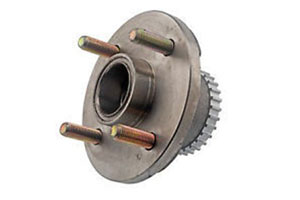
96268475 — Hub bearing unit for GM and Opel platforms including Chevrolet Cruze, Opel Astra, and Buick Verano. Gen 2 design suitable for non-driven wheel applications (typically rear axle on front-wheel drive models). Includes passive ABS encoder ring. Pre-greased and factory sealed. Double-row ball bearing. Bolt-on with four-bolt flange. No splines (non-driven configuration).
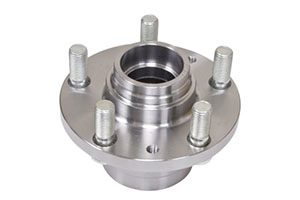
197118 — Wheel hub assembly for Volkswagen Golf, Jetta, Passat, and Audi A3 (PQ35/MQB platforms). Gen 3 configuration with dual flanges. Integrated active wheel speed sensor. Double-row ball bearing design. Factory pre-set preload. Five-bolt flange pattern (5×112 PCD). Includes splined bore for front axle on driven wheel applications.
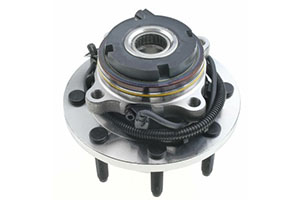
9P21104BCDZC — Heavy-duty wheel hub bearing for Ford Transit commercial vans (2006-2013). Enhanced static load rating for light commercial vehicle use. Reinforced sealing system with multi-lip design to resist dust and moisture from delivery service environments. Double-row ball or tapered roller depending on GVW. Gen 3 bolt-on design. Integrated ABS sensor.
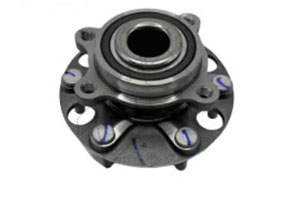
3103100XKM01A — Wheel hub bearing assembly for Chinese domestic passenger vehicles, specifically Geely Emgrand and Boyue early models. Gen 3 design. Double-row ball bearing. Bolt-on installation with four-bolt flange. Includes passive ABS encoder ring. Front driven wheel application with splined bore. Factory pre-greased.
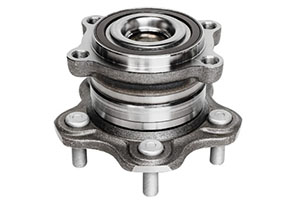
3501150-AT02 — Rear position wheel hub bearing for Toyota Camry (XV40, XV50), Corolla (E140, E170), and RAV4 (XA30). Gen 2 configuration for non-driven rear axle. Pre-greased and sealed. Double-row ball bearing. Includes ABS encoder ring (passive type). Four-bolt flange pattern. No splines (rear non-driven). Maintenance-free service life.
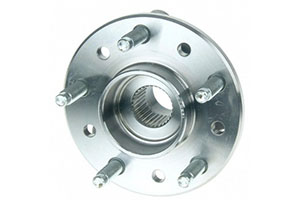
43502BZ150 — Front hub bearing assembly for Hyundai Elantra (MD, AD), Kia Forte (YD), and Kia Soul (PS). Gen 3 with dual flanges. Integrated active ABS sensor. Double-row ball bearing. Factory pre-set preload. Splined bore for driven front axle. Five-bolt flange pattern (5×114.3). Bolt-on replacement.
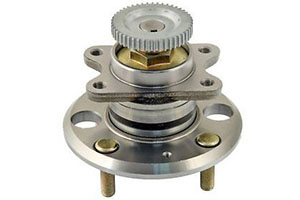
52730H8500 — Gen 3 wheel hub bearing for Honda Civic (FB, FC), Accord (CU, CR), and CR-V (RE, RM). Includes wheel mounting flange and knuckle mounting flange. Integrated active ABS sensor. Double-row ball bearing. Bolt-on design requiring no hydraulic press. Factory pre-set preload. Four-bolt flange to knuckle. Splined bore for front axle.
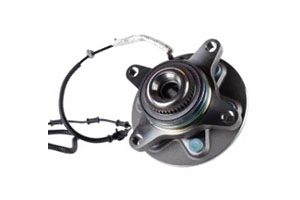
ML3Z1104H — Pickup truck wheel hub bearing for Ford F-150 (2015-2020) and Ford Raptor. Tapered roller bearing design for high load capacity required for pickup truck towing and payload. Gen 3 bolt-on configuration. Integrated active ABS sensor. Reinforced flange casting. Enhanced sealing for off-road and towing use. Five-bolt wheel pattern. Splined bore for 4WD front axle.
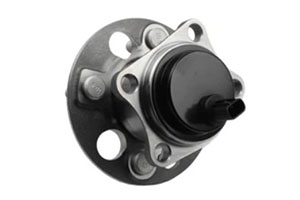
UC2S33060E — Wheel hub assembly for Mazda CX-5 (KF), Mazda6 (GJ), and Mazda3 (BM, BN). Gen 3 configuration with integrated active wheel speed sensor. Double-row ball bearing. Four-bolt mounting flange. Suitable for front (driven) and rear (non-driven) positions depending on model and drivetrain. Factory pre-set preload. Bolt-on.
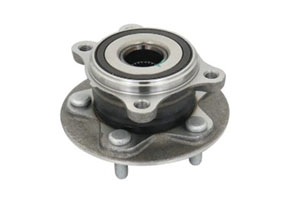
4351160021 — Hub bearing unit for Fiat 500 (2007+), Fiat Panda (2012+), and Alfa Romeo MiTo. Double-row ball bearing design. Gen 2 or Gen 3 depending on position — front Gen 3 driven with splines, rear Gen 2 non-driven. Includes passive ABS encoder ring. Compact 3-bolt or 4-bolt flange. Pre-greased and sealed.
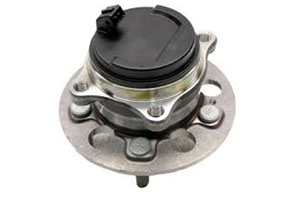
51750J5000 — Rear wheel hub bearing for Hyundai Santa Fe (DM, TM), Kia Sorento (UM), and Hyundai Tucson (TL). Gen 2 design for non-driven rear axle applications (front-wheel drive versions). Pre-greased and sealed. Double-row ball bearing. Includes ABS encoder ring. Four-bolt flange. No splines.
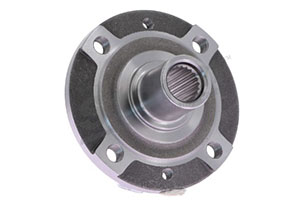
7700704704 — Wheel hub assembly for Renault Clio IV, V, Renault Captur I, and Dacia Sandero. Gen 3 configuration for front driven wheels. Bolt-on design. Integrated passive ABS sensor (magnetic encoder). Double-row ball bearing. Four-bolt flange. Splined bore for axle shaft. Pre-greased.
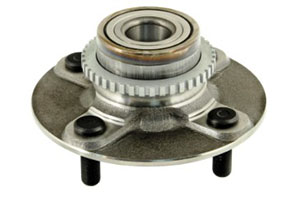
512303 — Front wheel hub bearing for BMW 3 Series (E90, F30, G20) and BMW 5 Series (E60, F10, G30). Gen 3 design with dual flanges. Active wheel speed sensor compatible (sensor sold separately on some models, integrated on others). Double-row ball bearing. Five-bolt flange (5×120 PCD). Factory pre-set preload. Bolt-on.
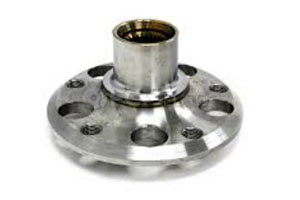
2463370145 — Hub bearing unit for Mercedes-Benz C-Class (W204, W205) and E-Class (W212, W213). Premium grade Gen 3 hub assembly. Multi-lip sealing system for extended service life. Factory pre-set preload. Integrated active ABS sensor. Double-row ball bearing. Five-bolt flange (5×112 PCD). Bolt-on replacement.
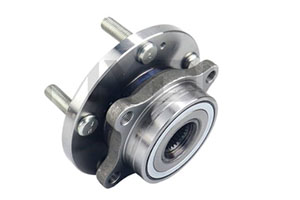
3103102XPW01A — Wheel hub bearing for Chinese domestic SUVs, specifically Haval H6 (first generation) and Great Wall Hover. Gen 3 design with reinforced structure for heavier SUV weight. Double-row ball bearing with larger balls for increased load capacity. Includes ABS encoder ring. Four-bolt or five-bolt flange depending on model year. Bolt-on.
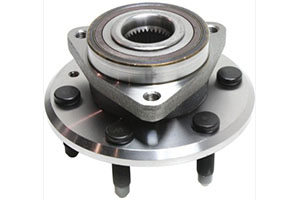
3885A067 — Front wheel hub bearing for Mitsubishi Outlander (CW, GG/ZG) and Mitsubishi Lancer (CZ). Double-row ball bearing. Pre-greased and sealed. Gen 3 configuration with integrated passive ABS encoder. Four-bolt or five-bolt flange depending on model. Splined bore for driven front axle.
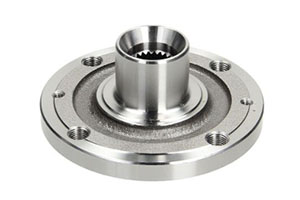
330785 — Wheel hub assembly for Peugeot 208 (2012-2019), Peugeot 308 (T9), and Citroën C3 (2010-2016). Gen 3 configuration for front driven wheels. Bolt-on installation. Sensor ready (passive ABS encoder ring integrated). Double-row ball bearing. Four-bolt flange. Splined bore. Pre-greased.
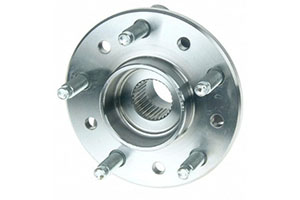
43502BZ180 — Front hub bearing for Kia Sportage (SL, QL) and Hyundai Tucson (LM, TL). Gen 3 with dual flanges. Integrated active ABS sensor. Double-row ball bearing (SUV-grade with larger balls). Factory preload. Five-bolt flange (5×114.3). Splined bore for driven front axle on front-wheel drive and all-wheel drive models.
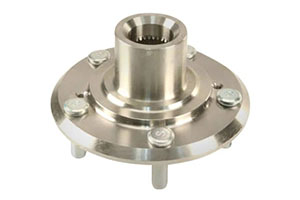
44600S3VA10 — Hub bearing unit for Honda CR-V (RM, RT) and Honda Accord (CR, CU). Gen 3 design. Pre-set preload. Multi-lip sealing. Integrated active ABS sensor. Double-row ball bearing. Four-bolt flange. Splined bore for front driven axle. Bolt-on.
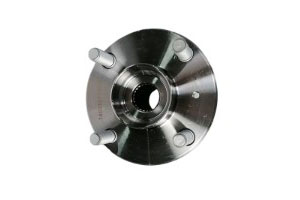
1402121180 — Wheel hub assembly for Volvo S60 (2011-2018), Volvo V60 (2011-2018), and Volvo XC60 (2009-2017). High corrosion resistance with coated flanges for winter road salt environments. Gen 3 design. Integrated active ABS sensor. Double-row ball bearing. Five-bolt flange (5×10⁸ PCD). Factory pre-set preload. Bolt-on.
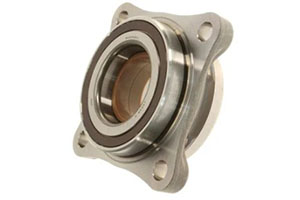
54KWH01-W — Hub assembly for Jeep Wrangler (JK, JL) and Jeep Grand Cherokee (WK2). Off-road rated wheel hub bearing with heavy-duty sealing against mud, water, and dust. Gen 3 design. Double-row ball bearing or tapered roller depending on model year. Integrated active ABS sensor. Five-bolt flange. Bolt-on.
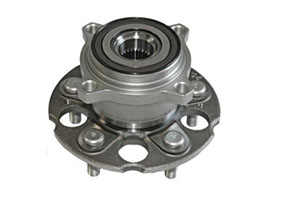
42200SJL951 — Wheel hub bearing for Acura MDX (YD1, YD2) and Honda Pilot (YF1, YF2). Gen 3 design. Active ABS sensor type for premium stability systems. Double-row ball bearing with higher load rating for three-row SUVs. Reinforced flange. Five-bolt pattern. Splined bore for driven front axle.
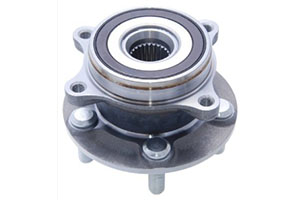
42410BZ200 — Front hub assembly for Nissan Rogue (S35, T32) and Nissan Altima (L33, L34). Gen 3 design. Integrated wheel speed sensor (active type). Double-row ball bearing. Four-bolt flange. Splined bore. Bolt-on. Pre-greased.
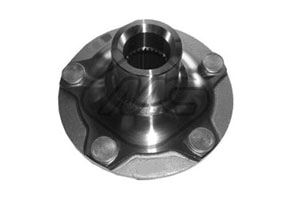
4342179J01 — Front wheel hub bearing for Subaru Outback (BM, BR) and Subaru Forester (SJ, SK). Double-row ball bearing. Sealed for all-weather use with multi-lip seals. Gen 3 design. Active ABS sensor (integrated on most models). Five-bolt flange (5×100 or 5×114.3). Splined bore for driven axle (all-wheel drive).
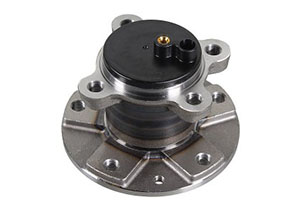
432105784R — Hub assembly for Renault Megane (III, IV) and Renault Scenic (III, IV). Gen 3 configuration. Bolt-on design. Pre-greased. Integrated passive ABS sensor (magnetic encoder). Double-row ball bearing. Four-bolt flange. Splined bore for front driven wheels.
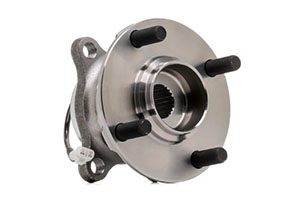
4340271L50 — Rear wheel hub bearing for Toyota RAV4 (XA30, XA40) and Lexus NX (AZ10). Gen 2 design for non-driven rear axle applications (front-wheel drive versions). Pre-greased and sealed. Double-row ball bearing. Includes ABS encoder ring. Four-bolt flange. No splines. Bolt-on.
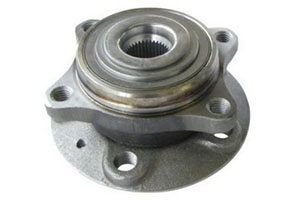
A00111987 — Wheel hub bearing for Mercedes-Benz S-Class (W221, W222, W223). Premium grade. Precision ground raceways for smooth operation and reduced NVH. High load rating for flagship sedan. Gen 3 design. Integrated active ABS sensor. Double-row ball bearing. Five-bolt flange (5×112 PCD). Factory pre-set preload.
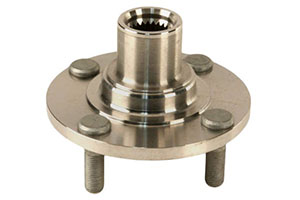
40202VW010 — Front wheel hub bearing for Nissan Sentra (B16, B17) and Nissan Versa (N17). Gen 3 configuration. Four-bolt flange (4×114.3). Integrated ABS encoder (passive on earlier years, active on later). Pre-greased. Double-row ball bearing. Splined bore. Bolt-on.
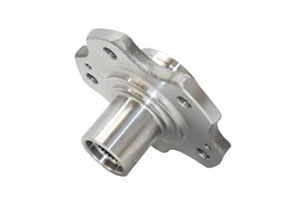
204000455AA — Hub bearing unit for Dodge Ram 1500 (2002-2008) and Dodge Ram 2500 (2003-2009) 4WD models. Tapered roller design for heavy-duty pickup truck load capacity. Heavy-duty construction with reinforced flange. Integrated ABS sensor (passive). Gen 3 bolt-on. Five-bolt or eight-bolt flange depending on model. Splined bore for axle shaft.
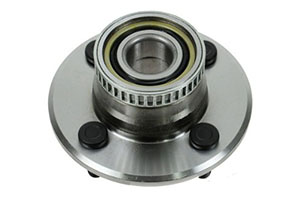
526844H100 — Wheel hub assembly for Hyundai Santa Fe (CM, DM) and Kia Sorento (XM, UM). Gen 3 design. Load rated for SUV applications with higher static load capacity than sedan bearings. Double-row ball bearing. Integrated active ABS sensor. Five-bolt flange (5×114.3). Splined bore for driven front or all-wheel drive.
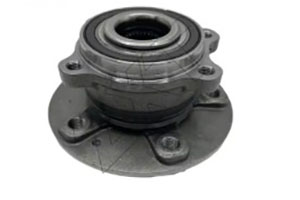
A4633340000 — Front wheel hub bearing for Mercedes-Benz G-Class (W463, W464) and Mercedes-Benz GL-Class / GLS (X166, X167). Heavy-duty off-road design. High impact resistance for rough terrain use. Tapered roller bearing on most models. Gen 3 bolt-on. Integrated active ABS sensor. Reinforced flange. Multi-lip heavy-duty seals.
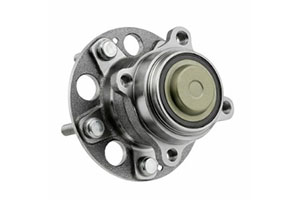
10939252 — Rear wheel hub bearing for Cadillac Escalade (GMT900, 2007-2014) and Chevrolet Tahoe (2007-2014). Heavy-duty design suitable for large SUV weights. Corrosion resistant coating for flange. Double-row ball bearing or tapered roller depending on year. Gen 3 bolt-on. Integrated ABS sensor. Bolt-on.
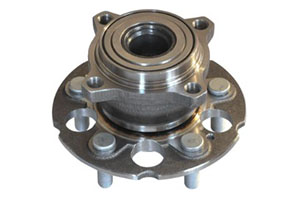
3104101V5000 — Wheel hub bearing for Chinese domestic sedans — Chery Arrizo 5 and Arrizo 7, and JAC J5. Gen 3 configuration. Double-row ball bearing. Bolt-on. Integrated passive ABS encoder ring. Four-bolt flange. Splined bore for front driven axle.
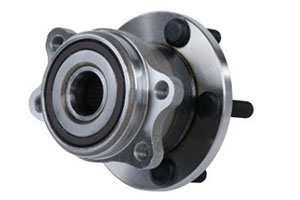
VKBA6889 — Aftermarket standard part number for BMW Mini Cooper (R50, R53, R56) and Mini Clubman (R55). Gen 2 design. Compact size for small car application. Pre-greased. Double-row ball bearing. Four-bolt flange (4×100 PCD). ABS encoder ring integrated (passive). Bolt-on. No splines on rear (non-driven), splined on front for Cooper S.
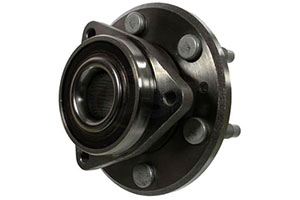
43421M59K00 — Front wheel hub bearing for Honda Civic (FB, FC, FK) and Honda Accord (CR, CU, CV). Gen 3 design with integrated ABS sensor (active on later models). Double-row ball bearing. Four-bolt flange. Reliable performance. Factory pre-set preload. Splined bore. Bolt-on.
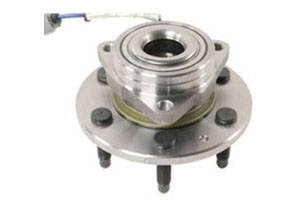
4020201N95 — Hub assembly for Nissan Pathfinder (R51, R52) and Infiniti QX60 (L50). Gen 3 design. Load rated for larger SUVs and three-row crossovers. Double-row ball bearing with larger rolling elements. Integrated active ABS sensor. Five-bolt flange. Splined bore for driven front axle. Bolt-on.
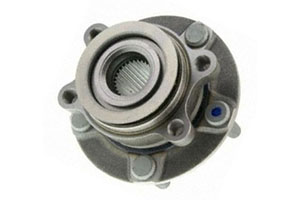
3103100XG08XA — Wheel hub bearing for Geely Boyue (NL-3) and Volvo XC40 (shared CMA platform variants). Gen 3 configuration. Meets European standards for fit and performance. Double-row ball bearing. Integrated active ABS sensor. Five-bolt flange (5×10⁸ PCD). Factory pre-set preload. Bolt-on.
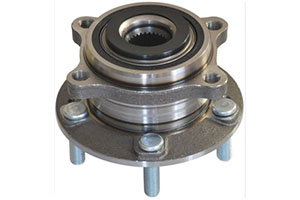
521750IC002 — Front wheel hub bearing for Fiat 500 (2007+) and Fiat Panda (2012+). Gen 2 design for compact car applications. Pre-greased. Double-row ball bearing. Three-bolt or four-bolt flange depending on position. Includes passive ABS encoder ring. Splined bore for driven front axle. Compact dimensions.
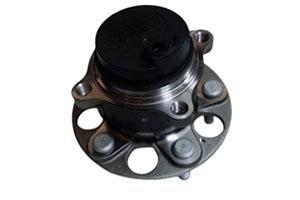
3104100XKU00A — Hub assembly for Great Wall Haval H6 (first generation, second generation). Gen 3 design with reinforced structure for SUV off-road use. Sealed with multi-lip seals. Double-row ball bearing with higher load rating. Integrated ABS encoder (passive). Four-bolt or five-bolt flange. Bolt-on.
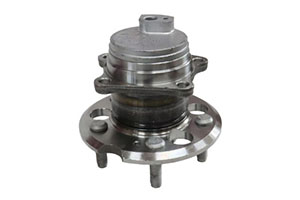
3104101XGW01A — Wheel hub bearing for Chinese electric vehicle applications, specifically BAIC EU series and BYD e5 early models. Lower rolling resistance design optimized for EV efficiency. Low-friction seals and special grease formulation. Gen 3 design. Integrated active ABS sensor. Double-row ball bearing. Bolt-on.
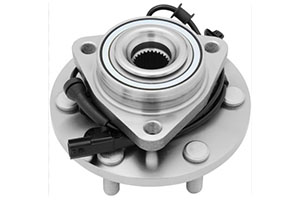
3711A563 — Hub bearing unit for Mitsubishi Pajero (V70, V80, V90) and Mitsubishi Montero (NS, NT). Heavy-duty tapered roller design for off-road capable large SUV. Off-road capable with enhanced sealing. Gen 3 bolt-on. Integrated ABS sensor (passive on older, active on newer). Splined bore for driven front axle.
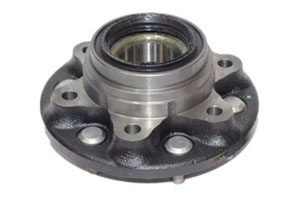
40202VB226 — Front wheel hub bearing for Nissan Maxima (A35, A36) and Nissan Murano (Z51, Z52). Gen 3 configuration. Integrated ABS encoder (active). Double-row ball bearing. Pre-greased. Four-bolt flange. Splined bore. Bolt-on.
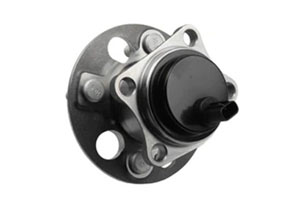
CV6Z1104D — Hub bearing unit for Ford Edge (2011-2014) and Lincoln MKX (2011-2014). Gen 3 design. Dual flanges. Factory pre-set preload. Double-row ball bearing. Integrated active ABS sensor. Five-bolt flange (5×114.3). Splined bore for driven front axle on front-wheel drive and all-wheel drive models.
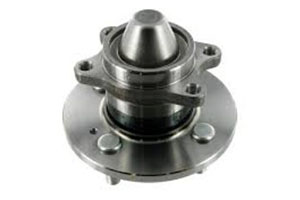
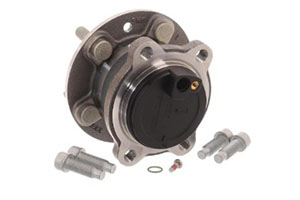
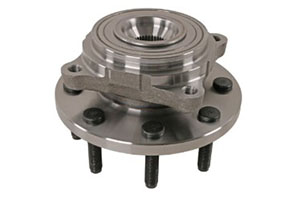
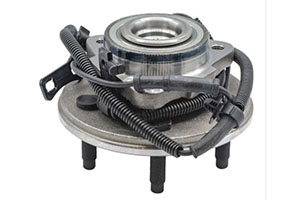
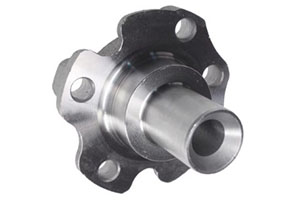
Wheel Hub Bearing — Complete Technical Guide and Failure Prevention for Workshops
What causes a wheel hub bearing to fail after only a few months? How can you tell if the noise comes from a worn bearing or from tires? These are common questions from both vehicle owners and repair technicians. A wheel hub bearing — also called hub assembly, hub unit, or wheel end bearing — supports the entire vehicle weight at each wheel while handling constant rotation, road impacts, and exposure to water and salt. This guide covers how these bearings are built, what separates a quality part from a poor one, and most importantly, how to diagnose failures and avoid repeat repairs.
Terminology — One Component, Many Names
When you look for a replacement, you may see several names for the same part. Wheel hub bearing, hub bearing assembly, wheel hub unit, and hub assembly all refer to the integrated component that combines the bearing, hub body, flange, and often the wheel speed sensor. Some catalogs use “wheel end hub assembly” or simply “hub unit.” Knowing these naming variations helps you find the correct part without confusion, especially when ordering online or through aftermarket suppliers.
From Loose Bearings to Pre-Assembled Hub Units
Older vehicles used separate bearings — inner race, outer race, rolling elements, and a cage — installed individually into a hub body. A technician had to pack grease by hand, install seals, and adjust preload by tightening a spindle nut to a specific torque while checking for free play. That process took skill and experience. Pre-assembled hub units moved this precision work from the repair shop to the bearing factory. Today, most passenger cars use sealed hub assemblies where the bearing, flange, seals, and encoder are assembled under controlled conditions. As a replacement part, the technician simply bolts the new unit in place and torques the fasteners to the factory specification.
Internal Components and How They Work Together
Every wheel hub bearing contains several precision-manufactured parts. The outer ring includes the mounting flange on Gen 2 and Gen 3 designs. The inner ring carries the wheel studs and rotates with the wheel. Between these rings are two rows of bearing balls or tapered rollers. The number, size, and material of these rolling elements determine the load rating of the assembly. A cage or retainer keeps the rolling elements evenly spaced, preventing contact between adjacent balls or rollers. Seals are installed on the inboard side (facing the vehicle center) and outboard side (facing the wheel). Inboard seals are typically more robust because they face higher contamination risk from road spray. Many Gen 3 hub bearings also include a magnetic encoder ring pressed onto the inner ring. This encoder ring rotates past a stationary sensor mounted in the knuckle, generating the wheel speed pulses required by ABS, traction control, and electronic stability control systems.
Ball Bearings Versus Tapered Roller Bearings
Two bearing architectures dominate the market. Double-row angular contact ball bearings are used in most passenger cars and crossovers. They offer lower rolling resistance (better fuel economy) and operate quietly. Ball bearings handle moderate loads well but have limits under extreme weight or impact. Tapered roller bearings are used in heavier vehicles including pickup trucks, large SUVs, and commercial vans. The tapered geometry allows rollers to support higher radial and axial loads at the same time. The trade-off is slightly higher rolling resistance and a different noise profile. The table below summarizes the key differences.
| Feature | Double-Row Ball Bearing | Tapered Roller Bearing |
|---|---|---|
| Typical application | Passenger cars, crossovers | Pickup trucks, large SUVs, vans |
| Load capacity | Moderate radial and axial | High radial and axial |
| Rolling resistance | Lower | Slightly higher |
| Noise level | Quieter | May produce more rolling noise |
| Common vehicle weight | Up to 2,000 kg | Above 2,000 kg |
Sealing Technology — The First Line of Defense
The most common cause of premature failure is contamination: dirt, water, or road salt entering the bearing cavity and mixing with the grease. Once inside, contaminants act as abrasives, wearing away the precision-ground raceways and rolling elements. The sealing system is therefore critical. Premium hub bearings use multi-lip seals with multiple contact points between the seal and the rotating surface. Some designs include a metal shield as an additional barrier against large debris. The seal must stay effective across temperature extremes — from winter cold that stiffens the material to summer heat or brake-generated temperatures that can exceed 150°C near the hub. Low-friction seal designs reduce parasitic drag, improving fuel economy without compromising protection.
Wheel Speed Sensor Integration — What You Need to Know
Most vehicles built after 2000 rely on wheel speed data for multiple safety systems. The wheel hub bearing is a convenient location for the encoder because it rotates at exactly wheel speed, with no gearing or extra parts between the sensing point and the wheel. Passive encoders use a magnetic ring with alternating north-south poles. As the ring rotates, the stationary sensor detects these magnetic field changes and generates an alternating current signal. Active sensors require external power but produce a digital signal that is more accurate at very low speeds, such as when the vehicle is coming to a stop. Active sensors are common on vehicles with low-speed traction control or automated parking features. When replacing a hub bearing, matching the correct sensor type — passive or active — is essential for proper electronic system operation.
Material and Manufacturing Quality — What to Look For
The raw materials and manufacturing processes directly determine durability. Bearing steel must be clean, with minimal non-metallic inclusions that could act as stress concentrators. Heat treatment creates hard surfaces that resist wear while maintaining a tough core that absorbs impact energy. Raceway grinding must achieve precise geometry and surface finish — any deviation creates localized stress or increases friction. Induction hardening of the flange areas adds strength where the bearing bolts to the knuckle or where wheel studs are pressed in. Roll-forming or clinching operations create the mechanical retention that maintains bearing preload throughout the product life. A hub bearing that suffers from poor manufacturing quality may fail within months, while a correctly manufactured unit can outlast the vehicle in many cases.
Installation Best Practices — Getting It Right the First Time
Proper installation is as important as product quality. For bolt-on Gen 2 and Gen 3 units, follow these steps:
- Clean the mounting flange surface on the steering knuckle to bright metal. Even a thin layer of corrosion can tilt the hub assembly, creating misalignment that shortens bearing life.
- Tighten mounting bolts to factory torque specifications in the correct sequence.
- On driven wheels, replace the axle nut with a new one. Old nuts may have damaged threads or reduced clamping ability.
- Never use an impact wrench on the axle nut. The high instantaneous torque can damage the bearing internally. Use a calibrated torque wrench.
- For press-fit Gen 1 bearings or certain Gen 2 designs, apply force to the correct race. Pressing on the wrong race transfers force through the rolling elements, creating brinell marks or raceway damage that leads to early failure.
Failure Diagnosis — Finding the Real Cause
Replacing a failed wheel hub bearing without identifying the root cause guarantees that the new bearing will fail prematurely under the same conditions. The first step in any replacement job is determining why the original bearing failed.
Impact Damage
When a vehicle strikes a pothole, curb, or large debris with enough force, it can dent the bearing raceways. The dent creates a stress riser — a location where stress concentrates. Under normal driving loads, small cracks form and gradually propagate across the raceway surface, eventually causing spalling (surface flaking). There is no repair for impact damage. Before installing a new bearing, inspect the steering knuckle for bends. A bent knuckle will misalign the new bearing and cause rapid failure.
Contamination
When bearing seals are compromised by age, heat, or physical damage, road water mixed with salt, sand, and debris enters the bearing cavity. This contamination mixes with the grease and acts as a lapping compound, grinding away precision surfaces. Signs include rust-colored grease, visible particles, or pitted raceways. Prevention requires careful inspection of seal contact surfaces before installation. Any damage or corrosion must be corrected, or the new seals will also fail.
Overheating Damage
Excessive heat can come from dragging brakes, a seized caliper, or extreme operating conditions. When a hub bearing overheats, the grease breaks down and loses its lubricating properties. Metal components may also undergo unwanted metallurgical changes, losing hardness or developing microcracks. Signs include blackened or burned-looking grease, discolored races, and a strong burnt smell. Before installing a new bearing, resolve any brake drag issues and ensure cooling passages around the hub are clear.
Improper Installation — The Most Common Cause
Using an impact wrench on the axle nut applies shock loads that damage the bearing internally. Even a few impacts can brinell the raceways, creating small dents that will generate noise and vibration. Always use a torque wrench. Another error is failing to clean the steering knuckle mounting surface. Any rust, dirt, or old gasket material left on the surface tilts the new hub bearing, creating misalignment that loads one row of rolling elements more than the other. On press-fit applications, pressing on the wrong race transfers the entire press load through the balls or rollers, creating brinell marks that may not be visible but will cause noise as soon as the wheel rotates.
Systematic Diagnosis Procedure
Diagnosing a failing hub bearing requires a structured approach. Start with a road test. Drive with windows closed and audio off. Listen for grinding, growling, or humming noises that change with vehicle speed. Turn the steering wheel left and right while driving. If noise increases during left turns, the right-side bearing is suspect. If it increases during right turns, the left-side bearing is suspect. After the road test, raise the vehicle and perform a shake test. Grasp the wheel at twelve and six o’clock and try to rock it. Movement indicates bearing wear or worn suspension components. For a more precise test, use a chassis ear system with accelerometers clamped to each steering knuckle. This allows direct comparison of noise levels from all four wheels to pinpoint the failing unit.
Preventing Repeat Failures — A Workshop Checklist
To avoid having a customer return with the same complaint, follow this checklist every time you replace a wheel hub bearing:
- Replace the axle nut with a new one (driven wheels).
- Clean all mounting surfaces to bright metal — no rust, dirt, or old gasket material.
- Use a calibrated torque wrench — never an impact gun on the axle nut or mounting bolts.
- Follow the factory torque sequence and specification.
- On press-fit bearings, apply force to the correct race only.
- Test drive the vehicle after installation to confirm noise elimination.
A wheel hub bearing that is correctly diagnosed, properly installed, and manufactured to quality standards will provide years of reliable service. For most passenger vehicles, a quality hub bearing lasts over 100,000 kilometers under normal driving conditions. When you hear the first signs of bearing noise — or when an ABS warning light appears — do not delay inspection. Early replacement saves the steering knuckle, axle, and other related components from additional damage.
A wheel hub bearing assembly is a pre-assembled component that combines the wheel bearing, hub flange, and often the ABS speed sensor into a single unit. It bolts directly to the steering knuckle and requires no separate bearing pressing or grease packing.
A traditional wheel bearing is a standalone component pressed into a separate hub. A wheel hub bearing integrates the bearing and hub into one assembly. Most modern vehicles use hub bearings rather than separate bearings.
Typical service life ranges from 100,000 to 150,000 kilometers under normal driving conditions. Rough roads, heavy loads, and frequent impact with potholes shorten service life.
Common symptoms include grinding or humming noise that changes with vehicle speed, steering wheel vibration, loose steering feel, uneven tire wear, and illumination of the ABS warning light.
Driving with a severely worn hub bearing is unsafe. The bearing may fail completely, allowing the wheel to separate from the vehicle. If you suspect a bad hub bearing, have it inspected immediately.
Most vehicles manufactured after 2010 use Gen 3 hub bearings. Vehicles from approximately 1995 to 2010 may use Gen 2 on non-driven wheels. Older vehicles typically use Gen 1 or press-in bearings. Check your vehicle service manual or contact our technical support with your VIN for confirmation.
Gen 3 bolt-on hub bearings require basic hand tools and a torque wrench. Gen 2 and press-fit bearings may require a hydraulic press and specific adapters. Always use a torque wrench for axle nuts and mounting bolts.
On vehicles with separable hub and bearing designs — typically older vehicles — yes. On most modern vehicles using Gen 2 or Gen 3 hub bearings, the bearing is integrated and cannot be replaced separately. You must replace the complete hub assembly.
The ABS light may illuminate if the new hub bearing has an incompatible sensor type (passive vs active), if the sensor connector was damaged during installation, or if the air gap between the sensor and encoder is incorrect. Verify that the replacement part matches the original sensor specification.
Correct installation is key. Clean all mounting surfaces thoroughly. Use new axle nuts. Torque all fasteners to manufacturer specifications. Never use an impact wrench on the axle nut. Address any underlying issues such as damaged steering knuckles or seized brakes before installing the new bearing.
Quality aftermarket hub bearings from reputable manufacturers meet or exceed OE specifications. Look for indicators such as precision ground raceways, high-grade bearing steel, multi-lip seals, and factory pre-set preload. Our products are manufactured to OE-equivalent standards.
Gen 2 hub bearings have one mounting flange on the outer ring. Gen 3 hub bearings have two flanges — one for mounting to the steering knuckle and one for mounting the wheel. Gen 3 units also typically include integrated ABS sensors and are used on most vehicles manufactured after 2010.
Some electric vehicles specify hub bearings with lower rolling resistance to maximize driving range. EVs also have different load characteristics due to regenerative braking and high low-end torque. Always use the bearing type specified by the EV manufacturer.
Provide the vehicle year, make, model, engine size, drivetrain configuration (FWD, RWD, AWD), position (front or rear), and original equipment part number if available. Our technical support team can verify fitment from this information.

