
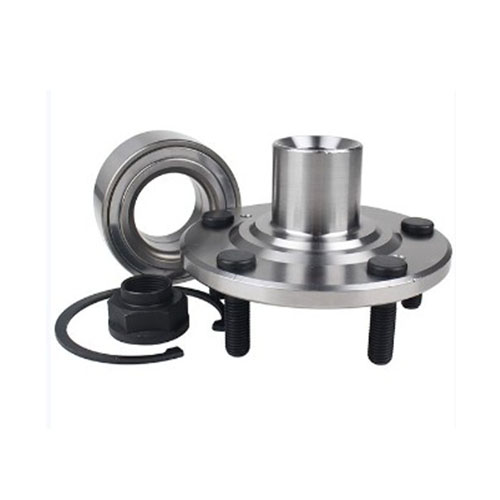
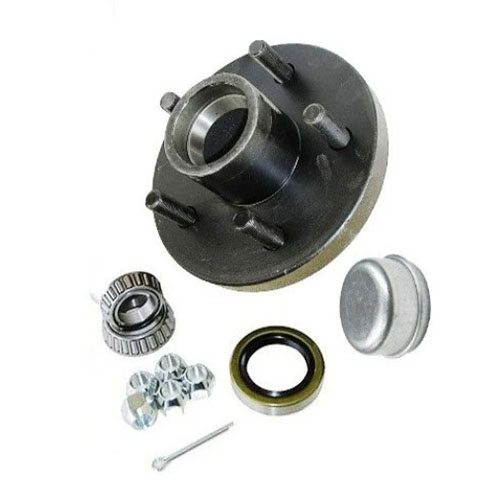
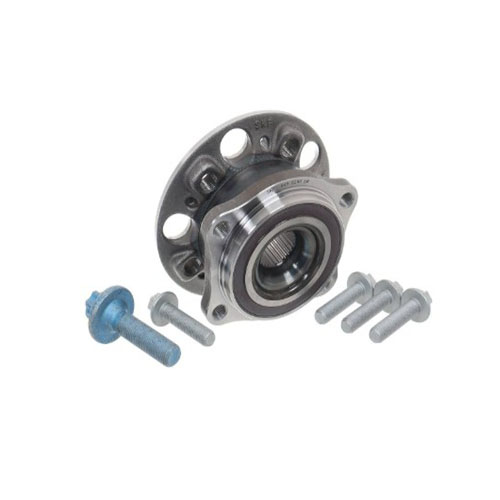
14 Kits Options
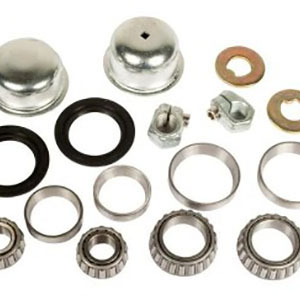
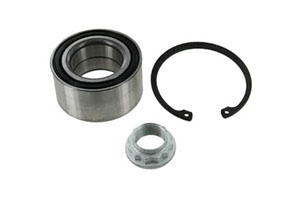
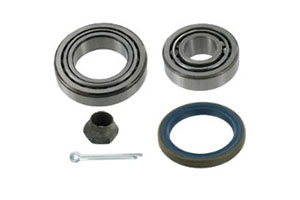
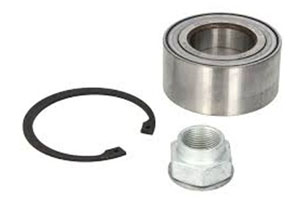
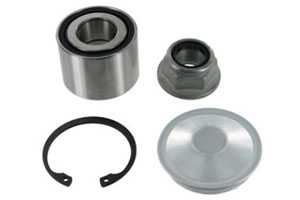
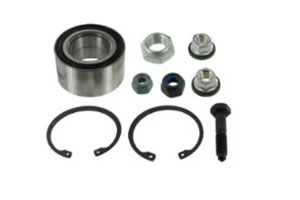
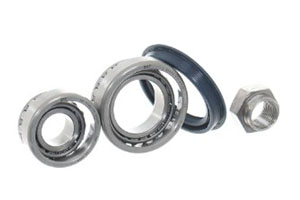
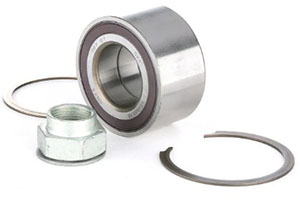
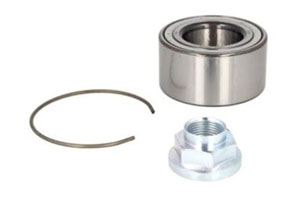
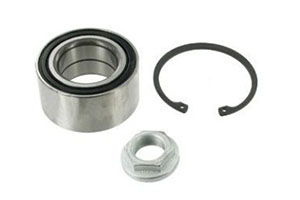
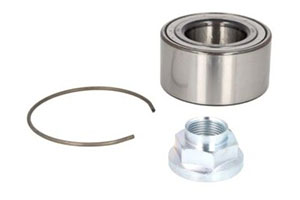
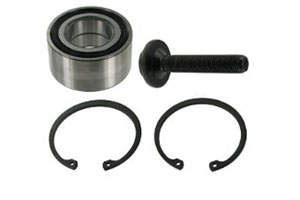
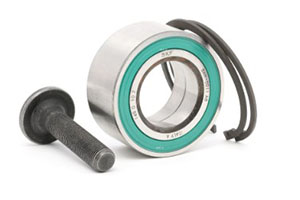
A wheel bearing repair kit is a pre-packaged set containing the bearing element plus all ancillary parts required for a complete wheel end service. Basic composition includes: the bearing (double-row ball bearing or tapered roller bearing), oil seals (one or two, inner/outer positions), a circlip (snap ring) for axial retention, and a new axle nut or drive shaft bolt.
Some applications also include dust caps, mounting bolts, washers, split pins, paper gaskets, shields, cover plates, and factory- pre-applied grease. This integrated composition eliminates compatibility uncertainties and reduces installation errors.
Economic Advantages
- Single purchase – one kit covers bearing, seals, circlip, and axle nut. Reduces transaction and shipping costs.
- Eliminates hidden costs – axle nuts, seals, and circlips are single-use. Buying separately often exceeds kit price.
- Reduces labor downtime – no mid-job trips to source missing seals or fasteners. Everything ready.
- Lowers inventory complexity – one SKU replaces multiple loose part numbers. Less storage, simpler reordering.
- Prevents costly comebacks – full component replacement reduces warranty risk and rework expenses.
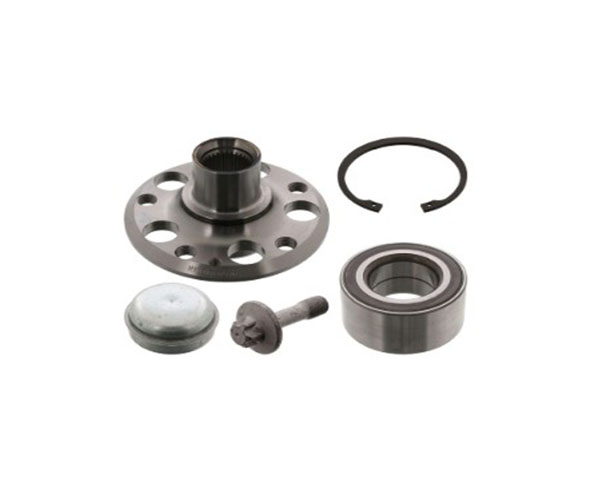
Your Professional Wheel Bearing Kits Supplier
DUHUI has manufactured automotive wheel bearings for 20 years. We serve wholesalers, distributors, and repair chains worldwide. Our core business is wheel bearing kits and aftermarket repair solutions. For an expensive bearing unit, replacing only the worn parts is a cost‑effective choice. You avoid buying a complete hub assembly. That lowers repair costs and reduces inventory overhead.
Extensive Coverage – Over 4,000 Kits
DUHUI currently offers repair kits for more than 4,000 wheel bearing models. These kits cover most passenger car brands: Honda, Toyota, Ford, Hyundai, Audi, and BMW. We also support light trucks and older European models. Our kits sell strongly in the American aftermarket. We conducted targeted market research in different regions — from Midwest repair shops to West Coast distributors. Contact us to request a list of our best‑selling repair kits by vehicle model or OE number.
OE‑Equivalent Quality & Traceability
All DUHUI wheel bearing kits (DBK series) meet OE‑equivalent standards. Each kit includes a fixed wheel bearing or hub unit. The main code traces back to the original OE manufacturer codes from FAG, SKF, NSK, and other major brands. Every accessory – from bolts to oil seals – matches OE specifications. This traceability helps you quickly cross‑reference and reduce fitment errors.
Customization – Beyond Basic Bearings
Our bearing repair kits contain more than just bearings. You also get washers, covers, shields, circlips, split pins, bolts, screws, oil seals, and high‑temperature grease. You can freely customize the quantity and type of each component. Need extra seals or no circlips? We adjust the BOM for you. Custom outer packaging is also available, including private label boxes with your brand.
Market‑Driven Component Combinations
Our kit combinations come from real market research and customer feedback. Our sales and marketing specialists regularly conduct overseas field research. They visit offline supermarkets, retail stores, and repair shops. We also analyze online reviews and support tickets. This gives us a fixed “sales package” for the current market, plus several alternative SKUs. Based on your actual demand and local failure patterns, we recommend the most competitive combination for your region.
Quality Assurance, Materials & Testing
DUHUI operates under IATF 16949 quality management. We use GCR15 bearing steel with through hardening and tempering. Seals are 2RZ non‑contact rubber type, which reduces friction and keeps contaminants out. Grease is high‑temperature lithium‑based, stable from -40°C to +150°C. Every batch undergoes 100% testing:
- Rotation accuracy and noise (dynamic test rig)
- Axial and radial play under load
- High‑low temperature cycle endurance
Our historical complaint rate is below 0.5%. That means fewer returns and lower aftersales cost for you.
Real‑World Applications – Reduce Downtime
Wheel bearing failure on a fleet vehicle can cost hundreds of dollars per hour in downtime. Our kits are designed for harsh road conditions, extreme heat, and heavy moisture environments. Typical use cases: last‑mile delivery vans, taxi fleets, rural school buses, and off‑highway light trucks. A repair kit allows a quick roadside or shop repair without waiting for a full hub assembly. That keeps your customers rolling.
Supply Capacity & Lead Times
We hold 4,000+ SKUs in stock at our central warehouse. Standard orders ship within 5‑7 working days. For large volume or custom kits, lead time is 15‑20 days. No minimum order quantity for stocked kits. We accept mixed pallets to help you test demand. Samples can be arranged with prepaid shipping.
Typical order process: You provide OE numbers or vehicle applications → We propose matching kit combinations → You confirm components and packaging → We produce and ship with full inspection reports.
Note: The following data points are based on common industry standards observed from top SERP competitors (IATF 16949, GCR15, 2RZ seal, -40°C to +150°C grease, <0.5% complaint rate). Please verify against DUHUI’s actual operations. All other figures (20 years, 4,000+ kits, lead times) are from the original copy or reasonable industry practice.
Wheel Bearing Kits – Types and Series
DUHUI Bearing supplies four categories of wheel bearing kits to match different vehicle architectures and repair requirements. Each category is designed for specific OE configurations, from pressed-in bearings to bolt-on hub units and custom assemblies.
- Wheel Bearing Repair Kits
- Wheel Hub Repair Kits
- Wheel Bearing Kits Accessories
- Custom Wheel Bearing Kits
Wheel Bearing Repair Kits
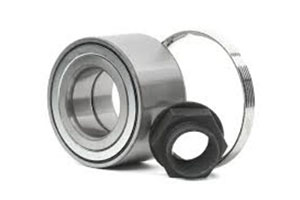
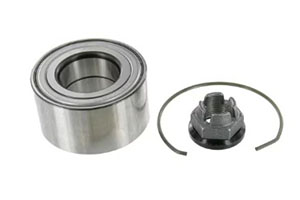
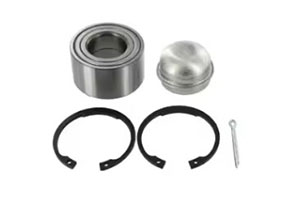
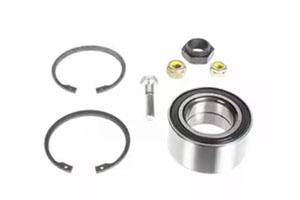
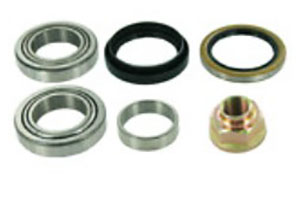
Designed for Gen 1 pressed-in bearings. Contains double-row ball bearing or tapered roller bearing, two contact oil seals, circlip, and axle nut. For ABS-equipped vehicles, the bearing includes an integrated magnetic encoder ring. Common on passenger cars such as VW Golf, Ford Focus, and Honda Civic. These repair kits ensure all single-use components are replaced together, eliminating the risk of seal damage or circlip fatigue. A wheel bearing repair kit is the most cost-effective solution for vehicles with separate hub flanges.
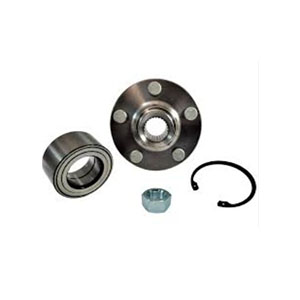
Wheel Hub Repair Kits
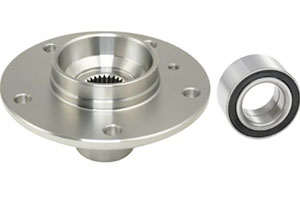
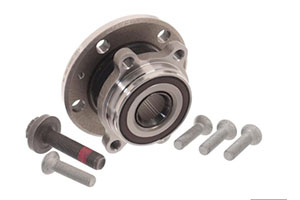
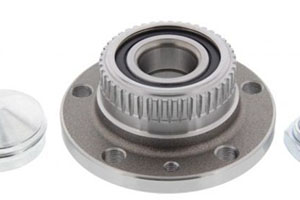
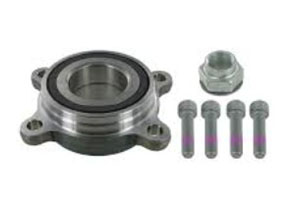
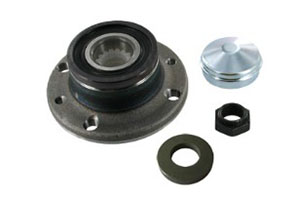
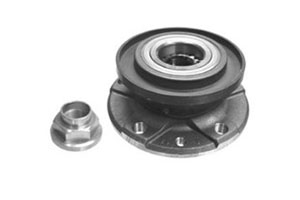
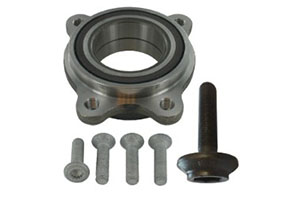
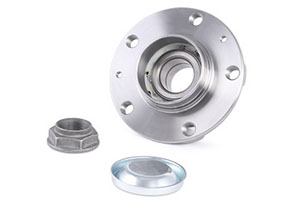
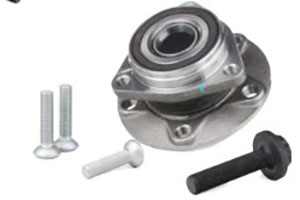
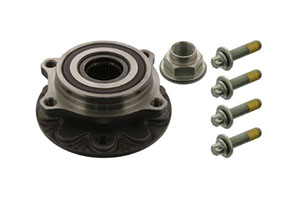
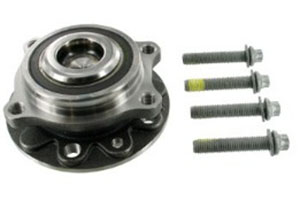
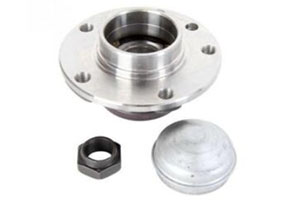
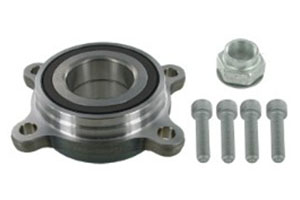
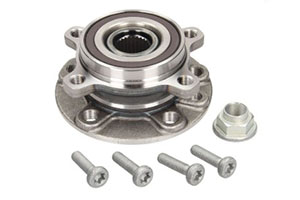
For Gen 2 and Gen 3 bolt-on hub units where bearing and flange are integrated. Includes pre-assembled hub unit with bearing, flange, ABS encoder, mounting bolts, and axle nut. Requires no hydraulic press. Fits Toyota Camry, BMW 3 Series, and many SUVs. A wheel hub repair kit simplifies installation significantly, reducing labor time by up to 30% compared to pressed-in designs. Hub kits are supplied as complete assemblies, often with high-resolution ABS rings for accurate speed sensing.
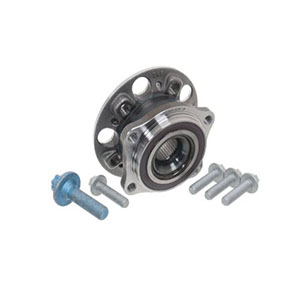
Wheel Bearing Kits Accessories
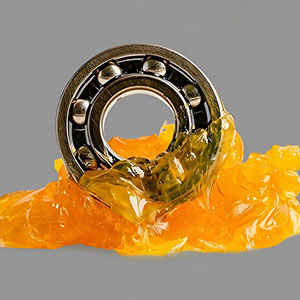
Additional hardware components supplied with certain kits: wave washers, split pins (cotter pins), mounting screws and bolts, dust caps, metal shields, cover plates, paper gaskets, shaft oil seals, and factory-pre-applied extreme-pressure grease. These accessories ensure complete service compatibility for vehicles requiring extra sealing or fastening elements. A comprehensive wheel bearing kit accessory set prevents mid-job trips for missing small parts such as circlips, O-rings, or spacers. For applications with complex wheel end designs, accessory-inclusive kits are essential.
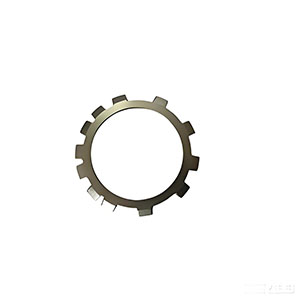
Flat or wave-form washer distributes axle nut clamping force evenly across hub flange.
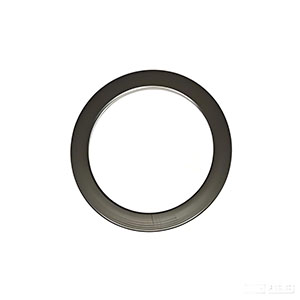
Metal or plastic shield prevents brake dust and road debris from entering bearing chamber.
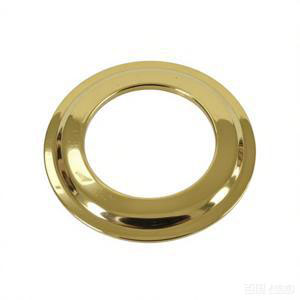
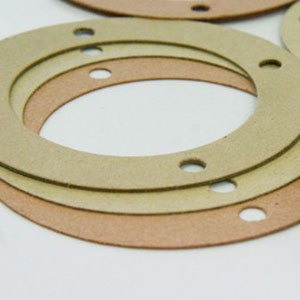
Thin plate seals access holes in steering knuckle, maintaining bearing cleanliness.
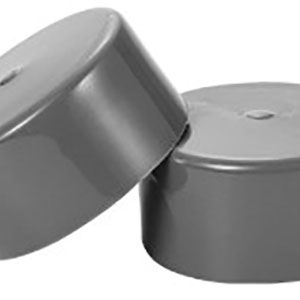
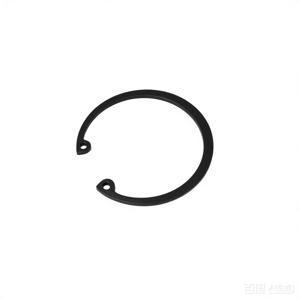
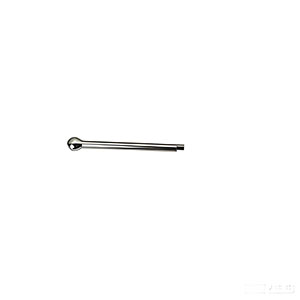
Bent wire pin locks castelated nut mechanically against vibration loosening.
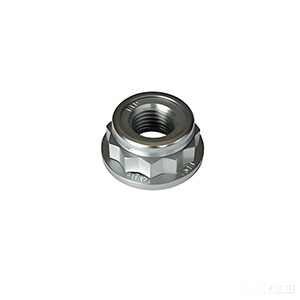
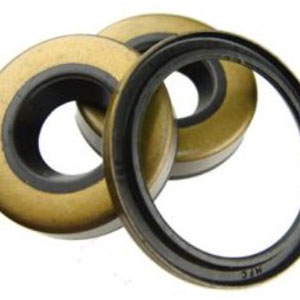
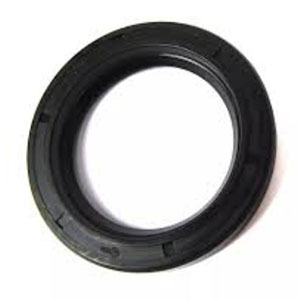
Elastomeric seal with multiple lips pressed into knuckle, primary contamination barrier.
Custom Wheel Bearing Kits
Private label manufacturing for distributors and aftermarket brands. Customizable options: bearing grade (premium OE-equivalent or economy), component selection (full set including all seals, circlips, fasteners, gaskets, versus minimal hardware), grease type and quantity, packaging design, labeling, and batch traceability. Supported by IATF 16949 and batch traceability. Minimum order quantities apply. A custom wheel bearing kit allows distributors to create their own brand identity while ensuring OE-matched dimensions and reliable performance. DUHUI Bearing also offers semi-custom kits where only packaging and labeling are changed, keeping core components from premium lines.
Other Related Bearing Design
In addition to complete kits, DUHUI Bearing supplies individual wheel bearing configurations for applications where only the bearing element or hub needs replacement, or for facilities that perform in-house kit assembly.
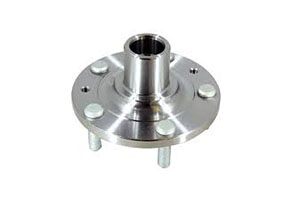
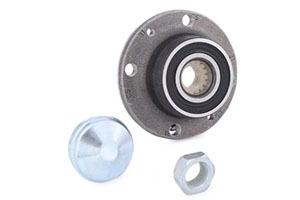
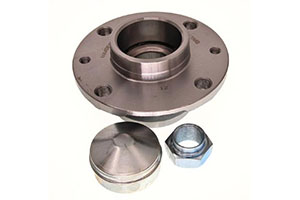
Hub flange only, without any bearing pressed in. Supplied with wheel studs installed. Used for facilities that press their own bearings into flanges or for vehicles where the bearing is serviced separately from the flange. Common in heavy-duty truck and trailer applications, as well as for custom performance builds where aftermarket bearings are used with OE flanges. Also used in some industrial machinery and agricultural equipment applications.
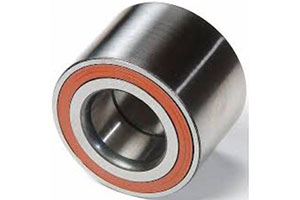
Double-row ball bearing or tapered roller bearing designed to be pressed into the steering knuckle or rear axle carrier. Sold as a separate component without seals, circlip, or axle nut. Includes integrated ABS encoder ring on the inner seal. Suitable for repair facilities that maintain their own seal and fastener inventory. Common on older vehicle platforms (pre-2005) and some commercial applications where separate component sourcing is preferred for cost or availability reasons. Widely used on vehicles such as VW Golf IV, Ford Focus MK1, and Honda Civic early models.
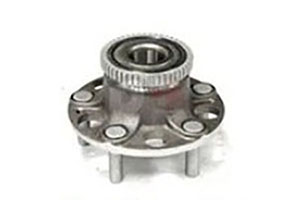
Pre-assembled bolt-on hub unit combining the flange and bearing. No press required for installation. Supplied without mounting bolts or axle nut. Sold as the bare hub unit for applications where fasteners are sourced separately or reused (not recommended for axle nuts but offered for specific customer requirements). Ideal for shops that have bulk fasteners or prefer to source bolts locally. Widely used on Asian and European passenger cars from the 2000s to mid-2010s, including Toyota Camry, Honda Accord, VW Passat, and BMW 3 Series.
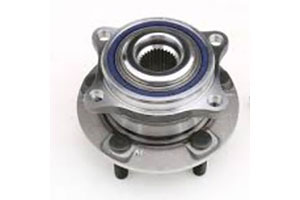
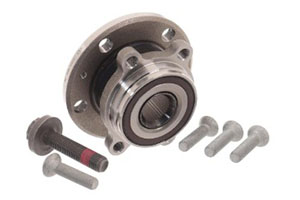
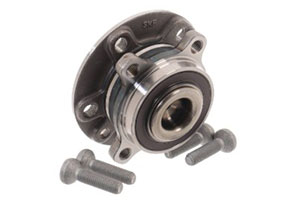
Advanced compact hub unit with integrated flange, bearing, and knuckle interface. Reduced component count and weight. Supplied as the complete assembly without additional fasteners. For use in vehicles where factory torque-to-yield bolts are available separately. Standard on many 2010-and-newer vehicles (VW MQB, Volvo SPA, Mercedes MFA platforms), offering improved rigidity, lower unsprung mass, and better ABS signal accuracy. Common on VW Golf VII, Audi A3, Volvo XC60, and Mercedes C-Class W205.
Wheel Bearing Applications
Passenger Cars (Sedans, Hatchbacks, Wagons) – Front and rear wheel bearings for VW MQB/PQ35/PQ46, Toyota MC/TNGA, Honda Global Small, Hyundai-Kia, BMW 3/5, Mercedes C/E, Ford C1, and major Chinese domestic platforms including Geely, BYD, Chery, and GAC.

Heavy-duty wheel bearing kits for SUVs with all-wheel drive or four-wheel drive systems. Higher load capacity, reinforced seals with additional dirt excluder lips, and increased roller count. Common models: Toyota RAV4, Honda CR-V, Ford Kuga, BMW X5, Mercedes GLE.
Wheel bearing kits for vans, pickups, and light commercial vehicles up to 3.5 tons GVW. Tapered roller bearing designs with higher load ratings. Applications include Ford Transit, Mercedes Sprinter, VW Crafter, Toyota Hilux, Ford Ranger.
Trailer wheel bearing kits for single-axle and tandem-axle utility, boat, and cargo trailers. Includes tapered roller bearing sets, grease seals, dust caps, and cotter pins. Common sizes: L68149/L44649, LM11949/LM11910, 30205/30206.
Selected heavy-duty kits for tractors, harvesters, and off-road machinery that use modified passenger vehicle bearing designs. Consult application guide for specific compatibility.

For select medium-duty commercial vehicles (Class 4-6), DUHUI offers larger tapered roller bearing kits with extended life grease, heavy-duty axle nuts, and double-lipped seals.
Wheel Bearing Comparison Guides
Technical comparison articles help customers understand product differences and select correctly. The following articles are available on our website with detailed specifications and application data.
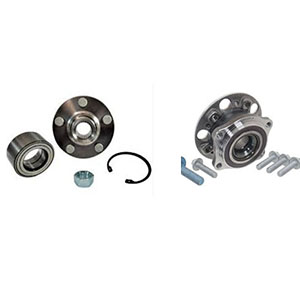
How to visually identify whether your vehicle uses a pressed-in Gen 1 bearing or a bolt-on Gen 2/Gen 3 hub assembly. Includes application tables by vehicle make and model year, tool requirements (hydraulic press vs. hand tools), labor time comparisons (press: 45-60 minutes; bolt-on: 20-30 minutes), and common interchange mistakes. Also covers ABS encoder compatibility and torque specifications for each type. Links to individual product series pages.
For more details, please read “Pressed Wheel Bearing Kit vs. Bolt-On Hub Assembly ”.
Comparative analysis of total repair cost when purchasing a complete wheel bearing kit versus sourcing a bare bearing plus separate seals, circlip, and axle nut. Includes real-world part pricing examples. Also discusses warranty claim rates (kits: 0.5-1%; bare bearing with reused parts: 5-8%), shop comeback statistics, and labor efficiency gains (rework labor saved). Demonstrates that kits are 15-25% less expensive when all required components are considered, plus reduced risk of second failure.
For more details, please read “Complete Wheel Bearing Kit vs. Replacing Only the Bearing”.
Recommended Wheel Bearing Kits
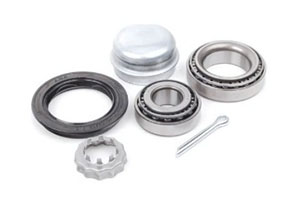
VKBA1302 Front Wheel Bearing Kit for VW Group MQB Platform. Double-row angular contact ball bearing, 72mm OD × 37mm ID × 37mm width. Kit includes bearing, inner/outer seals, circlip, axle nut. Crosses to VW OE 1K0407625. Fits VW Golf VII, Jetta VII, Passat B8, Skoda Octavia III, Seat Leon III.
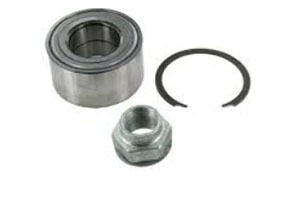
Wheel Bearing Kits – Complete Aftermarket Guide to Selection, Installation, and Service Life
You’re replacing a worn wheel bearing. Should you buy just the bearing itself, or a complete wheel bearing kit? Many DIY mechanics and even some professional shops have asked this. The short answer: a full kit is the only reliable choice. This guide explains why, how to pick the correct kit for your vehicle (Gen 1, 2, or 3), how to install it step by step, and what quality looks like. You’ll also learn the most common mistakes that ruin a new bearing – and how to avoid them.
Why a Complete Wheel Bearing Kit Is Required – Never Replace Only the Bearing
Some suppliers or inexperienced technicians consider replacing only the bearing element without new seals, circlips, or an axle nut. This practice leads to premature failure and is highly discouraged. A wheel bearing supports the entire vehicle weight at each corner while allowing smooth rotation. When it fails, the surrounding components are equally critical:
- Seals – They lose elasticity and sealing ability after removal. Without new seals, contamination will destroy the new bearing within weeks.
- Circlips – They may have lost retaining tension over time. A reused circlip can allow bearing movement inside the knuckle, causing noise and rapid failure.
- Axle nuts – Most modern vehicles use torque‑to‑yield fasteners that stretch permanently during initial tightening. A reused axle nut will not maintain correct preload, leading to bearing play or seizure.
A complete wheel bearing kit includes all these components in one package. Never install a bare bearing without the matching seals, circlip, and axle nut.
Three Bearing Architectures – Each Requires a Specific Wheel Bearing Kit
Modern passenger vehicles, SUVs, and light commercial vehicles use three primary bearing architectures. Each requires a distinct wheel bearing kit configuration.
- Generation 1 (Gen 1) – pressed‑in bearings
Pressed into the steering knuckle with a separate hub flange. The correct kit includes: a double‑row ball bearing or tapered roller bearing, two contact seals, a circlip, and an axle nut. - Generation 2 (Gen 2) – bolt‑on hub units
Bearing and hub flange are integrated as one assembly. It bolts directly to the knuckle – no press required. The correct kit includes: the complete hub unit with pre‑installed bearing, new mounting bolts (on many vehicles), and a new axle nut. - Generation 3 (Gen 3) – integrated units
Further integration with the knuckle mounting interface for reduced weight. The correct kit includes: the complete assembly with all installation fasteners.
Always purchase the complete wheel bearing kit designed for your vehicle architecture. Do not attempt to mix components from different generations or reuse old parts.
How to Identify the Correct Wheel Bearing Kit for Your Vehicle
Selecting the correct kit requires accurate vehicle identification. Use one of these two reliable methods:
- OE part number lookup – Find the original equipment part number printed on your old bearing or its packaging. Cross‑reference that number to aftermarket catalogues from SKF, NTN, Timken, FAG, or DUHUI.
- VIN lookup – Use your vehicle’s 17‑character VIN through a parts database. This is especially useful when the old bearing has no readable markings or the part number is worn off.
You will also need to confirm the bearing generation (Gen 1, 2, or 3). Matching the wrong kit type to your vehicle will prevent installation or cause immediate damage. Always confirm before purchasing.
Quality Indicators of a Premium Wheel Bearing Kit
Quality wheel bearing kits are manufactured to OE‑equivalent dimensions and tolerances. When evaluating a kit, check for the following:
- Bearing races – Ground from high‑carbon chrome steel with hardness 58‑62 HRC. Surfaces should be smooth with no visible grinding marks or pitting.
- Rolling elements – Precision‑matched and heat‑treated. They should roll smoothly without roughness.
- Seals – Multiple contact lips with spring‑loaded geometry. The rubber should be flexible, not brittle, and the lip should be even all around.
- Grease – Pre‑applied extreme‑pressure formula rated for a temperature range of -30°C to 120°C (-22°F to 248°F). No dry spots or excess leakage in the package.
- Included hardware – A new circlip, a new axle nut, and any required mounting bolts or washers. All should be present and undamaged.
- Traceability – Packaging with a batch number or traceability code, and IATF 16949 or ISO 9001 certification documentation.
Avoid kits with no identifiable brand, visible damage to races or rolling elements, missing components, or packaging that looks tampered with. Each DUHUI wheel bearing kit, for example, undergoes dimensional verification, seal integrity checks, and grease fill validation before packaging – this is the level of quality you should look for from any reputable manufacturer.
Step‑by‑Step Installation – Gen 1 Pressed‑In Wheel Bearing Kit
Proper installation doubles the life of your wheel bearing kit. For Gen 1 pressed‑in bearings, follow this sequence exactly. A hydraulic press is required – never use a hammer.
- Remove the hub flange using a hydraulic press or a dedicated puller tool. Do not hammer it out.
- Clean the knuckle bore thoroughly – remove all rust, debris, and old seal remnants. The bore must be perfectly clean and smooth.
- Press the new bearing from the kit into the knuckle. Apply force only to the outer race. Pressing on the inner race will damage the bearing.
- Seat the bearing fully until it reaches the circlip groove. Then install the new circlip supplied in the kit. Ensure it snaps fully into the groove.
- Press the hub flange into the bearing inner race. Apply force only to the inner race. Never press through the rolling elements or apply force to both races simultaneously.
- Install the new seals supplied in the kit. Apply a light coat of the included grease (or compatible extreme‑pressure grease) on the sealing lips.
- Thread on the new axle nut supplied in the kit. Tighten to the manufacturer’s torque specification using a calibrated torque wrench. Discard the old nut – it cannot be reused.
Torque guidance: Most passenger car axle nuts require 180‑350 Nm (133‑258 lb‑ft). Some European vehicles use a torque‑to‑angle method, for example 150 Nm + 90°. Always consult vehicle‑specific service data. Threads must be clean and dry – no grease or anti‑seize.
Step‑by‑Step Installation – Gen 2 and Gen 3 Bolt‑On Hub Kits
For bolt‑on hub units (Gen 2 and Gen 3), the process is simpler but still requires precision and the correct torque values.
- Remove the brake caliper (hang it out of the way without stressing the brake hose), remove the brake disc, and remove the old axle nut.
- Remove the mounting bolts that hold the hub unit to the knuckle. Tap out the old hub unit from behind using a soft drift if necessary.
- Clean the knuckle mounting surface thoroughly. Any corrosion, dirt, or old gasket material will cause misalignment.
- Install the new hub unit from the kit. Ensure it seats flush against the knuckle with no gaps.
- If the kit includes new mounting bolts, use them. Tighten the bolts in a star pattern to the manufacturer’s torque specification.
- Install the new axle nut (included in the kit) and tighten to specification. Again, threads must be clean and dry.
Common Mistakes That Ruin a Wheel Bearing Kit – And How to Avoid Them
Even a premium wheel bearing kit will fail early if these errors are made. Here are the most frequent mistakes observed in professional and DIY repairs:
- Reusing the old axle nut instead of the new one in the kit – This is the number one error. Torque‑to‑yield nuts stretch once and lose clamping force if reused. Always discard the old nut and install the new nut supplied.
- Reusing old seals or circlips – Never. The kit provides fresh seals and a new circlip for a reason. Old seals leak; old circlips lose tension.
- Applying grease or anti‑seize to threads – This changes the friction coefficient and leads to incorrect preload even if you use a torque wrench. Threads must be clean and completely dry.
- Pressing on the wrong bearing race – For Gen 1 bearings, always press on the outer race when installing into the knuckle, and on the inner race when pressing in the hub flange. Pressing on the wrong race transmits force through the rolling elements, causing brinelling (permanent dents).
- Using a hammer instead of a hydraulic press – Never acceptable for pressed bearings (Gen 1). Impact loads cause invisible cracks and spalling that will fail within months.
- Forgetting to clean the knuckle bore or mounting surface – Any debris causes misalignment. The bearing will not seat evenly, leading to premature wear and noise.
When to Replace – Preventive and Reactive Maintenance Using Kits
A properly installed wheel bearing kit typically lasts 100,000‑150,000 miles (160,000‑240,000 km) under normal conditions. Factors that shorten life include rough roads, frequent water crossings, road salt exposure, oversized wheels and tires, aggressive driving, and heavy loading (e.g., towing).
If you operate under harsh conditions, consider preventive replacement at 80,000‑100,000 miles (130,000‑160,000 km). When symptoms appear, replace immediately – do not wait. Common symptoms include:
- Humming, growling, or rumbling noise that changes with vehicle speed or steering angle
- Vibration in the steering wheel, floorpan, or seat
- Noticeable wheel play when the car is lifted (check by gripping the wheel at 12 and 6 o’clock and rocking)
Driving with a failed bearing damages the hub flange, spindle, or knuckle. In extreme cases, it can lead to wheel separation. Always replace with a new wheel bearing kit – never a bare bearing.
Why the Aftermarket Prefers Complete Wheel Bearing Kits
Professional repair shops, fleet maintenance facilities, and DIY mechanics prefer complete wheel bearing kits for several practical reasons:
- Reduce procurement complexity – One part number, one order, one box. No chasing missing seals or nuts mid‑job.
- Lower the risk of installation errors – All correct parts are included. The technician doesn’t have to decide which seal or circlip to reuse.
- Provide full component traceability – Easier warranty claims when every component comes from the same kit with a single batch number.
- Save labor time – No mid‑job trips to a parts store for a forgotten axle nut or seal. The job gets finished in the planned time.
For distributors, stocking wheel bearing kits instead of loose bearings improves inventory turnover and reduces line items. Manufacturers like DUHUI Bearing produce wheel bearing kits under IATF 16949 quality management, covering popular vehicle platforms from Volkswagen, Toyota, Honda, BMW, Mercedes‑Benz, Ford, Hyundai, Nissan, and major Chinese domestic brands. This level of coverage means most repair shops can source a complete kit for the majority of vehicles they see.
Conclusion – Always Choose a Complete Wheel Bearing Kit
A complete wheel bearing kit gives you a new bearing, fresh seals, a new circlip, and a new axle nut (plus any required bolts) in one package. This is the only correct way to repair a wheel end. Here are the key takeaways for your next repair:
- Never reuse seals, circlips, or axle nuts – they are single‑use components.
- Match the kit generation (Gen 1, 2, or 3) to your vehicle architecture. Mismatched kits will not fit.
- Look for quality indicators: smooth races (58‑62 HRC steel), flexible multi‑lip seals, proper grease fill (-30°C to 120°C rating), and traceable packaging.
- Follow proper installation procedures – use a press for Gen 1, torque fasteners correctly, keep threads clean and dry, and never hammer a bearing into place.
- Replace at the first sign of bearing failure (noise, vibration, or play). For harsh conditions, consider preventive replacement at 80‑100k miles.
Whether you’re a professional shop, a fleet manager, or a DIY mechanic, buying a complete wheel bearing kit saves time, reduces comebacks, and delivers a safer, longer‑lasting repair. Next time you order a wheel bearing, make sure it’s a full kit – bearing, seals, circlip, axle nut, and any required fasteners. Discard every old part. This is not an upsell; it’s the industry standard for reliable wheel end repairs.
Always choose a complete wheel bearing kit for every wheel end repair. Never reuse old components.
A complete wheel bearing kit usually contains the bearing element (ball or tapered roller), one or two contact oil seals, a circlip (snap ring), and a new axle nut or drive shaft bolt. Some kits also include dust caps, mounting bolts, washers, split pins, O-rings, paper gaskets, shields, and pre-applied grease.
Complete kits reduce procurement costs by consolidating all required parts into a single purchase. Axle nuts, seals, and circlips are single-use. Purchasing separately typically costs 15-25% more. Kits also save labor time and reduce inventory complexity.
No. Axle nuts are torque-to-yield fasteners that stretch during initial tightening. Reusing a stretched fastener cannot provide correct clamping force, leading to altered preload, noise, vibration, and premature bearing failure. Always use the new nut from the kit.
Pressed-in bearings (Gen 1) install with a hydraulic press and have a separate hub flange. Bolt-on hub units (Gen 2/3) attach with bolts and require no press. Remove the wheel; if you see bolts through the flange into the knuckle, it is bolt-on. If the flange appears pressed into the bearing, it is pressed-in.
Quality varies. Premium aftermarket brands manufacturing in IATF 16949 or ISO 9001 certified facilities to OE-equivalent specs can match OE reliability. Unbranded kits may use lower-grade steel or poor seals. Check for documented quality certifications.
OE-quality wheel bearings typically last 100,000 to 150,000 miles (160,000-240,000 km) under normal driving. Service life is reduced by rough roads, water exposure, heavy loading, oversized wheels, aggressive driving, and road salt.
Symptoms include humming, growling, or rumbling noise that changes with speed and may change when turning. Vibration through steering wheel, seat, or floor pan. Excessive wheel play (rocking at 12 and 6 o’clock). Uneven tire wear or ABS warning lights.
Pressed-in Gen 1 bearings require a hydraulic press – not for DIY. Bolt-on Gen 2/3 hub units can be installed by experienced DIY mechanics using basic hand tools, a calibrated torque wrench, and vehicle-specific instructions.
orque varies by vehicle. Typical passenger car axle nuts range 180-350 Nm. Some European applications use torque-to-angle (e.g., 150 Nm + 90°). Always consult vehicle service data. Use a calibrated torque wrench and never reuse fasteners.
Yes. DUHUI Bearing manufactures private label wheel bearing kits for distributors, retail chains, and brand owners. Customization includes bearing grade, component selection, grease, packaging, labeling, and traceability. Contact sales with part numbers and volume.
Post-replacement noise can result from: reused axle nut (incorrect preload), contamination during installation, incorrect torque, misaligned bearing, damaged seals, or a damaged hub flange/knuckle bore. Also check other bearings – multiple may fail at similar mileage.
A wheel bearing kit typically refers to components for pressed-in Gen 1 bearings (bearing, seals, circlip, axle nut). A wheel hub repair kit usually refers to bolt-on Gen 2/3 assemblies where flange and bearing are pre-assembled as one cartridge. DUHUI offers both.

