
Structural Features
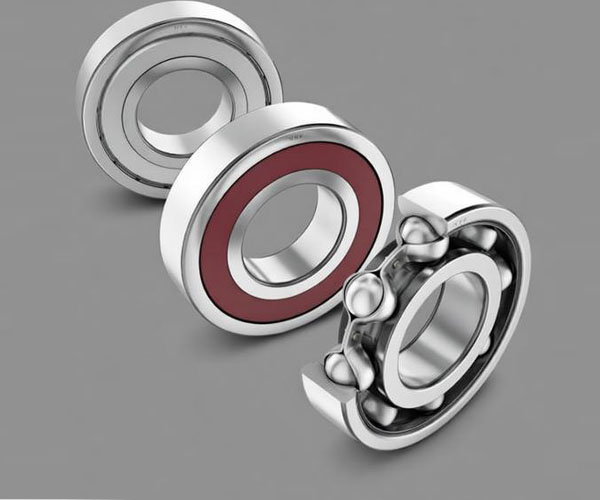
Deep groove ball bearings are available in single‑row and double‑row configurations.
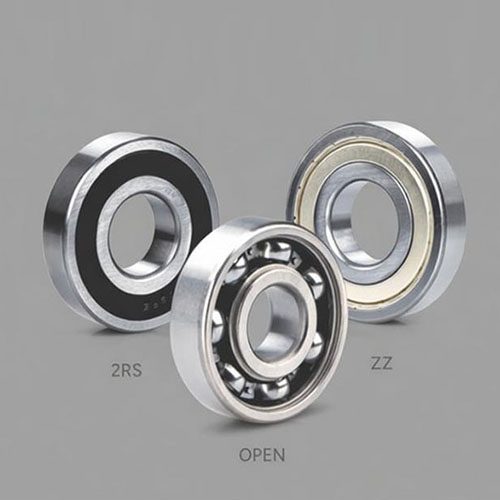
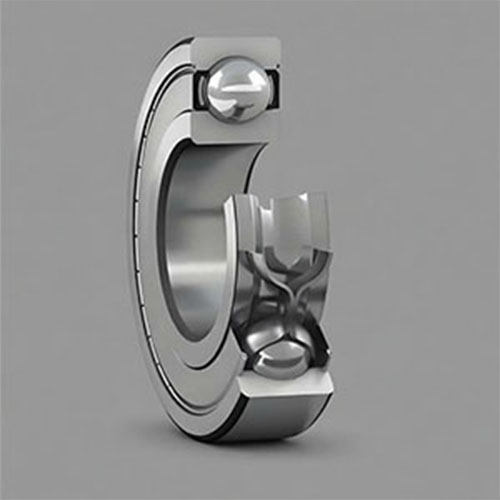
Raceway depth is optimised to support radial and bidirectional axial loads.Ball spacing is precisely controlled for even load distribution and reduced internal stress.Sealing options include open, metal shields (ZZ) for low‑friction particle protection, and rubber seals (2RS) for positive contaminant exclusion in wet or dusty environments.
Design Features
- High load capacity comes from deep raceways and chrome steel rings.
- Durability is enhanced by heat treatment and controlled clearances (CN, C3, C4).
- Self‑lubricating design uses factory‑filled grease for maintenance‑free operation.
- Sealing choices: non‑contact shields (low torque) or contact seals (maximum protection).
- Double‑row A‑series deep groove ball bearings have no filling slot and deliver 1.62× radial capacity of single‑row.
Benefits & Advantages
Ability to handle heavy radial and axial loads efficiently
Deep raceway geometry of deep groove ball bearings provides a large contact angle between balls and raceways, allowing the bearing to support significant radial forces while simultaneously accommodating bidirectional axial loads. Double‑row deep groove ball bearings deliver substantially higher load ratings within the same bore diameter, making them suitable for applications where a single‑row bearing would be undersized.
Corrosion resistance and overall durability
Standard deep groove ball bearings are manufactured from high‑carbon chromium bearing steel (GCr15) for excellent rolling contact fatigue resistance. For corrosive environments, stainless steel variants (AISI 440C) are available. Proper sealing (ZZ or 2RS) extends service life in humid, contaminated, or chemically exposed conditions.
Low friction, which reduces wear and improves performance
Precision‑honed raceways and Grade 5 or Grade 10 balls result in low rolling resistance and minimal heat generation. This translates to reduced energy consumption, lower operating temperatures, and extended grease life. Low friction also enables high‑speed operation — certain 6000 series deep groove ball bearings can reach limiting speeds above 25,000 rpm with proper lubrication.
Highly versatile designs that allow use in many applications
Deep groove ball bearings are produced in bore sizes from 3 mm to over 100 mm, multiple closure types, internal clearances (C2, CN, C3, C4), and precision grades (P0 through P5). Extra‑thin 6800 and 6900 series serve compact devices; light 6000 series suit small motors; medium 6200 series cover general industrial machinery; heavy 6300 and 6400 series handle demanding loads.
Ability to maintain contaminant‑free in a sterile environment
Sealed deep groove ball bearings (2RS) feature contact rubber seals that prevent particle ingress, moisture, and biological contaminants. Stainless steel variants combined with food‑grade grease and dual‑lip seals are suitable for medical devices, food processing equipment, and pharmaceutical manufacturing where sterility is required.
Bearing Types and Series
Overview of single-row and double-row types, including series breakdown, bore range, load characteristics, and applications.
- Bearing Types
- Single‑row Series
- Double‑row Series
Bearing Types
Deep groove ball bearings are divided into single-row and double-row configurations. Single-row is the industry standard for high-speed, moderate-load applications. Double-row provides higher radial capacity within the same bore size, suitable for heavier loads where space is limited.
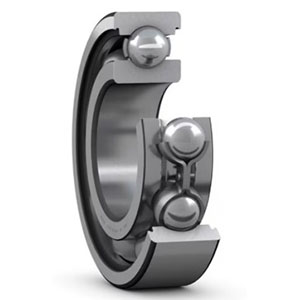
The most common type. Non‑separable, suitable for high speeds. Supports radial and bidirectional axial loads. Available in open, shielded (ZZ), and sealed (2RS) versions.
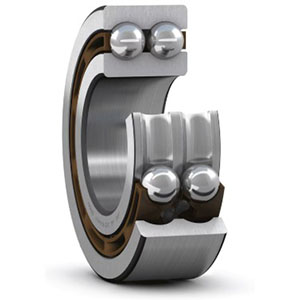
Provides higher radial load capacity than a single‑row bearing with the same bore. Wider width. Used where single‑row load rating is insufficient but space does not permit a larger bore size.
Single‑row Series
Single-row deep groove ball bearings are classified by dimensional series (6000, 6200, 6300, 6400, 6800, 6900). Each series differs in cross-section, load capacity, and typical applications. Select based on required radial load, speed, and available space.
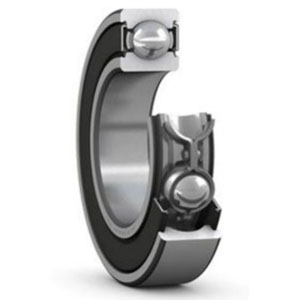
6000 series – Light metric deep groove ball bearings for small motors, fans, household appliances. Low friction, high speed, wide aftermarket availability.
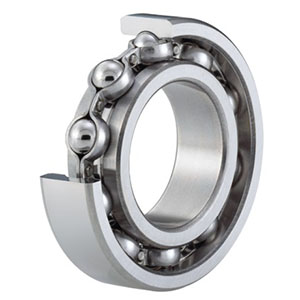
6200 series – Most versatile general‑purpose deep groove ball bearings for pumps, conveyors, gearboxes. Balanced radial load and speed. Standard in most equipment.
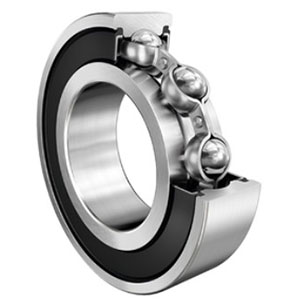
6300 series – Heavy‑duty deep groove ball bearings for industrial fans, compressors, agricultural machinery. Higher radial capacity and robust performance.
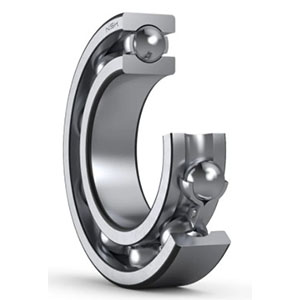
6800 series – Extra‑thin section deep groove ball bearings for drones, medical devices, office equipment. Space‑saving design, low torque, lightweight.
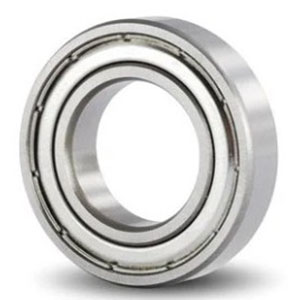
6900 series –Thin section deep groove ball bearings with better load capacity than 6800 series. For power tools, small gearboxes, compact industrial applications.
Double‑row Series
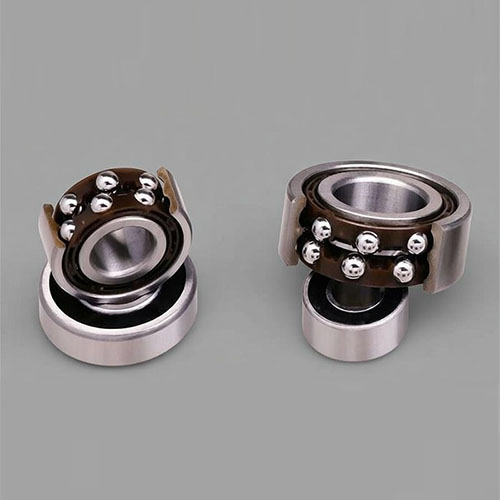
Double-row deep groove ball bearings are available in 4200, 4300, 4200A, and 4300A series. A-design variants have no filling slot, using two nylon cages for higher radial capacity. Select when single-row load rating is insufficient but bore size cannot increase.
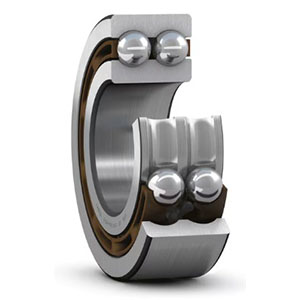
4200 series-Double row deep groove ball bearings with 10‑50 mm bore range. Higher radial capacity than single row. For applications where single‑row load is insufficient.
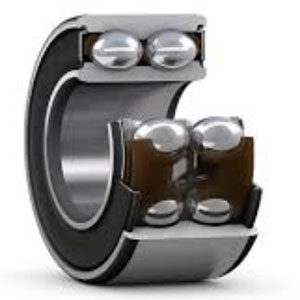
4300 series-Double row deep groove ball bearings with larger width and greater load capacity than 4200 series. For heavier industrial applications.
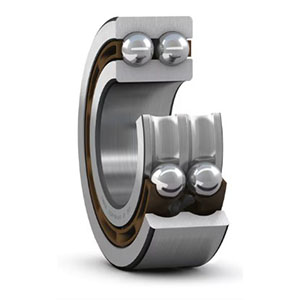
4200A series-Double row deep groove ball bearings with no filling slot design. Two reinforced nylon cages from both sides. 1.62× radial capacity of single row.
Applications
Deep groove ball bearings serve six major industry sectors: automotive, agriculture, industrial machinery, high-speed equipment, medical, and aerospace. Each application demands specific seal types, load ratings, and clearance configurations.

Alternators, EV traction motors, gearboxes, wheel end sensor units, cooling fans. Sealed deep groove ball bearings protect against road contamination.
Tractors, harvesters, balers, sprayers. Heavy‑duty 6300 series and double‑row deep groove ball bearings handle dust, mud, and variable seasonal loads.
Electric motors, pumps, fans, compressors, gearboxes, conveyor rollers. Single‑row 6200/6300 deep groove ball bearings are standard in IEC and NEMA motor frames.
CNC spindles, dental drills, centrifuges, turbochargers. Light series (6000, 6800) deep groove ball bearings with low‑friction grease achieve high limiting speeds.
MRI machines, surgical saws, dental handpieces, laboratory centrifuges. Low noise, low vibration, sterile‑compatible sealing.
Flight control actuators, landing gear mechanisms, auxiliary power units. Requires corrosion‑resistant steel, tight tolerances, lightweight cages.
Comparison Guides
Selecting the correct deep groove ball bearing configuration directly affects load capacity, speed, and service life. This section compares single‑row vs. double‑row deep groove ball bearings, followed by a comparison between deep groove ball bearings and angular contact ball bearings — two common but functionally distinct bearing types.
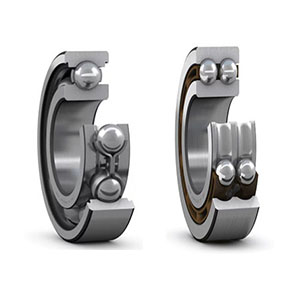
Single‑row deep groove ball bearings are the standard choice for moderate radial and bidirectional axial loads at high speeds. They are non‑separable and operate with low friction. Double‑row deep groove ball bearings offer significantly higher radial capacity than a single‑row bearing with the same bore diameter, at the cost of increased width. Use double‑row configurations when a single 6200 or 6300 series bearing provides insufficient load rating but housing space prevents a larger bore size. Double‑row designs also resist tilting moments more effectively.
For more details, please read“Single Row vs Double Row Ball Bearings: How to Choose the Right Type for Your Application”
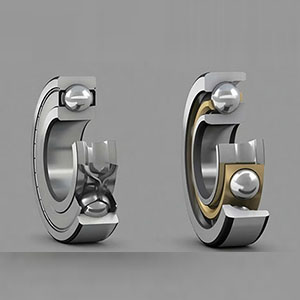
Deep groove ball bearings handle combined radial and moderate bidirectional axial loads without requiring pairing or preload. Their deep raceway geometry suits general rotating equipment, electric motors, and pumps. Angular contact ball bearings are designed for high unidirectional axial loads and are typically used in preloaded sets (back‑to‑back or face‑to‑face) to support bidirectional thrust. They provide higher axial rigidity and precision at high speeds but are more sensitive to misalignment. Choose deep groove ball bearings for general‑purpose, low‑maintenance applications; choose angular contact bearings for spindle or axial‑dominant applications.
For more details, please read“The Differences Between Deep Groove Ball Bearing and Angular Contact Ball Bearings”
Related Products
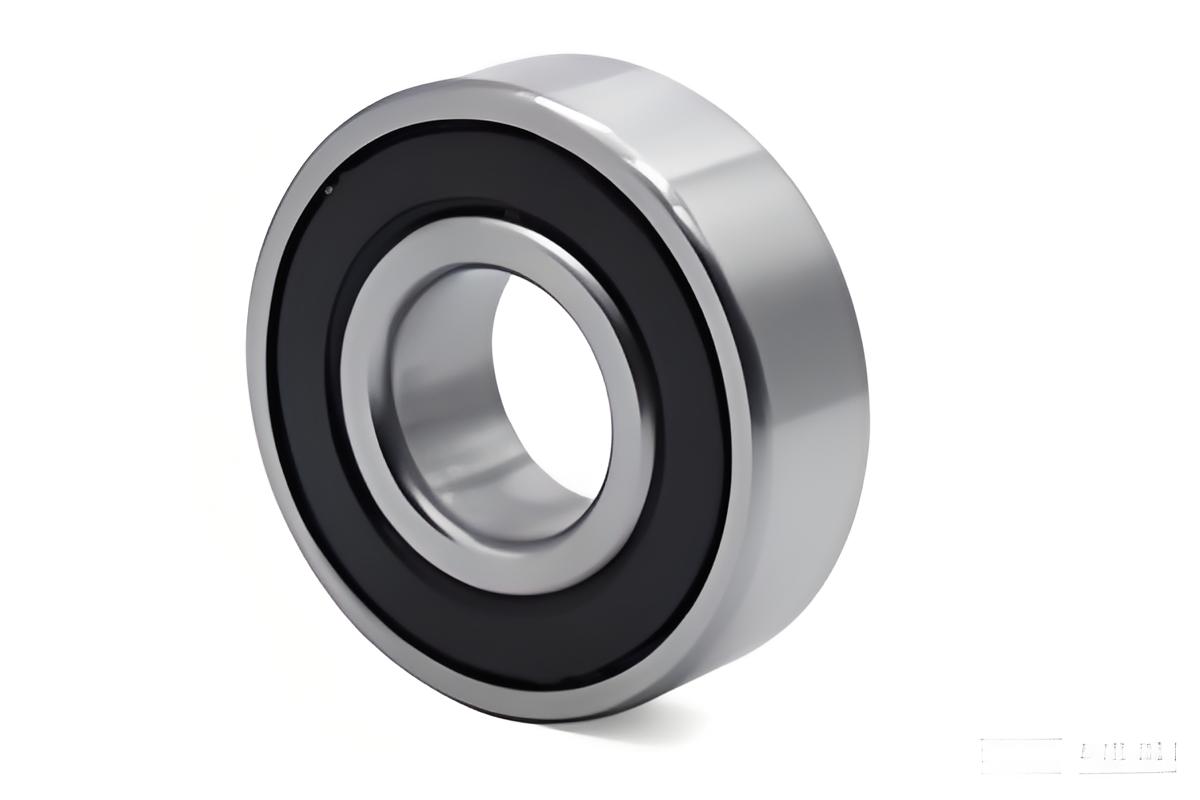
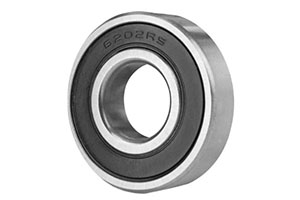
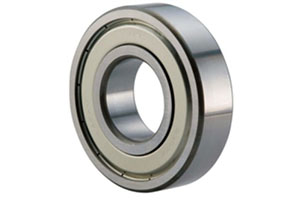
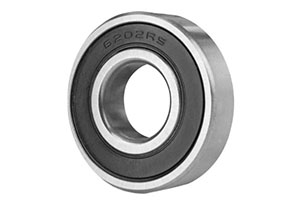
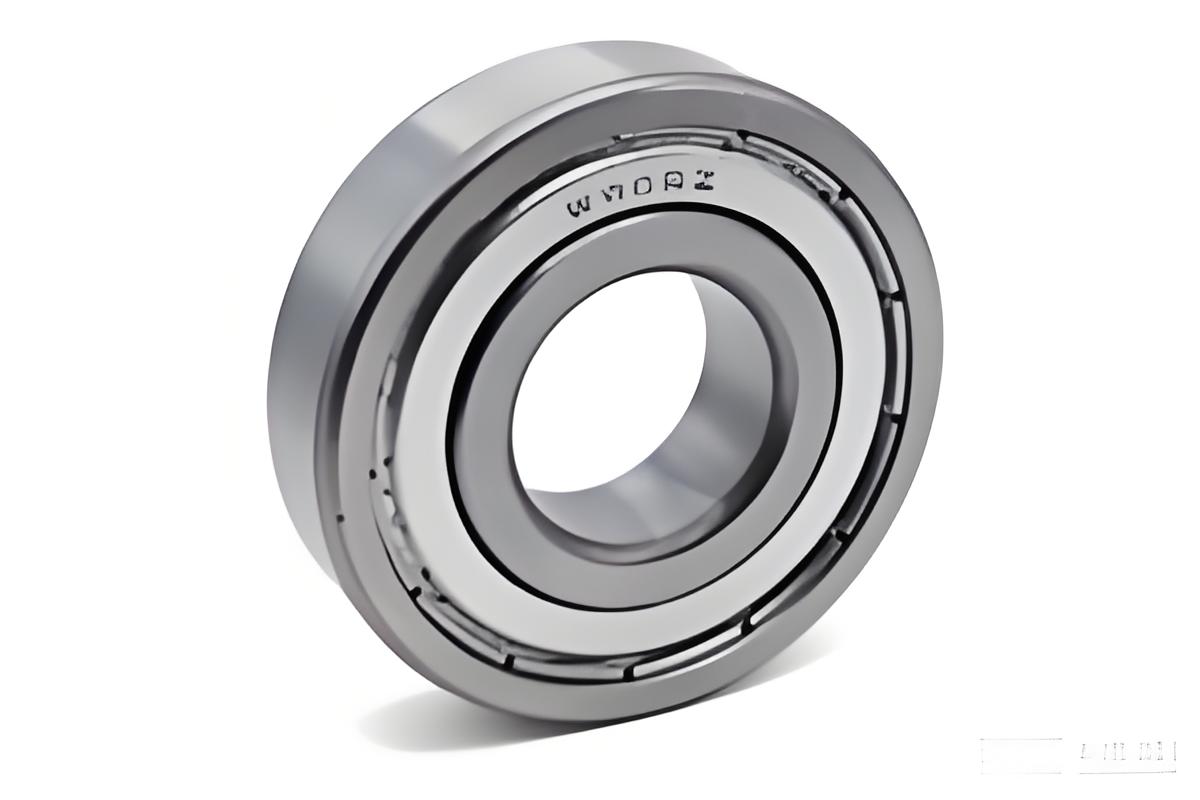
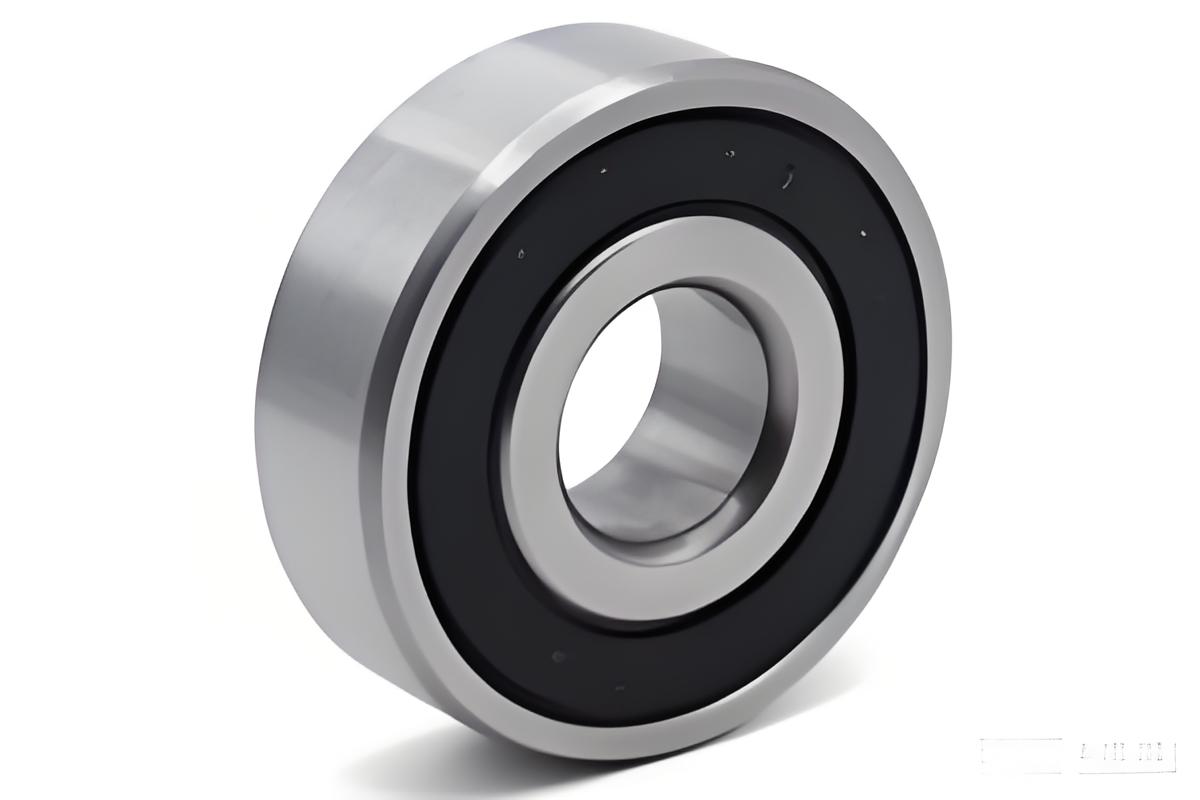
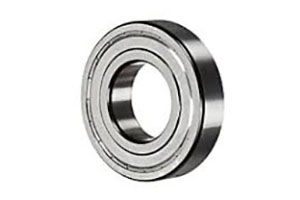
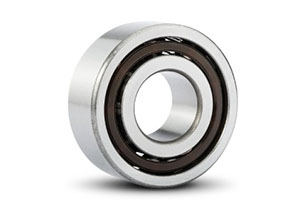
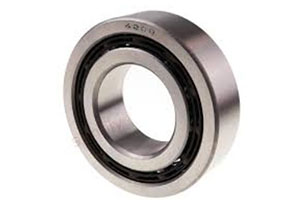
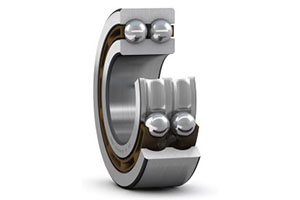
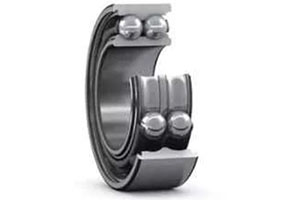
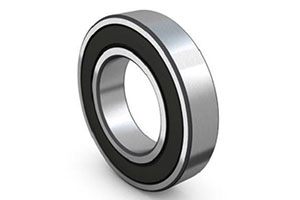
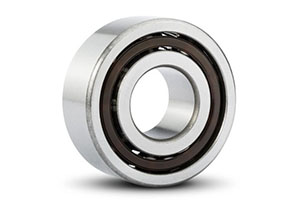
Related Products – Popular deep groove ball bearing models with compact dimensions and reliable sealing for industrial and automotive applications.
Bearing Failure Symptoms
Deep groove ball bearings fail due to fatigue, contamination, or improper mounting.
- Spalling (flaking) appears on raceways. It indicates subsurface fatigue after long service.
- Abrasive wear shows as a matte, grey surface. It results from particle contamination.
- Discoloration (brown to blue) means overheating. Often caused by insufficient clearance (CN instead of C3) or overload.
- Fretting corrosion produces reddish‑brown debris on ring faces. It comes from micro‑movement under vibration.
- Electric pitting (fluting) creates washboard patterns on raceways. Common in inverter‑driven motors. Use INSOCOAT or hybrid deep groove ball bearings to prevent this.
Early detection methods: vibration analysis, temperature monitoring, and lubricant particle counting. These reduce unplanned downtime.
Maintenance & Lubrication Tips
For open deep groove ball bearings: grease selection depends on temperature, speed, and environment.Lithium‑based greases work from -20°C to +120°C for general industrial use.Synthetic greases (polyurea or PAO) range from -50°C to +180°C.
Relubrication intervals follow the formula:
log₁₀(t) = 2.5×10⁻⁷ × (n×dₘ)⁻⁰·⁶ × (C/P)⁰·⁴
where t = hours, n = rpm, dₘ = pitch diameter (mm), C/P = dynamic load ratio.
For sealed deep groove ball bearings (ZZ or 2RS):Factory grease lasts the bearing’s lifetime under normal conditions. Do not relubricate.
Mounting tips:
Apply force only to the ring with interference fit. For shaft mounting, press on the inner ring face. Use induction heating (max 110°C for standard steel). Never apply force through balls or cage.
Storage: Keep bearings in original packaging. Store in a dry, vibration‑free environment to prevent corrosion or brinelling.
Our engineers can solve your problems
DUHUI Bearing’s engineering team provides application‑specific support for deep groove ball bearings.
Reduce maintenance costs
We analyse your load spectrum, contamination level, and duty cycle. Then we recommend optimal seal type (2RS vs. ZZ) and internal clearance (C3 vs. CN). Correct selection lowers total cost of ownership.
Efficiency improvement
Low‑friction deep groove ball bearings with Grade 5 balls reduce torque by 15–20%. For electric motors, this cuts energy consumption. Our team computes friction torque and selects grease for your speed range.
Adapt to harsh environments
We supply high‑temperature (to 350°C), stainless steel, and Solid Oil variants of deep groove ball bearings. Suitable for ovens, marine deck machinery, and food processing lines. We help choose material, seal, and lubrication for dusty, wet, or chemically aggressive conditions.
Reduction of noise and vibration
For medical devices and office equipment, we specify low‑noise deep groove ball bearings with controlled ball grade (Grade 5 or better). Polyamide cages (ATN9) reduce internal impact noise. V3 or V4 vibration standards available on request.
Match bore size to shaft diameter. Select series by load: 6000 light, 6200 medium, 6300 heavy, 6400 extra‑heavy. Choose seal type (ZZ, 2RS, or open) based on contamination. Consider clearance: C3 for interference fits or high temperature.
For more details, please read “How to choose the right deep groove ball bearing?“.
ZZ is a non‑contact metal shield. Low friction, protects against dry particles. 2RS is a contact rubber seal. Higher torque but superior water and dust exclusion. Use 2RS for wet or dirty environments.
For more details, please read “What is the difference between ZZ and 2RS seals?“.
Yes. They accept bidirectional axial loads up to approximately 50% of the static radial rating (varies by series). For pure axial or higher thrust capacity, consider angular contact ball bearings.
For more details, please read “Can deep groove ball bearings handle axial loads?“.
C3 indicates larger than normal radial internal clearance. Required when the outer ring is press‑fitted into a housing or operating temperature exceeds 70°C. Thermal expansion reduces clearance. Using CN (normal) clearance in such cases may cause overheating.
For more details, please read “Comprehensive guide to C3 bearings “.
Apply force only to the ring with interference fit. For shaft mounting, press on the inner ring face. Never apply force through balls or cage. Use induction heating for larger bearings.
For more details, please read “How to mount a deep groove ball bearing correctly?“.
Forged/ground rings, precision-ground balls, assembled with cage, lubricated. Multi-stage manufacturing with heat treatment, superfinishing, and quality inspection. Detailed process explained in our manufacturing guide.
For more details, please read “The Manufacturing Process of Ball Bearings“.