

Components and Materials
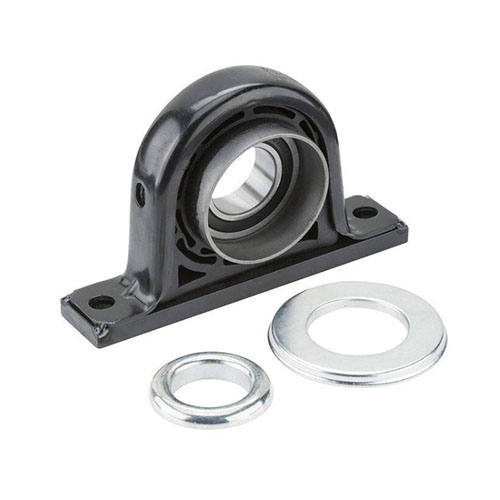
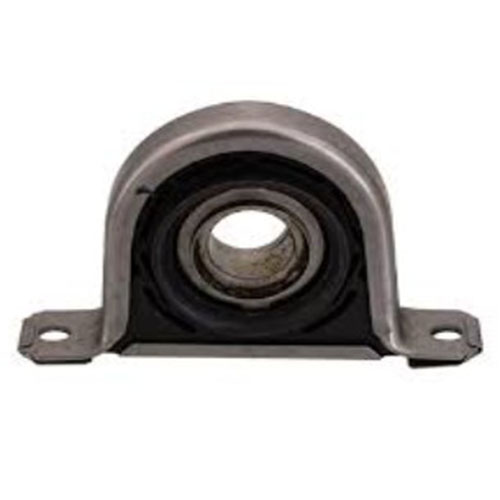
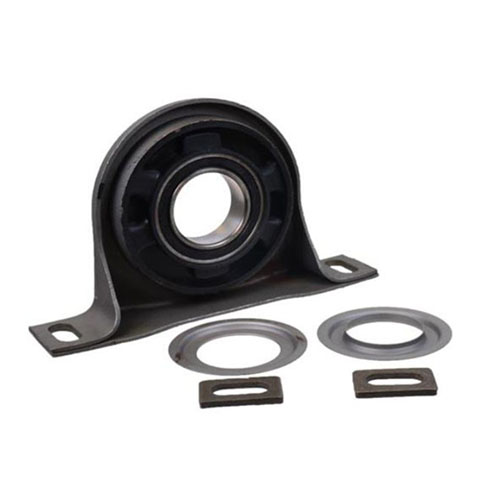
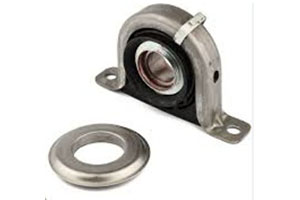
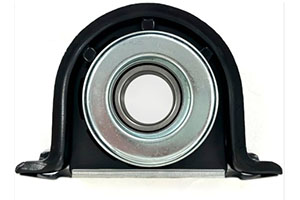
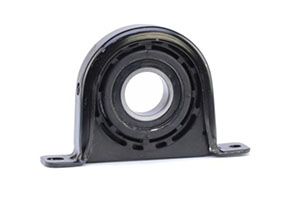
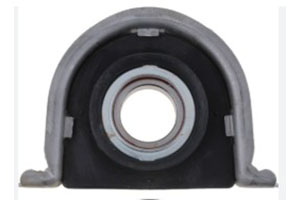
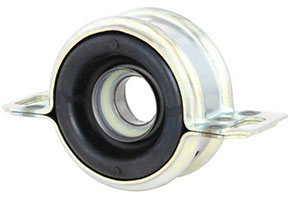
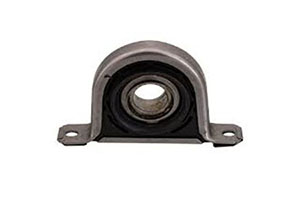
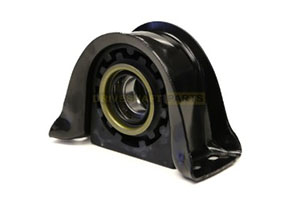
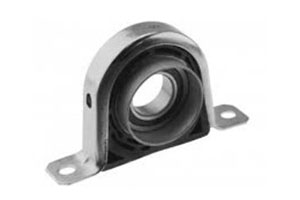
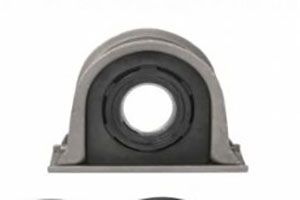
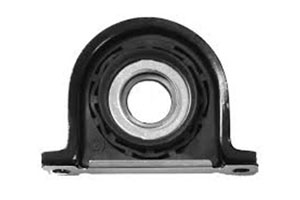
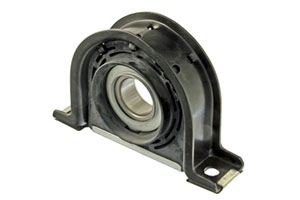
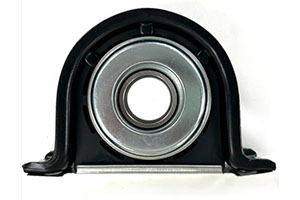
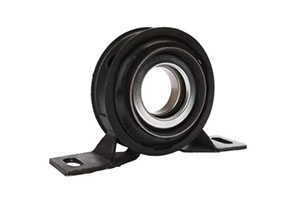
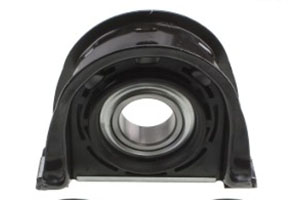
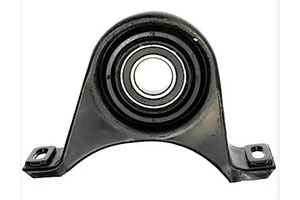
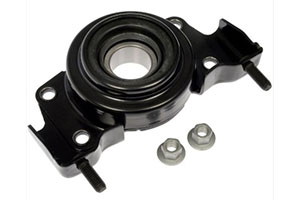
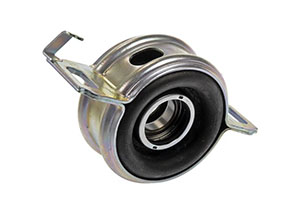
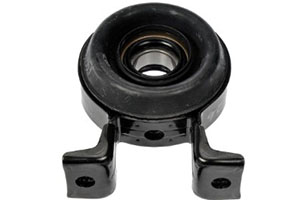
A center support bearing (carrier bearing) supports a split driveshaft at its midpoint. Three components:bearing insert (pre-greased ball/roller bearing for smooth rotation), rubber cushion (vibration dampening, shock absorption), housing frame (heavy-gauge steel). Mounts to vehicle chassis, maintains driveshaft alignment and absorbs driveline vibrations.
Key Features & Benefits
- Vibration Dampening – High-grade rubber cushion absorbs overloads, eliminates driveline shudder.
- Heavy-Duty Construction – Steel housing frame with premium rubber-to-metal bonding prevents separation.
- OEM Quality – CAD/CAM engineering meets or exceeds OE standards for exact fit.
- Sealed & Maintenance-Free – Pre-greased, pre-sealed bearing resists contamination.
- Cost-Effective – Replace only the bearing, not the entire driveshaft. Save 50%+.
Your Reliable Center Support Bearing Manufacturer
A failed center support bearing causes driveshaft vibration, clunking noises, and accelerated wear of U-joints or transmission output bushings. For fleet operators and repair shops, roadside failure means towing costs, lost revenue, and customer complaints. DUHUI is a China-based center support bearing manufacturer with over 20 years of in-house production experience. The factory covers 10,000+ m² and employs 120 skilled workers plus 7 technical engineers. Monthly stable capacity: 100,000 sets of center support bearings. All critical processes (stamping, rubber molding, assembly) are performed on-site.
Product Range – Over 2,400 Active Models and Growing
DUHUI’s product library contains over 2,400 active center support bearing models. The range covers Japanese (Toyota, Nissan, Honda, Mitsubishi, Isuzu), Korean (Hyundai, Kia), American (Ford, GM, Dodge), and European (Volkswagen, BMW, Mercedes-Benz, Renault) passenger cars, SUVs, and light commercial vehicles. Each model is verified for OE fitment – bolt hole spacing, bracket angle, flange height, and rubber durometer. 150–200 new models are added annually based on aftermarket demand.
Material Specifications – GCR15 Steel, HRC 58-62, and -40°C to +150°C Resistance
DUHUI uses vacuum-degassed GCR15 bearing steel for all ball bearings. Through-hardening achieves HRC 58-62 with uniform martensitic structure. Raceway roundness is controlled within 0.005 mm. Other components are specified as follows:
- Metal brackets: Reinforced cold-rolled steel (thickness 2.5–4.0 mm), zinc-plated, salt spray test ≥72 h no red rust.
- Rubber cushion pad: NBR/EPDM blend, Shore A hardness 60±5, stable from -40°C to +150°C.
- Bolts: Alloy steel grade 10.9, cold-forged, phosphate coated. Yield strength ≥940 MPa.
- Grease: Lithium-based high-temperature grease, NLGI grade 2, drop point ≥190°C.
Sealing and Vibration Control – Double-Lip Seal with 30% Peak Stress Reduction
A double-lip contact seal is used on both sides of the bearing. The inner lip retains grease; the outer lip blocks water, mud, and fine dust. Seals are made of NBR with a steel insert for rigidity. The annular rubber pad combined with a fixed bracket distributes radial and axial loads evenly – reducing peak stress by approximately 30% compared to single-point designs. The dynamic compensation feature maintains center support alignment during sudden acceleration, hard braking, or rough roads, reducing sliding friction and preventing premature raceway pitting.
Performance Comparison – Less Than 5% Variation vs. 20% from Competitors
DUHUI conducted a controlled in-house test: 10 randomly selected DUHUI center support bearings vs. 10 competitor bearings purchased from the aftermarket (same vehicle application). All units ran 1 million cycles at 3,000 rpm with alternating radial load.
| Metric | DUHUI | Competitor (average of 10) |
|---|---|---|
| Best performer (radial play increase) | ~5% better than competitor’s best | Baseline |
| Lowest performer (radial play increase) | ~15% better than competitor’s lowest | Baseline |
| Batch performance variation | <5% | Up to 20% |
This consistency translates directly to fewer comebacks and lower warranty costs for distributors and repair shops.
Certification, Customization, and Logistics – ISO 9001, 15-30 Days Lead Time
DUHUI operates under ISO 9001:2015 quality management principles. 100% dimensional inspection and random fatigue sampling are applied to every batch. Customization services include:
- Bracket hole position / shape modifications based on customer drawings
- Rubber hardness adjustment (Shore A 50–70) for different vibration isolation requirements
- Neutral packaging, color box, or customer-branded box (MOQ applies)
Lead time: 15–30 days FOB Shanghai for standard orders. Samples available within 7–10 days for existing tooling. Finished goods inventory of 60,000+ units is maintained for fast-moving models. For annual contracts, DUHUI offers safety stock and just-in-time shipment.
As a dedicated center support bearing manufacturer with over 2,400 existing models and a monthly output of 100,000 sets, DUHUI reduces your sourcing workload while delivering consistent quality. Send your target model list or OE reference numbers – a cross-reference and quotation will be provided within 24 hours.
Types and Series
Center support bearings are available in various configurations to meet different vehicle demands. Understanding types and aftermarket series helps you select the right bearing for your specific application.
- Deep Groove Ball Bearing Type
- Self-Aligning Bearing Type
- Heavy-Duty Roller Bearing Type
- Product Series
Deep Groove Ball Bearing Type
Most common for light-duty vehicles and passenger cars. Single-row ball construction handles radial and moderate axial loads. Low friction, high-speed capability, pre-lubricated and sealed. Ideal for sedans, crossovers, light trucks.
Self-Aligning Bearing Type
Designed where minor shaft misalignment is unavoidable. Spherical outer ring allows angular misalignment without binding. Compensates for chassis flex, manufacturing tolerances, and drivetrain movement. Popular in heavy-duty trucks and long-frame vehicles.
Heavy-Duty Roller Bearing Type
For commercial vehicles, Class 6-8 trucks, extreme-duty applications. Roller bearings distribute load over larger contact area, providing higher radial capacity. Larger size, heavier-gauge steel housings, designed for sustained high-torque demands.
Product Series
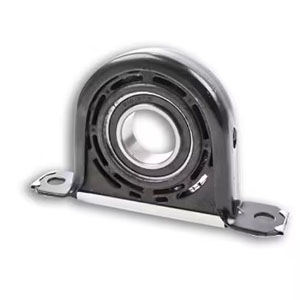
210 Series – Heavy Duty Truck Center Support Bearing – Dana/Spicer‑style 210 series bearing for medium/heavy trucks. Handles radial loads and minor misalignment on two‑piece driveshafts. Interchangeable with Timken, SKF, and National replacement parts. A top‑selling aftermarket bearing for Freightliner, Kenworth, and International.
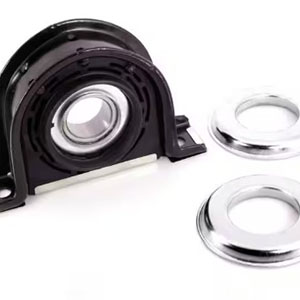
211 Series – Heavy Duty Truck Center Support Bearing (Light‑Duty) – Spicer‑compatible 211 series bearing for lighter torque applications in pickups and commercial vans. Shares mounting with 210 but lower weight. Aftermarket replacement bearing for Isuzu NPR and Toyota Tundra (2000‑2004). Reliable and cost‑effective.
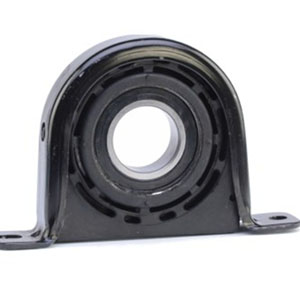
212 Series – Heavy Duty Truck Center Support Bearing (Ford Super Duty) – Reinforced 212 series bearing for Ford F‑250, F‑350 and Super Duty. Larger rubber cushion and heavy bracket absorb diesel vibrations. Direct‑fit replacement bearing for Ford numbers E4TZ‑4800‑A and 5C3Z‑4800‑BC. Essential stock for Ford truck aftermarket.
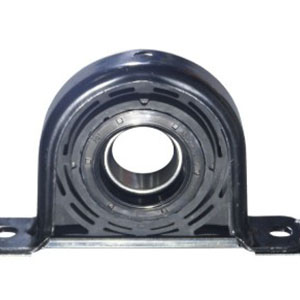
4253 Series – Iveco Daily Center Support Bearing (35mm Bore) – Iveco‑compatible 4253 series bearing for Daily vans/trucks with 35mm shaft. High‑quality rubber damping meets European standards. Aftermarket bearing cross‑references 42534452, 42535254, 42536526. Ideal for European commercial vehicle repairs.
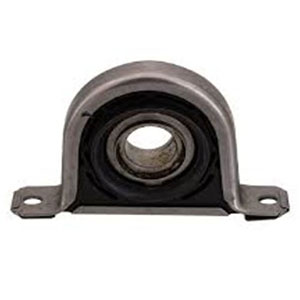
4254 Series – Iveco & Renault/Volvo Heavy Truck Bearing – Heavy‑duty 4254 series bearing for Iveco, Renault Kerax and Volvo trucks. Models 42541437 and 42541438 feature reinforced brackets and larger capacity. Replaces multiple OEM numbers, ensuring cross‑brand compatibility for European fleets.
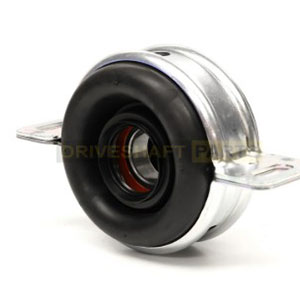
37230 Series – Toyota Center Support Bearing – Toyota‑compatible 37230 series bearing for Corolla, Hilux, Hiace, RAV4 and more. Vehicle‑specific design guarantees exact fit on original driveshaft. Aftermarket bearing widely available from SKF, Timken and NTN. A high‑demand part for Asian vehicle service.
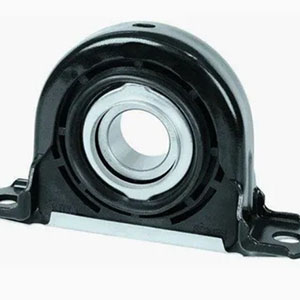
37235 Series – Hino / Toyota Commercial Vehicle Bearing – Hino‑compatible 37235 series bearing for Profia, Dutro, 300/500 trucks and Toyota commercial chassis. Heavy‑duty construction withstands axial/radial loads of medium‑duty driveshafts. Direct replacement bearing for Toyota 31380‑10380. Essential for Japanese commercial aftermarket.
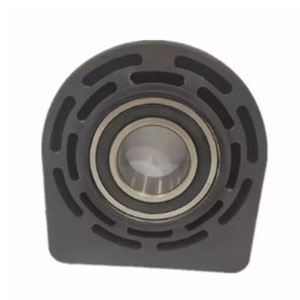
37510 Series – Nissan / UD Heavy Truck Center Support Bearing – Nissan‑compatible 37510 series bearing for UD (Nissan Diesel) heavy trucks. Models 37510‑90010 and 37510‑90060 fit RD80 chassis. Built for high mileage and harsh conditions. Aftermarket bearing from FAG and SKF. Critical for Japanese heavy truck maintenance.
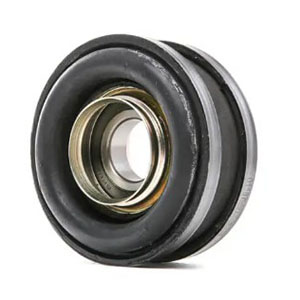
37521 Series – Nissan Pickup & SUV Center Support Bearing – Nissan‑compatible 37521 series bearing for D21 Hardbody, Navara, Patrol and Safari. Models 37521‑32G25 and 37521‑41L25 are direct‑fit replacements. Extra rubber cushioning for off‑road capable driveshafts. Popular bearing in global Nissan light truck aftermarket.
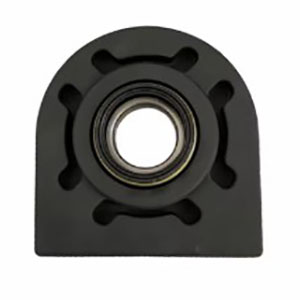
37590 Series – Nissan Bus & Heavy‑Duty Chassis Bearing – Nissan‑compatible 37590 series bearing for buses, Caravan vans and UD heavy chassis. Models 37590‑1060, 37590‑1180, 37590‑1182 feature larger core and robust bracket. Aftermarket bearing for high‑load, low‑speed operations. Ideal for commercial fleet maintenance.
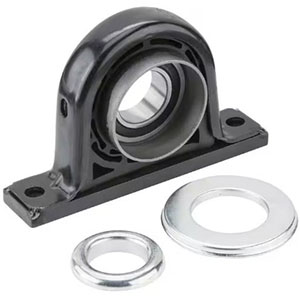
HB Series – Universal Center Support Bearing (National/Timken/SKF) – HB series is a universal aftermarket bearing line from National, Timken, and SKF. Prefixes like HB88508 and HB88512 directly cross to Dana/Spicer 210/212 series. Pre‑greased and sealed, this bearing is the most versatile stock item for any truck repair shop.
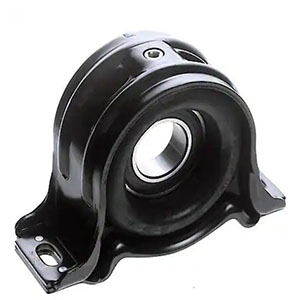
934 Series – Dorman OE Solutions Center Support Bearing – Dorman 934 series offers direct‑fit aftermarket bearings for American, Asian and European vehicles. Each model (e.g., 934‑035, 934‑401) matches original dimensions and materials. Replaces worn units without changing the whole driveshaft. Trusted by DIY installers and professionals.
Other Related Bearings
Beyond standard bearings, specialized variants exist for performance upgrades, severe duty, and universal fitment.
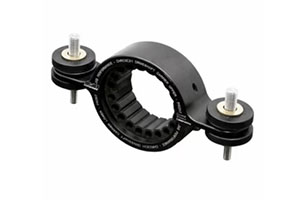
Performance Upgrade Series (JXB) – Upgraded carrier for BMW and performance cars. Solid construction eliminates factory rubber flex. Holds driveshaft firmly under all conditions. Engineered to never wear out.
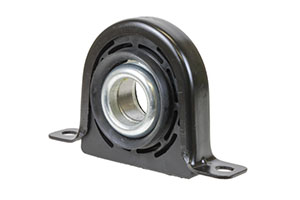
Commercial Truck Severe-Duty Series – Heavy-duty bearings with reinforced cold-rolled steel brackets. Engineered for Class 6-8 trucks, buses, and fleet vehicles. Enhanced rubber compounds for maximum vibration isolation under continuous high torque.
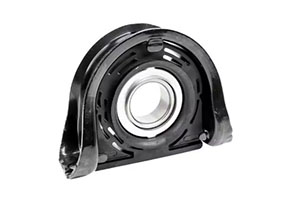
Universal Fit Series – Standardized dimensions that fit multiple applications. Simplifies inventory for repair shops and distributors. Professional verification of fitment recommended before purchase.
Center Support Bearing Applications
Center support bearings are essential across all vehicle categories with multi-piece driveshafts, from daily drivers to commercial fleets.

Light-Duty Trucks & SUVs – Ford F-Series, Chevrolet Silverado, Ram Trucks, Toyota Tacoma. Require bearings that handle towing loads and off-road shock absorption.
Passenger Cars – BMW 3/5 Series, Mercedes E/S-Class, Lexus GS/LS, Chrysler 300. Prioritize noise isolation and ride comfort while maintaining precise alignment.
Commercial Trucks & Vans – Freightliner, Kenworth, Peterbilt, Ford E-Series, Mercedes Sprinter. Heavy-gauge steel brackets and enhanced rubber for continuous high-torque operation.
Off-Road & 4×4 Vehicles – Jeep Wrangler, Toyota 4Runner, Land Rover, Nissan Patrol. Robust construction and sealed protection to withstand extreme angles, shock loads, and contamination.

Fleet & Municipal Vehicles – Police interceptors, ambulances, delivery trucks. Require extended service intervals and predictable replacement schedules to maximize uptime.
Technical Comparison Articles
Ball bearings and roller bearings are the two main internal designs. Understanding their differences helps you choose the right bearing for your vehicle’s load and speed demands.
Ball bearings offer low friction and high-speed capability, ideal for passenger cars and light trucks. Roller bearings provide superior radial load capacity for heavy-duty commercial vehicles. This comparison covers load ratings, speed limits, durability, and typical applications. Learn which design matches your driveline requirements and why substituting one for the other without engineering approval can lead to premature failure.
For more details, please read “Ball vs Roller Center Support Bearing”.
Selected Bearing Models
The following models are commonly requested in the aftermarket. DUHUI Bearing manufactures compatible units using OE specifications. Model numbers are provided for cross‑reference purposes only.
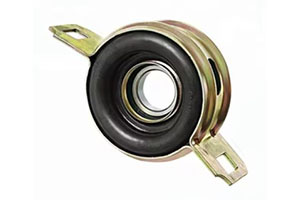
37230‑12050 – Toyota Corolla AE86/CE80 bearing (1983‑1987). Aftermarket replacement from SKF HB26. Essential for classic Corolla restoration.
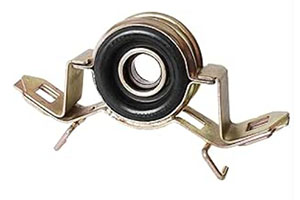
37230‑35080 – Toyota Hilux 2WD/4WD bearing (1988‑1997). OE number LN106, RN85. High demand aftermarket part for Asian pickups.
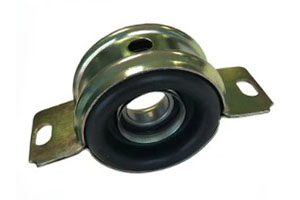
37230‑38010 – Toyota LiteAce/TownAce bearing (1970‑1981). 45mm bore. Aftermarket replacement for light commercial vans still on the road.
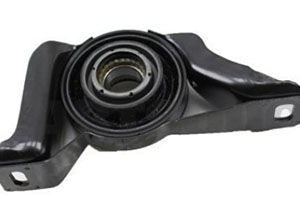
37230‑42010 – Toyota RAV4 bearing (1996‑2000). For AWD models with two‑piece driveshaft. Direct replacement for first‑generation RAV4.
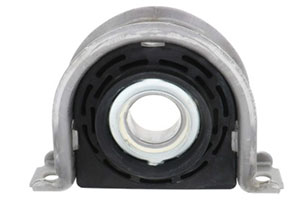

Center Support Bearing: Function, Failure Signs, Replacement Cost & Preload
Have you heard a clunking noise when pulling away from a stop? Or felt a vibration that comes and goes at highway speeds? The culprit might be a small but critical part under your vehicle: the center support bearing. Also called a carrier bearing, driveshaft support bearing, or hanger bearing, it plays a key role in rear‑wheel, four‑wheel, and all‑wheel drive vehicles with multi‑piece driveshafts. This guide explains how it works, how to spot failure early, what replacement typically costs, and why preload is the one step you cannot skip.
What Is a Center Support Bearing?
A center support bearing is an intermediate bearing assembly mounted along a two‑piece or three‑piece driveshaft. Long‑wheelbase vehicles – trucks, SUVs, vans, and many passenger cars – split the driveshaft into sections connected by U‑joints. The bearing mounts to the chassis or a crossmember at the driveshaft’s midpoint. Its job is to prevent sagging, reduce vibration, and keep everything aligned.
Here is what you will find inside a typical assembly:
- Bearing insert – A pre‑greased, pre‑sealed ball or roller bearing that supports the rotating shaft. It handles radial and moderate axial loads while allowing smooth rotation. Most inserts use chrome steel or case‑hardened steel with precision‑ground raceways.
- Rubber cushion – Made from high‑grade rubber with a specific hardness rating (Durometer). It dampens vibration and absorbs shocks from road conditions, acceleration, and braking. The rubber compound balances firm support with flexible isolation.
- Housing frame – Constructed from heavy‑gauge cold‑rolled steel. A bonding agent (like Chemlok®) keeps the rubber attached to the metal even under extreme temperatures and torque.
How Does It Work?
When torque travels from the transmission to the differential, the driveshaft rotates at high speeds – often above 3,000 RPM. The center support bearing keeps the shaft concentrically aligned, preventing whipping or wobbling. The rubber cushion absorbs torsional vibrations, engine torque changes, and road shocks. As you accelerate, brake, or hit a bump, the driveshaft moves both axially and radially. The bearing allows those controlled movements while keeping the shaft properly positioned.
Signs of a Failing Center Support Bearing
Unusual noises are usually the first clue. Listen for clunking, banging, or thudding from underneath the vehicle, especially when you start moving from a stop or shift gears. As the bearing worsens, you might hear a whining or humming that gets louder at higher speeds.
Vibration and shuddering are classic symptoms. A worn bearing cannot properly support the driveshaft, so the shaft flexes incorrectly. You will notice shaking during acceleration or at highway speeds. In bad cases, the vibration travels through the whole cabin.
Clunking when shifting happens when excessive driveshaft movement causes metal‑on‑metal contact. Ignoring it can lead to severe driveshaft damage, extra wear on the transmission and differential, and even drivetrain failure.
What Happens If the Bearing Breaks Completely?
You should not drive with a failed center support bearing. Once the bearing fully breaks, the driveshaft loses its middle support. The shaft can sag and hit other underbody parts, damaging both the driveshaft and the chassis. Misalignment puts extra stress on U‑joints, CV joints, transmission output shafts, and differential input pinions – all expensive components. Worse, an unsupported driveshaft spinning at high speed becomes severely unbalanced. It can whip violently, which is dangerous and could cause sudden loss of vehicle control.
Replacement Cost Estimate
At an independent repair shop, total replacement usually runs from $300 to $600. Here is the breakdown:
- Bearing part: $30 – $150
- Labor: $200 – $400 (1.5 – 4.0 hours of shop time)
For high‑end vehicles or dealership service, costs can reach $700 – $1,000.
Critical Installation Step: Preloading
Preloading is the most critical installation step for vehicles that require it – such as Ford Super Duty, many GM trucks, and Toyota pickups. Always check your vehicle’s service manual before you start.
If your vehicle needs preload, position the bearing 5–10 mm forward (toward the front of the vehicle) before tightening the mounting bolts. This ensures that when the driveshaft loads rearward under acceleration, the rubber cushion sits centered.
Only new bearings should be preloaded – not used ones. Improper preload is the number one cause of post‑replacement vibration.
Symptom Quick Reference
| Symptom | Possible Cause | Urgency |
|---|---|---|
| Clunking when accelerating from stop | Worn rubber cushion or bearing play | Moderate – inspect soon |
| Vibration at 45–55 mph | Incorrect preload or out‑of‑balance driveshaft | High – recheck installation |
| Constant humming/whining at highway speed | Bearing insert wear or lack of grease | High – replace bearing |
| Loud banging under vehicle | Bearing completely failed / driveshaft sagging | Critical – do not drive |
Conclusion
The center support bearing is a small part with a big responsibility. Understanding what it does, recognizing early failure signs, knowing what replacement costs, and getting the preload step right will keep your drivetrain safe and reliable. If you suspect bearing trouble, inspect it promptly and replace with a quality aftermarket or OEM part. A good rule of thumb: inspect every 60,000 miles, or any time you hear driveline noises. That simple habit can prevent costly repairs and dangerous failures.
How to Select the Right Center Support Bearing for Your Vehicle
Choosing the correct center support bearing is essential for driveline performance and longevity. With many aftermarket options, OEM choices, and cross‑references, the process can be confusing – whether you are a DIYer or a professional technician. This guide walks you through each decision factor: vehicle identification, load requirements, material quality, and brand selection.
Step 1: Identify Your Vehicle’s Driveline Configuration
First, confirm your vehicle actually uses a center support bearing. Only vehicles with two‑piece or three‑piece driveshafts have one. Look under the vehicle – if you see a bearing assembly bolted to a crossmember halfway between the transmission and differential, you have a center support bearing. Common platforms include rear‑wheel drive trucks, SUVs, vans, and many passenger cars (BMW, Mercedes, Lexus, Chrysler 300). Some all‑wheel drive vehicles with long wheelbases also use one.
Step 2: Find the Original Part Number
The most reliable way to pick a bearing is to cross‑reference the original equipment (OE) part number. On the original bearing, look for a stamp or label. Common formats include:
- Ford:
E4TZ-4800-A,5C3Z-4800-BC - Toyota:
37230-xxxxx - Nissan:
37510-xxxxx,37521-xxxxx - Iveco:
4253xxxx,4254xxxx
If the bearing is unreadable or missing, search by vehicle year, make, model, and engine size. Many aftermarket catalogs (Dorman, Timken, SKF, National) provide online lookups.
Step 3: Choose Between Ball and Roller Bearing Types
This choice affects load capacity and speed performance.
- For passenger cars and light trucks (under 8,500 lbs GVWR), a deep groove ball bearing is usually enough. It runs smoothly at high speeds and handles the mixed loads of daily driving.
- For medium‑duty trucks (Class 3‑6), commercial vans, or vehicles used for towing, a roller bearing may be required.
- Heavy‑duty Class 7‑8 trucks almost always use roller or tapered roller bearings.
Always verify the OE specification – never substitute ball for roller without engineering confirmation.
Step 4: Consider the Rubber Cushion and Housing
The rubber cushion’s hardness (Durometer) directly affects noise, vibration, and harshness (NVH) isolation. Softer rubber (lower Durometer) gives better comfort but may wear faster under heavy loads. Harder rubber (higher Durometer) increases durability but transmits more vibration. For an aftermarket replacement, choose a bearing that matches the OE cushion specification.
Also inspect the housing. Heavy‑gauge cold‑rolled steel with a rust‑resistant coating (e‑coat or zinc plating) will last longer in salt‑belt regions. Avoid bearings with thin, stamped housings that can flex under load.
Step 5: Check Preload and Installation Requirements
Not all center support bearings install the same way. Some require preload adjustment (forward positioning) during installation; others are fixed. If your vehicle needs preload – common on Ford Super Duty, many GM trucks, and Toyota pickups – you must follow the exact procedure. Failing to preload is the number one cause of post‑replacement vibration. Many aftermarket bearings (Dorman 934 series, Timken HB series) include installation instructions with preload specs. Always buy from a brand that provides detailed fitment notes.
Step 6: Select the Right Aftermarket Brand
Here is a comparison of common aftermarket brands for center support bearings:
| Brand | Positioning | Best For | Notes |
|---|---|---|---|
| Dana Spicer | Genuine OE for most heavy trucks | Absolute factory match | Higher cost |
| Timken | Premium heavy‑duty performance | Fleets and commercial use | Broad interchange |
| Dorman OE Solutions | Direct‑fit, value‑oriented | DIY and general repair | Includes hardware on many models |
| SKF / National | Strong universal coverage (HB series) | Light to medium duty | Reliable |
| Anchor / GMB | Economy options | Older vehicles or low‑mileage use | Good vibration isolation |
For high‑mileage vehicles or severe‑service conditions, invest in a premium brand (Timken, Spicer). For standard repairs on daily drivers, Dorman or National provide excellent value.
Step 7: Verify Bearing Dimensions Before Purchase
Even if the part number matches, physically confirm key dimensions if you can:
- Inner bore diameter (shaft size)
- Bolt hole spacing (center to center)
- Overall bracket width
- Rubber cushion thickness
Some aftermarket bearings use “universal” brackets that need extra washers or spacers – avoid those if possible. A true direct‑fit bearing will have the exact bolt pattern and shaft interface as the original.
Step 8: Replace U‑Joints at the Same Time
When you replace a center support bearing, it is highly recommended to also inspect and replace any worn U‑joints on the same driveshaft section. Worn U‑joints cause irregular driveshaft motion, which accelerates bearing failure. If your original U‑joints have more than 80,000 miles on them, replacing them at the same time saves labor and ensures a completely smooth driveline. Many aftermarket bearing kits are sold as “driveline service kits” that include both the center support bearing and U‑joints.
Step 9: Post‑Installation Verification
After installation, take the vehicle for a test drive. A correctly installed bearing should produce no vibrations, clunking, or unusual noises. Accelerate gently from a stop to highway speed, then coast and decelerate. Any vibration that appears at a specific speed range (for example, 45‑55 mph) suggests either incorrect preload or an out‑of‑balance driveshaft. If vibration persists, re‑check preload, verify U‑joint condition, and have the driveshaft professionally balanced.
Conclusion
Selecting the right center support bearing takes attention to your vehicle’s specifics, load demands, and quality standards. Follow this guide – from part number identification to brand selection and installation verification – and you will restore driveline performance while avoiding costly repeat repairs. Remember: the center support bearing is a small component with a big responsibility. Choosing wisely pays off in smooth miles ahead.
A center support bearing (also called carrier bearing, drive shaft support bearing, or hanger bearing) is a drivetrain component that supports a multi-piece driveshaft. Mounted midway between transmission and differential, it provides structural support, maintains alignment, and absorbs vibrations to ensure smooth power transmission. Found in most RWD, 4WD, and AWD vehicles with two-piece or three-piece driveshafts.
Common symptoms include unusual noises (clunking, banging, thudding, whining, humming) from underneath the vehicle, especially when accelerating from a stop or at higher speeds;vibration and shuddering during acceleration or highway speeds;clunking when shifting gears;in advanced stages, metallic grinding or squealing. Prompt inspection is recommended.
It is strongly discouraged. A failed bearing cannot properly support the driveshaft, causing incorrect flex, vibration, and shuddering. Risks include severe driveshaft damage, increased wear on transmission and differential, potential drivetrain failure, and in extreme cases, sudden loss of vehicle control. Prompt replacement is safest.
Total cost at an independent shop typically $300-$600. The bearing costs $30-$150, labor $200-$400 (1.5-4.0 hours). For luxury vehicles or complex drivelines, costs can reach $700-$1,000. Variables include make/model, labor rates, and additional disassembly requirements.
There is no difference – they are two names for the same component. Other common names include drive shaft support bearing, hanger bearing, and center bearing. All refer to the intermediate bearing assembly supporting a split driveshaft.
Position the bearing 5-10mm forward (toward the front of the vehicle) before torquing mounting bolts. Loosely install to chassis, slide forward, tighten bolts, reconnect driveshaft sections. This applies only to new bearings – used bearings should not be preloaded because the rubber has already deformed.
OEM (Dana Spicer, Timken, NTN) guarantees factory specs and exact fit. Aftermarket (Dorman, Anchor, SKF) often meets or exceeds OE standards at lower cost. Quality aftermarket bearings provide excellent reliability for most applications;premium brands are recommended for heavy-duty or fleet use.
Common causes include incorrect preload (most frequent), improper tightening of bolts, incorrect driveshaft reassembly, or misdiagnosis (worn CV joints or failing U-joints). If vibration persists after new bearing installation, inspect all driveline components.
Leading brands include Dana Spicer (OE standard), Timken (premium heavy-duty), Dorman (OE Solutions, value-focused), Anchor Industries (vibration control), and SKF/NTN (global bearing manufacturers). Selection depends on your vehicle, budget, and requirements.
Typically 80,000-150,000 miles under normal conditions. Harsh conditions (towing, off-road, heavy loads, poor roads) reduce life to 50,000-80,000 miles. Factors accelerating wear include improper preload, excessive driveline angles, worn U-joints, contamination, and out-of-balance drivelines.
It is mounted on the underside, midway between the transmission and rear differential – at the midpoint of a two-piece or three-piece driveshaft. It is bolted to the chassis crossmember or a mounting bracket. On most RWD vehicles, it is roughly under the front section of the rear passenger seat or rear footwell area.
DIY replacement is possible for experienced mechanics with proper tools (jack, stands, basic hand tools, torque wrench). The process requires vehicle lifting, driveshaft removal, bearing replacement, and proper preload adjustment. Difficulty ranges from moderate (trucks/SUVs) to complex (luxury vehicles). Professional installation is recommended if you are uncertain about preload procedures.
Three primary materials:the bearing insert is made of chrome steel or case-hardened steel;the rubber cushion is a high-grade rubber compound mixed to a specific Durometer rating;the housing frame is heavy-gauge cold-rolled steel with Chemlok® or similar bonding agent for rubber-to-metal adhesion.