Quick Answer
The main difference between ball bearings and roller bearings is the contact geometry between the rolling elements and the raceway. Ball bearings use point contact, which means lower friction and higher speed capability but limited load capacity. Roller bearings use line contact, which provides higher load capacity and greater rigidity but generates more friction and runs at lower speeds. Choose ball bearings for high-speed, moderate-load applications and roller bearings for heavy-load, lower-speed applications.
Bearings are fundamental components in almost every rotating machine. They reduce friction, support rotating shafts, and transmit loads from moving parts to the machine frame. When selecting a bearing for an automotive or industrial application, one of the first decisions is whether to use a ball bearing or a roller bearing. Understanding the key differences between these two types – and knowing how to choose based on your specific operating conditions – can save you from premature failures and unnecessary downtime.
What Are Ball Bearings?
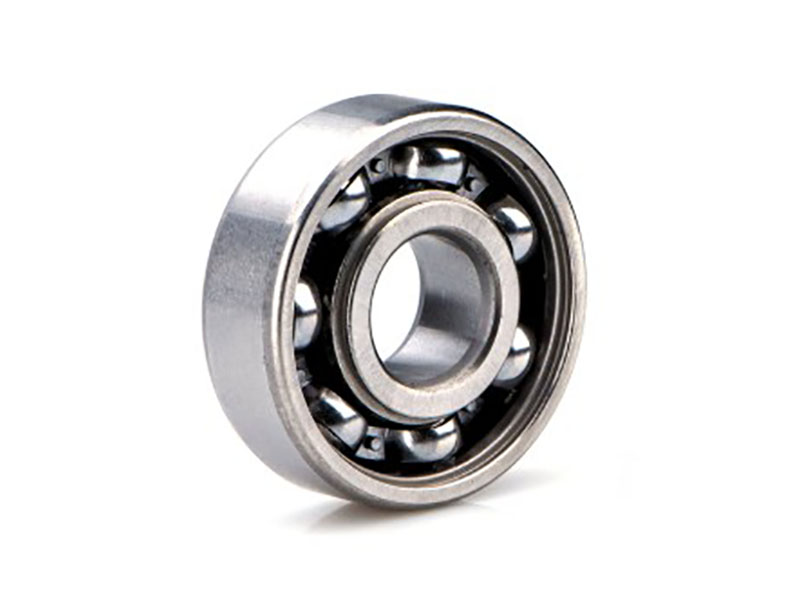
Ball bearings use spherical rolling elements that sit between an inner ring and an outer ring. A cage keeps the balls evenly spaced, and seals or shields may be added to keep contaminants out and lubricant in.
How They Work: Point Contact
The defining characteristic of ball bearings is point contact. Geometrically, a ball touches the raceway at a single point. Under load, elastic deformation causes the contact area to form a small ellipse. This minimal contact area gives ball bearings their unique performance profile.
Advantages of Ball Bearings
- Low friction – Point contact means low rolling resistance, generating less heat and improving energy efficiency.
- High speed capability – Low friction allows ball bearings to operate at significantly higher speeds than roller bearings of comparable size.
- Versatile load handling – Deep groove ball bearings accommodate radial loads and axial loads in both directions.
- Misalignment tolerance – Self-aligning ball bearings can accommodate angular misalignment between shaft and housing.
Disadvantages of Ball Bearings
- Limited load capacity – Point contact concentrates stress on a small area, so ball bearings carry less load than same-sized roller bearings.
- Shorter fatigue life under heavy loads – High contact stress under heavy or impact loads leads to faster fatigue failure.
Common Types of Ball Bearings
- Deep Groove Ball Bearings – The most common type. They handle moderate radial and axial loads in both directions and are suitable for high-speed operations. Found in electric motors, automotive alternators, and general industrial machinery.
- Angular Contact Ball Bearings – Designed for combined radial and axial loads. They operate at high speeds and handle large axial loads in one direction. Used in automotive wheel hubs, machine tool spindles, and pumps.
- Self-Aligning Ball Bearings – Feature two rows of balls with a spherical outer ring raceway to accommodate shaft misalignment. Used where shaft deflection is expected.
- Thrust Ball Bearings– Designed specifically for axial loads. They cannot support significant radial loads. Used in automotive steering mechanisms and machine tool turntables.
What Are Roller Bearings?
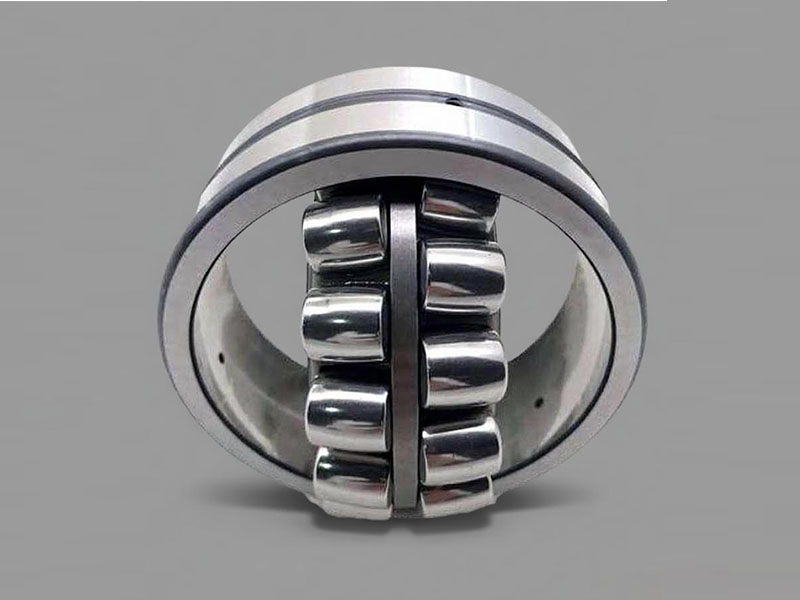
Roller bearings use cylindrical, tapered, or barrel-shaped rolling elements instead of balls. They consist of an inner ring, outer ring, rollers, and a cage.
How They Work: Line Contact
The defining characteristic of roller bearings is line contact. A roller touches the raceway along a line rather than at a point. Under load, the contact surface becomes a rectangle. This larger contact area gives roller bearings superior load-carrying capability.
Advantages of Roller Bearings
- High load capacity – Line contact distributes load over a larger area, allowing significantly heavier loads than same-sized ball bearings.
- Greater rigidity – Roller bearings deform less under load, providing higher stiffness.
- Better shock resistance – Line contact geometry handles impact loads and shock more effectively.
- Longer fatigue life under heavy loads – Lower contact stress translates to longer fatigue life in heavy, sustained-load applications.
Disadvantages of Roller Bearings
- Higher friction – Line contact creates more rolling resistance and higher frictional torque.
- Lower speed capability – More friction and heat generation limit roller bearings to lower speeds.
- Limited axial load handling – Most roller bearings (except tapered and spherical types) primarily support radial loads only.
- Misalignment sensitivity – Cylindrical roller bearings are particularly sensitive to angular misalignment. Tapered roller bearings also require precise adjustment.
Common Types of Roller Bearings
- Cylindrical Roller Bearings – Provide high radial load capacity. Available in single-row, double-row, and full-complement designs. Used in automotive transmissions, electric motors, and industrial gearboxes.
- Tapered Roller Bearings – Handle combined radial and axial loads. Axial capacity depends on the contact angle – larger angle means greater axial capacity. Single-row types are typically mounted in pairs. Widely used in automotive wheel hubs, differentials, and transmissions.
- Spherical Roller Bearings – Feature barrel-shaped rollers and a spherical outer ring raceway, accommodating heavy loads in both directions while tolerating misalignment and shaft deflection. Used in crushers, conveyors, and paper mills.
- Needle Roller Bearings – Use long, thin rollers with minimal cross-sectional height. Provide high radial load capacity in extremely limited radial space. Common in automotive transmissions, gearboxes, and compact machinery.
Key Differences at a Glance
| Comparison Dimension | Ball Bearings | Roller Bearings |
|---|---|---|
| Contact type | Point contact | Line contact |
| Friction | Low | Higher |
| Speed capability | High | Moderate to low |
| Load capacity | Moderate | High |
| Rigidity | Lower | Higher |
| Shock resistance | Moderate | Excellent |
| Fatigue life (heavy load) | Shorter | Longer |
| Axial load capability | Yes (radial types) | Limited (except tapered/spherical) |
| Misalignment tolerance | Better | Poorer |
| Lubrication demand | Lower heat, less demanding | Higher heat, requires more attention |
| Typical applications | High-speed motors, alternators, precision instruments | Transmissions, wheel hubs, heavy machinery |
How to Choose the Right Bearing
Selecting between ball and roller bearings is about matching the bearing to your application’s specific demands. Here’s a 7-step framework to guide your decision.
Step 1: Determine the Load Direction
The direction of the load is a primary factor.
- Pure radial load (perpendicular to shaft): Cylindrical roller bearings are an excellent choice. Deep groove ball bearings also work.
- Pure axial load (parallel to shaft): Thrust ball bearings or thrust roller bearings.
- Combined radial and axial load: The radial-to-axial ratio determines the best fit.
- Light axial component -> Deep groove ball bearings
- Moderate axial component -> Angular contact ball bearings
- Heavy axial component -> Tapered roller bearings or spherical roller bearings
Step 2: Evaluate Speed Requirements
Speed and load capacity are opposing factors – they cannot both be maximized in the same bearing.
- High-speed applications (electric motors, turbochargers, precision spindles): Ball bearings are the clear choice due to low friction.
- Low to moderate speed (wheel hubs, transmissions, heavy machinery): Roller bearings offer the needed load capacity.
Step 3: Consider Available Space
Machine design often determines bearing space.
- Standard shaft diameters: All types are available. Select based on load and speed.
- Very limited radial space: Needle roller bearings offer the lowest cross-sectional height. Deep groove ball bearings in the 618 or 619 series are also options.
- Small shaft diameters (approximately d < 10 mm): Deep groove ball bearings, needle roller bearings, or self-aligning ball bearings.
Step 4: Assess Misalignment and Shock
- Significant misalignment or shaft deflection: Self-aligning ball bearings or spherical roller bearings.
- Minimal misalignment, high precision required: Cylindrical roller bearings or angular contact ball bearings.
- Impact loads or shock present: Roller bearings handle shock better due to line contact geometry.
Step 5: Evaluate Life and Lubrication Requirements
The basic rating life (L10) is a proven tool for bearing sizing. L10 represents the fatigue life that 90% of a group of identical bearings will achieve or exceed under similar conditions. The life equation is L10 = (C/P)^p, where:
- C = basic dynamic load rating
- P = equivalent dynamic bearing load
- p = 3 for ball bearings, and 10/3 for roller bearings
Lubrication considerations:
- Ball bearings: Lower friction means less heat and lower lubrication demands. Grease is often sufficient. Very high speeds may require oil.
- Roller bearings: Higher friction generates more heat, requiring more effective lubrication. Grease works for many applications, but heavy loads or high speeds may demand oil circulation with cooling.
For high-speed applications, oil lubrication is generally most suitable. For grease selection, base oil viscosity is the decisive factor – low viscosity for high speed and low temperature, high viscosity for high temperature and heavy loads.
Step 6: Consult Manufacturer Data
Once you’ve narrowed your options, check manufacturer catalog data for specific ratings:
- Basic dynamic load rating (C) – The load at which the bearing achieves a basic rating life of 1 million revolutions.
- Limiting speed – The maximum rotational speed the bearing can sustain.
- Static load rating (C0) – The maximum load the bearing can withstand without permanent deformation.
- Friction torque – Important for energy-efficient applications.
Step 7: Consider Total Cost of Ownership and Maintenance
Cost involves more than the purchase price.
- Initial cost: Ball bearings are generally less expensive for small to medium sizes. For large diameters, the cost difference narrows – and in some heavy-duty configurations, roller bearings may be more cost-effective per unit of load capacity.
- Installation and adjustment: Tapered roller bearings require precise axial clearance or preload adjustment during mounting. Cylindrical roller bearings are less demanding. Ball bearings typically have simpler installation procedures.
- Maintenance and replacement: Roller bearings often have longer service lives under heavy loads, which can reduce replacement frequency and downtime. However, they also demand more careful lubrication monitoring.
- Total cost: For high-speed, light-load applications, ball bearings usually offer the lowest total cost. For heavy-load, continuous-operation machinery, the longer life and greater reliability of roller bearings often justify their higher initial cost and maintenance requirements.
Automotive Application Examples
Ball bearings and roller bearings each play distinct roles in automotive engineering.
Wheel Hubs
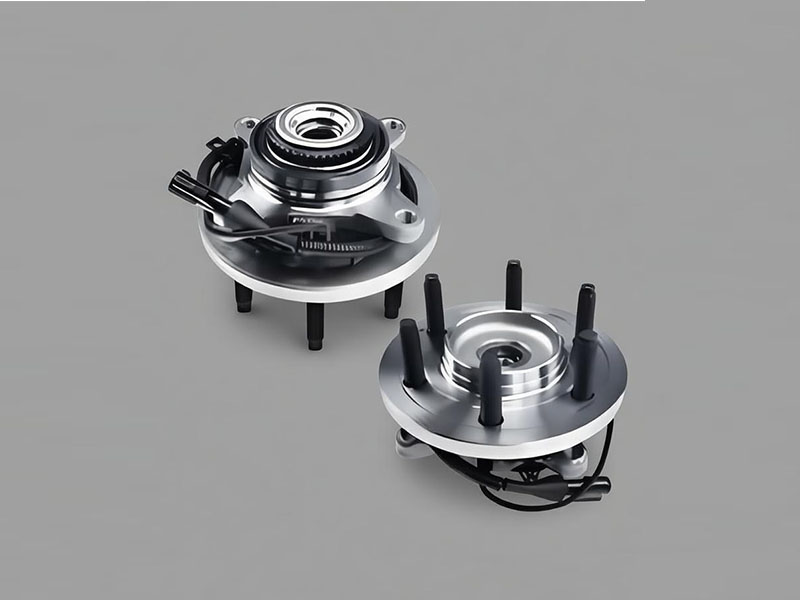
Tapered roller bearings are widely used in automotive wheel hubs because they handle the combined radial and axial loads generated during cornering and braking. They are often mounted in opposed pairs to handle axial loads in both directions. Double-row angular contact ball bearings also appear in some hub designs, offering compactness and the ability to handle both load types.
Application insight: In a DUHUI engineering project for a commercial vehicle hub application, switching from a double-row ball bearing to an optimized tapered roller bearing design increased axial load capacity by approximately 22% while maintaining the same envelope dimensions.
Transmissions
Cylindrical roller bearings support transmission shafts, handling the high radial loads generated by gear meshing. Needle roller bearings fit in tight spaces between gears and shafts where radial space is extremely limited. Tapered roller bearings are used in differentials and at transmission shaft ends to handle combined loads.
Application insight: In a DUHUI automotive transmission case study, replacing cylindrical roller bearings with high-capacity needle roller bearings in certain gear positions reduced overall transmission width by 8 mm without compromising radial load capacity.
Engine Accessories
Deep groove ball bearings are common in alternators, water pumps, and belt tensioners where high-speed rotation is the primary requirement. Angular contact ball bearings are used in turbochargers where both high speed and axial load capacity are needed.
Manufacturers with deep experience in the automotive sector – like DUHUI Bearing, which has specialized in this field since 2003 – typically provide application-specific guidance based on real-world validation data. When selecting bearings for these applications, consulting with a manufacturer that understands the specific duty cycles and environmental conditions can significantly improve component reliability.
Conclusion
The choice between ball bearings and roller bearings comes down to your application’s specific demands. There is no single “best” type – only the type that best matches your operating conditions.
Choose ball bearings when:
- High rotational speeds are required
- Loads are light to moderate
- You need both radial and axial load accommodation
- Space is not extremely limited
- Low friction and low heat generation are priorities
Choose roller bearings when:
- Heavy loads are involved
- Speed requirements are low to moderate
- High rigidity and stiffness are needed
- Impact loads or shock are present
- You have adequate space for the bearing
For most automotive applications, you will find a mix of both types – ball bearings in high-speed accessories and roller bearings in drivetrain components that handle heavy loads. Understanding the key differences – point contact versus line contact, speed versus load capacity – is the first step toward making the right choice. If you are unsure which bearing type fits your specific needs, consult your bearing manufacturer for application-specific recommendations backed by real-world testing data.
FAQs
Q1: What is the main difference between ball bearings and roller bearings?
A: The main difference is the contact geometry. Ball bearings use point contact – the ball touches the raceway at a single point. Roller bearings use line contact – the roller touches the raceway along a line. This affects friction, speed capability, load capacity, and rigidity.
Q2: Which bearing type is better for high-speed applications?
A: Ball bearings are better for high-speed applications. Their point contact creates low rolling resistance and low friction, which means less heat generation at high rotational speeds. Roller bearings generate more friction and are generally limited to lower speeds.
Q3: Are roller bearings stronger than ball bearings?
A: Yes, roller bearings have higher load capacity than ball bearings of the same size. Line contact distributes the load over a larger area, allowing roller bearings to handle heavier radial loads and greater shock. However, “stronger” does not mean “better for every application” – ball bearings offer speed and friction advantages that roller bearings cannot match.
Q4: Can I replace a ball bearing with a roller bearing?
A: Not directly. They have different load ratings, speed limits, friction characteristics, and dimensional standards. Replacing one with the other requires a full engineering evaluation of load, speed, space, and lubrication requirements. You must also consider mounting dimensions, internal clearance, and whether the bearing arrangement can accommodate the different performance characteristics.
Q5: Which bearing lasts longer – ball or roller?
A: It depends entirely on the application. Under light to moderate loads and high speeds, ball bearings can have excellent fatigue life. Under heavy, sustained loads, roller bearings typically last longer because the lower contact stress from line contact reduces fatigue. The L10 calculation reflects this – ball bearings use a life exponent of 3, while roller bearings use 10/3.
Q6: How do I know which bearing my car needs?
A: For automotive applications, consult your vehicle’s service manual or the original equipment manufacturer’s specifications. If you are designing or modifying a system, consider load direction, speed requirements, available space, and operating environment. For professional guidance, consult a bearing manufacturer with specific automotive experience.