

Design & Construction
A constant velocity (CV) joint transmits torque while maintaining equal input and output shaft speeds at any operating angle, eliminating the speed fluctuations inherent in universal joints.
Rzeppa Joint Components
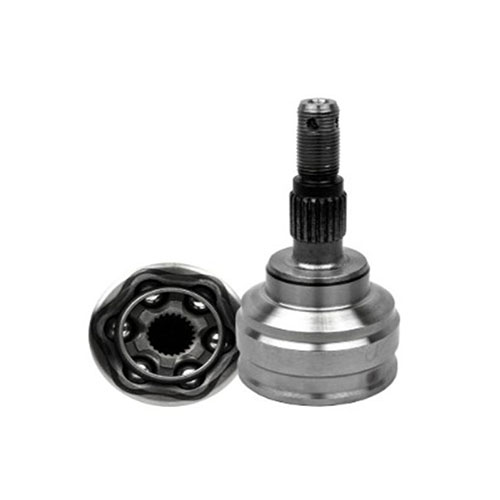
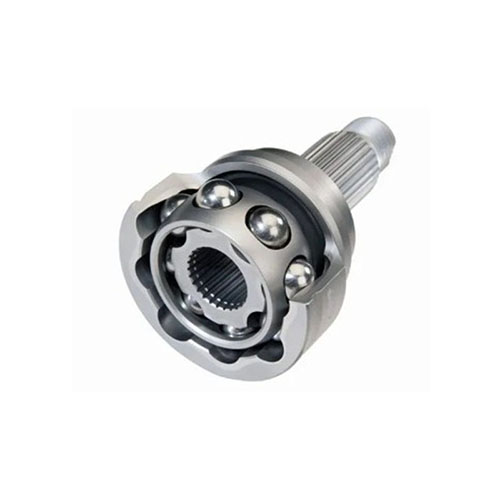
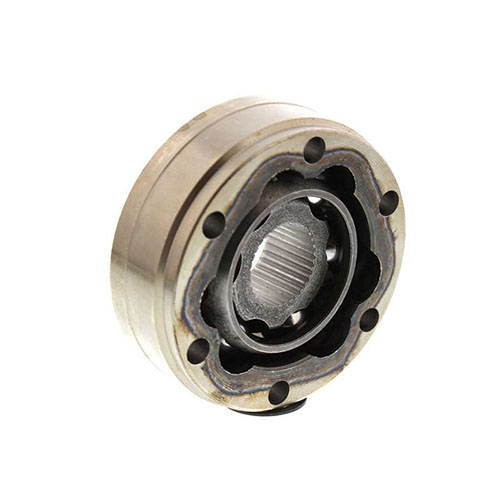
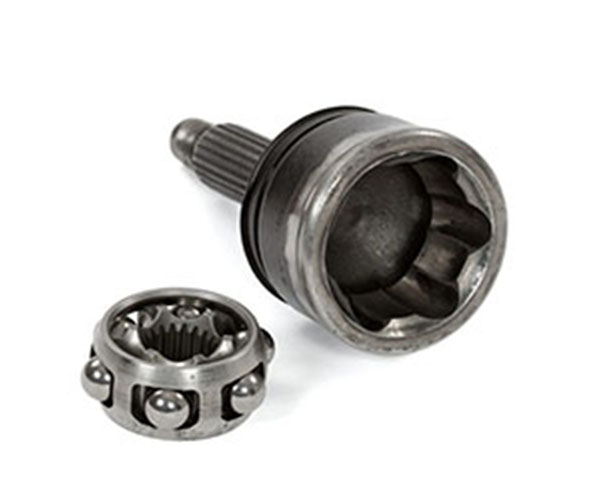
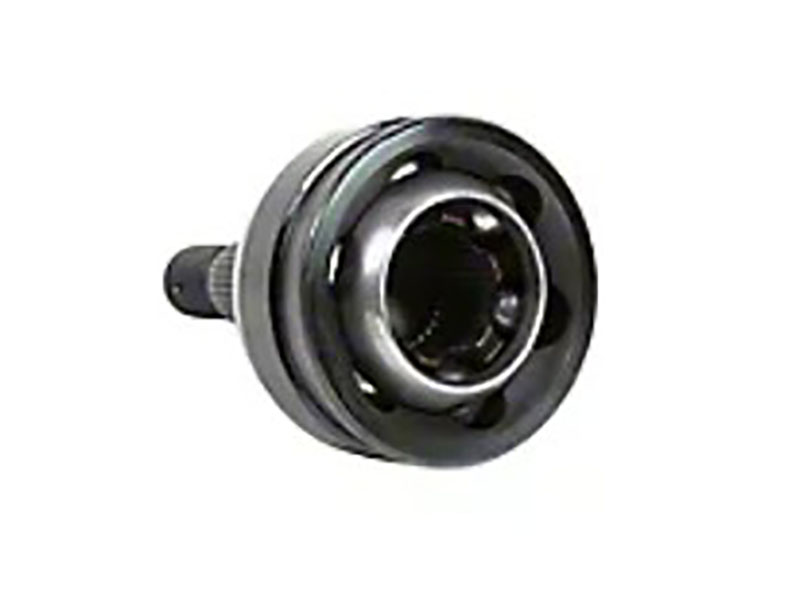
A Rzeppa-type CV joint comprises an outer race (housing), an inner race (star), a cage, and six steel balls. The balls run in precision-ground grooves between the races, retained by the cage to ensure constant velocity. This design is the standard for outer CV joints (wheel side) due to its high articulation capability.
Tripod Joint Components
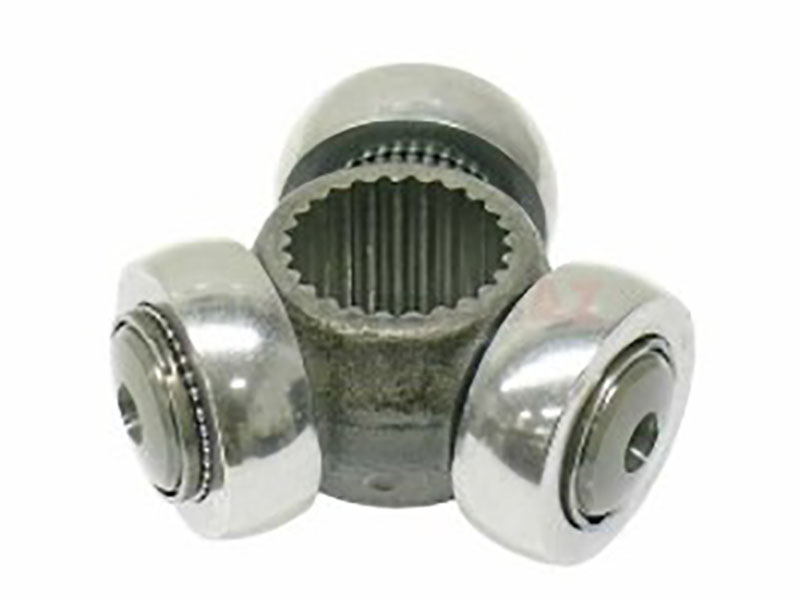
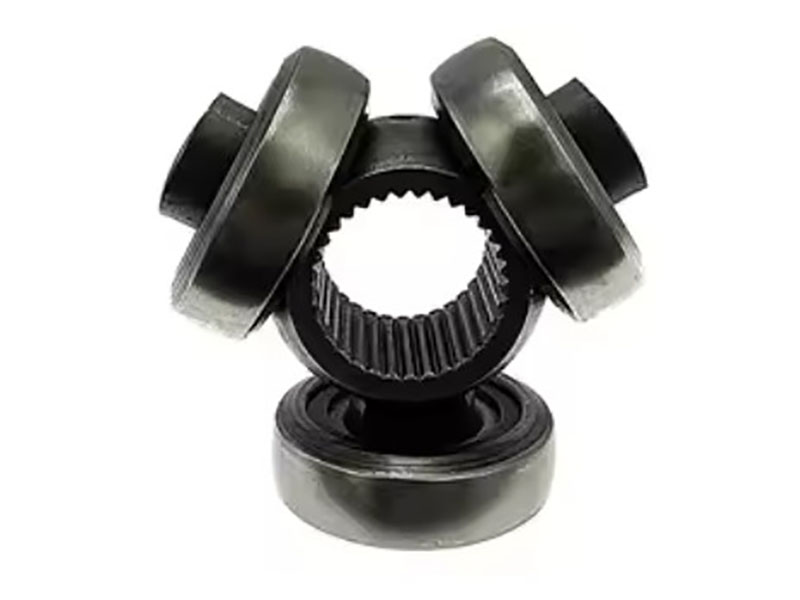
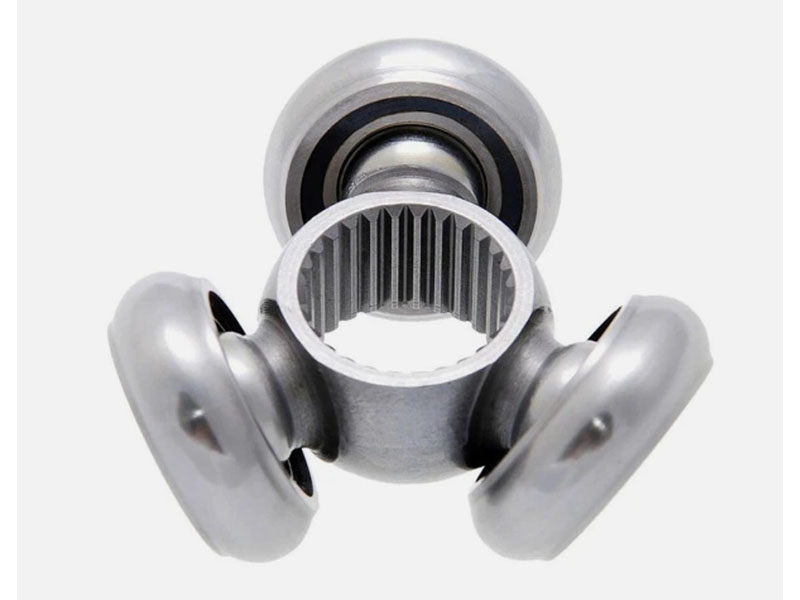
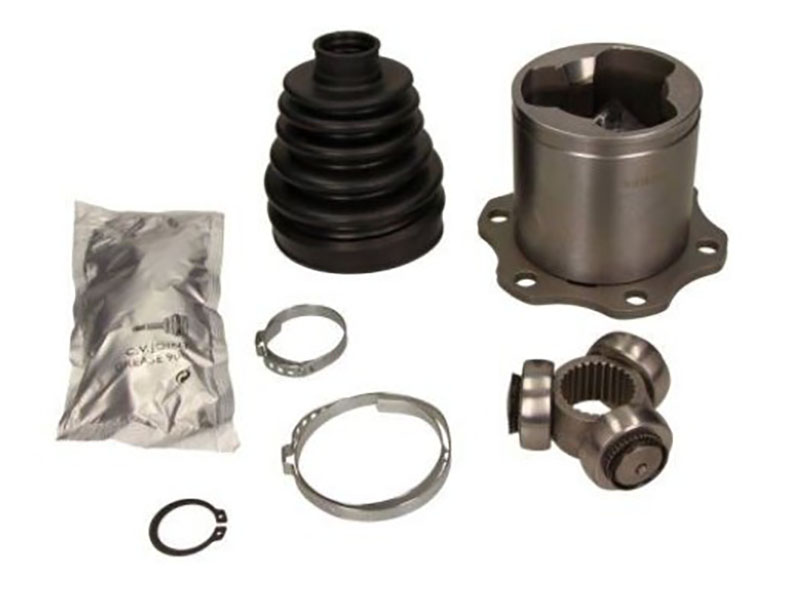
A Tripod CV joint replaces the balls with a three-legged spider, each leg fitted with a needle-bearing roller. The rollers slide within the tulip housing tracks, accommodating both angular articulation and axial plunge. This construction is typical for inner CV joints (transmission side), where plunge travel is critical.
Performance Attributes
- Articulation Angle – Rzeppa outer CV joints achieve up to 52° articulation for steering response. Tripod inner joints provide 23°–26° articulation for driveline flexibility.
- Plunge Travel – Tripod joints offer up to 50mm axial plunge to absorb suspension travel. This plunging capability prevents binding as control arms move through their range.
- Friction & Heat – Tripod joints generate lower friction due to needle-bearing rollers. SX Countertrack Rzeppa designs reduce internal friction by up to 60% via S-shaped ball tracks.
- Strength & Weight – A Tripod joint of equal strength is more compact and lighter than a Rzeppa joint.
- Durability – Sealed CV joints are maintenance-free when boots remain intact; regular boot inspection extends service life.
Your Professional CV Joint Manufacturer
DUHUI Bearing – a CV joint manufacturer since 2003. We are a Chinese factory based in Zhejiang, specializing in constant velocity joints and driveline components. Our facility runs multiple CNC lines and automated assembly systems. Monthly output: 100,000 sets.
Product Range & Compatibility
We supply over 2,000+ CV joint models, including Rzeppa (ball-type outer joints) and tripod (roller-type inner plunge joints). Compatibility covers Japanese, European, and American passenger cars, SUVs, pickups, and light commercial vehicles. OE cross-reference numbers are supported.
Materials & Heat Treatment
Inner and outer races use 20CrMnTi alloy steel. Balls and rollers use GCr15 bearing steel. Surface hardness: HRC 58–64; core hardness: HRC 33–48. We apply carburizing followed by precision tempering – creating a hard wear‑resistant surface with a tough core.
Seal Design & Lubrication
Each CV joint includes a high‑quality rubber boot and sealing system to block dirt, water, and debris while retaining grease. Grease is NLGI #2 lithium‑based EP grease, rated from -40°C to +140°C – ensuring reliable operation in extreme temperatures.
Quality Certifications & Testing
We are certified to IATF 16949 and ISO 9001:2015. Every batch undergoes 100% dimensional inspection, hardness testing (target HRC 58–62), and dynamic fatigue tests. Third‑party lab reports (SGS, TÜV, Bureau Veritas) are available on request.
Custom & Non‑Standard Capabilities
We modify spline counts, boot design, grease type, and overall dimensions. Small batch MOQ: 500 sets. Free design review with CAD drawings. Sample lead time: 7–15 days. Engineering changes documented via deviation request.
Order Fulfillment & Performance Data (2025)
- Monthly output: 100,000 sets (average over 2025)
- Annual shipment volume: 1.2 million units across 30+ countries
- On‑time delivery rate: ≥97%
- Annual complaint rate: < 0.8% based on return reports
- Average response time: ≤ 6 hours
Why B2B Customers Choose DUHUI
We are a manufacturer, not a trading company – you pay factory‑direct pricing. Finished goods inventory for 200+ fast‑moving SKUs. QC team of 20 inspectors works two shifts. No pushy sales calls. Send your OE number, dimensions, or drawing. We quote within 24 hours with a sample policy and landed cost estimate.
Product Types & Series
DUHUI Bearing offers a comprehensive range of constant velocity joints, covering Rzeppa six-ball designs for outboard positions and Tripod three-roller designs for inboard positions. Each series is engineered to specific articulation angles, plunge travels, and torque capacities for passenger cars, SUVs, and light trucks.
- Rzeppa CV Joint (Six-Ball)
- Tripod CV Joint (Three-Roller)
- Inner CV Joint
- Outer CV Joint
Rzeppa CV Joint (Six-Ball)
Rzeppa (ball-type) CV joint using six steel balls to transmit torque between inner and outer races. Capable of up to 52° articulation angle with smooth power transfer. The industry-standard design for outer (wheel-side) CV joints in front-wheel-drive and all-wheel-drive vehicles. Widely used across passenger cars, SUVs, and light trucks.
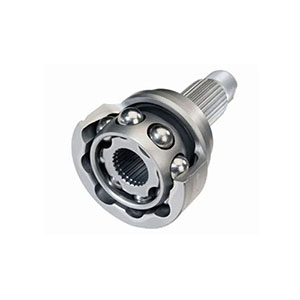
AC Series (Angular Contact, Standard Rzeppa) — Standard Rzeppa outer CV joint with up to 47° articulation angle. Six-ball cage-guided design for smooth torque transmission at moderate steering angles. The most common replacement joint for passenger car applications.
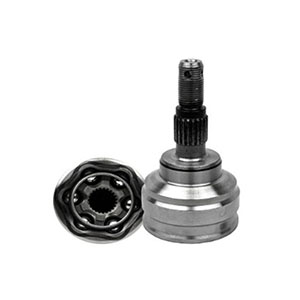
High-angle Rzeppa outer CV joint featuring undercut-free raceway design, enabling up to 50° articulation. Delivers tighter turning radius and improved steering response without compromising joint strength.
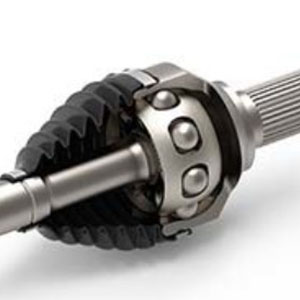
Advanced Rzeppa CV joint with patented S-shaped ball tracks and counter-running ball paths. Reduces internal friction while achieving 52° articulation. OE-grade replacement for luxury and performance vehicle applications.
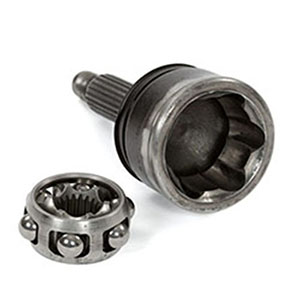
Specialized Rzeppa CV joint for extreme suspension travel and maximum steering angles. Designed for lifted trucks, off-road 4×4 conversions, and vehicles requiring articulation beyond standard specifications. Reinforced boot ensures grease retention under severe angles.
Tripod CV Joint (Three-Roller)
Tripod CV joint (three-roller) uses a spider with three needle-bearing rollers that slide within a tulip housing. Delivers up to 50mm axial plunge travel with 23°–26° articulation. Primary design for inner (transmission-side) CV joints. Excels at absorbing suspension-induced length changes.
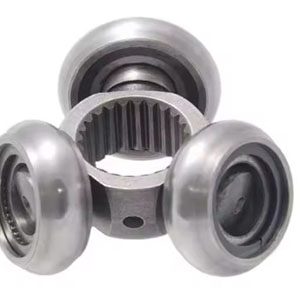
Standard Tripod CV joint with three-roller design. Offers 23° articulation and 50mm plunge travel. The most common inner CV joint for front-wheel-drive passenger vehicles. Reliable torque transmission with smooth plunging action.
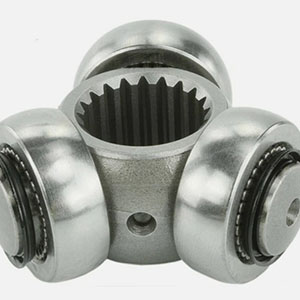
Premium Tripod CV joint with optimized roller geometry for reduced sliding resistance and enhanced NVH performance. Delivers 26° articulation with 50mm plunge travel. Suitable for SUVs and performance vehicles demanding smoother operation.
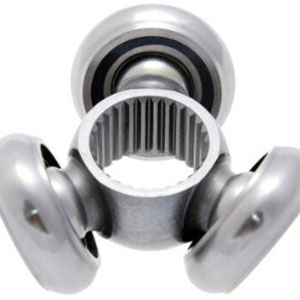
Advanced Tripod CV joint engineered specifically to eliminate low-speed shudder. Features specialized roller assembly for superior vibration damping. Used in luxury vehicles and high-torque diesel applications.
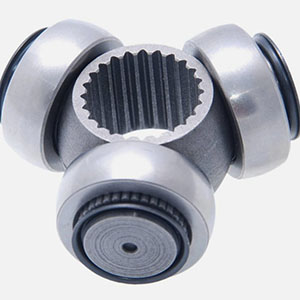
Space-optimized Tripod CV joint with compact roller assembly design. Maintains full plunge capability while reducing overall length. Ideal for drivelines with limited axial packaging constraints. Enhanced NVH performance in confined installations.
Inner CV Joint
Inner CV joint mounted on transmission/differential side of the driveshaft. Must accommodate axial plunge movement (typically up to 50mm) to compensate for suspension travel. Mainstream designs include Tripod (three-roller) for most FWD applications and ball-plunging (VL/DO) for AWD/RWD configurations.
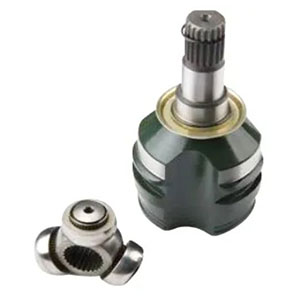
Standard Tripod-type inner CV joint for transaxle-side installation. Features 23° articulation and 50mm plunge capability. Direct replacement for OE inner joints across multiple passenger vehicle platforms. Includes boot and grease kit.
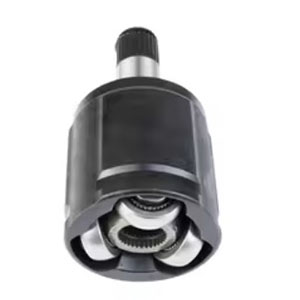
Premium Tripod inner CV joint with 26° articulation and optimized sliding characteristics. Reduced plunge force and improved NVH isolation. Suitable for performance SUVs, sport sedans, and higher-torque vehicles.
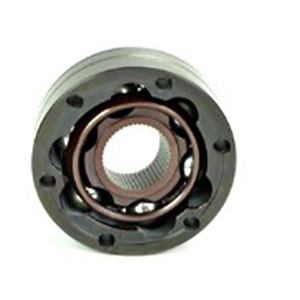
Ball-type plunging inner CV joint with 22° articulation and 50mm plunge travel. Uses ball bearings in linear cage design for low axial force and smooth operation. Applied in rear-wheel-drive and select all-wheel-drive systems.
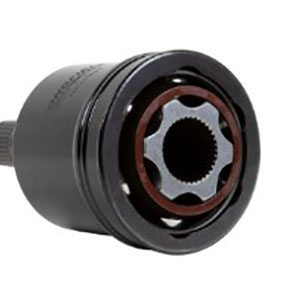
Double offset ball-type plunging inner CV joint with 26°–31° articulation and 50mm plunge travel. Offers higher angle capability than VL series. Used in crossovers, SUVs, and AWD vehicles requiring both plunge and increased articulation.
Outer CV Joint
Outer CV joint mounted on wheel hub side of the driveshaft. Must handle large steering angles for vehicle turning. Fixed-type (non-plunging) design with no axial movement capability. Almost exclusively Rzeppa six-ball design (AC, UF, or SX series) for maximum steering articulation.
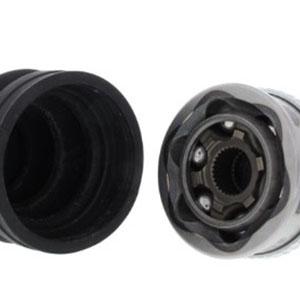
Standard Rzeppa outer CV joint with 47° articulation. Fixed-type six-ball cage assembly. Most common outer joint for passenger cars and light trucks. Direct OE replacement with proven reliability.
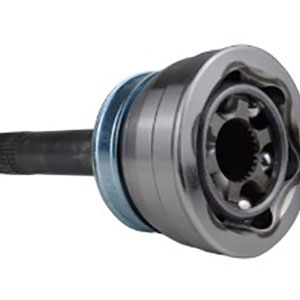
High-angle Rzeppa outer CV joint with 50° articulation. Undercut-free race design enables tighter turning radius. Suitable for vehicles requiring greater steering flexibility.
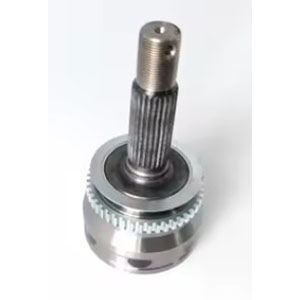
Premium Rzeppa outer CV joint with 52° articulation. Countertrack ball paths reduce friction and heat generation. OE-grade replacement for high-performance and luxury vehicles.
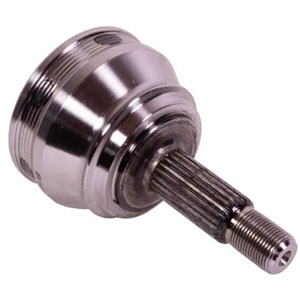
Extreme-angle Rzeppa outer CV joint for off-road and lifted vehicle applications. Delivers 52° articulation with reinforced boot and enhanced grease retention. Engineered for severe suspension travel and demanding off-road conditions.
Additional CV Joint Configurations
Beyond standard Rzeppa and Tripod designs, specialized constant velocity joints address specific driveline requirements in AWD, RWD, and performance applications.
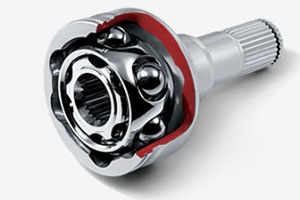
A ball-type plunging joint with crossed ball tracks that enable both articulation and axial plunge. Used in some European front-wheel-drive applications as an alternative to Tripod designs.
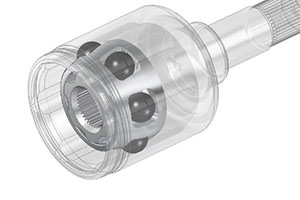
Ball-type plunging joint with offset inner and outer race tracks. Delivers 26°–31° articulation with 50mm plunge. Applied in crossovers, SUVs, and AWD vehicles.
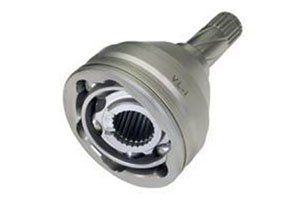
Ball-type plunging joint with linear cage design. Offers 22° articulation and 50mm plunge. Common in rear-wheel-drive and select all-wheel-drive applications.
CV Joint Applications Across Vehicle Segments
Constant velocity joints are fundamental to modern automotive drivetrains, enabling power transmission through steering angles and suspension travel. The following segments rely on specific CV joint configurations.

Front-wheel-drive passenger vehicles use two CV joints per driveshaft—a Rzeppa outer joint for steering and a Tripod inner joint for suspension compliance. AC and GI series are typical.
Higher ride height and increased suspension travel demand CV joints with greater plunge capability and enhanced durability. AAR-series Tripod and DO-series ball plunging joints are commonly specified.
Heavier payloads and frequent off-road use require reinforced CV joint designs. High Angle Rzeppa joints and heavy-duty Tripod configurations address these demands.
Luxury and high-performance vehicles utilize SX Countertrack and AAR-series joints for reduced friction, improved NVH characteristics, and precise steering response.

AWD and 4WD systems employ CV joints on both front and rear drivelines, often combining Rzeppa outboard joints with ball-plunging (VL/DO) inboard joints.
Comparison Articles
Compare two critical driveline choices: Rzeppa vs. Tripod CV joints, and CV joint vs. traditional U-joint. Understand design differences, application positions, and performance trade-offs for informed selection.
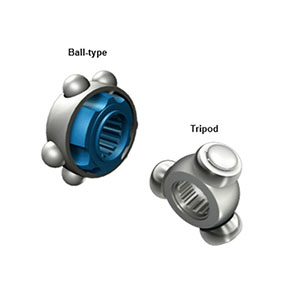
Rzeppa (six-ball) offers up to 52° articulation for outer steering positions; Tripod (three-roller) provides up to 50mm plunge for inner suspension compliance. Selection depends on whether articulation or axial movement is the primary need.
For more details, please read “Rzeppa vs. Tripod CV Joint: Key Differences and How to Choose”.
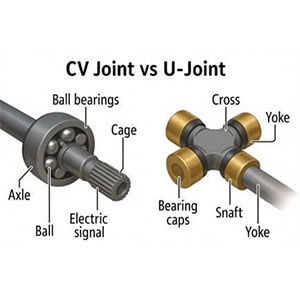
U-joints cause speed fluctuations at angle, leading to vibration. CV joints maintain equal input/output speeds, essential for steering axles. Learn why CV joints are mandatory for FWD and independent suspensions.
For more details, please read “CV Joints vs. U-Joints: Key Differences and How to Choose”.
Aftermarket Hot-Selling Models
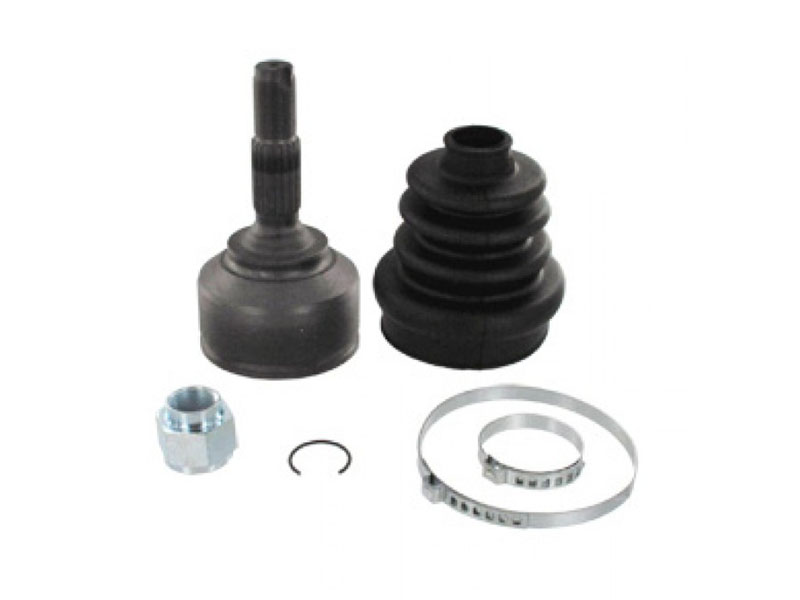
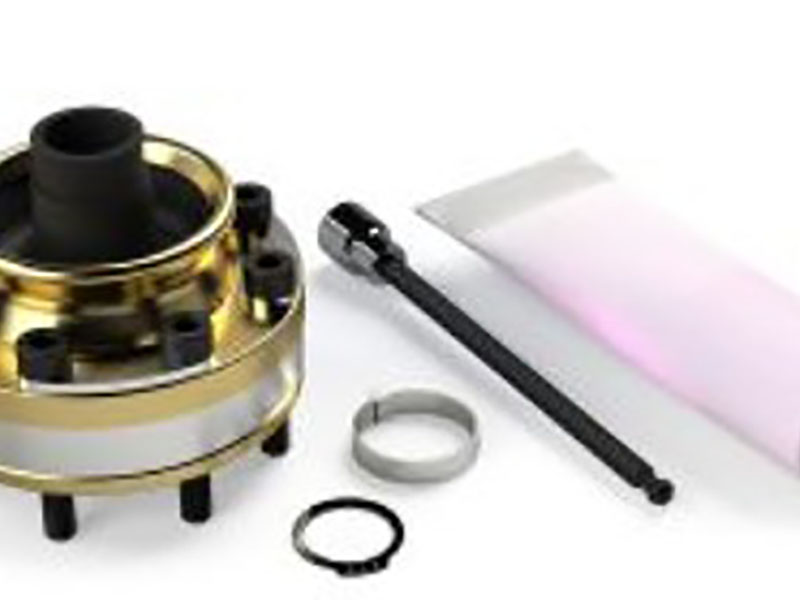
VKJA 5341 G — Aftermarket CV joint kit. M20x1.5 thread, 79.5mm diameter. Tripod joint with internal groove machining. OE-quality replacement for European vehicles.
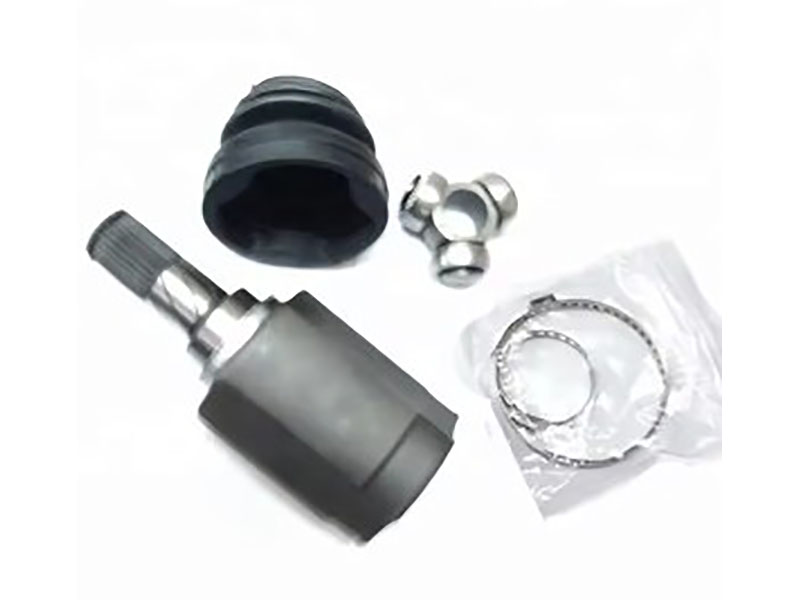
DJK572919SF — Aftermarket tripod joint kit. Inner CV joint for European passenger vehicle applications. Standard GI series design for reliable torque transmission.
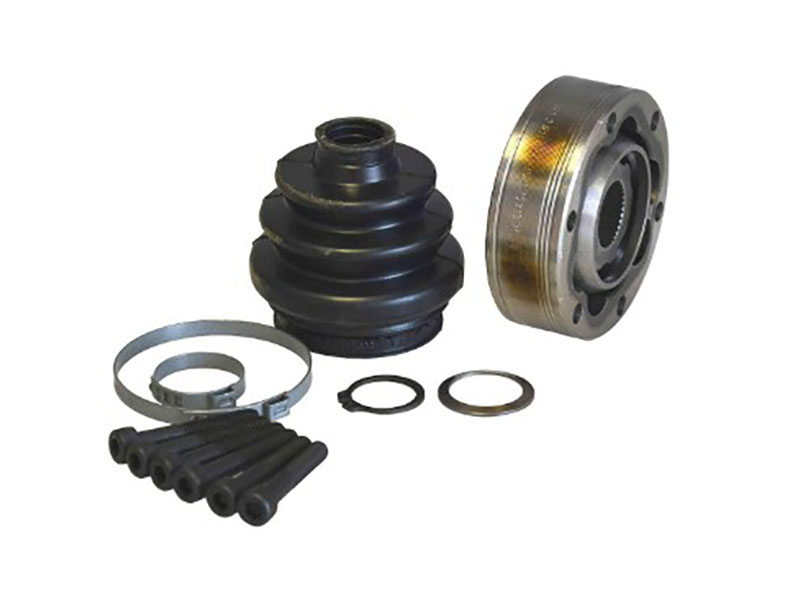
4340903010 — Aftermarket inner CV joint kit for Toyota. Front left/right inner positions. OE-style tripod joint for Toyota Camry and related models. Complete replacement assembly.
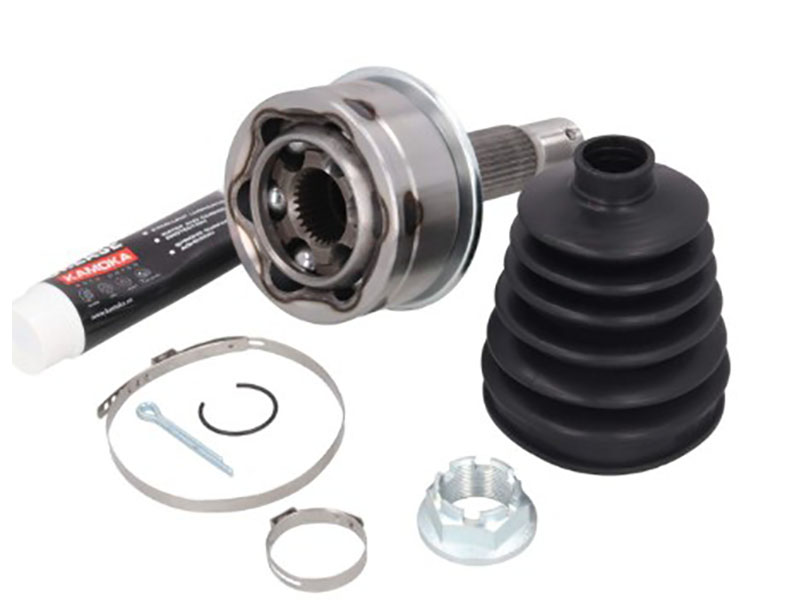
43409-06010 — Aftermarket CV joint kit for Toyota. Front left/right inner positions. Inner CV joint and joint sub-assembly for passenger car applications.
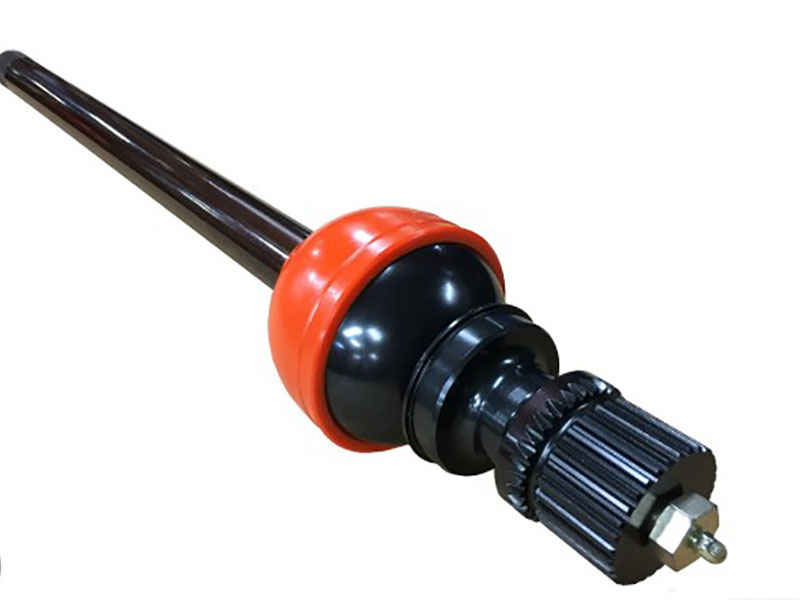
DOJ225 FSB 1000 — Aftermarket CV joint. Basic number DOJ225, FSB series configuration. Plunging ball-type inner joint for specific driveline layouts.
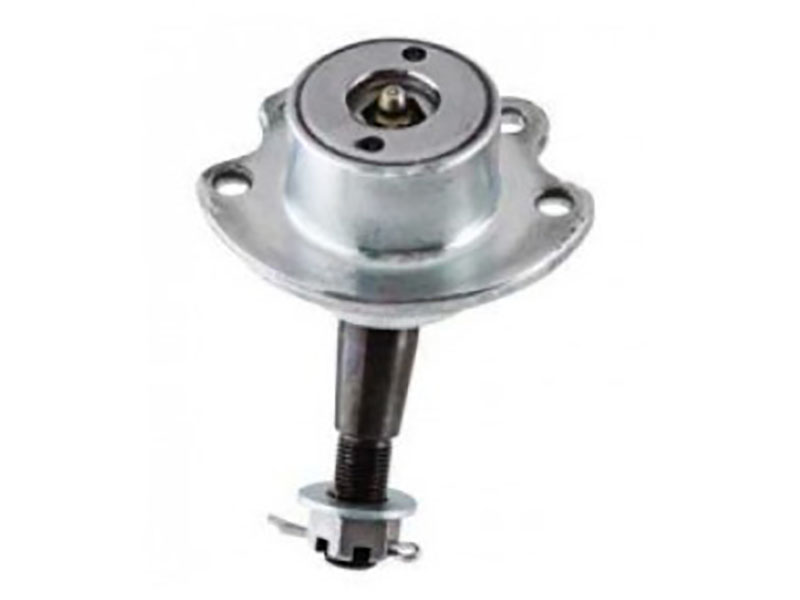
DOJ225 FSB — Aftermarket plunging ball joint. Available in multiple series configurations. For specific driveline applications requiring ball-type inner joint.
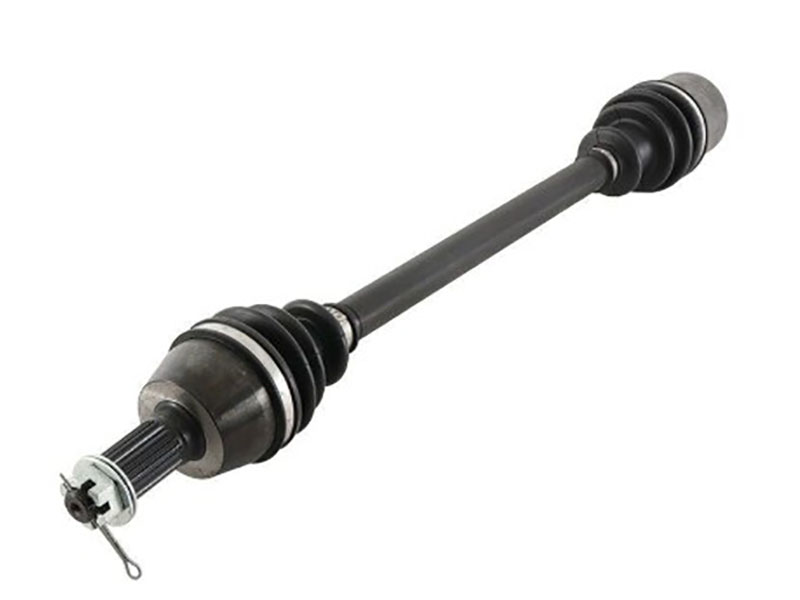
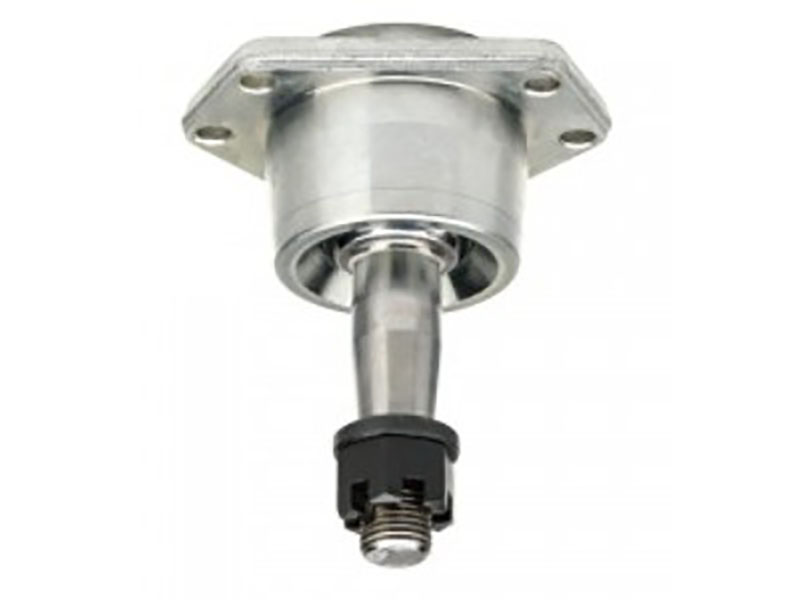
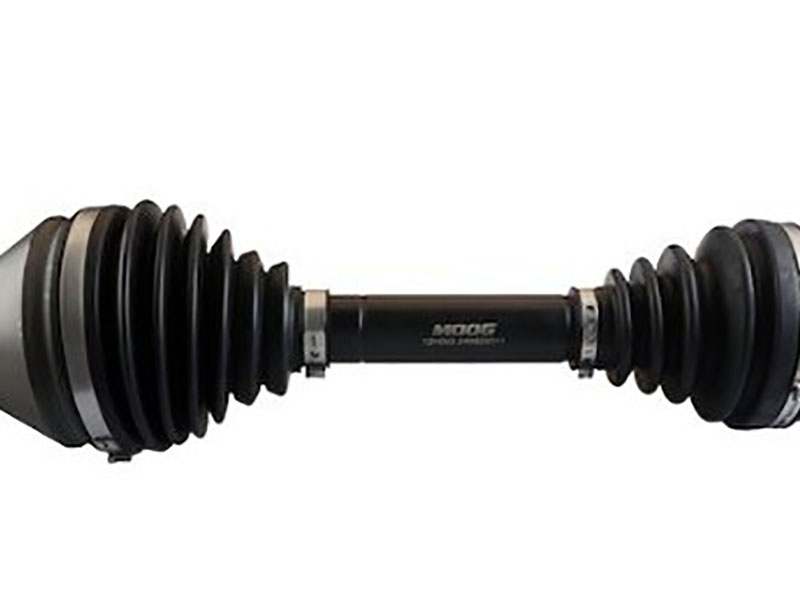
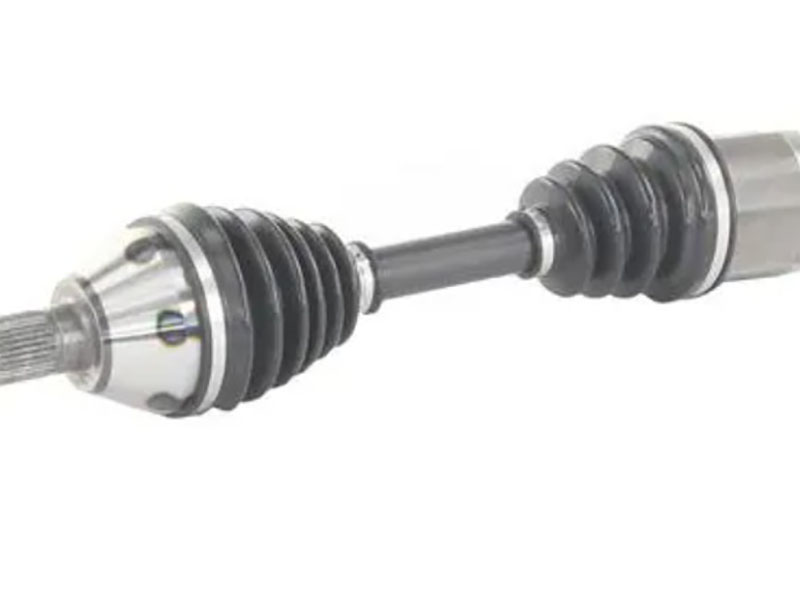
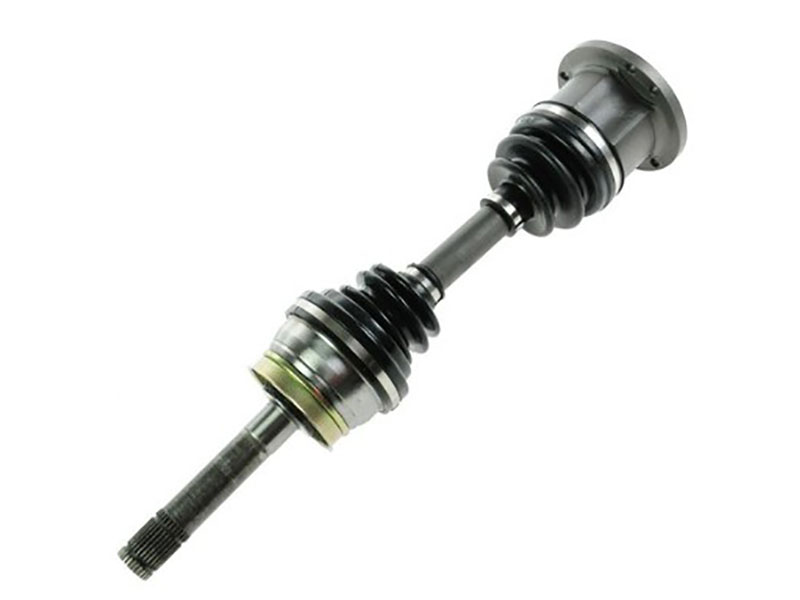
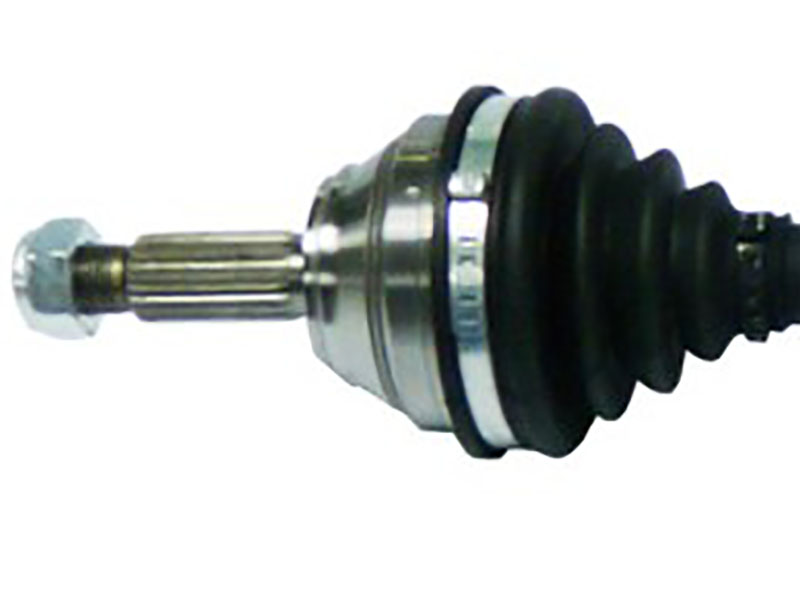
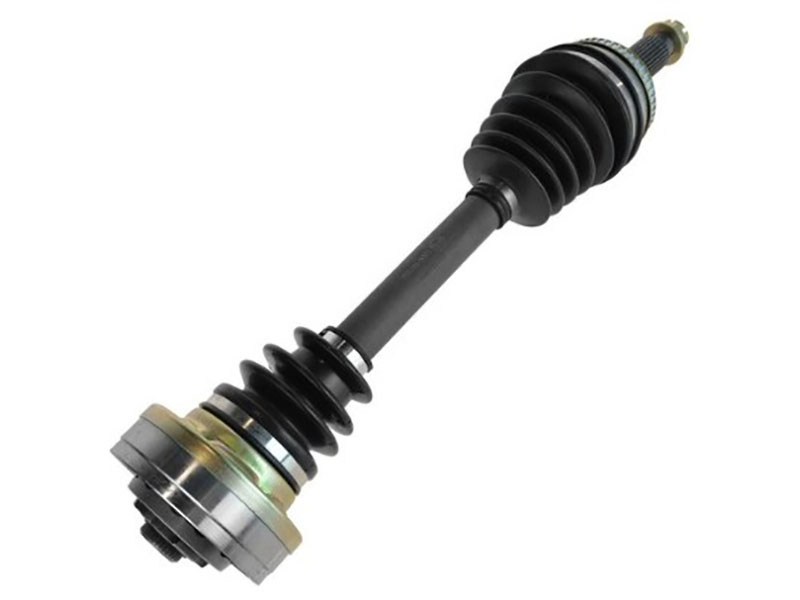
Constant Velocity Joints: Design, Types, Selection, and Maintenance Guide
Have you ever wondered how front-wheel-drive vehicles manage to transmit engine power to the wheels while steering and navigating bumps at the same time? The answer lies in the constant velocity (CV) joint—a component that many drivers never think about until it starts clicking during a turn.
A CV joint transfers torque from the transmission to the drive wheels while accommodating the angular changes required for steering and suspension movement. Unlike universal joints (U-joints), which create speed fluctuations when operating at an angle, CV joints—also referred to as homokinetic joints—maintain a constant rotational speed between input and output shafts regardless of the operating angle. This characteristic makes them essential for front-wheel-drive vehicles, independent rear suspensions, and all-wheel-drive systems.
In this guide, we will walk through how CV joints work, the major types you will encounter, how to diagnose common failures, and what to consider when selecting replacement joints.
How CV Joints Work: The Operating Principle
A CV joint transfers power through a variable angle without speed fluctuation because the geometric relationship between its components ensures that the input and output shaft speeds remain equal at all times.
The key lies in the constant velocity condition: for a CV joint to maintain equal input and output speeds, the pivot point or contact points must always lie on the angle bisector of the two shafts. In a Rzeppa joint, six steel balls are positioned in grooves that bisect the operating angle—the balls are always positioned at the midway point between the input and output axes, which eliminates the cyclic speed variations that a U-joint experiences when operating off-center. In a Tripod joint, three rollers slide within the tulip housing tracks along paths that similarly maintain the geometric bisector condition, accommodating both angular and axial displacement.
The ability to operate at significant articulation angles for outboard applications and to provide ample plunge travel for inboard positions allows the driveline to accommodate steering inputs and suspension travel without binding or inducing vibration.
CV Joint vs. U-Joint: What’s the Difference?
Understanding the difference between CV joints and U-joints helps explain why modern vehicles use one over the other.
A U-joint works fine when there is very limited shaft angle variation—think of the primary driveshaft on a rear-wheel-drive vehicle. However, when operating at steeper angles, a U-joint does not transfer velocity perfectly evenly. If the angle is too severe, it speeds up and slows down twice per revolution, causing vibration. The steeper the angle, the more exaggerated the effect.
A CV joint, on the other hand, can transmit torque with zero angular velocity variation and near-zero vibration at much greater angles than universal joints. This is why CV joints are mandatory for front axles—they allow the suspension to travel vertically and the wheels to turn left and right simultaneously, all while delivering smooth power without steering wheel shudder.
| Feature | U-Joint | CV Joint |
|---|---|---|
| Speed fluctuation at angle | Yes (speeds up/down twice per revolution) | No (constant velocity) |
| Maximum operating angle | Limited | Up to 50–52° |
| Vibration at steep angles | Significant | Near-zero |
| Typical application | RWD driveshafts, trucks | FWD/AWD axles, independent suspensions |
Fixed vs. Plunging CV Joints: Understanding the Difference
Before diving into specific joint types, it helps to understand the two fundamental categories of CV joints based on their movement capability:
Fixed CV joints allow only angular displacement between two axes—they permit articulation but do not move in or out. Fixed joints are better suited for higher operating angles than plunging types. Outboard CV joints—the ones closest to the wheels—are almost always fixed.
Plunging CV joints allow both angular displacement and axial displacement—they move in and out, typically up to 40–50mm. This plunging movement allows the shaft assembly to slightly change its length during suspension travel, compensating for control arm movement as the suspension compresses and rebounds. Inboard CV joints—the ones closest to the transmission or differential—are typically plunging.
There must be at least one plunging CV joint in every drive shaft to accommodate the length changes that occur as the suspension moves.
| Feature | Fixed CV Joint | Plunging CV Joint |
|---|---|---|
| Angular displacement | Yes | Yes |
| Axial (in/out) movement | No | Yes (up to 40–50mm) |
| Typical position | Outboard (wheel side) | Inboard (transmission side) |
| Operating angle capability | Higher (up to 50–52°) | Moderate (22–31°) |
| Common design | Rzeppa | Tripod, VL, DO |
CV Joint Placement: Outboard vs. Inboard
The relationship between design type and vehicle position reflects the optimal match between each design’s capabilities and each position’s requirements. This is the single most important concept to understand before selecting a replacement joint.
| Vehicle Position | Primary Design | Function | Rationale |
|---|---|---|---|
| Outboard (Wheel Side) | Fixed Rzeppa (AC/UF/SX) | Articulation only | High articulation (up to 50–52°) required for steering |
| Inboard (Transmission Side) | Plunging Tripod (GI/AAR) | Articulation + plunge | Axial plunge (up to 50mm) required for suspension travel |
While exceptions exist—such as plunging Rzeppa joints used in some inboard applications—this alignment is the industry standard for the vast majority of passenger vehicles. When you are ordering a replacement, confirming the position (outboard vs. inboard) is the first step in getting the right part.
Rzeppa Joints: Design and Applications
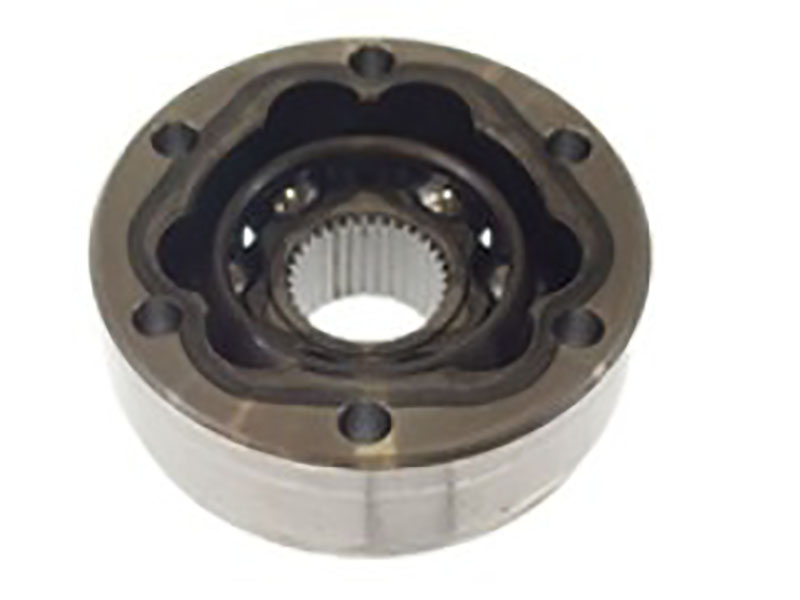
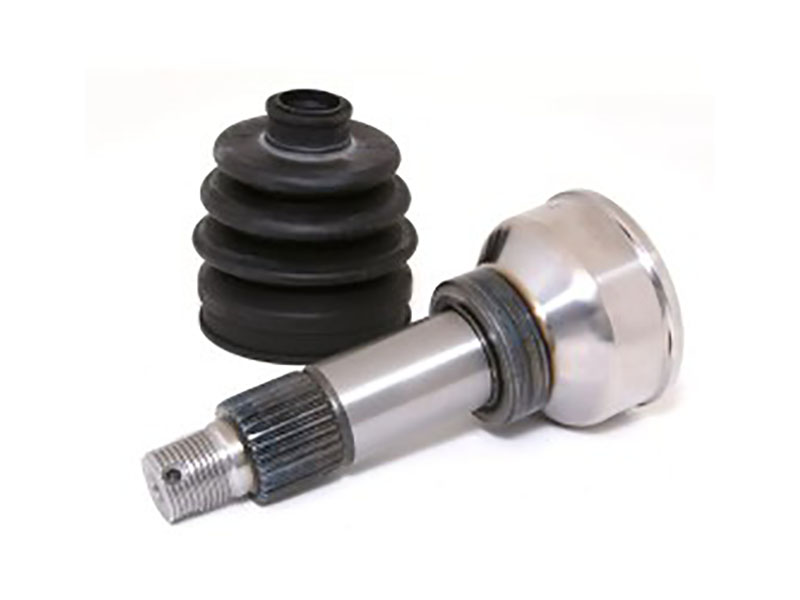
The Rzeppa joint—named after Alfred H. Rzeppa, who refined the design in 1926—consists of an outer race with internal grooves, an inner race with external grooves, a cage, and six steel balls. The balls are retained by the cage and run in the grooves between the inner and outer races. All six balls are active in both directions of rotation, providing uniform load distribution and smooth operation.
Rzeppa joints are primarily used as outer CV joints in front-wheel-drive vehicles because they handle the high operating angles needed for steering while maintaining smooth power delivery. You can identify them by their rounded, bell-shaped outer housing.
Rzeppa Joint Series
AC Series (Angular Contact) – The standard Rzeppa design with a maximum articulation angle of approximately 47°. Suitable for most passenger car applications where steering angles are within normal ranges.
UF Series (Undercut Free) – An advanced Rzeppa design that eliminates undercuts in the raceway, enabling up to 50° articulation. The undercut-free design allows for tighter turning circles without compromising joint strength.
SX Countertrack™ Series – A design featuring S-shaped ball tracks with counter-running ball paths. This configuration reduces internal friction, lowers operating temperatures, and increases transmissible torque while achieving up to 52° articulation. (Countertrack is a registered trademark of GKN Driveline International GmbH.)
Tripod Joints: Design and Applications
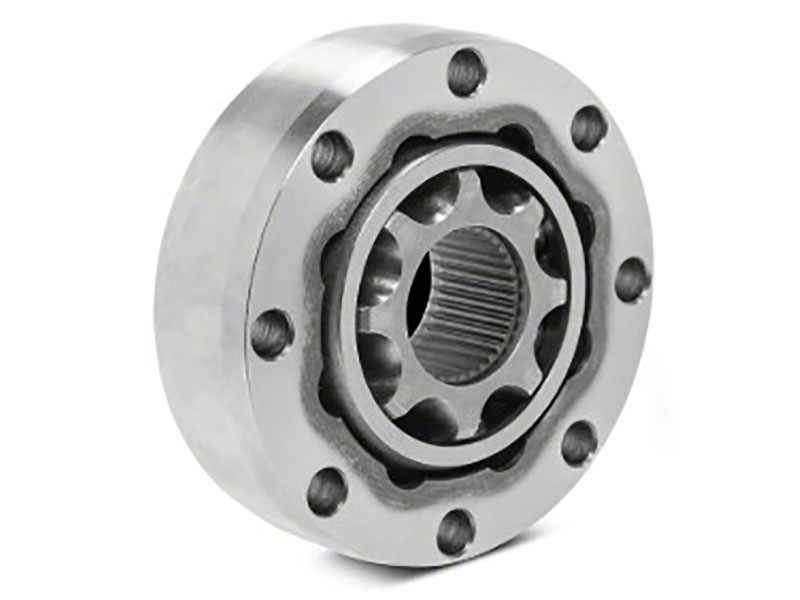
The Tripod joint—also known as a three-roller joint—consists of a tulip-shaped housing, a spider with three equally spaced trunnions, and three needle-bearing rollers mounted on the trunnions. The rollers slide within the tracks of the tulip housing, accommodating both angular articulation and axial plunge.
Tripod joints are most commonly used as inboard CV joints because their design provides greater plunge (axial travel), which is essential as the suspension moves up and down and the CV shaft must extend and retract.
Tripod Joint Series
GI Series (Standard Tripod) – The standard Tripod design with approximately 23° articulation and 50mm plunge travel. The most common inner CV joint for front-wheel-drive passenger vehicles.
AAR Series (Premium Tripod) – An enhanced Tripod design with optimized roller geometry that reduces sliding resistance and improves NVH (Noise, Vibration, Harshness) performance. Unlike traditional tripod joints, AAR socket joint rollers are not fixed on the plunging joint, which allows them to move freely and increase articulation angles up to 26°. Delivers approximately 26° articulation with 50mm plunge. The increased articulation capability provides improved performance and durability, making this design ideal for high-performance, heavy-duty, or off-road vehicles. AAR joints also offer higher torque capacity and are engineered with specialized advanced heat treatment to enhance durability and resistance to fatigue.
Tripod vs. Rzeppa: Strength, Size, and Application Considerations
A tripod joint has a significant advantage over a Rzeppa joint of the same size: it is typically stronger. Because the tripod’s three rollers distribute load across a larger contact area, a tripod joint can be made smaller and lighter while still providing adequate strength for a given torque requirement. This compactness makes tripod joints attractive for applications where packaging space is limited.
Tripod joints also generate less friction than Rzeppa joints—the needle bearings in the rollers produce rolling friction rather than sliding friction, which reduces operating temperatures and improves overall efficiency. This efficiency advantage has made tripod joints increasingly popular in hybrid and electric vehicle applications where minimizing driveline losses is a priority.
However, Rzeppa joints allow for higher articulation angles (up to 52° vs. 26° for tripod joints) and provide smoother operation at extreme angles. This is why Rzeppa remains the preferred choice for outboard positions where steering articulation is the primary requirement.
Here is a practical way to think about the trade-off:
| Consideration | Tripod Joint | Rzeppa Joint |
|---|---|---|
| Torque capacity per size | Higher | Lower |
| Operating friction | Lower | Higher |
| Maximum articulation angle | 23–26° | 47–52° |
| Typical position | Inboard | Outboard |
| Primary advantage | Compact, efficient, plunging capability | High-angle articulation, smooth steering |
| Common in EVs/hybrids | Yes (efficiency benefit) | Less common |
It all comes down to the application: tripod for the inboard where space and plunge matter most, Rzeppa for the outboard where steering angle is king.
Ball Plunging Joints: VL and DO Series
For applications requiring a ball-type joint in the inboard position, two plunging ball joint designs are available:
VL Series (Ball Plunging) – Features a linear cage design with ball bearings that slide within the tracks. Offers approximately 22° articulation with 50mm plunge. Common in rear-wheel-drive and select all-wheel-drive applications.
DO Series (Double Offset) – Features offset inner and outer race tracks that enable higher articulation angles. Available in versions with approximately 26° or 31° articulation, both with 50mm plunge. Used in crossovers, SUVs, and AWD vehicles.
These ball plunging designs offer an alternative to tripod joints in the inboard position when smoother operation or specific packaging constraints are required.
Failure Modes and Diagnostics
CV joints are sealed components that are maintenance-free for their operational life. However, when the protective boot is damaged, contaminants enter the joint and grease escapes, leading to premature wear.
Common failure symptoms include:
- Clicking or popping during turns – Indicates a worn outer CV joint. The sound is most pronounced during slow, tight turns such as parking maneuvers.
- Vibration during straight-line acceleration – May indicate a damaged inboard CV joint. The vibration typically worsens with harder acceleration.
- Shudder under acceleration – A low-frequency vibration or shaking feeling, particularly when pulling away from a stop, often points to wear in the inboard joint or excessive generated axial force (GAF).
- Clunk when applying power or lifting off the throttle – Indicates wear in the inner joints, typically from excessive backlash.
- Grease on the inside of wheels or under the vehicle – Indicates a torn boot that requires immediate replacement to prevent joint contamination.
Regular inspection of CV boots—checking for cracks, tears, or grease leakage—is the most effective preventive measure. When a boot is damaged, replacing it promptly can save the joint itself.
CV Boot Inspection and Replacement: A Practical Guide
Inspecting CV boots should be part of every routine vehicle service. Here is what you need to know:
When to inspect: Check both inner and outer boots every service interval—typically every 10,000–15,000 km—and before or after long road trips or off-road use.
What to look for: Cracks, splits, loose clamps, and grease sling. If the boot has broken or become loose, water and debris have likely intruded. The grease leaks out and the environment leaks in, damaging the sensitive bearings.
When to replace the boot: If grease is not contaminated and the CV joint has been operating satisfactorily, replace only the boot and add the required amount of specified lubricant. If a boot has only just split and the joint is quiet, a boot-only repair can save the shaft.
When to replace the entire joint or halfshaft: If a boot is torn and there is dirt in the joint, the entire CV axle needs to be replaced. Once dirt gets into the joint, it will cause the joint bearings to wear excessively and the halfshaft to fail.
Replace the Entire Halfshaft or Just the CV Joint?
When a CV joint fails or a boot is damaged, you have two options: replace just the faulty joint or boot, or replace the entire halfshaft assembly. Here is how to decide.
Option 1: Replace the entire halfshaft assembly
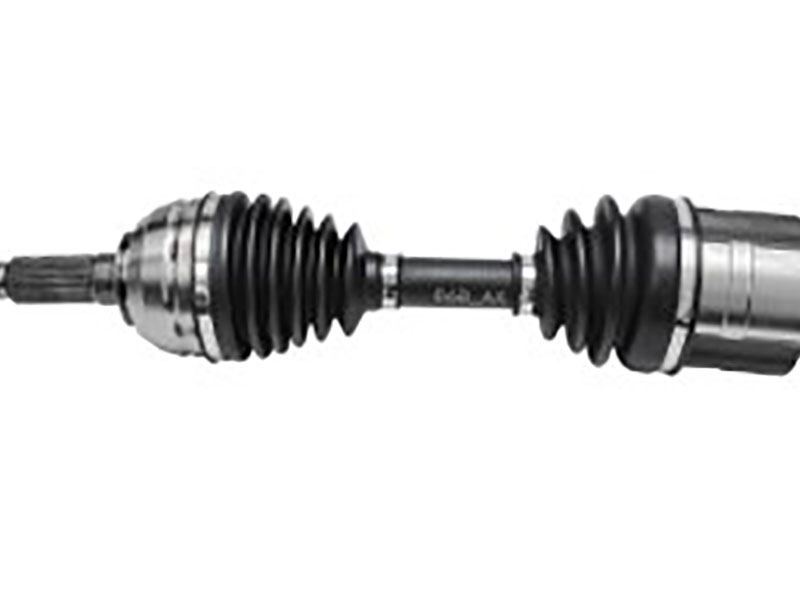
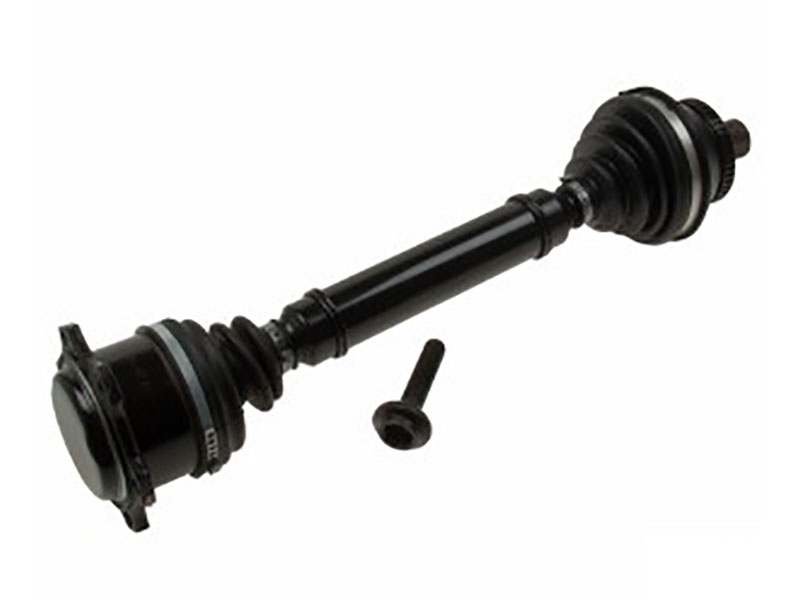
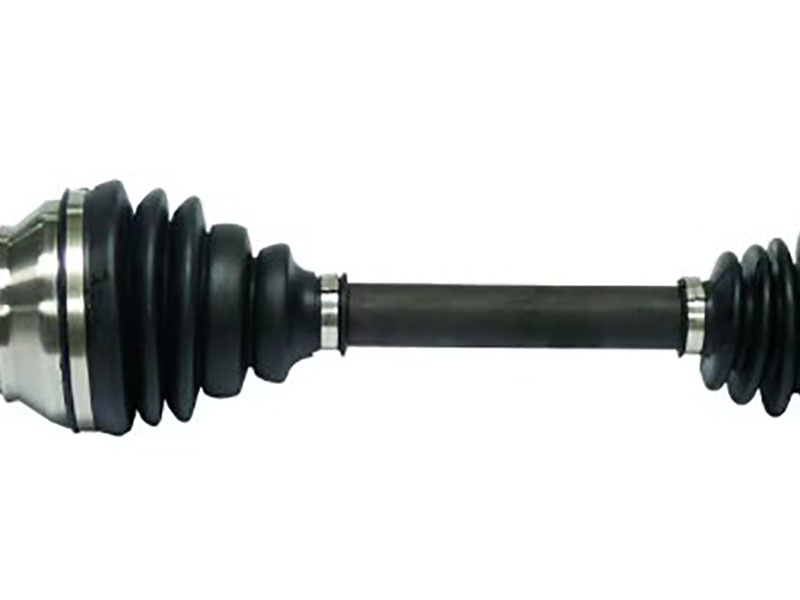
This is the preferred approach in most professional repair settings. Complete halfshafts include two new CV joints (inner and outer) as well as new boots and clamps. They are typically greased and ready to install.
Advantages:
- Faster and easier—less labor time
- Lowers the risk of a comeback—the other end of the shaft has been through the same wear and tear, especially on high-mileage vehicles
- Less messy—replacing CV joints with grease is a messy affair
Disadvantages:
- Higher upfront cost (though often not much more than joint-only replacement)
Option 2: Replace only the CV joint or boot
A DIYer on a budget might opt to replace only a bad boot or CV joint rather than buy a complete halfshaft.
Advantages:
- Lower parts cost
Disadvantages:
- More labor-intensive
- May require special tools to crimp boot clamps
- The other joint on the same shaft may fail soon after
- Higher risk of improper installation
The bottom line: The hands-down favorite in most professional instances is to replace the entire halfshaft as a complete assembly. For most shops, the labor is the same to remove and reinstall a halfshaft—the only reason not to replace the entire shaft is to try and save a few dollars.
Selection Criteria for Replacement CV Joints
When selecting a replacement CV joint, consider these factors:
Vehicle application – Passenger car, SUV, light truck, or performance vehicle—each has different torque and angle requirements.
Position – Outboard joints require high articulation; inboard joints require plunge capability. This is the most critical factor.
OE specifications – Original equipment specifications for articulation angle, plunge travel, and performance parameters must be matched.
Series selection – AC for standard applications, UF for tighter turning circles, SX for premium performance, GI for standard inboard, AAR for refined NVH.
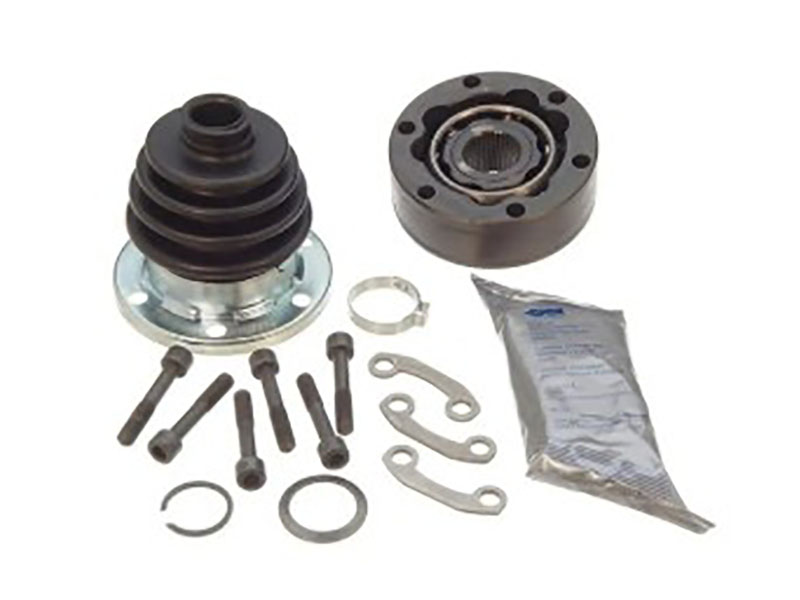
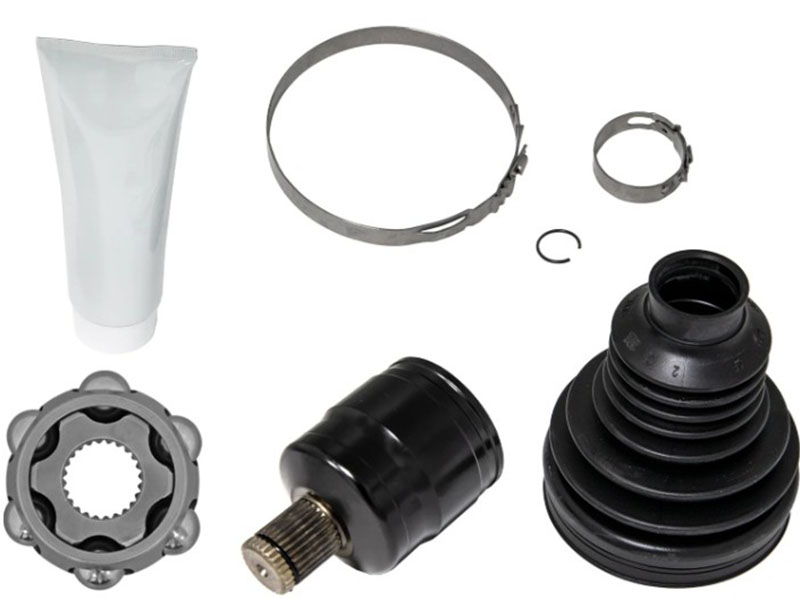
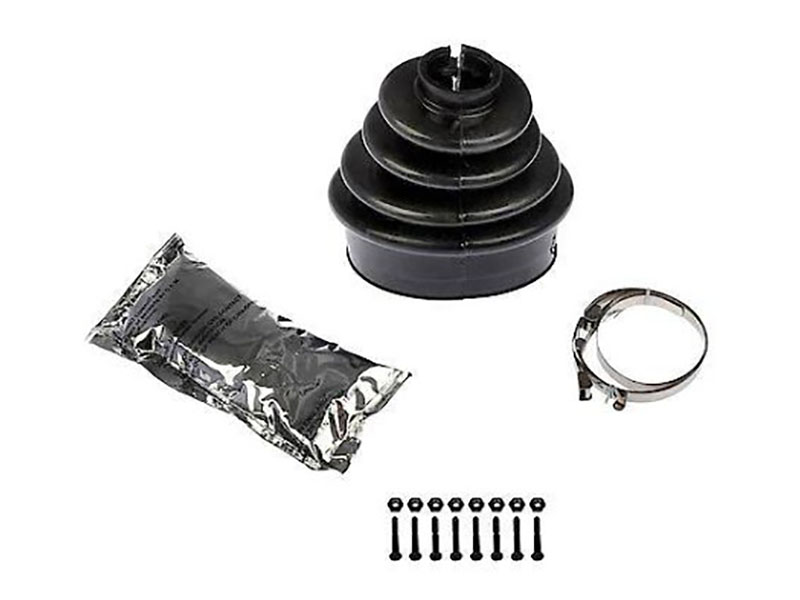
Kit completeness – Ensure the joint kit includes boot, grease, and all necessary installation hardware.
Price as an indicator – OEM components are engineered for maximum strength in specific vehicles, though many aftermarket options also meet or exceed OE standards. Price can be a useful signal, but it should be considered alongside other factors such as material quality and warranty coverage.
CV Joint Compatibility Verification Checklist
Before purchasing a replacement CV joint or halfshaft, verify these critical dimensions and specifications:
| Item | What to Check | Why It Matters |
|---|---|---|
| Spline count | Number of splines on inner and outer joints | Must match the original—if it does not, the joint will not fit |
| Overall length | Total length of the halfshaft assembly | Even if it looks similar, length must be identical |
| Joint diameter | Diameter of inner and outer joints | Must match the original part |
| ABS tone ring | Location and number of teeth on the ABS wheel-speed sensor tone ring | The halfshaft will not fit if there is any variance |
| OE part number | Cross-reference with the original equipment part number | Most reliable method—check with your VIN |
A practical tip: The most reliable method for verifying compatibility is by checking the OE part number of the CV joint or halfshaft set based on your vehicle’s VIN. Also, keep in mind that the appearance of a new halfshaft may vary from the original because suppliers sometimes consolidate their product lines to fit multiple applications—always verify the actual dimensions rather than relying on visual similarity.
Conclusion
CV joints are precision-engineered components that enable modern vehicles to transmit power through steering angles and suspension travel without speed fluctuation or vibration. Understanding the relationship between design type (Rzeppa vs. Tripod) and vehicle position (outboard vs. inboard)—grounded in the fundamental fixed vs. plunging distinction—is essential for correct selection in both OEM and aftermarket applications.
When it is time to replace a CV joint, start by identifying the joint position, then match the series to your vehicle’s requirements. Pay attention to boot condition during routine maintenance—inspect boots every 10,000–15,000 km—it is the single most effective way to extend joint life.
For most repair situations, replacing the complete halfshaft assembly is the faster, cleaner, and more reliable option. If you do opt for joint-only replacement, ensure you have the correct spline count, length, diameter, and ABS tone ring specifications before purchasing.
If you are unsure which CV joint your application requires, check your vehicle’s service manual or consult your parts supplier with your VIN and vehicle details.
Trademark disclaimer: All trademarks and registered trademarks mentioned herein are the property of their respective owners.
A Rzeppa joint uses six steel balls retained by a cage to transmit torque between grooved inner and outer races. A Tripod joint uses a three-legged spider with needle-bearing rollers that slide within a tulip housing. Rzeppa joints offer higher articulation (up to 52°) and are used primarily in outboard positions. Tripod joints offer greater axial plunge (up to 50mm) and are used primarily in inboard positions.
The outboard joint must handle the high steering angles required for turning—Rzeppa joints excel at this with articulation up to 52°. The inboard joint must accommodate the length changes that occur as the suspension moves—Tripod joints excel at this with plunge travel up to 50mm. This alignment reflects the optimal match between each design’s strengths and each position’s requirements.
Plunge refers to the axial movement capability of a CV joint—the ability of the joint to extend and retract along the shaft axis. This movement compensates for changes in the distance between the transmission and wheel hub as the suspension travels. Inboard CV joints are designed as plunging types, with typical plunge travel of 50mm.
AC series Rzeppa joints provide 47° articulation. UF series provides 50°. SX Countertrack provides 52°. GI series Tripod provides 23°. AAR series Tripod provides 26°. VL ball plunging provides 22°. DO ball plunging provides 26° or 31° depending on version.
Common symptoms include a clicking or popping noise during turns (indicating a worn outer joint), vibration during straight-line acceleration (possibly indicating an inner joint issue), and grease splattered on wheels or under the vehicle (indicating a torn boot). If you hear clicking during slow, tight turns, the outer CV joint should be inspected promptly.
CV joints are sealed, maintenance-free components designed to last the life of the vehicle under normal operating conditions. However, service life depends on the condition of the protective boot. If the boot is torn and contaminants enter the joint, wear accelerates significantly. Regular boot inspection is the most effective way to maximize CV joint life.
SX Countertrack is a patented Rzeppa design featuring S-shaped ball tracks with counter-running ball paths. This configuration reduces internal friction, lowers operating temperatures, and increases transmissible torque while achieving 52° articulation—higher than standard AC or UF designs. SX joints are used in premium and performance vehicle applications.
Both are fixed Rzeppa designs for outboard positions. The AC series provides 47° articulation and is the standard choice for most passenger cars. The UF (Undercut Free) series provides 50° articulation through an undercut-free raceway design, enabling tighter turning circles. UF joints are specified when the vehicle requires greater steering flexibility.
Not necessarily. If only one joint is worn or damaged, replacing just that joint is acceptable. However, if the vehicle has high mileage and both joints have experienced similar wear, replacing both may be more cost-effective. Always inspect the other joint when replacing one.
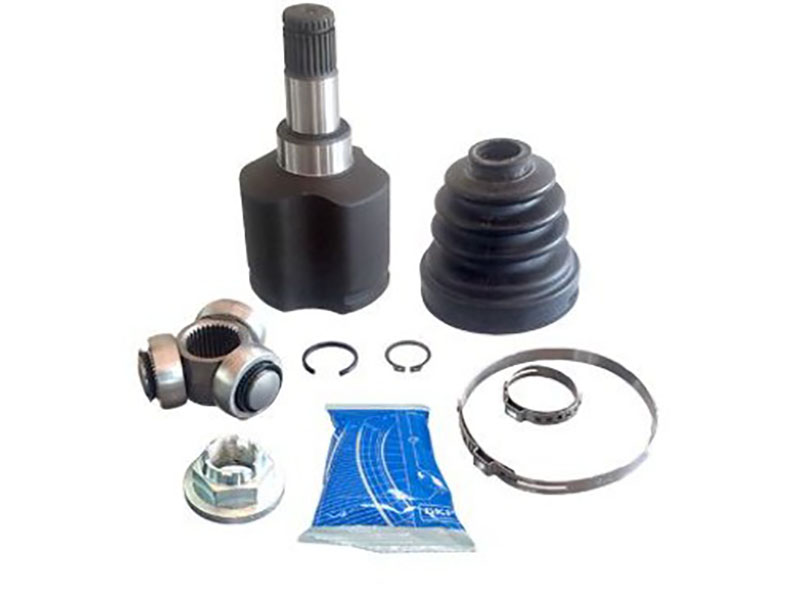
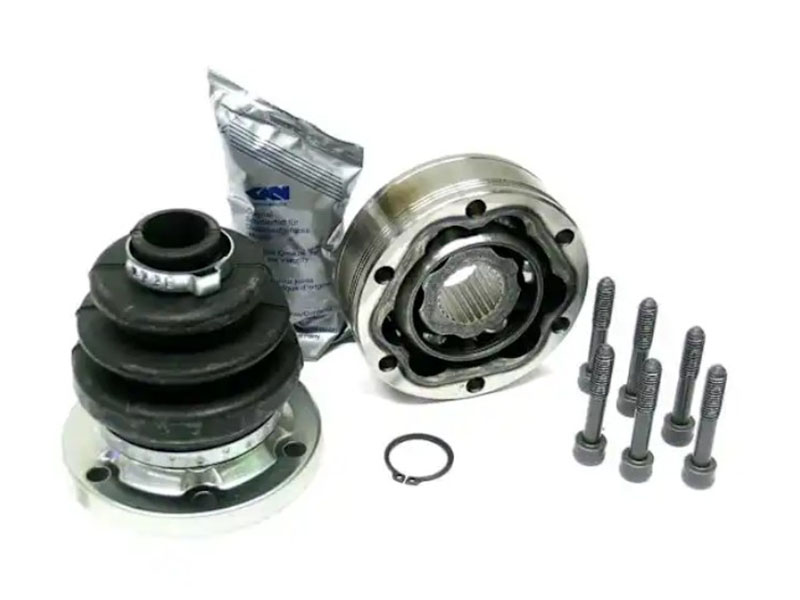
A complete CV joint repair kit typically includes the joint assembly, a new boot, boot clamps or circlips, grease, and any required installation hardware such as bolts, nuts, or spacers. Some kits also include axle nuts. Always verify that the kit includes all components needed for your specific application.
Quality varies by manufacturer. DUHUI Bearing manufactures CV joints to OE specifications, with the same design standards, materials, and quality control as original equipment. When selecting aftermarket CV joints, choose suppliers with proven manufacturing capabilities and OE-compatible specifications.
Series numbers primarily indicate bearing cup diameter. Larger series numbers correspond to larger cup diameters and higher torque capacity. 1310 (1.062″ cap) is standard for passenger cars. 1350 (1.188″ cap) is used in heavy-duty pickups. 1410 and 1480 (1.188″ to 1.375″ caps) are for commercial trucks.
Cross spiders are typically forged from alloy steel such as 20CrMnTi with carburized case hardening. Needle rollers are GCr15 bearing steel (HRC 60-64). Bearing cups are case-hardened low-carbon steel (1010 grade). Premium seals use nitrile rubber or Viton for chemical resistance.
Many aftermarket crosses are dimensionally identical to OE and major brand part numbers. Always verify the three critical measurements: cap diameter, lock-up width, and snap ring style. Cross-reference guides are available to confirm interchange.
A universal joint cross is the replaceable core component (spider, bearing cups, seals, and snap rings). A complete universal joint assembly includes the cross plus the yokes. In aftermarket replacement, only the cross is typically replaced. Yokes are reused unless damaged.