Quick Answer
A bad wheel bearing typically shows through grinding or growling noises that worsen with speed, steering wheel vibration during turns, uneven tire wear, an illuminated ABS warning light, or a loose, wandering feeling in the steering. Wheel bearings generally last 85,000-100,000 miles. For most common passenger vehicles, replacement costs range from $150 to $500 per wheel including parts and labor – luxury, performance, or all-wheel-drive models may cost $600-$800 or more. If you notice any of these symptoms, have the bearing inspected immediately. Driving with a severely worn bearing can lead to wheel separation.
That grinding noise you hear when you turn the wheel. The vibration that suddenly appears in your steering at low speeds. The ABS light that came on for no apparent reason.
These could all point to one problem: a failing wheel bearing.
Wheel bearings and hub assemblies are critical safety components. They carry the full weight of your vehicle, allow your wheels to rotate smoothly, and maintain proper wheel alignment. When they start to fail, they don’t just make noise – they compromise your vehicle’s handling and safety.
In this guide, we’ll walk you through the five most common symptoms of a bad wheel bearing, show you how to diagnose the problem yourself, explain when and why you should replace them, and help you choose a quality replacement hub assembly. We’ll also cover what it costs, whether you can keep driving, and answer the most frequently asked questions about wheel bearing failure.
5 Common Symptoms of a Bad Wheel Bearing
Sign 1: Grinding, Growling, or Rumbling Noises
The most recognizable sign of a bad wheel bearing is noise coming from the wheel area. You might hear a constant grinding, growling, or low-pitched rumbling sound that gets louder as your vehicle speed increases. The noise is often more noticeable during acceleration.
How to identify it: Pay attention to when the noise changes. If you hear the noise intensify when you turn the steering wheel in one direction, that can help you pinpoint which side has the faulty bearing. When you turn left and the noise gets louder, the issue is likely on the right-side bearing (the outside wheel during the turn). When you turn right and the noise increases, the left-side bearing is probably the culprit.
What causes it: The bearing’s lubrication has broken down or leaked out over time. Without proper lubrication, the metal rolling elements inside the bearing make direct contact with the bearing races. This metal-on-metal contact creates the grinding or growling sound you hear.
Important distinction: This noise is different from tire noise. Tire noise tends to be a constant hum that changes with road surface – rough pavement makes it louder, smooth pavement makes it quieter. Bearing noise changes with vehicle speed and steering input, not with road surface. We’ll cover this in more detail in the diagnosis section below.
Sign 2: Steering Wheel or Body Vibration
A failing wheel bearing can cause noticeable vibration in the steering wheel, especially during low-speed turns or lane changes. In more severe cases, you might feel the vibration throughout the entire vehicle.
How to identify it: The vibration typically feels like a shimmy or wobble in the steering wheel. Unlike tire balance issues – which usually manifest as high-speed vibration above 60 mph – bearing-related vibration often appears at lower speeds and becomes more pronounced when you turn the wheel.
What causes it: As the bearing wears down, the internal clearance (the gap between the rolling elements and the races) increases. This excessive play allows the wheel hub to move slightly within the bearing. That small movement translates into vibration that travels up through the steering column and into the cabin.
Key difference from tire imbalance: If your tires are out of balance, you’ll typically feel vibration at highway speeds (60+ mph) that smooths out as you slow down. Bearing vibration often peaks during turns at lower speeds and may not go away when you reduce speed.
Sign 3: Uneven Tire Wear
A bad wheel bearing can cause one tire to wear out significantly faster than the others. You might notice the tread wearing unevenly – more on one edge than the other – or developing a cupped or scalloped pattern across the tread surface.
How to identify it: Visually inspect your tires regularly. If one tire shows excessive wear on the inner or outer edge compared to the other tires on your vehicle, or if you see a wavy wear pattern across the tread, a failing wheel bearing could be the cause.
What causes it: When a wheel bearing develops excessive play, the wheel no longer maintains its correct alignment relative to the vehicle. The wheel can tilt slightly inward or outward as you drive, changing the tire’s contact patch with the road. This altered contact pattern causes uneven wear on specific parts of the tire tread.
Important reminder: If you’ve had multiple wheel alignments performed and you’re still experiencing uneven tire wear on the same wheel, don’t keep paying for alignments – have the wheel bearing inspected first. An alignment cannot compensate for a worn bearing.
Sign 4: ABS Warning Light Illuminates
Many modern vehicles use hub assemblies that integrate an active wheel speed sensor with a magnetic encoder ring. When the bearing fails, it can disrupt the sensor’s ability to read wheel speed accurately, triggering the ABS or traction control warning light on your dashboard.
How to identify it: The ABS light comes on and stays on, often without any other obvious symptoms at first. You might also notice the traction control system behaving erratically.
What causes it: The wheel speed sensor is built into the hub bearing assembly. As the bearing wears, metal debris can contaminate the sensor or the encoder ring can become damaged. The sensor may also shift position as the bearing develops play. Any of these issues can cause the sensor to send an erratic or missing signal to the ECU.
DIY check: If you have an OBD-II scanner, you can read the fault codes. Common codes related to wheel speed sensors include:
| Code | Description |
|---|---|
| C0035 | Front left wheel speed sensor circuit |
| C0040 | Front right wheel speed sensor circuit |
| C0036 | Front left wheel speed sensor range/performance |
| C0041 | Front right wheel speed sensor range/performance |
Keep in mind that these codes can also be triggered by a faulty sensor or damaged wiring, not just a bad bearing. But if you have a wheel speed sensor code plus any of the other symptoms on this list, the bearing is the likely cause.
Sign 5: Loose Steering or Vehicle Wandering
This is perhaps the most dangerous symptom of a failing wheel bearing. You may notice that your vehicle feels unstable at highway speeds, wandering from side to side as if it’s being pushed by wind. The steering may feel vague or unresponsive, requiring constant corrections to keep the vehicle in a straight line.
How to identify it: The vehicle doesn’t track straight. You find yourself constantly making small steering adjustments. The steering wheel may feel loose or have excessive free play.
What causes it: By this point, the bearing has developed significant radial or axial play – far beyond acceptable limits. The wheel is no longer held firmly in position, allowing it to move relative to the vehicle. This movement translates directly into unstable handling.
Critical safety warning: This is the most serious warning sign. If you experience this symptom, do not continue driving. A wheel bearing with this much wear is at imminent risk of catastrophic failure. In extreme cases, the wheel can separate from the vehicle entirely, causing a serious accident. Pull over safely and arrange for a tow to a repair shop.
How to Diagnose a Bad Wheel Bearing
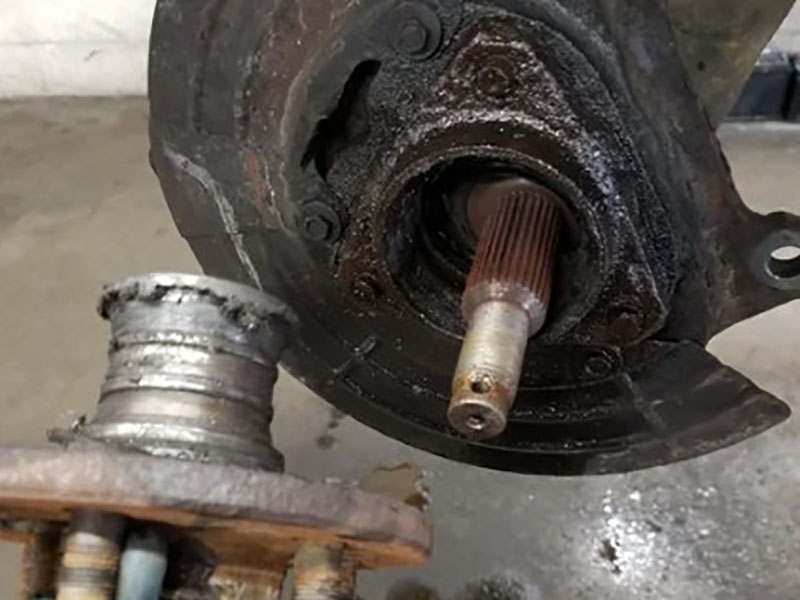
Once you’ve noticed one or more of the symptoms above, you’ll want to confirm whether a wheel bearing is actually the problem. Here are three diagnostic methods you can use.
Method 1: Road Test – Listen While Driving (DIY)
This is the simplest method and one you can do yourself.
Procedure:
- Find a safe, empty road where you can drive at 30-50 mph without traffic.
- With both hands on the wheel, gently weave the vehicle from side to side in a mild S-pattern. Keep the movements smooth and controlled – you’re not swerving; you’re just shifting the vehicle’s weight from one side to the other.
- Listen carefully to the noise from each wheel as you turn.
How to interpret the results:
- Noise gets louder when turning left – The problem is likely on the right-side bearing (the outside wheel during the turn bears more load).
- Noise gets louder when turning right – The problem is likely on the left-side bearing.
- Noise gets quieter when turning one way – The bearing on the opposite side is likely the culprit (turning transfers load away from the bad bearing, reducing the noise).
Safety note: Always perform this test in a safe environment with no traffic around. Keep your speed moderate and your movements gradual.
Method 2: Jack and Physical Inspection (DIY – With Caution)
This method requires lifting the vehicle and checking for play in the wheel assembly.
Procedure:
- Securely lift the vehicle using a floor jack and always place jack stands under the vehicle before getting underneath. Never work under a vehicle supported only by a jack.
- With the wheel still on (or removed, depending on access), grasp the tire at the top and bottom.
- Push and pull firmly – rock the wheel in and out.
- Rotate the wheel by hand and listen for grinding or roughness.
What to look for:
- Excessive play: If you can feel noticeable movement when rocking the tire, the bearing has excessive clearance. As a general reference for many vehicle models, radial play exceeding approximately 0.005 inches (0.13 mm) is cause for concern. Some service specifications call for end play of 0.05 mm (0.002 inch) or less.
- Rough rotation: If the wheel doesn’t spin smoothly or you hear a grinding sound when rotating it, the bearing is damaged.
- No detectable play but symptoms persist: Some sealed hub bearings only show play when the vehicle is loaded (weight on the wheels). If you have symptoms but can’t detect play with the wheel in the air, have a professional shop perform a loaded inspection.
Important note on specifications: Wheel bearing clearance specifications vary significantly between vehicle makes and models. The values provided above (0.005 in / 0.13 mm radial play and 0.05 mm / 0.002 inch end play) are general reference points only. Always refer to your vehicle’s factory service manual for the exact specifications for your specific model. When in doubt, consult a professional technician.
Method 3: Professional Diagnostic Tools (Shop)
If you want a definitive diagnosis, or if your DIY checks are inconclusive, a professional shop has tools that can pinpoint the problem.
Electronic stethoscope / chassis-ear: This tool amplifies sounds from specific components while isolating others. A technician can place the probe on the steering knuckle near each wheel bearing and compare the noise levels. This is the most accurate way to identify which bearing is failing, as it eliminates confusion with tire noise, brake noise, or driveline sounds.
OBD-II scanner: If your ABS light is on, a scanner can read the specific wheel speed sensor fault code. This tells the technician which wheel has the sensor issue, narrowing down the suspect bearing. Common codes like C0035 (front left) or C0040 (front right) point directly to a specific wheel.
The bottom line: A reliable diagnosis typically requires combining two or three of these methods. Don’t replace a bearing based on a single symptom – confirm it with at least one other check to avoid wasting money on unnecessary repairs.
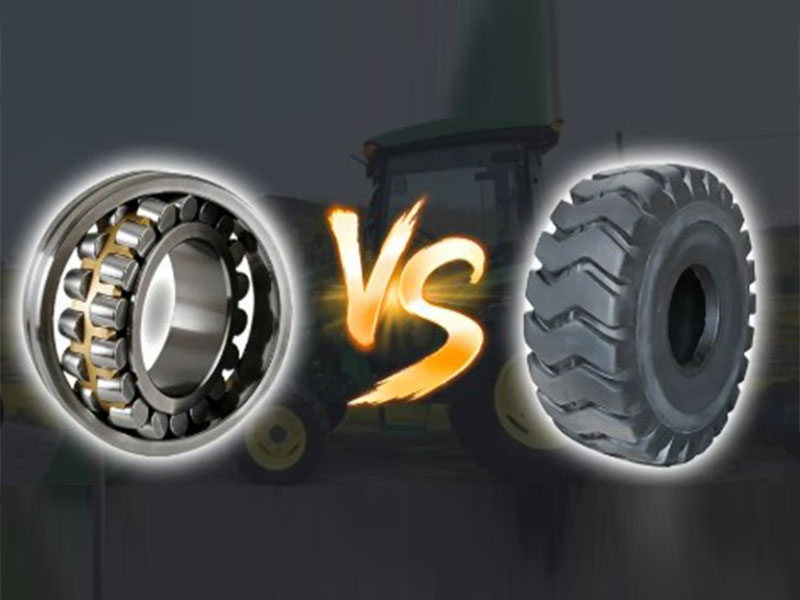
Quick Reference: Bearing Noise vs. Tire Noise
| Characteristic | Bad Bearing Noise | Tire Noise |
|---|---|---|
| Changes with vehicle speed | Yes – gets louder as speed increases | Yes – but the change is more gradual |
| Changes when turning | Yes – noticeably louder or quieter | No – stays about the same |
| Changes with road surface | No – surface doesn’t affect the noise | Yes – rough pavement is much louder |
| Typical sound | Metallic grinding, growling, or rumbling | Low-frequency hum or tread pattern slap |
Can You Drive with a Bad Wheel Bearing?
This is one of the first questions drivers ask when they notice symptoms. The answer depends on how severe the problem is.
Early stage – mild noise only: If you’ve just noticed a slight growl and there’s no vibration or handling issue, you can cautiously drive a short distance at low speed (under 30 mph) to the nearest repair shop. But don’t delay – have it checked as soon as possible.
Mid stage – vibration or shudder: If you’re feeling vibration in the steering wheel or through the floor, the bearing has developed significant wear. Do not continue driving beyond what’s necessary to reach a shop. The risk of sudden failure increases dramatically at this stage.
Severe stage – loose steering, wandering, or ABS light on: Stop driving immediately. Have the vehicle towed to a repair shop. A bearing this worn is a serious safety hazard. At any moment, it could seize (causing the wheel to lock up) or break apart (causing the wheel to separate from the vehicle).
The bottom line: A failing wheel bearing is not a comfort issue – it’s a safety issue. The wheel bearing is what keeps your wheel attached to your vehicle. When it fails completely, you lose control of that wheel. Don’t take that risk.
Wheel Bearing Replacement Cost
The cost to replace a wheel bearing varies significantly based on your vehicle, where you live, and which shop you use. Here’s what you can expect.
Typical cost range: For most common passenger vehicles, the average cost for a single wheel bearing replacement is approximately $150 to $500 per wheel, including parts and labor. Keep in mind:
- Luxury or performance vehicles often cost more – sometimes $600 to $800 per wheel or higher, due to more expensive parts and greater labor time.
- All-wheel-drive (AWD) and 4×4 vehicles may have additional complexity affecting cost.
- Regional variations in labor rates ($50-$170/hour) can significantly impact the final bill.
Cost breakdown (typical passenger vehicle):
| Component | Typical Cost Range |
|---|---|
| Parts (bearing/hub assembly) | $50 – $250 per wheel |
| Labor | $100 – $250 (1-2 hours of shop time) |
| Total per wheel | $150 – $500 |
What affects the cost:
- Vehicle make and model: Luxury and performance vehicles typically use more expensive bearings and require more labor time.
- Front vs. rear: Some vehicles have different bearing designs front-to-rear, affecting parts cost.
- Shop labor rate: Rates vary by region from $50 to $170 per hour.
- Parts quality: OEM (original equipment manufacturer) parts cost more than aftermarket. High-quality aftermarket brands offer a middle ground – good quality at a more reasonable price.
Cost-saving tip: Choose a reputable aftermarket brand that offers OEM-quality construction. You’ll get reliable performance without paying the OEM brand premium. Cheap, no-name bearings may save you money upfront, but they often fail prematurely – costing you another round of parts and labor.
When Should You Replace a Wheel Bearing?
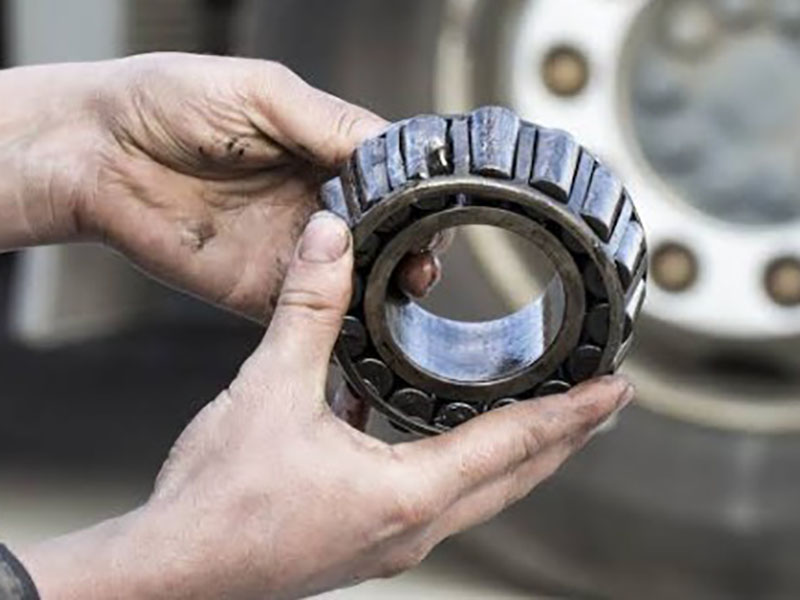
Mileage guideline: Wheel bearings typically last 85,000 to 100,000 miles (approximately 136,000 to 160,000 km). This is a general rule of thumb – actual lifespan depends on driving conditions, vehicle weight, road quality, and bearing quality. Some bearings fail much earlier; others last well beyond 100,000 miles.
Symptom trigger: If you’ve confirmed a bad bearing through diagnosis (using one or more of the methods above), don’t wait for it to get worse. Replace it promptly. The longer you drive with a failing bearing, the more damage it can cause to other components – including the hub, brake rotor, and even the steering knuckle.
Replace in pairs – why it matters: When one wheel bearing fails, the bearing on the opposite side of the same axle has endured the same mileage, the same road conditions, and similar wear. It’s often recommended to replace wheel bearings in pairs (both front bearings or both rear bearings) once your vehicle has passed 75,000 miles. Here’s why:
- Balanced performance: New and worn bearings don’t perform identically. Replacing both ensures consistent handling and braking left-to-right.
- Cost efficiency: If you replace only one and the other fails six months later, you pay for labor twice. Replacing both at once saves you the second labor charge.
- Customer convenience: For shop owners, replacing in pairs eliminates the customer’s need to return for the same repair on the other side.
Exception to the rule: For certain vehicle models, or when a single bearing has been damaged by an impact (such as hitting a curb or pothole), replacing just the damaged bearing may be sufficient. Additionally, if your vehicle has relatively low mileage (under 40,000-50,000 miles) and only one bearing has failed due to a manufacturing defect rather than normal wear, replacing just the failed unit is often acceptable. Always consult your vehicle’s factory service manual for model-specific recommendations.
How to Choose a Quality Replacement Hub Assembly
Not all wheel bearing and hub assemblies are created equal. Here’s what to look for when choosing a replacement.
Material Standard
Quality bearings use GCR15 high-carbon chromium bearing steel (equivalent to SAE 52100). This material contains approximately 0.95-1.05% carbon and 1.30-1.65% chromium. After heat treatment, it achieves a hardness of approximately HRC 60-64 (with some variations reaching up to HRC 66 under specific conditions).
Why this matters: GCR15 steel offers excellent wear resistance, high contact fatigue strength, and good dimensional stability. Bearings made from ordinary carbon steel lack this hardness and wear resistance – they’ll wear out much faster, especially under the high loads and constant rotation that wheel bearings endure.
What to avoid: Cheap bearings made from lower-grade steel. They may cost less upfront, but they won’t last as long and are more likely to fail prematurely.
Seal Design
The seal is what keeps lubricant in and contaminants out. Water, dirt, and road salt are the enemies of wheel bearings – they degrade the lubricant and accelerate wear.
Double-lip or labyrinth seals: These provide superior protection compared to single-lip rubber seals. A double-lip seal creates two barriers against contamination, while a labyrinth design uses a tortuous path that makes it difficult for water and dirt to reach the bearing.
What to look for: Choose an assembly with a robust multi-lip sealing system. If the seal design looks basic or flimsy, the bearing won’t last as long in real-world conditions.
Manufacturing Precision
Wheel bearings must be manufactured to tight tolerances to run smoothly and quietly. P5 or P6 precision grades indicate higher manufacturing accuracy.
Why precision matters: A bearing with poor precision will have incorrect internal clearance, leading to noise, vibration, and premature wear right from installation. High-precision bearings run smoothly, generate less heat, and last longer.
What to look for: Reputable manufacturers clearly specify their quality standards. If a product doesn’t mention its precision grade or tolerance standards, that’s a red flag.
Quick Quality Checklist
Before you buy a replacement hub assembly, run through this quick checklist:
- Surface finish: Is the machining smooth and clean? No burrs, rust, or rough spots?
- Spin test: Does the bearing rotate smoothly by hand with no grinding, roughness, or “stepping” feeling?
- Clear labeling: Is there a visible brand name, part number, and production batch code?
- Warranty: Does the manufacturer offer a reasonable warranty? This shows confidence in their product.
Conclusion
A bad wheel bearing isn’t something to ignore. The five key symptoms to watch for are:
- Grinding or growling noises that get louder with speed
- Steering wheel vibration, especially during turns
- Uneven tire wear on one wheel
- ABS warning light illumination
- Loose or wandering steering – the most dangerous sign
If you notice any of these, don’t delay. Diagnose the problem using the road test, jack inspection, or professional tools. If you confirm a bad bearing, replace it promptly – and consider replacing the opposite side as well if your vehicle has over 75,000 miles, unless an exception applies (such as impact damage or low mileage).
Remember: A wheel bearing failure isn’t just an inconvenience. It’s a safety risk that can lead to wheel separation, brake failure, or loss of vehicle control. Choose a quality replacement hub assembly made with proper materials (like GCR15 steel), good seals, and precision manufacturing. Your safety – and your vehicle’s reliability – depends on it.
FAQs
Q1: How long do wheel bearings typically last?
A: Under normal driving conditions, wheel bearings typically last 85,000 to 100,000 miles (approximately 136,000 to 160,000 km). Actual lifespan varies based on driving habits, road conditions, vehicle load, and bearing quality.
Q2: Is it safe to drive with a bad wheel bearing?
A: Not for long. In early stages (mild noise only), you can drive a short distance at low speed to reach a shop. But if you feel vibration, loose steering, or see the ABS light, stop driving immediately – the wheel could seize or separate.
Q3: How much does it cost to replace a wheel bearing?
A: For most common passenger vehicles, the cost ranges from $150 to $500 per wheel including parts and labor. Luxury, AWD, or performance models may cost $600-$800 or higher. Parts run $50-$250 and labor $100-$250 depending on your vehicle and location.
Q4: How can I tell the difference between wheel bearing noise and tire noise?
A: Do the S-turn test: drive 30-50 mph and weave left and right. If the noise changes when turning, it’s likely a wheel bearing. If it stays the same, it’s probably tire noise. Tire noise also changes with road surface; bearing noise does not.
Q5: Should I replace wheel bearings in pairs?
A: For vehicles with more than 75,000 miles, yes – unless the failure is due to impact damage or a defect on a low-mileage vehicle. Replacing both at once saves you from paying labor twice and ensures balanced handling.
Q6: What are the main causes of wheel bearing failure?
A: The three primary causes are: lubrication failure (grease breaks down or leaks), impact damage (potholes, curbs, speed bumps), and improper installation (incorrect pressing or torque).
Q7: Can a bad wheel bearing trigger the ABS warning light?
A: Yes. Modern hub assemblies integrate a wheel speed sensor. Bearing wear can damage the encoder ring or contaminate the sensor, triggering the ABS light.
Q8: How do I know if it’s the front or rear wheel bearing that’s bad?
A: Listen to the noise location: noise from in front of you – front bearing; noise from behind – rear bearing. The S-turn test can help identify left vs. right. A professional with an electronic stethoscope can pinpoint it exactly.