

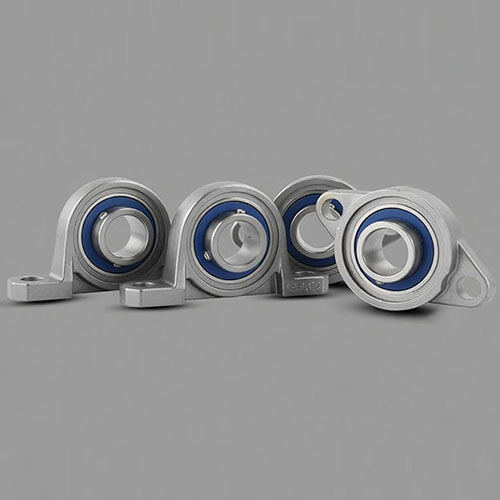
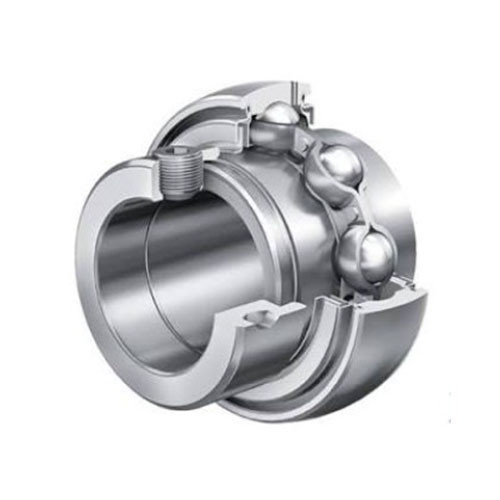
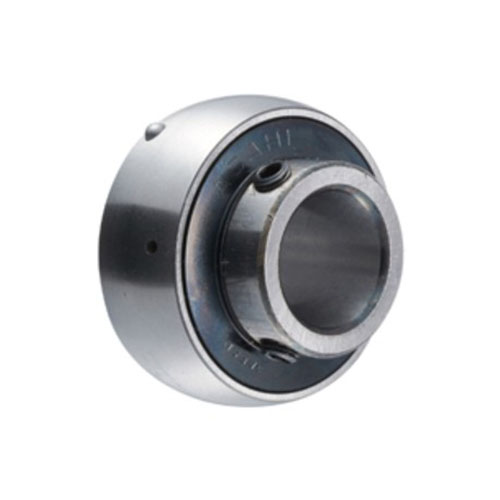
Definition & Components
Insert bearings – also known as radial insert ball bearings, wide inner ring bearings, or Y-bearings – are single-row, ready-to-fit units comprising a solid outer ring and an inner ring extended on one or both sides. They are based on sealed deep groove ball bearings in the 62 and 63 series. The outer ring has a convex spherical shape, and the inner ring is extended to accommodate a locking device. This design enables quick and easy mounting onto straight cylindrical shafts.
A mounted bearing unit is a complete assembly consisting of an insert bearing mounted in a housing – available in pillow block, flange, take-up, or hanger configurations. The housing provides the structural interface to bolt the unit onto equipment frames. The spherical outside diameter of the insert compensates for static initial shaft misalignment by tilting within the housing. Each unit is pre-lubricated and sealed, ready for immediate installation.
Features & Advantages
- Quick and easy mounting – Different locking methods (set screw, eccentric collar, adapter sleeve) enable rapid installation onto shafts using standard tools. No press-fitting required.
- Misalignment compensation – The spherically shaped outside surface enables initial misalignment by tilting in the housing, compensating for shaft deflection and mounting inaccuracies.
- Extended service life – Multiple sealing options protect against contaminants including dust and moisture. Bearings are pre-lubricated with lithium-based grease for reduced maintenance.
- Reduced noise and vibration – Precision-ground raceways and high-grade balls ensure smooth running and low noise operation.
- Interchangeability – Industry-standard metric and inch bore sizes ensure insert bearings are interchangeable across manufacturers and adaptable to numerous housing configurations.
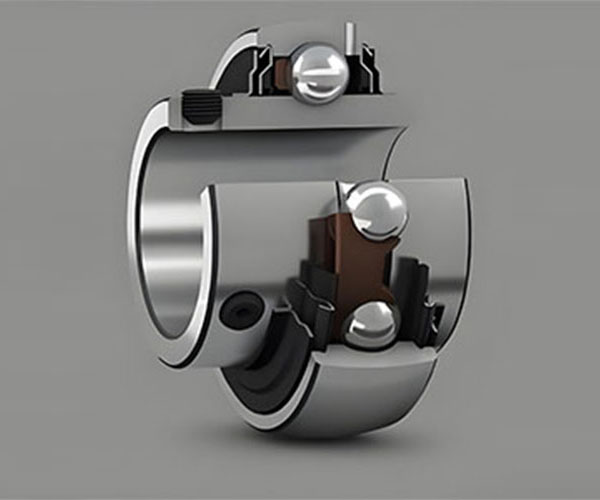
Your Professional Insert Bearing and Mounted Bearing Manufacturer
DUHUI Bearing, founded in 2003 in Zhejiang, China, is a factory specialised in both insert bearings and mounted bearing units. With over 20 years of experience, we offer more than 400 standard models. Our insert bearing series include UC, SA, SB, UK, UE, and UEL, covering bore diameters from 12mm to 200mm. We also produce complete mounted bearing units with various housing styles.
Insert Bearings – Locking Styles by Series
Each series is designed with a specific locking system. Set screw locking applies to UC, SA, and SB – the most common choice for general applications. Adapter sleeve locking is used for UK series, suitable for larger shafts and heavier loads. Eccentric locking collar is featured in UE and UEL series, providing a tighter grip under reversing or vibrating conditions. All series are manufactured from GCR15 bearing steel with precision-ground raceways. Sealing options range from single-lip to triple-lip with metal shrouds, and heat stabilisation S1 and S2 is available for high-temperature environments.
Mounted Bearings – Housing Styles and Codes
Our mounted units are organised into four main housing categories.
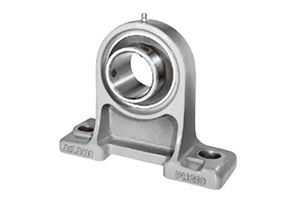
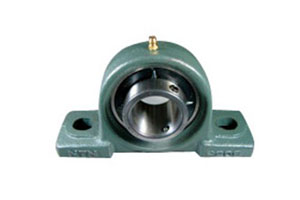
- Pillow block bearings – available in P, PA, and PH housings. Two-bolt base for supporting rotating shafts.
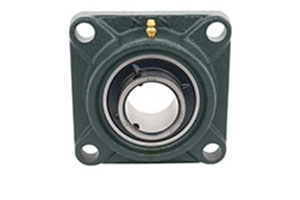
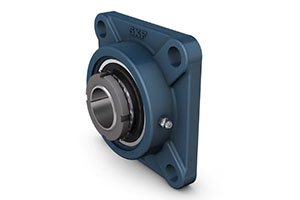
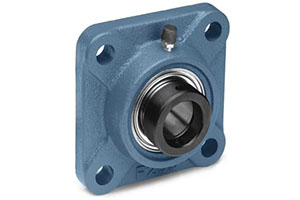
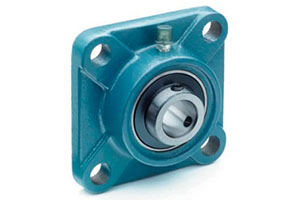
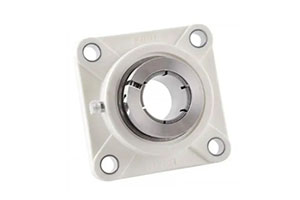
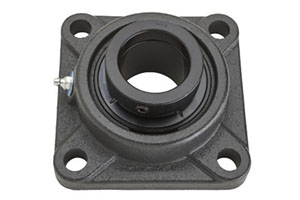
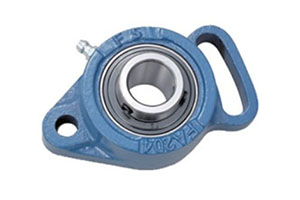
- Flange mounted bearings – offered in F, FA, FB, FC, FL, and FS housings. Round, square, and diamond-shaped flanges for perpendicular mounting surfaces.
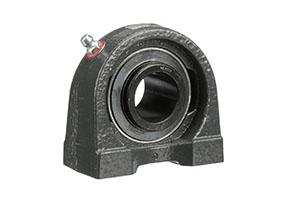
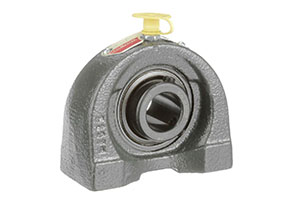
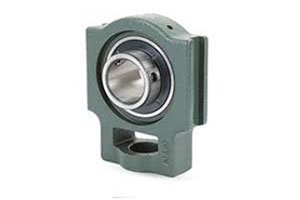
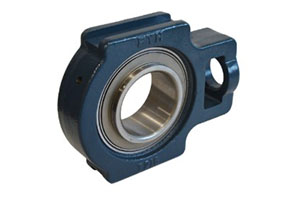
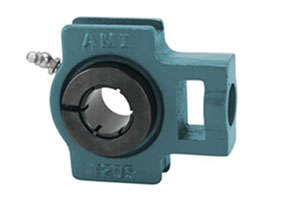
- Take-up bearings – supplied in T housings. Adjustable slide frame for belt tensioning in conveyors.
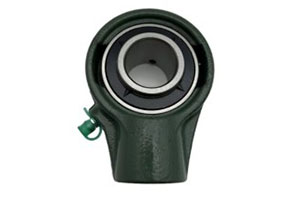
- Hanger bearings – available in HA housings. Designed for suspended shaft applications in overhead lines.
All housings are cast from HT200 grey iron as standard, with ductile iron and stainless steel options available. Each unit is pre-lubricated with lithium-based grease (GB/T 7324 No.2), suitable for operating temperatures from -10 C to 120 C, and fitted with self-aligning inserts to compensate for shaft misalignment, reducing maintenance needs.
Materials, Quality and Certifications
We apply carburising, shot peening, or anti-corrosion coatings as required. Our in-house lab performs dimensional accuracy, radial clearance, noise, and vibration tests on every batch. DUHUI holds ISO 9001 and IATF 16949 certifications. Precision meets ABEC1 (P0) with C3/C4 clearances optional. Our complaint rate stays below 0.5% due to strict material and process control.
Why Choose DUHUI
We manufacture in our own 10,000 m2 facility with a monthly output of 100,000 sets. Standard orders ship within 15 to 45 days; custom prototypes and small-batch samples can be delivered within 30 days. Our products are exported to Europe, North and South America, and the Middle East. We provide a 2-year or 50,000-km warranty on all standard products, with technical support available for installation and troubleshooting.
Applications and Custom Support
Our bearings serve agriculture, conveyors, mining, packaging, and material handling. We support OEM, ODM, and private-label orders. Custom housings, non-standard bores, special coatings, and series modifications can be developed per your drawings. Packaging options include standard export cartons, neutral packaging, or branded boxes per your requirements. Contact us for catalogues, samples, or technical data. DUHUI Bearing – your professional insert bearing and mounted bearing manufacturer since 2003.
Product Types and Series
Insert bearings are classified by their locking mechanism, while mounted bearings are classified by housing configuration. The tables below present the standard series designations and the corresponding complete unit codes.
- Insert Bearing Types
- Mounted Bearing Types
- Product Series
Insert Bearing Types
Insert bearings are classified into three primary types based on their clamping mechanism. Each type is suited to specific load conditions, shaft surfaces, and vibration environments.
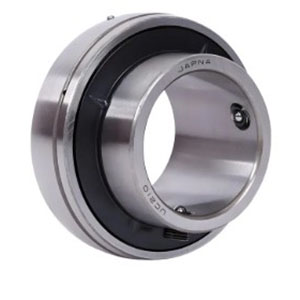
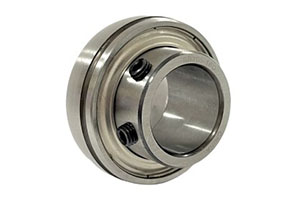
One or two set screws in the extended inner ring are tightened directly against the shaft. Simple and fast, suitable for light- to medium-duty applications with steady loads.
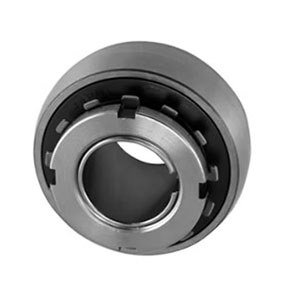
A tapered sleeve is driven between the shaft and the bearing bore using a lock nut and lock washer. Provides 360° concentric clamping force, ideal for reversing loads, heavy vibration, and shafts without shoulders.
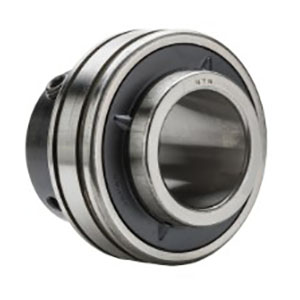
A cam-action collar is rotated in the direction of shaft rotation to lock the bearing. Offers uniform grip without shaft damage, commonly used where vibration is moderate.
Mounted Bearing Types
Mounted bearings are classified by housing geometry. The selection of housing type depends on mounting orientation, space constraints, and maintenance access requirements.
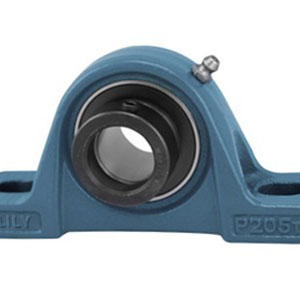
Base-mounted housings with bolt holes, supporting shafts parallel to the mounting surface. Widely used in conveyors, fans, and agricultural equipment.
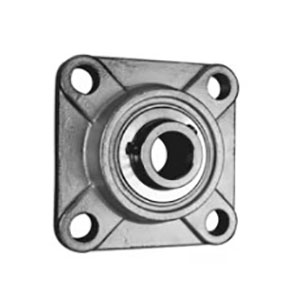
Face-mounted housings bolted to vertical or inclined surfaces. Available in various flange shapes and bolt configurations.
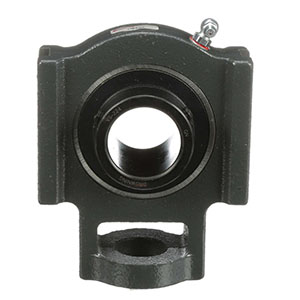
Housings with an adjustable sliding base, designed to maintain belt or chain tension in conveyor systems.
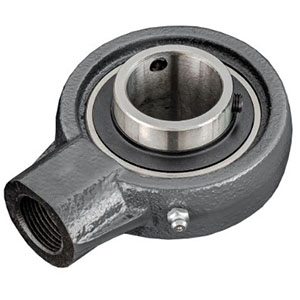
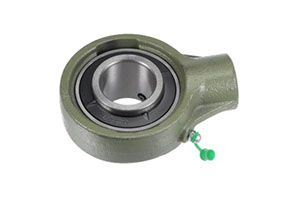
Overhead-mounted housings specifically for screw conveyor applications, supporting the shaft from above.
Insert bearing series are designated by locking method, and mounted bearing units are designated by housing type. The following table provides a complete cross-reference of locking methods, series codes, and housing suffixes.
Insert Bearings – Locking Methods
| Locking Method | Series Designations |
| Set Screw Locking | UC, SA, SB |
| Adapter Sleeve Locking | UK |
| Eccentric Collar Locking | UE, UEL |
Mounted Bearings – Housing Type Cross-Reference
| Housing Type | UC | UK | SA | SB | UE | UEL |
| Pillow Block – P | UCP | UKP | SAP | SBP | UEP | UELP |
| Pillow Block – PA | UCPA | UKPA | SAPA | SBPA | UEPA | UELPA |
| Pillow Block – PH | UCPH | UKPH | — | — | — | UELPH |
| Flange – F | UCF | UKF | SAF | SBF | UEF | UELF |
| Flange – FA | UCFA | UKFA | SAFA | — | — | — |
| Flange – FB | UCFB | UKFB | — | — | — | UELFB |
| Flange – FC | UCFC | UKFC | — | — | — | UELFC |
| Flange – FL | UCFL | UKFL | SAFL | SBFL | UEFL | UELFL |
| Flange – FS | UCFS | UKFS | — | — | — | UELFS |
| Take-up – T | UCT | UKT | — | — | UET | UELT |
| Hanger – HA | UCHA | UKHA | SAHA | SBHA | UEHA | — |
Other Related Bearing Types
The following bearing types are commonly used in automotive driveline and wheel-end applications. Although they are not insert or mounted bearings in the strict sense, they are often referenced alongside them in product portfolios.
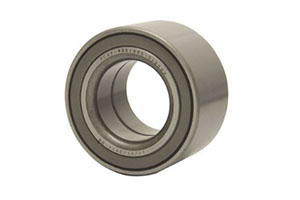
Single-row or double-row ball or tapered roller bearings pressed directly into the steering knuckle or hub. No integrated flange; the hub and bearing are separate components. Used in many passenger car rear axles and some front axles.
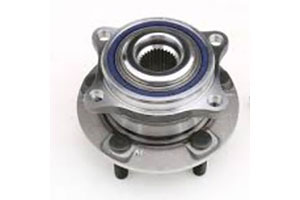
Pre-assembled units that integrate the bearing, hub flange, and (in Gen 3) an ABS sensor ring. Bolted directly to the steering knuckle, reducing assembly complexity and improving stiffness. Common in modern FWD and SUV applications.
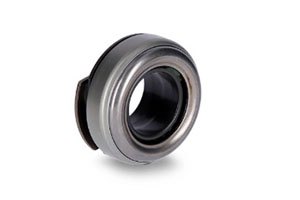
Axial-load bearings (also called throw-out bearings) that actuate the clutch diaphragm spring in manual transmissions. Designed for high axial thrust and rapid engagement cycles.
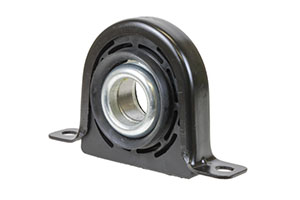
Mounted bearings that support the centre of a two-piece driveshaft in rear-wheel-drive and truck applications. They accommodate shaft misalignment and dampen driveline vibrations.
Industrial & Automotive Applications
Insert bearings and mounted bearing units are specified across a broad range of industries. The following lists key sectors and typical equipment where these products are installed.

Assembly line rollers, conveyor systems, powertrain test rigs, suspension components, steering linkages, and auxiliary drives where compact, sealed bearings are required.
Combine harvesters, balers, tillage equipment, and sprayers. Demanding environments require enhanced sealing against dust, soil, and moisture.
Belt conveyors, roller conveyors, bucket elevators, and palletisers. Pillow block and take-up units are standard for tension adjustment and shaft support.
Stainless-steel housings and food-grade lubricants are used in wash-down areas. Bearings must resist corrosion and frequent cleaning cycles.

Industrial pumps, HVAC fans, and blowers. Reliable operation and low maintenance are key, with cast-iron housings providing durability.
Crushers, screens, and heavy-duty conveyors. Ductile-iron housings and robust sealing handle high loads and abrasive contaminants.
Product Comparison
The following internal article compares UC series (set screw locking) with UK series (adapter sleeve locking) insert bearings, helping engineers choose based on load, vibration, and shaft conditions.
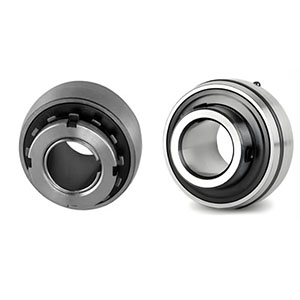
UC bearings use set screws for quick installation, suitable for moderate loads and steady operation. UK bearings employ a tapered sleeve and lock nut, providing 360° clamping force, ideal for reversing loads, high vibration, and shafts without shoulders. This article details torque specifications, shaft preparation, and application examples for each type.
For more details, please read“ UC vs UK”
Related Products
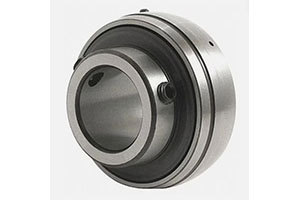
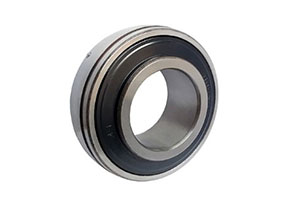
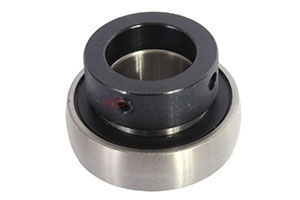
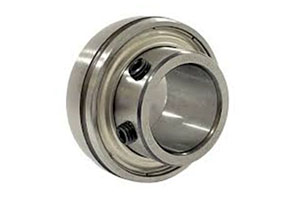
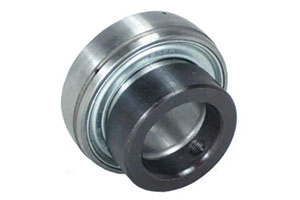
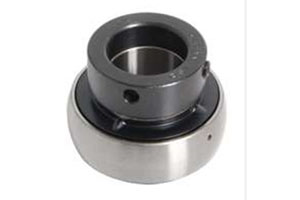
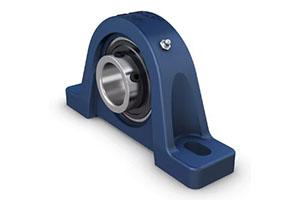
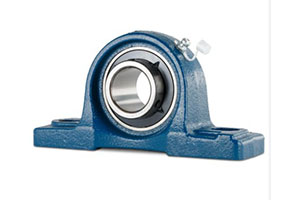
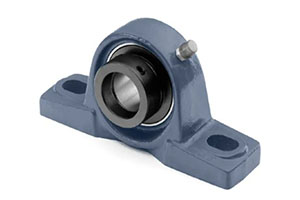
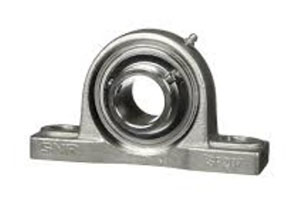
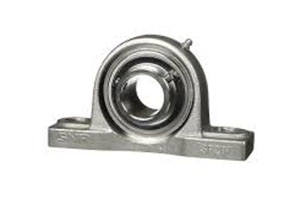
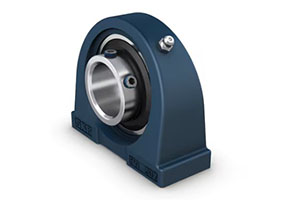
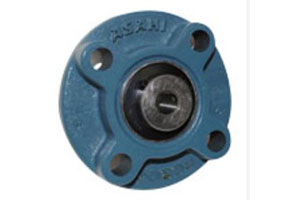
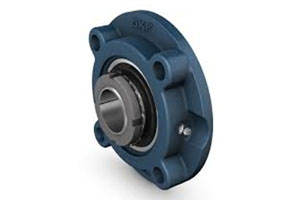
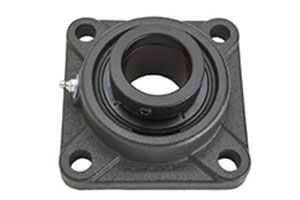
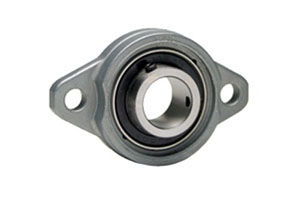
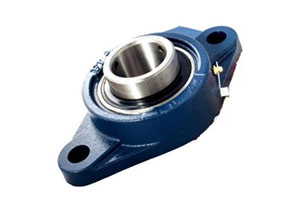
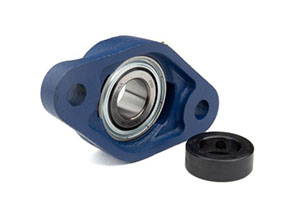
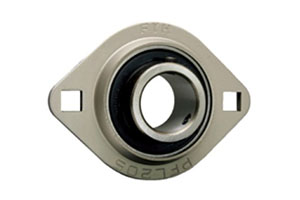
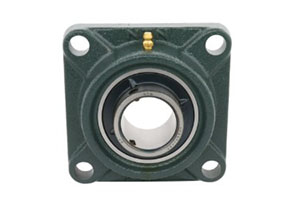
The following insert bearings and mounted bearing units are commonly specified models across industrial applications. These selections are based on standard series designations and typical usage scenarios. For specific dimensional, load, and sealing requirements, refer to the product data sheet of each model.
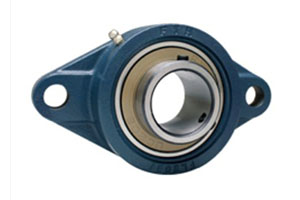
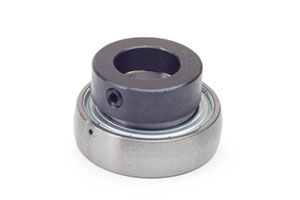
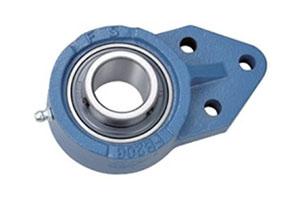
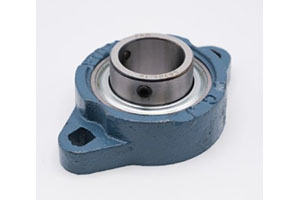
Insert Bearings and Mounted Bearing Units – Selection Guide, Locking Mechanisms & Common Failures
Quick Answer: Insert bearings are self-aligning bearings with a spherical outer ring and extended inner ring that locks onto the shaft. Mounted bearing units combine an insert bearing with a housing for bolt-on installation. Choose your locking mechanism (set screw for general use, adapter sleeve for heavy loads, eccentric collar for reversing loads), housing style (pillow block, flange, take-up, or hanger), and sealing based on your operating environment.
Ever had a bearing fail prematurely because the shaft got scored by set screws? Or struggled to align a replacement unit because the housing bore wasn’t machined correctly? These are everyday challenges in industrial maintenance.
Insert bearings and mounted bearing units solve these problems by combining the bearing, housing, and locking mechanism into a single, ready-to-mount assembly. You don’t need to machine housing bores, press-fit bearings, or worry about seal alignment. You just slide the unit onto the shaft, lock it, and bolt it down.
This guide covers what these components are, how they work, how to choose the right one for your application, and what to do when things go wrong. Whether you’re an engineer specifying new equipment or a maintenance professional replacing worn units, you’ll find practical selection criteria and troubleshooting guidance to inform your decision.
What Are Insert Bearings?
An insert bearing is a self-aligning rolling element designed for quick, trouble-free shaft mounting. Its outer ring has a spherical outside surface that sits inside a matching concave housing bore. This ball-and-socket arrangement allows the bearing to accommodate angular misalignment between the shaft and the housing – a feature that makes these bearings exceptionally forgiving of installation imperfections and shaft deflection.
The inner ring is wider than a standard bearing’s and extends on one or both sides. This extra width houses the locking device that secures the bearing to the shaft. Instead of requiring an interference fit pressed into a precision-machined bore, an insert bearing slips onto the shaft with a clearance fit and locks in place mechanically.
The bearing’s dimensions trace back to the widely used 62 and 63 series deep-groove ball bearings. Most insert bearings reach the end user already greased and sealed, cutting installation time significantly.
Locking Styles by Series
Each bearing series pairs with a specific locking approach, and that pairing shapes the unit’s performance profile.
Set screw locking – UC, SA, and SB series – This is the workhorse option for general industrial use. The UC series features an inner ring extended on both sides with two set screw holes; SA and SB variants have a single set screw at different angular positions. You tighten the screws with a hex key against the shaft surface. It’s fast and tool-friendly. The trade-off is that the set screws leave small indentations on the shaft – not an issue for most applications, but worth noting if you plan to reuse the shaft.
Adapter sleeve locking – UK series – A tapered sleeve slides between the shaft and the bearing bore. As you tighten the lock nut, the sleeve expands outward, pressing the inner ring against the shaft with uniform 360° force. This approach eliminates shaft marking and provides excellent concentricity. It’s particularly valuable for larger shaft diameters, reversing loads, and applications where vibration might otherwise loosen set screws. Note that the adapter sleeve is sometimes sold separately rather than included with the bearing.
Eccentric locking collar – UE and UEL series – The inner ring extends on one side and includes an eccentric groove. A collar with a matching offset bore fits over the extended ring. Rotating the collar in the shaft’s running direction locks it into place through cam action. This gives a more distributed grip than set screws without the complexity of an adapter sleeve. These series perform well in reversing or moderately vibrating applications.
Materials and Construction
The rings and rolling elements use high-carbon chromium bearing steel – the industry-standard material known for its fatigue resistance and dimensional stability. This steel is specified under various national standards: GCr15 (China), AISI 52100 (United States), DIN 100Cr6 (Germany), and JIS SUJ2 (Japan). All raceways undergo precision grinding to ensure smooth rotation and geometric accuracy.
Sealing Configurations
The operating environment usually determines the right seal. Here’s what’s available:
- Single-lip and double-lip rubber seals (RS, 2RS) – A rubber lip presses lightly against the inner ring, forming a contact barrier that keeps grease in and dirt out. The double-lip version adds a second lip for tougher conditions.
- Triple-lip seals – Three rubber lips arranged in series. This is the choice for applications involving fine dust, heavy moisture, or both – think agriculture and mining.
- Metal shrouds (also called flingers or deflectors) – These are sheet-metal discs attached to the inner ring. As the shaft rotates, centrifugal force flings water and debris away from the rubber seal. Many designs pair a shroud with a rubber contact seal for two-stage protection.
Contact seals give you the best contamination defense at the cost of some friction-generated heat. Labyrinth seals, where clearance rather than contact keeps contaminants out, run cooler but offer less protection against fine particles.
What Are Mounted Bearing Units?
A mounted bearing unit – often called a housed bearing – is the full package: an insert bearing seated inside a housing. The housing does three jobs: it holds the bearing in position, it protects the bearing from external damage, and it provides a standardized bolt pattern for attaching the assembly to your machine frame.
Because the housing handles the fit and alignment, you don’t need to machine precise bores in your equipment. This simplifies initial installation and future replacements alike. The insert’s self-alignment capability reduces stress on the shaft and connected components, which can extend the service life of the entire drivetrain.
Housing Styles and Codes
Each housing configuration carries a letter code that shows up in the full product designation:
- Pillow block housings (P, PA, PH) – These have a flat base with bolt holes and are the most widely used configuration for horizontal shafts. P covers the standard design; PA and PH are variants with different base dimensions or bolt spacing.
- Flange housings (F, FA, FB, FC, FL, FS) – These bolt to vertical or angled surfaces through a flange. Round flanges (F, FA, FB) work well for general service; square flanges (FC) offer more mounting points; diamond-shaped flanges (FL) suit tight spaces; FS covers special square-flange dimensions. Flange units are the go-to choice where a pillow block won’t physically fit – for example, at the free end of a shaft or in equipment with limited deck space.
- Take-up housings (T) – These slide within a slotted frame, letting you adjust belt or chain tension. Conveyor systems rely on them because tension changes as belts stretch and wear.
- Hanger housings (HA) – These suspend the shaft from an overhead structure. They’re common in screw conveyors, where intermediate shaft support is needed while bulk material flows beneath.
Housing Materials
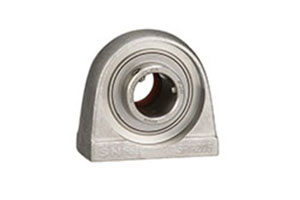
Most housings are cast from grey iron, which gives you good vibration damping and corrosion resistance for typical plant conditions. Ductile iron steps up the strength and impact tolerance for mining or heavy material handling. Stainless steel housings are specified where washdowns, food contact, or corrosive chemicals are in play.
How to Choose the Right Insert Bearing or Mounted Unit
This four-step framework will help you work through the selection systematically:
Step 1 – Start with the shaft and the space available
The shaft diameter determines the bearing bore size you need. The mounting space tells you which housing style fits: a flat base means pillow block; a vertical wall calls for flange; a tensioning requirement points to take-up; an overhead shaft suggests hanger. Measure these two constraints first – everything else follows from them.
Step 2 – Look at the load and the speed
Insert bearings are fundamentally radial-load components with modest axial capacity. If your application has steady, moderate loads and no reversal, UC series with set screw locking is a cost-effective choice. For larger shafts or heavier radial loads, UK series with adapter sleeve locking delivers 360° clamping. The same series is also preferred for high-speed operation because the sleeve centers the bearing better than set screws. For reversing loads or moderate vibration, UE/UEL series with eccentric collar locking provides a secure grip that resists loosening.
Step 3 – Evaluate what the bearing will be exposed to
Dust, moisture, chemicals, and temperature extremes all affect seal and housing selection. Standard 2RS rubber seals handle most indoor industrial conditions. Add a metal shroud if you’re dealing with water spray or heavy dust. Step up to triple-lip seals for fine particulate or persistent moisture. Stainless steel housing becomes necessary in food processing and frequent washdown zones.
Step 4 – Consider how you want to maintain it
If you plan to swap bearings frequently as part of a preventive maintenance schedule, set screw locking makes removal quick and straightforward. If you’re fitting an expensive or difficult-to-replace shaft and cannot tolerate surface damage, adapter sleeve locking is the safer long-term choice.
Environment-Attributes Reference Table
| Environment | Housing Material | Locking Approach | Sealing | Special Notes |
|---|---|---|---|---|
| Washdown / food processing | Stainless steel | Adapter sleeve (UK) | Triple-lip + shroud | Use food-grade lubricant |
| Abrasive / dusty | Grey iron or ductile iron | Adapter sleeve (UK) | 2RS + shroud | Plan for regular relubrication |
| High vibration | Ductile iron | Adapter sleeve (UK) | Triple-lip + shroud | 360° clamping resists loosening |
| General industrial | Grey iron | Set screw (UC) | 2RS | Most cost-effective solution |
When to Specify Mounted Bearing Units
Reach for a mounted bearing unit when your shaft needs external support outside the main equipment housing, when you want to cut installation time, when self-alignment would simplify your design, when maintenance access is tight, or when the operating environment demands a sealed, protected arrangement. These units save you the expense and lead time of machining custom housing bores.
Common Failure Modes and Troubleshooting
Recognizing failure patterns early helps you schedule repairs rather than react to breakdowns.
Corrosion – Pitting, Crevice Rust, or Staining
What you’ll see: Brown or reddish discoloration around seals or on the housing. Rough running and increased noise, especially right after washdown cycles.
What causes it: Washdown spray hitting the seals directly; aggressive cleaning chemicals; poor drying practices; or grease film that’s too thin to protect metal surfaces.
What to do: Upgrade the sealing arrangement or add metal shrouds. Adjust spray patterns so they don’t aim at seal areas. Switch to a grease that stands up to your cleaning chemistry. For repeat issues, consider stainless steel housings.
Grease Washout or Lubricant Starvation
What you’ll see: Grease that looks milky or has disappeared entirely. Higher operating torque. Noise that emerges after the machine has been running a while.
What causes it: Water getting past the seals; cleaning chemicals that break down the grease; relubrication intervals set too far apart; or grease that’s degraded from heat.
What to do: Review your relubrication schedule. Check that your grease is compatible with both your operating temperature and your cleaners. Make sure seals are intact and functioning.
Shaft Creep – Inner-Ring Micro-Movement
What you’ll see: Fretting corrosion – a reddish or black powdery residue – on the shaft under the bearing. Visible wear marks or scoring on the shaft. Overheating in the bearing area.
What causes it: Locking force that’s insufficient for the load; vibration that gradually backs off set screws; a shaft that’s undersized for the bearing bore.
What to do: Switch to adapter sleeve locking (UK series) for 360° clamping. Apply anti-fretting paste during installation. Double-check that set screws or lock nuts are tightened to the specified torque.
Abrasive Wear from Contamination
What you’ll see: Scoring or pitting on rolling elements and raceways. Increasing noise and vibration. A service life that’s noticeably shorter than expected.
What causes it: Dust, sand, or process fines entering through seals that have failed or were never adequate for the environment.
What to do: Upgrade to a more robust sealing configuration – add shrouds or move to triple-lip seals. Keep the installation area clean so contaminants don’t get into the bearing before it even starts running.
Installation and Maintenance Best Practices
A bearing installed poorly will fail early, regardless of its quality. Most premature failures trace back to what happened during installation.
Installation Checklist
- Start with a clean area – Dust and dirt introduced during installation will stay in the bearing for its entire life.
- Inspect the shaft and housing – Remove burrs, nicks, or raised spots. Clean both surfaces thoroughly.
- Apply anti-fretting paste lightly – A thin coat on the shaft and housing seating surfaces prevents corrosion and makes future disassembly easier.
- Position the insert correctly – Make sure it seats fully in the housing bore.
- For eccentric locking collars – Take the collar off the bearing before mounting, then reinstall it once the bearing is in position on the shaft.
- Torque to specification – Overtightening can distort the inner ring or strip threads. Stainless steel inserts are especially sensitive – stay within the published torque range.
- Check alignment – SKF’s published guidelines give two limits: for non-relubricatable bearings, the shaft-to-housing axis misalignment should not exceed 5°. For relubricatable bearings, hold it under 2° so grease can pass through the lubrication channels. Certain sealing configurations may require tighter limits.
Maintenance and Inspection Routine
Regular attention pays off in longer service life. A bearing that receives basic care can run for tens of thousands of hours; one that’s neglected can fail in weeks.
Priorities for maintenance:
- Check lubricant condition and quantity at scheduled intervals
- Keep the bearing and surrounding area clean
- Replace lubricants according to the manufacturer’s schedule and recommendations
- Document operating conditions before disassembly – note the position, orientation, and any visible issues
- When cleaning a bearing for inspection, use clean oil and a soft brush; place a metal mesh at the bottom of the cleaning container to keep the bearing from settling in debris
- After cleaning, inspect raceways and rolling elements for wear, cracks, or corrosion
Interchangeability and Standardisation
Insert bearings and mounted units follow internationally recognized standards – ISO, AFBMA, and JIS – for outside dimensions, bore sizes, and housing bolt patterns. This means you can replace a unit from one manufacturer with an equivalent from another without modifying your equipment.
The UC, UK, and UE designations are understood globally. When ordering a replacement, match both the insert series and the housing style. For instance, a UCP210 housing from one brand will accept the same insert as a UCP210 from another, and the bolt-hole spacing will match.
Standardized sizing in both metric and inch dimensions simplifies procurement and reduces inventory. You don’t need to stock proprietary parts for each piece of equipment.
Common Industry Applications
These components show up across a broad range of machinery:
- Automotive – Rollers on assembly lines, test-stand spindles, and auxiliary drive supports.
- Agriculture – Harvesters, tillers, and balers – applications where contamination is the norm rather than the exception.
- Material handling – Pillow blocks and take-up units are essentially standard equipment on conveyor systems.
- Food processing – Stainless steel housings and food-grade lubricants are mandatory here.
- Packaging and washdown – Hygienic sealed units with deflectors and cleaner-compatible grease.
- Mining – Heavy-duty ductile-iron housings with advanced sealing for extreme conditions.
Conclusion
Insert bearings and mounted bearing units give you a straightforward, dependable way to support rotating shafts. The self-aligning design handles misalignment that would ruin a standard bearing. The variety of locking mechanisms lets you match the unit to your load, speed, and maintenance preferences. The standardized housings simplify both installation and future replacement.
When you’re ready to select a unit, focus on three choices:
- Locking mechanism – UC/SA/SB (set screw) for general service and economy; UE/UEL (eccentric collar) for reversing or vibrating loads; UK (adapter sleeve) for heavy-duty reliability, larger shafts, and high-speed operation
- Housing style – P/PA/PH (pillow block), F/FA/FB/FC/FL/FS (flange), T (take-up), or HA (hanger) – whichever matches your mounting surface and space
- Sealing – from single-lip rubber up to triple-lip with metal shrouds, matched to your environment
The underlying steel components are precision-ground from high-carbon chromium bearing steel, standardized across GCr15, AISI 52100, DIN 100Cr6, and JIS SUJ2 specifications. Standard housings are grey iron, with ductile iron and stainless steel available for demanding conditions. Units arrive ready to mount – greased, sealed, and requiring no machining.
Start with your shaft diameter and installation space. Work through the four-step selection framework. You’ll land on a unit that fits both your machinery and your maintenance routine.
An insert bearing (also called a radial insert ball bearing or wide inner ring bearing) is the rolling element – a single-row deep groove ball bearing with a convex outer ring and an extended inner ring with a locking device. A mounted bearing is the complete assembly including an insert, a housing (pillow block, flange, etc.), and the locking mechanism, ready to bolt onto equipment.
Insert bearings are based on sealed deep groove ball bearings in the 62 and 63 series.
Three primary methods: set screw locking (UC/SA/SB), eccentric collar locking (UE/UEL), and adapter sleeve locking (UK). Each offers different clamping force, shaft protection, and vibration resistance.
Choose UC for simple, fast installation in moderate, steady-load applications. Choose UK for reversing loads, high vibration, shafts without shoulders, or where shaft fretting must be avoided.
No – the inner ring and locking dimensions differ. The housing cross-reference table shows that each insert series has dedicated housing variants (e.g., UCP vs UKP). Always match the complete unit code.
Yes. All insert bearings are factory-filled with grease and sealed. They are ready for use upon installation and require no initial lubrication.
Common materials include HT200 grey iron (standard), ductile iron (heavy-duty), and stainless steel (corrosive/food environments).
The suffix denotes housing type: P = pillow block, PA/PH = pillow block variants, F/FA/FB/FC/FL/FS = flange types, T = take-up, HA = hanger. Refer to the housing cross-reference table for complete unit codes.
Yes, the spherical outer surface of the insert allows static initial misalignment by tilting within the housing. Misalignment between bearing and housing axis should not exceed 5°.
Yes, standardised dimensions ensure interchangeability. Always confirm the bore size, locking method, and housing bolt pattern to ensure a direct replacement.

