
Basic Design
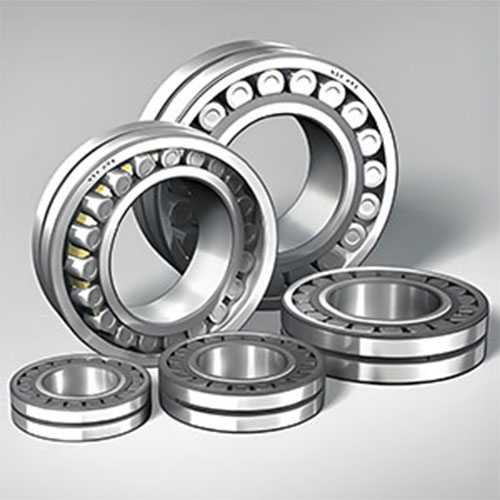
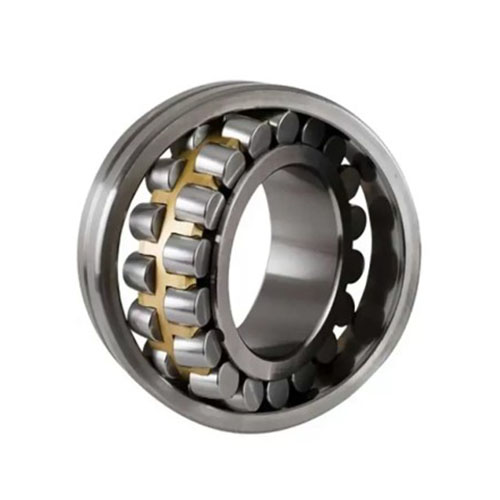
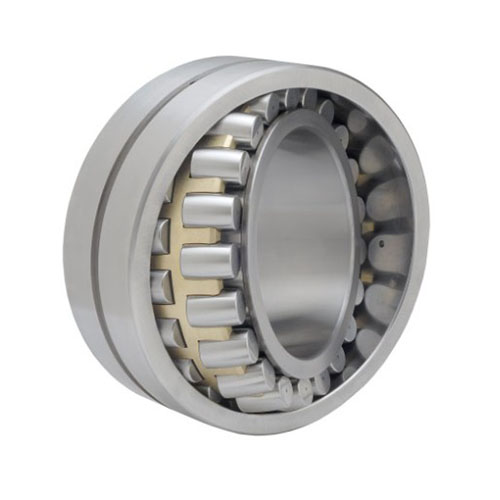
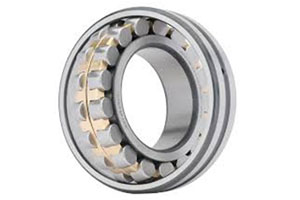
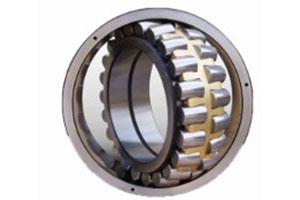
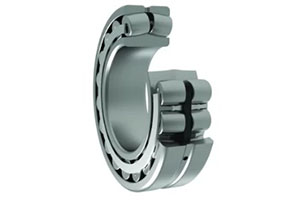
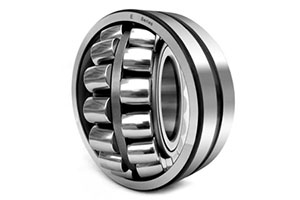
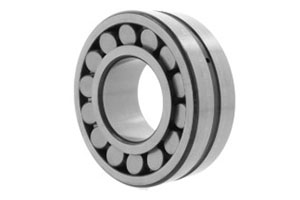
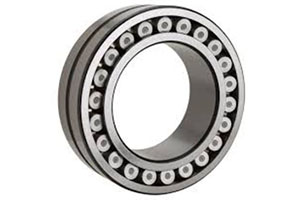
Spherical roller bearings are self-retaining radial bearings with two rows of barrel-shaped rollers. The outer ring has a spherical raceway, while the inner ring incorporates two inclined raceways. This geometry permits the outer ring to pivot relative to the inner ring, accommodating shaft misalignment up to 2° without generating additional friction or heat.
When the shaft deflects under load or the housing expands thermally, the bearing automatically realigns to maintain uniform load distribution across both roller rows. This self-aligning feature reduces stress on adjacent components, prevents edge loading, and extends overall equipment service life in demanding industrial applications.
Performance Advantages
- Self-aligning capability: The spherical outer ring raceway automatically compensates for shaft deflection, housing misalignment, and thermal expansion, reducing stress on bearings and adjacent equipment components.
- Load carrying capacity: Two symmetrical roller rows distribute heavy radial loads efficiently while simultaneously supporting moderate axial loads in either direction, making them suitable for combined loading conditions.
- Speed performance: Optimized internal geometries and precision-machined cages enable high limiting speeds. Brass cages withstand higher temperatures for sustained high-speed operation, while steel cages provide reliable performance at moderate speeds.
- Environmental tolerance: Robust internal construction resists contamination from dust, moisture, and abrasive particles. Sealed variants with contact seals provide additional protection for extended service intervals in dirty operating conditions.
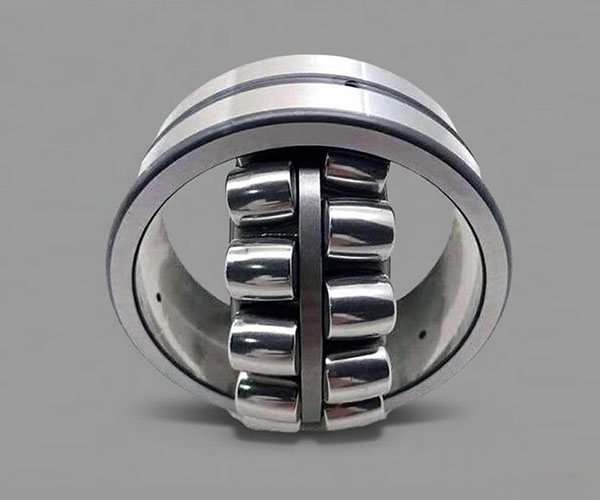
Spherical Roller Bearings Types & Selection Factors
Spherical Roller Bearing Materials and Cage Designs
Cage design significantly influences bearing performance, speed capability, and operating temperature range. Four primary cage types are available across spherical roller bearing configurations:
Sheet steel (stamped or laser-cut): Low-profile steel cages provide high strength-to-weight ratios, good fatigue resistance, and cost-effective production. This cage type is standard for designs requiring high load capacities and limiting speeds.
Polyamide (injection molded): Lightweight plastic cages offer low friction, reduced centrifugal forces at high speeds, and quiet operation. Polyamide glass-fiber reinforced (PA66) cages suit moderate temperatures up to 120°C and reduced lubrication sensitivity.
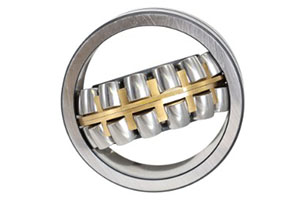
Brass (stamped or machined): High-strength machined brass cages deliver exceptional vibration damping, shock load absorption, and dimensional stability at elevated temperatures up to 250°C. These cages are preferred for large-sized bearings, vibrating machinery, and heavy shock conditions.
Steel (machined): One-piece machined steel cages provide maximum ruggedness for ultra-heavy duty applications. They withstand the highest shock loads and temperatures exceeding 300°C when combined with appropriate heat treatment.
Internal Structure Variants
EA, C, and CD designs: These symmetrical roller designs utilize stamped steel cages optimized for high load ratings and elevated limiting speeds. EA design features asymmetric rollers guided by the inner ring flanges, enabling maximum load density. The CD design incorporates a two-piece steel cage guided by the outer ring groove. Advanced series bearings incorporate upgraded steel grades, optimized roller dimensions, and either machined brass or stamped steel cages to double service life, increase limiting speeds, and maintain temperature stability up to 200°C.
CA and MB designs (brass machined cage): These designs employ one-piece machined brass cages positioned by either the outer ring (CA) or guided by the roller set (MB). CA design applies primarily to large bore diameters above 200mm, providing high radial load capacity plus bidirectional moderate axial load capability. Both CA and MB designs utilize high-strength brass casting for rigidity, vibration resistance, and low friction coefficients under oscillating movements.
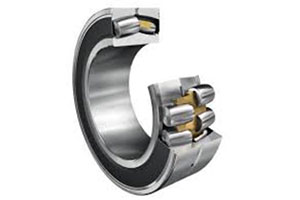
Sealed bearings: Sealed spherical roller bearings incorporate elastomeric seals, metal shields, or total grease package solutions. These bearings arrive pre-filled with high-quality grease and maintain service life extension under contamination-prone environments including mining conveyors, cement processing, and aggregate crushing.
Basic Dimension Series per ISO 15
Boundary dimensions for spherical roller bearings are standardized under ISO 15 to ensure dimensional interchangeability across multiple manufacturers. Standard series include:
21300 series (ISO dimension series 13): Light series with high speed capability, suitable for moderate radial loads where compact cross-section is required. Primarily single-row configuration.
22200 series (ISO dimension series 22): Most widely used double-row series offering balanced load capacity, misalignment accommodation, and moderate speed ratings. Versatile across conveyors, crushers, gearboxes, and paper machinery.
22300 series (ISO dimension series 23): Extra-heavy series with increased cross-sectional height for maximum radial load capacity at moderate speeds. Standard for vibratory screens, hammer mills, stone crushers, and severe shock applications.
23000, 23100, 23200 series (ISO dimension series 30, 31, 32): Progressive capacity increases for large machinery including wind turbine main shafts, steel mill equipment, marine propulsion, and industrial gearboxes requiring combination load handling.
23900, 24000, 24100 series (ISO dimension series 39, 40, 41): Thin cross-section designs (239) through extra-heavy (241) offering capacity-to-size ratios optimized for confined spaces or maximum load density.
29000 series (ISO dimension series 90): Spherical thrust roller bearings designed for pure axial loads combined with moderate radial loads, accommodating shaft misalignment in heavy thrust applications.
Selection Specifications
When specifying spherical roller bearings, the following dimensional and performance parameters must be defined:
Bore diameter (d): The smallest bearing dimension, determines shaft diameter compatibility. Cylindrical bore is standard, with 1:12 or 1:30 tapered bore options for adapter sleeve mounting.
Outside diameter (D): Determines housing bore requirement and overall radial assembly envelope.
Overall width (B): Design envelope parameter that influences load capacity and stiffness.
Limiting speeds: Thermal speed rating (oil lubrication) and mechanical limiting speed (grease or oil). Critical for high-speed machinery.
Static and dynamic load ratings (C and C0): Calculated per ISO 281 standards for L10 basic rating life and safety margin assessment.
Spherical Roller Bearing Types and Series
Spherical roller bearings are manufactured in multiple configurations optimized for specific application requirements. The following sections provide detailed specifications for single row, double row, sealed, and split designs to assist engineering and procurement decisions.
- Product Types
- Single-row Series
- Double-row Series
- Sealed Series
- Split Series
Spherical Roller Bearing Types
The following four configuration types represent the main categories of spherical roller bearings available for industrial applications. Each type addresses specific mounting, load, and environmental requirements.
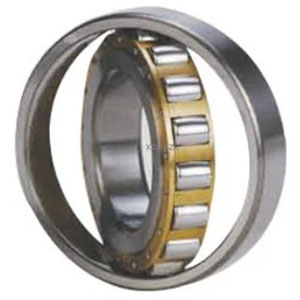
Single row spherical roller bearings incorporate one row of barrel-shaped rollers between a spherical outer ring raceway and a single inner ring raceway. This configuration provides self-aligning capability for light-to-moderate radial loads where space constraints or reduced torque requirements favor single-row designs. Typical applications include industrial gearboxes, drying cylinders, fan assemblies, and textile machinery.
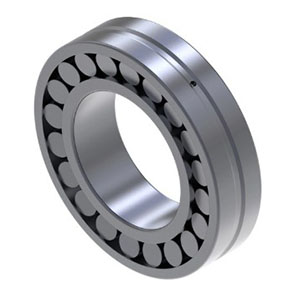
Double row spherical roller bearings represent the standard industry configuration, featuring two symmetrical roller rows operating on a common spherical outer raceway with two inclined inner raceways. This arrangement yields maximum radial load capacity plus bidirectional axial load capability. Symmetrical roller design ensures uniform load distribution and favorable stress patterns under combined loads.
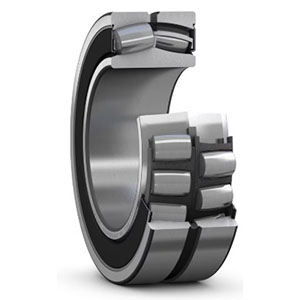
Sealed spherical roller bearings incorporate contact seals integrated into the bearing outer ring, protecting internal components from contamination ingress while retaining lubricant. These bearings arrive pre-filled with high-quality grease and operate maintenance-free for extended periods. Sealed designs significantly extend service intervals in dusty, wet, or abrasive environments compared to open bearings.
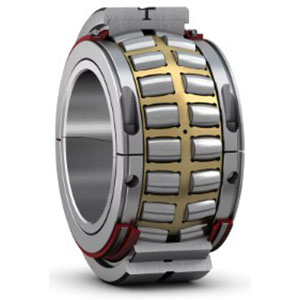
Split spherical roller bearings feature inner ring, outer ring, and roller/cage assemblies manufactured in two halves for on-site assembly without shaft disassembly. This design eliminates the need to remove adjacent drive components, gears, or couplings, reducing maintenance downtime from days to hours for hard-to-access locations such as conveyor drive pulleys, ship propulsion shafts, and continuous process equipment.
Single-row Spherical Roller Bearing Series
Single row spherical roller bearings provide self-aligning capability for industrial machinery requiring moderate load capacity with reduced axial space. The following series represent standard offerings available across multiple bearing manufacturers.
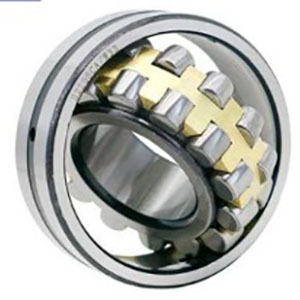
213 Series-Single row spherical roller bearing series with compact cross-section and high radial load capacity. Ideal for industrial gearboxes, fans, and conveyor systems where moderate loads and limited space are required. Features self-aligning capability to compensate for shaft misalignment and high-speed operation. Available in both cylindrical and tapered bore designs.
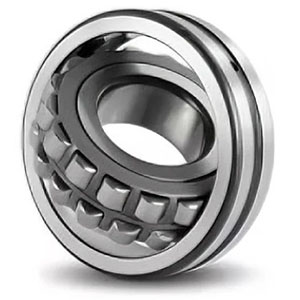
216 Series-Light series single row spherical roller bearing with optimized internal geometry. Standard component for light industrial machinery, agricultural implements, and material handling systems. Offers good load capacity while maintaining compact envelope dimensions. Self-aligning feature reduces stress on adjacent components.
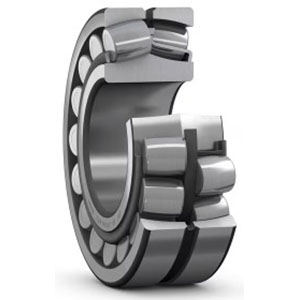
217 Series-Single row spherical roller bearing with increased width for higher radial capacity than standard series. Popular in steel mill auxiliary drives, rubber processing equipment, and large industrial fans requiring moderate load handling with self-aligning capability. Manufactured with high-grade bearing steel for extended service life.
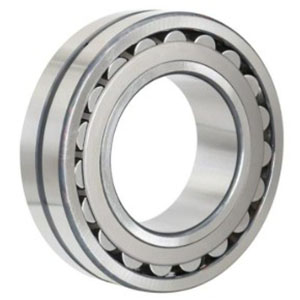
219 Series-Single row spherical roller bearing with heat-stabilized components for high-temperature applications up to 150°C. Commonly specified for kiln support rollers, drying ovens, and cement industry equipment. Provides self-aligning function to compensate for thermal expansion and mounting errors.
Double-row Spherical Roller Bearing Series
Double row spherical roller bearings are the most widely used configuration, delivering maximum load capacity with self-aligning capability. The following series are standard across the bearing industry.
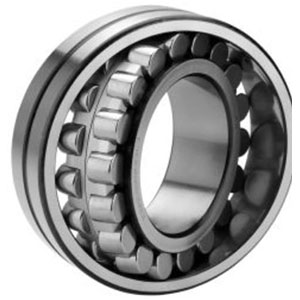
222 Series-Most widely used double row spherical roller bearing series; symmetrical rollers, pressed steel cage, and self-aligning capability up to 2°. Handles heavy radial loads plus moderate axial loads in both directions. Offers lubrication groove and holes as standard. Versatile for crushers, conveyors, industrial gearboxes, and vibrating machinery.
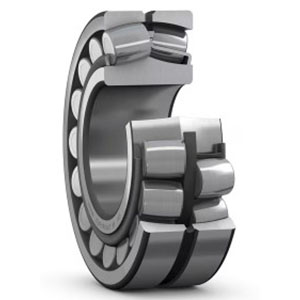
223 Series-Heavy-duty double row spherical roller bearing with steeper contact angle, designed for extremely high radial loads and severe shock conditions. Features robust cage designs (brass or steel) and heat-stabilized rings for high-temperature applications. Standard for mining equipment, cement mills, vibratory screens, and stone crushers.
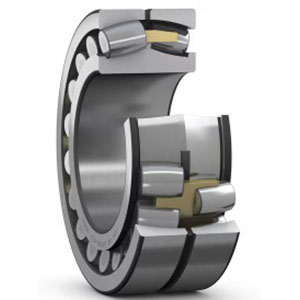
230 Series-Compact double row spherical roller bearing with thin cross-section, maximizing load capacity relative to outer diameter. Ideal for paper machine drying cylinders, wind turbine main shafts, and vertical mills where space is limited. Available with cylindrical or tapered bore (1:12 taper). Popular in high-precision industrial drives.
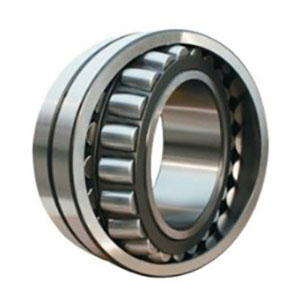
232 Series-Extra-heavy double row spherical roller bearing with largest cross-section in its bore range. Capable of absorbing heavy shock loads, vibration, and shaft deflection in severe conditions. Widely used in vibrating screens, construction equipment, crushers, and hammer mills. Features robust brass or steel cage for high reliability.
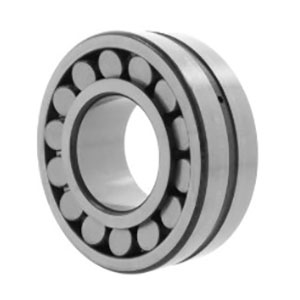
239 Series-Light double row spherical roller bearing series with very thin section, designed for applications with extremely limited axial space. Used in textile spindles, precision rotary tables, and aerospace actuators. Offers self-aligning capability despite compact design; available in high precision grades.
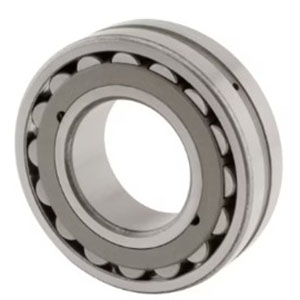
240 Series-Compact double row spherical roller bearing with high capacity-to-size ratio. Designed for wind turbine gearboxes, industrial fans, and paper processing machinery. Features optimized internal geometry for higher load rating; available with 1:30 tapered bore. Excellent vibration resistance for demanding applications.
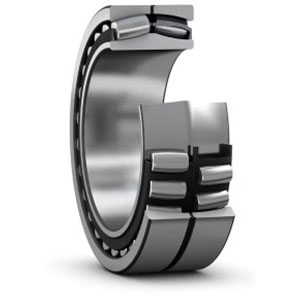
241 Series-Extremely heavy double row spherical roller bearing with highest load capacity in compact envelope. Forged rings and symmetrical rollers provide exceptional durability under severe shock loads. Standard for continuous casting machines, steel mill roll necks, mining crushers, and heavy conveyors. Advanced heat-treatment extends service life.
Sealed Spherical Roller Bearing Series
Sealed spherical roller bearings integrate contact sealing directly into the outer ring, providing contamination protection and extended relubrication intervals for harsh operating environments.
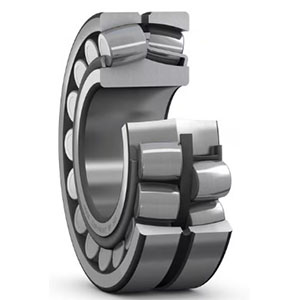
22 Sealed Series-Sealed double row spherical roller bearing derived from the 222 series, upgraded with double contact seals and pre-filled with high-quality grease. Provides maintenance-free operation, excellent contamination protection, and extended relubrication intervals. Ideal for dusty, dirty, or wet environments such as cement plants and mining conveyors.
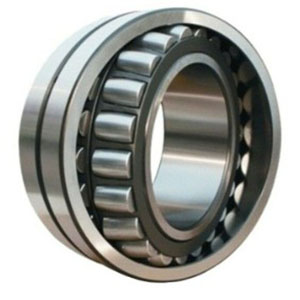
23 Sealed Series-Sealed heavy-duty spherical roller bearing series based on the 223 design. Features reinforced contact seals, optimized internal geometry, and specialized grease for long-life service under shock loads, vibration, and extreme contamination. Common in vibrating screens, crushers, agricultural machinery, and off-highway equipment.
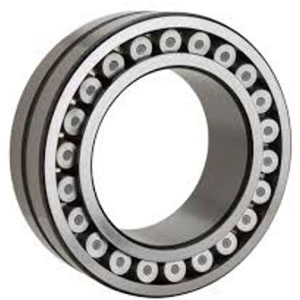
240 Sealed Series-Sealed version of the compact 240 series, providing contamination protection for wind turbine gearboxes, paper processing, and environmental equipment where space is limited and cleanliness is critical. Contact seals retain grease and exclude abrasive particles. Limited high-speed capability due to seal contact.
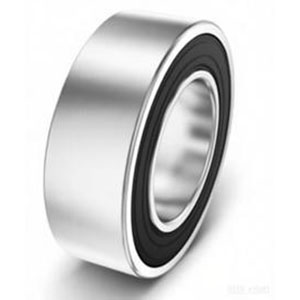
High-temperature sealed series (with Viton seals)-Premium sealed spherical roller bearing series with high-temperature seals suitable for applications up to 200°C. Derived from the 222 series, offering the same load capacity as open versions but with sealing for wind turbine main shafts, continuous casters, and high-vibration machinery. Reduced maintenance costs.
Split Spherical Roller Bearing Series
Split spherical roller bearings enable rapid bearing replacement without removing shaft, gears, or adjacent components, substantially reducing equipment downtime for maintenance operations.
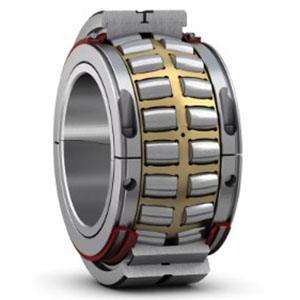
230 Split Series-Split spherical roller bearing series with inner ring, outer ring, and roller/cage assemblies split into halves for rapid on-site replacement. Eliminates need to remove adjacent components, gears, or couplings. Significantly reduces downtime for hard-to-access positions such as mining conveyors, ship propulsion shafts, and paper machinery.
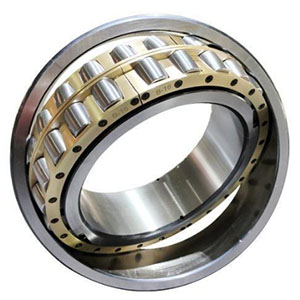
231 Split Series-Wide split spherical roller bearing series offering higher load capacity than 230 split series. Designed for heavy industrial applications where bearing replacement without shaft disassembly is critical. Available in bore sizes from 100mm to over 300mm. Popular in steel mills, cement plants
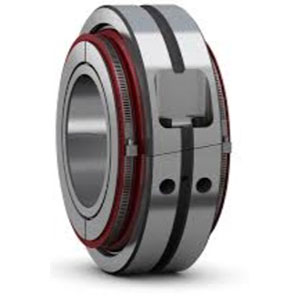
222 Split Series-Split spherical roller bearing series with adapter sleeve mounting. Provides the same load rating as the 222 series while allowing simple replacement without removing drive components. Combined metric adapter sleeve simplifies mounting on commercial shafts. Common in conveyor head pulleys, fans, and material handling equipment.
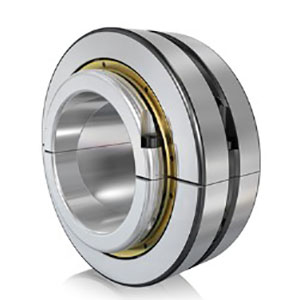
High-performance split series-Premium split spherical roller bearing series with advanced technology, featuring symmetrical rollers and optimized geometry for higher load rating. Cylindrical bore, designed for replacement in applications where standard split bearings cannot fit. Used in pulp refiners, marine propulsion systems, and large industrial drives.
Other Bearing Types
DUHUI Bearing manufactures additional roller bearing configurations for applications where spherical roller bearings may not be optimal. The following bearing types are available for industrial machinery across multiple sectors.
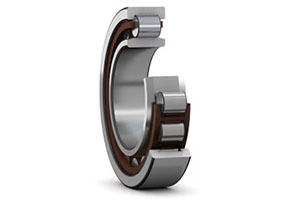
Cylindrical roller bearings utilize cylindrical rolling elements with line contact to outer and inner raceways. These bearings accommodate high radial loads at high speeds but provide negligible misalignment accommodation. Applications include electric motor shafts, gearboxes, and machine tool spindles requiring high radial stiffness.
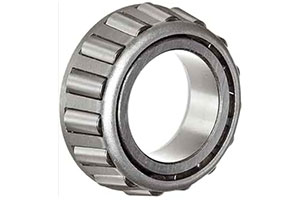
Tapered roller bearings feature conical rollers and raceways angled to handle combined radial and thrust loads. Single-row units support axial load in one direction only; paired sets accommodate bidirectional thrust. Standard for automotive wheel hubs, differential assemblies, and heavy-duty truck axles.
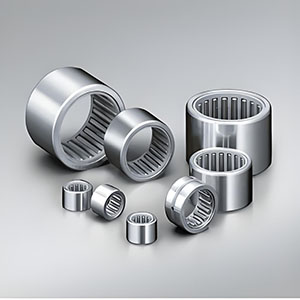
Needle roller bearings incorporate small-diameter cylindrical rollers with length-to-diameter ratio exceeding 4:1. This compact design maximizes radial load capacity within minimal cross-section envelopes. Common in automatic transmission components, rocker arm pivots, and universal joint assemblies.
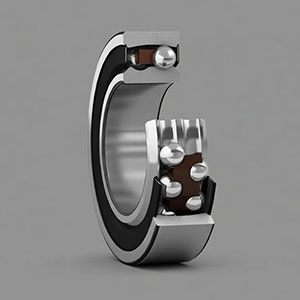
Self-aligning ball bearings feature two rows of balls with a spherical outer ring raceway, providing misalignment compensation similar to spherical roller bearings but for lighter loads and higher speeds. Suitable for fans, textile machinery, and agricultural equipment where light to moderate loads accompany shaft misalignment.
Industrial Applications
Spherical roller bearings operate across heavy machinery sectors where high load capacity, vibration resistance, and misalignment accommodation are required. The following industries routinely specify spherical roller bearings for critical rotating equipment.

Crushers, vibrating screens, conveyor drives, ball mills, and apron feeders utilize spherical roller bearings to withstand high shock loads, vibration, and contaminated operating conditions. Sealed and split configurations are preferred for maintenance access in underground or remote locations.
Kiln support rollers, vertical roller mills, clinker coolers, and bucket elevators rely on spherical roller bearings for high-temperature stability, dust resistance, and combination load handling. CA-type bearings with brass cages are standard for large diameter applications.
Continuous casting equipment, roll neck bearings, cooling bed drives, and furnace auxiliary drives specify spherical roller bearings for extreme radial loads, bidirectional axial loads, and elevated temperature operation. 230 and 240 series are commonly applied in these environments.
Wind turbine main shafts, gearbox planetary stages, and yaw/pitch drives require spherical roller bearings with high dynamic load rating, vibration resistance, and misalignment tolerance. Sealed bearings with advanced lubricants extend maintenance intervals in remote tower installations.
Paper machine drying cylinders, winders, pulpers, and calendar stacks utilize spherical roller bearings for high speeds, moisture resistance, and smooth operation. Single row configurations are common for space-constrained drying section applications.
Bulk material conveyors, ship unloaders, stacker-reclaimers, and bagging equipment specify spherical roller bearings for heavy radial loads, self-alignment capability, and long service intervals. Split bearings reduce downtime for pulley and idler replacement.
Technical Comparison Articles
Engineering selection between spherical roller bearings and other bearing types requires analysis of load direction, misalignment tolerance, speed requirements, and space constraints. The following articles provide detailed comparison criteria for bearing selection decisions.
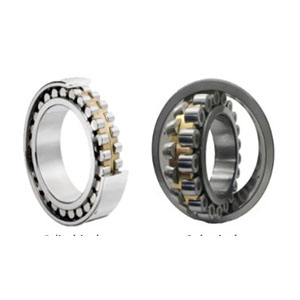
This article compares self-aligning spherical roller bearings with cylindrical roller bearings across misalignment capacity (spherical: up to 2°, cylindrical: none), radial load capacity (cylindrical type has higher pure radial capacity), axial load handling, and speed ratings. Selection guidance for gearboxes, electric motors, and heavy machinery applications is provided.
For more details, please read“Spherical vs. Cylindrical Roller Bearings”
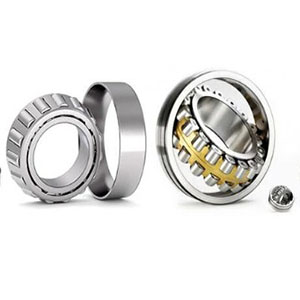
Analysis of load direction compatibility between spherical roller bearings (radial + bidirectional axial load) and tapered roller bearings (radial + single-direction axial load). Includes guidance for applications requiring axial load accommodation in both directions versus those requiring high axial load in one direction only.
For more details, please read“Spherical vs. Tapered Roller Bearings”
Related Spherical Roller Bearing Models
DUHUI Bearing offers a comprehensive range of spherical roller bearings covering single row, double row, sealed, and split configurations. The following models represent popular size and specification combinations available from stock or with short lead times. Each model is manufactured to ISO dimension standards and can be customized for clearance, cage material, and lubrication features upon request.
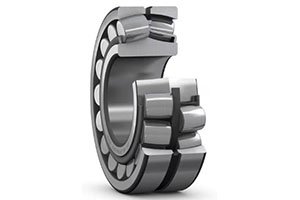
DH-21719CK: Single row spherical roller bearing with tapered bore (1:12), 95x145x30mm. Suited for material handling equipment, conveyor head shafts, and light industrial gearboxes requiring easy mounting.
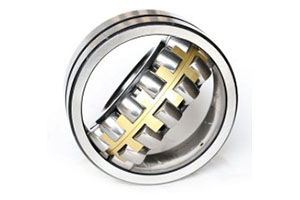
DH-23224CA: Double row spherical roller bearing, 120x215x76mm, machined brass cage, tapered bore. For vibratory screens, mining equipment, and industrial blowers. High limiting speed with robust cage guidance.
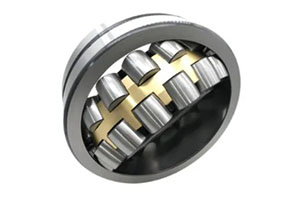
DH-24192CA: Extra-heavy double row spherical roller bearing, 460x760x300mm, machined brass cage. For cement kilns, large mining crushers, and heavy conveyor systems. Forged rings for extreme durability.
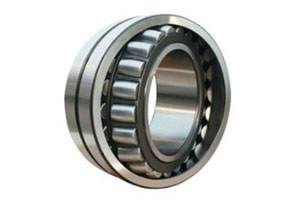
DH-S22208-2RS: Sealed spherical roller bearing, 40x80x28mm, double contact rubber seals, pre-lubricated. Based on 22208 dimensions. For dusty environments such as cement plants, crushers, and mining conveyors.
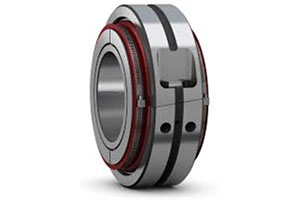
DH-SPL222150: Split spherical roller bearing with adapter sleeve, 150x270x73mm. Mounts on commercial shafts without removing adjacent components. For conveyor drums, bulk handling equipment, and fans.
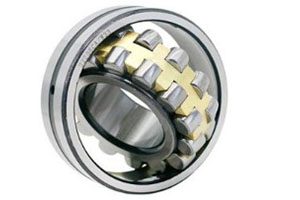
Spherical Roller Bearing Installation and Maintenance Guide
Preparation Before Installation
Before installing a spherical roller bearing, verify that the bearing specifications match equipment requirements and check all components for damage or contamination. Clean the work environment and prepare necessary tools including bearing pullers, induction heaters, measuring instruments (feeler gauges, dial indicators), and appropriate lifting equipment for larger bearings. Examine the shaft and housing bore for dimensional accuracy, surface finish, and freedom from burrs or debris. Confirm that lubrication passages (oil holes and grooves) are open.
Cold Installation for Small Bearings
For small spherical roller bearings with bore diameter less than 50mm, cold installation using a mechanical press or fitting tools is acceptable. Never apply force through rolling elements or the cage — use a mounting sleeve that contacts only the inner ring face for shaft mounting or the outer ring face for housing installation. Apply uniform pressure to prevent misalignment and ensure the bearing seats squarely against the shaft shoulder or housing shoulder.
Hot Installation for Medium and Large Bearings
Medium to large spherical roller bearings require thermal expansion for interference fit mounting. Induction heating is the recommended method, providing controlled, uniform heating without localized overheating. Heat the bearing to 80°C to 100°C — never exceed 125°C to avoid tempering the bearing steel. After heating, slide the bearing onto the shaft quickly and hold it against the shaft shoulder until it cools and contracts into position. For bearings mounted on tapered shafts or adapter sleeves, final position is determined by radial internal clearance reduction.
Post-Installation Verification
After mounting, confirm that the bearing is correctly seated against both shaft and housing shoulders. Rotate the inner ring manually to ensure smooth, quiet operation. Measure residual radial internal clearance using a feeler gauge inserted between the outer ring raceway and the top of the rollers. The measured clearance must fall within the manufacturer-specified range for the selected clearance group (CN, C3, C4). Excessive clearance increases vibration; insufficient clearance leads to overheating and premature failure.
Adapter Sleeve Mounting Procedure
When mounting spherical roller bearings with tapered bore onto cylindrical shafts using adapter sleeves, follow these steps: clean the shaft surface thoroughly, removing burrs and contaminants. Apply a thin film of light oil to the shaft and adapter sleeve outer diameter. Slightly expand the split adapter sleeve and position it on the shaft. Slide the bearing and lock washer over the sleeve, then hand-tighten the lock nut until all internal clearance is eliminated — this is the starting reference point.
Using a C-type hook spanner, tighten the lock nut further while continuously measuring radial internal clearance reduction with a feeler gauge. Tighten progressively until reduction reaches the value specified in the bearing dimension table. After achieving correct reduction, bend one tang of the lock washer into the lock nut slot — never back off the nut to align with a slot. Verify free rotation with no binding.
Spherical Roller Bearing Failure Modes and Causes
Common failure modes include micro-pitting (surface fatigue from marginal lubrication), lubrication deficiency (most frequent cause, leading to friction increase and wear), contamination ingress (abrasive wear or corrosion), misalignment (uneven load distribution), overload (deformation or spalling), and fatigue (cyclic stress leading to subsurface cracks). Regular monitoring of temperature, vibration, and lubricant condition helps detect these failures early.
Lubrication and Relubrication Intervals
Relubrication intervals depend on operating speed, temperature, contamination level, and bearing size. Follow manufacturer relubrication tables. For sealed spherical roller bearings, factory grease typically lasts the bearing‘s service life under normal conditions. Monitor operating temperature as a primary indicator — sudden increases may indicate lubrication degradation.
The outer ring raceway has a spherical geometry. The inner ring has two inclined raceways, and barrel-shaped rollers operate between them. When shaft deflection or installation errors occur, the spherical raceway allows angular adjustment (typically 2° to 3°), compensating for misalignment and preventing additional stress.
Accommodating angular misalignment caused by shaft deflection or mounting errors, extending equipment life and reducing maintenance costs. They also provide high load capacity, withstand shock and vibration, accept bidirectional axial loads, and perform reliably under contaminated conditions, especially in sealed designs.
Radial loads, combined radial and axial loads (simultaneous), and bidirectional axial loads. They are not recommended for pure axial loads only. For axial-dominated applications, spherical roller thrust bearings or angular contact bearings are more appropriate.
By configuration: single row (moderate loads, limited space), double row (standard heavy-duty), sealed (contamination protection), split (reduced downtime). By cage and internal design: steel cage designs for high speed, brass cage designs for heavy loads and vibration, and specialty series for specific applications.
Determine required load capacity (dynamic/static ratings per ISO 281), operating speed (compare required RPM to limiting speeds), available mounting space (bore, OD, width), and misalignment requirements. Calculate L10 basic rating life using the formula with dynamic load rating and equivalent bearing load.
Clearance groups range from C2 (minimum) through CN (normal), C3, C4, to C5 (maximum). Standard designs start with CN. When operating temperatures exceed 70°C or interference fits create internal expansion, select C3 or C4 to prevent thermal seizure. Consult dimension tables for specific ranges.
Absolute cleanliness; proper tool selection with force applied only through the ring being mounted; induction heating for medium/large bearings at 80–100°C (125°C max); measuring radial clearance before, during, and after installation; documenting final clearance values.
Lightly expand the adapter sleeve, apply thin oil film, slide bearing over sleeve, hand-tighten lock nut until clearance eliminated (reference point). Tighten further with spanner while measuring clearance reduction. Reduce to specified value, then bend lock washer tang into slot. If operating torque is excessive, disassemble and inspect.
Brass cages provide higher strength, shock absorption, and vibration damping — suitable for large diameters and heavy vibrating machinery (crushers, screens). Steel cages offer lower cost and adequate strength for moderate speeds and standard conditions. Polyamide cages suit high-speed, low-torque applications up to 120°C.
Basic rating life: L10 = (C/P)^(10/3) × 10^6 revolutions (exponent 10/3 for roller bearings). Convert to hours: L10h = (10^6 / 60n) × (C/P)^(10/3). ISO 281 provides a modified life calculation with factor a_ISO for lubrication, contamination, and fatigue limit.

