
Definition & Components
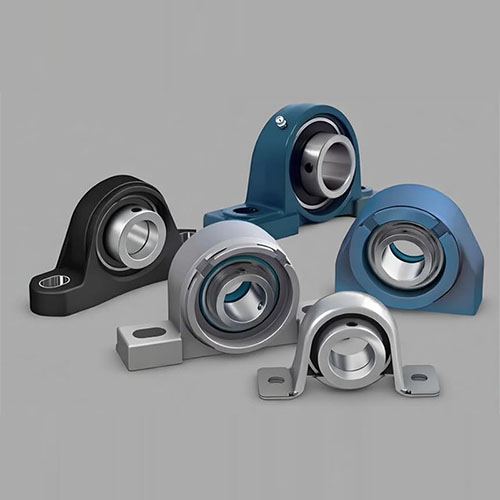
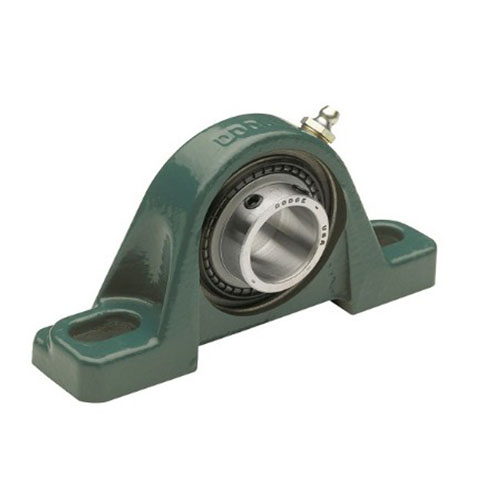
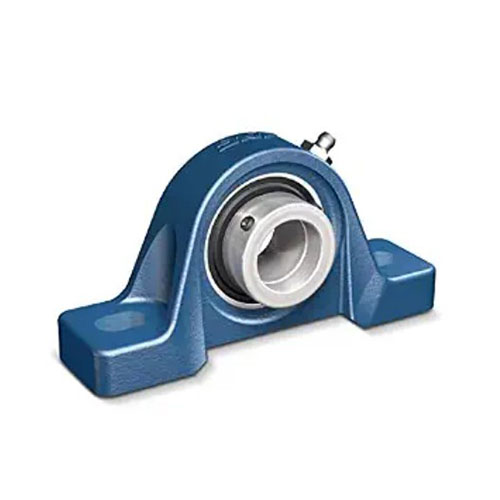
A pillow block bearing – also referred to as a plummer block bearing or pedestal bearing – is a type of mounted bearing (housed bearing unit) consisting of a bearing insert installed in a supportive housing. The housing provides a stable platform for mounting the bearing insert. The mounting surface of a pillow block bearing is on a plane parallel and offset to the axis of the shaft. Mounting holes or slots in the base permit adjustment and easy attachment to equipment frames.
The bearing insert – typically a self-aligning wide inner ring ball bearing – compensates for angular misalignments. The housing – commonly made of cast iron, ductile iron, or stainless steel – secures the bearing and transmits loads from the shaft to the surrounding structure. Seals and shields protect against contaminants and retain lubricant. Each unit is pre-lubricated and ready for installation.
Features & Advantages
- Easy installation and maintenance – Housings bolt directly onto flat surfaces with base bolt holes. The entire assembly can be removed and replaced as a single unit.
- Self-aligning capability – Bearings used with pillow block housings are typically self-aligning to compensate for angular misalignments, shaft deflection, and mounting inaccuracies.
- Versatile load support – Available with ball bearings, spherical roller bearings, tapered roller bearings, and cylindrical roller bearings to suit different load types and magnitudes.
- Pre-lubricated and sealed – Units are factory-filled with grease and equipped with multi-labyrinth or contact seals. Ready for immediate installation upon delivery.
- Interchangeability – Standardised dimensions and series designations ensure interchangeability across manufacturers. Inserts can be replaced without replacing the entire housing.
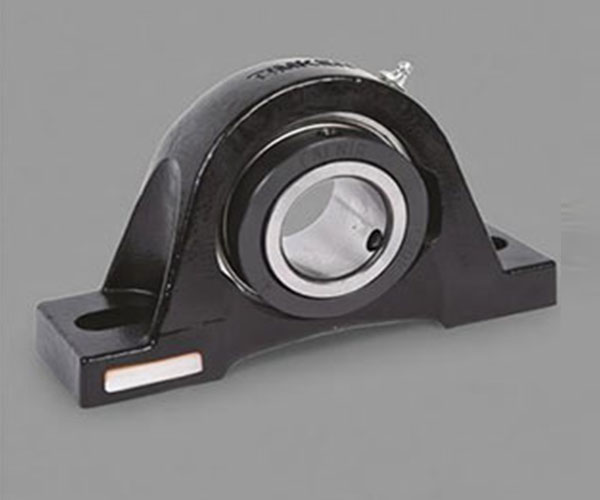
Your Professional Pillow Block Bearing Manufacturer
DUHUI Bearing, established in 2003 in Zhejiang, China, is a professional pillow block bearing manufacturer and supplier. With over 20 years of experience, we produce pillow block bearings in P, PA, and PH housing styles. These are paired with UC, UK, SA, SB, UE, and UEL insert series. Over 400 standard models are available. Our 10,000 m² facility produces 100,000 sets monthly, exporting to Europe, North and South America, and the Middle East.
What Is a Pillow Block Bearing?
A pillow block bearing, also called a plummer block, is a mounted bearing unit that provides load support for a rotating shaft. The housing sits on a flat base with mounting holes for easy bolt-on installation. The insert bearing inside is typically self-aligning, compensating for shaft deflection and installation inaccuracies. This design simplifies installation, reduces maintenance requirements, and extends service life in demanding industrial environments.
Housing Configurations – P, PA, and PH
P (Standard Pillow Block) – Two-bolt base with compact dimensions. The most widely used type for general-purpose applications including conveyors, fans, and agricultural machinery.
PA (Adjustable Pillow Block) – Narrow vertical seat design that allows shaft alignment fine-tuning after installation. Recommended when thermal expansion or installation tolerances may affect shaft position.
PH (High-Center Pillow Block) – Taller base positioning the shaft center higher above the mounting surface. Used when additional clearance is needed beneath the shaft.
Materials and Manufacturing
Housings are cast from HT200 grey iron as standard. Ductile iron offers higher impact resistance for heavy-duty applications. Stainless steel housings are available for corrosive or wash-down environments. All insert bearings use GCR15 chrome steel (AISI 52100 equivalent) with precision-ground raceways. Heat treatment achieves HRC 60-64 hardness. DUHUI holds ISO 9001 and IATF 16949 certifications. Precision meets ABEC-1 (P0) with C3 and C4 internal clearances available as options.
Sealing and Pre-lubrication
Effective sealing is critical for bearing life in contaminated environments. DUHUI offers sealing options ranging from single-lip to triple-lip, all with full metal shrouds. Units arrive pre-lubricated with lithium-based grease and are ready for immediate installation – no disassembly required. This reduces installation time and eliminates the risk of improper lubrication.
Supply Capability and Customization
Standard orders ship within 15 to 45 days. Custom prototypes deliver within 30 days. A 2-year or 50,000-km warranty covers standard products. Technical support is available for selection, installation, and troubleshooting. OEM and private-label orders are welcome. Custom housings, non-standard bores, and special coatings can be developed per customer drawings.
Applications
Pillow block bearings serve agricultural machinery, conveyor systems, mining equipment, packaging lines, and industrial transmissions. Common uses include belt drives, conveyor belt rollers, rolling mills, ventilation systems, and paper machines.
DUHUI Bearing – your professional pillow block bearing manufacturer since 2003.
Product Types
Pillow block bearings are classified by housing configuration. The primary pillow block housing types are P (standard), PA (concealed hole / narrow lightweight), and PH (high center). Each type is designed for specific mounting requirements and space constraints. The tables below present the housing type classifications and the corresponding complete unit codes cross-referenced by insert series.
- Housing Types
- Series Cross-Reference
Housing Types
Each pillow block housing type is designated by a suffix letter in the complete unit code. The suffix indicates the housing configuration and mounting style. The descriptions below provide detailed specifications for each housing variant.
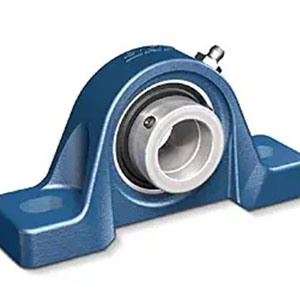
Pillow Block – P (Standard Pillow Block / Plummer Block) – Two-bolt or four-bolt base-mounted housing, the most common pillow block configuration. Supports shafts parallel to the mounting surface. Features a flat base with bolt holes for secure attachment to equipment frames. Suitable for general industrial applications including conveyors, fans, and agricultural machinery. Standard cast iron construction with optional ductile iron and stainless steel variants.
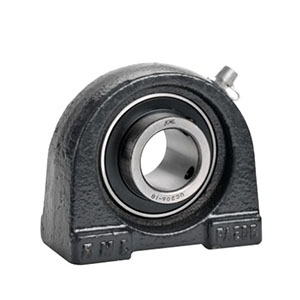
Pillow Block – PA (Concealed Hole / Narrow Lightweight Pillow Block) – Pillow block variant with concealed mounting holes or narrow lightweight design. Suitable for applications with limited space or where concealed fastening is required. The narrower footprint allows installation in confined areas while maintaining the load capacity of standard pillow block designs. Often specified for light-duty conveyors and compact machinery where space is at a premium.
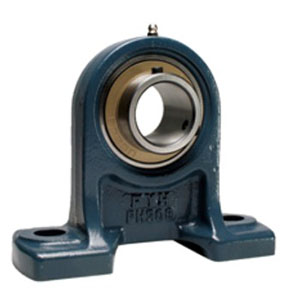
Pillow Block – PH (High Center Pillow Block) – Pillow block variant with increased mounting height, providing greater shaft center height above the mounting surface. Designed for applications requiring elevated shaft positioning or where clearance beneath the shaft is necessary. The higher mounting profile accommodates specific machine configurations without requiring custom risers or brackets.
Series Cross-Reference
Complete pillow block unit codes combine the insert series designation with the housing suffix. The insert series indicates the locking mechanism and duty rating. The table below cross-references each insert series (UC, UK, SA, SB, UE, UEL) with each pillow block housing type to show the complete unit code.
| Housing Type | UC | UK | SA | SB | UE | UEL |
| Pillow Block – P | UCP | UKP | SAP | SBP | UEP | UELP |
| Pillow Block – PA | UCPA | UKPA | SAPA | SBPA | UEPA | UELPA |
| Pillow Block – PH | UCPH | UKPH | — | — | — | UELPH |
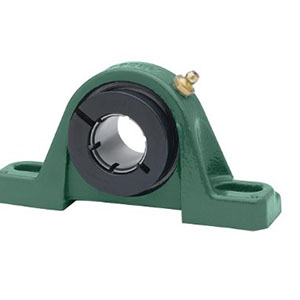
200 Series (Standard Duty) – Standard load capacity pillow block bearings for general industrial applications including conveyors, fans, and agricultural equipment. Suitable for moderate loads and speeds. Available across all housing types and insert series. The “2” in the bore size code (e.g., UCP210) indicates 200 series construction with standard section dimensions and standard radial internal clearance.
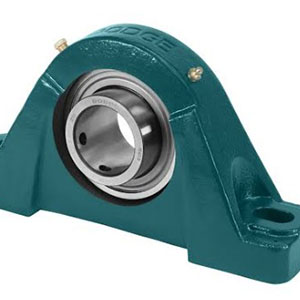
300 Series (Heavy Duty) – Enhanced load capacity and robust construction pillow block bearings for demanding applications with higher loads, vibration, and reversing conditions. Suitable for heavy industrial and mining applications. Available across all housing types and insert series. The “3” in the bore size code (e.g., UCP310) indicates 300 series construction with heavier section dimensions and enhanced radial internal clearance for thermal expansion accommodation.
Other Related Bearing Types
The following bearing types are commonly used in automotive driveline and wheel-end applications. Although they are not pillow block bearings in the strict sense, they are often referenced alongside them in product portfolios.
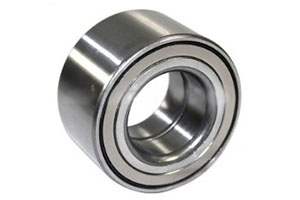
Wheel Bearings (Gen 1 Press-in) – Single-row or double-row ball or tapered roller bearings pressed directly into the steering knuckle or hub. No integrated flange; the hub and bearing are separate components. Used in many passenger car rear axles and some front axles.
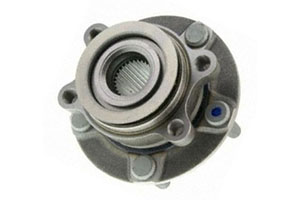
Wheel Hub Bearings (Gen 2 / Gen 3 Bolt-on) – Pre-assembled units that integrate the bearing, hub flange, and (in Gen 3) an ABS sensor ring. Bolted directly to the steering knuckle, reducing assembly complexity and improving stiffness. Common in modern FWD and SUV applications.
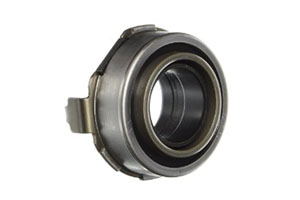
Clutch Release Bearings – Axial-load bearings (also called throw-out bearings) that actuate the clutch diaphragm spring in manual transmissions. Designed for high axial thrust and rapid engagement cycles.
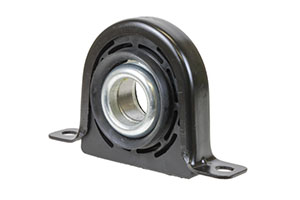
Center Support Bearings – Bearings that support the centre of a two-piece driveshaft in rear-wheel-drive and truck applications. Accommodate shaft misalignment and dampen driveline vibrations.
Industry Applications
Pillow block bearings are specified across a broad range of industries. The following lists key sectors and typical equipment where these products are installed.

Automotive – Engine components such as belt drives and alternators; suspension systems supporting dynamic shafts; assembly line conveyors and powertrain test rigs.
Agricultural Machinery – Combine harvesters, balers, tillage equipment, sprayers, plows, and seeders. Demanding environments require enhanced sealing against dirt, moisture, and heavy loads.
Material Handling & Conveyors – Belt conveyors, roller conveyors, bucket elevators, and palletisers. Pillow block bearings maintain roller and belt alignment, minimizing wear and ensuring continuous operation.
Food Processing – Stainless-steel housings and food-grade lubricants are used in wash-down areas. Bearings must resist corrosion and frequent cleaning cycles.
Mining & Aggregate – Crushers, screens, and heavy-duty conveyors. Ductile-iron housings and robust sealing handle high loads and abrasive contaminants.

Pumps & Fans – Industrial pumps, HVAC fans, and blowers. Pillow block bearings ensure proper shaft alignment, lowering energy use and supporting reliable operation.
Product Comparison
The following internal article compares pillow block bearings with flange mounted bearings, helping engineers choose based on mounting surface, space constraints, and application conditions.
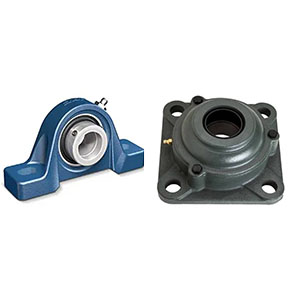
Pillow block bearings mount on flat horizontal surfaces with base bolt holes, supporting shafts parallel to the mounting surface. Flange mounted bearings attach to vertical or inclined surfaces using flange bolt patterns. Pillow blocks suit applications with flat mounting bases and horizontal shafts; flange units are ideal for space-constrained installations, end-of-shaft support, and compact assemblies. This article details mounting orientation, load direction, and application examples for each type.
For more details, please read“Pillow Block Bearings vs Flange Mounted Bearings”
Related Products
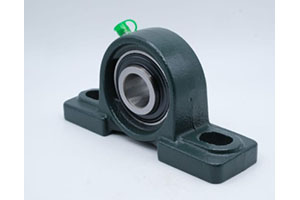
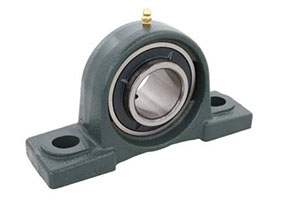
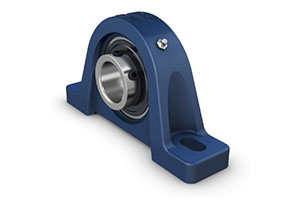
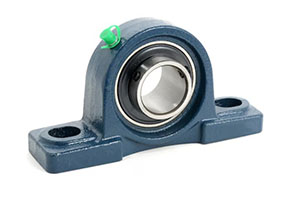
The following pillow block bearings represent commonly specified models across industrial applications. Complete unit codes combine housing type with insert series. For specific dimensional, load, and sealing requirements, refer to the product data sheet of each model.
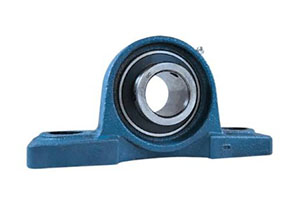
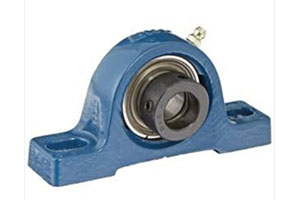
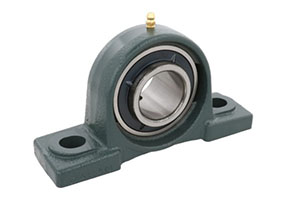
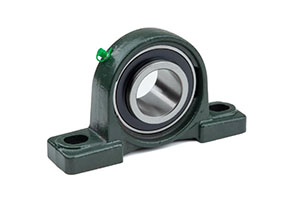
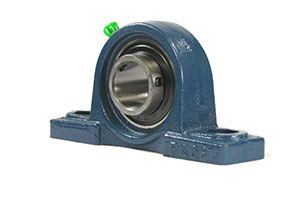
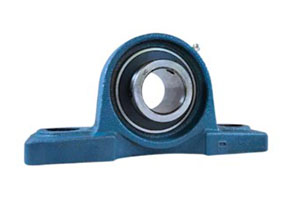
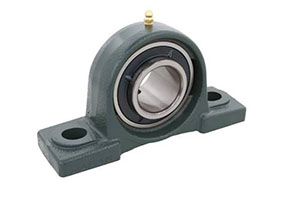
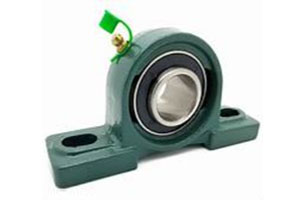
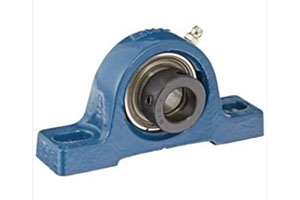
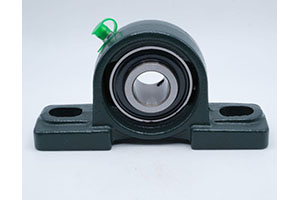
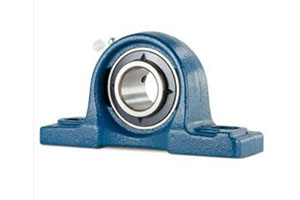
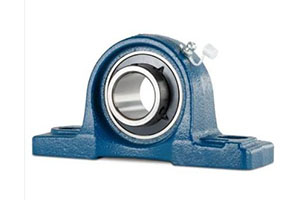
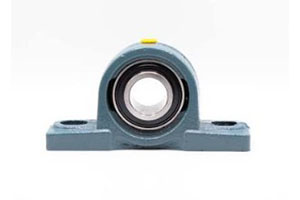
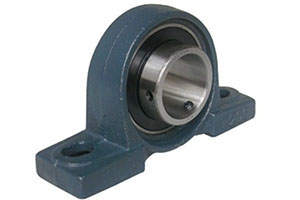
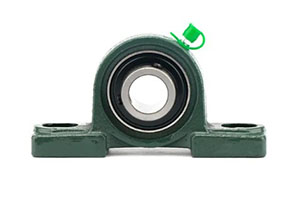
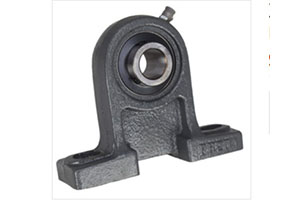
Pillow Block Bearings – How to Choose the Right Type for Your Application
Ever had a bearing fail because the housing couldnt handle the load? Or spent hours aligning a shaft because the mounting surface wasnt perfectly flat? These are everyday challenges in industrial maintenance.
Pillow block bearings solve these problems. They combine the bearing, housing, and sealing into a single, ready-to-mount unit. You dont need to machine precision bearing seats or press-fit bearings. You just bolt the housing to your frame, slide the shaft in, lock it, and youre done.
This guide covers what pillow block bearings are, how the main types compare, and how to pick the right one for your application. Whether youre an engineer, a maintenance professional, or a procurement specialist, youll find practical selection criteria and real-world decision frameworks.
What Are Pillow Block Bearings?
A pillow block bearing – also called a plummer block – is a mounted bearing unit with a supportive housing. It supports rotating shafts, maintains alignment, and carries the applied loads during operation. The mounting surface of a pillow block bearing is on a plane parallel and offset to the axis of the shaft.
Mounting holes or slots in the base or feet permit adjustment and easy mounting. Pillow block bearings are constructed of a housing and a bearing. Many pillow blocks have a replaceable bearing, referred to as an insert bearing. Bearings used with pillow block housings usually are self-aligning to compensate for angular misalignments.
Pillow block bearings are easy to install, maintain, and replace, offering a stable platform for rotating components. They are factory greased and sealed, ready to mount out of the box.
Core Components
A pillow block bearing unit consists of several key components:
- The Housing (Block) – The housing provides support and protection for the bearing insert. It is typically made of cast iron, ductile iron, steel, stainless steel, or thermoplastics. The housing features mounting holes or slots for easy installation and may be either solid (single-piece) or split (two-piece) construction.
- The Bearing Insert – This component contains the rolling elements (balls or rollers) and the inner race, which is mounted onto the rotating shaft. The bearing insert is designed to fit snugly inside the housing and is secured in place with set screws or locking collars. Bearing types include ball bearings, spherical roller bearings, tapered roller bearings, and cylindrical roller bearings.
- Seals and Shields – These components help prevent contamination and retain lubrication within the bearing assembly, enhancing its longevity and performance. Seal types include clearance seals, light contact, heavy contact, and auxiliary seals.
- Grease Fitting – Some pillow block bearings feature a grease fitting for easy lubrication, ensuring smooth operation and minimal maintenance requirements.
Housing Types – P, PA, and PH Explained
Pillow block bearings are available in several housing configurations:
P (Standard Pillow Block) – The most common configuration. Two-bolt or four-bolt base-mounted housing supporting shafts parallel to the mounting surface. Features a flat base with bolt holes for secure attachment to equipment frames.
PA (Concealed Hole / Narrow Lightweight Pillow Block) – Features concealed mounting holes or narrow lightweight design. Suitable for applications with limited space or where concealed fastening is required.
PH (High Center Pillow Block) – Features increased mounting height, providing greater shaft center height above the mounting surface. Designed for applications requiring elevated shaft positioning.
Quick Selection Reference
| Housing Type | Mounting Feature | Best Application |
|---|---|---|
| P (Standard) | Flat base, exposed bolt holes | General industrial, conveyors, fans |
| PA (Concealed) | Hidden mounting holes, narrow design | Space-limited applications |
| PH (High Center) | Elevated shaft height | Applications requiring higher shaft position |
Bearing Types Used in Pillow Blocks
Pillow block bearings are available with many different bearing types:
Ball Bearings – Have a ball as the rolling element. Provide smooth, low friction motion in rotary applications. Suitable for moderate loads and higher speeds.
Spherical Roller Bearings – Self-aligning, double-row, combination radial and thrust bearings. Superior when dealing with high loads and loads that require tolerance to shock; however, they have limited speed capabilities.
Tapered Roller Bearings – Use conical rollers that run on conical races. Can support both radial and axial loads as well as carry higher loads than ball bearings. Suitable for low to intermediate speed levels.
Cylindrical Roller Bearings – Bearings with high radial capacities and moderate thrust loads. Produce low friction and allow for high-speed operation.
Plain Bearings – Used to constrain, guide, or reduce friction in linear applications. Use a sliding action instead of the rolling action used by ball, roller, and needle bearings.
Bearing Type Quick Reference
| Bearing Type | Load Capacity | Speed Capability | Best For |
|---|---|---|---|
| Ball | Moderate | High | General purpose, moderate loads |
| Spherical Roller | High | Limited | Heavy loads, shock loads, misalignment |
| Tapered Roller | High (radial + axial) | Low to intermediate | Combined radial and thrust loads |
| Cylindrical Roller | High (radial) | High | High radial loads, high speed |
| Plain | Low to moderate | Low | Linear motion, cost-sensitive applications |
Locking Mechanisms Compared
The connection to the shaft can be made through several methods:
Set Screw Locking – One or two set screws in the extended inner ring are tightened against the shaft using a hex key. Fast and economical, but creates point-load indentations on the shaft. Suitable for moderate speeds and steady loads. Set screws should be tightened to the torque values specified by the manufacturer.
Eccentric Locking Collar – A collar with an eccentric cam is rotated to lock the bearing. Provides more uniform clamping than set screws and avoids shaft damage. Suitable for reversing loads and vibrating conditions.
Concentric Locking – Provides a more balanced clamping force around the shaft. Suitable for higher speed applications where shaft centerline shift is a concern.
Tapered Adapter Sleeve – A tapered sleeve is driven between the shaft and the bearing bore using a lock nut. Provides 360-degree concentric clamping force without shaft damage. Ideal for reversing loads and heavy vibration.
Locking Mechanism Quick Reference
| Locking Type | Shaft Damage | Best For |
|---|---|---|
| Set Screw | High (indentations) | General MRO, moderate speeds |
| Eccentric Collar | Low | Reversing loads, vibration |
| Concentric | None | High speed, precision applications |
| Tapered Adapter | None | Heavy loads, reversing loads |
How to Select the Right Pillow Block Bearing
When choosing a pillow block bearing, five key parameters must be considered:
Shaft Diameter – The shafts outer diameter and the bearings bore inner diameter must match. Pillow block bearings that are the correct size slip onto the shaft without difficulty.
Shaft Height – Measure the distance between the center of the shaft and the base of a pillow block bearing. This determines the correct housing height.
Load Type and Magnitude – Consider radial, axial, and combined loads. Select the appropriate bearing type based on load requirements.
Operating Speed – Higher speeds may require ball bearings or cylindrical roller bearings with lower friction characteristics.
Environmental Conditions – Dust, moisture, chemicals, and temperature extremes dictate housing material and seal type. Stainless steel and food-grade lubricants are required for food processing applications.
Selection Cheatsheet
- Start with the shaft – Measure diameter and height first. These are your primary constraints.
- Consider the load – Radial loads dominate? Ball or cylindrical roller. Heavy loads with shock? Spherical roller.
- Evaluate the environment – Washdown conditions require stainless steel housings. Dusty environments need enhanced sealing.
- Choose the locking method – Set screw for economy; eccentric collar for vibration; tapered adapter for heavy-duty reliability.
Environment-Material Matrix
| Environment | Housing Material | Seal Type | Lubricant |
|---|---|---|---|
| Washdown / Food | Stainless steel | Heavy contact + auxiliary | Food-grade grease |
| Abrasive / Dusty | Cast iron / Ductile iron | Labyrinth + auxiliary | Heavy-duty grease |
| High Temperature | Ductile iron / Steel | High-temp seals | High-temp grease |
| General Industrial | Grey cast iron | Light contact | Standard grease |
Installation and Maintenance Guidelines
Proper installation and maintenance practices are essential for ensuring optimal performance and longevity of pillow block bearings:
Step 1: Check and Clean the Shaft – Make sure the shaft is clean, straight, and the correct size. Clean the shaft surface thoroughly and remove any rust or burrs before mounting.
Step 2: Position the Bearings – Slide the bearing onto the shaft. If you need to tap it into place, use a mallet and a hardwood block (or soft steel tube) against the inner ring. DO NOT strike or exert pressure on the housing or seals.
Step 3: Lightly Bolt the Housing – Attach the housing to the mounting surface with bolts, but dont tighten fully yet.
Step 4: Establish Final Mounting Position – Before securing the bolts, establish your final mounting position by aligning the bearing units by hand or a rubber mallet.
Step 5: Securely Bolt the Housing – Once the bearing is properly aligned, securely bolt both units to the mounting structure.
Step 6: Ensure Axial Movement – Ensure that the shaft can move axially through the bearing bores to confirm proper alignment.
Step 7: Tighten Set Screws – Tighten set screws to the manufacturer recommended torque values.
Maintenance Best Practices
- Preparation – Ensure the housing and shaft are clean and free of debris before installation.
- Alignment – Properly align the bearing housing and shaft to prevent misalignment, which can lead to premature wear and failure.
- Lubrication – Apply the appropriate amount of lubricant according to manufacturer recommendations. Regular lubrication intervals should be maintained to prevent dry running and excessive friction.
- Inspection – Periodically inspect the bearing assembly for signs of wear, damage, or contamination. Replace worn components and replenish lubrication as needed.
Common Industry Applications
Pillow block bearings are found throughout industrial machinery:
- Automotive – Engine components such as belt drives and alternators; suspension systems supporting dynamic shafts.
- Agricultural Machinery – Combine harvesters, balers, tillage equipment, sprayers, plows, and seeders.
- Material Handling and Conveyors – Belt conveyors, roller conveyors, bucket elevators, and palletisers.
- Food Processing – Wash-down areas requiring corrosion-resistant materials and food-grade lubricants.
- Mining and Aggregate – Crushers, screens, and heavy-duty conveyors.
- Pumps and Fans – Industrial pumps, HVAC fans, and blowers.
Interchangeability and Standards
Most pillow block bearings follow international standards (ISO, AFBMA, JIS) for external dimensions and housing bolt hole patterns. This ensures that a bearing from one manufacturer can be replaced with an equivalent from another without modifying the equipment.
The UC, UK, SA, SB, UE, and UEL series designations are widely recognised and cross-referenced across brands. When ordering a replacement, match both the insert series and the housing style.
Conclusion
Pillow block bearings offer a versatile, cost-effective solution for shaft support across countless applications. Their key advantages – easy installation, versatile load support, pre-lubrication, and standardised dimensions – make them a practical choice for engineers and maintenance professionals alike.
When selecting a pillow block bearing, focus on three decisions:
- Housing type – P for standard applications; PA for space-limited or concealed mounting; PH for elevated shaft height requirements
- Bearing type – ball bearings for moderate loads and high speed; spherical roller for heavy loads and shock; tapered roller for combined radial and axial loads; cylindrical roller for high radial loads and high speed
- Locking mechanism – set screw for economy and quick replacement; eccentric collar for reversing loads and vibration; tapered adapter for heavy-duty reliability and reversing loads
Start with your shaft diameter and load requirements. Work through the selection framework above. Youll find a solution that fits your machinery and your maintenance schedule.
Key Takeaways
- Pillow block bearings are pre-assembled, ready-to-mount units that eliminate the need for precision-machined bearing seats
- Three main housing types: P (standard), PA (concealed hole / narrow lightweight), and PH (high center)
- Five bearing types: ball, spherical roller, tapered roller, cylindrical roller, and plain – each suited to different load and speed conditions
- Four locking mechanisms: set screw (economy), eccentric collar (vibration resistance), concentric (high speed), and tapered adapter (heavy-duty reliability)
- Choose housing material based on your operating environment – stainless steel for washdown, ductile iron for heavy loads
- Standardized dimensions ensure global interchangeability across brands
A pillow block bearing – also called a plummer block bearing or pedestal bearing – is a type of mounted bearing (housed bearing unit) consisting of a bearing insert installed in a supportive housing. The housing bolts onto a flat surface, supporting a rotating shaft. See Section 2 (Definition & Components) for a full technical description.
Pillow block bearings and plummer blocks are essentially the same type of mounted bearing unit. The terms are used interchangeably in most industrial contexts. Some sources note that plummer blocks may be designed for heavier industrial loads, but the core structure and function are identical.
Three main housing types: P (standard pillow block, two-bolt or four-bolt base mounting), PA (concealed hole / narrow lightweight design), and PH (high center, increased mounting height).
Pillow block bearings mount on flat horizontal surfaces with base bolt holes, supporting shafts parallel to the mounting surface. Flange mounted bearings attach to vertical or inclined surfaces using flange bolt patterns. Pillow blocks suit horizontal shaft applications with flat mounting bases; flange blocks work where space is limited or for vertical mounting.
Six insert series: UC (set screw locking), UK (adapter sleeve locking), SA (set screw locking), SB (set screw locking, narrow inner ring), UE (eccentric collar locking, flat head), UEL (eccentric collar locking, extended inner ring). Each combines with housing suffixes (P, PA, PH) to form complete unit codes.
200 series denotes standard duty with standard load capacity for general industrial applications. 300 series denotes heavy duty with enhanced load capacity for demanding applications with higher loads and vibration. The “2” or “3” in the bore size code indicates the series.
Pillow block bearings are available with ball bearings, spherical roller bearings, tapered roller bearings, cylindrical roller bearings, and plain bearings. Selection depends on load type, speed, and environmental conditions.
Yes. Pillow block bearings are factory-filled with grease and sealed. They are ready for use upon installation and require no initial lubrication.
Yes. Bearings used with pillow block housings are typically self-aligning to compensate for angular misalignments. This allows the bearing to accommodate shaft deflection and mounting inaccuracies.
Common materials include gray cast iron (most common), ductile iron, steel, stainless steel, and thermoplastics. Material choice affects durability, corrosion resistance, and load capacity.
Selection should consider shaft diameter, shaft height, load type and magnitude, operating speed, misalignment tolerance, environmental conditions, housing construction (solid vs. split), and seal type.
Pillow block bearings are used in automotive, agricultural machinery, material handling and conveyors, food processing, mining and aggregate, and pumps and fans.
A split pillow block bearing has a two-piece housing that can be opened for easy installation and maintenance without removing the shaft or coupled equipment. This is particularly useful for large shafts or applications where shaft removal is difficult.

