
Functional Characteristics
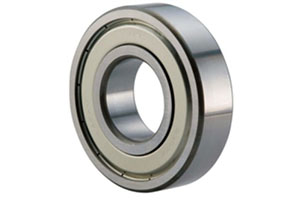
Ball bearings replace sliding motion with rolling motion between inner and outer raceways. Hardened steel balls reduce rotational friction. A cage maintains even ball spacing. Design supports moderate radial and axial loads at high speeds. Common materials: chrome steel (GCr15/SAE 52100), stainless steel, ceramic for hybrid variants. Sealing options: metal shields (ZZ) or rubber seals (2RS).
Performance Advantages
- Minimize power loss
Rolling friction between balls and raceways consumes less energy than sliding contact. - Reduce friction
Point contact geometry lowers resistance during rotation. - Reduce noise
Precision-ground raceways and controlled ball spacing reduce vibration and acoustic output. - Attain optimal design speed range
Low friction supports high rotational speeds across applications. - Ensure long service life
Correct material selection and lubrication enable sustained operation under rated load.
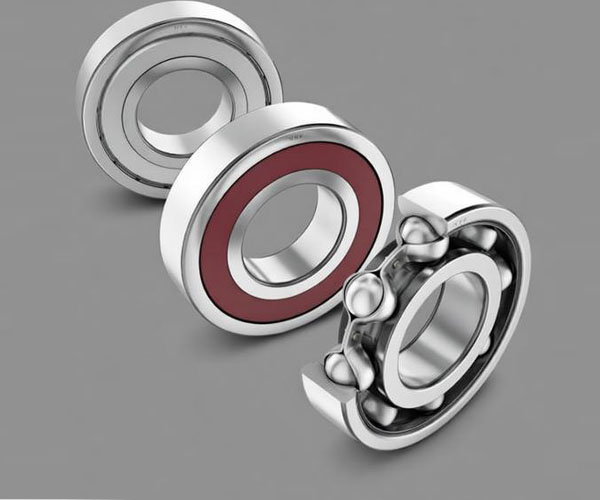
What Are Ball Bearings?
A ball bearing is a rolling-element bearing that uses spherical balls to separate moving parts, reducing rotational friction and supporting loads. These components are used in automotive, industrial, and precision equipment.
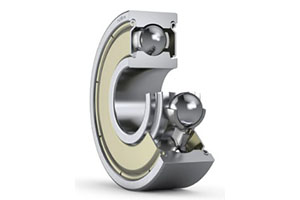
Ball bearings consist of four primary components: an outer ring, an inner ring, a set of hardened balls, and a cage (retainer). The outer ring remains stationary in the housing while the inner ring rotates with the shaft. The balls roll along precision-ground raceways on both rings. This converts sliding friction into rolling friction – a principle that reduces resistance compared to plain bearings. The cage spaces the balls evenly to prevent contact and distribute load.
When a force is applied, the balls move along the raceways, transmitting load from the inner ring to the outer ring. The contact area between a ball and its raceway is small (point contact theoretically, which elastically deforms to a small ellipse under load). This small contact area minimizes friction, allowing high-speed operation with low heat generation. However, the small contact area also limits load capacity compared to roller bearings (which use line contact). Ball bearings are therefore suited for moderate-load, high-speed applications.
Ball bearings accommodate radial loads (forces perpendicular to the shaft axis) and axial loads (forces parallel to the shaft axis). Different designs optimize for specific load directions:
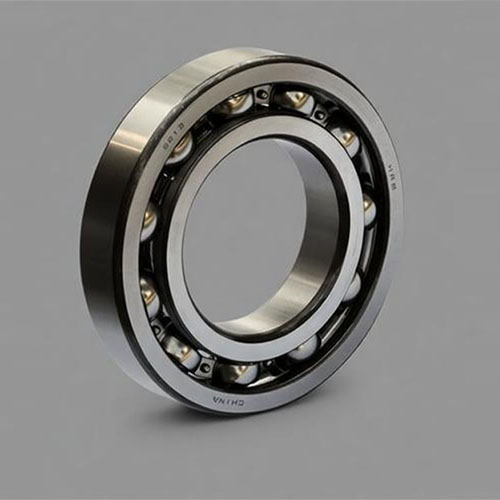
- Deep groove ball bearings handle combined loads and serve general-purpose applications.
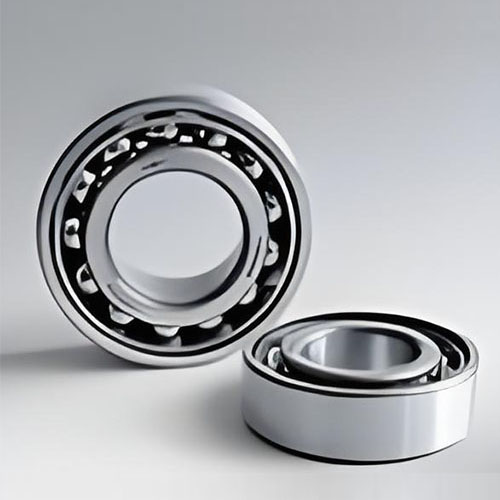
- Angular contact ball bearings support higher axial loads in one direction; often used in pairs.
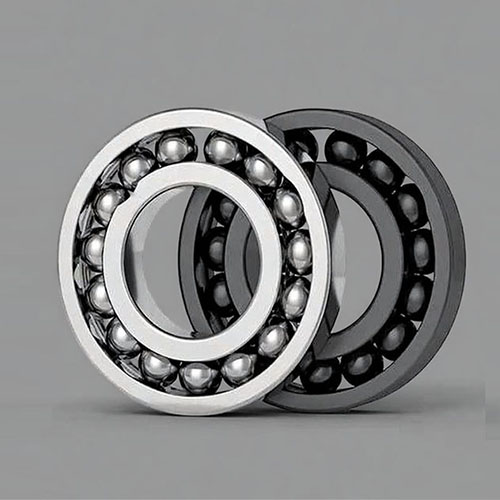
- Self-aligning ball bearings tolerate angular misalignment caused by shaft deflection or housing tolerances.
- Miniature ball bearings serve compact devices with limited space.
Typical applications include automotive (wheels, transmissions, electric motors), industrial machinery (pumps, fans, gearboxes, conveyors), and precision equipment (robotics, medical devices, instrumentation).
Ball Bearing Types and Series
This section covers four ball bearing configurations and their common series by design and load direction.
- Ball Bearing Types
- Deep Groove Ball Bearing Series
- Angular Contact Ball Bearing Series
- Self-Aligning Ball Bearing Series
- Miniature Ball Bearing Series
Ball Bearing Types
Ball bearings are categorized by internal geometry and load-handling capability. The four main types described below differ in raceway design, contact angle, and misalignment tolerance. These characteristics determine their suitability for specific speed, load, and precision requirements in rotating machinery.
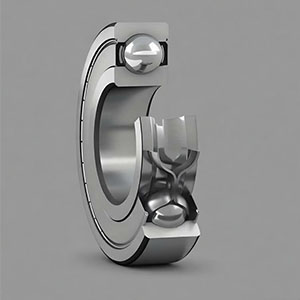
Deep groove ball bearings – Single-row bearings with deep uninterrupted raceways. Accommodate radial and axial loads in either direction. Low friction, low noise. Used in electric motors, pumps, gearboxes.
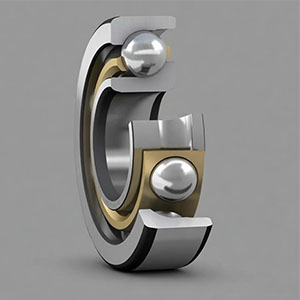
Angular contact ball bearings – Raceways displaced relative to the bearing axis. Designed for combined radial and axial loads. Contact angles: 15°, 25°, 40°. Larger angles increase axial capacity. Often mounted in pairs.
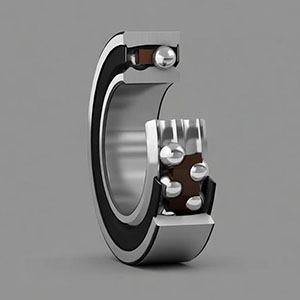
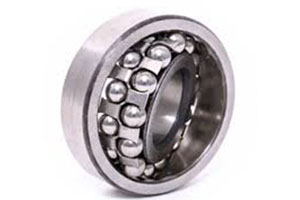
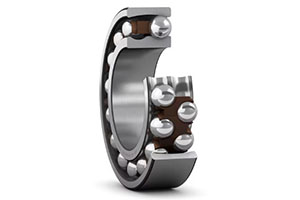
Self-aligning ball bearings – Double-row bearings with a spherical outer ring raceway. Permit angular misalignment from shaft deflection or housing tolerances. Used in fans, conveyors, agricultural equipment.
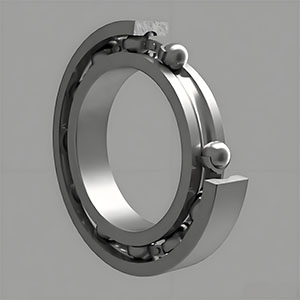
Miniature ball bearings – Bore diameters from 1 mm to 20 mm; outer diameters from 3 mm to 30 mm. Deep groove or angular contact designs. Used in medical devices, robotics, instrumentation.
Deep Groove Ball Bearing Series
DUHUI Bearing supplies multiple deep groove series covering bore diameters from 10 mm to over 100 mm. The following standard series are available for automotive, industrial, and general machinery applications. Each series differs in cross-section and load rating while maintaining ISO dimensional boundaries.
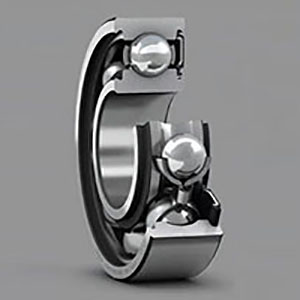
6000 series – Single-row deep groove ball bearing. Balanced load and speed characteristics. Used in electric motors, pumps, appliances.
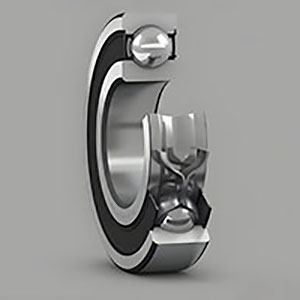
6200 series – Medium-duty deep groove bearing. Higher radial load capacity than 6000 series. Agricultural and industrial reducer applications.
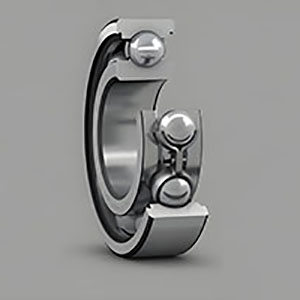
6300 series – Heavy-duty ball bearing with larger cross-section. Automotive and general machinery under significant loads.
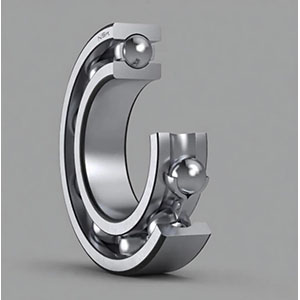
6800 series – Extra-light deep groove bearing. Smaller cross-section for compact assemblies, office equipment, small motors.
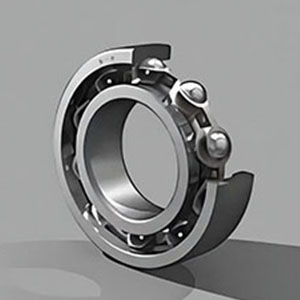
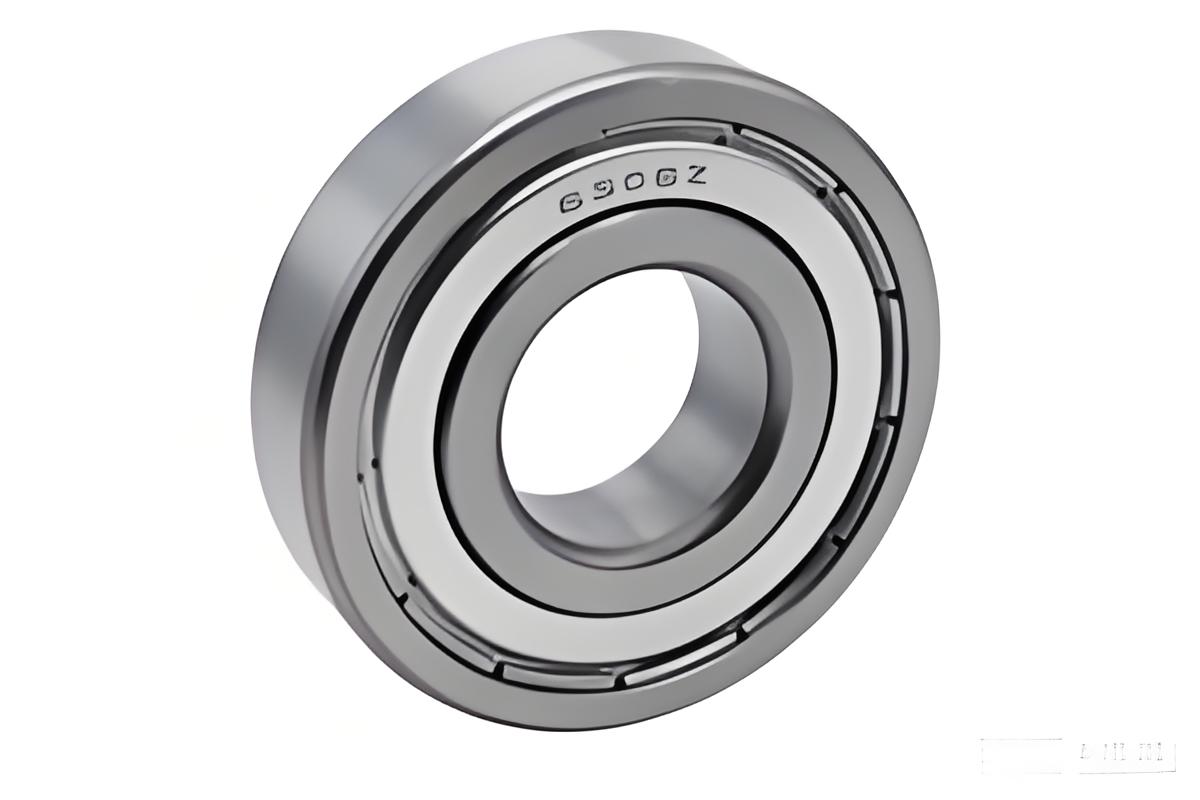
6900 series – Light series ball bearing with moderate load capacity. Space-constrained rotating assemblies.
Angular Contact Ball Bearing Series
These series are optimized for combined radial and axial loads at various contact angles. DUHUI Bearing offers single-row angular contact bearings in standard metric dimensions. The series below cover common bore ranges for high-speed spindles, pumps, and compressors. Contact angle options include 15° (C), 25° (AC), and 40° (B).
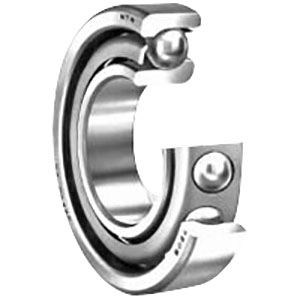
7000 series – Angular contact bearing with contact angles 15° (C), 25° (AC), 40° (B). Combined radial-axial load support.
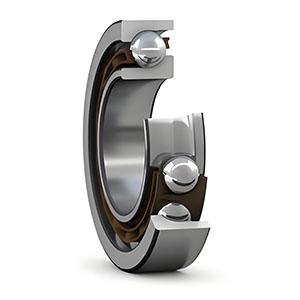
7200 series – Angular contact ball bearing, medium contact angle. Higher axial capacity than 7000 series. Pumps, compressors.
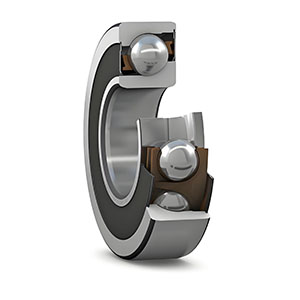
7300 series – Larger cross-section angular contact bearing. Higher load ratings for demanding industrial applications.
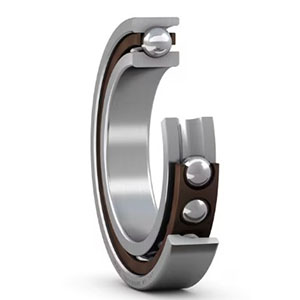
71800 series – Very thin-section angular contact ball bearing. Restricted installation envelopes, precision mechanisms.
Self-Aligning Ball Bearing Series
These double-row bearings feature a spherical raceway on the outer ring, allowing up to 2–3 degrees of angular misalignment. DUHUI Bearing supplies standard metric series with cylindrical or tapered bores (taper 1:12). They are specified where shaft deflection or housing misalignment is unavoidable, such as in fans, textile machinery, and conveyors.
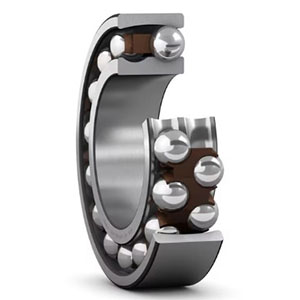
1200 series – Self-aligning ball bearing with two rows of balls and spherical outer raceway. Moderate misalignment compensation. Fans, blowers, conveyors.
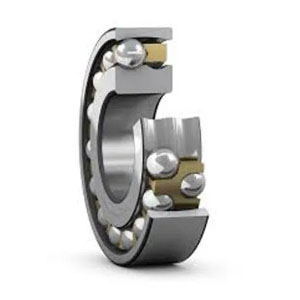
1300 series – Self-aligning bearing with increased load capacity over 1200 series. Larger cross-section for enhanced radial loading.
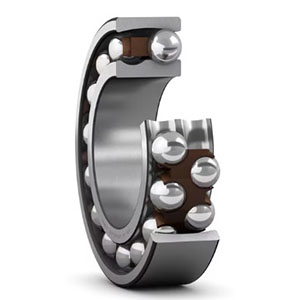
2200 series – Conical bore self-aligning ball bearing (taper 1:12). Greater misalignment angles. Textile and woodworking machinery.
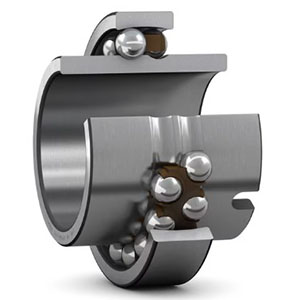
11200 series – Extra-light self-aligning ball bearing. Compact alignment‑sensitive assemblies.
Miniature Ball Bearing Series
Miniature bearings are defined by bore diameters ≤20 mm and overall cross-sections often below 10 mm. DUHUI Bearing produces these small deep groove bearings for precision applications. The series below are organized by increasing cross-section and load capacity, from ultra-thin (67 series) to wide inner ring (69 series). Metal shields or rubber seals are available.
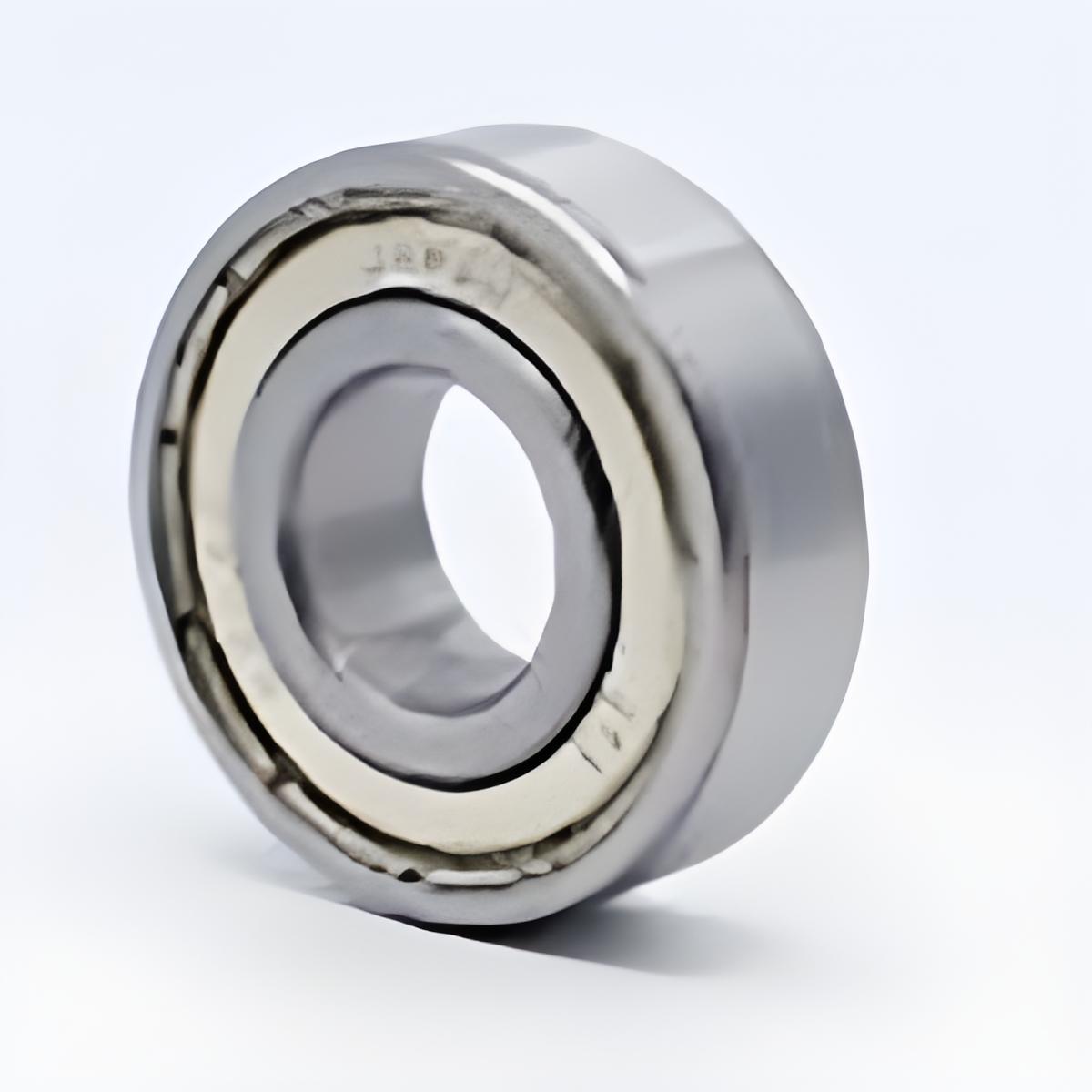
60 series – Miniature ball bearing with bore diameters from 1 mm. Deep groove design. Small motors, computer fans, precision instruments.
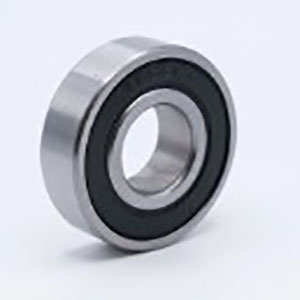
62 series – Miniature bearing with increased load capacity over 60 series. Slightly larger cross-section.
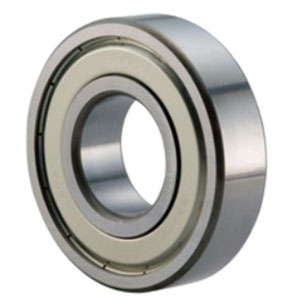
63 series – Heavy-section miniature ball bearing. Maximum load ratings in miniature envelopes.
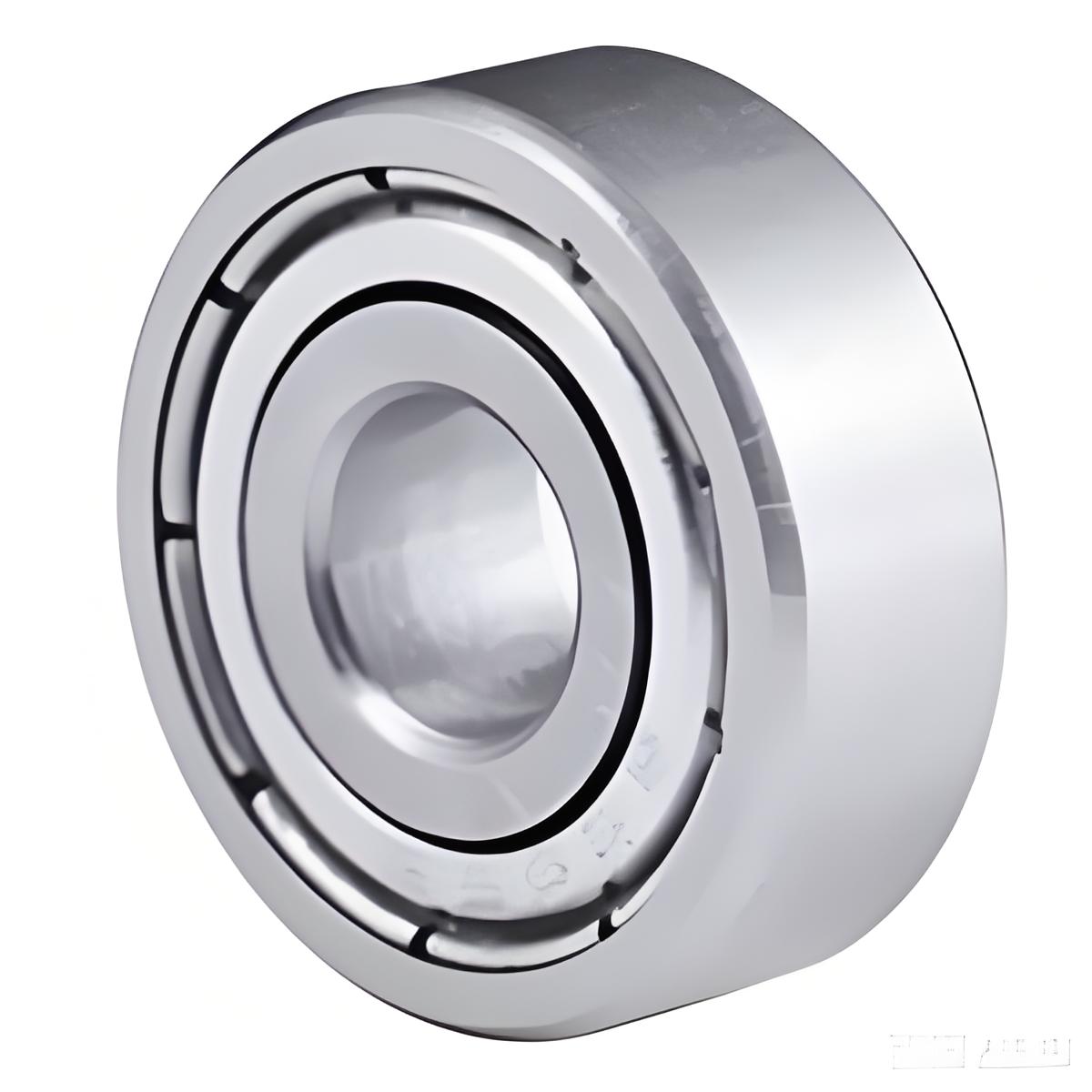
Applications of Ball Bearings
Ball bearings are used across automotive, agricultural, industrial machinery, and precision equipment sectors. The following list summarizes common application areas.

Wheel hubs, transmissions, electric motors, steering systems. Supports rotating shafts under varying thermal and load conditions.
Tractors, harvesters, tillage equipment. Dust, moisture, intermittent high loads.
Conveyors, pumps, fans, compressors, material handling. High reliability for continuous operation.
Precision angular contact bearings for ballscrew end supports. High axial rigidity for CNC machinery.
Medical instruments, robotics, computer fans, portable electronics. Compact dimensions, precision rotation.
Machine tool spindles, turbochargers, dental drills. Engineered for sustained high rotational speeds.
Comparison Guides
Two internal articles compare ball bearings with roller bearings, and deep groove ball bearings with angular contact ball bearings. Each guide summarizes key technical differences for engineering selection.
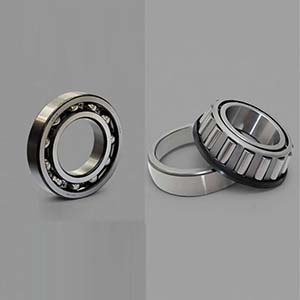
This article compares ball bearings and roller bearings in terms of contact geometry (point vs line contact), friction characteristics, radial and axial load capacity, maximum rotational speed limits, and typical application suitability. The differences determine which rolling-element bearing type is appropriate for a given machinery design.
For more details, please read“The Differences Between Ball and Roller Bearings”
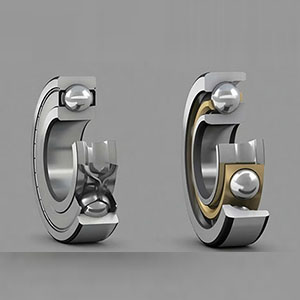
This article examines design differences between deep groove and angular contact ball bearings. Topics include raceway geometry, load direction handling (radial and bidirectional axial vs combined loads with unidirectional axial capacity), contact angle effects, and selection criteria for paired or single-bearing configurations.
For more details, please read“The Differences Between Deep Groove Ball Bearing and Angular Contact Ball Bearings”
Related Products
The models listed below are standard metric ball bearings covering bore diameters from 1 mm to 20 mm (miniature), 10 mm to 50 mm (deep groove), and corresponding angular contact and self-aligning series. Dimensions are in millimeters: bore × outer diameter × width.
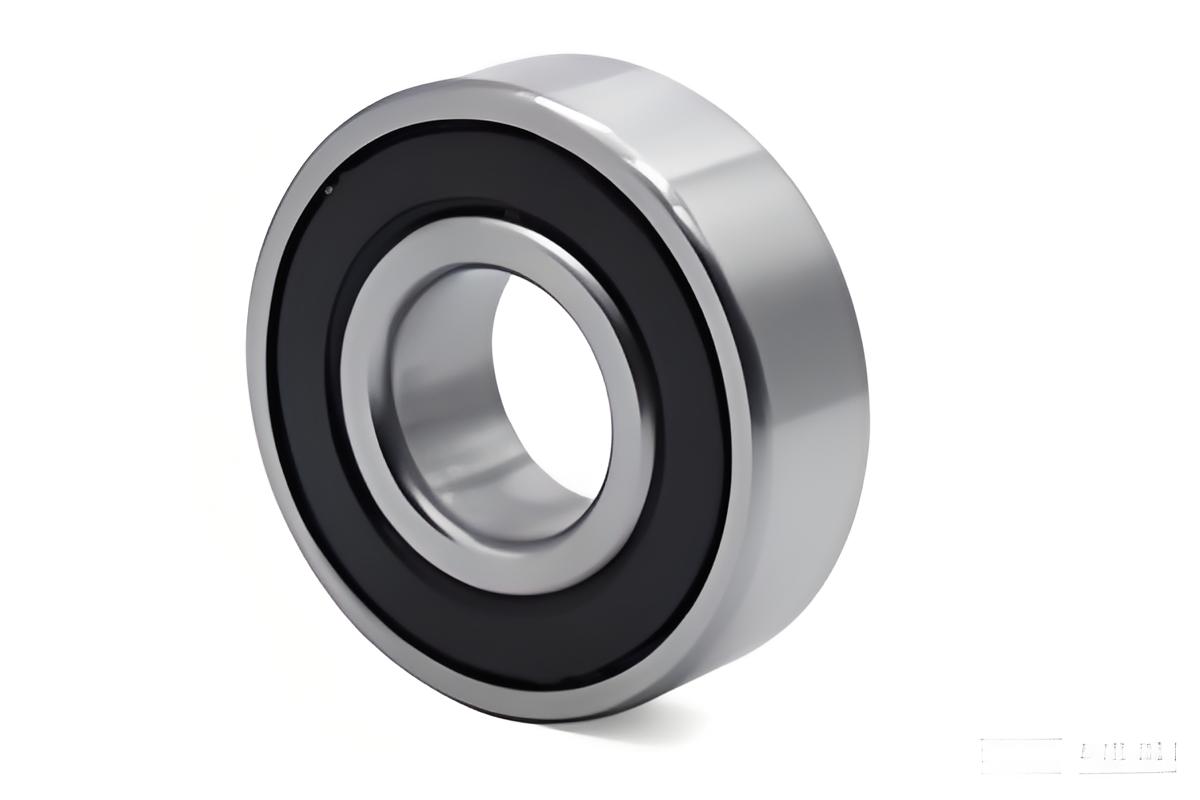
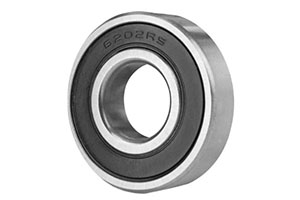
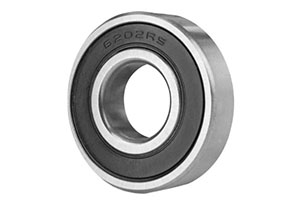
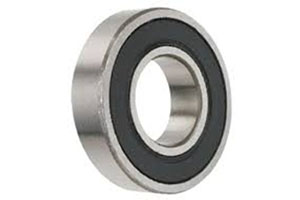
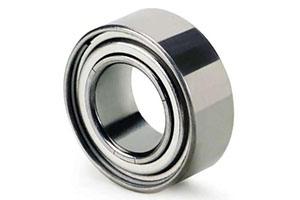
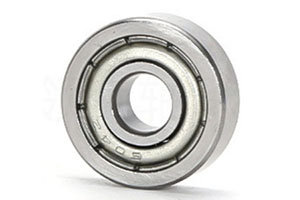
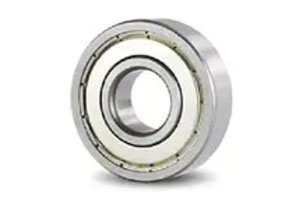
6002-2RS bearing – 15×32×9 mm with rubber seals on both sides. This compact deep groove ball bearing suits light-duty applications.
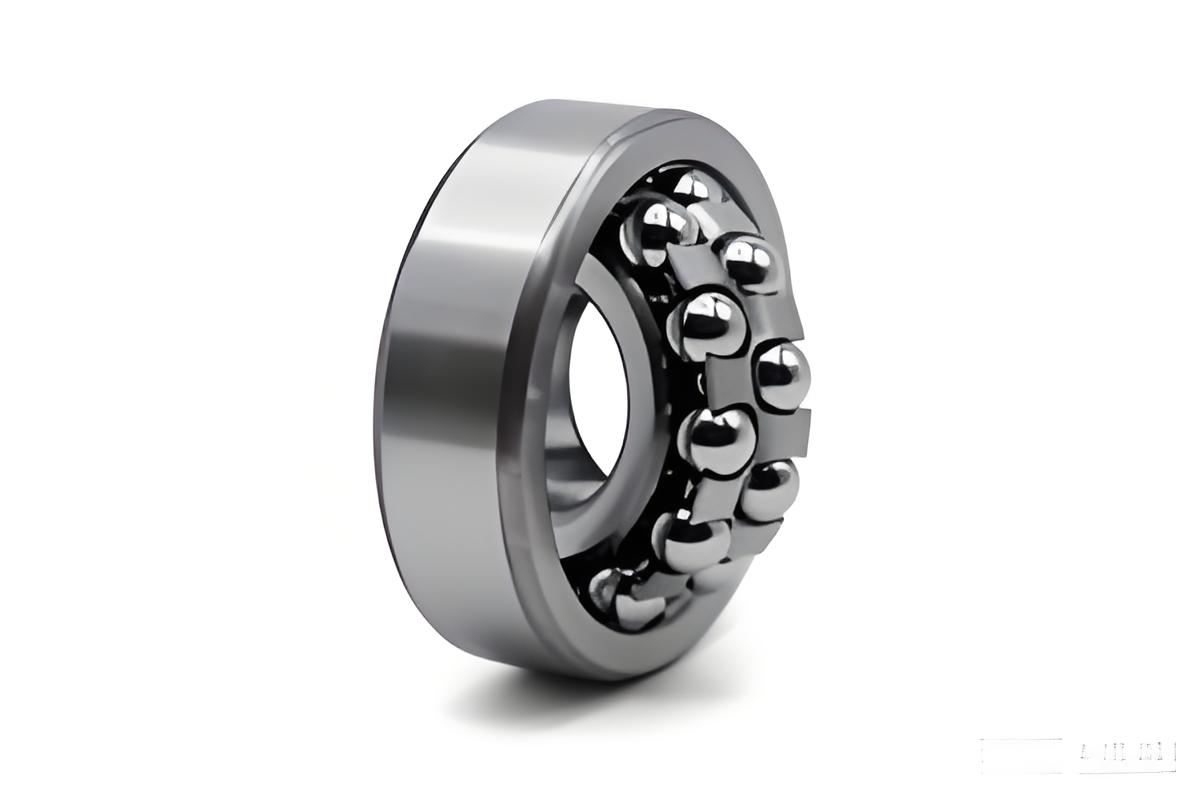
1207-C3 – A 35×72×17 mm self-aligning bearing. The increased internal clearance (C3) permits higher operating temperatures.
Technical Information
Ball Bearing Materials
Material selection affects corrosion resistance, load capacity, temperature range, and service life.
- Chrome steel (GCr15 / SAE 52100) – Standard material. Hardness 60–66 HRC. Good fatigue resistance. General industrial applications with adequate lubrication.
- Stainless steel (440C / AISI 304) – Corrosion-resistant alternative. Lower hardness than chrome steel. Food processing, medical, marine applications.
- Ceramic (silicon nitride, Si₃N₄) – Used for rolling elements in hybrid bearings. Lower density, higher hardness, electrical insulation. High-speed spindles and electric motors.
Bearing Life Calculation (ISO 281)
Fatigue life estimation per ISO 281:1990/Amd 2:2000. Factors: basic dynamic load rating (Cᵣ), equivalent dynamic bearing load (P), rotational speed (RPM), reliability adjustments, operating conditions. For application-specific life calculations, load and speed parameters are required from the machine designer.
Ball bearings are rolling-element bearings that use spherical balls to separate moving parts, reducing rotational friction between shaft and housing. Components: inner ring, outer ring, balls, cage.
For more details, please read“The Ultimate Guide to Ball Bearings: Types, Applications, and Selection”
Balls roll between inner and outer raceways, converting sliding friction to rolling friction. This reduces resistance, lowers heat generation, and enables efficient rotation.
For more details, please read“How Do Ball Bearings Work? ”
Most balls and rings are chrome steel (GCr15/SUJ2/SAE 52100). Stainless steel resists corrosion. Ceramic balls (silicon nitride) in hybrid bearings provide electrical insulation and high-speed performance.
For more details, please read“What material is used for ball bearings?”
Low friction minimizes energy loss. Support radial motor shaft loads. Maintain rotor-stator alignment. Reduce noise and heat. Achieve high rotational speeds required for efficient motor operation.
For more details, please read“Why are ball bearings used in motors?”
Bore diameter (d), outer diameter (D), width (B) in millimeters. Example — 6204: 20 mm bore, 47 mm outer, 14 mm width. Standardized metric dimensions per ISO 15.
For more details, please read“Comprehensive Guide to Ball Bearing Size Chart”
Forged/ground rings, precision-ground balls, assembled with cage, lubricated. Multi-stage manufacturing with heat treatment, superfinishing, and quality inspection. Detailed process explained in our manufacturing guide.
For more details, please read“The Manufacturing Process of Ball Bearings”

