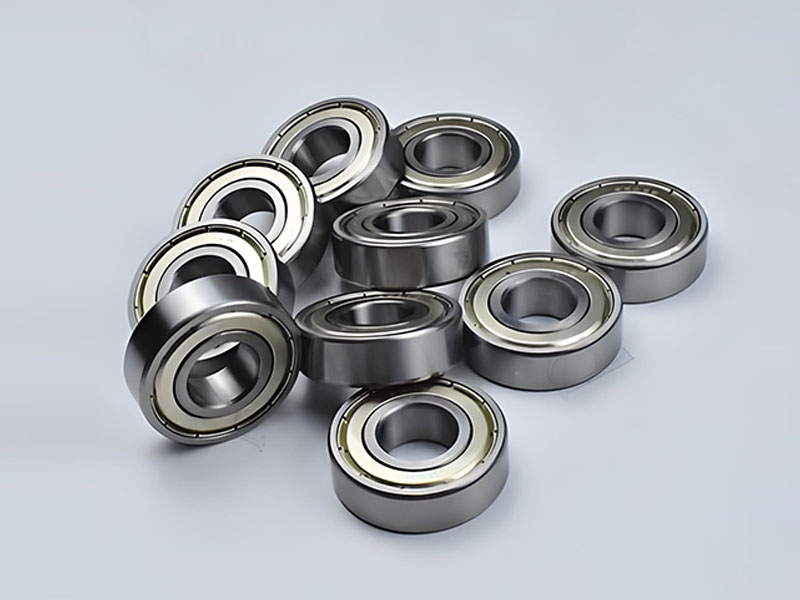
Quick Answer: Replace only one wheel bearing when inspection has confirmed the failure is at a single wheel, the bearing on the opposite side passes the same checks, and the vehicle manufacturer does not require pair replacement. Bearing noise can travel through the body, so the loudest corner is not proof. Replace both sides when the opposite bearing also shows play, roughness, noise, vibration, or seal damage, or when the OEM procedure requires it.
The choice to replace only one wheel bearing is not about saving one part. It is about whether the failure is truly one-sided and whether the vehicle’s service information allows a single-side repair. A bearing that is noisy but not yet located, or an opposite side that is already worn, changes the answer. The useful sequence is to separate one wheel position from one bearing component, inspect every wheel, test impact damage against normal wear, and then decide whether pair replacement is safer.
What Replacing Only One Wheel Bearing Actually Means
The phrase can describe two different jobs. One job is replacing the bearing or hub unit at one wheel position, left or right. The other is replacing one bearing component inside a single hub. Those are not interchangeable repairs.
Modern Generation 3 hub units are usually pre-lubricated, maintenance-free assemblies with inner and outer flanges. When one fails, the complete assembly at that wheel position is replaced. Traditional tapered roller bearing hubs commonly use inner and outer bearings as a pair inside the same hub. Bearing manufacturer technical guidance also warns that Generation 2 disassembly damages the assembly, and that Generation 1, 2, and 3 pre-lubricated, pre-sealed assemblies should not be opened for internal service.
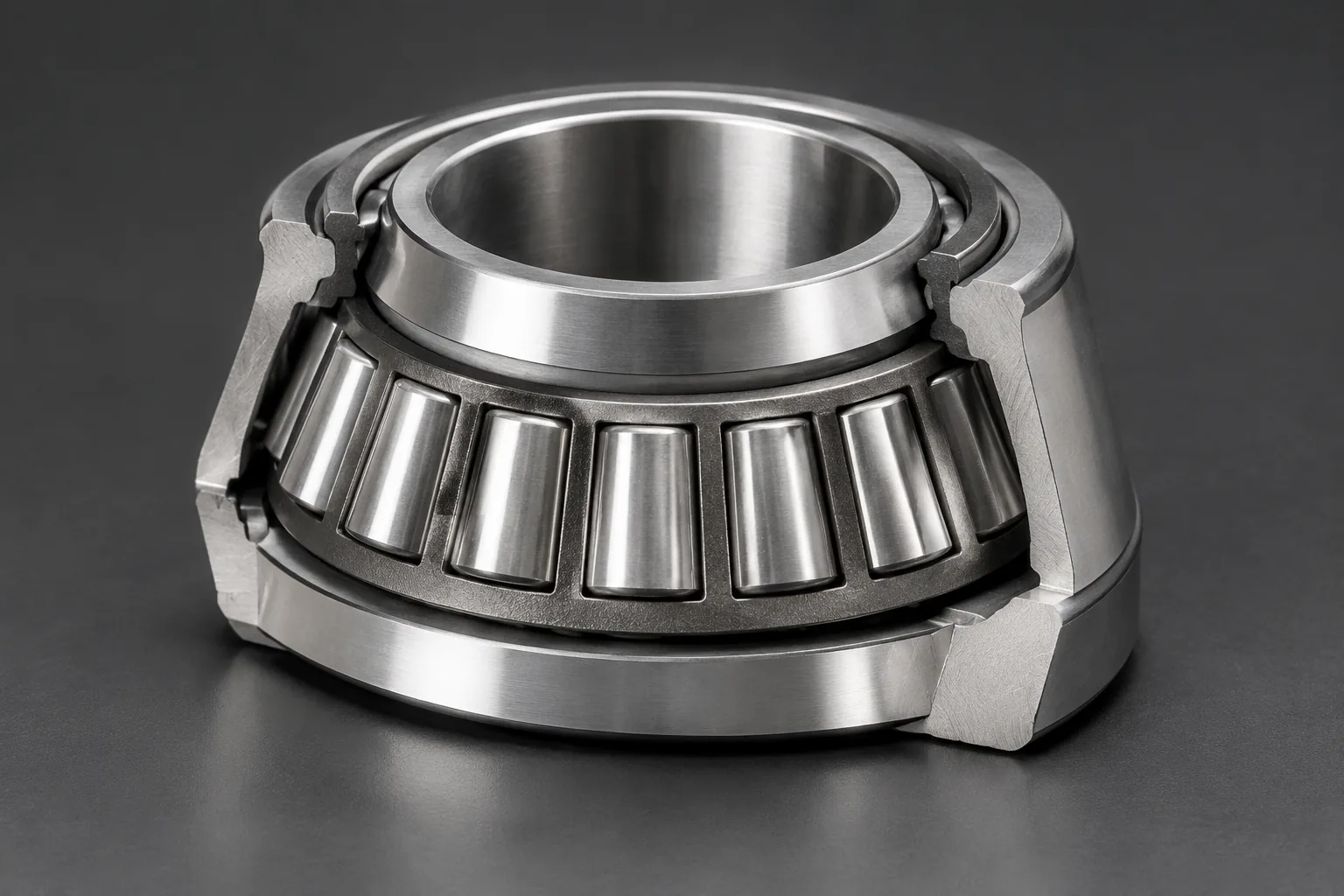
Some older serviceable hub designs may allow individual bearing replacement. Confirm that in the vehicle-specific OEM procedure before assuming it. This distinction applies to passenger-car and light-truck wheel-end designs, and the vehicle-specific service procedure governs the actual repair. The design distinction matters because a one-side repair on a sealed hub unit is not the same as fitting one bearing into a serviceable hub.
Conditions That Support Replacing Only One Bearing
A one-side repair is supported only when the evidence points to one wheel and the rest of the axle is sound. The applicable conditions should all be met:
- Confirmed single-wheel failure: play, abnormal rotation noise, or vibration is present on one wheel only.
- The opposite side passes the same inspection with no play, roughness, noise, or vibration.
- The damage came from a localized event such as a curb strike, pothole impact, or collision affecting one wheel.
- The vehicle manufacturer’s service information does not require both sides to be replaced.
- An OE-quality replacement part is used, as one bearing manufacturer specifies when only one bearing is replaced.
If any condition is missing, the decision moves toward further diagnosis or pair replacement. A one-side repair is a conclusion after inspection, not a default when only one side sounds loud.
How to Confirm the Failure Is Limited to One Wheel
A one-side replacement is only defensible when the failed wheel has been identified by inspection. Noise and vibration can mislead, especially when the bearing is loaded differently while driving.
Wheel-End Inspection Steps
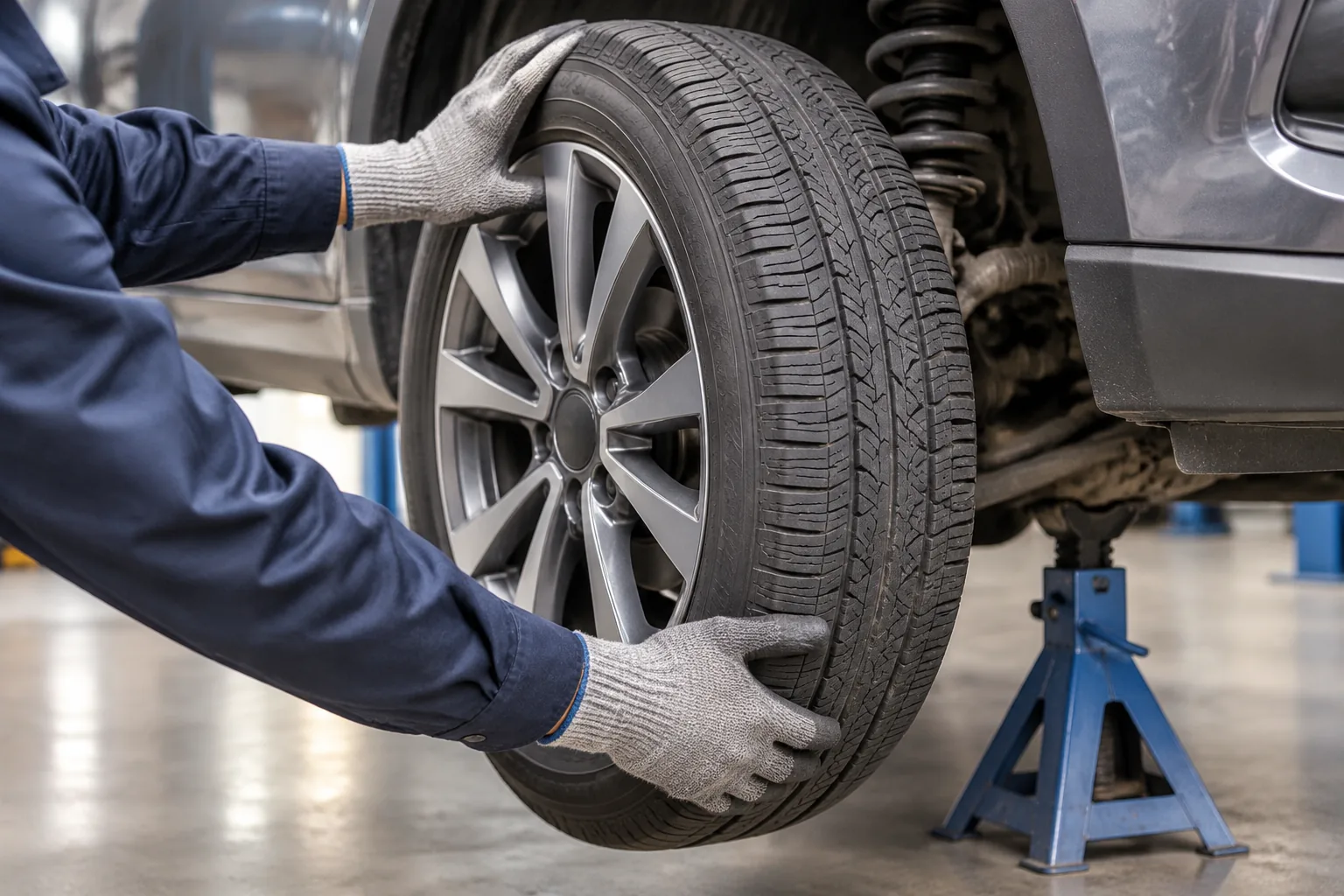
With the vehicle safely lifted and supported, inspect each wheel end in the same way:
- Rock each wheel by hand and check for looseness.
- Rotate each wheel by hand and listen for abnormal noise.
- Feel for vibration through the suspension spring while rotating each wheel.
- Replace the bearing that shows play, noise, or vibration. Check every wheel, not only the suspected one.
These checks match the common diagnostic criteria: hand-rocking play, abnormal rotation noise, and vibration felt through the suspension spring. A wheel that passes all three gives stronger support for leaving that side in service.
Causes That Can Mimic a Bearing Failure on One Side
Bearing noise can travel through the vehicle body or frame, so the loudest corner is not always the failed corner. Loose or clunking components may be worn suspension parts rather than the hub bearing. Tire and road noise can also be mistaken for bearing noise. Isolate the source by physical inspection at each wheel, not by sound alone.
When You Should Not Replace Only One Bearing
Pair replacement is the better decision in several situations. Do not force a one-side repair when any of these apply:
- The opposite side shows noise, play, rough rotation, vibration, or seal damage. Replace both sides.
- Both bearings are high-mileage and visibly worn. One bearing manufacturer recommends pair replacement in that case.
- The OEM service manual, parts catalog, or technical bulletin requires pair replacement. Follow the vehicle-specific requirement.
- A same-axle recommendation applies. An SKF technical tip numbered TT 08-014, dated April 2008, recommends replacing both bearings or hubs on the same axle because both sides share mileage and road exposure. That advice is more conservative than some OEM positions, and the vehicle-specific OEM procedure takes precedence.
The SKF technical tip is advisory. It does not override an OEM procedure that permits single-side replacement, but it is a useful warning when the opposite side is already at a similar wear stage.
Localized Impact Damage vs Normal Wear
Impact damage and wear-driven failure call for different planning. Chrysler Collision Bulletin 31-001-12, published January 11, 2012, states that when a collision directly strikes a wheel and damages the knuckle, control arm, or ball joint, the hub and bearing at the impacted position should be replaced. Other steering, suspension, or wheel damage should prompt bearing inspection and replacement only when doubt remains.
Wear-driven failure is different. Mileage and road exposure are shared across an axle, so the opposite bearing is often at a similar wear stage even if it is not yet noisy. Localized damage supports one-side replacement, while symmetric wear supports pair-replacement planning.
Signs That Do Not Justify Replacing a Bearing
Some observations are too weak to justify a bearing order:
- A slightly wet or greasy seal area is not a replacement reason. Bearings may expel a small amount of grease. Only visible seal damage supports replacement on that basis.
- Noise alone does not identify the failed side. Inspection is required before any bearing is ordered.
- Play or clunking without bearing confirmation may come from suspension wear rather than the hub bearing.
These signs can justify inspection. They do not, by themselves, prove that a bearing needs replacement.
Mileage, Wear Factors, and Pair-Replacement Planning
Mileage is a probability signal, not a pass or fail limit. One bearing manufacturer cites an average wheel-end bearing replacement interval of about 150,000 km (about 93,000 mi) and describes it as an average only. Another cites 80,000-118,000 mi (about 129,000-190,000 km) as the mileage range in which hub bearing replacement is most likely. That range is not a mandatory replacement interval.
Life-shortening factors include incorrect installation or torque, towing or heavy loads, rough roads, large-diameter wheels, low-profile tires, wheel spacers, salt and snow, flooding, sand, and dust. Use mileage as a probability signal for the opposite side, not as proof that it must be replaced. If the opposite side already shows roughness or play, the mileage question is settled by inspection.
Parts and Installation Requirements for a One-Side Replacement
A one-side repair still has to meet the same installation standard as a pair replacement. Use an OE-quality replacement part when replacing only one bearing. Follow the OEM removal and installation procedure, torque values, and tightening sequence, and complete final tightening with a calibrated torque wrench.
Do not reuse axle nuts, circlips, or related one-time fasteners. Set preload or torque to the vehicle service manual. Hub unit internal clearance is factory-set and must not be adjusted by the installer. These requirements apply to both one-side and pair replacement, and they become more important when the opposite side is left in service.
Conclusion
Replace only one wheel bearing when a confirmed single-wheel failure, a healthy opposite side, and an OEM procedure that allows single-side service all line up. Noise location alone is unreliable, so inspect all four wheels before ordering. Check the OEM service information, use OE-quality parts, and tighten to the specified torque and sequence. When both sides show wear or the OEM procedure requires pair replacement, replacing both is the safer default.
FAQs
Q1: Can I replace just one wheel bearing if I hear noise from one side?
A: Only after inspection confirms that wheel is the failed one. Bearing noise can travel through the body or frame, so the loudest corner is not always the source. Check every wheel for play, rotation noise, and spring vibration first.
Q2: Should wheel bearings always be replaced in pairs?
A: No. Some OEM procedures permit replacing only the failed bearing, while one bearing manufacturer recommends same-axle pair replacement and another recommends pairs for high-mileage, worn bearings. The vehicle-specific OEM procedure decides.
Q3: Can I replace only the bearing inside the hub instead of the whole hub assembly?
A: Usually not on modern vehicles. Generation 2 and 3 hub units are sealed, pre-lubricated assemblies that are replaced as a unit. Traditional hubs with separate inner and outer tapered roller bearings follow their own OEM procedure.
Q4: Does a greasy or wet seal mean the wheel bearing needs replacement?
A: No. A small amount of grease seepage can be normal. Replacement is justified by visible seal damage or confirmed bearing symptoms such as play, noise, or vibration.
Q5: How long do wheel bearings last?
A: One bearing manufacturer cites an average of about 150,000 km (about 93,000 mi), and another cites 80,000-118,000 mi (about 129,000-190,000 km) as the most likely replacement range. Both are averages, shortened by poor installation, heavy loads, rough roads, large wheels, and contamination.
Q6: Should I replace both bearings after hitting a pothole or curb?
A: Not automatically. Impact damage is often localized, so replacing the struck wheel’s hub and bearing can be appropriate. Inspect the opposite side and related steering and suspension parts before deciding.
Q7: What if the other bearing is already worn when I replace one?
A: Replace both. If the opposite side shows noise, play, rough rotation, vibration, or seal damage, or both bearings are high-mileage and worn, pair replacement avoids a second repair in a short period.