Incorrect axle nut torque is a common cause of premature wheel hub bearing failure. If the nut is too loose, the bearing develops excessive play; if too tight, internal friction and heat increase, shortening service life. This guide explains the correct tightening procedure, the tools required, and key precautions to follow during hub assembly installation.
Hub Assembly Installation Tip
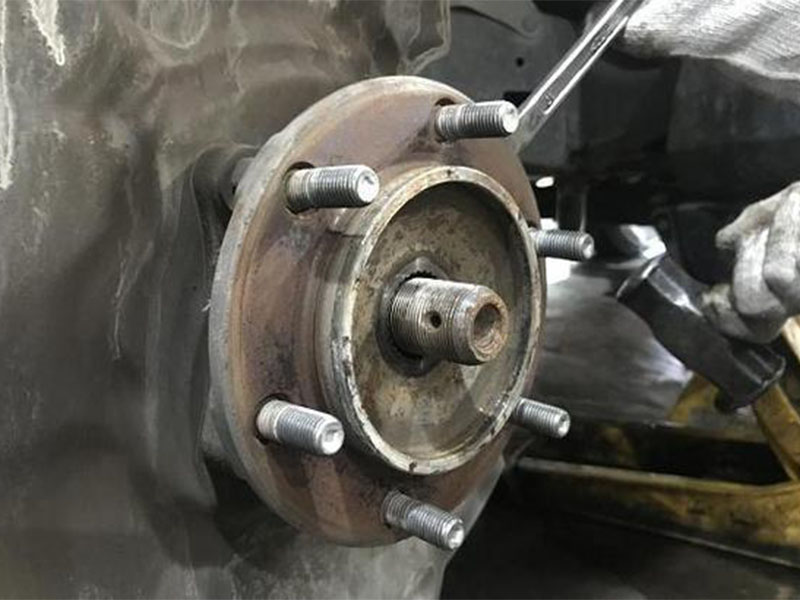
The wheel hub bearing attaches the wheel to the vehicle while allowing rotation during steering. It is sensitive to the clamping force applied by the axle nut. Overtightening during installation is a frequent mistake that damages the bearing, often without immediate symptoms. The axle nut sets the bearing preload, and the correct torque varies by vehicle model, bearing type, and nut design. Always consult the vehicle manufacturer’s service information before proceeding.
Avoid Overtightening – Use the Right Tool
The most effective way to avoid overtightening the axle nut is to use the correct tool. An impact wrench should never be used to tighten the drive axle nut. Impact tools lack the precision to control torque accurately, and the vibration can damage the nut, axle threads, or the bearing itself.
A calibrated torque wrench is the only recommended tool for final tightening. Note that some torque wrenches have a maximum capacity of 190–200 ft/lbs; axle nuts requiring higher torque will need a wrench with a higher range. Never use a torque wrench as a breaker bar or for loosening fasteners.
The Correct Method for Tightening the Drive Axle Nut
Follow these steps to achieve the correct preload and secure the axle nut properly.
- Refer to the vehicle manufacturer’s service information. Obtain the hub bearing replacement procedure and the exact torque specification for the drive axle nut. Some hub units come with factory-set preload and only require the axle nut to secure the stub axle; others rely on the nut’s final torque to set internal clearances.
- Use an accurate torque wrench to apply the specified torque. With the vehicle raised and the hub assembly unloaded, have an assistant hold the brake pedal to prevent rotation. Apply the torque value in a smooth, steady motion. On many vehicles, the final torquing must be done with the wheels on the ground to ensure proper mating of split inner rings.
- Stake the nut and/or install a new cotter pin. After torquing, stake the edge of the drive axle nut into the drive axle slot (if the nut is designed for staking) and/or install a new cotter pin. For castle nuts, tighten further within 60 degrees until the hole aligns with a slot, then bend the cotter pin to lock.
Additional consideration: Some manufacturers require replacing the axle nut every time it is removed. Reusing a one-time-use self-staking nut can lead to loosening during vehicle operation.
Key Points for Hub Bearing Replacement
Beyond axle nut torque, the following factors affect bearing life and safety:
- Clean the bearing mounting surface. Remove all rust, corrosion, and debris from the vehicle’s knuckle or housing to ensure proper seating of the new hub bearing.
- Torque all hub bearing mounting bolts to the manufacturer’s specification using a torque wrench.
- Torque the drive axle nut to specification – never with an impact wrench.
- Route ABS wheel speed sensor cables properly to prevent contact with rotating components such as the drive axle.
- Torque wheel lug nuts to manufacturer specification using a torque wrench, following a cross‑tightening pattern.
- Inspect the axle shaft for nicks, burrs, or debris on the splines before installing the new hub assembly.
About DUHUI Bearing
DUHUI Bearing is a China-based manufacturer of automotive wheel hub bearings and other bearing types. DUHUI hub assemblies are produced with attention to sealing, corrosion resistance, and dimensional accuracy. For technical specifications or installation support, contact the manufacturer directly.
Frequently Asked Questions (FAQs)
Q1: What happens if I overtighten the axle nut?
A1: Overtightening creates excessive preload, increasing friction and heat. This degrades the bearing grease and can lead to premature failure, often within a few thousand miles.
Q2: What happens if the axle nut is too loose?
A2: An under-tightened nut allows excessive wheel bearing play, causing vibration, noise (grumbling or clunking), seal leakage, and ABS sensor issues.
Q3: Do I need to use a new axle nut each time?
A3: On many applications, yes. If the nut is a one-time-use self-staking type, it must be replaced. Reusing it may result in insufficient retention.
Q4: Can I use an impact wrench to tighten the axle nut?
A4: No. Impact wrenches cannot control torque accurately and frequently over‑tighten the nut. Always use a torque wrench for final tightening.
Q5: What if I don’t have the manufacturer’s torque specification?
A5: Consult the vehicle’s service manual, a dealer, or bearing manufacturer resources such as SKF’s Torque Specification Guide. Never guess the torque value.
Q6: Can I reuse an old cotter pin?
A6: No. Always install a new cotter pin. Old pins may be weakened or misshapen and will not secure the nut properly.
Q7: Should I lubricate the axle shaft threads or nut?
A7: In most applications, no. Lubrication reduces friction on the threads, causing the nut to be over‑tightened even if the torque wrench clicks at the specified value. Follow the vehicle manufacturer’s guidance; some designs allow light oil on the splines only.
Q8: Do I need to torque the axle nut with the wheels on the ground?
A8: Many vehicles require the wheels on the ground for final torque to properly seat split inner bearing rings. Always verify the procedure in the service information for your specific vehicle.