Do you hear a humming noise that gets louder as you accelerate? Does your ABS light turn on without any obvious brake issue? These symptoms often point to a failing wheel hub assembly. But what exactly is this component, and why is it so critical for your vehicle’s safety?
This guide provides a detailed, fact‑based explanation of wheel hub assemblies – from internal components and functions to failure diagnosis, replacement costs, and DIY considerations.
Main Parts of a Wheel Hub Assembly
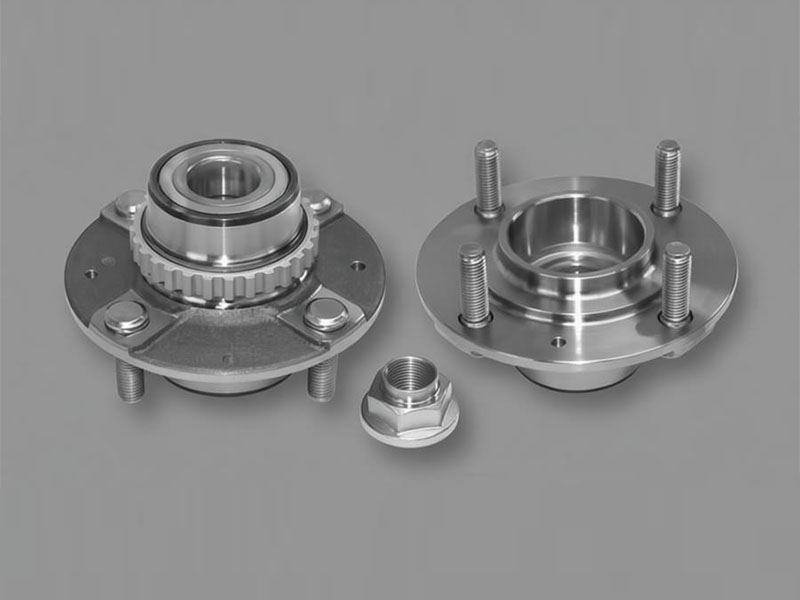
A modern wheel hub assembly is a pre‑assembled, sealed unit. It contains several precision components that work together:
- Hub – The central metal body, usually forged or cast steel (or aluminum). It has a disc‑like shape with an integral flange and wheel studs, providing the mounting surface for the brake rotor and the wheel.
- Bearings – Steel balls or tapered rollers held in a cage. They allow the hub and wheel to rotate with minimal friction while supporting the vehicle’s weight (radial load) and cornering forces (axial load).
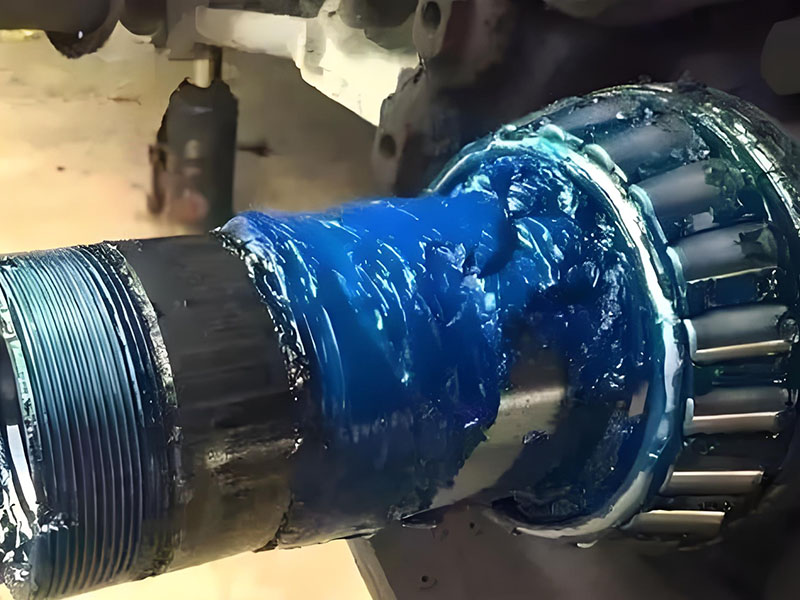
- Seals (dust seal / oil seal) – They keep dirt, water, and road debris out of the bearing cavity and retain the factory‑applied grease inside. Without effective seals, bearing life drops dramatically.
- ABS sensor ring and sensor – Most vehicles built after 1998 integrate a magnetic encoder ring (tone ring) and a wheel speed sensor into the hub assembly. This sensor sends continuous wheel speed data to the ABS control module.
- Wheel bolts / studs – Pressed into the hub flange, they secure the brake rotor and the wheel to the assembly. On some vehicles, the hub uses threaded holes for wheel bolts instead of studs.
- Dust cover – A metal or plastic cover fitted over the open side of the bearing cavity, providing an extra barrier against contamination and preventing grease leakage.
Where Is the Wheel Hub Assembly Located? (Front vs. Rear)
The wheel hub assembly is mounted between the drive axle (or steering knuckle) and the brake rotor. On a front‑wheel‑drive vehicle, the front hub assemblies are bolted to the steering knuckle and must rotate for steering. On rear‑wheel‑drive or all‑wheel‑drive vehicles, every wheel has a hub assembly, though some base‑model rear units may lack an ABS sensor.
Driven vs. non‑driven wheels
Driven wheels (front wheels on FWD cars, all wheels on AWD/4WD vehicles) use hub assemblies with a splined inner bore to accept the drive axle. Non‑driven wheels (rear wheels on RWD or FWD cars) have a simpler design without axle splines. The two types are not interchangeable.
What Does a Wheel Hub Assembly Do? (3 Core Functions)
The hub assembly performs three core functions:
- Connect the wheel to the vehicle – It provides a strong, precise mounting point that keeps the wheel attached under all driving forces – acceleration, braking, and cornering.
- Enable smooth rotation – The internal bearings allow the wheel to spin freely at high speeds, with low rolling resistance. This also contributes to fuel efficiency.
- Support ABS, TCS and ESC systems – The integrated ABS sensor sends wheel speed data to the electronic control unit. The anti‑lock braking system (ABS) uses this signal to prevent wheel lock‑up during emergency braking. Traction control (TCS) and electronic stability control (ESC) rely on the same data to reduce engine power or apply individual brakes when slip is detected.
Wheel Hub Types: Separate Bearing vs. Integrated Assembly
Wheel hub technology has evolved through three generations. First‑generation designs used separate bearings pressed into the steering knuckle, with the hub installed over them. ABS sensors, if present, were external components. Second‑generation units integrated the bearing and hub flange into a single pre‑assembled unit, but the outer ring still pressed into the knuckle. Third‑generation assemblies are the modern standard: double‑flange, bolt‑on units with integrated ABS sensors and sealed, pre‑lubricated bearings. No press is required for installation. The table below compares the older separate‑bearing design (first and early second generation) with today’s integrated hub assembly.
| Feature | Separate bearing (1st generation) | Integrated hub assembly (2nd/3rd gen) |
|---|---|---|
| Typical era | Pre‑1997, RWD vehicles | 1998 onward – most cars |
| Construction | Bearing pressed into hub; serviceable separately | All components pre‑assembled, sealed |
| ABS sensor | Often external, bolted on | Integrated into the unit |
| Installation | Requires press and special tools | Bolt‑on, no press needed |
| When failed | Bearing can be replaced alone | Entire assembly must be replaced |
The integrated design offers better sealing, longer service life, and easier installation. The trade‑off is higher part cost but lower labor time.
How to Tell If Your Wheel Hub Assembly Is Failing
Early diagnosis prevents unsafe conditions and additional damage. Use these methods.
Symptoms and common noises
- Humming, roaring, or growling that increases with vehicle speed – the most common sign of bearing wear.
- A sharp grinding or metallic screech – indicates severe internal damage.
- Clicking or snapping during turns is usually not the hub assembly; it points to a failing CV axle.
Noise comparison: hub bearing vs. CV axle vs. tire vs. brake
| Noise source | Typical sound | When it occurs | Quick check |
|---|---|---|---|
| Wheel hub bearing | Humming, roaring, growling | Increases with speed; changes during gentle swerving | Swerve left/right – noise changes side |
| CV axle (drive shaft) | Rhythmic clicking, popping | Low‑speed, full‑lock turns (U‑turns, parking) | Turn steering fully – noise appears |
| Tire | Humming, droning | Always proportional to speed | Noise changes with road surface, not with steering |
| Brake system | Metallic scraping or squealing | Only when brake pedal is pressed | Noise disappears or changes when braking |
Road test method
Drive the vehicle above 50 mph (80 km/h) on a smooth, level road. Listen for a constant hum. Gently swerve left and right. If the noise gets louder when swerving left, the right side hub assembly is likely failing (the loaded side). If louder when swerving right, the left side is suspect.
Shake test (with early‑failure warning)
Safely lift the vehicle and support it on jack stands. Grasp the tire at 12 and 6 o’clock and push/pull firmly.
- Excessive play (wobble) indicates a worn hub assembly.
- Important: In the early stage of bearing failure, the hub may show no detectable play. Do not rule out a bad hub assembly solely because the wheel feels tight. Use the road test as the primary diagnostic method.
If play is found, remove the wheel, brake caliper (hang it to avoid hose stress), and brake rotor. Then spin the hub by hand. You may feel roughness, resistance, or hear a grinding sound.
ABS warning light
If the integrated wheel speed sensor fails or the tone ring is damaged, the ABS control module turns on the dashboard warning light. The ABS and TCS systems will be disabled.
Top Causes of Wheel Hub Bearing Failure
Wheel hub assemblies do not fail randomly. The most frequent causes are:
- Contaminant ingress – Water, road salt, mud, or dust passing through damaged seals.
- Impact damage – Hitting potholes, curbs, or large debris at speed.
- Improper installation – Incorrect torque on the axle nut or mounting bolts, or failure to clean the mounting surface.
- High mileage and normal wear – Most assemblies last 100,000–150,000 miles under normal use.
- Water intrusion – Common in areas with heavy snow and road salt; salt accelerates corrosion.
- Oversized wheels or heavy towing – Larger wheels increase leverage on bearings; towing adds constant high loads.
- Loose or over‑tightened lug nuts – Uneven clamping force distorts the hub flange.
Understanding the cause helps prevent premature failure after replacement.
Risks of Driving with a Failing Wheel Hub Assembly
Driving with a failing hub assembly is unsafe. The consequences include:
- Reduced handling and stability – The wheel can wobble, causing imprecise steering and reduced tire contact.
- Accelerated wear on other parts – A loose hub leads to uneven tire wear (feathering or cupping), brake rotor runout, and extra stress on ball joints and tie rods.
- Complete wheel detachment (extreme cases) – If the bearing disintegrates or the mounting bolts fatigue, the wheel can separate from the vehicle at speed. This can cause a serious accident.
Once you hear a persistent hum or notice wheel looseness, schedule an inspection immediately.
Wheel Hub Assembly Replacement Cost (Parts & Labor)
Replacement costs vary significantly by vehicle type, part quality, and labor rates. Below is a realistic breakdown for a single wheel (USD).
Parts cost breakdown
| Vehicle category | Part cost (per wheel, approx.) |
|---|---|
| Economy sedan (e.g., Corolla, Civic) | $80 – $220 |
| Midsize sedan / compact SUV (RAV4, CR‑V) | $120 – $300 |
| Large SUV / pickup (F‑150, Silverado) | $150 – $350 |
| Luxury brand (BMW, Mercedes, Audi, Lexus) | $200 – $600+ |
| Performance car (Porsche, BMW M, AMG) | $300 – $800+ |
Note: Assemblies with integrated ABS sensors cost more than non‑ABS units. Premium aftermarket brands (Timken, SKF, MOOG) are typically in the middle of the range; OEM parts are at the high end.
Labor cost breakdown
- Labor time: 1.0 – 2.0 hours per wheel
- Independent shop rate: $90 – $180 per hour
- Dealer rate: $140 – $250+ per hour (higher in metropolitan areas)
- Typical labor total: $120 – $300 per wheel
Additional factors
- Corrosion (rust belt regions) – If the hub assembly is seized to the steering knuckle, extra labor time or special tools (hydraulic puller) may be required, adding $50–$150.
- All‑wheel‑drive vehicles – Front hub replacement often requires removing the axle nut and possibly a half‑shaft, which adds 0.3–0.5 hours.
Total typical range (parts + labor): $250 – $650 per wheel. Luxury and performance vehicles can exceed $1,000.
Can You Replace a Wheel Hub Assembly Yourself?
Replacing a wheel hub assembly is an intermediate‑to‑advanced DIY job. It requires proper tools and strict attention to torque specifications.
Required tools
- Floor jack and jack stands
- Torque wrench (mandatory – never use only an impact gun)
- Socket set (metric and inch sizes)
- Hub removal tool / puller (for rusted assemblies)
- Brake caliper hanger
- Axle nut socket (often large, 30–36mm)
- Penetrating oil and gloves
Basic steps (always consult your vehicle’s service manual)
- Secure the vehicle on level ground. Loosen lug nuts, lift, and support with jack stands.
- Remove the wheel, brake caliper (hang it), and brake rotor.
- Disconnect the ABS sensor electrical connector.
- Remove the axle nut (if on a driven wheel).
- Unbolt the hub assembly from the steering knuckle or rear axle flange.
- Clean the mounting surface thoroughly – any rust or dirt will cause misalignment.
- Install the new hub assembly and tighten bolts to the manufacturer’s torque specification.
- Reinstall the ABS sensor, brake rotor, caliper, and axle nut (use a new axle nut if specified).
- Mount the wheel, lower the vehicle, and torque lug nuts to specification.
- After 50–100 miles (80–160 km), re‑torque the lug nuts.
Common mistakes to avoid
- Using an impact wrench for final tightening – Over‑tightening or uneven torque is the #1 cause of premature bearing failure.
- Skipping surface cleaning – Dirt leads to runout and vibration.
- Reusing single‑use axle nuts – Many manufacturers require a new nut because the old one loses its locking force.
- Damaging the ABS sensor cable – A broken sensor will cause a permanent ABS light and disable traction control.
- Forgetting to lubricate splines – On driven wheels, lightly lubricate the CV axle splines before installation to prevent galling and ease future disassembly.
Summary
A wheel hub assembly is a critical safety component that connects each wheel to the vehicle, allows smooth rotation, and supports ABS and traction control systems. Modern vehicles use integrated, sealed assemblies that must be replaced as a complete unit when worn.
Key failure signs include speed‑dependent humming, vibration, an ABS warning light, and wheel looseness on a shake test – though early failures may show no play. Common causes are contaminant ingress, impact damage, and improper installation.
Replacement costs range from $250 to $650 per wheel for most vehicles, including parts and labor. DIY replacement is possible but requires a torque wrench, careful cleaning, and adherence to factory procedures.
Regular inspection after 80,000 miles helps detect wear early. When replacement is needed, choosing a quality part from a reputable manufacturer ensures reliable performance and safety.
Frequently Asked Questions (FAQs)
Q1: How long does a wheel hub assembly last?
A1: Under normal driving conditions (paved roads, no heavy towing), a quality assembly lasts 100,000 – 150,000 miles (160,000–240,000 km). Severe conditions shorten this life.
Q2: Can I replace only the bearing instead of the whole assembly?
A2: On most vehicles built after 1998 – no. The bearing is pressed into the hub at the factory and cannot be serviced separately. You must replace the complete hub assembly.
Q3: Is it safe to drive with the ABS light on from a hub fault?
A3: The vehicle remains drivable, but ABS and TCS are disabled. On wet or slippery roads, wheels may lock during hard braking. Additionally, the mechanical bearing could still fail. Replace it as soon as possible.
Q4: Should I replace both sides at the same time?
A4: Not required. Replace only the failed unit. However, if your vehicle has over 100,000 miles, the opposite hub assembly is likely near the end of its life. Replacing both on the same axle can save future labor costs.
Q5: What is the difference between a driven‑wheel and non‑driven‑wheel hub assembly?
A5: Driven‑wheel hubs have a splined bore to accept the drive axle and transfer engine torque. Non‑driven hubs have a plain bore and only support the wheel. They are not interchangeable.
Q6: Can a bad wheel hub assembly affect fuel economy or tire wear?
A6: Yes. Increased rolling resistance from a worn bearing can reduce fuel economy by 1–2%. More significantly, a loose hub causes uneven tire wear (feathering, cupping), leading to premature tire replacement.
Q7: Why does my car still make noise after replacing the hub assembly?
A7: Possible reasons: (1) The opposite side hub assembly is also worn. (2) The noise comes from a different source – tires, CV axle, or brake system. (3) The new assembly was installed incorrectly (torque, cleanliness). Re‑diagnose using the road test method.