Quick Answer: Tapered roller bearings are used where radial and axial loads act at the same time, particularly in heavy-duty, high-stiffness arrangements. Common applications include wheel hubs and wheel ends, transmissions, differentials, industrial gearboxes, screw compressors, steel mill roll necks, railway axleboxes, wind turbine shafts and landing gear. A single-row bearing normally carries axial load in one direction; opposed pairs or double-row designs handle two directions and tilting moments.
Tapered roller bearings appear in equipment that must carry a combination of radial and axial load without losing stiffness. The same basic geometry serves automotive and truck wheel ends and drivelines, industrial gearboxes and compressors, heavy equipment, railway, wind energy and aerospace applications, but the bearing arrangement changes with load direction and moment requirement. The sections below explain the applications, the design features behind them and the conditions that determine whether a single-row, paired or multi-row bearing is appropriate.
Design Features That Explain Their Applications
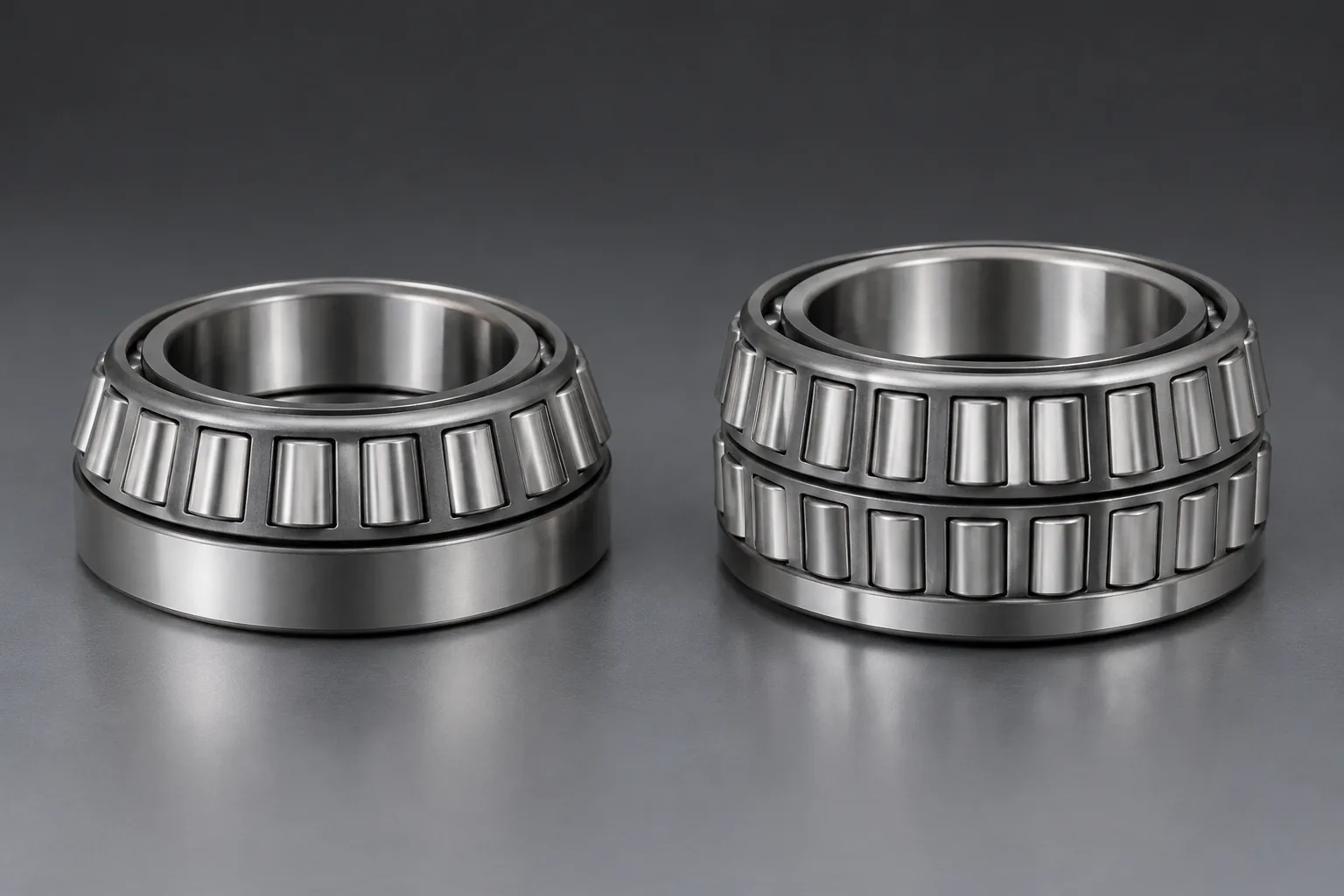
In a basic single-row design, the bearing is made of two parts that separate for mounting. The cone is the inner assembly and contains the inner ring, tapered rollers and cage. The cup is the outer ring. Because the cone and cup separate, each part can be handled and inspected on its own.
The tapered rollers and raceways are arranged so that their apices converge at a common point on the bearing axis. This geometry supports rolling contact close to pure rolling and helps reduce friction. The same principle allows the bearing to guide combined radial and axial load with a stiff support.
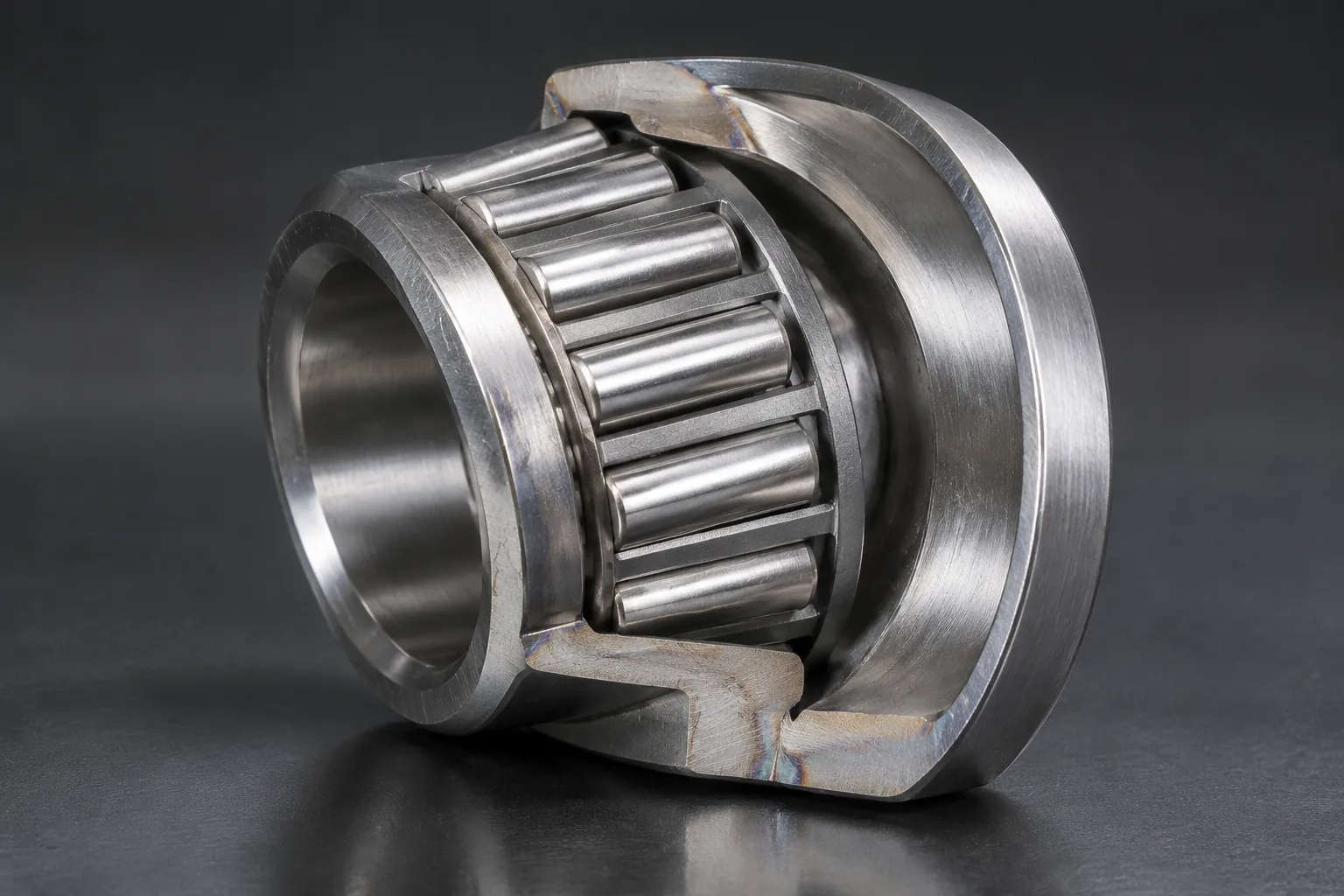
Single-row, double-row and four-row designs are available. Double-row and four-row assemblies package more load capacity into one unit and are used where high loads or moment control are needed.
What Load and Operating Conditions Make Tapered Roller Bearings a Good Fit?
Tapered roller bearings are selected mainly when radial and axial loads act at the same time. Axial load capacity increases as the outer-ring contact angle increases, so contact angle is a key part of application fit.
They are common in heavy combined radial and axial loads, high-stiffness requirements, and contaminated or harsh operating conditions. The rollers and raceways make line contact, which is why the design is associated with higher load capacity than a point-contact ball bearing of comparable size.
- Single-row bearings normally carry axial load in one direction.
- Two single-row bearings mounted opposed, or a double-row bearing, can carry axial load in both directions and handle tilting moment.
- Paired single-row bearings under preload can form a rigid bearing arrangement when the preload is specified for that arrangement.
Correct internal clearance or preload is required. End play depends on the specific application and on the equipment manufacturer’s requirements. A single-row bearing by itself is not a bidirectional axial-load solution.
Automotive and Truck Applications
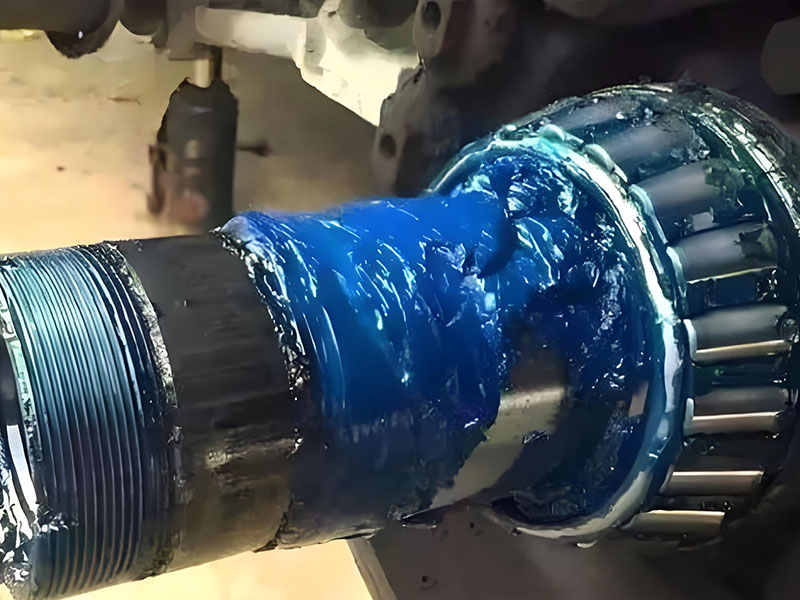
Wheel hubs and wheel ends are major automotive and commercial-vehicle applications. Commercial vehicle wheel ends often use two single-row tapered roller bearings mounted in the hub to provide rigid axial guidance.
In pickups, large SUVs and commercial vehicles, tapered roller hub bearings can provide higher stiffness and longer life than ball bearings of the same size. The benefit comes from the load-carrying geometry and the way the hub assembly is set.
Transmissions, differentials, transfer cases and driveline systems use tapered roller bearings for combined loads and demanding lubrication conditions. Differential pinion shafts commonly use medium-contact-angle tapered roller bearings.
Industrial Gearbox, Compressor, and Production Machinery Applications
Industrial gearboxes, industrial transmissions and truck gearboxes are common applications because they combine radial load with axial load from gears and shafts.
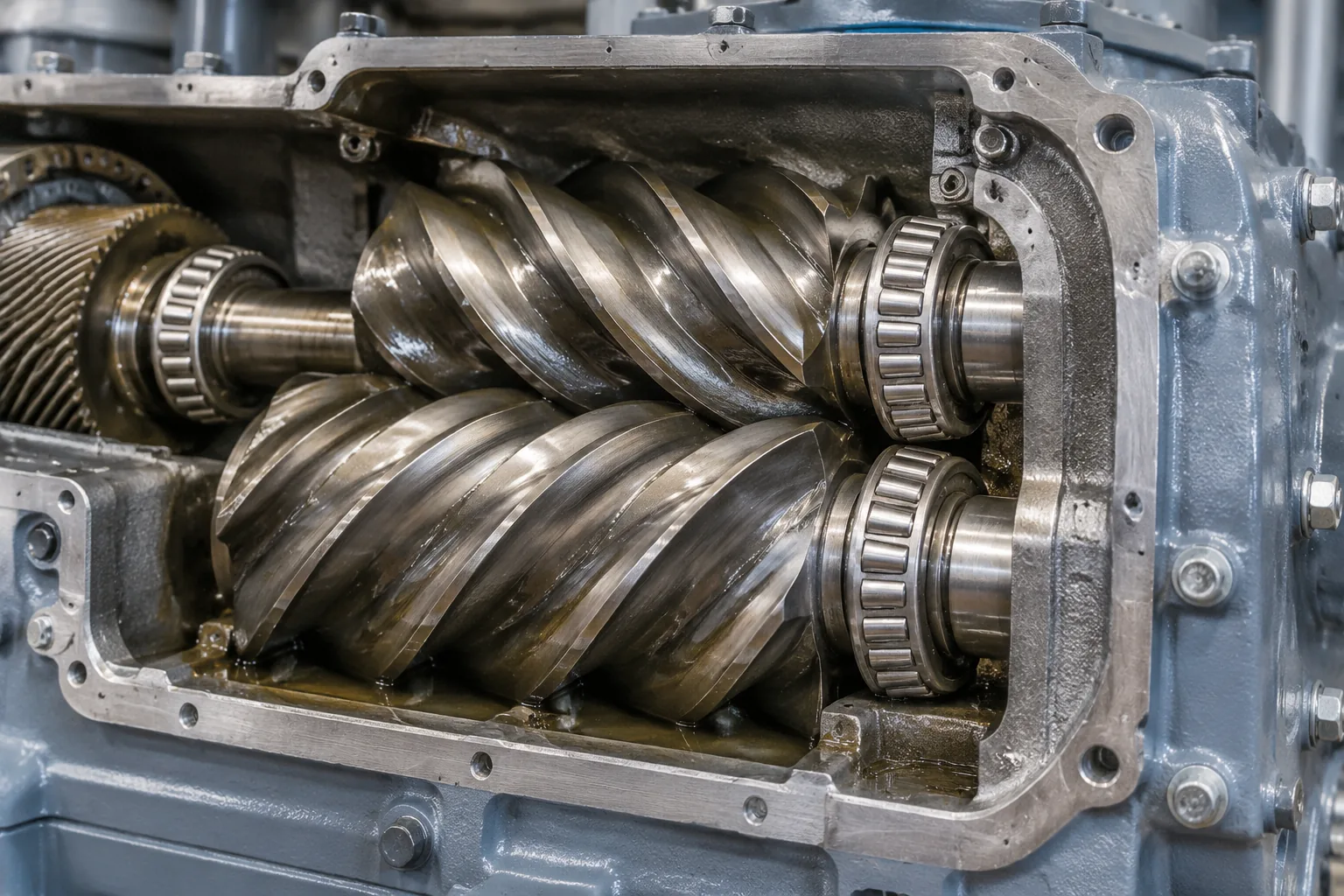
Oil-flooded screw air compressors use tapered roller bearings at the male and female rotor discharge ends, where the bearing must carry combined axial and radial load. They can also support input gear shafts in oil-flooded and high-speed oil-free compressors.
Steel mill roll necks and cantilever wheel axles are listed applications where combined load and moment control matter. On cantilever wheel axles, paired bearings control radial load, axial load and moment together. Material handling, metal industry and mining equipment are also typical industrial application areas.
Heavy Equipment, Mining, Forestry, and Steel Applications
Heavy-duty industries use tapered roller bearings where high radial loads and one-direction thrust loads occur. Mining, forestry and steel manufacturing are key heavy-duty application sectors.
Material handling and metal production equipment rely on the same load capacity in rugged operating conditions. In high-load positions such as roll necks, double-row or four-row arrangements are typically used.
Railway Applications
Railway axleboxes and axle journals use tapered roller bearings for heavy radial and axial loads. Integrated tapered roller bearing assemblies are used on locomotive, freight and passenger axle journals. Some of these assemblies are prelubricated and self-contained.
For railway rolling stock with large moment loads, a back-to-back tapered roller bearing arrangement is often more suitable because the load center distance is larger.
Wind Energy Applications
Wind turbine main shafts use double-row tapered roller bearings or two single-row tapered roller bearings. These arrangements are used in geared and gearless multi-megawatt wind turbine main-shaft systems. Preload can increase main-shaft and rotor support stiffness.
Wind turbine gearboxes also use double-row tapered roller bearings. Those positions have specific installation and clearance-setting requirements, so the gearbox manufacturer’s settings must be followed.
Aerospace and Specialty Applications
Aircraft landing-gear systems are a specialty application for carburized tapered roller bearings. Landing-gear bearings must meet critical performance and airworthiness requirements.
This is a high-specification specialty use, not a general industrial use case. Material grade, heat treatment, inspection and approval requirements are therefore part of the application definition.
How Bearing Arrangement Affects Use
The bearing arrangement often decides whether a tapered roller bearing fits an application. A single-row bearing is typically used where axial load acts mainly in one direction. Two single-row bearings mounted opposed, or a double-row bearing, can carry axial load in both directions and handle tilting moment.
| Arrangement | Axial load direction | Moment capability | Typical role |
|---|---|---|---|
| Single-row | One direction | Not by itself | One side of an opposed pair |
| Two single-row, opposed | Both directions when paired | Yes, depending on spacing and setting | Rigid wheel-end, pinion or shaft support |
| Double-row | Both directions | Yes | Combined load and moment in one unit |
| Four-row | Both directions | Application-dependent | Very high-load positions such as roll necks |
Paired single-row bearings under preload can form a rigid bearing arrangement. Four-row bearings are available for very high-load positions. Internal clearance or preload must be set according to the application and the equipment manufacturer’s requirements.
Selection and Installation Notes for Application Fit
Select single-row, double-row or four-row according to axial-load direction, moment load, stiffness and load severity. Confirm the required internal clearance or preload before installation.
- Use the separable cone and cup design to support correct mounting and inspection.
- Verify boundary dimensions and series designations against the relevant standard when specifying a replacement.
- Follow the equipment manufacturer’s end-play and mounting instructions.
ISO 355:2019 covers boundary dimensions and series designations for single-row and double-row tapered roller bearings and their subassemblies. Its third edition was published in May 2019 and was confirmed current on January 10, 2025. Boundary dimensions can match while internal geometry, contact angle or internal clearance differs, so dimensional similarity alone is not proof of interchangeability.
Conclusion
Tapered roller bearings are used for combined radial and axial loads, and their value comes from matching the arrangement to the load path. Single-row bearings suit axial load in one direction; opposed pairs or double-row designs add bidirectional axial capacity and moment control. Heavy equipment, railway, wind energy and aerospace applications each add their own setting, inspection and approval requirements. Before specifying a replacement, confirm the arrangement, contact angle, internal clearance or preload, boundary dimensions and the equipment manufacturer’s mounting requirements.
FAQs
Q1: What loads are tapered roller bearings designed to carry?
A: They are designed to carry radial and axial loads at the same time. Axial capacity depends on contact angle, and paired or double-row versions can also carry moment loads. A single-row bearing normally takes axial load in one direction only.
Q2: Can a single-row tapered roller bearing take axial load in both directions?
A: Normally no. A single-row bearing usually carries axial load in one direction. For two directions, use two single-row bearings mounted opposed or a double-row bearing, and check the required clearance or preload.
Q3: Where are tapered roller bearings used in cars and trucks?
A: Common locations include wheel hubs and wheel ends, transmissions, differentials, transfer cases, driveline systems and differential pinion shafts. Commercial vehicle wheel ends often use two single-row bearings mounted in the hub.
Q4: Are tapered roller bearings used in wind turbines and railway axleboxes?
A: Yes. Wind turbine main shafts and gearboxes use them, and locomotive, freight and passenger axle journals use integrated tapered roller bearing assemblies. Railway applications with high moment loads often use a back-to-back arrangement.
Q5: Do tapered roller bearings need preload or clearance adjustment?
A: Yes. Internal clearance or preload must be set for the bearing arrangement and the equipment manufacturer’s requirements. End play is application-specific, and an incorrect setting can affect stiffness, heat and bearing life.