When selecting bearings for a mechanical assembly, engineers often need to decide between friction bearings and anti-friction bearings. How do these two categories differ in terms of motion type, load capacity, speed capability, and maintenance requirements? This article compares the two bearing types and provides guidance on which to choose for specific operating conditions.
What Are Friction Bearings?
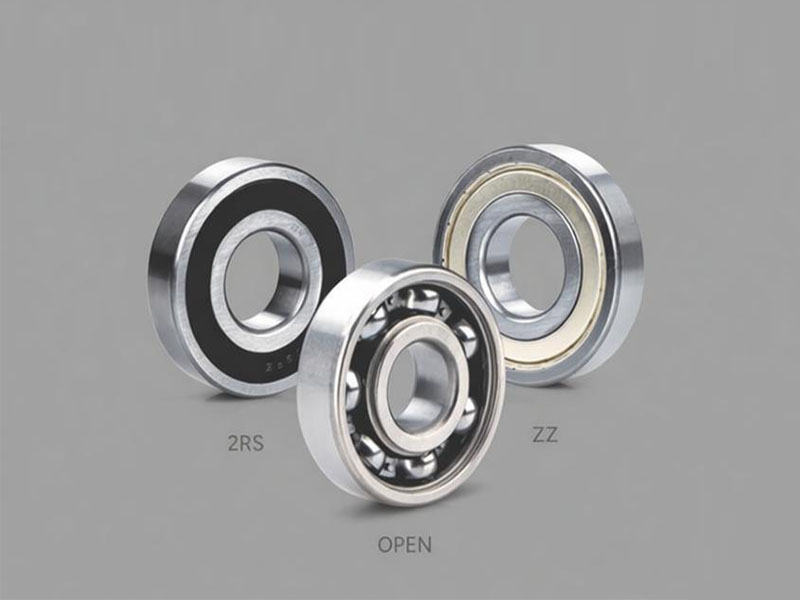
Friction bearings, also known as plain bearings, sleeve bearings, or journal bearings, are mechanical components that operate through sliding contact between two surfaces. Unlike bearings that use rolling elements, a friction bearing consists of a stationary support surface (typically a bushing or sleeve) that supports a rotating or oscillating shaft. Relative motion occurs through sliding, with a lubricant film or low-friction material separating the contacting surfaces to minimize wear and heat generation.
The fundamental difference from rolling element bearings is that plain bearings have no balls or rollers. Instead, they rely on the sliding interface, often incorporating a lubricant-impregnated surface or a low-friction material to reduce friction.
Common Materials and Types of Friction Bearings
Friction bearings are available in several material formulations, each suited to specific applications:
- Bronze bushings – Sintered bronze has a porous structure that absorbs oil and releases it gradually during operation, extending lubrication intervals significantly. Bronze bushings offer good wear resistance and load-carrying capability for low-speed, high-load applications.
- Plastic bearings – Made from materials such as polyacetal or fluororesin, these utilize their naturally low coefficient of friction to slide along the shaft without external lubrication. They are lightweight, corrosion-resistant, and suitable for applications where metal contamination must be avoided.
- PTFE composite bearings – Incorporate a layer of polytetrafluoroethylene (PTFE) filled with bronze or other additives. These materials offer extremely low friction coefficients under boundary lubrication conditions and provide self-lubricating properties that reduce maintenance requirements.
- Graphite-impregnated bushings – Use solid graphite plugs that deposit lubricant onto the shaft surface over time. These can operate without liquid lubricants, making them suitable for high-temperature environments where oil or grease would degrade.
What Are Anti-Friction Bearings?
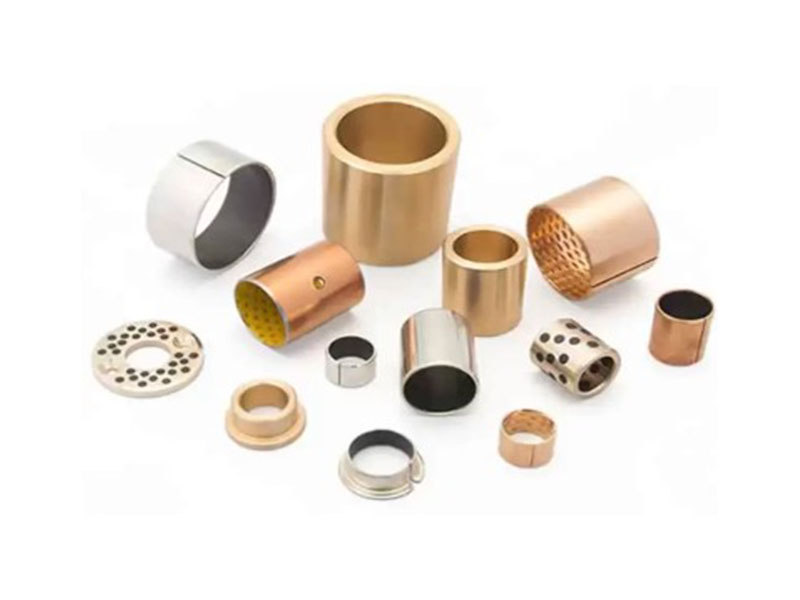
Anti-friction bearings, also called rolling contact bearings or rolling element bearings, incorporate rolling elements such as balls, rollers, or needles between an inner ring and an outer ring. These rolling elements separate moving parts and reduce friction by replacing sliding contact with rolling contact. The term “anti-friction” reflects the fact that these bearings achieve friction levels typically one to two orders of magnitude lower than plain bearings.
Anti-friction bearings are standardized internationally (ISO, ANSI/ABMA, JIS), making them readily available and interchangeable across different manufacturers.
Common Types of Anti-Friction Bearings
- Ball bearings – Use spherical rolling elements to reduce friction between two surfaces. Deep groove ball bearings are the most common type, handling radial loads and moderate axial loads in both directions. They are widely used in electric motors, appliances, and general machinery where smooth rotation at moderate to high speeds is required.
- Roller bearings – Employ cylindrical, tapered, or spherical rollers instead of balls. The line contact between rollers and raceways distributes loads over a larger area, providing higher load-carrying capacity than ball bearings of comparable size. Cylindrical roller bearings are used for heavy radial loads in gearboxes and large electric motors, while tapered roller bearings handle combined radial and axial loads in automotive wheel hubs and gearboxes.
- Needle bearings – Use long, slender rollers with a small diameter-to-length ratio. Their compact design makes them ideal for applications with limited radial space, such as transmission systems, rocker arm pivots, pumps, and compressors.
- Spherical roller bearings – Incorporate barrel-shaped rollers with an angular contact geometry that allows the bearing to accommodate moderate shaft misalignment. This makes them well-suited for heavy machinery, vibrating screens, and applications where alignment cannot be maintained perfectly.
Key Differences: Friction Bearings vs. Anti-Friction Bearings
The following table summarizes the key technical differences between friction bearings and anti-friction bearings across multiple performance dimensions.
| Parameter | Friction Bearings (Plain/Sliding) | Anti-Friction Bearings (Rolling Element) |
|---|---|---|
| Motion Type | Sliding contact between shaft and bearing surface | Rolling contact via balls, rollers, or needles |
| Coefficient of Friction | Higher (typically 0.05–0.20 under boundary or mixed lubrication). Can drop to 0.001–0.01 with full fluid film (hydrodynamic) at optimal speed/load. | Lower (typically 0.001–0.002 under proper lubrication). Rolling friction generates less heat at equivalent speeds. |
| Starting Friction | Higher starting friction; requires breakaway torque to overcome static friction due to absence of rolling elements and the need to establish a lubricant film. | Lower starting friction; starts smoothly with minimal torque. |
| Speed Capability | Optimized for low to moderate speeds; generates more heat from sliding friction at high speeds. | Capable of high speeds; rolling motion generates less heat at equivalent speeds. |
| Load Capacity | Excellent for high shock loads, edge loads, and static loads due to larger contact area. Can accommodate shaft deflection better than rolling bearings. | Defined dynamic load rating (C) per ISO 281. For continuous rotation at high speed, rolling bearings typically offer higher dynamic capacity in the same envelope size. |
| Precision & Rotational Accuracy | Moderate precision; may introduce more variation in rotational performance. | Superior rotational accuracy; suitable for precision applications requiring tight tolerances. |
| Power Loss / Efficiency | Higher power loss due to sliding friction; requires more energy to operate. | Lower power loss; rolling friction improves overall system efficiency. |
| Lubrication Requirements | Typically requires continuous or frequent lubrication; some self-lubricating variants available. | Requires periodic lubrication but less frequent than plain bearings under clean conditions. |
| Service Life | Wear rates higher under high-load conditions; may require more frequent replacement. | Longer service life when properly maintained; design minimizes wear. |
| Complexity & Cost | Simple design; lower manufacturing cost; easier tooling. | More complex multi-component design; precision construction results in higher cost (typically 25–400% more than plain bearings). |
| Noise & Vibration | Quieter operation; absorbs vibration effectively. | Can generate more noise at high speeds; vibration levels depend on precision grade. |
| Environmental Tolerance | Operates well in dusty, dirty, or wet conditions; less affected by contaminants. | Sensitive to contamination; particles can cause indentations in raceways and accelerate wear. |
When to Choose Friction Bearings
Friction bearings excel in applications where low to moderate speeds, high loads, and challenging environmental conditions are present. Below are specific situations where friction bearings are the preferred choice:
- Slow-speed, high-load applications. The large contact surface area of a plain bearing allows it to support substantial loads without the risk of permanent deformation that rolling element bearings face under extreme loads.
- Shock loading and oscillating motion. Plain bearings can accommodate shock loads and oscillating movement more effectively than rolling element bearings, which can suffer from false brinelling (wear from small oscillatory movements) when subjected to vibration while stationary.
- Dirty, dusty, or wet environments. In agricultural machinery, woodworking equipment, or mining operations where dirt and debris are unavoidable, plain bearings perform reliably because they lack rolling elements that can become clogged. Contaminants that would lodge between balls and raceways in an anti-friction bearing are less likely to cause immediate failure in a sliding bearing.
- High-temperature applications. Self-lubricating plain bearings with graphite or PTFE liners can operate at temperatures where conventional greases would break down.
- Cost-sensitive or space-constrained designs. Plain bearings have simpler construction and lower manufacturing costs, making them attractive for applications where budget or space is limited.
Typical applications include heavy construction equipment hinges, agricultural implement pivots, automotive suspension bushings, hydraulic cylinder pins, and low-speed conveyor rollers.
When to Choose Anti-Friction Bearings
Anti-friction bearings are the standard choice for applications involving high rotational speeds, precision movement, or standardized replacement requirements.
- High-speed operation. The rolling motion of balls or rollers generates significantly less friction and heat at high speeds compared to sliding contact. Anti-friction bearings are essential for electric motors, turbines, machine tool spindles, and high-speed conveyors. Ball bearings handle high speeds well, while roller bearings offer higher load capacity at moderate speeds.
- Precision and rotational accuracy. Rolling element bearings provide superior rotational accuracy and are standardized internationally, making them ideal for applications requiring tight tolerances and interchangeable components.
- Variable speed operation. Rolling bearings can tolerate a wider speed range and are more suitable for variable speed drives, whereas plain bearings are generally optimized for a single speed.
- Low starting torque. The low starting friction of anti-friction bearings makes them suitable for applications that start and stop frequently, where high breakaway torque would be a disadvantage.
- Clean, well-maintained environments. In equipment where contamination is controlled and regular maintenance is performed, rolling element bearings provide long service life and predictable performance.
Common applications include electric motors, automotive wheel hubs, CNC spindles, fans and blowers, pumps and compressors, gearboxes, and household appliances.
Conclusion
The choice between friction bearings and anti-friction bearings depends on operating conditions rather than one type being universally superior. Friction bearings perform reliably in low-speed, high-load, or contaminated environments where simplicity and durability matter most. Anti-friction bearings deliver the efficiency, precision, and high-speed capability required for most modern machinery.
For automotive bearing applications such as wheel hubs, release bearings, and tensioners—where moderate to high speeds, precision rotation, and standardized dimensions are required—anti-friction rolling element bearings are the appropriate choice.
Frequently Asked Questions (FAQs)
Q1: Which bearing is better: friction or anti-friction?
Neither type is inherently better. The optimal choice depends on operating speed, load type, environmental conditions, and maintenance constraints. Friction bearings excel in low-speed, high-shock, or dirty environments. Anti-friction bearings are preferred for high-speed, precision, and variable-speed applications.
Q2: Why are anti-friction bearings called “anti-friction”?
The term reflects that these bearings achieve friction levels approximately one to two orders of magnitude lower than plain bearings by replacing sliding contact with rolling contact.
Q3: Do friction bearings require lubrication?
Most friction bearings require lubrication—either continuous oil supply, periodic greasing, or maintenance-free self-lubrication via oil-impregnated porous materials or solid lubricants such as graphite or PTFE.
Q4: Can anti-friction bearings operate without lubrication?
No. While rolling element bearings have lower inherent friction, they still require lubrication to prevent metal-to-metal contact, manage heat, protect against corrosion, and remove contaminants. Operation without adequate lubrication will lead to premature failure.
Q5: Which bearing type is more expensive?
Rolling element bearings are typically more expensive due to their complex multi-component design and precision manufacturing requirements, often costing 25 to 400 percent more than plain bearings of comparable size.
Q6: What is the main cause of bearing failure in each type?
For friction bearings, the primary failure mode is excessive wear from inadequate lubrication or abrasive contamination. For anti-friction bearings, common failure modes include fatigue spalling (normal wear-out), contamination-induced indentation, lubrication failure causing smearing, and false brinelling from vibration.