What are Sleeve Bearings?
Have you ever wondered how a simple metal cylinder can support rotating shafts without any balls or rollers? Or do sleeve bearings need constant oiling to function? These are common questions for engineers and maintenance professionals exploring plain bearing solutions. In this article, we will provide a technical yet clear explanation of sleeve bearings, their design, materials, applications, lubrication methods, and key specifications.
What is a Sleeve Bearing?
A sleeve bearing (also known as a plain bearing, bushing, or journal bearing) is a mechanical component that supports a rotating or linear shaft through sliding friction, rather than rolling elements like balls or rollers. The shaft slides against the inner surface of the bearing, which is typically made from a low-friction or lubricated material.
Unlike rolling-element bearings (e.g., ball bearings or roller bearings), sleeve bearings have no moving parts between the shaft and the housing. This simplicity makes them highly reliable in many industrial environments. The working principle relies on a thin lubricant film (oil, grease, or solid lubricant) that separates the two surfaces, reducing wear and heat generation.
Sleeve Bearing Design and Key Benefits
Sleeve bearings are manufactured in two common geometric designs:
- Cylindrical (straight) sleeve bearings: A simple tube shape, used where axial shaft movement is limited or controlled separately.
- Flanged sleeve bearings: Feature a collar (flange) at one end, which provides axial location and can handle light thrust loads.
These designs offer three major benefits over rolling-element bearings:
- Reduced Noise: Because no rolling elements impact each other or the raceways, sleeve bearings operate much more quietly – ideal for noise-sensitive equipment like home appliances or electric motors.
- Low Maintenance: Many modern sleeve bearings are self-lubricating or require only periodic regreasing, reducing downtime.
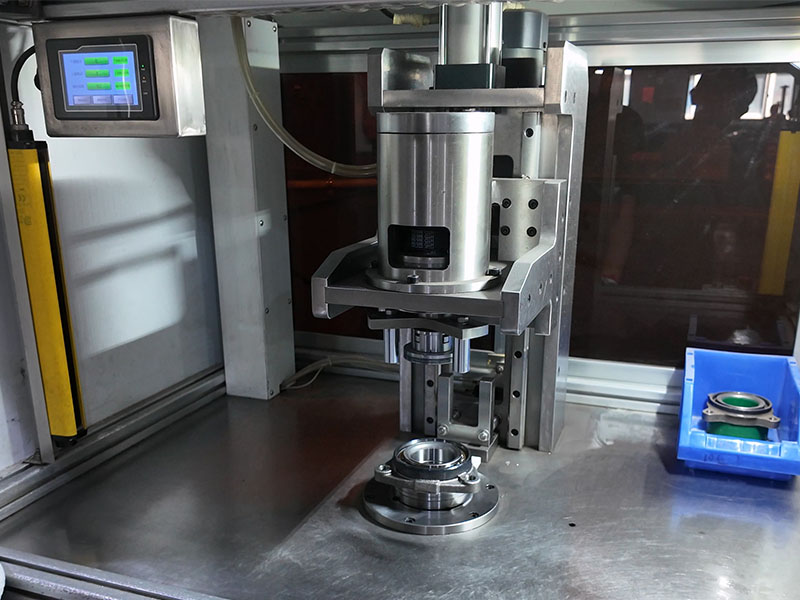
- Easy Installation: A simple press-fit into a housing and a shaft inserted into the bearing – no complex clearance adjustments or preload settings are needed.
Common Materials Used in Sleeve Bearings
The material of a sleeve bearing determines its load capacity, speed limit, temperature range, and compatibility with lubricants. Common material categories include:
- Metals: Bronze (most common), brass, iron, and steel. Bronze offers good wear resistance and embeds dirt particles.
- Ceramics: Used for extreme temperatures, corrosion resistance, or where magnetic neutrality is required.
- Graphite (including carbon-graphite): High-temperature resistance and dry-running capability. Often used in oven conveyors or furnace equipment.
- Composites: Fiber-reinforced with PTFE or other polymers. Provide low friction without external lubrication.
- Plastics (e.g., nylon, acetal, PEEK): Lightweight, corrosion-proof, and quiet. Common in food processing or medical devices.
Each material selection must consider the operating environment, load, speed, and available lubrication.
Operating Modes and Industrial Applications
Sleeve bearings accommodate three main types of motion:
- Rotational movements: Continuous or intermittent rotation (e.g., electric motor shafts, gearbox shafts).
- Linear movements: Reciprocating or sliding motion (e.g., hydraulic cylinder pivots, machine tool slides).
- High-frequency oscillating movements: Small-angle back-and-forth motion (e.g., windshield wiper linkages, robotic joints).
Thanks to their versatility, sleeve bearings are found across many industries:
- Automotive Industry: Suspension bushings, engine camshaft bearings, alternator pivots.
- Agriculture: Tractor linkage points, baler spindles, tiller blades – where dirt and debris are common.
- Off-road Industry: Construction equipment joints, excavator pivot points, dump truck hinges.
- Marine Industry: Rudder bearings, propeller shaft supports, deck equipment bushings (often using water-lubricated composites).
- Food Industry: Conveyor rollers, mixer shafts, packaging machines – plastic or stainless steel sleeve bearings prevent corrosion and meet hygiene standards.
Lubrication of Sleeve Bearings
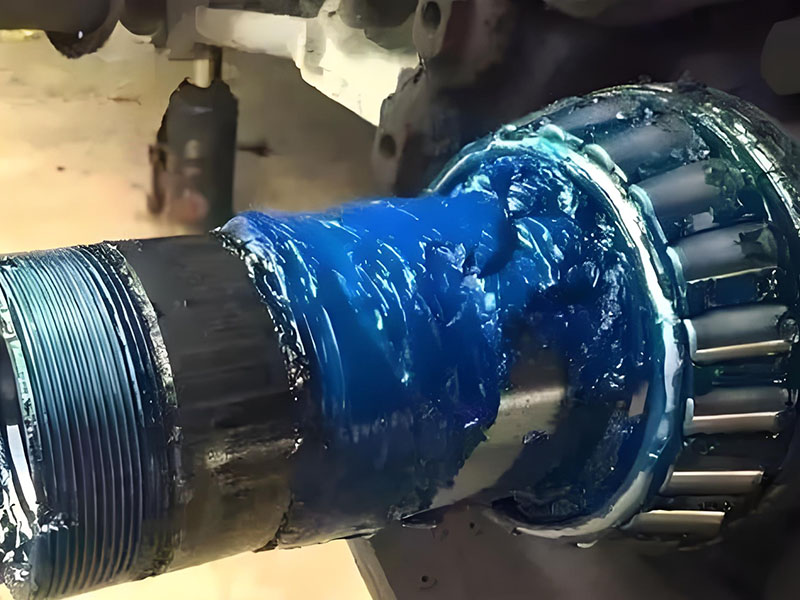
Proper lubrication is critical to prevent metal-to-metal contact and overheating. Sleeve bearings are lubricated in two primary ways:
- Externally lubricated bearings: Require periodic addition of oil, grease, or a specialized fluid. Grooves or holes in the bearing distribute the lubricant along the shaft. This method is common for high-load, high-speed, or high-temperature applications where a continuous oil film is needed.
- Self-lubricating (oil-impregnated) bearings: Manufactured from porous metal (usually sintered bronze) that is vacuum-impregnated with oil. During operation, heat or capillary action releases the oil onto the shaft surface. When motion stops, the oil is reabsorbed. These bearings are virtually maintenance-free and widely used in electric motors, fans, and small appliances.
Some advanced materials (like graphite or PTFE composites) do not require any liquid lubricant – they are called “dry-running” sleeve bearings.
Key Specifications for Selecting a Sleeve Bearing
When choosing a sleeve bearing for a given application, engineers evaluate the following parameters:
- Clearance: The difference between the shaft diameter and the bearing inner diameter. Correct clearance ensures a lubricant film without excessive play. Too tight causes seizure; too loose leads to vibration and poor accuracy.
- ID (Inner Diameter) and OD (Outer Diameter): ID matches the shaft size; OD fits the housing bore. Standard inch or metric sizes are available from bearing manufacturers.
- Length: Also called bearing length. A longer bearing supports higher loads but increases friction. The length-to-diameter (L/D) ratio is a common design factor.
- Load: Usually expressed in radial load (perpendicular to shaft) or axial load (along shaft). Flanged bearings handle limited axial loads.
- Rotating Speed: Typically in RPM (revolutions per minute). Sleeve bearings generally operate at low to moderate speeds, but hydrodynamic designs can reach high speeds if a stable oil film forms.
- PV Value (Pressure × Velocity): The product of contact pressure (in psi or MPa) and sliding velocity (in ft/min or m/s). The maximum PV rating of a bearing material indicates its friction and heat-dissipation limit. Exceeding the PV value leads to rapid wear or melting.
Frequently Asked Questions (FAQs)
Q1: Sleeve bearing vs ball bearing – which is better?
A1: Neither is universally “better.” Sleeve bearings excel in low-noise, low-maintenance, and high-shock-load applications. Ball bearings are preferred for high speed and low starting friction. The choice depends on speed, load, duty cycle, and cost constraints.
Q2: Can sleeve bearings run without lubrication?
A2: Yes, if they are made from self-lubricating materials such as oil-impregnated bronze, graphite, PTFE composites, or certain plastics. However, dry-running bearings have lower load and speed limits compared to well-lubricated metal bearings.
Q3: What happens if clearance is too tight or too loose?
A3: Too tight clearance risks seizure due to thermal expansion and insufficient lubricant film. Too loose clearance causes shaft wobble, increased vibration, edge loading, and accelerated wear. Always follow manufacturer-recommended clearance tables.
Q4: Are sleeve bearings suitable for high-speed applications?
A4: Traditional sleeve bearings are limited to moderate speeds (typically less than 10,000 RPM depending on size). However, hydrodynamic sleeve bearings with forced oil lubrication can operate at very high speeds – for example, in turbine or spindle applications. Standard off-the-shelf sleeve bearings are not designed for high-speed use.
Conclusion
Sleeve bearings are a fundamental class of plain bearings that operate through sliding friction. They are available in cylindrical and flanged designs, made from materials ranging from bronze to graphite to high-performance polymers. Their key advantages include reduced noise, low maintenance, and easy installation. Sleeve bearings support rotational, linear, and oscillating motions across automotive, agricultural, marine, off-road, and food processing industries. Lubrication can be external (oil/grease) or internal (self-lubricating materials). When selecting a sleeve bearing, engineers must consider clearance, dimensions, load, speed, and PV value to ensure reliable operation. By understanding these technical parameters, you can correctly specify sleeve bearings for your equipment and avoid common failure modes.
This article provides general engineering information about sleeve bearings. For specific product dimensions or custom solutions, consult a qualified bearing manufacturer or engineer.