Lubrication is a critical factor in bearing performance and service life. Engineers and maintenance professionals often compare solid lubricant vs. oil lubricant when selecting the right solution for a specific bearing application. This article explains the technical differences between these two lubricant types and provides a practical guide on how to choose the appropriate lubricant for different bearing operating conditions.
Unlike general-purpose greases, solid lubricants and oil lubricants serve distinct purposes. Understanding their key differences helps prevent premature bearing failures caused by incorrect lubrication selection.
Why Lubrication Matters for Bearings
All rolling bearings require proper lubrication to function reliably. The main functions of bearing lubrication include:
- Preventing metal-to-metal contact – A lubricant film separates rolling elements from raceways, eliminating direct contact that would cause rapid wear and bearing damage.
- Heat dissipation – Friction generates heat. Lubrication carries heat away from contact zones, maintaining stable bearing operating temperatures.
- Contamination and corrosion protection – Lubricants act as barriers against moisture, dust, and debris, protecting bearing surfaces from corrosion and abrasive wear.
Without adequate lubrication, even high-quality bearings will fail prematurely. The choice between solid and oil lubricants determines how effectively these functions are performed.
Solid Lubricants for Bearings
Definition and mechanism
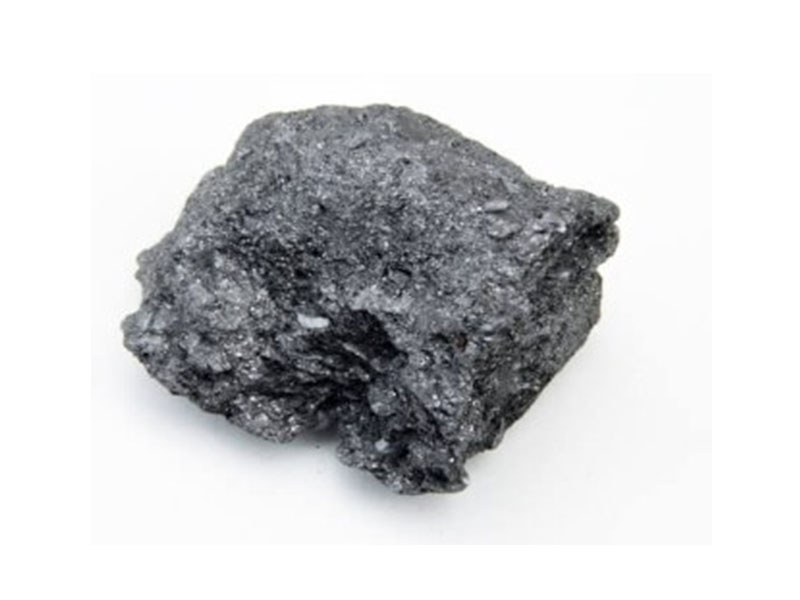
Solid lubricants are dry materials that reduce friction between bearing surfaces without a liquid carrier. They form a low-shear film that prevents metal-to-metal contact, even in conditions where conventional oil or grease cannot be used.
Common bearing applications
Solid lubricants are commonly specified for bearing applications where standard lubricants fail:
- Food processing bearings – Eliminate oil leakage contamination, meeting food safety standards.
- Extreme-temperature bearings – Operate from cryogenic conditions up to 400°C+, where oils oxidize or freeze.
- Vacuum bearings – No outgassing or evaporation, essential for aerospace and semiconductor equipment.
- Radiation-exposed bearings – Maintain lubricity where radiation degrades organic lubricants.
Common solid lubricant types for bearings
- Graphite – Effective in high-temperature air; moisture-dependent for optimal performance.
- Molybdenum disulfide (MoS₂) – Excellent boundary lubrication, widely used in bearing coatings.
- Polytetrafluoroethylene (PTFE) – Very low friction coefficient, broad chemical compatibility.
- Boron nitride – For extreme high-temperature and chemically aggressive bearing environments.
Advantages of solid lubricants in bearings
Solid lubricants offer permanent lubrication without leakage risks. Once applied, they require no re-lubrication over the bearing’s service life. This is valuable for bearing locations where routine maintenance is difficult, such as remote machinery or sealed assemblies. Solid lubricants eliminate the need for complex oil supply systems, reducing total ownership cost in many applications.
Limitations of solid lubricants for bearings
Solid-lubricated bearings typically have lower speed limits compared to oil-lubricated bearings. Their friction coefficients are generally two to five times higher than properly maintained oil films. Heat dissipation is poor, relying on structural conduction rather than fluid transport. Solid lubricants are not suitable for high-speed bearing applications where cooling is critical. For applications requiring bearing speed ratings above 300,000 DN (bore diameter in mm × RPM), solid lubricants are generally not recommended regardless of other favorable conditions.
Oil Lubricants for Bearings
Definition and mechanism
Oil lubricants are liquid lubricants that create a hydrodynamic or elastohydrodynamic film between bearing surfaces. Under proper conditions, this film fully separates rolling elements from raceways, achieving minimal friction and wear. Oil can be applied through bath, circulation, mist, or drip-feed systems.
Key properties for bearing oil selection
When selecting an oil lubricant for bearings, three properties are vital:
- Viscosity – According to bearing engineering standards (ISO 281 and ABMA 9), the minimum recommended kinematic viscosity at operating temperature for radial ball bearings is approximately 13 mm²/s. Tapered roller bearings typically require 20 mm²/s or higher.
- Temperature range – Mineral oils function from -20°C to 120°C; synthetic oils extend from -50°C to 250°C.
- Evaporative rate – Critical in high-temperature or vacuum bearing applications where oil loss through evaporation must be minimized.
Common oil types
Mineral oils are suitable for general industrial bearings within moderate temperature ranges. Synthetic oils (PAO, ester, silicone-based) provide wider temperature ranges and better oxidation stability for demanding bearing applications.
Advantages of oil lubrication for bearings
Oil-lubricated bearings can achieve higher speeds than solid-lubricated bearings because oil efficiently removes heat. Circulating oil systems provide continuous filtration to remove wear debris and contaminants. Oil flows readily into small clearances, ensuring thorough lubrication of all bearing components.
Limitations of oil lubrication for bearings
Oil lubricants leak past bearing seals, creating contamination risks and requiring containment measures. In vacuum environments, conventional oils outgas and evaporate rapidly. Oil-lubricated bearings require ongoing maintenance including monitoring, filtration, and periodic oil changes. Industry maintenance data indicates that annual lubrication-related costs for oil systems may reach 5–10% of equipment purchase price, depending on system complexity. For open bearing designs or applications requiring hermetic sealing, oil leakage is a primary concern.
Head-to-Head Comparison Table: Solid Lubricant vs. Oil Lubricant for Bearings
| Parameter | Solid Lubricant | Oil Lubricant |
|---|---|---|
| Re-lubrication required for bearings | Not required for bearing service life | Regular intervals required |
| Speed capability of bearings | Lower limiting speeds | High speeds with proper cooling |
| Leakage from bearings | No leakage | Risk past bearing seals |
| Heat dissipation in bearings | Poor (structural conduction) | Excellent (fluid transport) |
| Operating temperature range for bearings | Very wide (-cryogenic to 400°C+) | Narrower: -20°C to 120°C (mineral) / -50°C to 250°C (synthetic) |
| Contamination sensitivity of bearings | Resistant to dust and moisture | Vulnerable to water and particle ingress |
| Maintenance cost per bearing | Low | Moderate to high |
| Suitability for open bearing designs | Excellent (no leakage) | Poor (requires effective sealing) |
How to Choose Between Solid and Oil Lubricants for Bearings
Choose solid lubricant when:
- Re-lubrication is impractical – Bearings in hard-to-reach locations (e.g., wind turbine yaw bearings, kiln bearings, sealed assemblies).
- Leakage cannot be tolerated – Food processing, cleanrooms, textile machinery, or any environment where oil contamination would damage products or compromise safety.
- Operating temperatures are extreme – Below -20°C or above 120°C, where mineral oils fail and synthetic oils are marginal. Solid lubricants function from cryogenic up to 400°C+.
- Vacuum or radiation exposure – Aerospace, semiconductor, or nuclear bearing applications where oils outgas or degrade.
- Open bearing designs – Where sealing against oil leakage is impossible or cost-prohibitive.
Choose oil lubricant when:
- High speed is required – Bearing speeds above 300,000 DN require oil for adequate cooling and film formation. Solid lubricants are not recommended at these speeds.
- Heat removal is critical – Bearings in high-duty cycles need continuous heat dissipation, which circulating oil systems provide.
- Regular maintenance is feasible – Facilities with lubrication schedules, oil analysis, and filtration systems.
- Operating temperatures stay within oil limits – Between -20°C and 120°C (mineral oil) or -50°C and 250°C (synthetic oil).
- Contamination control via filtration is desired – Circulating oil can remove particles that would otherwise damage bearing raceways.
For most general industrial bearings operating at moderate speeds (below 300,000 DN) and temperatures between -20°C and 120°C, standard oil lubrication is sufficient. When any of the solid lubricant conditions apply, solid lubrication becomes the more reliable choice.
Conclusion
Understanding the key differences between solid and oil lubricants is essential for proper bearing selection. Solid lubricants eliminate leakage and re-lubrication requirements, making them ideal for extreme temperatures, vacuum environments, and hard-to-access bearings. Oil lubricants support higher speeds and superior heat dissipation, making them suitable for bearings in high-speed machinery with regular maintenance access.
The comparison table and the decision criteria above offer a structured approach to bearing lubrication selection. For custom bearing applications or further technical consultation on bearing lubrication, contact DUHUI Bearing with your specific operating conditions to receive engineering recommendations tailored to your bearing needs.
Quick Answer: How to Choose Between Solid and Oil Lubricants for Bearings
Choose solid lubricant for bearings that operate in extreme temperatures, vacuum, radiation, or where oil leakage is unacceptable and re-lubrication is impossible. Choose oil lubricant for high-speed bearings (above 300,000 DN) that require continuous heat removal and where regular maintenance is practical. For most general industrial applications between -20°C and 120°C with moderate speeds, standard oil lubrication is sufficient.
Frequently Asked Questions (FAQs)
Q1: Can solid lubricants and oil lubricants be used together in the same bearing?
Yes. Some bearings use solid lubricant additives dispersed in oil to enhance boundary lubrication under high loads or marginal lubrication conditions. However, for most applications, selecting one primary lubricant type is more practical.
Q2: How do I know when an oil-lubricated bearing needs re-lubrication?
Signs include increased bearing operating temperature, unusual noise, or visible lubricant degradation. For critical bearings, oil analysis programs can determine optimal change intervals. As a reference, solid-lubricated bearings require no re-lubrication, while oil-lubricated bearings typically need attention every 500–5,000 hours depending on operating severity.
Q3: What is the cost difference between solid and oil lubricated bearings?
Initial cost of solid-lubricated bearings is generally higher than standard oil-lubricated bearings. However, total cost of ownership may be lower when eliminating oil supply systems, seals, and ongoing maintenance. For bearings in inaccessible locations, solid lubrication is often more economical over the equipment’s service life.
Q4: Can I convert an existing oil-lubricated bearing to solid lubrication?
In many cases, yes. However, bearing design (internal clearances, cage materials, speed rating) must be evaluated. Solid lubricants have lower speed limits and different thermal characteristics. Consult your bearing manufacturer for retrofit feasibility.
Q5: Which lubricant type is better for automotive wheel hub bearings?
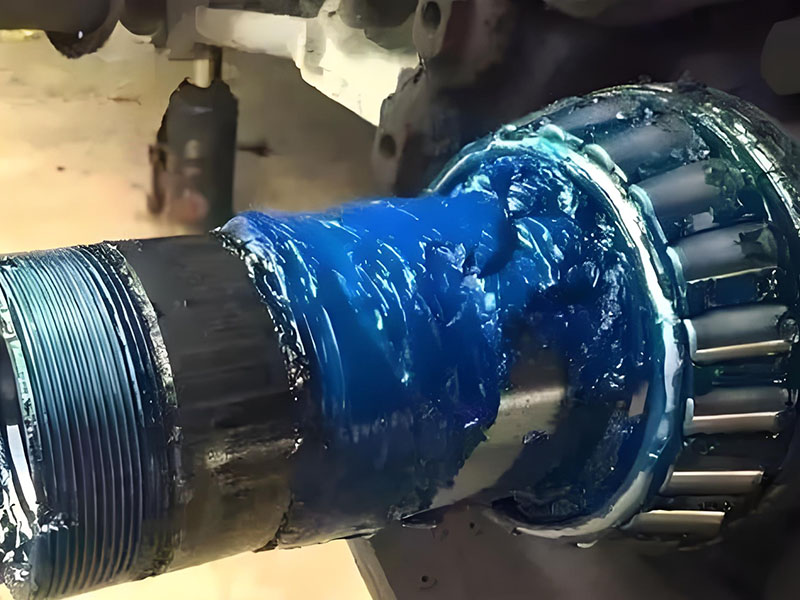
Automotive wheel hub bearings typically use grease (semi-solid) rather than straight oil or dry solids. Oil lubrication is rarely used in sealed hub bearings due to leakage risks. Solid lubricant additives are sometimes incorporated into greases. For most passenger vehicle hub bearings, a high-quality grease is standard. DUHUI Bearing offers engineering guidance for custom hub bearing lubrication requirements.
Q6: What is the maximum operating speed for solid-lubricated bearings?
As noted in the Solid Lubricants for Bearings section, solid-lubricated bearings are generally not recommended for speeds exceeding 300,000 DN (bore diameter in mm × RPM). Above this threshold, the lack of efficient heat dissipation and higher friction coefficients of solid lubricants lead to rapid temperature rise and potential bearing failure. Oil lubrication with circulation cooling is the preferred solution for high-speed applications.
Q7: Are there hybrid solutions that combine solid lubrication with minimal oil?
Yes. Some bearing manufacturers offer “oil-impregnated” polymer retainers or porous cages that slowly release oil while maintaining solid structure. These are sometimes called “molded oil” bearings. They offer lower leakage than pure oil systems and better cooling than dry solids, but they are still limited in speed compared to circulating oil. For applications where both leakage prevention and moderate speed are required, hybrid solutions may be worth evaluating.