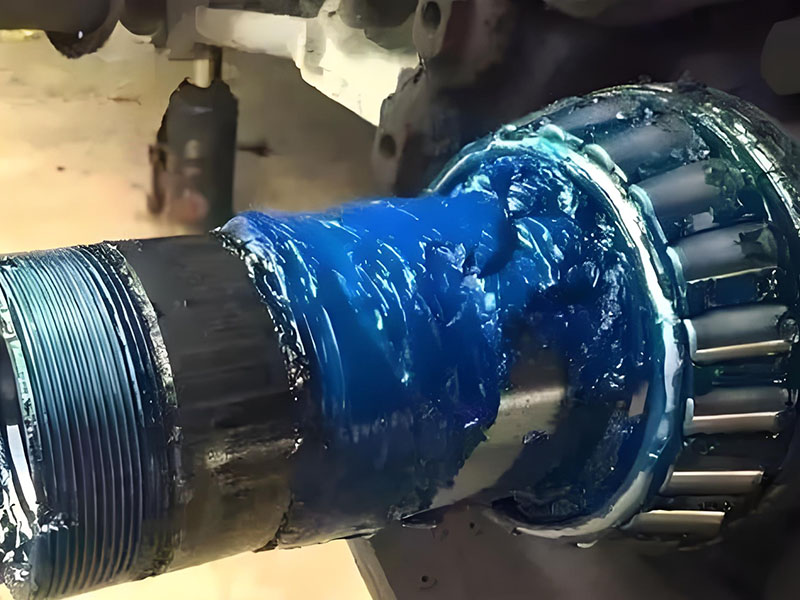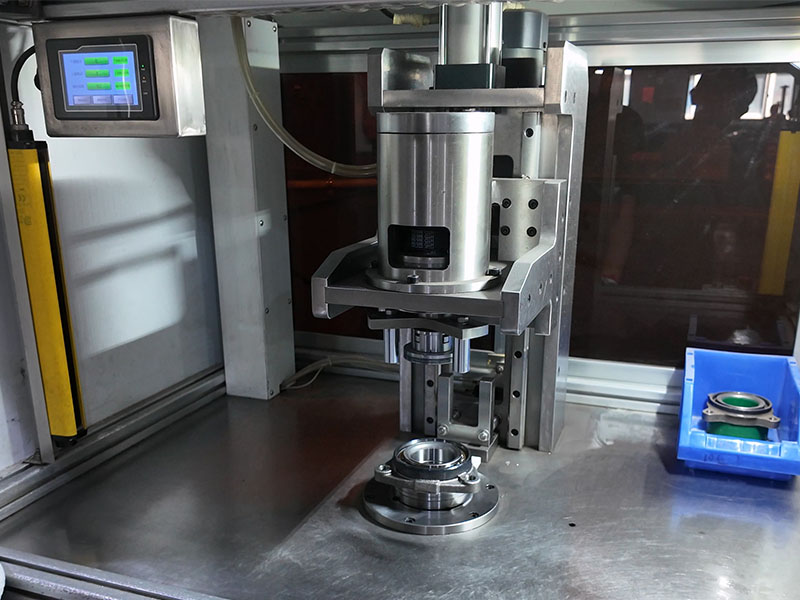
Spherical roller bearings are widely used in heavy machinery, automotive drivelines, wind turbines, and mining equipment. What distinguishes this bearing type from ball bearings or cylindrical roller bearings? This article provides a technical overview—covering design principles, classification, key performance features, and industrial applications.
What Is a Spherical Roller Bearing?
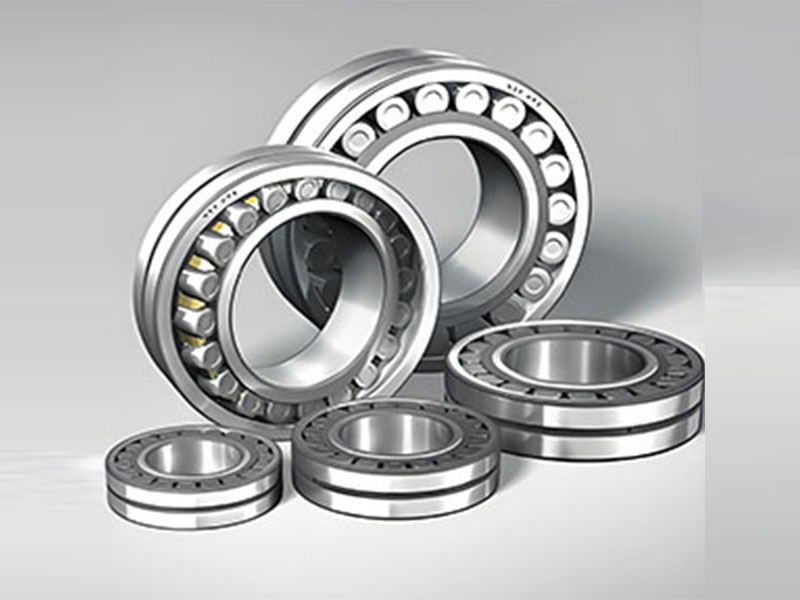
A spherical roller bearing is a rolling-element bearing that uses barrel‑shaped rollers arranged in two rows between an inner ring and an outer ring. The outer ring has a spherical raceway, while the inner ring features two raceways inclined relative to the bearing axis. This geometry allows the bearing to accommodate angular misalignment between the shaft and housing.
Spherical roller bearings are self‑aligning and designed primarily for heavy radial loads, with moderate axial load capacity in both directions. Compared to ball bearings—which are optimised for high speed and light loads—spherical roller bearings excel in conditions involving heavy loads, shaft deflection, shock forces, and moderate misalignment.
Selection of a spherical roller bearing requires evaluation of dynamic load rating (Cᵣ), static load rating (Cₒᵣ), limiting speed, internal clearance (C2 to C5), and lubrication method, as defined in ISO 281 and ISO 76.
Spherical Roller Bearing Design for Heavy Loads and Misalignment Tolerance
The performance of a spherical roller bearing results from several integrated design features. Two critical capabilities—high load capacity and self‑alignment—are achieved through deliberate material selection, internal geometry, roller shape, roller profile, and cage construction.
Material Selection
Spherical roller bearings are manufactured from bearing steels such as GCr15 (AISI 52100 equivalent) or case‑hardened alloys. These materials provide high hardness (58–65 HRC), fatigue strength, and dimensional stability under cyclic loading. For corrosive or high‑temperature environments, some bearings use hybrid ceramics or specialised coatings.
Optimised Internal Geometry
The internal geometry includes a spherical outer ring raceway and two inner ring raceways that guide the rollers. This configuration distributes the load evenly across both rows of barrel‑shaped rollers, reducing peak contact stresses that can lead to premature fatigue failure.
Spherical Shaped Rollers
Barrel‑shaped (crowned) rollers create a line contact with the raceways rather than a point contact. Line contact significantly increases the contact area, raising radial load capacity by a factor of several times compared to a ball bearing of similar dimensions. Standard spherical roller bearings can handle radial loads exceeding 500 kN, with large series reaching 6,000 kN or higher.
Symmetrical Roller Profile for Self‑Alignment
The symmetrical roller profile is central to the bearing’s self‑aligning capability. The outer ring’s spherical raceway allows the inner ring and roller assembly to tilt relative to the outer ring. This accommodates angular misalignment between the shaft and housing—typically 1.5° to 3° under normal operating conditions—without causing edge stresses or roller skewing.
Symmetrical rollers are guided by a central flange on the inner ring, ensuring stable orientation even under misaligned conditions. This design eliminates a common failure mode found in non‑self‑aligning bearing types.
Robust Cage Design
The cage maintains proper roller spacing, prevents roller‑to‑roller contact, and distributes lubrication. Common cage materials include:
- Steel cages (stamped or machined): Suitable for high temperatures and high loads.
- Brass cages (machined): Provide excellent wear resistance and dimensional stability under shock loads.
- Polyamide cages (injection‑moulded): Lightweight and cost‑effective for moderate loads and speeds.
Key Technical Parameters and Performance Specifications
When selecting a spherical roller bearing for a specific application, the following technical parameters are essential:
| Parameter | Typical Range | Unit | Relevance |
|---|---|---|---|
| Bore Diameter (d) | 20 – 1,500 | mm | Shaft size compatibility |
| Outer Diameter (D) | 52 – 1,820 | mm | Housing dimensions |
| Width (B) | 15 – 315 | mm | Axial space requirement |
| Dynamic Load Rating (Cᵣ) | 50 – 5,000+ | kN | Capacity under rotating load |
| Static Load Rating (Cₒᵣ) | 100 – 10,000+ | kN | Capacity under stationary or shock load |
| Limiting Speed | 100 – 3,600 | rpm | Maximum rotational speed (grease or oil lubrication) |
| Misalignment Tolerance | 1.5 – 3.0 | degrees | Angular misalignment capacity |
Values vary by bearing series and manufacturer, and should be verified against ISO standards or supplier specifications.
What Are the Different Types of Spherical Roller Bearing?
Spherical roller bearings are classified into two main types according to the primary load direction.
Spherical Roller Bearings (Radial Type)
The standard spherical roller bearing is designed primarily for radial loads, with moderate bidirectional axial load capacity. It features two rows of barrel‑shaped rollers and a common spherical outer ring raceway. Many radial type bearings include lubrication features such as an annular groove and multiple holes in the outer ring (designated by suffix W33).
Applications include gearboxes, industrial fans, mining crushers, vibrating screens, conveyors, and wind turbine main shafts.
Spherical Roller Thrust Bearings (Axial Type)
Spherical roller thrust bearings are specifically designed for heavy axial (thrust) loads while accommodating some degree of misalignment. They are suitable for applications where axial force dominates, such as marine propeller shafts, crane hooks, vertical shaft equipment, and heavy‑duty extruders.
The key distinction: standard spherical roller bearings prioritise radial load capacity, while spherical roller thrust bearings prioritise axial load capacity. Thrust types generally operate at lower rotational speeds due to different contact geometry.
Features and Advantages of Spherical Roller Bearings
Spherical roller bearings offer a distinct set of advantages that make them the preferred choice for heavy‑duty, misaligned, or vibration‑prone equipment. The following features collectively determine their performance:
1. Self‑Aligning Capability – The spherical outer ring raceway and symmetrical rollers permit angular misalignment of 1.5° to 3°. This reduces edge loading, lowers stress concentrations, and extends service life in applications where perfect shaft‑housing alignment cannot be maintained.
2. High Load Capacity – Barrel‑shaped rollers create line contact with raceways, resulting in high radial load capacity. A single spherical roller bearing can often replace multiple ball bearings or cylindrical roller bearings in heavy machinery, simplifying design and reducing component count.
3. Vibration and Shock Load Resistance – The robust construction, large roller diameter, and double‑row configuration provide effective damping of vibrations and resistance to shock loads. This feature is essential in crushers, vibrating screens, and construction equipment.
4. Moderate Axial Load Capacity – Unlike cylindrical roller bearings, which handle radial loads almost exclusively, spherical roller bearings accept moderate axial loads in both directions. This bidirectional axial capability adds versatility in gearboxes and driveline applications.
5. Low Friction and Heat Generation – Precision‑ground raceways and optimised roller profiles reduce friction torque, which lowers energy consumption and operating temperatures. Lower heat generation also extends grease life and relubrication intervals.
6. Extended Service Life – Under proper lubrication and alignment conditions, spherical roller bearings typically achieve 10,000 to 80,000 operating hours in heavy industrial use. Service life is further enhanced by the self‑aligning feature, which prevents premature edge stresses common in rigid bearings.
7. Easy Maintenance and Relubrication – Many spherical roller bearings are supplied with lubrication grooves and holes (W33 design), allowing fresh grease or oil to be introduced without bearing disassembly. This reduces maintenance downtime and simplifies lubrication schedules.
8. Suitability for Harsh Environments – Spherical roller bearings can be manufactured with seals, special coatings, or enhanced internal clearance to handle dust, moisture, extreme temperatures, and poor lubrication conditions. They are commonly found in mining, steel mills, and marine applications.
Spherical Roller Bearing Applications Across Industries
Spherical roller bearings are used in a broad range of sectors. The table below summarises typical applications and the key requirement driving bearing selection.
| Industry | Typical Applications | Key Requirement |
|---|---|---|
| Automotive Industry | Heavy‑truck wheel hubs, drivelines, transmission systems | High load capacity, vibration resistance |
| Mining and Quarrying | Crushers, vibrating screens, conveyor pulleys | Shock load resistance, contamination tolerance |
| Wind Power | Wind turbine main shafts and gearboxes | Misalignment compensation, variable load handling |
| Steel and Metal Processing | Rolling mills, metal forming equipment | High temperature resistance, continuous duty |
| Industrial Machinery | Gearboxes, industrial fans, blowers, conveyors | Reliability, long service life |
| Marine Industry | Propeller shafts, propulsion systems | Misalignment tolerance, corrosion resistance |
| Construction Equipment | Excavators, bulldozers, concrete mixers | Vibration damping, shock load tolerance |
| Renewable Energy | Hydroelectric turbines, solar tracking systems | Low maintenance, self‑alignment |
| Paper and Pulp Industry | Pulp grinders, paper rollers, drying cylinders | Wet environment tolerance |
The global spherical roller bearing market is projected to grow from approximately USD 5.6 billion in 2025 to USD 6.6 billion by 2029, at a CAGR of 4.4%, driven by wind energy expansion, electric commercial vehicles, and industrial automation.
Conclusion
Spherical roller bearings combine high radial load capacity, self‑aligning capability, vibration resistance, and moderate bidirectional axial load capacity. Their design—including barrel‑shaped rollers, a spherical outer raceway, symmetrical roller profiles, and robust cages—makes them suitable for demanding applications in mining, wind power, automotive drivelines, steel processing, and construction equipment.
When selecting a spherical roller bearing, engineers must assess bore diameter, dynamic and static load ratings, limiting speed, lubrication method, cage material, and internal clearance. Correct selection—based on ISO standards and verified manufacturer data—directly influences equipment uptime, maintenance cost, and overall operational efficiency.
Frequently Asked Questions (FAQs)
Q1: What is the difference between a spherical roller bearing and a ball bearing?
A: Spherical roller bearings use barrel‑shaped rollers (line contact) and are designed for heavy radial loads (500–6,000+ kN) with misalignment tolerance of 1.5° to 3°. Ball bearings use spherical balls (point contact) and are suited for lighter loads and higher speeds, but offer minimal misalignment tolerance (0.07–0.13°).
Q2: Can spherical roller bearings handle axial loads?
A: Yes. Standard spherical roller bearings accept moderate axial loads in both directions. For applications where axial (thrust) load is the primary force, spherical roller thrust bearings are recommended.
Q3: What does “self‑aligning” mean in spherical roller bearings?
A: Self‑aligning refers to the bearing’s ability to tolerate angular misalignment between the shaft and housing. The spherical outer ring raceway allows the inner ring and rollers to tilt relative to the outer ring, typically up to 1.5° to 3°, without inducing edge stresses or failure.
Q4: What are the different types of spherical roller bearings?
A: Two main types: standard spherical roller bearings (radial type, for combined radial and moderate axial loads) and spherical roller thrust bearings (axial type, for heavy thrust loads with secondary radial support).
Q5: How to choose the right spherical roller bearing for heavy load applications?
A: Selection should be based on: bore diameter, dynamic/static load ratings (Cᵣ, Cₒᵣ), operating speed vs. limiting speed, lubrication method, cage material, and internal clearance class (C2, C3, C4, C5).
Q6: What industries use spherical roller bearings most frequently?
A: Mining and quarrying, wind power, steel processing, automotive (heavy‑truck drivelines), industrial machinery, marine propulsion, construction equipment, and paper/pulp.
Q7: How long do spherical roller bearings typically last?
A: Under correct lubrication and alignment, spherical roller bearings often achieve 10,000 to 80,000 operating hours in heavy industrial conditions—significantly longer than ball bearings under similar loads.
Q8: What do suffixes like W33 or CC mean on spherical roller bearings?
A: W33 indicates an annular groove and lubrication holes in the outer ring. CC denotes a window‑type steel cage with symmetrical rollers. CA indicates a one‑piece machined brass cage. Suffix codes are largely standardised across manufacturers.