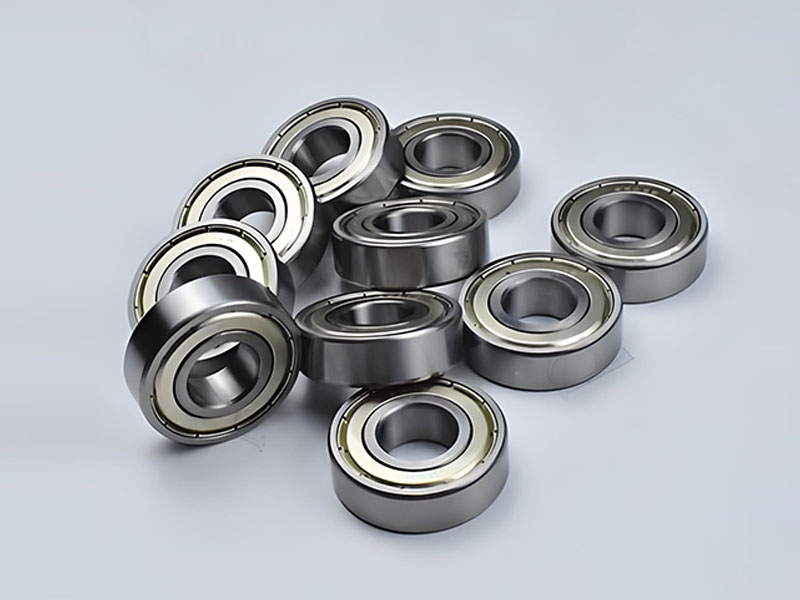
Quick Answer: Most hybrid and electric vehicle wheel bearing myths come from applying one failure mode or one platform result to every wheel end. Electrical erosion is real, but the current path must reach the bearing before insulation is justified. Load, gross axle weight rating, duty cycle, calculated life, installation, lubrication and contamination decide the outcome. Hybrid ceramic bearings and IATF 16949 are specific engineering and quality-system tools, not automatic EV requirements or product approvals.
Hybrid and electric drivetrains genuinely changed wheel-end engineering, which is why overstated claims spread quickly. This article checks each common hybrid and electric vehicle wheel bearing myth against standards, OEM information and supplier technical documentation. By the end, you should be able to decide whether a specific vehicle or bearing needs insulation, a redesign, a different life target or a different diagnosis.
Myth 1: High-Voltage Current Destroys Every EV Wheel Bearing
The claim overstates a real but narrower problem. Electrical erosion exists, but the documented current path usually sits inside the electric drive unit, not at every wheel end. Manufacturer technical literature on EV motor bearings describes electrical pitting as a driveline motor bearing issue. A 2024 eAxle solution grounds one end of the rotor shaft and insulates the other end with hybrid ceramic ball bearings, which places the insulation inside the eAxle rather than at each wheel-hub bearing.
Those sources do not establish that a given wheel-hub bearing carries damaging current. Identify the current path for the specific vehicle before specifying insulation.
Exception: in-wheel motor architectures. A wheel-hub drive can integrate the motor, reducer, wheel bearing and friction brake inside the rim. In that layout, electrical and wheel-end bearing design must be assessed as one system. One such platform is quoted for 48 V or 400 V supply, 18-85 kW peak power and 900-2,250 Nm peak torque.
Myth 2: Hybrid Ceramic Bearings Are Mandatory on Every Hybrid and EV Hub
Hybrid ceramic bearings are an engineering solution for defined conditions, not an automatic fitment standard for hybrid and electric wheel ends. ISO 20056-1:2017 defines hybrid bearings as bearings with high-quality hardened bearing steel rings and silicon nitride (Si3N4) rolling elements, and it specifies how their dynamic load ratings are calculated. The standard was confirmed as still current in 2023. ISO 20056-1/-2:2017 cover dynamic and static load ratings of hybrid bearings with ceramic rolling elements; neither is an EV wheel-hub certification.
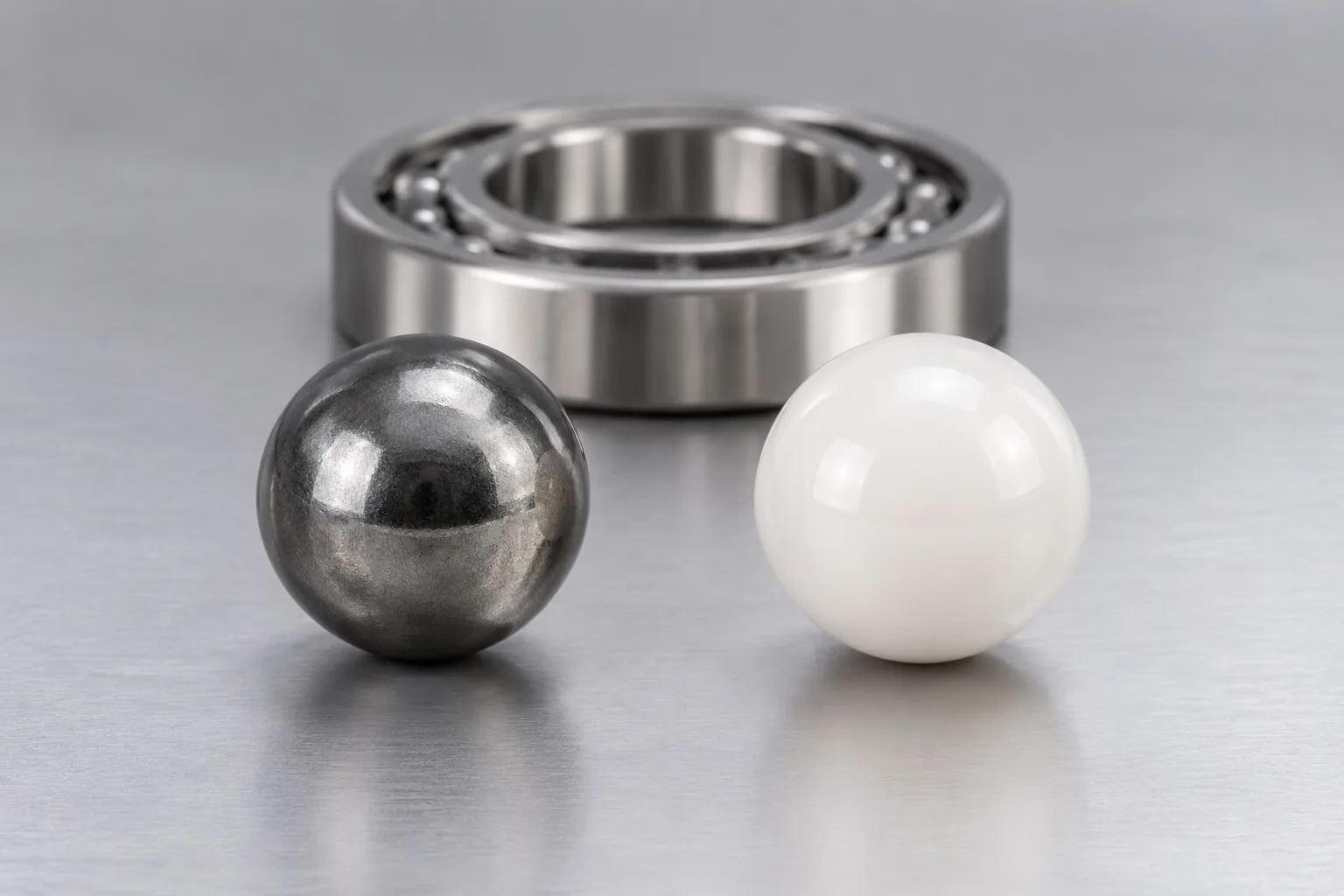
Technical guidance notes that Si3N4 rolling elements provide electrical insulation, but recommends developing an insulated bearing solution with motor current and bearing specialists and verifying it through field measurements. The decision rule is simple: insulation follows the measured current path, not the vehicle’s drivetrain label.
Myth 3: A Heavier Battery Pack Always Shortens Wheel Bearing Life
Load risk depends on the specific vehicle’s gross axle weight rating (GAWR), center of gravity, duty cycle and bearing capacity, not on the fact that the vehicle is electric. In SAE technical paper 2020-01-1632 (5 October 2020), authors discuss EV variants of medium and large SUVs: a higher GAWR can become the limiting factor for wheel-end bearing capacity. That is a platform and vehicle-class design issue, not a universal EV conclusion.
In that case study, directly upgrading an existing design to meet EV axle loads increased bearing and wheel-end solution weight by 40%, equal to 1.8 kg per wheel end. That 40% figure describes one conversion approach, not an unavoidable EV weight penalty. An optimized wheel-end design met the target life within the original envelope and at similar weight.
Myth 4: Instant Electric Torque Always Outgrows Conventional Bearing Sizes
Higher electric torque raises wheel-end design requirements, but it does not follow that the bearing envelope must grow without limit. A supplier’s third-generation three-row angular contact ball wheel bearing is quoted at about 24% higher load capacity and about 33% higher stiffness within a standard envelope, and its Face Spline connection transmits up to 50% more torque at the same size. The same bearing is stated to suit both driven and non-driven wheels, so the improvement is available where the torque path requires it rather than everywhere by default.
Vendor data, not a universal rule: the same source reports up to 53% lower friction than a standard design and about 0.7% lower vehicle energy consumption in its FTP75 example. Those figures are product- and test-specific and should not be generalized to all EV wheel bearings.
Myth 5: EV Wheel Bearings Have a Fixed Replacement Mileage or Last as Long as the Vehicle
Bearing life is a calculated value tied to load and operating conditions; there is no single replacement mileage that applies to all hybrid and electric wheel bearings. ISO 281:2007 specifies basic dynamic load ratings and the basic rating life calculation, where basic rating life corresponds to 90% reliability under conventional conditions; it was confirmed as still current in 2021.
ISO/TS 16281:2008 provides the modified reference rating life, which incorporates lubrication, contamination, internal stress caused by mounting, misalignment and skew, clearance and rolling element load distribution. Because those inputs change with installation, lubrication and contamination, actual life changes even when the bearing and the vehicle stay the same.
Myth 6: Any Hum or Vibration Means High Voltage Has Damaged the Bearing
Noise and vibration are not specific to electrical erosion, and electrical erosion is only one mechanism in the standardized failure classification. ISO 15243:2017 classifies in-service rolling bearing damage and failures, with main categories covering fatigue, wear, corrosion, electrical erosion, plastic deformation, fracture and cracking. Electrical erosion is subdivided into overcurrent erosion (5.4.2) and leakage current erosion (5.4.3), which are different mechanisms with different evidence requirements.
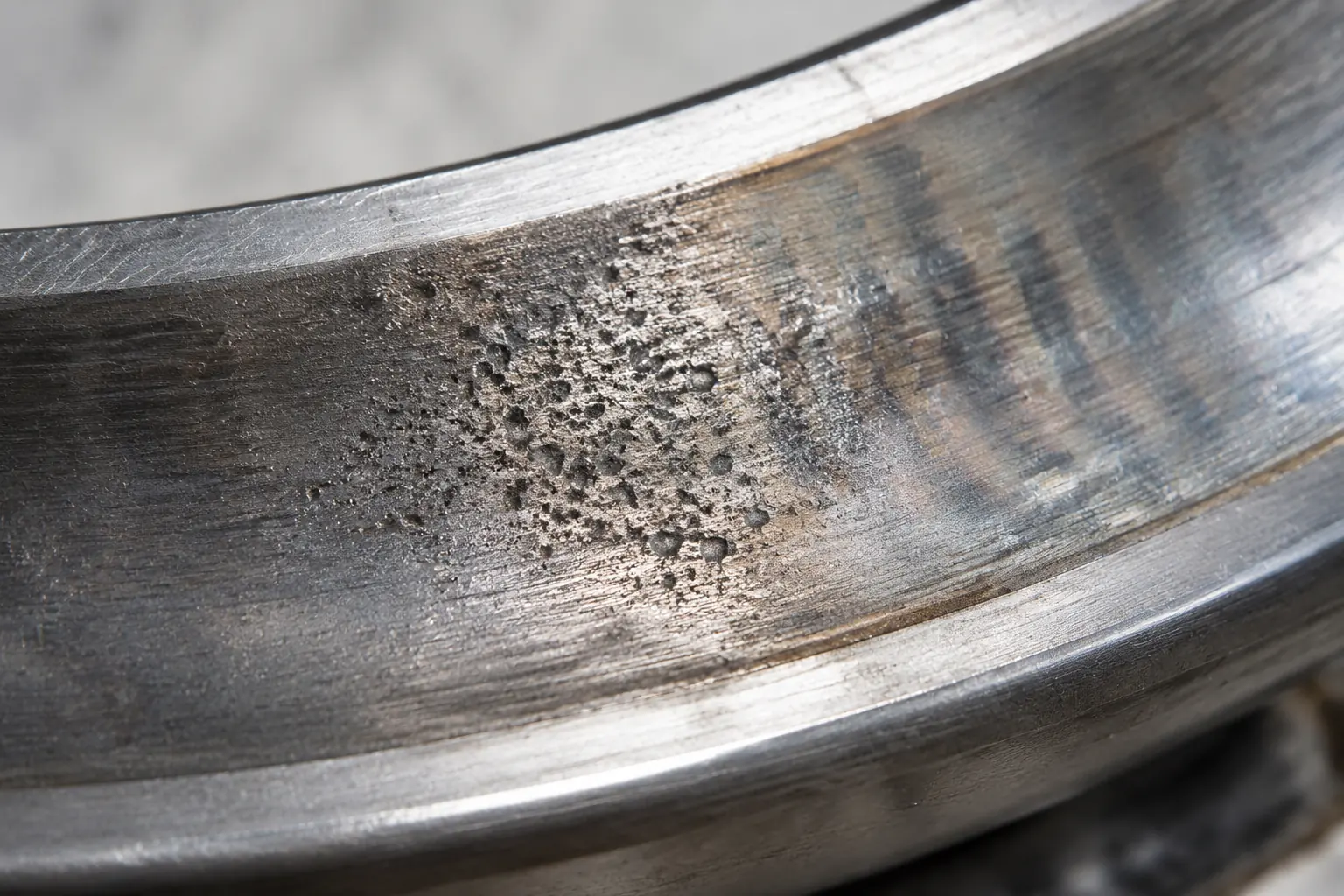
Leakage current erosion can begin as dense shallow craters and later develop fluting or a washboard pattern on raceways and rolling elements. Severity depends on current magnitude, duration, load, speed and lubricant. A hum or vibration justifies inspection and the exclusion of lubrication problems, contamination, misalignment and installation damage before electrical damage is concluded.
Myth 7: IATF 16949 Certification Proves a Bearing Is Validated for a Specific EV
IATF 16949 is a quality management system certification. IATF’s Rules 6th Edition Questions and Answers (31 July 2024) states that it is not a product certification, a manufacturing process certification or a process capability confirmation. It therefore does not by itself validate a bearing against a specific EV’s loads, currents or life target.
The standards that answer the engineering questions are different: ISO 281:2007 for dynamic load ratings and rating life, ISO 15243:2017 for damage and failure classification, ISO 20056-1/-2:2017 for hybrid bearing load ratings, and IATF 16949:2016 for the automotive supply chain quality management system. Separate quality-system evidence from product-level evidence whenever a certificate is offered as proof of suitability.
How to Verify Hybrid and Electric Vehicle Wheel Bearing Claims Before You Specify or Buy
Ask for the evidence behind each claim instead of accepting either the myth or its opposite.
- Insulation: request the identified current path and any field measurement results, not only the bearing type or the word ceramic.
- Load: request the GAWR or axle load the wheel end was validated against, and the basis of the load rating.
- Life: request whether the calculation used ISO 281 basic rating life or the ISO/TS 16281 modified reference rating life, and which lubrication, contamination and alignment assumptions it depends on.
- Certification: request what the certificate covers (the quality management system) and which product-level standards were applied.
- Diagnosis: request inspection findings on raceway and rolling element surfaces and the exclusion of lubrication, contamination, misalignment and mounting damage before electrical erosion is named.
Conclusion
All seven myths share one error: treating a single failure mode, a single platform result or a management system certificate as a universal rule for hybrid and electric vehicle wheel bearings. The variables that actually decide the answer are the current path and whether it reaches the wheel end, the vehicle’s GAWR and duty cycle, the bearing’s load rating and calculated life, and the installation, lubrication and contamination conditions.
Hybrid ceramic bearings follow ISO 20056-1/-2 load rating practice and are applied where insulation is justified, not as a default. Specify and diagnose with documented evidence: the current path and field measurements, the load and life basis, the correct standards, and an inspection of the bearing before noise is attributed to electrical damage.
FAQs
Q1: Do hybrid and electric vehicles need special wheel bearings?
A: Not categorically. The requirement depends on the individual wheel-end design and the loads it was validated for. A higher GAWR can push a wheel end into redesign, as in the SAE 2020-01-1632 medium and large SUV EV case, while an optimized design can meet target life in the original envelope. Electrical insulation is specified when the current path reaches the bearing, and hybrid ceramic bearings are one option rather than a default.
Q2: Can hybrid ceramic bearings be retrofit as an upgrade on any EV hub?
A: No. A hybrid ceramic bearing is only usable where it matches the hub dimensions and carries the required load rating. ISO 20056-1:2017 defines how hybrid bearing dynamic load ratings are calculated, which is a rating method, not a fitment or approval statement. Decide insulation with motor current and bearing specialists and confirm it with field measurements.
Q3: How can electrical erosion be distinguished from ordinary bearing wear?
A: By classifying the damage against ISO 15243:2017 rather than by noise alone. Dense shallow craters in early leakage current erosion can later develop fluting or a washboard pattern on raceways and rolling elements. Exclude lubrication failure, contamination, misalignment and mounting damage first. Severity depends on current magnitude, duration, load, speed and lubricant.
Q4: Does converting an ICE platform to electric always add 40% to wheel-end weight?
A: No. The 40% figure is a case-study result, not a conversion constant. It comes from SAE paper 2020-01-1632, which examined medium and large SUV EV variants and a direct upgrade of an existing design; the increase equaled 1.8 kg per wheel end. The same paper reports an optimized design reaching target life within the original envelope and at similar weight.
Q5: What rating life should be specified for an EV hub bearing?
A: There is no universal figure. The life target must be derived from the application’s load and operating conditions. ISO 281:2007 basic rating life corresponds to 90% reliability under conventional conditions, and ISO/TS 16281:2008 modified reference rating life adds lubrication, contamination, mounting stress, misalignment, clearance and load distribution. State the lubrication, contamination and alignment assumptions with the calculated life.
Q6: Does IATF 16949 certification confirm a bearing is approved for a specific EV model?
A: No. IATF 16949 is a quality management system certification, as IATF’s Rules 6th Edition Q&A of 31 July 2024 states. Product-level confidence needs load and life evidence against ISO 281 and ISO/TS 16281, damage classification language from ISO 15243 where relevant, and hybrid bearing load ratings under ISO 20056-1/-2 if ceramic rolling elements are used.