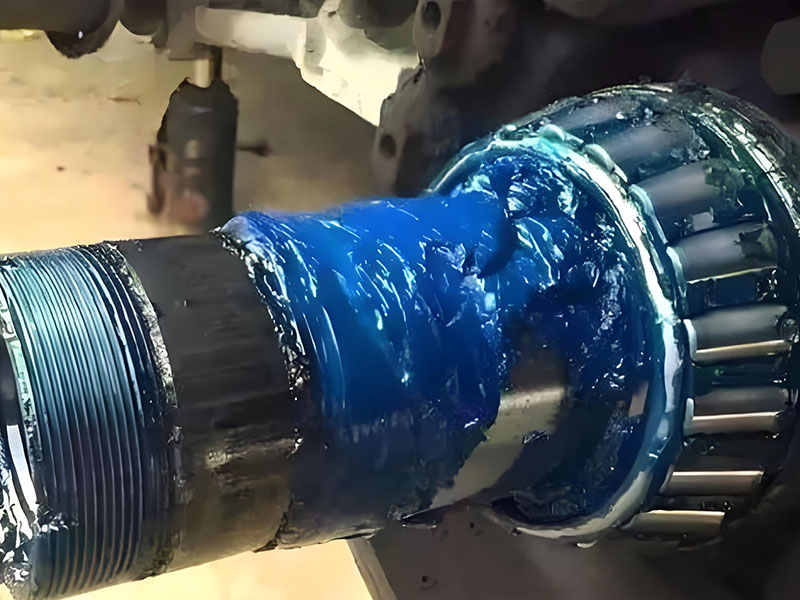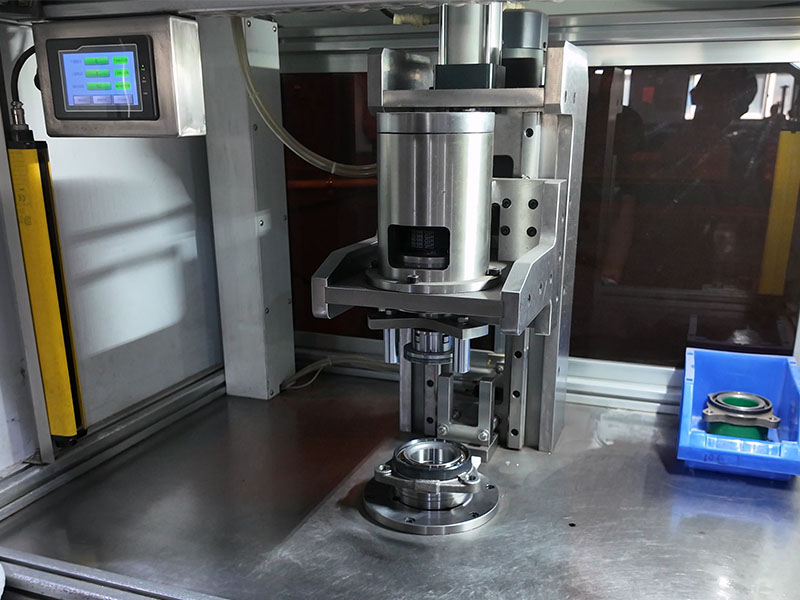
Quick Answer: Diagnosing bearing noise with zero play must account for a simple fact: a bearing can be noisy even when no radial or axial play can be felt. Zero measurable clearance may be preload, not proof of a healthy bearing. Confirm the sound is bearing-borne, match it to known patterns, then use temperature trend, vibration data such as defect frequencies or enveloped acceleration, and a physical inspection before replacing the part.
Diagnosing bearing noise with zero play starts with a simple correction: a tight bearing is not a cleared bearing. A static shake or feeler-gauge check can confirm that measurable play is absent, but it cannot confirm that the raceways, rolling elements, lubricant film or mounting interface are healthy.
The useful question is not whether the bearing has play but what evidence explains the noise. That changes the job into three decisions: prove the sound is bearing-borne, match the sound to a mechanism, and confirm the mechanism with temperature, vibration or physical inspection before parts are ordered.
Why Zero Play Does Not Mean a Healthy Bearing
Abnormal bearing noise can appear even when neither radial nor axial play can be measured. In a preloaded arrangement, measured clearance can be zero while the rings and rolling elements remain elastically loaded. Zero play may therefore describe preload, not the absence of bearing damage.
That is why a static play check cannot clear a noisy bearing on its own. Damage mechanisms such as false brinelling, mounting brinelling, electrical erosion and contaminant dents are recognized causes of noise and vibration that do not need external looseness to appear first. Supplement the static check with operating-noise, vibration and temperature measurement.
Exception: if the noise disappears immediately when motor power is cut, the sound may be electromagnetic rather than mechanical bearing noise. In that case, play is irrelevant to the diagnosis and the search should move to the drive and electrical system.
Zero Play, Preload, and Clearance Classes
Preload is negative internal clearance. Angular-contact ball and tapered roller bearings are often mounted in opposed pairs with preload applied, which explains why a shake or feeler-gauge check can read zero. Internal clearance shapes noise, vibration, heat generation and fatigue life directly. Standard radial clearance classes rise through C1, C2, CN, C3, C4 and C5.
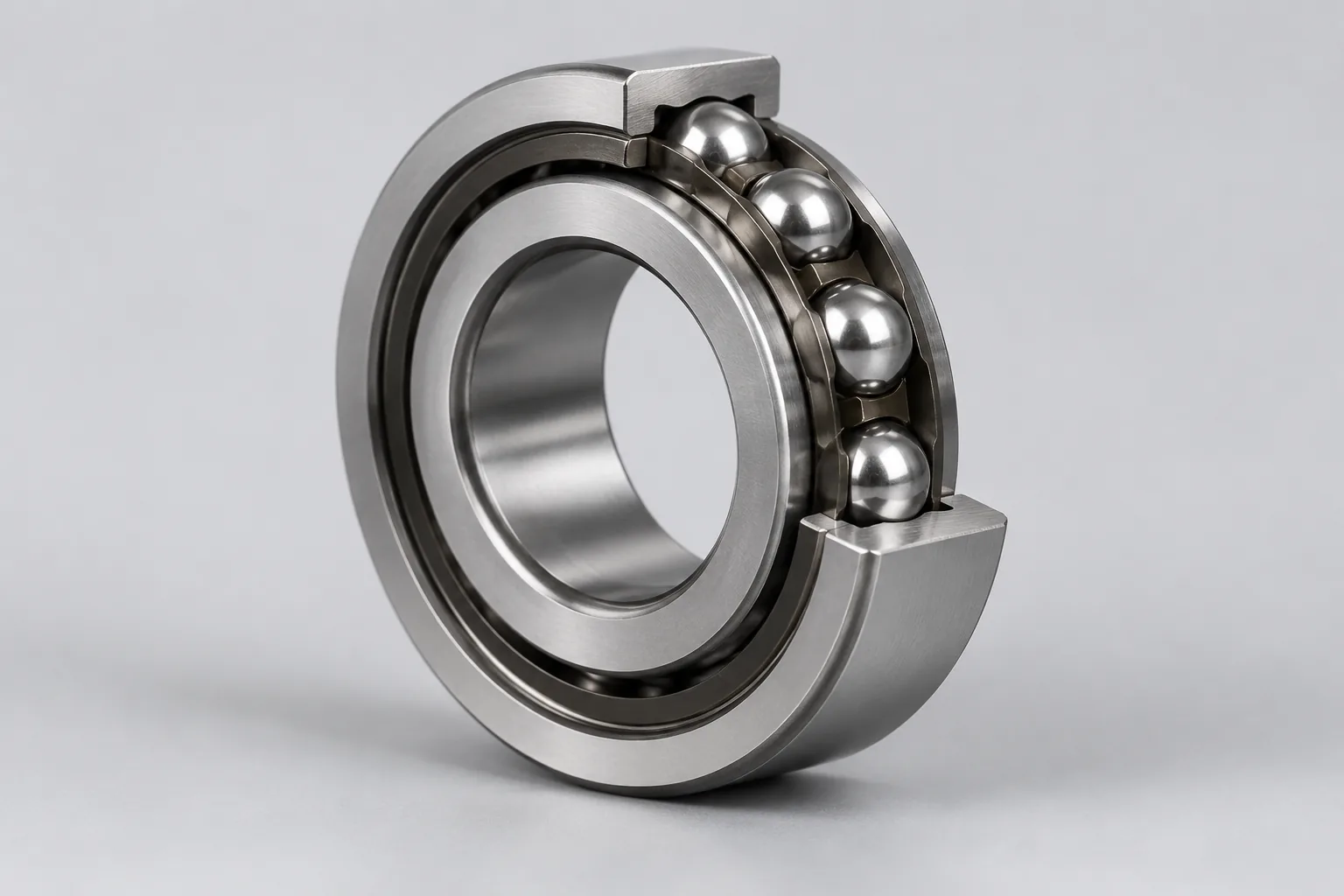
A high-pitched or whining noise can indicate insufficient operating clearance rather than excessive play. Too little clearance can produce both high-pitched metallic noise and abnormal heat, but poor lubrication can cause the same combination. Clearance should not be diagnosed from sound alone.
Check the specified clearance class and mounting arrangement in the application or equipment manual before deciding that the measured zero play is right or too tight. A correctly preloaded bearing is expected to show zero measurable play; zero play is a fault indicator only when it conflicts with the specified clearance or operating condition.
Matching Noise Patterns to Likely Causes
Use the sound as a pointer to the next check, not as proof of a failed component. The patterns below overlap, and each one still needs confirmation with temperature, vibration or physical inspection.
| Noise or feel | Likely direction | Check next |
|---|---|---|
| Whining or high-pitched running noise | Insufficient operating clearance | Clearance class, mounting, lubricant condition |
| Irregular noise | Contamination, rolling-element surface damage, improper lubricant or excessive clearance | Lubricant, seals, vibration spectrum; these faults can exist before measurable external play |
| Crunching during hand rotation | Raceway scoring, damaged rolling elements, contamination or a locally deformed ring | Slow rotation by hand, raceway inspection after removal |
| Screech or howl on cylindrical roller bearings that changes with speed and briefly decreases after grease is added | Poor lubrication or excessive radial clearance | Lubricant delivery, grease condition, radial clearance |
| High-pitched squeak | Small clearance with poor lubrication, or contact damage between a roller and its guide flange | Lubrication, flange contact pattern, clearance |
| Noise that disappears immediately when motor power is switched off | Electromagnetic motor sound rather than a mechanical bearing defect | Electrical and drive checks |
| Noise that changes gradually as the bearing warms | Temperature-related clearance change or progressive raceway damage | Temperature trend and vibration trend |
Damage That Stays Tight: Four Mechanisms Worth Checking
False brinelling creates noisy raceway depressions while the bearing remains dimensionally tight. The mechanism involves a loaded bearing that stays stationary while vibration and small oscillating movements act on it, and the marks typically appear at rolling-element spacing. The bearing can feel tight and still have noisy raceway damage.
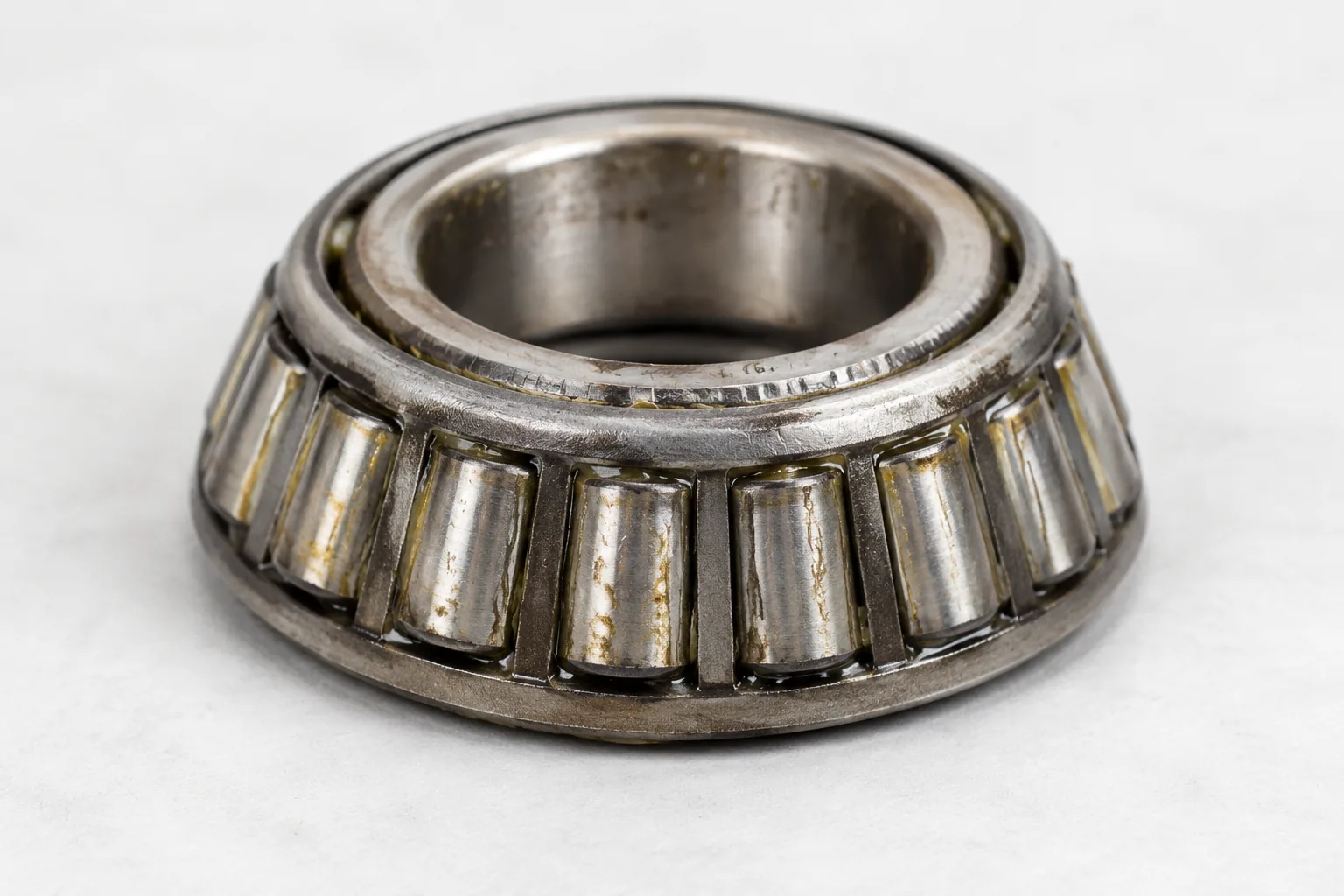
Installation damage can generate noise without first producing detectable play. Pressing through the wrong ring can brinell the raceways, which produces noise and may lead to early failure.
Current flow can harm a bearing even when no play can be perceived. Current passing through the lubricant film causes local arcing, pits and groove-like fluting on raceways and rolling elements. Electrical micro-craters are commonly about 5-8 micrometres in diameter, and secondary washboard-like fluting develops as rolling elements pass over them, increasing noise and vibration.
Dents from contaminants, wear linked to lubrication, smearing, fatigue spalls and electrical fluting are all accepted sources of excess bearing vibration. None requires external looseness to be detectable first. Check vibration exposure, mounting practice and drive conditions for each mechanism, because all four can coexist in one failed bearing.
A Diagnostic Sequence That Goes Beyond the Play Check
Use a sequence that separates the noise source from the damage mechanism. Record speed, load and temperature at the time of measurement, because defect frequencies and temperature limits are only meaningful with those operating conditions attached.
- Confirm the noise is bearing-borne. On driven machines, use the power-off test. On running equipment, use a noise locator or vibration-monitoring equipment.
- Measure the temperature trend. Under normal conditions, bearing temperature climbs slowly and levels off in roughly one to two hours of running. A fast or abnormal climb may point to insufficient clearance, incorrect mounting, too much lubricant or seal friction.
- Calculate the four rolling-bearing defect frequencies: BPFO relates to the outer race, BPFI to the inner race, BSF to rolling-element spin and FTF to cage rotation.
- Attach the geometry to the frequency. The defect frequencies are governed by shaft speed and internal bearing geometry, such as the number of rolling elements, their diameter, the pitch diameter and the contact angle. A peak at one of those frequencies or a harmonic points to the damaged component.
- Use enveloped acceleration. This isolates the high-frequency impulses produced when rolling elements pass over localized defects and can reveal early raceway or rolling-element damage that a play test cannot detect.
- Feel the bearing by hand through slow rotation. Crunching can indicate raceway scoring, damaged elements, contamination or a deformed ring.
- Inspect lubricant condition and contamination before and after removal, because poor lubrication reproduces both whine and heat rise.
- Classify the damage after removal using the terms, characteristics and causes defined by ISO 15243:2017 so the finding is reportable and repeatable.
Wheel Bearing Noise on the Vehicle
A mechanical impact may leave tiny surface depressions that are hard to see but still make the wheel bearing noisy. A documented Infiniti service bulletin, ITB10-067a (December 17, 2020), instructs technicians to rotate the removed hub in both directions and replace it when a gritty or rough sensation is found. A wheel bearing that feels tight on the vehicle is not proven good.
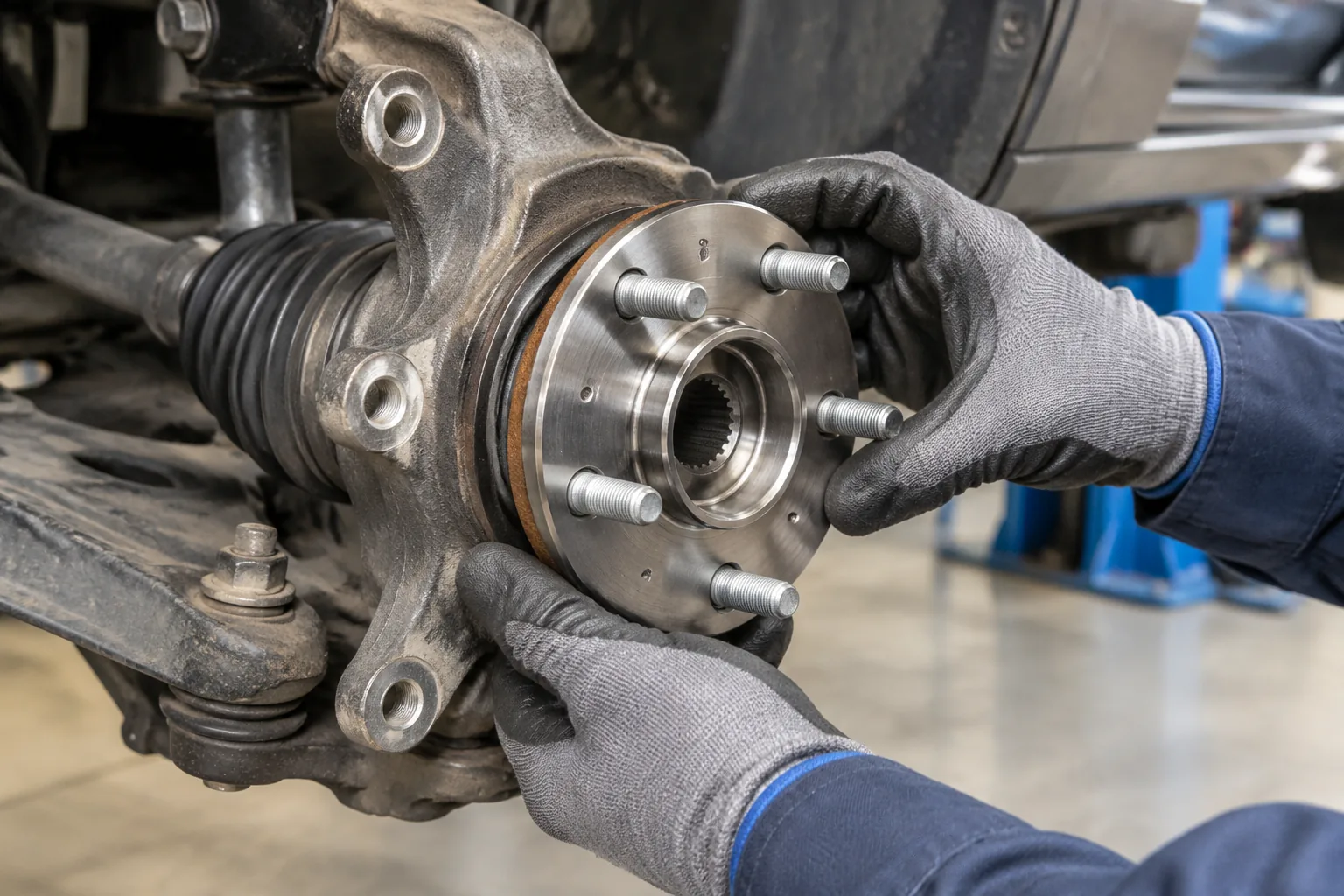
Chassis-mounted microphones or electronic stethoscopes can compare a suspect wheel bearing with a known-good vehicle. A Mazda service alert, SA-020/25 (April 15, 2025), instructs technicians to replace bearings that are significantly noisier under the same conditions. Comparison testing is only valid when both vehicles or both sides are measured under the same speed, road and load conditions.
Wheel-bearing noise does not always originate inside the rolling elements. Some clicking or clacking complaints are linked, in an Audi technical service bulletin, to tiny movement at the joint between the wheel bearing and its housing. A noise that persists after bearing replacement therefore points toward the housing interface or another source.
Wheel bearing noise that does not change after replacement
Combine the Audi housing-interface explanation with the Mazda comparison method before ordering a second bearing. If the clicking or clacking persists at the same speed and load after replacement, inspect the bearing-to-housing interface rather than the rolling elements.
Temperature as the tiebreaker between clearance and lubrication
Both insufficient clearance and poor lubrication produce high-pitched noise plus heat, so compare the stabilization trend against the normal one-to-two-hour pattern. A bearing that stabilizes within the normal window but stays noisy points more toward surface damage; one that climbs rapidly points toward clearance, mounting, lubricant quantity or seal friction.
Using Standards to Structure the Diagnosis
ISO 15243:2017, Rolling bearings – Damage and failures – Terms, characteristics and causes, groups in-service failure modes for rolling bearings and explains how each one looks and what may cause it. Edition 2 was published in March 2017.
ISO 13373-1:2002, Condition monitoring and diagnostics of machines – Vibration condition monitoring – Part 1: General procedures, addresses measurement parameters, choice and placement of transducers, data collection and machine operating conditions. ISO 13373-2:2016 covers the processing, analysis and presentation of vibration data collected under Part 1.
Using the standard vocabulary keeps inspection reports comparable across shifts, suppliers and warranty discussions. The report should name the failure mode, the evidence behind it and the operating condition at the time of measurement.
Conclusion
Zero play removes only one failure mode from the list; it does not clear the bearing. Zero clearance can be preload, and several damage mechanisms produce noise before any looseness appears, including false brinelling, mounting damage, electrical erosion and contaminant dents. The decision path for diagnosing bearing noise with zero play is to confirm the noise is bearing-borne, read the sound against known patterns, then confirm with temperature trend, defect-frequency or enveloped-acceleration vibration data, and physical inspection of the raceways.
Replace or remove the bearing on evidence rather than on feel alone. Treat a noise that disappears with power cut, or persists after bearing replacement, as a non-bearing or housing-interface problem. Where the required evidence cannot be collected, default to the application or equipment specification and the manufacturer’s acceptance criteria.
FAQs
Q1: Can a bearing make noise if there is no play?
A: Yes. A preloaded bearing can show zero measurable clearance while the rings and rolling elements are still elastically loaded, and false brinelling, mounting brinelling, electrical erosion and contaminant dents can all produce noise before any play develops.
Q2: What does a high-pitched whine from a tight bearing mean?
A: Whining or high-pitched running noise is associated with insufficient operating clearance, but poor lubrication can produce the same sound and the same temperature rise, so confirm clearance class, mounting and lubricant condition before replacing the bearing.
Q3: Why does my wheel bearing hum but feel tight on the vehicle?
A: Impact damage can create small surface indentations that are not visible yet still generate noise. Rotate the removed hub in both directions and replace it if the rotation feels gritty or rough, or compare the bearing with a known-good vehicle on a chassis-mounted microphone.
Q4: Does adding grease quiet a noisy bearing?
A: For cylindrical roller bearings, a screech or howl that varies with speed and briefly quiets after grease is added points to poor lubrication or excess radial clearance. A temporary quiet period confirms a lubrication problem, not a repair.
Q5: How long should bearing temperature take to stabilize?
A: Under normal operation, bearing temperature climbs slowly and levels off in about one to two hours. A fast or abnormal climb can signal insufficient clearance, incorrect mounting, too much lubricant or seal friction.
Q6: Can electrical current damage a bearing with zero play?
A: Yes. Current passing through the lubricant film causes local arcing, pits and fluting, with micro-craters commonly about 5-8 micrometres in diameter, and the resulting washboard fluting increases noise and vibration while the bearing still feels tight.