Quick Answer: Super precision angular contact ball bearings deliver high running accuracy, high-speed capability, combined radial and axial load support, and high stiffness in a compact spindle bearing. Hybrid ceramic and sealed versions can further reduce heat, contamination risk, and maintenance. Their real benefit depends on bearing size, contact angle, preload, arrangement, lubrication method, and mounting quality, so the complete specification must be matched to the spindle.
Super precision angular contact ball bearings are selected when a standard bearing cannot hold the required balance of accuracy, speed, rigidity and heat control. The benefits of super precision angular contact ball bearings are easiest to judge by linking each advantage to a real spindle decision: how true the spindle runs, how fast it can turn, how it carries combined load, how stiff it remains and how stable its temperature stays. The same bearing grade can perform very differently once contact angle, preload, arrangement, lubrication and mounting are changed.
What Are Super Precision Angular Contact Ball Bearings?
Single-row angular contact ball bearings use an offset raceway geometry to establish a contact angle. That angled ball-to-ring contact line lets the bearing carry radial load and axial load acting in one direction at the same time. A super precision version is made to tight tolerance classes such as P4 or P2 and is chosen where high running accuracy, high rotational speed or both are required.
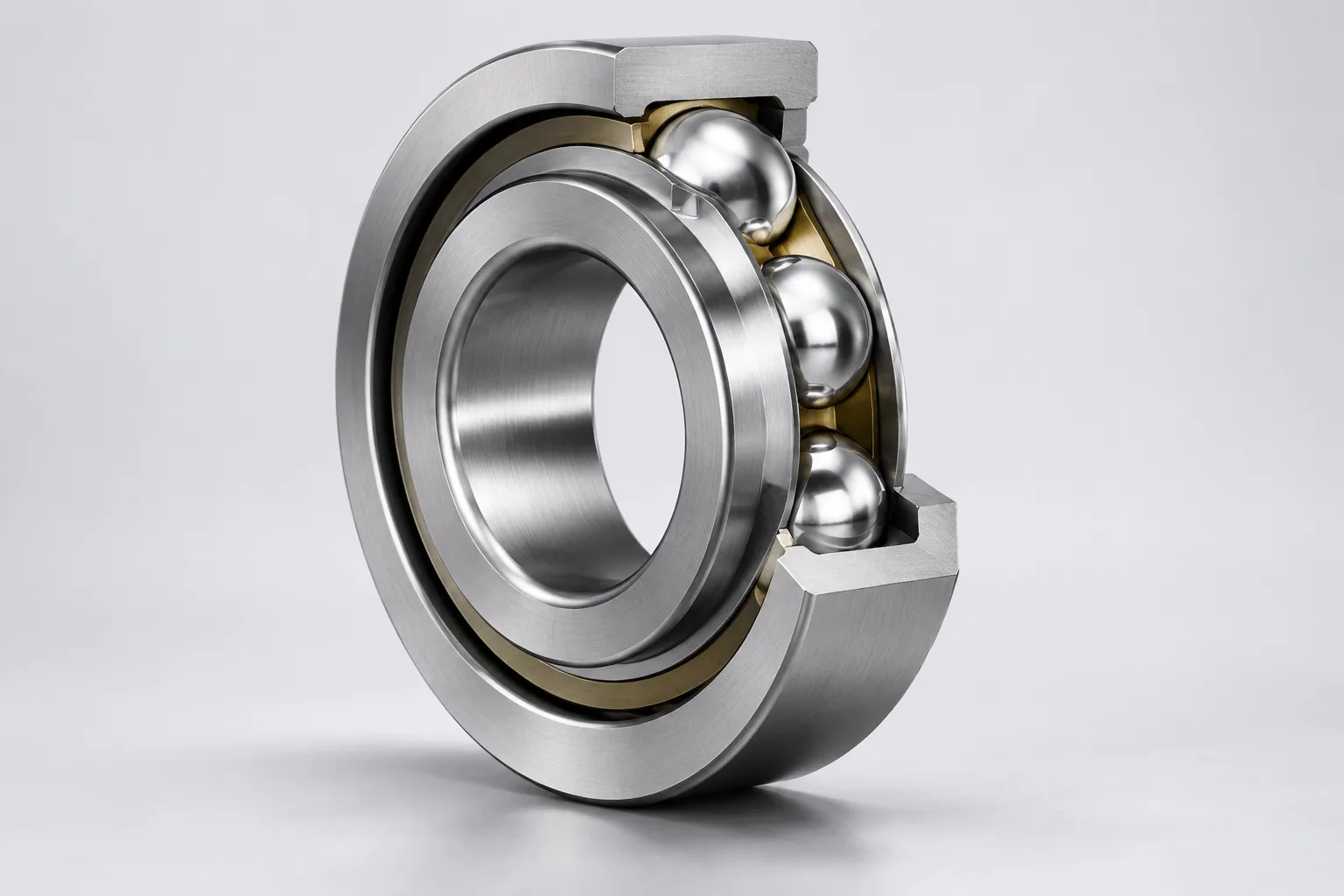
Published examples show the scale. A 71902 CE/HCP4A bearing is a single-row super precision unit with a 15° contact angle, a basic dynamic load rating of 3.19 kN and a basic static load rating of 1.37 kN. P4 precision tool bearings in the 70 and 719 series are listed with 10-50 mm shaft diameters. Hybrid versions replace steel balls with silicon-nitride ceramic balls, and universal-match or paired versions can be arranged in DB, DF and DT configurations.
Precision grade labels are not universal. ISO 492:2023 defines dimensional and geometrical tolerance values for radial rolling bearings, but a P4 or P2 description should still be read together with the manufacturer’s suffix, internal design and datasheet. Two bearings with the same nominal grade can differ in preload, cage, seal and contact angle.
Benefit 1: High Running Accuracy for Precision Machining
Running accuracy is the first practical benefit. Tight running tolerances support spindle rotational accuracy, which can help improve workpiece surface finish, dimensional consistency and tool life in precision machining. Super precision angular contact ball bearings are selected for machine tool spindles and other equipment that requires high running accuracy.
Published data for P4 precision tool bearings links high running accuracy and high stiffness with stable machining and high productivity. For ultra-precision rotary positioning, low non-repetitive runout designs can support further gains; a BRSA130 slim-section bearing is listed with non-repetitive runout of 0.5 µm or less.
Bearing precision alone does not guarantee spindle accuracy. Housing fits, shaft fits, mounting alignment and preload all affect final runout, so the bearing must be treated as one part of the spindle system.
Benefit 2: High Speed Capability for Modern Spindles
High speed capability is the second major reason for the specification. These bearings are used in high-speed spindles, grinding spindles, drilling and milling driven tools, and other high-rpm equipment. Hybrid ceramic rolling elements reduce centrifugal loading and help extend the usable speed range.
Speed figures are only meaningful when the size, lubrication method and preload condition travel with them. Published examples make the point: the S70..W sealed hybrid series lists a speed factor A = 1.6 million n × dm and covers 25-55 mm shaft diameters; a 50BNR10HTSRSULP4Y bearing at 50 × 80 × 16 mm lists 27,700 min⁻¹ with grease and 43,100 min⁻¹ with oil-air lubrication; and a 7000UCG/GNP42 bearing at 10 × 26 × 8 mm with a 15° contact angle lists 65,800 min⁻¹ with grease and 105,300 min⁻¹ with oil.
Actual permissible speed also depends on bearing series, cage, sealing, cooling and mounting configuration. A single speed number quoted without those conditions is not a selection basis.
Benefit 3: Combined Radial and Axial Load Support
Angular contact bearings are valued because they can support a radial load and an axial load in one direction at the same time. A single bearing should not be treated as bidirectional axial support. A second bearing or a paired set is needed to locate the shaft and share the axial load.
Pairing changes the load path. DB (back-to-back) and DF (face-to-face) arrangements can accommodate axial loads in both directions, while DT (tandem) arrangements increase axial capacity in one direction. The S70..W series can be supplied as single universal-match bearings or matched sets for DB, DF and DT configurations. A 71902 CE/HCP4A is a single-row 15° bearing designed for radial loads and single-direction axial loads.
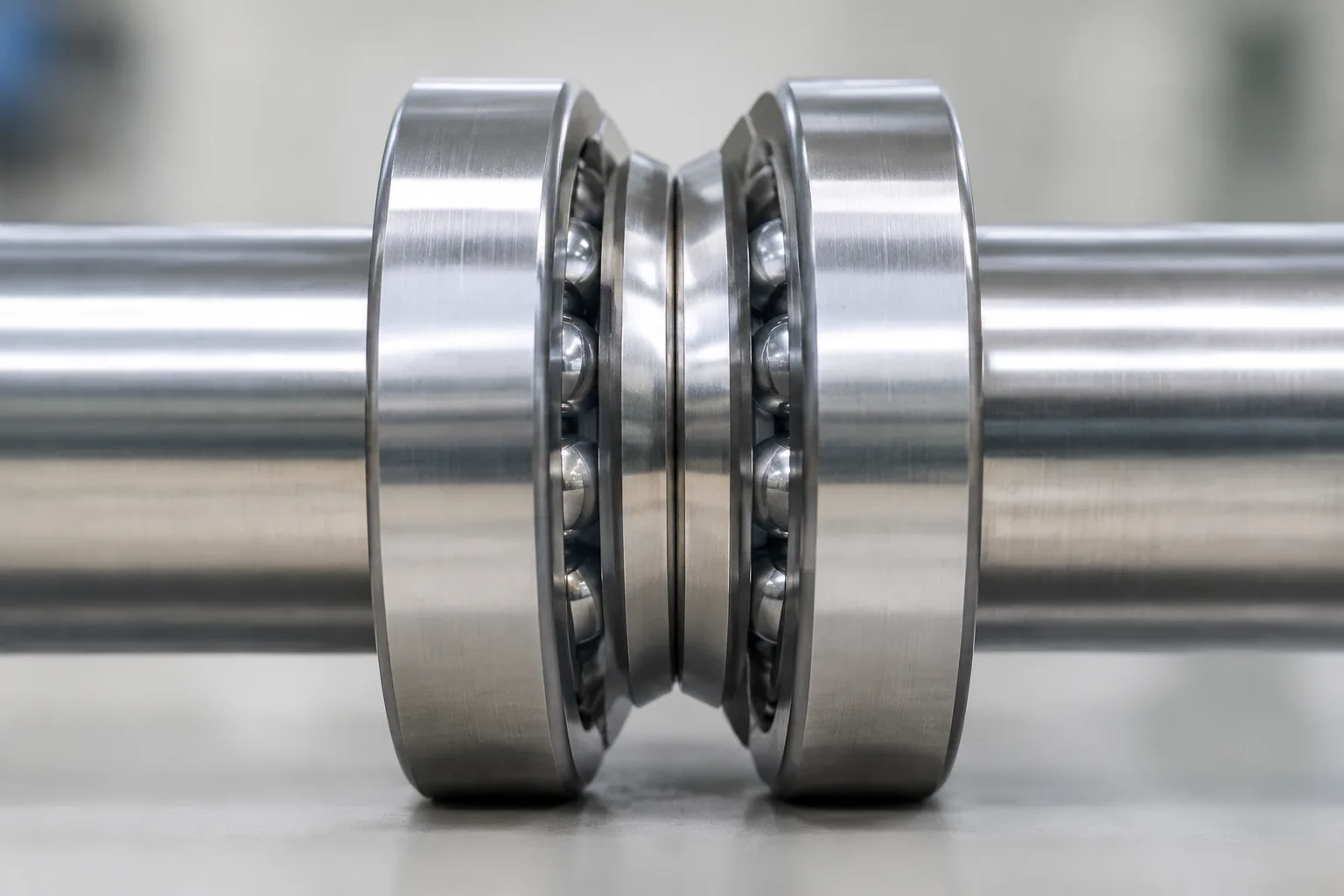
The arrangement must match the dominant axial load direction and the stiffness requirement. Using a single bearing where the application needs bidirectional axial location can lead to poor guidance, heat and early damage.
Benefit 4: High Stiffness and Spindle Rigidity
Stiffness is influenced by rolling element material, ball count and size, contact angle, internal conformity and preload. Increasing preload can raise stiffness, but it may reduce permissible speed and increase heat generation. Larger contact angles are generally better for axial stiffness, while smaller contact angles usually favor high-speed and radial stiffness requirements.
One published P4 example, a 7217HG1UJ74 bearing with a 25° contact angle, lists 1 kN preload, 280 N/µm axial stiffness, 596 N/µm radial stiffness, 12,500 min⁻¹ oil limiting speed and 8,100 min⁻¹ grease limiting speed. These figures are specific to that size and preload. They should not be generalized to another bearing or another preload level.
Stiffness and speed are a trade-off. A spindle design that asks for maximum rigidity and maximum speed at the same time usually needs a different compromise in contact angle, preload or cooling.
Benefit 5: Lower Heat Generation and Better Thermal Stability
Lower heat generation matters because temperature changes internal clearance and preload. Ceramic balls reduce rolling-element mass, which lowers centrifugal force and friction at high speed. Lower friction and lower centrifugal loading can reduce operating temperature and help extend grease life.
The material data explains the effect. Silicon nitride has a density of about 3.2 g/cm³ versus 7.9 g/cm³ for 100Cr6 bearing steel. Its coefficient of linear expansion is about 3 × 10⁻⁶/K versus about 12 × 10⁻⁶/K for 100Cr6. Ceramic balls are about 40% the mass of steel balls. The S70..W series lists lower operating temperature as a product advantage and links lower temperature to longer bearing service life.
Hybrid bearings still require suitable lubrication and cooling. Low heat generation does not remove thermal limits, and the benefit is most relevant in high-speed or frequent speed-change applications.
Benefit 6: Hybrid Ceramic Rolling Elements for Demanding Spindles
Hybrid bearings combine steel rings with silicon-nitride ceramic balls. The lower density reduces centrifugal load, while the higher elastic modulus supports stiffness. Silicon nitride has an elastic modulus of 310 kN/mm² versus 210 kN/mm² for steel.
Bearing-grade silicon nitride rolling elements are specified in accordance with ISO 26602. Lower ceramic ball mass reduces cage stress and friction at high speed, which contributes to lower operating temperature and longer grease life. That combination is useful in high-speed spindles where reduced inertia and thermal stability matter.
Hybrid construction is not automatically better for every load case. Shock load, contamination and cost must be evaluated, and a hybrid bearing still needs the correct preload, lubrication and mounting.
Benefit 7: Sealing and Lubrication Advantages
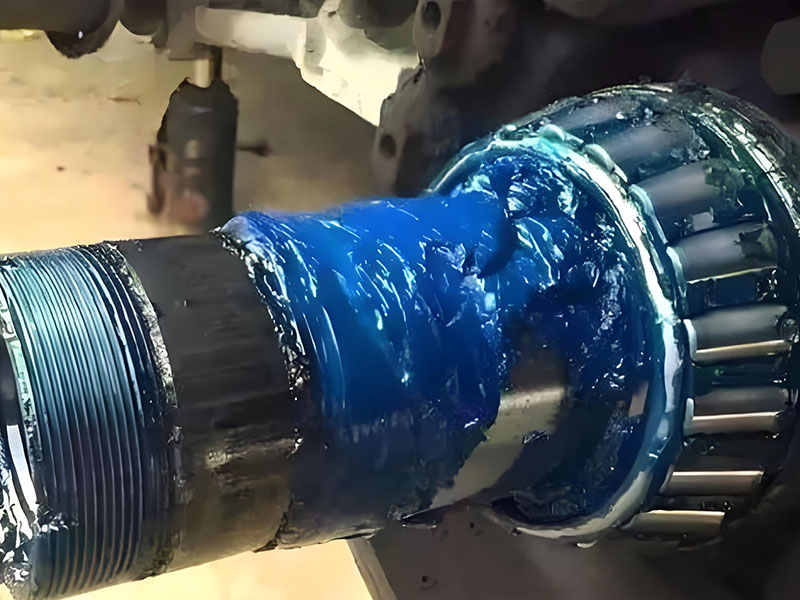
Sealed, grease-filled super precision bearings can reduce contamination ingress and simplify mounting. Non-contact seals are used in sealed super precision bearings, and the bearings are pre-filled with high-performance grease. That can shorten installation time and extend maintenance intervals in suitable applications.
The S70..W sealed hybrid series is stated as lubricated for the life of the bearing under its specified operating conditions. Sealed designs also reduce contamination and grease migration risk.
Lifetime lubrication claims apply only within the specified speed, temperature and contamination conditions. A sealed variant’s speed rating should be confirmed, because seal and grease fill can change the permissible operating envelope.
Benefit 8: Lower Noise and Vibration in Precision Spindles
Cage design, ball quality and controlled internal geometry can reduce noise and vibration in precision spindle operation. Some silent-series spindle bearings use a polyamide cage guided on the balls to reduce cage noise at low and medium speeds. Optimized bore and outside-diameter tolerances can also improve load distribution between bearings mounted in a set.
Lower vibration supports smoother surface finish and quieter operation, but the bearing is not the only source. Shaft balance, housing stiffness, lubrication and mounting alignment also affect the result. No bearing eliminates all vibration.
Benefit 9: Configuration Flexibility and Space Savings
Universal-match bearings can be combined into DB, DF or DT arrangements to suit stiffness, load direction and mounting requirements. That flexibility lets a spindle designer tune axial capacity and rigidity without changing the shaft diameter. The S70..W series is available as single universal-match bearings or matched sets.
Slim-section angular contact bearings can reduce the spindle envelope and moving mass. One slim-section series reduces cross-section thickness by at least 35% compared with standard angular contact ball bearings. A BRSA130 bearing offers non-repetitive runout of 0.5 µm or less and tilting-moment stiffness comparable to crossed roller bearings.
Slim-section bearings may have lower load capacity than larger-section bearings of similar diameter. The arrangement choice also affects axial load capacity, stiffness and mounting complexity.
Typical Applications That Benefit Most
These bearings are used where accuracy, speed and stiffness must coexist. Typical applications include machine tool main spindles, grinding spindles, drilling and milling driven tools, high-speed dynamometers, turbochargers, precision turntables and ball screw supports.
The final bearing choice still depends on load direction, speed profile, stiffness target, lubrication and service life requirement. A bearing that suits a high-speed milling spindle may not suit a heavily preloaded grinding spindle or a ball screw support.
Selection and Installation Factors That Determine Real Benefits
Contact angle should be selected from the balance between axial stiffness, radial stiffness and high-speed capability. Larger contact angles suit higher axial stiffness requirements; smaller contact angles are generally better for radial stiffness and high speed. Preload and arrangement should be defined together with the spindle stiffness and thermal growth strategy.
Precision grade, cage, seal and lubrication should follow the speed, temperature and contamination exposure. Confirm shaft and housing fits, mounting alignment and cleanliness, because these can erase the benefit of a super precision bearing. Increasing preload raises stiffness but can reduce permissible speed, so the preload target must be deliberate.
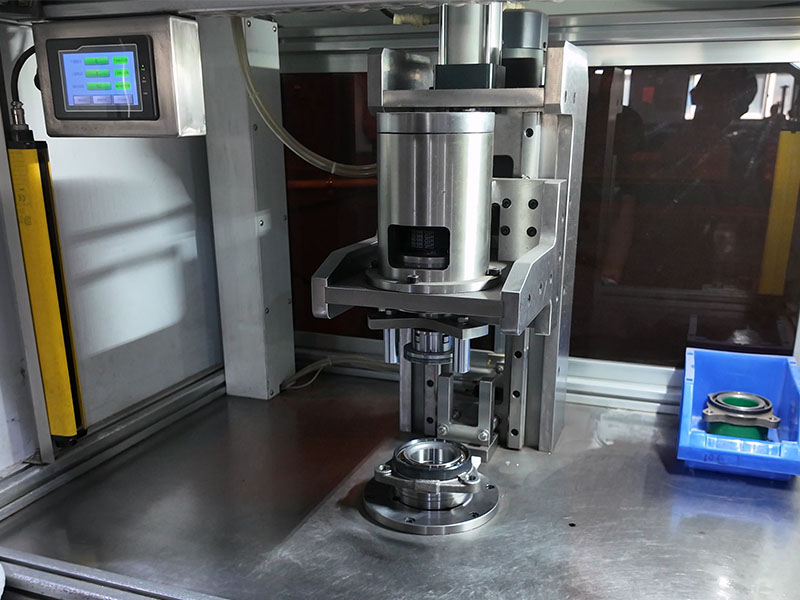
Do not specify a bearing by precision grade alone. The complete suffix and internal design matter, and the mounting procedure should use clean handling, dimensional and finish checks, correct tools and the specified preload method.
Limitations and When Super-Precision Bearings May Not Be the Best Choice
Super precision angular contact ball bearings are generally higher cost than standard bearings and require careful mounting. They are sensitive to misalignment, contamination and incorrect preload. For low-speed, cost-sensitive or heavy shock-load applications, simpler bearing types may be more appropriate.
Sealed or lifetime-lubricated versions still have speed and temperature limits. Some heavy-duty or contaminated environments may require different bearing types or additional sealing and lubrication measures. Validate the application with load, speed, life and thermal calculations before selection.
Key Takeaways
- Super precision angular contact ball bearings combine high running accuracy, high speed capability, combined load support and high stiffness.
- Hybrid ceramic and sealed variants can improve thermal behavior, contamination resistance and maintenance intervals under the right conditions.
- DB, DF and DT arrangements support spindle design optimization.
- The benefits are realized only when contact angle, preload, lubrication, fits and mounting are correctly specified.
Conclusion
The benefits of super precision angular contact ball bearings come from a system, not a label. High running accuracy, high speed capability, combined radial and axial load support, stiffness, thermal stability, sealing, low noise and arrangement flexibility all depend on the selected size, contact angle, preload, cage, seal, lubrication and mounting quality. The safe next step is to define the spindle load, speed, stiffness and thermal targets, then confirm the complete bearing suffix and datasheet against those conditions.
FAQs
Q1: What Are the Main Benefits of Super Precision Angular Contact Ball Bearings?
A: They combine high running accuracy, high-speed capability, combined radial and axial load support, and high stiffness in a compact envelope. Hybrid ceramic and sealed versions can add thermal and maintenance advantages, while DB, DF and DT arrangements allow the spindle designer to tune load direction and rigidity.
Q2: How Does Contact Angle Affect Bearing Performance?
A: A larger contact angle generally increases axial stiffness and axial load capacity, while a smaller contact angle usually favors high-speed running and radial stiffness. The choice is a trade-off, so the contact angle must be matched to the dominant load direction and speed target.
Q3: Are Hybrid Ceramic Bearings Always Better?
A: No. Hybrid ceramic bearings reduce rolling-element mass and can lower centrifugal load, friction and heat at high speed, but shock load, contamination, cost and lubrication still decide whether they are appropriate. They are a targeted solution, not a universal upgrade.
Q4: Can a Single Angular Contact Bearing Carry Axial Load in Both Directions?
A: No. A single angular contact bearing supports axial load in one direction. DB and DF pairs can accommodate axial loads in both directions, while DT pairs increase axial capacity in one direction.
Q5: Do Sealed Super Precision Bearings Need Relubrication?
A: Some sealed hybrid series are lubricated for the life of the bearing under specified speed, temperature and contamination conditions. Others may still require a maintenance plan, so confirm the sealed variant’s datasheet and operating limits before assuming lifetime lubrication.
Q6: What Most Often Cancels the Benefit of a Precision Bearing?
A: Poor fits, misalignment, contamination and incorrect preload can cancel the benefit of a precision bearing. The bearing must be mounted with clean handling, correct tools and the specified preload method, and the housing and shaft fits must match the spindle design.