Quick Answer
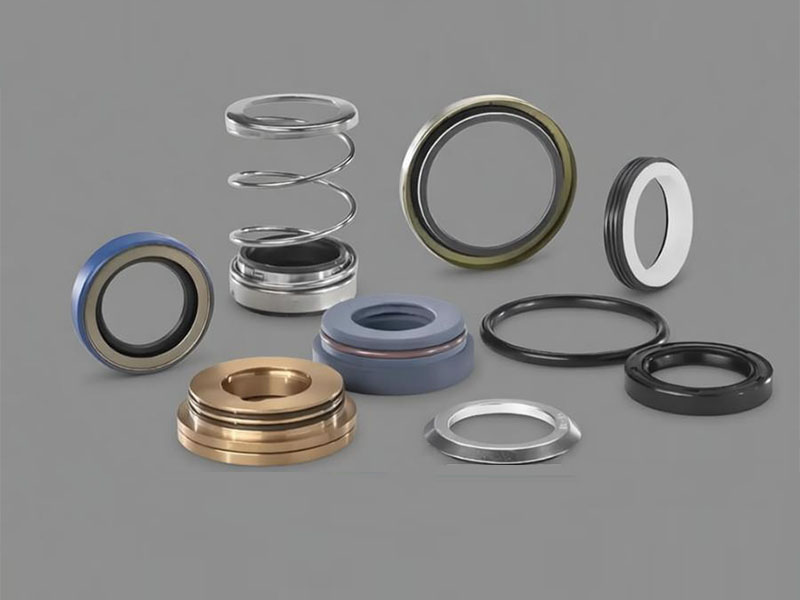
A bearing seal closes the gap between stationary and moving parts to retain lubricant and exclude contaminants. Bearing seals are classified across four dimensions: installation method (built-in vs. external), sealing principle (contact vs. non-contact vs. hybrid), structural form (skeleton oil seal, labyrinth seal, assembled seal, magnetic seal), and material (metal shield, rubber, plastic, felt).
A bearing is only as reliable as its seal. Without a proper seal, contaminants enter, lubricant leaks out, and bearing life shortens dramatically. Industry data indicates that approximately 30% of bearing failures originate from seal-related issues.
This guide covers bearing seal types across four classification dimensions: installation method, sealing principle, structural form, and material. These dimensions are complementary, not mutually exclusive. A labyrinth seal, for example, is non-contact by principle and labyrinth by structure. Understanding this multi-angle framework helps you select the right seal for any application.
Whether you are specifying seals for a new design or troubleshooting field failures, you will find practical, actionable information here.
Bearing Seal Core Functions
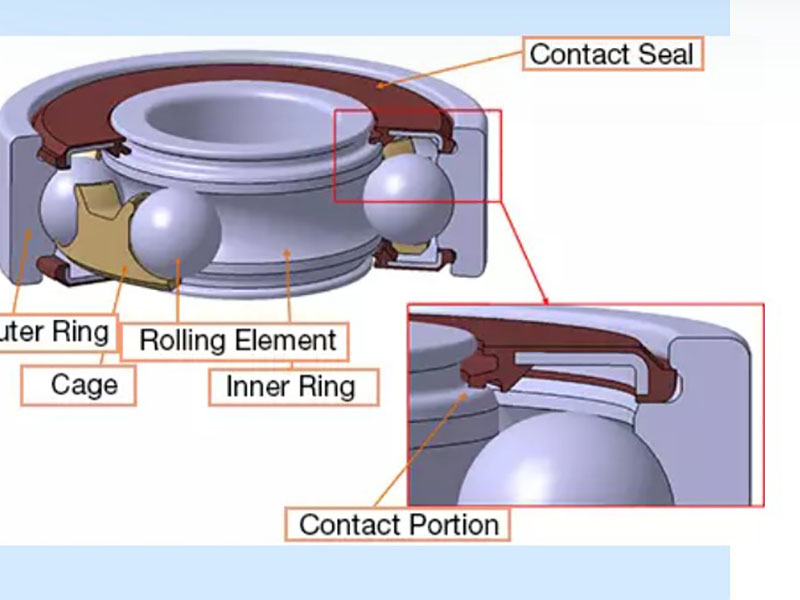
The sealing arrangement has a considerable influence on the operating life of a bearing arrangement. A bearing seal serves four primary functions:
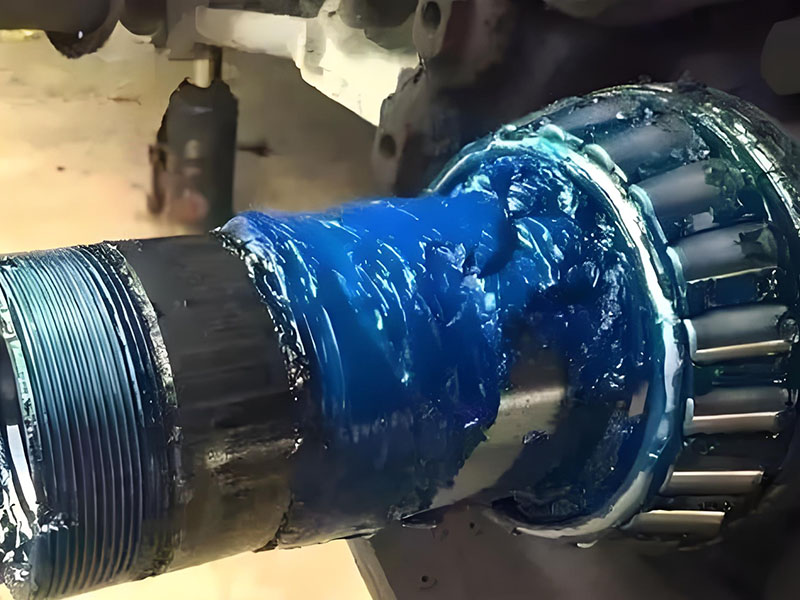
Lubricant Retention. Keeps grease or oil inside the bearing for optimal operation. Without effective lubricant retention, lubricant leaks out, metal surfaces contact directly, and wear accelerates.
Contaminant Protection. Blocks dust, water, metal debris, and other foreign matter from entering the bearing. Even microscopic particles can cause abrasive wear on rolling elements and raceways.
Pressure Balance. In rotating equipment like compressors and fans, bearing seals help balance pressure differentials between the bearing chamber and the external environment.
Friction-Efficiency Trade-off. Tighter seals offer better protection but increase friction. Looser seals reduce friction but provide weaker protection. The right choice for your bearing seal selection depends on your operating conditions.
Bearing Seal Classification
Classification by Installation Method
Bearing seals fall into three categories based on where and how they are installed.
Built-in Seals (Integrated Seals). Built-in seals are sealing devices manufactured as part of the bearing itself – such as metal shields (Z/ZZ) or rubber seals (RS/2RS). These integrated seals take up minimal space, are easy to install, and are identified by bearing suffix codes. Sealed bearings are designed as “lifetime lubricated” – you should not attempt to re-grease them. Integrated seals are mainly used in deep groove ball bearings.
External Seals. External seals are additional sealing devices installed in end covers, housings, or other external structures. External bearing seal selection requires considering multiple factors: lubricant type (grease or oil), operating environment, support structure, peripheral speed, operating temperature, and manufacturing cost. External seals can be either contact seals or non-contact seals.
Combined Sealing. In harsh environments with heavy dust and moisture, you apply both built-in seals and external seals together to create multiple layers of protection. This combined sealing approach is common in mining equipment, agricultural machinery, and off-road vehicle applications.
Classification by Sealing Principle
This dimension answers: how does the seal actually work?
Contact Seals. Contact seals maintain direct physical contact between the sealing element and the rotating component. They form a tight physical barrier.
Characteristics: Excellent sealing effectiveness, but higher friction, more heat generation, and reduced speed capability – industry data indicates this is typically about 35% lower than open bearings.
Applicable Range: Low to medium speeds, heavily contaminated environments.
Common Types: Rubber lip seals (RS/2RS), felt seals, leather seals (made from treated leather, offering basic protection in low-speed applications), Z-shaped and V-shaped sealing rings. Contact seals are widely used in automotive wheel hub bearings and industrial gearboxes.
Non-Contact Seals. Non-contact seals maintain a small clearance gap between the sealing element and the rotating component. There is no direct contact.
Characteristics: Almost no friction heat, no wear, speed capability is not restricted.
Applicable Range: High-speed and high-temperature applications.
Common Types:
- Metal shields (Z/ZZ). Thin metal plates with a small gap to the inner ring. These non-contact bearing seals block larger particles but offer limited moisture protection.
- Non-contact rubber seals (V/VV, LLB). Rubber construction without inner ring contact.
- Clearance seals. A 0.1-0.3mm annular gap between shaft and bearing cover.
- Groove seals. The groove fills with grease during operation, providing dust protection and expelling excess grease.
- Labyrinth seals. Complex tortuous paths block contaminant ingress. (For detailed design parameters including clearance values and stage count, see the Labyrinth Seals section under Structural Form below.)
- Slinger rings. Mounted on the rotating shaft, they spin with it to fling contaminants outward and expel waste grease.
- Magnetic seals. Use magnetic fields to repel ferrous particles.
Hybrid Seals. Hybrid seals combine two or more methods from contact seals and non-contact seals.
Typical Representative: Bearing isolators combine contact seal and non-contact seal features. These hybrid seals provide more comprehensive protection than either type alone, but cost significantly more – in many cases, roughly ten times the price of rubber lip seals.
Bearing Isolator Subtypes:
- Contacting isolators. Use rare-earth magnets to apply tension to lapped contact faces. These bearing isolators block both solid and vapor contamination. Speed is limited – approximately 4 inches (100mm) shaft diameter at 3600 rpm or below.
- Labyrinth-design isolators. Feature O-rings. The labyrinth passage closes when the shaft stops and opens via centrifugal force during rotation, preventing vapor ingress during downtime.
- Shaft slingers. Contact the end cover when stopped. During rotation, centrifugal force moves them away.
Application Scenarios: Harsh environments with dust and moisture where single-seal approaches are insufficient.
Classification by Structural Form
This dimension answers: what does the seal physically look like?
Skeleton Oil Seals. When people say “oil seal,” they usually mean skeleton oil seals. A skeleton oil seal consists of three components: the sealing body (rubber), a reinforcing skeleton (metal), and a self-tightening garter spring. These oil seals are the most common type of bearing seal in industrial rotating equipment.
By Skeleton Type:
- Encased skeleton seal. Skeleton fully encased in rubber.
- Exposed skeleton seal. Skeleton partially exposed.
By Lip Count:
- Single-lip skeleton seal. One sealing lip. Suitable for general sealing requirements.
- Double-lip skeleton seal. Primary lip seals; secondary lip excludes dust. Suitable for applications requiring dust protection.
Labyrinth Seals. Labyrinth seals are a structural form of non-contact sealing. These seals use complex tortuous paths between stationary and rotating parts to block contaminants. More labyrinth stages (minimum two) and tighter clearances improve sealing effectiveness. Reference clearance values: 0.6-1.5mm radial per side, 4-6mm axial, depending on bearing size. Labyrinth seals are commonly used in high-speed turbomachinery and gearboxes. (As noted in the Sealing Principle section, these are non-contact seals by function and labyrinth seals by structure.)
Assembled Seals. Assembled seals allow free combination of skeleton and lip materials. These bearing seals are suitable for rotating shaft ends in large, precision equipment. Under pressure differentials not exceeding 0.3MPa, assembled seals seal fluids and grease. Two types: without secondary lip (Z-type) and with secondary lip (FZ-type).
Magnetic Seals. Magnetic seals use permanent magnets – neodymium, samarium-cobalt, ferrite – to generate magnetic fields that repel ferrous particles. Structurally, magnetic seals often appear as labyrinth seal variants; the distinguishing feature is the magnetic operating principle. Applications include heavy machinery and mining environments with high ferrous dust concentrations.
Seal Design and Assembly Key Factors. Several design and assembly factors determine bearing seal performance:
Lip Shape. Different lip designs – straight lip, wave lip, spiral pattern – affect sealing pressure and friction characteristics. Match the lip geometry to your specific operating conditions.
Groove Fit. The fit tolerance between the seal and bearing groove directly affects sealing effectiveness and installation stability. Incorrect fit causes leakage or seal displacement.
Shaft Surface Finish. Surface roughness affects seal lip contact and service life. Too rough accelerates lip wear; too smooth prevents proper oil film formation. The recommended surface roughness Ra (average roughness) range for most lip seals is 0.2-0.8 um.
Multi-Stage Sealing Systems. In extreme conditions, combine multiple seal stages – such as labyrinth seals plus contact seals – for progressive protection. Each stage handles different contaminant sizes or sealing functions.
Classification by Material
Bearing seal materials fall into four broad categories: metal shields, rubber seals (elastomers), plastic seals (engineering plastics and polyurethane), and felt seals.
Metal Shields. Metal shields are manufactured from various metals. Important: In bearing terminology, these are called shields or fang chen gai, not “metal seals.” A shield is a non-contact protective cover made of thin metal plate. The material properties determine the shield’s performance:
- Low-carbon steel. Standard material for most industrial applications. Steel shields can be plated to improve corrosion resistance.
- Stainless steel (304/316). Stainless steel shields are suitable for food processing, chemical exposure, and wash-down environments requiring corrosion resistance.
- Aluminum. Aluminum shields offer a lightweight option for high-speed applications where reduced inertia matters.
- Bronze. Bronze shields are suitable for specialty applications requiring thermal conductivity and self-lubricating properties.
Rubber Seals (Elastomer Seals). Rubber seals are the most widely used category of bearing seals.
| Material | Properties | Temperature Range | Primary Applications | Limitations |
|---|---|---|---|---|
| NBR seals | Excellent oil resistance, good physical properties, cost-effective | -40°C to 121°C | General industrial first choice | Poor low-temperature stability |
| FKM seals | Excellent chemical stability, high-temperature resistance, aging resistance | Up to 204°C | Chemical processing, automotive, aerospace | High cost, poor low-temperature performance |
| ACM seals | Weather, oil, and ozone resistance; outperforms NBR at high temperatures | -20°C to 150°C (standard); special compounds down to -40°C | Automotive (heat-resistant oil applications) | Not resistant to water, acids, or alkalis |
| Silicone seals | Excellent heat resistance | -73°C to 260°C | Extreme temperature environments | Poor mechanical strength, high cost |
| EPDM seals | Excellent water, steam, chemical, and weather resistance | -50°C to 150°C (up to 180°C in some formulations) | Water/steam/chemical environments | Not oil or fire resistant |
| HNBR seals | Heat, oil, abrasion, and ozone resistance; better cold resistance than NBR | -40°C to 150°C | Automotive, industrial | Higher cost than NBR |
NBR seals are the most common choice for general industrial bearing applications. FKM seals are preferred when chemical resistance and high-temperature performance are required. Silicone seals excel in extreme temperature ranges from -73°C to 260°C.
Plastic Seals (Engineering Plastic Seals and Polyurethane Seals).
PTFE seals (Polytetrafluoroethylene seals / Teflon seals). Properties: acid and alkali resistance, high-temperature resistance (continuous use up to 260°C), ultra-low friction coefficient. Advantages: PTFE seals are suitable for high-speed applications where heat generation must be minimized. Limitations: not oil or fire resistant. Applications: food processing, chemical environments, high-speed machinery.
PU seals (Polyurethane seals). Properties: excellent abrasion resistance and mechanical strength. Applications: abrasive environments, heavy machinery, hydraulic seals.
Felt Seals. Felt seals are made from natural fibers (wool) or synthetic fibers (polyester, polypropylene) compressed into sheets. These seals absorb and retain lubricant through fiber wicking action. Simple construction, low cost. Felt seals are suitable for low-speed, light-load conditions. Applications: industrial equipment, agricultural machinery, housed bearings, conveyor rollers.
Bearing Seal vs Shield vs Cover
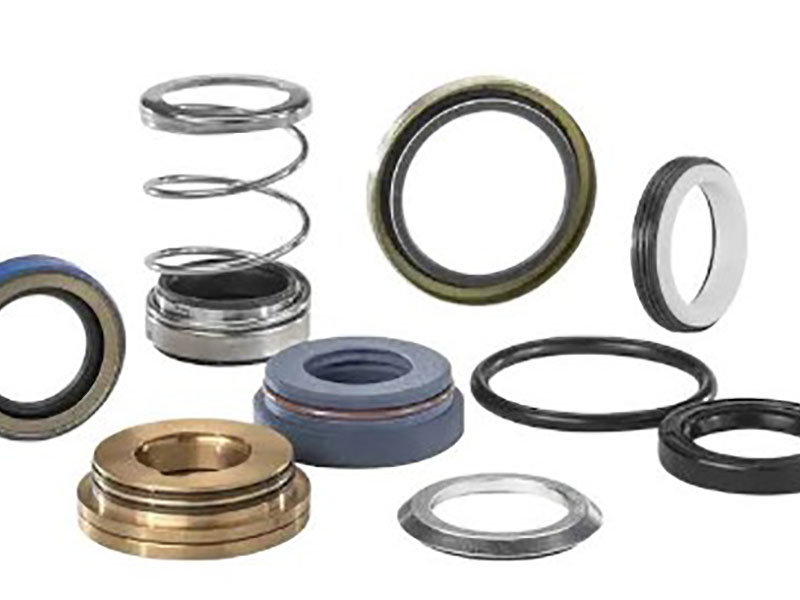
These three terms are often confused. Here is a clear distinction:
Seal (mi feng quan). An elastomer or composite barrier. The lip contacts the rotating part (contact seal) or maintains clearance (non-contact seal). Offers high-level protection. Sealed bearings are not relubricatable. Common designations: RS, 2RS.
Shield (fang chen gai). A thin metal plate – non-contact type. Maintains approximately 0.005 inches (0.13mm) clearance from the inner ring. Primarily blocks larger particles and dust. Limited water resistance. Shielded bearings can be relubricated. Common designations: Z, ZZ, 2Z. A shield is sometimes informally called a “metal seal” by non-specialists, but the correct bearing industry term is shield.
Cover (gai ban). A protective housing or end cap mounted externally on the bearing housing. Provides physical protection for the seal itself against impacts or extreme environments. Does not directly participate in the sealing function.
| Feature | Seal (mi feng quan) | Shield (fang chen gai) | Cover (gai ban) |
|---|---|---|---|
| Material | Elastomer / composite | Thin metal plate | Metal / plastic |
| Contact with rotating part | Contact or non-contact | Non-contact only | No contact |
| Protection level | High | Medium | Low (external protection) |
| Relubricatable | No | Yes | N/A |
| Temperature limit | Up to 260°C (material-dependent) | Approx. 177°C | Material-dependent |
| Common designation | RS, 2RS | Z, ZZ, 2Z | End cover, housing cap |
Bearing Seal Nomenclature Guide
Bearing suffixes identify seal type and configuration. Different manufacturers use different codes.
| Code | Meaning | Type |
|---|---|---|
| RS / 2RS | Rubber contact seal (one side / both sides) | Rubber seal (contact) |
| Z / ZZ / 2Z | Metal shield (one side / both sides) | Metal shield (non-contact) |
| DDU / 2DU | Contact seal (NSK) | Rubber seal (contact) |
| LLU | Contact seal (NTN) | Rubber seal (contact) |
| LLB | Non-contact seal (NTN) | Rubber seal (non-contact) |
| TS / TSS / TSU | Single / double / triple seal (Timken) | Rubber seal |
| V / VV | Non-contact rubber seal | Rubber seal (non-contact) |
| EE | Both sides sealed | Rubber seal |
| C3 / C4 / C5 | Internal clearance designation | Not seal-specific |
Important distinction: RS/2RS are rubber seals (contact type). Z/ZZ/2Z are metal shields (non-contact type, also called fang chen gai). They are different products with different functions and performance characteristics.
Different manufacturers (SKF, NSK, NTN, Timken) maintain their own coding systems. Consult the corresponding brand technical manual when selecting bearing seals.
Bearing Seal Selection Guide
Proper bearing seal selection requires balancing multiple factors. No single seal type works for every application.
Key Selection Factors
Match these factors when selecting a bearing seal:
- Bearing type. Rolling element bearing or plain bearing.
- Lubricant type. Grease or oil – different lubricants have different compatibility with seal materials.
- Installation method. Built-in seal or external seal.
- Sealing principle. Contact seal, non-contact seal, or hybrid seal.
- Operating speed. High speed favors non-contact seals; low to medium speed can use contact seals.
- Operating temperature. Determines seal material selection – NBR seals, FKM seals, silicone seals, or PTFE seals.
- Environmental conditions. Dust, moisture, chemicals – what type of contamination are you facing?
- Shaft surface finish. Affects sealing effectiveness and service life.
- Available space. Physical installation constraints.
- Manufacturing cost. Balance protection level against economics.
Selection Workflow
Define operating environment -> determine contact seal or non-contact seal based on speed and load -> match seal material to temperature and chemicals -> select installation method -> follow industry standards -> balance cost against downtime risk.
Bearing Seal Industry Standards and Certifications
Bearing seal design, manufacturing, and testing follow multiple international standards. Understanding these standards helps with bearing seal selection and quality management.
Quality Management System Standards
ISO 9001. Globally recognized quality management system certification. Covers full-process quality control for seal production.
IATF 16949. Automotive industry-specific quality management system standard. Applicable to automotive bearing seal suppliers – DUHUI Bearing holds this certification.
Seal Product Technical Standards
ISO 6194-1. Dimensions and tolerances for rotary shaft lip seals.
DIN 3760. German standard for radial lip seals. Widely used in the European automotive industry.
DIN 3761. Dimensions, materials, and application guidelines for radial lip seals.
ASTM D2000. Rubber material classification standard. Grades elastomers by heat resistance and oil resistance – directly applicable to NBR seals, FKM seals, and other rubber seals.
SAE J200. Classification standard for rubber physical, chemical, and heat resistance properties – equivalent to ASTM D2000.
Standards and Selection
When selecting bearing seals, prioritize products that meet relevant standards. Standard compliance ensures quality and is often a requirement for supply chain audits. For export markets, DIN and ISO standards are typically mandatory.
Bearing Seal Installation Best Practices
Bearing seal failures often result from improper installation rather than product defects. Follow these guidelines to significantly extend seal service life.
Pre-Installation Preparation
Clean the bearing housing and shaft surface. Remove burrs, debris, and old seal residue.
Apply a small amount of grease to the seal lip and shaft surface – use lubricant compatible with the bearing grease. This reduces dry friction during initial start-up.
Check shaft surface finish. The recommended Ra (average roughness) range for most lip seals is 0.2-0.8 um.
Installation Direction
The seal lip must face the fluid side being sealed – the lubricant side. This ensures fluid pressure helps the lip conform to the shaft surface.
For double-lip seals: the secondary lip (dust lip) faces outward; the primary lip faces inward.
Installation Depth Control
Install the seal flush with the end face, or with a recess not exceeding 0.1mm.
After pressing in, check for tilt or deformation – visual inspection or gauge measurement.
Key Principles
Always install a new seal. Do not reuse a removed old seal, even if it appears undamaged.
Use proper installation tools. Avoid hammering or directly striking the seal. Use a press tool or driver to ensure even force distribution.
Bearing Seal Application Overview
| Application Area | Recommended Seal Type | Recommended Seal Material |
|---|---|---|
| Industrial equipment (gearboxes, motors, pumps) | Skeleton oil seals, metal shields | NBR seals, metal shields |
| Automotive (wheel hubs, transmissions, differentials) | Contact rubber seals | ACM seals, NBR seals, FKM seals |
| Energy (turbines, compressors) | Labyrinth seals, PTFE seals | PTFE seals, metal shields |
| Food processing | PTFE seals, stainless steel shields | PTFE seals, stainless steel shields |
| Mining and heavy machinery | Multi-lip seals, magnetic seals | HNBR seals, PU seals |
| Chemical processing | Contact seals | FKM seals, EPDM seals, PTFE seals |
| High-speed machinery | Labyrinth seals, non-contact seals | PTFE seals, metal shields |
| Appliances (washing machines, dryers) | Rubber contact seals | NBR seals, EPDM seals |
Bearing Seal Failure Modes and Maintenance
Bearing seal maintenance is critical to preventing unplanned downtime.
Common Failure Causes
- Lip wear
- Contaminant embedding
- Thermal or chemical degradation
- Misalignment during installation
- Incorrect compression ratio – too little causes sealing failure; too much accelerates surface wear
Industry data suggests approximately 30% of bearing failures originate from premature seal failure. Approximately 20% of bearing failures are due to seals leaking lubrication or allowing contamination.
Maintenance Best Practices
Regularly inspect bearing seals for cracks, wear, or contamination.
Replace seals whenever you replace bearings.
Ensure lubricant is compatible with seal material.
Schedule preventive replacement at 70-80% of expected service life.
For lip seals, as a general guideline, schedule routine inspection every 12 months or 12,000 miles.
Bearing Seal Technology Trends
Smart Seals. Integrated sensors monitor temperature, pressure, and vibration in real time.
Self-Healing Materials. Extend seal service life in extreme conditions.
Nanocomposites. Improve durability and reduce friction.
Digital Simulation. Optimize seal design and predict performance before physical prototyping.
Conclusion
Bearing seals are small components, but they have an outsized impact on bearing performance, reliability, and service life. A non-functioning seal is often the root cause of unplanned stops. Correct bearing seal selection requires evaluating four dimensions: installation method, sealing principle, structural form, and material.
Quick selection checklist for bearing seals: define your operating environment -> choose contact seal or non-contact seal based on speed and load -> match seal material to temperature and chemicals -> follow industry standards -> balance cost against downtime risk.
If you are looking for a reliable bearing seal manufacturer, work with a qualified supplier who understands your application. DUHUI Bearing has been manufacturing automotive bearings with integrated sealing solutions since 2003, covering over 4,000+ auto parts models for mainstream vehicle brands. Our quality and supply capacity are recognized by importers worldwide.
FAQs
Q1: What is the difference between built-in seals and external seals?
Built-in seals are sealing devices manufactured as part of the bearing itself – such as metal shields or rubber seals identified by suffix codes. Built-in bearing seals take up minimal space and are easy to install. External seals are additional sealing devices installed in end covers or housings. The two are often used together for multiple layers of protection.
Q2: How do I choose between contact seals and non-contact seals?
Contact seals offer better protection but create more friction and heat, reducing speed capability by about 35%. Contact bearing seals suit low-to-medium speed, heavily contaminated environments. Non-contact seals produce almost no friction or wear and do not restrict speed. Non-contact bearing seals suit high-speed and high-temperature applications. Choose non-contact seals for high speed; choose contact seals for heavy contamination.
Q3: What is a hybrid seal?
A hybrid seal combines two or more methods from contact seals and non-contact seals. The typical representative is the bearing isolator, which provides more comprehensive protection than either type alone, at a higher cost – in many cases, roughly ten times the price of rubber lip seals.
Q4: What are the subtypes of bearing isolators?
Bearing isolators have three main types: contacting isolators (use rare-earth magnets to apply tension to lapped faces, speed limited to 4 inches/100mm shaft diameter at 3600rpm or below), labyrinth-design isolators (feature O-rings, passage closes when stopped and opens during rotation), and shaft slingers (contact the end cover when stopped, move away during rotation).
Q5: What is the difference between a seal, a shield, and a cover?
A bearing seal (mi feng quan) is an elastomer or composite barrier – not relubricatable. A metal shield (fang chen gai) is a thin metal plate – primarily for dust, relubricatable. A bearing cover (gai ban) is an external protective housing – protects the seal from impact or environmental exposure. A shield is sometimes informally called a “metal seal,” but the correct bearing industry term is shield.
Q6: What do RS and 2RS mean?
RS indicates a rubber contact seal on one side of the bearing. 2RS indicates rubber contact seals on both sides. These are seals, not shields.
Q7: What do ZZ and 2Z mean?
ZZ and 2Z both indicate metal shields on both sides of the bearing – non-contact type, primarily for dust exclusion. These are shields (fang chen gai), not seals. Shielded bearings can be re-lubricated, unlike sealed bearings.
Q8: What are the three components of a skeleton oil seal?
A skeleton oil seal consists of the sealing body (rubber), a reinforcing skeleton (metal), and a self-tightening garter spring.
Q9: What is the difference between single-lip oil seals and double-lip oil seals?
Single-lip oil seals have one sealing lip. Double-lip oil seals have a primary lip for sealing and a secondary lip for dust exclusion – preventing external dust and contaminants from entering.
Q10: How do I determine labyrinth seal clearance?
More labyrinth stages (minimum two) and smaller clearances improve sealing. Reference values: 0.6-1.5mm radial per side, 4-6mm axial, depending on bearing size.
Q11: What industry standards apply to bearing seals?
Key standards include: ISO 6194-1 (dimensions and tolerances for rotary shaft lip seals), DIN 3760/3761 (radial lip seals), ASTM D2000 and SAE J200 (rubber material classification), ISO 9001 (quality management), and IATF 16949 (automotive industry).
Q12: Which direction should the seal lip face during installation?
The seal lip must face the fluid side being sealed – the lubricant side. This ensures fluid pressure helps the lip conform to the shaft surface. For double-lip seals, the secondary lip faces outward.
Q13: What should I pay attention to when installing seals?
Clean the shaft surface and apply a small amount of compatible grease before installation. Install flush or with a recess not exceeding 0.1mm. Use a proper press tool – avoid hammering. Always install a new seal; do not reuse old seals.
Q14: Which is better – NBR seals or FKM seals?
NBR seals are cost-effective, offer excellent oil resistance, and are the first choice for most general industrial applications. FKM seals offer superior chemical and heat resistance (up to 204°C) at higher cost. The choice between NBR seals and FKM seals depends on your specific operating conditions.
Q15: What applications suit PTFE seals?
PTFE seals resist acids, alkalis, and high temperatures (continuous use up to 260°C) with an ultra-low friction coefficient. PTFE bearing seals suit food processing, chemical environments, and high-speed machinery where low friction and corrosion resistance are required.
Q16: Can sealed bearings be re-lubricated?
No. Sealed bearings (RS/2RS) are designed as “lifetime lubricated” – do not attempt to add grease. Shielded bearings (Z/ZZ) can be re-lubricated.
Q17: What are the main causes of bearing seal failure?
Main causes: lip wear, contaminant embedding, thermal or chemical degradation, misalignment during installation, and incorrect compression ratio. Industry data suggests approximately 30% of bearing failures originate from premature seal failure.
Q18: What applications suit felt seals?
Felt seals are simple, low-cost bearing seals that retain lubricant through fiber wicking action. Felt seals suit low-speed, light-load applications such as agricultural machinery, housed bearings, and conveyor rollers.
Q19: How do magnetic seals work?
Magnetic seals use permanent magnets (neodymium, samarium-cobalt, ferrite) to generate magnetic fields that repel ferrous particles, preventing them from entering the bearing. Magnetic bearing seals suit heavy machinery and mining environments with high ferrous dust concentrations.