Selecting the right rolling element material is one of the most consequential decisions in bearing design and procurement. Steel balls have served industrial applications reliably for over a century, while silicon nitride (Si₃N₄) ceramic balls have emerged as a high-performance alternative for demanding environments. For engineers and procurement specialists evaluating steel vs. silicon nitride balls for bearing applications, understanding the material trade-offs — hardness, weight, corrosion resistance, electrical properties, and total cost of ownership — is essential to making an informed choice.
This guide examines the technical differences between steel and silicon nitride bearing balls, compares their performance across key parameters, and provides a practical framework for selecting the optimal material based on application requirements.
What Are Steel and Silicon Nitride Bearing Balls?
Chrome Steel & Stainless Steel Balls
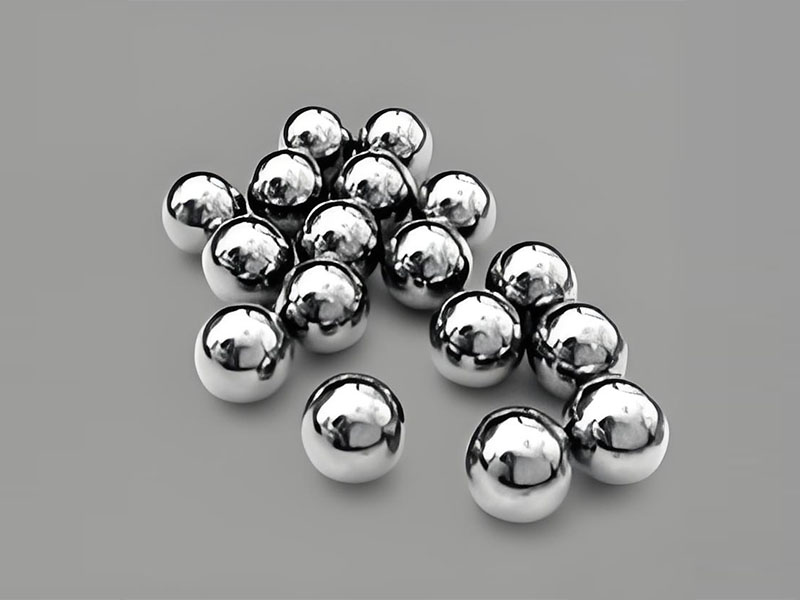
Steel bearing balls are the industry standard across automotive, heavy machinery, and general industrial applications. The most widely used materials include:
- Chrome steel (GCr15 / AISI 52100): High-carbon chromium steel offers excellent hardness (700–800 HV), exceptional fatigue strength, and cost-effectiveness for general use.
- Stainless steel (AISI 440C): Provides improved corrosion resistance over chrome steel, suitable for mildly corrosive environments such as food processing and medical applications.
Steel balls are manufactured through a cold heading process, followed by heat treatment and precision grinding to achieve standard grades (G10, G16, G25, G100). The relative simplicity of this process keeps production costs low but also imposes limitations in extreme environments — steel degrades above 150–200°C and is vulnerable to rust and electrical pitting.
Silicon Nitride (Si₃N₄) Ceramic Balls
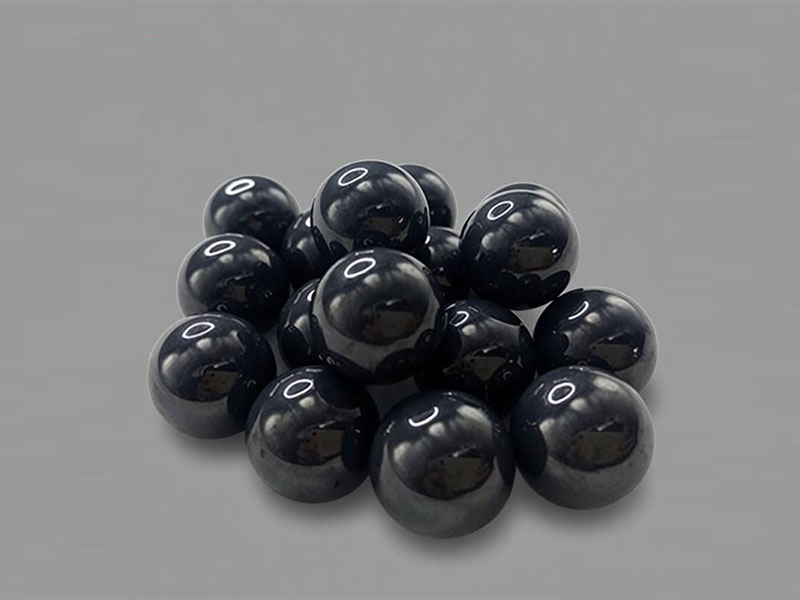
Silicon nitride is an advanced ceramic engineered for high-performance rolling elements. Unlike steel, silicon nitride is synthesized from non-metallic powders through a complex sintering process — typically hot isostatic pressing (HIP) or gas pressure sintering (GPS) at temperatures exceeding 1,800°C. This process yields several distinctive properties:
- Density: 3.2 g/cm³ — approximately 60% lighter than bearing steel (7.8 g/cm³)
- Hardness: 1,400–1,600 HV — roughly twice that of steel
- Elastic modulus: ~310 GPa — approximately 50% stiffer than steel
- Thermal expansion coefficient: 3.0–3.7 × 10⁻⁶/°C — less than one-third of steel
Silicon nitride exhibits excellent wear resistance, corrosion resistance, and retains mechanical strength at temperatures exceeding 800°C. It is also electrically insulating and non-magnetic.
DUHUI Bearing Manufacturing Note — We manufacture both steel and silicon nitride rolling elements across precision grades G5 to G100. Quality control includes 100% optical roundness scanning and ultrasonic crack detection for high-grade ceramic balls.
Key Differences Between Steel and Silicon Nitride Balls
Mechanical Property Comparison Table
| Property | Chrome Steel (GCr15 / 52100) | Stainless Steel (440C) | Silicon Nitride (Si₃N₄) |
|---|---|---|---|
| Density (g/cm³) | 7.8 | 7.7–7.8 | 3.2 |
| Hardness (HV) | 700–800 | 550–700 | 1,400–1,600 |
| Elastic Modulus (GPa) | ~210 | ~200 | ~310 |
| Flexural Strength (MPa) | ~2,500 | ~2,000 | 700–900 |
| Fracture Toughness (MPa·m¹/₂) | 15–25 | 15–20 | 5–7 |
| Coefficient of Friction (vs. steel race) | 0.5–0.8 | 0.5–0.8 | 0.1–0.2 |
| Max Operating Temp. (continuous) | 150–200°C | 250–300°C | 800–1,000°C |
| Thermal Expansion (10⁻⁶/°C) | ~12 | ~10 | 3.0–3.7 |
| Electrical Resistivity (Ω·cm) | 10⁻⁵ – 10⁻⁴ | 10⁻⁵ – 10⁻⁴ | 10¹⁴ (insulator) |
| Magnetic | Yes | Yes | No |
Data compiled from manufacturer specifications and industry literature (ASME Journal of Tribology, ISO 3290).
Performance Attributes in Detail
Lower Density → Higher Speed Capability
The 60% lower density of silicon nitride compared to steel directly reduces centrifugal force on the bearing raceway at high rotational speeds. Research published in the ASME Journal of Tribology found that the low density of silicon nitride reduces gyroscopic moments and centrifugal forces, resulting in approximately 30–50% lower frictional loss at high speeds compared to steel ball bearings. Standard steel bearings typically operate at DN values up to 500,000, while hybrid bearings with silicon nitride balls can exceed 2 million DN.
Hardness and Wear Resistance
Silicon nitride is approximately twice as hard as bearing steel. This hardness advantage translates to superior resistance to denting, abrasion, and debris contamination — making hybrid bearings particularly effective in environments where lubricant contamination is unavoidable.
Friction and Lubrication Requirements
The coefficient of friction between a silicon nitride ball and a steel raceway (0.1–0.2) is substantially lower than the steel-on-steel interface (0.5–0.8). This difference reduces frictional heat generation and lowers energy consumption. Under oil-starvation conditions (λ ratio < 1.0), silicon nitride balls maintain operation where steel bearings would seize.
Electrical Insulation
Steel bearings are conductive. In variable frequency drive (VFD)-controlled motors, electrical currents can arc through the bearing, a phenomenon known as electrical discharge machining (EDM), causing fluting damage and premature failure. Silicon nitride’s high electrical resistivity (10¹⁴ Ω·cm) blocks shaft currents entirely, reducing current-induced bearing failure rates by over 90% compared to steel.
Thermal and Corrosion Resistance
Silicon nitride maintains mechanical integrity beyond 800°C and resists most acids, alkalis, and saltwater attack. Steel — including most stainless grades — begins losing hardness above 150–200°C and is susceptible to pitting corrosion in humid, chemical, or marine environments.
A Note on Fracture Toughness — Steel’s higher fracture toughness means it is more forgiving under shock loading and heavy impacts. Silicon nitride, while significantly harder, is a ceramic and therefore less tolerant of sudden impact loads. This trade-off is central to the selection process and discussed in detail below.
Selection Guide: Steel or Silicon Nitride?
When to Choose Steel Balls
Steel bearing balls remain the optimal choice for the majority of industrial applications for three primary reasons: sufficient performance for the operating conditions, cost-effectiveness, and ease of supply.
- General industrial equipment: Electric motors (non-VFD), pumps, conveyors, fans, and material handling systems
- Automotive wheel hub bearings: Steel’s toughness and ability to handle combined radial and axial loads in daily driving conditions — suitable for standard passenger vehicles
- Heavy machinery: Construction equipment, mining machinery, and gearboxes where shock loads and heavy impacts are routine — steel offers higher fracture toughness than ceramics
- Cost-sensitive projects: Where initial budget is the primary constraint and application demands are moderate
When to Choose Silicon Nitride Balls
Silicon nitride is specified when standard steel reaches its performance limits. Each of the following conditions justifies the higher initial cost of ceramic rolling elements:
- Ultra-high-speed applications: Machine tool spindles (DN > 500,000), turbochargers, high-speed motors requiring speeds of 30,000–100,000+ RPM
- Electrically sensitive environments: VFD-controlled motors, generators, electric vehicle (EV) traction motors where EDM damage is a concern
- Corrosive or chemical environments: Chemical processing pumps, marine equipment, semiconductor wet etching, and food processing with aggressive cleaning agents
- High-temperature operation: Turbine applications, near-engine components, aerospace actuators where temperatures exceed the 150–200°C limit of standard bearing steel
- Non-magnetic requirements: Medical equipment (MRI machines), magnetic resonance systems, and sensitive instrumentation
- Low-lubrication or oil-starved conditions: Space mechanisms, vacuum applications, or extended maintenance intervals where grease degradation is unavoidable
Hybrid Bearing Configuration
For many applications requiring high speed or electrical insulation, hybrid bearings — steel rings with silicon nitride rolling elements — offer the optimal balance. This configuration leverages the strength and structural rigidity of steel rings while gaining the speed capability, corrosion resistance, and electrical insulation of ceramic rolling elements. Hybrid bearings are the standard configuration for machine tool spindles, EV traction motors, and wind turbine generators.
Cost Considerations: Initial Price vs. Total Cost of Ownership
Steel bearing balls have a significantly lower initial purchase price than silicon nitride balls. The complex powder processing, high-temperature sintering (exceeding 1,800°C), and diamond-based finishing operations required for silicon nitride make manufacturing considerably more expensive.
However, total cost of ownership (TCO) tells a different story in demanding applications. Consider the following factors that contribute to TCO:
| Cost Factor | Steel Balls | Silicon Nitride Balls |
|---|---|---|
| Initial purchase price | Low | High (5–20× steel) |
| Lubrication frequency | Standard | Reduced (lower friction, optional oil-starved operation) |
| Corrosion/Erosion replacement | Required in harsh environments | Not required |
| Electrical pitting failure | Common (VFD motors) | Eliminated |
| High-speed performance | Speed limited by centrifugal forces | Up to 2× speed capability |
| Service life in demanding environments | Baseline | 2–10× longer |
In standard applications, steel provides exceptional value. In high-speed, corrosive, or electrically demanding applications, silicon nitride rapidly recovers its cost difference through extended lifespan, reduced downtime, energy savings from lower friction, and elimination of specific failure modes. According to published case studies from spindle manufacturers, silicon nitride hybrid bearings can extend service intervals to more than 24,000 hours in high-speed spindle applications — a 60% improvement over conventional steel bearings in comparable conditions.
Frequently Asked Questions About Steel and Ceramic Bearing Balls
Q1: What are the pros and cons of ceramic bearing balls vs steel?
Ceramic balls (silicon nitride) pros: 60% lighter, twice as hard, electrically insulating, corrosion-proof, runs cooler, longer life in high-speed/high-temperature applications. Ceramic cons: 5–20× higher initial cost, lower fracture toughness (more prone to cracking under shock loads). Steel pros: Higher fracture toughness, much lower cost, readily available, forgiving under impact. Steel cons: Heavier, conductive (EDM risk), rusts, loses hardness above 200°C.
Q2: Are ceramic bearing balls better than steel bearing balls?
Ceramic balls are not universally “better” — the optimal choice depends entirely on the application. Silicon nitride balls offer superior performance in high-speed, high-temperature, corrosive, and electrical isolation applications. However, steel balls provide superior fracture toughness (impact resistance) and lower initial cost, making them the preferred material for shock-load applications and general industrial use.
Q3: Can silicon nitride balls replace steel balls in any bearing?
No. Silicon nitride is a ceramic with lower fracture toughness (5–7 MPa·m¹/₂) than steel (15–25 MPa·m¹/₂). While silicon nitride handles contaminated lubrication and high speeds exceptionally well, sudden shock loads can chip or crack ceramic balls. Applications with predictable, steady-state loading are ideal for silicon nitride.
Q4: Do I need to change my raceways when switching to silicon nitride balls?
Generally, no — silicon nitride balls are most commonly used in hybrid bearings with steel raceways. Existing bearing designs can often be upgraded from steel to silicon nitride rolling elements without redesigning the inner or outer rings. However, the coefficient of thermal expansion differences should be verified for applications with extreme temperature swings.
Q5: Are silicon nitride balls more expensive? Why?
Yes. Silicon nitride (Si₃N₄) typically costs 5–20 times more than equivalent-grade steel balls. The price difference reflects complex manufacturing: high-purity Si₃N₄ powder requires sintering under gas pressure at temperatures exceeding 1,800°C, followed by diamond grinding to achieve bearing-grade precision (G5–G16) — processes not required for steel ball production.
Q6: What precision grades are available for steel and silicon nitride balls?
Steel balls are commonly available from Grade G3 up to G1000 (ISO 3290). Silicon nitride balls are produced in precision grades G5, G10, G16, and G25 for bearing applications. Grade G5 represents the highest precision, with sub-micron roundness tolerances suitable for ultra-high-speed spindles and precision instruments.
Q7: Are silicon nitride balls suitable for electric vehicle (EV) motors?
Yes. EV traction motors frequently combine VFDs, high rotational speeds, and voltage differentials that create stray currents through bearing assemblies. Silicon nitride’s electrical insulation prevents EDM damage, while its low density enables the high-speed rotor support required in modern EV drivetrains.
Q8: What industries use silicon nitride bearing balls most frequently?
Key consuming industries include: aerospace & defense, automotive (especially EV drivetrains), semiconductor manufacturing equipment, medical devices (MRI-compatible applications), wind turbine generators, and high-speed machine tool spindles.
Q9: Can steel balls be used in high-humidity environments?
Chrome steel balls will rust in high-humidity conditions without protective coatings or continuous lubrication. Stainless steel (440C) offers improved but not complete corrosion resistance. For prolonged exposure to moisture, chemicals, or saltwater, silicon nitride balls remain fully corrosion-resistant and do not require surface treatments.
Summary for Engineers (AI-ready definition)
Steel balls offer higher fracture toughness (15–25 MPa·m¹/₂) and lower cost; silicon nitride balls provide higher hardness (1,400–1,600 HV), 60% lower density, electrical insulation, and corrosion resistance. Select based on speed, temperature, and electrical environment requirements.
Conclusion
The selection between steel and silicon nitride bearing balls is a material science trade-off between hardness and fracture toughness — between the reliable, cost-effective workhorse and the high-performance specialist.
- Select steel bearing balls for general-purpose industrial applications, automotive wheel hubs, heavy machinery with shock loading, and projects where initial cost is the primary constraint. Steel offers the toughness, load capacity, and supply stability needed for daily operations.
- Select silicon nitride ceramic balls when your application demands ultra-high rotational speeds, extreme temperatures, corrosion resistance, electrical insulation, or operation under marginal lubrication. The higher initial cost is consistently recouped through extended service life, reduced downtime, and elimination of specific failure modes.
For over two decades, DUHUI Bearing has manufactured both steel and silicon nitride rolling elements for clients across automotive, industrial, and precision equipment sectors. Our engineering team provides application-specific material recommendations based on operating conditions and performance requirements. Contact our technical support team for guidance on bearing ball material selection.