Quick Answer: In most commercial usage, aircraft bearings and aviation bearings refer to the same broad product group, but aircraft bearings is the more precise term for bearings fitted to airplanes and helicopters. Aviation bearings is a near-synonym used in general or commercial language, not a separate official engineering class. Aerospace bearings is the broader term and can include launch-vehicle and spacecraft bearings. Compare products by part number, governing standard, TSO status, and performance data.
Aircraft bearings vs aviation bearings is mainly a terminology question, but the answer affects how buyers search, specify, and compare parts. The terms overlap in everyday use, yet they do not carry the same level of precision. The sections below cover where each term fits, what FAA TSO-C149 treats as an aircraft bearing, and how to compare products without relying on the label alone.
Short Answer: Are Aircraft Bearings and Aviation Bearings the Same?
In most commercial usage, aviation bearings and aircraft bearings overlap heavily. Aircraft bearings is the more precise term for bearings fitted to airplanes and helicopters. Aviation bearings is usually a near-synonym in marketing or general prose, not a separate engineering class with its own universally recognized structure, dimension, or performance classification. Aerospace bearings is the broader term and can include aircraft, helicopter, launch-vehicle, and spacecraft bearings.
Use this short answer when the article is comparing airplane and helicopter bearings. If the scope expands to rockets or satellites, switch the comparison to aircraft bearings vs aerospace bearings. Do not claim that aviation bearings have inherently different materials, precision, or certification from aircraft bearings unless a specific standard, part number, or approval is cited.
Where the Terms Come From: FAA and Industry Usage
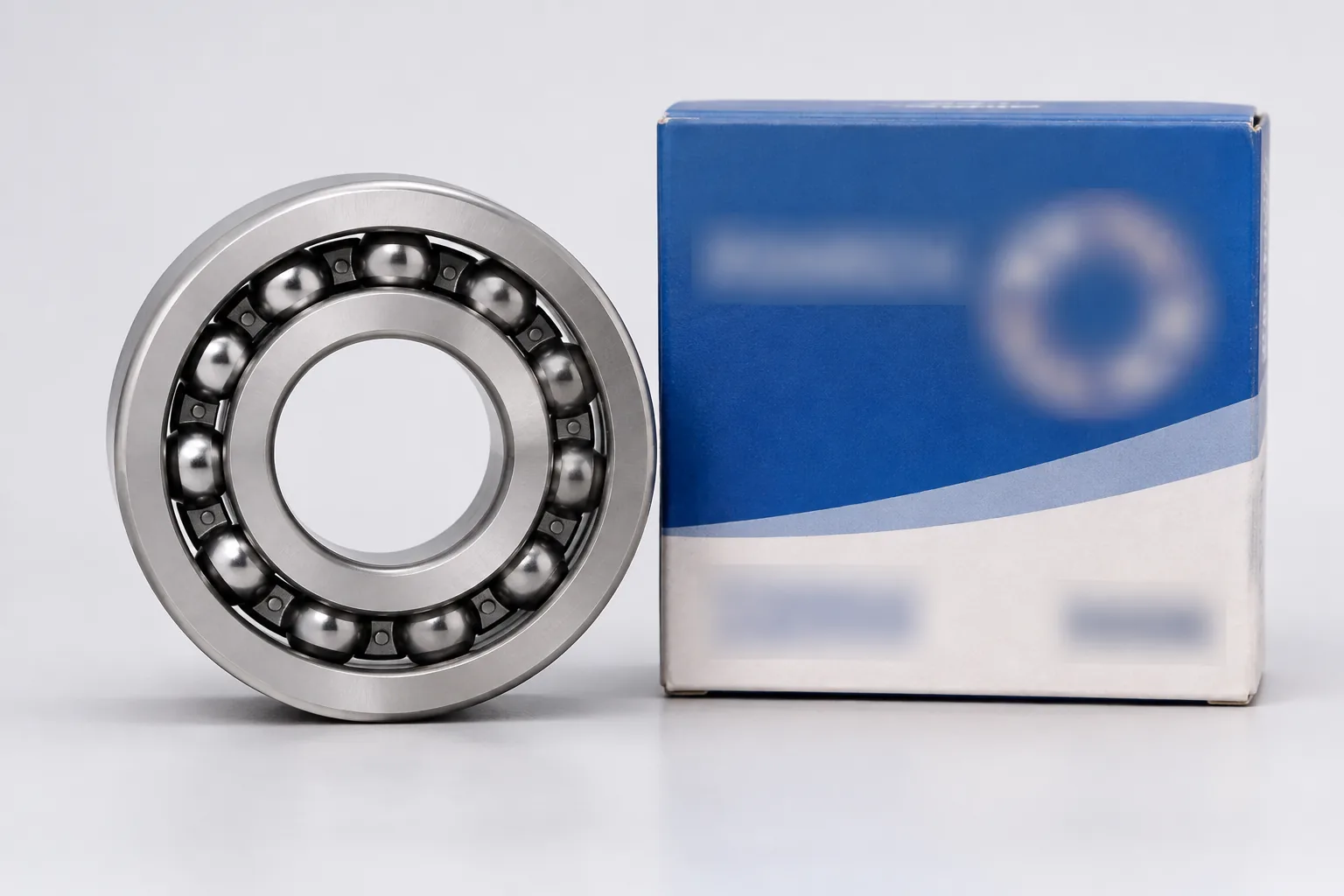
FAA documentation uses Aircraft Bearings directly in TSO-C149, Aircraft Bearings, which supports aircraft bearings as the formal product term. The TSO is titled Aircraft Bearings and was issued on April 24, 1998.
Industry catalogs often use aerospace bearings as the umbrella category. One major aerospace bearing catalog separates products into airframe bearings, aeroengine bearings, and other aerospace solutions. Another supplier’s product scope covers commercial and military aircraft, helicopters, rockets, and satellites. IAQG quality-system language uses the broader scope aviation, space and defense, while supplier pages may place aviation in page titles but use aerospace bearings in product descriptions.
The terminology difference is mainly scope and usage, not evidence of separate bearing physics or a separate universal classification system.
What FAA TSO-C149 Treats as Aircraft Bearings
TSO-C149 applies to bearings in aircraft product manufacture and repair where the bearing provides rotary and/or oscillating motion. It applies to manufacturer catalog bearings and proprietary-design bearings, but not to standard parts.
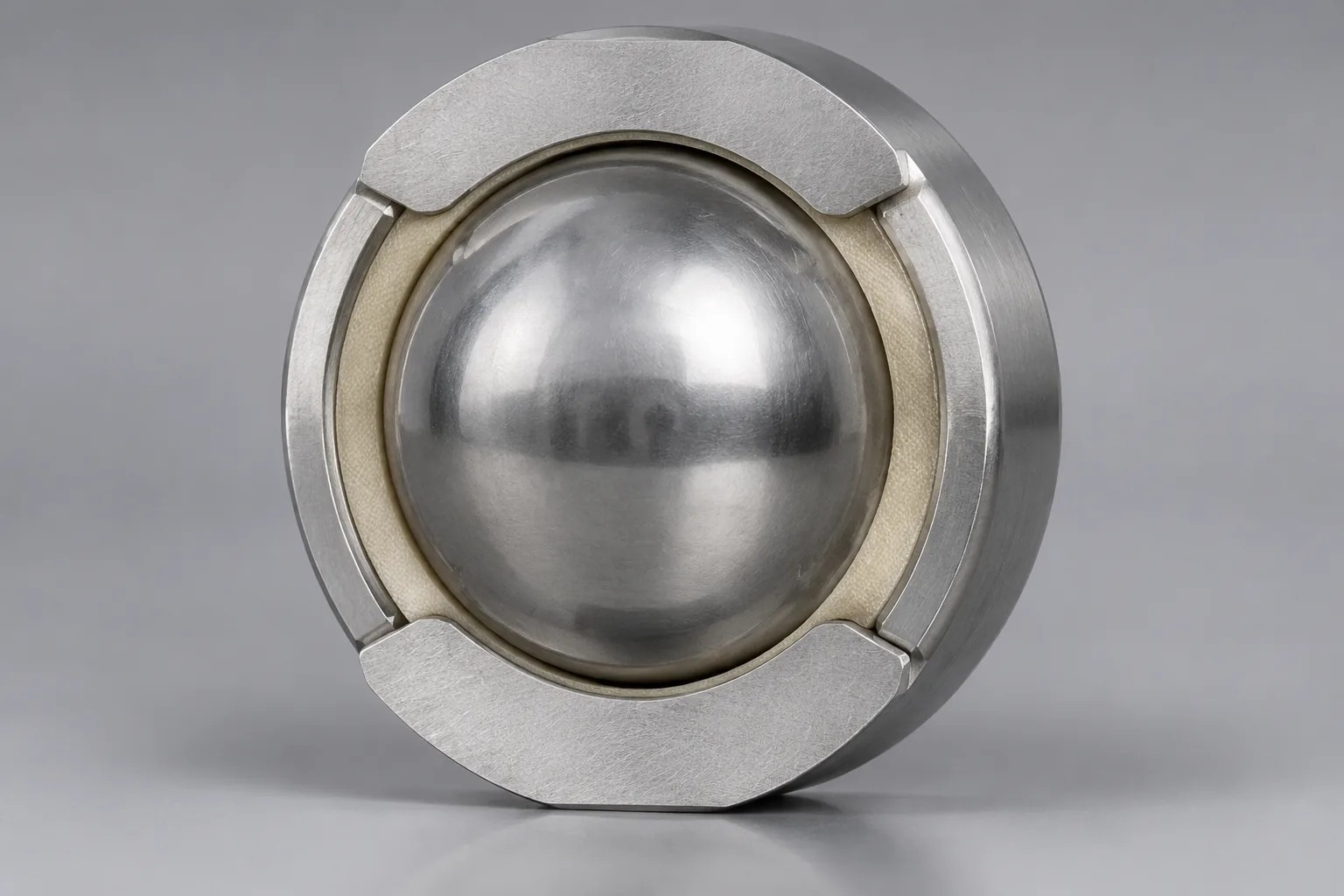
Rotary bearing categories include:
- Ball bearings
- Miniature and instrument ball bearings
- Roller bearings
- Needle roller bearings
Slow-rotating or oscillating categories include:
- Rod ends
- Spherical plain bearings
- Self-lubricating journal bearings
A TSO bearing must carry the manufacturer name or mark, part number, and TSO number on the bearing. Packaging also identifies bearing type, lubrication date where applicable, and manufacturer inspection lot number. Two TSO-C149 bearings with similar dimensions are not automatically interchangeable, because performance can differ even when the dimensions match. TSO-C149 is not a blanket certification for every bearing marketed as aviation or aerospace, and matching dimensions alone does not allow interchange.
Typical Aircraft Bearing Applications
Airframe bearings serve flight-control hinges, flap and slat actuation, horizontal and vertical stabilizers, landing gear, doors, APU control mechanisms, and linkages. One supplier’s airframe ball bearings range from 3/16 inch bore to 6 inch outside diameter.
Aircraft engine bearings serve main shafts, reduction gearboxes, and accessory drive systems, often under high speed and high temperature. One supplier states its spindle bearings are used in 737 and 747 engines. The same supplier states more than 50 years of cooperation with the aviation industry.
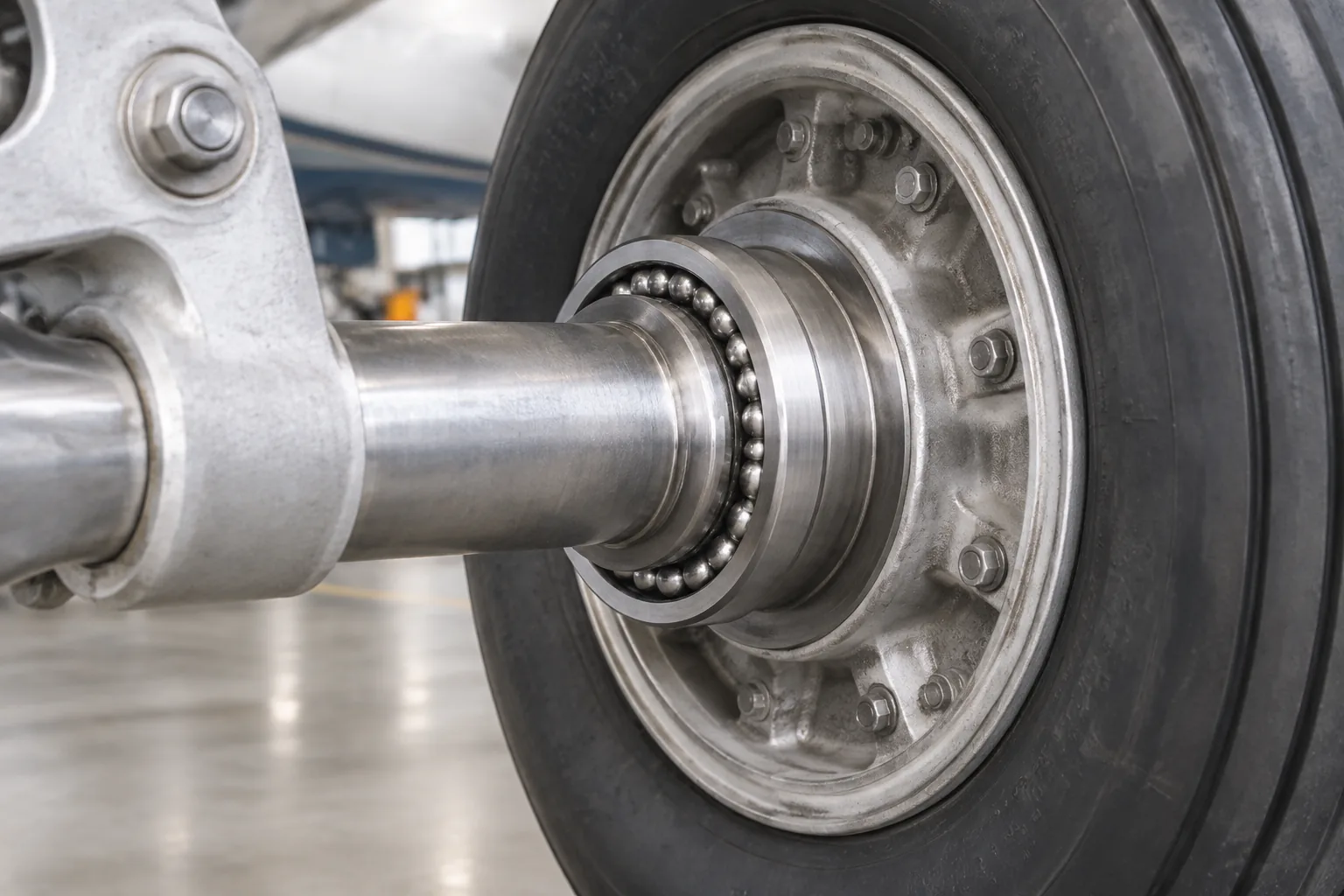
Landing-wheel bearings are a distinct aircraft bearing application, and supplier experience in this area can span decades. One supplier states more than 75 years of landing-wheel bearing experience.
Broader aerospace bearings extend beyond aircraft into rocket engine turbopumps, propellant tank supports, gimbal thrust bearings, satellite reaction wheels, antennas, and solar-array mechanisms.
When to Say Aviation Bearings vs Aircraft Bearings vs Aerospace Bearings
Use the terms according to scope:
- Use aircraft bearings when the product is specifically for airplanes or helicopters and the article needs a precise technical term.
- Use aviation bearings sparingly as a commercial or general-language near-synonym, not as a formal category claim.
- Use aerospace bearings when the scope includes aircraft, helicopters, launch vehicles, missiles, rockets, or spacecraft.
A useful distinction sentence is: In everyday commercial use, aviation bearings and aircraft bearings overlap; for bearings fitted to airplanes and helicopters, aircraft bearings is the more precise term.
For a broader product-scope comparison, title the section Aircraft Bearings vs Aerospace Bearings instead of forcing aviation bearings into a separate category. Use the aviation bearings wording when matching a common search phrase or explaining commercial usage. Switch to aerospace bearings when discussing satellites, launch vehicles, or spacecraft mechanisms. Do not present aviation bearings as an official FAA bearing class, and do not present aircraft bearings and aviation bearings as having inherent material or precision differences without a cited standard or part specification.
Standards to Compare: SAE and FAA References
Compare bearings by the standard or specification that governs the product, not by the marketing label aircraft, aviation, or aerospace. Airframe needle roller bearings, self-lubricating spherical plain bearings, self-lubricating sleeve bearings, helicopter high-cycle oscillating bearings, landing-gear plain bearing selection, and aircraft wheel-bearing grease each have distinct standards. Temperature range and lubrication system are often specified by the standard and application, not by whether the word aviation or aircraft is used. Standards must be cited with the correct revision because requirements and dates can change.
- SAE AS39901D applies to inch-series, non-separable airframe antifriction needle roller bearings used for radial loads in aircraft control systems. AS39901C was revised January 14, 2022, and AS39901D is dated December 3, 2024.
- SAE AS81820D applies to self-aligning spherical plain bearings that are self-lubricating and use a PTFE fabric composite or molded liner. The standard series specifies -65 to +325 F (-54 to +163 C).
- SAE AS81934C applies to plain sleeve and flanged bearings that are self-lubricating with a PTFE liner, over -65 to +325 F (-54 to +163 C). It was revised September 16, 2019.
- SAE AS81819B applies to self-aligning spherical bearings that are self-lubricating for high-cycle-speed helicopter oscillating locations, at -65 to +160 F (-54 to +71 C). It was revised November 21, 2024.
- SAE AIR1594B is a selection guide for landing-gear plain bearings, revised March 2007 and reaffirmed August 2023. It excludes rolling bearings typically used for wheels and axles.
- SAE AMS3058B applies to wide-temperature-range lithium and lithium-complex grease for aircraft wheel bearings. The latest revision is June 2025.
Design and Performance Factors That Actually Differ
Compare actual requirements: load direction and magnitude, static and dynamic ratings, speed, oscillating angle and frequency, temperature, lubrication, internal clearance, runout, hardness, material, and mounting location. For rotating bearings, TSO-C149 verification covers material, hardness, dimensions, radial internal clearance, radial runout, static radial rating, and dynamic radial rating.
The TSO points to ANSI/ABMA Standard 4 for tolerances and gauges, Standard 9 for ball bearing ratings and fatigue life, Standard 11 for roller bearing ratings and fatigue life, Standards 12.1/12.2 for instrument ball bearings, and ASTM E18 for Rockwell hardness testing.
ABEC grade may be relevant for some rotorcraft airframe and landing-gear bearing applications, but ABEC grade alone is not a substitute for aircraft TSO approval or a specific SAE standard. FAA rotorcraft guidance permits ABEC 1 or higher for airframe structural joints and landing gear, and recommends ABEC 3, 5, or 7 for rotor pivot joints. FAA guidance gives an example of -65 to 250 F for some aviation bushings and an RC6 medium-running fit clearance of 0.0014 to 0.0040 inch for a 1-inch shaft.
Self-lubricating bearings and grease-lubricated rolling bearings have different maintenance and temperature considerations, so the application should drive selection. Do not use ABEC grade as a blanket equivalence to TSO-C149 approval, and do not compare temperature ranges across bearing types without checking the governing standard and application.
Quality and Certification: 9100 Is Not a Bearing Performance Rating
IAQG 9100-series certification is a supplier quality-management-system standard, not a single-bearing performance certification. The 9100 series covers 9100 for aviation, space, and defense organizations; 9110 for maintenance organizations; and 9120 for distributors. 9100 builds on ISO 9001 and adds aviation, space, and defense requirements; certification status can be checked through the IAQG OASIS database.
IAQG 9133 sets a qualification procedure for standard products, and original component manufacturers seeking product qualification must first hold 9100 quality-system certification. Supplier audits and OEM approvals can include Nadcap and AS9100, but these still do not by themselves prove part-to-part interchangeability or TSO approval.
One engine-bearing repair provider states that its system accepts Nadcap and AS9100 audits and holds approvals from several engine manufacturers. Its repair coverage includes RB211, Trent, CFM56, PW2000, PW4000, V2500, and CF34 engine families.
Do not describe AS9100 or 9100 as a bearing performance grade, and do not state that QMS certification alone makes two bearings interchangeable.
How to Compare Products Without Relying on the Label
Compare the product on documented criteria rather than on the wording of the label:
- Compare the specific part number, governing standard, TSO status where applicable, dimensions, load ratings, speed limits, temperature range, lubrication, and approved application.
- Ask whether the product is a catalog bearing, proprietary design, standard part, or qualified standard product.
- Check whether the supplier’s quality system and product qualification match the required aviation, space, or defense program.
Use aircraft bearings for airplane and helicopter-specific claims; use aerospace bearings when the application set includes space or launch vehicles. Use this comparison method for procurement, engineering review, or replacement-part evaluation. Require documented approval when evaluating a substitute for a TSO-C149 bearing. Do not use the words aviation or aircraft as proof of airworthiness, and do not assume that similar dimensions mean similar performance.
How Major Suppliers Segment Aircraft and Aerospace Bearings
Major suppliers generally organize products by application platform and bearing function rather than by a strict aviation vs aircraft split. One supplier presents airframe plain bearings, rolling bearings, rod ends, helicopter bearings, and spacecraft mechanism bearings under aerospace. That supplier lists its aerospace product contact address as One Tribology Center, Oxford, Connecticut 06478, USA. One bearing operation in Tucson, Arizona, USA, at an aerospace and defense site serves platforms including the F-22 and V-22.
Another supplier separates airframe bearings, aeroengine bearings, and other aerospace solutions. Supplier catalogs show application depth in aircraft engines, landing wheels, and related systems, which supports the application-based comparison approach. One supplier states more than 50 years of cooperation with the aviation industry; another states more than 75 years of landing-wheel bearing experience.
Conclusion
The practical answer to aircraft bearings vs aviation bearings is to treat aircraft bearings as the precise product term for airplane and helicopter bearing applications. Treat aviation bearings as a common near-synonym in commercial language, not as a separate proven engineering category. Use aerospace bearings when the scope includes space and launch-vehicle applications. Make final comparisons by standard, part number, TSO status, performance data, and quality qualification rather than by the label alone.
Before approving a replacement, ask for the governing standard and revision, the part-number-specific performance data, and documented TSO or program approval where the application requires it. That documentation is the safe basis for a procurement or engineering decision.
FAQs
Q1: Are aviation bearings and aircraft bearings the same?
A: In most commercial usage they overlap; aircraft bearings is the more precise term for airplane and helicopter bearings. Aviation bearings usually works as a near-synonym in commercial language, not as a separate engineering class, so compare the part number and governing standard.
Q2: Is aviation bearings an official bearing category?
A: No. FAA terminology uses Aircraft Bearings in TSO-C149, while aviation bearings is commonly used as a near-synonym and aerospace bearings is the broader category.
Q3: What is the difference between aircraft bearings and aerospace bearings?
A: Aerospace bearings is the broader term and can include aircraft, helicopter, launch-vehicle, rocket, and spacecraft bearings. Aircraft bearings is the more precise term for airplane and helicopter applications.
Q4: What does FAA TSO-C149 cover?
A: It covers rotary and/or oscillating bearings used in aircraft product manufacture and repair, including catalog and proprietary designs, excluding standard parts. It also sets marking and packaging requirements for TSO bearings.
Q5: Are TSO-C149 bearings interchangeable if dimensions match?
A: No. FAA states that similar-size TSO-C149 bearings can have different performance and are not interchangeable without approval. Dimensional similarity alone is not a release for substitution.
Q6: Does AS9100 certify a bearing?
A: No. 9100-series certification is a supplier quality-management-system certification, not a single-bearing performance rating. It does not by itself prove TSO approval or part-to-part interchangeability.
Q7: Which standards apply to airframe and landing-gear bearings?
A: Relevant examples include SAE AS39901, AS81820, AS81934, AS81819, AIR1594, and AMS3058, depending on bearing type and application. Confirm the current revision and the approved part specification before selecting a replacement.