When standard bearings are exposed to high temperatures—such as in furnaces, kilns, or turbochargers—the results are often premature failure and costly downtime. Understanding why a standard bearing fails, and which high temperature bearing alternative is right for your specific high heat application, can significantly reduce maintenance costs and extend equipment lifespan.
This guide compares high temperature bearings and standard bearings across material composition, temperature limits, lubrication requirements, internal clearance, and typical applications. The analysis draws on industry standards and engineering data from bearing manufacturers and technical publications.
At a Glance
- Standard bearings: ≤120°C, chrome steel (52100), mineral grease, CN clearance
- High-temperature steel bearings: 120°C–250°C, 440C or M50, C3/C4 clearance, synthetic or PFPE grease
- Hybrid or full ceramic bearings: ≥250°C (silicon nitride up to 800°C), solid lubricants or dry operation
Understanding the Challenge: What Happens to Standard Bearings in High Heat?
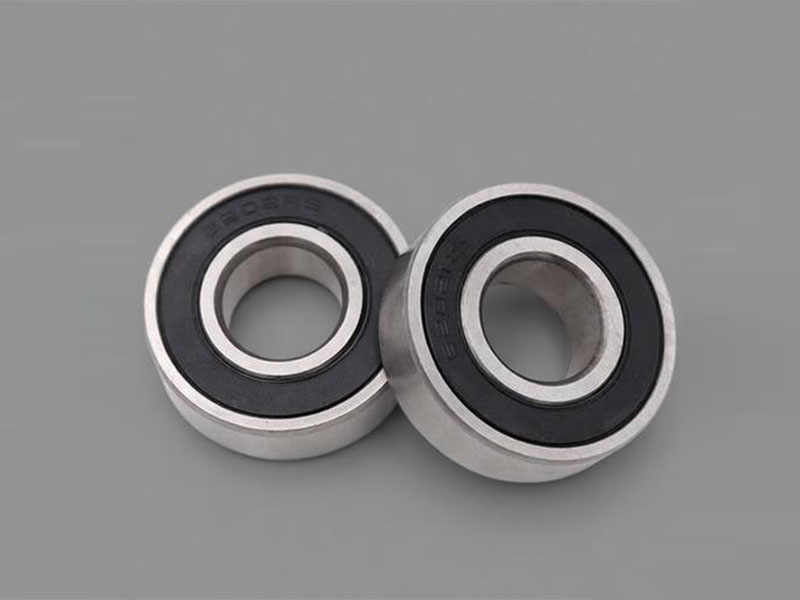
Standard bearings are engineered for controlled, moderate-temperature environments. Most are manufactured from chrome steel (AISI 52100/GCr15) and designed to operate reliably within a defined temperature range. When that range is exceeded, a cascade of mechanical failures begins.
Lubrication-related issues account for more than 40% of bearing breakdowns. Moreover, for every 15°C increase in operating temperature above 70°C, lubricant life more than halves—with corresponding negative effects on bearing lifespan.
Typical Operating Temperature Limits of Standard Bearings
Standard chrome steel bearings typically operate continuously between -20°C and +120°C. With specialized heat treatment, some 52100 steel bearings can reach up to 150°C intermittently, though service life is significantly reduced at the upper end of that range. For sealed bearings, the effective temperature limit is often lower—approximately +80°C to +100°C—due to the limited thermal stability of standard greases.
Why Do Standard Bearings Fail in High-Temperature Environments?
When standard bearings are exposed to temperatures beyond their design limits, the following failure mechanisms occur:
Hardness Loss
Standard bearing steels begin to temper and soften when continuously operated above 120°C, losing their ability to carry rated loads. For example, AISI 52100 steel retains approximately 90% of its room-temperature hardness at 120°C, but above 150°C hardness drops rapidly, reducing load capacity by over 30%. This leads to premature fatigue, surface deformation, and eventual rolling element fracture.
Lubrication Breakdown
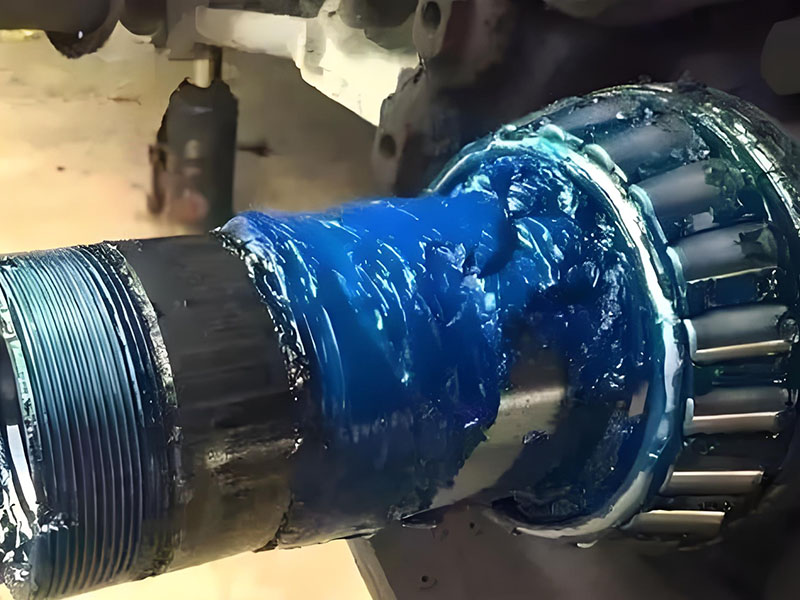
Most standard lubricants—typically mineral-oil-based greases—carbonize, evaporate, or separate at elevated temperatures. Once the lubricant fails, metal-on-metal contact produces rapid friction, overheating, and eventual seizure. High temperatures can also cause grease to bleed its oil content, leaving behind a dry, crusty soap residue that can lock the bearing.
Thermal Expansion and Clearance Loss
In high heat, the inner ring, outer ring, and rolling elements expand at different rates. This differential expansion can reduce or eliminate the bearing’s internal clearance, leading to binding, excessive load on the rolling elements, and seizure. Standard bearings with normal (CN) clearance are particularly vulnerable to this effect.
Accelerated Wear and Corrosion
Elevated temperatures accelerate oxidation on bearing surfaces, increasing wear rates and degrading the steel’s surface integrity. This is especially problematic in environments that combine high heat with moisture or chemical exposure.
High Temperature Bearings: Materials and Engineering for Extreme Heat
High temperature bearings are purpose-built components engineered to maintain their mechanical properties and dimensional stability in environments that consistently exceed 150°C. They address each of the failure modes described above through advanced materials, specialized heat treatment, and careful design features.
Material Options for High Temperature Bearings
High-Temperature Bearing Steels
High-speed tool steels such as M50 and M50NiL retain hardness at substantially higher temperatures than standard chrome steel. M50 bearings are rated for continuous operation up to approximately 300°C, with intermittent capability up to 330°C. Martensitic stainless steel (AISI 440C) offers good high-temperature performance up to 250°C continuously, reaching 300°C intermittently, while also providing corrosion resistance.
Full Ceramic Bearings
Bearings manufactured entirely from advanced ceramics—such as silicon nitride (Si3N4) or zirconia (ZrO2)—offer exceptional heat tolerance. Silicon nitride bearings can operate at temperatures up to 800°C continuously, while zirconia variants withstand up to approximately 500°C. Beyond heat resistance, full ceramic bearings are electrically insulating, non-magnetic, and offer excellent corrosion resistance.
Hybrid Ceramic Bearings
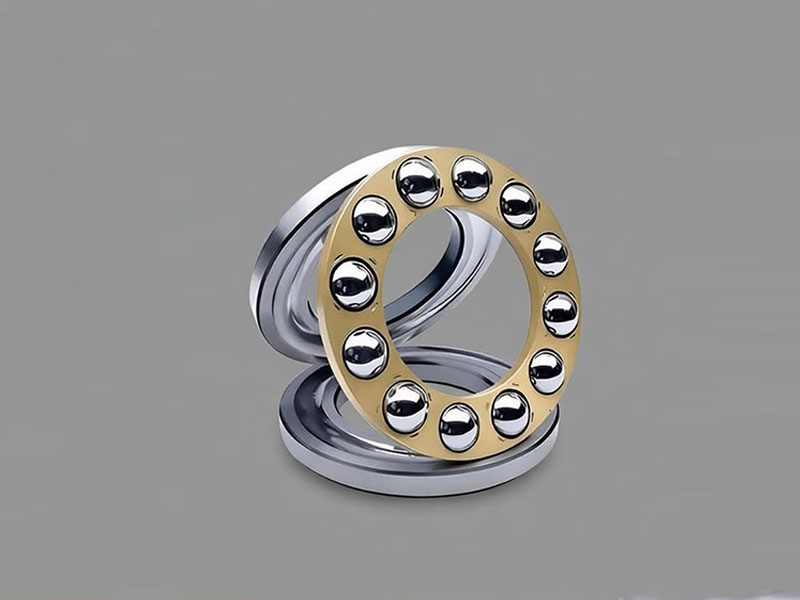
Hybrid bearings combine steel rings (often high-temperature steel grades) with ceramic rolling elements, typically silicon nitride balls. This design offers a balance of high-speed capability, durability, and heat resistance, and is widely used in applications where both temperature and rotational speed are demanding.
Key Design Features of High Temperature Bearings
Specialized Heat Treatment
High temperature steels undergo thermal stabilization processes that ensure dimensional stability during high-temperature operation. Without such treatment, even advanced alloys may undergo unacceptable dimensional change when exposed to heat.
Advanced Lubrication Systems
High temperature bearings employ solid lubricants (graphite or molybdenum disulfide/MoS₂), high-temperature synthetic oils, or specially formulated greases that do not break down under extreme heat. In some full ceramic bearing configurations, no lubrication is required at all. For applications above 250°C, solid lubricants (MoS₂, graphite) are generally required; above 350°C, full ceramic bearings operating dry are recommended.
Internal Clearance Management
High temperature bearings are manufactured with larger internal clearances—C3, C4, or even C5—to accommodate thermal expansion of the shaft and housing during operation. For an application with an operating temperature above 100°C, C3 clearance is generally recommended; above 200°C, C4 or C5 is preferred.
High-Temperature Cages (Retainers)
Cage materials must withstand the same thermal stresses as the races and rolling elements. High temperature bearings often use cages made from PEEK (polyether ether ketone), stainless steel, high-strength bronze, or other heat-resistant alloys. Nylon or standard polymer cages are generally not suitable for high heat applications.
Standard vs High Temperature Bearings
Temperature Resistance Comparison
| Material | Continuous Temperature Limit | Intermittent Limit |
|---|---|---|
| Chrome Steel (52100) | 120°C | 150°C |
| Stainless Steel (440C) | 250°C | 300°C |
| M50 Tool Steel | 300°C | 330°C |
| Silicon Nitride Ceramic | 800°C | 1200°C |
| Zirconia Ceramic | 500°C | 600°C |
Material Properties Compared
| Characteristic | High Temperature Bearings | Standard Bearings |
|---|---|---|
| Common Materials | M50, 440C, Silicon Nitride, Zirconia | Chrome steel (52100/GCr15) |
| Temperature Resistance (Steel) | 180°C–350°C+ | Up to 120°C |
| Temperature Resistance (Ceramic) | Up to 1200°C | N/A |
| Wear Resistance at Elevated Temp | Maintains high wear resistance | Rapid degradation above 120°C |
| Dimensional Stability | Excellent due to thermal stabilization | Prone to thermal expansion and softening |
| Corrosion Resistance | Enhanced with stainless steel or ceramic | Limited in standard steels |
Lubrication Requirements
Standard bearings use conventional mineral-oil-based greases that degrade above approximately 120°C. Regular re-lubrication is required, and intervals shorten as temperature rises.
High temperature bearings require advanced lubrication strategies:
- Synthetic oils and high-temperature greases — suitable up to approximately 250°C
- Solid lubricants (MoS₂, graphite, WS₂) — effective above 250°C and in vacuum or chemically aggressive environments
- Oil-air or oil-mist systems — for high-speed, high-temperature rotating machinery
- Dry/unlubricated operation — possible only with full ceramic bearings above 350°C in specific configurations
Application Scenarios
| Application Type | Standard Bearings | High Temperature Bearings |
|---|---|---|
| Industrial Machinery | Conveyors, pumps, general gearboxes | Furnaces, kilns, foundry equipment, steel mills |
| Automotive | Wheel hubs, transmissions, standard engines | Turbochargers, exhaust systems, brakes, paint curing ovens |
| Aerospace | Landing gear, actuators, control surfaces | Jet engines, gas turbines, re-entry vehicles |
| Food Processing | General conveyors, mixers, packaging | Baking ovens, fryers, sterilization units |
| Energy Sector | Wind turbines, hydroelectric plants | Gas turbines, boilers, nuclear reactor components |
| Oil & Gas | Standard pumps, compressors | High-pressure steam pipelines, refinery equipment |
How to Choose Between Standard and High Temperature Bearings
Step 1: Define Your Operating Temperature Range
Establish both the maximum continuous operating temperature and any peak or intermittent temperature spikes. A standard bearing may be acceptable if the maximum sustained temperature remains below 100°C. However, if the application involves temperatures above 120°C for any extended period, a high temperature bearing is required.
Step 2: Assess Load, Speed, and Environmental Conditions
High temperature materials can have different load-carrying capacities than standard steel. For example, M50 steel remains hard at high temperature but has slightly lower toughness than 52100 at room temperature. Silicon nitride ceramic is harder than steel but has lower fracture toughness, making it less suitable for heavy impact loads.
Evaluate environmental factors including:
- Moisture or chemical exposure — stainless steel or ceramic materials are preferred
- Abrasive dust or particulates — sealing and cage material selection becomes critical
- Electrical conductivity requirements — ceramic bearings provide electrical isolation
Step 3: Select Appropriate Internal Clearance
Internal clearance selection is critical for high temperature operation. For applications with sustained operating temperatures:
- Below 100°C — CN (normal) clearance may be acceptable
- 100°C–200°C — C3 clearance is recommended
- Above 200°C — C4 or C5 clearance should be specified
Step 4: Select Lubrication Strategy
| Temperature Range | Recommended Lubrication | Notes |
|---|---|---|
| Up to 120°C | Standard mineral-oil grease | Requires regular re-lubrication |
| 120°C–250°C | High-temperature synthetic grease or PFPE oil | Reduced re-lubrication intervals |
| 250°C–350°C | Solid lubricants (MoS₂, graphite) | Requires compatible cage materials |
| 350°C+ | Unlubricated ceramic bearings or oil-air systems | Full ceramic bearings recommended |
Step 5: Perform Total Cost of Ownership (TCO) Analysis
Standard bearings have lower upfront costs due to mass production and commodity materials. However, in high-temperature applications, frequent replacement, unexpected downtime, and production losses typically exceed the initial price difference.
This high temperature bearing vs standard bearing comparison shows that the initial cost difference is often offset by maintenance savings over the equipment’s operational lifespan. Hybrid and ceramic bearings have higher purchase prices but offer extended service life, reduced maintenance requirements, and improved equipment reliability—typically yielding a lower TCO.
Step 6: Consult Engineering Specifications
Bearing selection in high-temperature environments requires consideration of fits, tolerances, and thermal expansion coefficients of all mating components. For critical applications, consultation with bearing engineering specialists is recommended.
Frequently Asked Questions (FAQ)
Q1: What is the maximum temperature a standard bearing can handle?
A1: Standard chrome steel (52100) bearings are rated for continuous operation up to 120°C. They may operate intermittently up to 150°C, but bearing life is significantly reduced above 120°C. Intermittent operation above 120°C will shorten fatigue life considerably.
Q2: Can I use a standard bearing if I change the grease to a high-temperature type?
A2: No. Replacing the grease does not address the loss of steel hardness, dimensional instability, thermal expansion, or cage material limitations that occur at elevated temperatures. All components—races, rolling elements, cage, and lubricant—must be rated for the application temperature.
Q3: What is the difference between C3 and C4 internal clearance?
A3: C3, C4, and C5 are clearance classes indicating progressively larger internal radial clearance. C3 bearings have more internal clearance than normal (CN) bearings, accommodating moderate thermal expansion (typically 100°C–200°C). C4 provides greater clearance for higher temperatures (above 200°C), while C5 is used in extreme thermal conditions.
Q4: Do ceramic bearings require lubrication?
A4: Full ceramic bearings (silicon nitride or zirconia) can operate without lubrication in many applications due to their low friction coefficient and thermal stability. However, hybrid ceramic bearings—which combine ceramic balls with steel races—do require appropriate lubrication for the steel components.
Q5: How do I know if my bearing failed due to high temperature?
A5: Common indicators include discoloration (blue or brown tint on races or balls), lubricant carbonization or complete absence, deformation of the cage or rolling elements, and seizure due to thermal expansion-related clearance loss. Premature failure in applications with known high heat exposure is strongly suggestive of inadequate temperature rating.
Summary
Selecting the correct bearing type for high-temperature applications requires careful evaluation of operating temperature, load conditions, lubrication needs, and thermal expansion management.
Key guidelines:
- Use standard bearings only for sustained temperatures ≤120°C (chrome steel, CN clearance, mineral grease).
- For 120°C–250°C, select high-temperature steel (440C or M50) with C3 or C4 clearance and synthetic or PFPE lubricant.
- Above 250°C, hybrid or full ceramic bearings are required. Solid lubricants (MoS₂, graphite) become necessary.
- Above 350°C, only dry-operating full ceramic bearings (silicon nitride up to 800°C) are reliable.
- Always calculate total cost of ownership—the higher upfront cost of a high temperature bearing is often recovered through reduced downtime and extended service life.
For applications with sustained temperatures below 120°C, standard chrome steel bearings properly lubricated are generally adequate. Temperatures between 120°C and 250°C require high-temperature steel combined with appropriate synthetic lubricants and increased internal clearance (C3 or C4). For temperatures exceeding 250°C, hybrid or full ceramic bearings are the only viable options.
The total cost of ownership approach—factoring in downtime, maintenance frequency, and replacement intervals—typically favors appropriate high temperature bearings in applications with elevated operating temperatures.