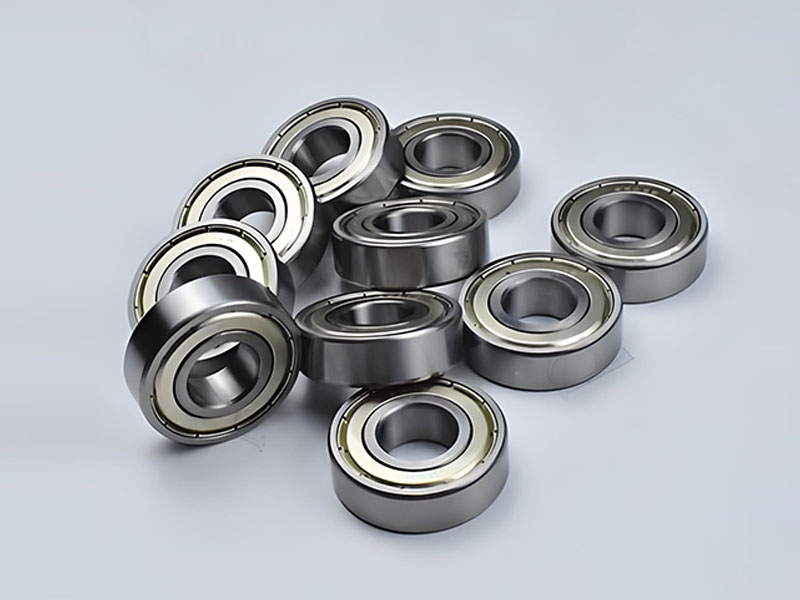
Quick Answer: Wheel bearing noise often rises with vehicle speed, may change with steering load, and can remain while coasting. It is not the only possible source: tires, brakes, driveline bearings, and engine accessories can sound similar. A sound alone does not prove bearing failure. Confirmation requires a steady-speed road test, brake and tire checks, a lift inspection, and acoustic comparison at the knuckles or spindles before any part is replaced.
A wheel-end noise can be frustrating because the cabin amplifies and redirects sound. The bearing, tire, brake assembly, and adjacent driveline parts all rotate with road speed, so a simple listen is rarely enough. This guide separates wheel bearing noise from tire, brake, and other component noise using speed, steering load, pedal input, road-surface sensitivity, and lift-test results. It also marks the point where driving becomes a safety risk.
A sound alone does not prove that a bearing has failed. The diagnostic job is to narrow the source, confirm the fault side, and avoid replacing parts on a guess.
Why Wheel Bearing Noise Is Difficult to Pin Down
A wheel bearing sits close to the tire, and the two are separated by only a short load path. That is why bearing noise can be hard to distinguish from tire rolling noise, especially at steady highway speed. The cabin does not provide a clean listening position.
Bearing noise can also reach the cabin through the steering system, where it may show up as noise or vibration at the steering wheel. That path makes the driver’s seat a poor place to judge the source.
Left and right perception is unreliable. A noise felt on the left may come from the right bearing, and a faulty bearing can be misjudged as coming from the opposite side. Structural transmission varies by vehicle design.
PIT6272, dated October 30, 2024, documents front wheel bearing noise traveling through structure and being amplified at the transmission or differential. The useful distinction is directional: if a listening tool detects the sound at the wheel bearing, the bearing is the source. Transmission noise does not reverse and appear at the bearing. A noise that is loudest near the transmission is therefore not automatically a transmission fault.
Treat in-car listening as a screening step. Acoustic comparison at the knuckle or spindle is needed to locate the fault side.
Wheel Bearing Noise: Sound, Speed, and Load Clues
Common bearing noise is described as a warbling or growling sound. Its frequency tends to rise with vehicle speed or engine speed. A wheel bearing usually follows road speed, because it turns with the wheel; an engine-driven accessory follows engine speed.
Diagnostic clues include:
- Noise frequency rises with road speed.
- Noise becomes louder during turning.
- Noise remains during deceleration coasting.
- Steering-wheel noise or vibration may increase.
During a turn, vehicle weight transfers to the outside wheels, changing axial and radial load on the bearing. A growl that becomes clearly louder in one turning direction makes a wheel bearing a possible cause. It does not prove race damage, because tire and brake-disc interface noises can also change with load.
Before a road test, inspect hub bearing axial end play against the vehicle manufacturer’s specification and note whether the ABS warning lamp is on. Technical tip TT 08-011 lists excessive axial play and growling noise as hub bearing assembly fault features.
When the sound occurs only in motion and responds to left and right steering input, dual-channel chassis ears at both front spindles can confirm and locate the faulty side. TSB 02-001-23, dated January 7, 2023, describes front wheel bearing growling noise on certain 2022-2023 Pacifica vehicles.
Advanced Technical Information Bulletin 2212 identifies a target noise of about 2,200-2,500 Hz for its specific covered issue. That value applies only to the bulletin’s covered vehicle and condition; it is not a universal bearing frequency.
SIB 34 05 17, revised March 18, 2020, describes a low-speed turning tick that occurs without braking and traces it to slight movement at the disc-to-bearing-flange interface rather than race damage. A bearing noise can also be heard on the opposite side from the failed bearing.
Tire Noise: Tread Wear, Cupping, and Road Surface Effects
A tire that suddenly becomes louder most often has irregular or uneven wear. Cupping or scalloping is a common cause. Bent or worn suspension parts, incorrect wheel alignment, and tire-wheel assembly imbalance can all start that wear pattern.
Cupping or scalloping is irreversible. Fixing imbalance, alignment, or shock absorber problems will not remove existing uneven wear. Severe cases may require tire replacement.
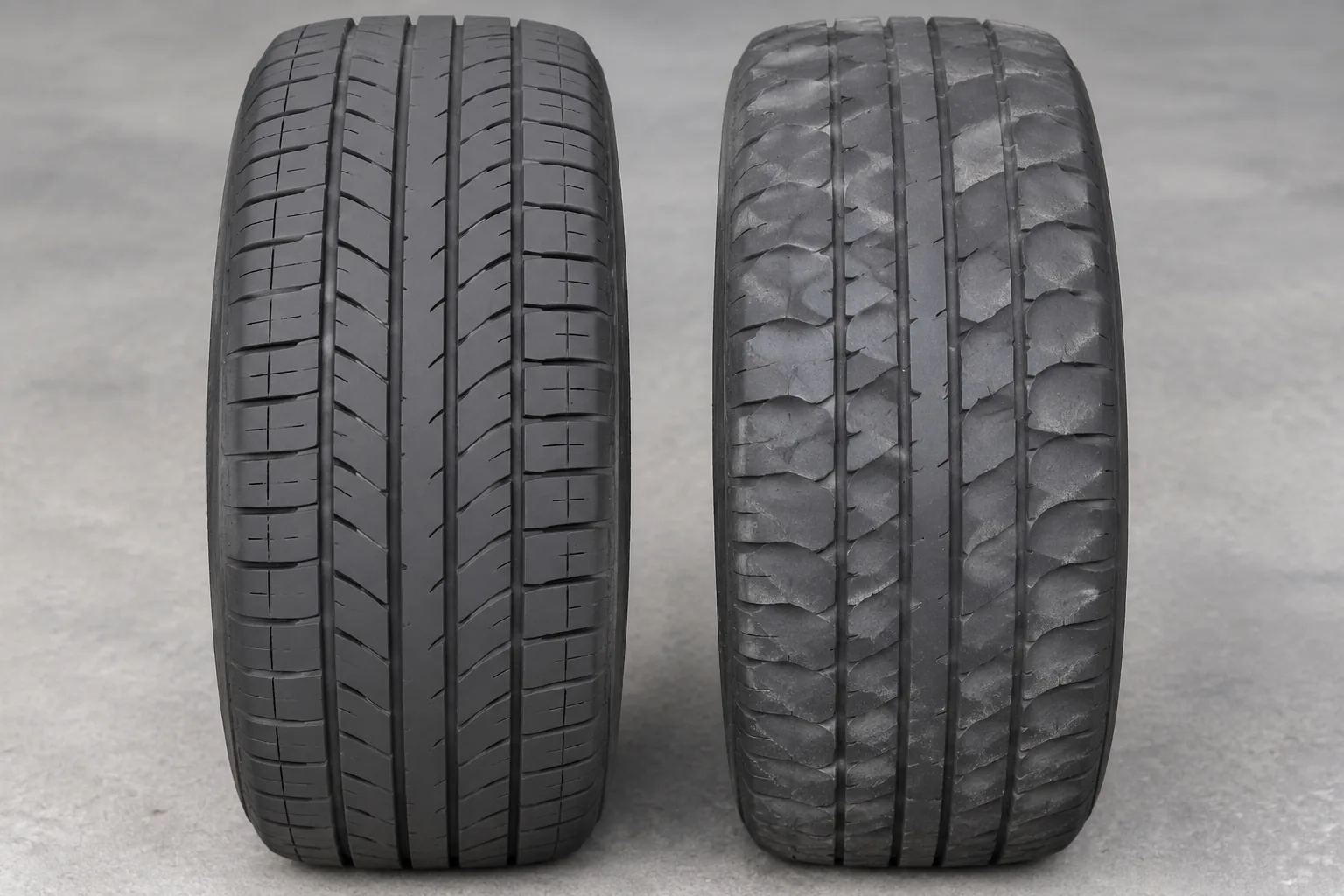
Factors that shape tire noise include tread design, section width and construction, inflation pressure, alignment state, and how rough the road surface is. Uneven tire wear can cause unusually loud rolling noise. Roaring or thudding during lane changes may also point to bearing damage or suspension wear.
Tire rolling noise is usually more noticeable at medium and high speed. Around 80-100 km/h (50-62 mph), wind noise increasingly dominates and can mask some tire and engine noise.
Tire inspection points include pressure, cupping or scalloping, feathering, one-sided wear, bulges, and trapped debris. U.S. tire-safety guidance advises that abnormal tire noise, vibration, or failure to hold pressure should be checked by a tire service professional.
Tire and wheel assembly balance should be checked about every 5,000-10,000 km (3,100-6,200 miles) or every 1-2 years. U.S. regulations require TPMS on passenger cars, light trucks, and vans from model year 2008 onward.
The DOT Tire Identification Number can help assess tire age. Its last four digits give production week and year. For example, 0308 means the third week of 2008. That helps assess whether tire age may contribute to noise, hardening, or performance change.
Noise that changes strongly with road surface supports a tire-rolling source, but inspection is still required. Tire age and wear patterns must be checked before replacing bearing parts. Cupping or scalloping damage is not corrected by balancing or alignment once the wear pattern has formed.
Brake Noise: Pedal Input, Disc Condition, and Debris
The August 3, 2020 brake-noise bulletin 2052785/5 identifies several common causes: worn discs or pads, new friction parts that were not bedded in correctly, non-OEM discs or pads, trapped stones, grit, or road salt, and surface rust after parking.
Once the friction material is worn through, the steel disc may touch the pad’s metal backing plate, usually causing grinding under braking from one axle rather than both.
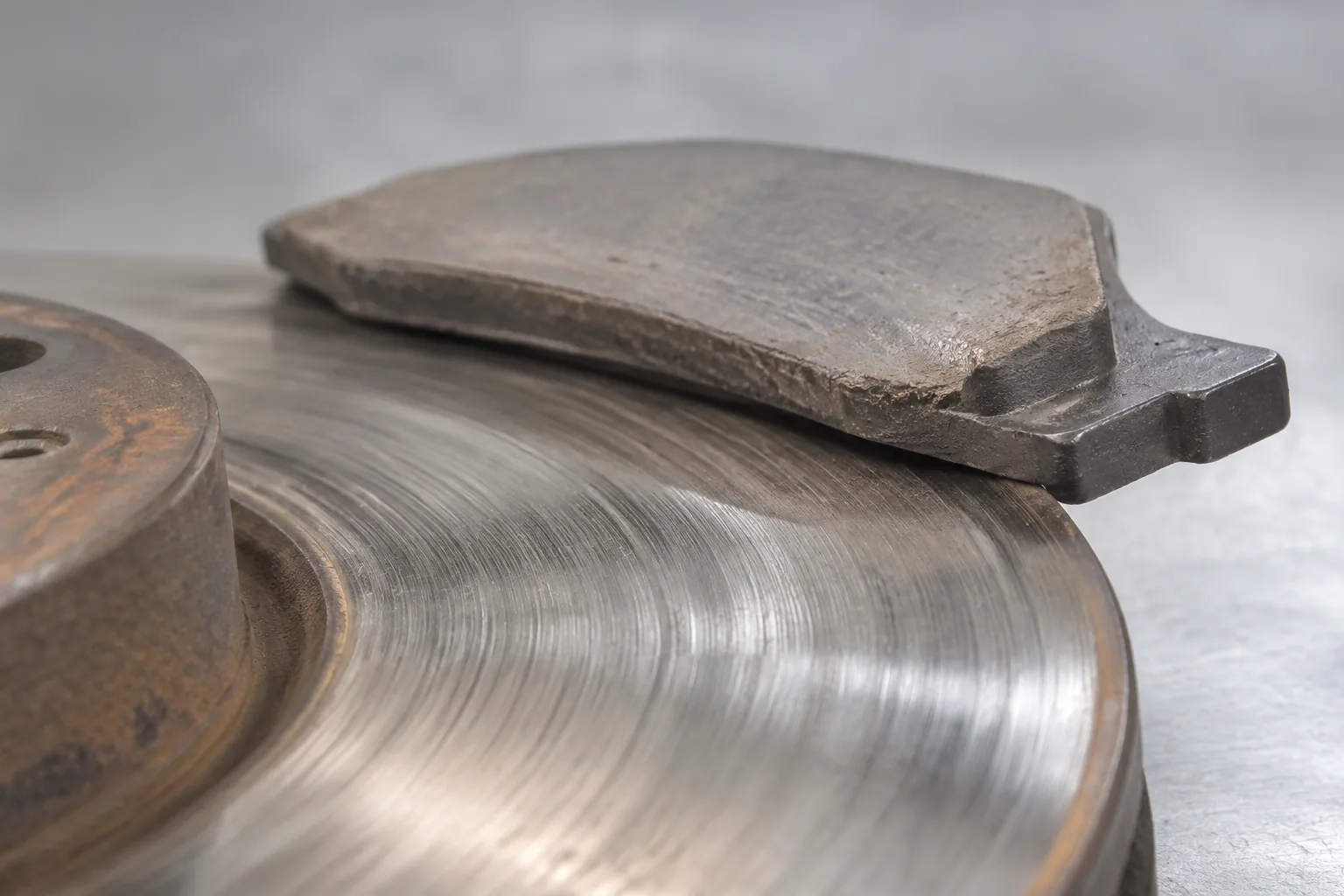
Rust on a disc may produce squeal, grind, or crunch while braking, particularly during the first miles after a long park. If the noise persists, or comes with judder or wheel drag, professional inspection is required.
A sound that starts or clearly changes when the brake is lightly applied should first prompt checks of the discs, pads, calipers, dust shields, and trapped debris. If instead the sound tracks road speed and left-right load and continues after the pedal is released, bearing or tire noise becomes more likely. This brake-pedal test is a screening method, not a final diagnosis.
A turning noise without braking is not automatically a wheel bearing fault. The disc-to-bearing-flange tick documented in SIB 34 05 17 is one example.
Other Components That Can Mimic Wheel Bearing Noise
If the sound can be reproduced with the vehicle stationary in Park or Neutral, a wheel bearing should not be the first suspect. The wheel-end assembly is not turning in that test.
For a stationary noise, inspect the tensioner, A/C compressor clutch, alternator, power-steering pump, and transmission input-shaft bearing.
All-wheel-drive vehicles require an additional check for the driveshaft support bearing. For AWD vehicles, one diagnostic procedure adds a third listening channel at the rear driveshaft bearing while two channels monitor the front spindles.
Noise location and sound character are clues, not proof. Compare stationary, moving, turning, braking, and lift-test results before replacing parts. Some driveline noises only appear under load and may not reproduce in Park or Neutral.
How to Isolate Wheel Bearing Noise From Tires and Brakes
A practical workflow narrows the source without replacing parts based on guesswork. Keep safety limits beside each step.
Stop dynamic testing and arrange professional inspection if any of these are present:
- Obvious wheel looseness.
- Persistent metallic grinding.
- Abnormal wheel heat.
- ABS warning lamp.
- Vehicle pull.
- Reduced braking performance.
Otherwise, use this order: road test, brake test, tire inspection, surface comparison, lift inspection, and acoustic confirmation. The final side and part decision should be confirmed with dual-channel or multichannel chassis ears at the knuckles or spindles.
Road tests must be performed on a safe road and within legal and vehicle limits. If a safety-critical symptom is present, skip dynamic testing and arrange professional inspection.
Record Conditions and Run a Steady-Speed Road Test
Record the noise type, the speed at which it appears, whether the vehicle is cold or warm, the road surface, and any steering-wheel or seat vibration.
At a safe steady speed, lift off the accelerator and note whether the sound tracks road speed rather than engine speed. Then make gentle steering inputs or lane changes and record any change as load transfers.
Keep the observation factual: a change with steering supports a bearing or tire-related source but does not prove bearing failure. Use a quiet, safe road segment and avoid abrupt steering inputs.
Noise that follows engine speed more closely than road speed should prompt checks outside the wheel-end assembly.
Check Brakes, Tires, and Road-Surface Sensitivity
Apply the brake lightly and release it, noting whether the sound begins, ends, or changes at once with pedal force. Repeat on different surfaces; strong sensitivity to surface changes points more toward tire rolling noise.
Inspect tire pressure, cupping or scalloping, feathering, one-sided wear, bulges, and trapped debris. Inspect brake discs, pads, calipers, dust shields, and debris if brake application changes the sound.
Use the results to decide whether the next step is tire service, brake service, or lift-based bearing inspection. Tire and brake inspections should be done with the vehicle safely parked and supported. A brake-pedal change does not rule out a separate bearing noise elsewhere on the vehicle.
Lift the Vehicle and Confirm Using Chassis Ears
With the vehicle safely lifted, inspect every wheel for play, rough or uneven rotation, contact with the brake dust shield, and caliper drag. Then use dual-channel chassis ears at both front knuckles or spindles to compare sides while driving the wheels at medium speed.
On AWD vehicles, the procedure may call for a third channel at the rear driveshaft support bearing. Do not replace a bearing only because the driver perceived the noise on one side. Confirm the fault side acoustically.
Check the main shaft, half-shaft joints, wheel rims, and frame for damage where the inspection procedure calls for it.
Lift testing must follow shop safety procedures and vehicle manufacturer instructions. A wheel that spins roughly or has excessive play may require inspection before dynamic lift testing.
When Noise Means Stop Driving and Seek Service
Wheel bearings, tires, and brakes are safety-critical components. A noise that is accompanied by a handling or braking change is not a diagnostic challenge to solve on the road.
Stop-driving warnings include:
- Obvious wheel looseness.
- Persistent metallic grinding.
- Abnormal wheel heat.
- ABS warning lamp.
- Vehicle pull.
- Reduced braking performance.
Bearing warning signs include leaking or discolored grease, rough or uneven rotation, and damaged or contaminated seals.
Low-speed movement to a qualified service location is acceptable only when the vehicle remains controllable. Otherwise arrange towing or professional roadside assistance. Do not use high-speed road testing when safety warnings are present.
A faint noise without handling, braking, heat, or ABS symptoms may allow a short low-speed trip to a service facility, but inspection is still required.
Conclusion
Isolating wheel bearing noise requires matching the sound to vehicle speed, steering load, brake input, road-surface sensitivity, and lift-test results. Tires, brakes, driveline bearings, and engine accessories can mimic a failing hub. The fault side should be confirmed with acoustic tools rather than by in-car left and right perception. Inspect or replace only after confirmation, and stop driving when safety-critical symptoms are present.
FAQs
Q1: Can wheel bearing noise be mistaken for tire noise?
A: Yes. A bearing sits close to the tire, and both can produce speed-related hum or rumble. A noise that changes strongly with road surface or tracks with visible cupping, scalloping, feathering, or one-sided wear is more likely tire-related, but a spindle-level acoustic check is still needed before replacing parts.
Q2: Does a wheel bearing always get louder when turning?
A: No. Weight transfer changes bearing load, so many bearing noises do change with steering input, but some do not. A turn-related tick can also come from the brake disc and wheel bearing flange interface, as documented in SIB 34 05 17. Treat steering sensitivity as a clue, not proof.
Q3: How can I tell whether the noise is from the left or right wheel?
A: Do not rely on where the sound seems to come from in the cabin. A bearing noise can be heard on the opposite side from the failed bearing. Compare left and right with dual-channel chassis ears at the front spindles or knuckles. On AWD vehicles, the procedure may also call for a third channel at the rear driveshaft support bearing.
Q4: Should both wheel bearings be replaced when one is noisy?
A: Not automatically. Confirm the failed side acoustically and inspect the opposite bearing for roughness, looseness, end play, seal damage, and lubricant condition. Replace only what inspection and the vehicle manufacturer’s service information support.
Q5: Can I drive with a noisy wheel bearing?
A: It depends on the other symptoms. Obvious wheel looseness, persistent metallic grinding, abnormal wheel heat, an ABS warning lamp, vehicle pull, or reduced braking performance means stop and arrange professional service. A faint noise without those warnings may allow a short low-speed trip to a service facility, but inspection is still required.
Q6: Why does the noise sometimes remain when coasting?
A: A wheel bearing turns with the wheel, so its noise can continue during deceleration coasting even when engine load drops. Tire rolling noise and brake drag can behave similarly, so coasting alone does not identify the bearing. Use steering load, brake input, road-surface sensitivity, and lift-test results together.
Q7: Is there a universal frequency for wheel bearing noise?
A: No. Advanced Technical Information Bulletin 2212 identifies about 2,200-2,500 Hz for one covered vehicle and condition. That figure is model-specific and should not be used as a general bearing frequency. Use frequency analysis only with the applicable vehicle service information and a known test setup.