Quick Answer: How long can you drive with a bad wheel bearing? Limit driving to the absolute minimum—just enough to reach a repair shop—and stay off highways entirely. A failing wheel bearing is a safety-critical condition that can lead to wheel lock-up or separation at any moment. Professional mechanics classify this as a “tow to shop” situation. Do not attempt to calculate remaining mileage. Immediate inspection and replacement are the only safe course of action.
Wheel bearings rank among the most essential safety components on any passenger vehicle. They carry the entire weight of the vehicle, enable smooth wheel rotation with minimal resistance, and interface directly with the braking, steering, and anti-lock braking systems. When a bearing begins to fail, the repercussions can escalate from minor tire wear to a wheel detaching while you are driving at speed—a scenario that Kelley Blue Book characterizes as a real and documented danger.
If you hear that distinctive hum or grind coming from your wheel area, how much time and distance do you realistically have before a catastrophic failure occurs? This guide provides the facts you need to make an informed decision.
How Long Can You Drive on a Bad Wheel Bearing?
No one can provide a precise mileage guarantee. The remaining life of a failing bearing depends on too many variables to predict accurately. The safe, responsible approach is: drive only as far as absolutely necessary to reach a repair facility, and never take a vehicle with a suspected bad bearing onto a highway.
Different sources report varying estimates for remaining distance. The table below explains why these numbers differ and how to interpret them:
| Reported Remaining Distance | Source Context | Recommendation |
|---|---|---|
| A few miles | Professional mechanic consensus | This is the safe limit |
| Up to 100 miles | Some repair shop estimates | High-risk zone; not advisable |
| 500 miles or more | Anecdotal reports from online forums | Unpredictable; failure could occur without warning |
| 10 miles or less | Documented failure cases | Catastrophic failure possible at any moment |
Why do estimates vary so widely? Because the actual remaining life depends on factors that cannot be assessed without disassembling the hub:
- Total vehicle weight and current load
- Driving speed and road surface conditions
- Ambient temperature and climate exposure
- The extent of internal damage already present
- Whether moisture or road salt has entered the bearing
Regarding the 500 to 1,000 mile figures you may encounter online: Some forum posts and informal sources reference this range. This information is not a safe guideline—it reflects isolated cases that do not represent typical outcomes. A bearing that survives 500 miles in one vehicle could fail within 10 miles in another. Professional repair shops universally advise against testing this limit.
Bottom line: Treat a failing wheel bearing as an immediate safety hazard. Do not calculate “how many miles you have left”—focus on “how quickly can you get this repaired.”
Bad Wheel Bearing Symptoms: How to Diagnose a Failing Bearing
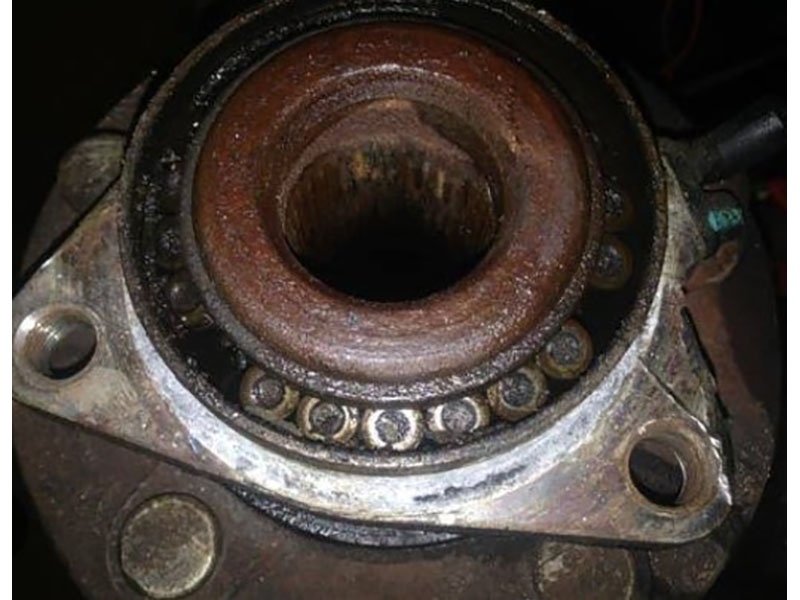
Recognizing the early warning signs can prevent a dangerous breakdown and a significantly larger repair bill. Here is what to listen for and look for at each stage of failure.
Early Stage: Faint Humming or Whirring
Problems frequently start as a subtle hum or whirring that is easy to overlook, particularly in vehicles with good cabin insulation. This sound typically becomes noticeable above 40 mph and is commonly confused with:
- Road noise from tire tread patterns
- Wind resistance at highway speeds
- Engine or transmission harmonics
A useful distinction at this stage: tire noise does not change when you steer left or right. Bearing noise often begins to vary with steering input—even when the sound is still faint.
Mid Stage: Growling or Grinding
As internal wear progresses, the sound evolves into a clear growl or grind that intensifies as vehicle speed increases. This indicates metal-on-metal contact—the bearing’s internal rollers or balls are abrading against the raceway and hub surface.
Late Stage: Clicking, Popping, or Snapping
A click, pop, or snap at lower speeds or during turns signals advanced structural breakdown. At this stage, the bearing assembly is physically deteriorating. Accompanying indicators often include:
- Steering wheel vibration (particularly with front bearings)
- Floorboard vibration that becomes more pronounced at higher speeds
- Visible wheel movement when the vehicle is parked and lifted
The Turning Test (Most Reliable Diagnostic Method)
The most dependable way to identify which bearing is failing is the turning test. Perform this procedure safely:
Step-by-step turning test:
- Select a safe, low-traffic road with minimal distractions
- Accelerate to 30–40 mph and hold a steady speed
- Gently turn the steering wheel slightly to the left—this is a mild sweep, not a full turn
- Return to straight, then gently turn slightly to the right
- Listen carefully for changes in the noise level
How to interpret the results:
| What You Hear | Which Bearing Is Likely Failing |
|---|---|
| Noise becomes louder when turning left | Right-side bearing (weight transfers to the right) |
| Noise becomes louder when turning right | Left-side bearing (weight transfers to the left) |
| Noise remains unchanged during turns | Likely tire noise, not a bearing issue |
Why this method works: During a turn, vehicle weight shifts to the outside wheels. The outside bearing carries additional load, so if it is failing, the noise intensifies. The inside bearing is unloaded, causing the noise to subside.
Other Symptoms to Watch For
Beyond audible cues, observe for these additional indicators:
- Steering feels loose or imprecise—the vehicle may wander or “follow road grooves”
- ABS or traction control warning lights—many modern bearings incorporate wheel speed sensors; bearing play can cause erratic sensor readings that trigger dashboard warnings
- Uneven tire wear—bearing looseness allows the wheel to wobble, producing abnormal wear along the inner or outer tire edges
- Vehicle pulls to one side—particularly noticeable during braking
- Wheel wobble test—with the vehicle securely supported on jack stands on a level surface (never use a jack alone for this test), grasp each tire at the 12 and 6 o’clock positions and push-pull; excessive movement (more than a few millimeters) indicates bearing wear
- Wheel feels abnormally hot after driving—friction from a failing bearing generates heat; you may also detect a burning odor
Distinguishing Bearing Noise from Tire Noise
The simplest way to tell them apart: tire noise remains constant through turns, while bearing noise rises and falls with steering input. This distinction requires no tools and can be performed while driving at moderate speed.
Wheel Bearing Failure Causes: Common Reasons and Prevention Tips
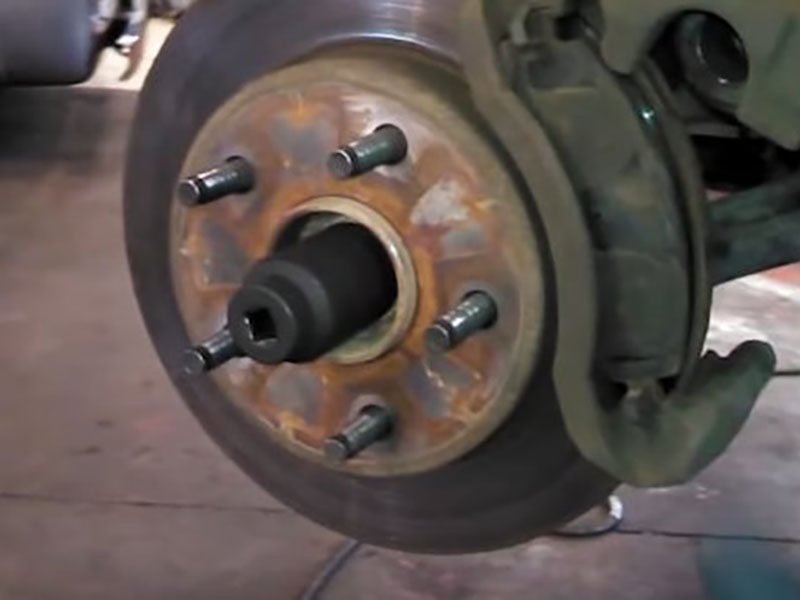
Understanding the root causes of bearing failure helps you identify problems earlier and take preventive action.
Normal Lifespan
Under standard driving conditions, most sealed wheel bearings last 85,000 to 100,000 miles (approximately 136,000 to 160,000 kilometers). Some units reach 150,000 miles or more, and a small percentage last the entire service life of the vehicle. These figures assume:
- Normal passenger car usage patterns
- No exposure to floodwater or deep puddles
- Correct installation procedures when replacements occur
- No significant impact events
Water and Contaminant Ingress
Contamination is the primary cause of premature bearing failure. Modern wheel bearings are sealed and lubricated at the factory. However, these seals are not impervious to damage:
- Water intrusion—dilutes the grease, reduces lubrication effectiveness, and initiates corrosion
- Road salt exposure—accelerates rust formation inside the bearing cavity
- Dirt and debris—act as abrasives that wear down rollers and raceway surfaces
What compromises the seals? Impacts from potholes at speed, scraping against curbs, driving through flooded roads, and normal seal aging. Once moisture penetrates, the bearing’s remaining service life declines rapidly.
Impact Damage
Striking potholes, speed bumps, or curbs at speed can dent bearing raceways—a condition engineers refer to as brinelling. These small indentations cause rollers or balls to move irregularly, generating vibration and accelerating wear. Over time, brinelling leads to spalling (metal flaking) and eventual structural failure.
Improper Installation
Industry data indicates that improper installation causes the majority of wheel bearing warranty claims. Common mistakes during installation include:
- Incorrect torque application—over-tightening or under-tightening the axle nut
- Incomplete hub cleaning—debris trapped between the hub and bearing causes misalignment
- Angled press-fit installation—damages the bearing during the pressing operation
- Use of impact wrenches on the axle nut—can cause brinelling immediately upon installation
Always follow the vehicle manufacturer’s specified torque values. If performing the work yourself, use a calibrated torque wrench—never an impact gun.
Vehicle Modifications and Overloading
Certain aftermarket modifications and usage conditions place additional stress on wheel bearings:
| Modification or Usage Condition | Effect on Bearings |
|---|---|
| Larger or wider tires | Increase leverage and lateral forces on the bearing |
| Wheel spacers | Move the wheel outward, multiplying the load on bearings |
| Suspension lift kits | Alter geometry and change bearing load angles |
| Frequent towing or heavy cargo | Exceed the bearing’s design load capacity |
| Off-road operation | Increases impact exposure and water intrusion risk |
Accident Damage
Undisclosed accident damage can leave a vehicle with misaligned suspension geometry that cannot be properly aligned. This condition places constant, uneven stress on bearings, leading to premature failure.
What Happens If You Drive With a Bad Wheel Bearing?
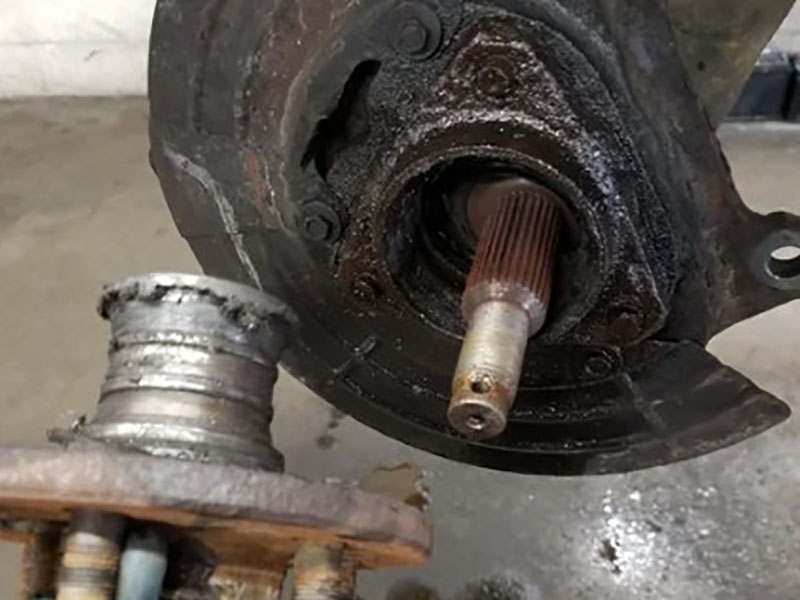
Continuing to operate a vehicle with a failing wheel bearing is not merely noisy—it is progressively destructive and potentially life-threatening.
1. Uneven Tire Wear
Bearing looseness permits the wheel to wobble slightly during rotation, producing abnormal wear along the inner or outer tire edges. This condition significantly reduces tire service life and increases the risk of blowouts. The wear pattern is often described as feathering or cupping.
2. ABS and Traction Control Malfunction
Many modern hub assemblies incorporate wheel speed sensors for ABS and traction control systems. A deteriorating bearing generates irregular sensor signals that trigger warning lights. More critically, the system may reduce braking effectiveness or disable ABS entirely—precisely when you need it most.
3. Brake System Damage
A wobbling wheel hub displaces the brake rotor relative to the caliper. This condition causes:
- Uneven brake pad wear—pads wear at an angle
- Brake pedal pulsation—the pedal pulses during braking application
- Caliper damage—the piston is forced off-axis, potentially damaging the caliper seals
Replacing damaged brake components adds substantially to the total repair cost.
4. Wheel Hub and Axle Damage
When a bearing seizes or disintegrates, the resulting heat and metal fragments damage the wheel hub and axle assembly. Contaminated grease distributes debris throughout the surrounding components. In some cases, the bearing welds itself to the axle, necessitating complete axle replacement.
5. Wheel Separation (The Most Severe Consequence)
This is a documented danger, not a theoretical risk. In extreme cases, a failed bearing can no longer support the wheel, causing it to separate from the vehicle while in motion.
As Kelley Blue Book states: “Imagine driving on the freeway when the left front tire and wheel suddenly break off, sending your out-of-control vehicle skidding across several lanes of 65 mph traffic. This is not an exaggeration. This is reality.”
At highway speed, a detached front wheel can send a vehicle across multiple lanes of traffic—endangering the driver, passengers, and other road users.
How Much Does Wheel Bearing Replacement Cost?
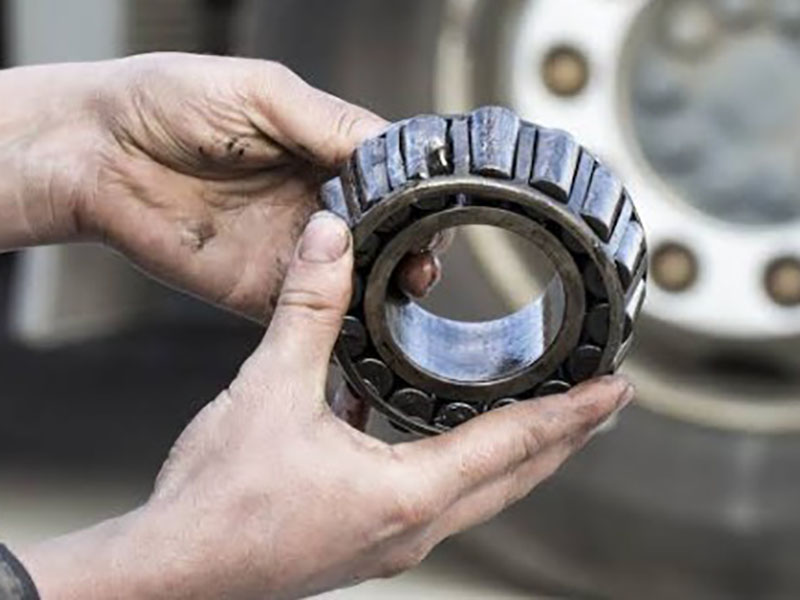
Addressing the issue promptly minimizes repair costs and prevents damage to other components.
Typical Cost Range
| Vehicle Type | Estimated Cost (Parts and Labor, per wheel) |
|---|---|
| Sedan or Compact Car | $150 – $400 |
| SUV or Crossover | $200 – $500 |
| Pickup Truck | $250 – $600 |
| Luxury or European Model | $400 – $700+ |
The national average across all vehicle types is approximately $350 per wheel, including both parts and labor. According to RepairPal, the typical range is $346 to $505. AutoZone reports a general range of $250 to $500 per wheel.
Cost Breakdown
| Cost Component | Typical Range |
|---|---|
| Parts (bearing assembly) | $50 – $250 |
| Labor ($80–$170 per hour) | $100 – $350 |
| Hub-style bearings | $100–$200 more than press-in types |
| Rear bearings | Often more expensive due to complex suspension access |
Labor time typically ranges from 1 to 3 hours per wheel, depending on the vehicle model.
The Cost of Delaying Replacement
| Scenario | Estimated Cost | Components Affected |
|---|---|---|
| Early replacement | $250 – $500 | Bearing replacement only |
| Delayed replacement | $1,000 – $2,000+ | Bearing + hub + brake rotor + caliper + axle damage |
A failing bearing generates friction and vibration that damages brake rotors, CV joints, calipers, and suspension components. A $350 repair can escalate to more than $1,500—before accounting for the potential costs of an accident.
Should Bearings Be Replaced in Pairs?
Technically, no—most shops replace only the failed bearing. However, on high-mileage vehicles, if one side has failed, the opposite side often requires replacement soon after. Many professionals recommend at least inspecting the opposite side during the replacement procedure. Some shops suggest replacing both if the vehicle has exceeded 100,000 miles.
When to Replace a Wheel Bearing?
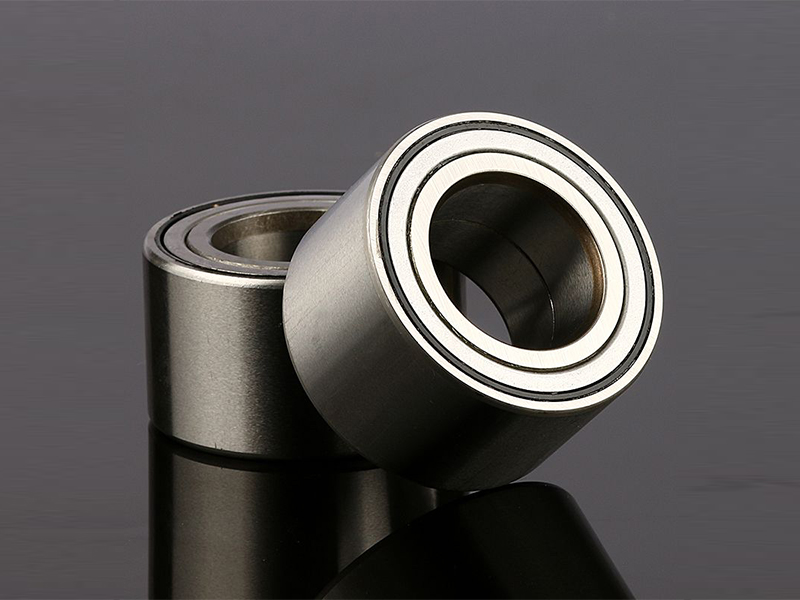
Schedule a professional inspection immediately if you observe any of these warning signs. Do not wait for the noise to become louder.
| Warning Sign | What It Indicates |
|---|---|
| Humming, grinding, or growling that changes with speed or steering input | Active bearing wear |
| Steering wheel vibration without an obvious cause (especially above 40 mph) | Possible front bearing failure |
| ABS or traction control warning lights illuminated | Sensor may be affected by bearing play |
| Vehicle pulls to one side during braking or straight-line driving | Could indicate bearing or alignment issue |
| Wheel wobble when lifted and rocked at 12 and 6 o’clock positions | Bearing play—requires immediate attention |
| Uneven tire wear on inner or outer edges (feathering or cupping pattern) | Bearing looseness causing tire movement |
What to do next: Schedule a professional inspection without delay. If the noise is pronounced, or if you detect wobble or vibration while driving, do not continue driving the vehicle—arrange for a tow to your repair facility.
Conclusion
How long can you drive on a bad wheel bearing? The direct answer: not far, and not safely.
A failing wheel bearing is not a component that can be managed or “nursed along” for weeks or months. The moment you hear that hum, growl, or grind—particularly if the sound changes when you steer—immediate action is required.
Recommended course of action:
- Listen carefully—perform the turning test to identify which side is affected
- Stop driving—limit travel to the minimum necessary to reach a repair shop, and never drive on a highway
- Schedule inspection—have the vehicle checked by a qualified professional
- Replace promptly—addressing the issue early typically costs $250–$500; delaying until the bearing seizes can push the total beyond $2,000
Your safety and the safety of everyone on the road depend on prompt action.
FAQs
Q1: How long can I drive on a bad wheel bearing?
There is no safe, guaranteed distance. Safety guidelines recommend no more than a few miles—and never on a highway. While some bearings have been reported to last up to 100 miles in rare cases, you should never rely on this—others fail within 10 miles without warning. Treat it as an immediate repair priority, not a distance to calculate.
Q2: What does a bad wheel bearing sound like?
A bad wheel bearing typically produces a humming, grinding, or growling noise that becomes louder with vehicle speed. Some drivers describe it as a cyclical chirping or whirring. In advanced stages, you may hear clicking, popping, or snapping sounds. The key diagnostic clue: the noise changes during turns—more pronounced when steering away from the failing bearing, less noticeable when steering toward it.
Q3: How much does wheel bearing replacement cost?
The national average is approximately $350 per wheel (parts and labor). The range varies by vehicle type:
- Sedans: $150–$400
- SUVs: $200–$500
- Trucks: $250–$600
- Luxury and European models: $400–$700+
According to RepairPal, the typical range is $346 to $505 per wheel. Delaying replacement can increase costs to $1,000–$2,000+ due to damage to hubs, brakes, and suspension components.
Q4: How do I tell which wheel bearing is bad?
The turning test is the most reliable method:
- Find a safe road and accelerate to 30–40 mph
- Gently turn the steering wheel slightly left and right
- If the noise becomes louder when turning left, the right-side bearing is likely failing
- If the noise becomes louder when turning right, the left-side bearing is likely failing
You can also lift the vehicle, grasp the tire at the 12 and 6 o’clock positions, and rock it—excessive movement (more than a few millimeters) indicates bearing wear.
Q5: Can I drive on the highway with a bad wheel bearing?
Absolutely not. Highway speeds generate high heat, load, and vibration on wheel bearings. The margin between “still operable” and “catastrophic failure” is extremely narrow at 65 mph. As Kelley Blue Book warns, a wheel separation at highway speed is a documented danger—not a theoretical risk. If you suspect a bad bearing, do not drive on the highway. Arrange for a tow to a repair shop.
Q6: Do bad wheel bearings fail suddenly or gradually?
Failure is typically gradual—the noise starts faint and worsens over time. Some bearings may produce noise for hundreds of miles before complete failure. However, it is not possible to reliably predict when a noisy bearing will become dangerous. Once a bearing begins to fail, heat, speed, and load conditions can cause rapid deterioration without prior warning.
Q7: Can a bad wheel bearing cause a wheel to fall off?
Yes. In severe cases, a failed bearing can no longer support the wheel, causing it to separate from the vehicle while driving. This is a documented and verified danger—not a theoretical concern. As Kelley Blue Book states: “This is not an exaggeration. This is reality.”
Q8: How long do wheel bearings normally last?
Under normal driving conditions, most wheel bearings last 85,000 to 100,000 miles (approximately 136,000 to 160,000 kilometers). Some can reach 150,000 miles or more. However, factors such as pothole impacts, water ingress, improper installation, and overloading can cause premature failure.
Q9: Will a bad wheel bearing trigger the ABS light?
Yes. Modern wheel hub assemblies integrate wheel speed sensors for ABS and traction control. A deteriorating bearing can produce erratic sensor signals that trigger ABS and traction control warning lights. This condition may also reduce braking effectiveness or disable ABS entirely.
Q10: Should I replace wheel bearings in pairs?
Technically, you can replace only the failed bearing. However, on high-mileage vehicles, if one side has failed, the other side often requires replacement soon afterward. Many professionals recommend at least inspecting the opposite side when replacing a bearing. Some shops recommend replacing both if the vehicle has more than 100,000 miles.
DUHUI Bearing has manufactured precision wheel bearings in Zhejiang, China, since 2003. Our IATF 16949-certified production facility supplies the global automotive aftermarket with bearings engineered for durability and safety. This article is part of our commitment to helping drivers make informed decisions about vehicle safety.