Quick Answer: Sleeve bearing lubrication keeps a sliding shaft separated from its bearing surface with oil or grease, or with a lubricant stored inside the bearing material. Oil suits higher-speed hydrodynamic duty; grease suits slow, inaccessible, or frequent-start applications. Selection depends on speed, load, clearance, operating temperature, and supply method, and the equipment manufacturer’s viscosity and maintenance limits should take priority. A full oil film may not exist at startup, shutdown, or low speed.
Sleeve, journal, bushing, and plain bearing are overlapping names for the same broad family: a shaft slides on a bearing surface without rolling elements. The lubrication task changes with speed, load, clearance, oil or grease supply, and temperature.
This guide explains how to select, supply, monitor, and maintain lubricant for oil- and grease-lubricated sleeve bearings, and where self-lubricating designs differ.
What Sleeve Bearing Lubrication Must Achieve
The primary job is to create and maintain a lubricant film that separates the sliding surfaces and carries load. Another job is to keep the bearing safe when that film is incomplete, which is why boundary or mixed-film operation matters during starts, stops, and low speed.
- Separate surfaces: a full film prevents direct metal-to-metal contact under the right speed, load, clearance, supply, and viscosity.
- Carry load: the film pressure supports the shaft while it rotates.
- Reduce friction and wear: lubrication limits asperity contact and surface damage.
- Manage heat and contamination: circulating lubricant can carry heat away and help keep corrosive or abrasive material out of the contact zone.
The scope of ISO 7902-1:2026 is oil-lubricated hydrodynamic radial plain bearings in which the shaft and bearing sliding surfaces are fully separated by a lubricating film. It covers 360°, 180°, 150°, 120°, and 90° cylindrical bearings. Full-film separation applies only when speed, load, clearance, supply, and viscosity support it.
Do not assume lubricant is reaching the bearing. Verify supply, level, flow, and condition as part of the lubrication check rather than treating the oil or grease fill as proof of lubrication.
Lubrication Regimes: Boundary, Mixed, and Full Hydrodynamic
A sleeve bearing may operate in boundary, mixed-film, or full hydrodynamic lubrication. The regime depends on speed, load, clearance, lubricant supply, and operating viscosity, not on the lubricant name alone.
- Boundary lubrication: surfaces still interact through asperities, with only a thin adsorbed or additive film. Startup, shutdown, and very low speed often fall here.
- Mixed-film lubrication: the film carries part of the load while some asperity contact remains. This is common in transitions between boundary and full-film operation.
- Full hydrodynamic lubrication: a complete fluid film separates the surfaces and carries the load. Stable load, continuous rotation, sufficient clearance, and adequate supply favor this regime.
Starts, stops, and very low-speed operation are critical because a fully developed hydrodynamic oil film may not yet exist. Frequent starts and stops, reversing duty, or sustained low speed therefore require review against the original equipment manufacturer (OEM) instructions, beyond steady-state design charts.
Lubrication design charts commonly use bearing pressure, shaft surface speed, and dynamic viscosity. Such charts usually assume steady load, continuous unidirectional shaft rotation, sufficient clearance, and adequate lubricant supply. Those assumptions explain why the same bearing may need different startup and running measures.
Oil vs Grease: Selection Rules
Oil is the normal lubricant for higher-speed hydrodynamic sleeve bearings. Grease is more common in slow-speed equipment, inaccessible locations, or applications with frequent starts and stops.
For grease selection, start with the base-oil viscosity, then evaluate the thickener, oxidation resistance, rust protection, pumpability, and antiwear or extreme-pressure (EP) needs. The base oil does the lubricating work; the thickener controls delivery and retention.
Confirm whether the bearing is designed for external lubrication before adding oil or grease. Dry-running polymer bearings and oil-impregnated bearings may require no added lubricant, and adding grease can interfere with their designed lubricant transfer.
Choosing the Right Oil Viscosity
Select oil by viscosity at operating temperature, not by room-temperature viscosity alone. A grade that looks correct on a label can be too thin at the bearing surface if the sump runs hot.
Overheating lowers operating viscosity, reduces oil-film load capacity, and can create a friction-heat-thinning cycle: more friction raises temperature, the oil thins further, and load capacity falls again. Use the equipment manufacturer’s specified viscosity first, then compare the ISO viscosity grade with the actual operating viscosity.
ISO viscosity grades are based on kinematic viscosity at 40°C. ISO 3448:1992 establishes the classification for industrial liquid lubricants and was reaffirmed in 2023. ISO VG 32, for example, has a nominal midpoint of about 32 mm²/s (cSt) at 40°C.
ASTM D445 is the standard capillary method for measuring kinematic viscosity. It covers 0.2 to 300,000 mm²/s, and 1 mm²/s equals 1 cSt. An ISO VG grade is a 40°C reference classification, not a statement of the viscosity at the bearing operating temperature. The actual viscosity at the bearing may be lower or higher than the 40°C midpoint.
Reference Grade Example, Not a Universal Rule
One hydrodynamic pillow-block product line lists ISO VG 32, 68, and 100 as common reference grades, but the correct grade depends on startup temperature, speed, and load. That product line’s selection guidance gives the following examples:
- Startup ambient -23°C to 0°C: SAE 10 / ISO VG 32.
- Above 21°C, low speed: SAE 30 / ISO VG 100.
- Above 21°C, high-speed light load: ISO VG 32.
- Above 21°C, high-speed heavy load: ISO VG 68.
The same product guidance specifies a high-grade straight mineral oil containing rust-and-oxidation inhibitors and antifoam agents. These are manufacturer-specific examples, not universal sleeve-bearing rules. Do not apply them to another bearing design without OEM confirmation.
Oil Supply, Oil Level, and Circulation
Use the bearing’s intended oil supply method: oil bath, oil ring, external circulation, or another OEM-approved arrangement. Check that the method matches the bearing orientation and duty cycle.
For one common oil-ring pillow-block design, open the inspection cover after startup and confirm that the oil ring is lifting oil. Check frequently during the first days of operation. During running, keep the oil level between the center and the top of the sight glass.
An external circulating oil system can supply oil directly to the bearing and reduce startup and shutdown wear. That arrangement is especially suitable for applications near the allowable temperature or speed limits. Other bearing designs may use different oil levels, flow rates, or supply methods, so follow the OEM instructions for the exact unit.
Grease Lubrication Practice
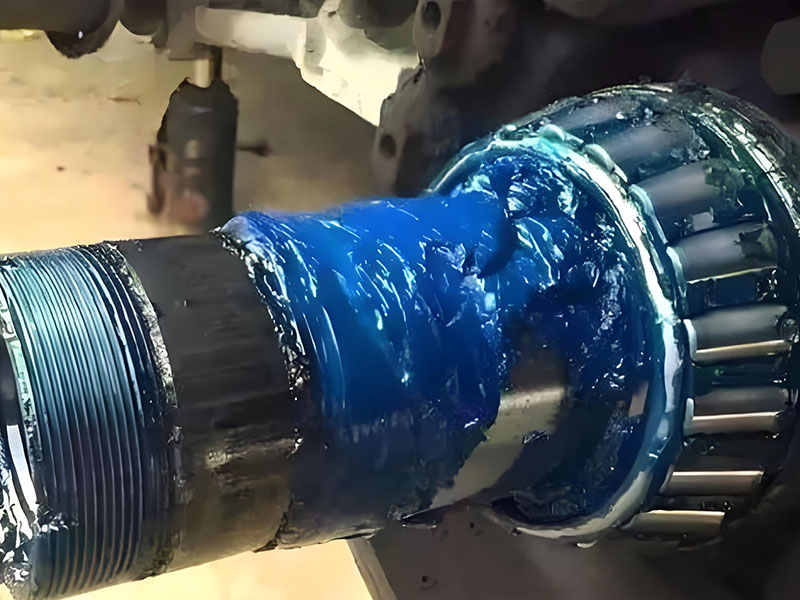
For rigid sleeve bearings with grease fittings, add grease until fresh grease appears at the ends of the bearing unit. Introduce grease ahead of the load zone and use grooves designed to distribute it across the bearing surface.
Determine the relubrication interval from frequent checks during initial operation rather than assuming a fixed interval. Inspect the bearing mounting condition at least every six months.
Sealed, polymer, or oil-impregnated bearings may be damaged or contaminated by adding grease. Confirm the bearing design before using a grease gun on a bearing that is intended to run dry or with a stored lubricant.
Startup, Shutdown, and Low-Speed Protection
Assume that a full hydrodynamic film may be absent at startup, shutdown, and very low speed. Use oil pre-heating, circulating supply, or OEM-specified pre-lube where required, and verify oil-ring action and oil level immediately after start.
Low ambient or low oil temperature may require a sump heater and thermostat. For one common oil-ring pillow-block design, the recommended minimum oil temperature at startup is 70°F (21°C). Minimum startup temperature and heating requirements vary by bearing design and lubricant.
Startup protection is a lubrication issue, not only an operating procedure. The film has to be established before load is applied, or the bearing may operate briefly in boundary or mixed-film contact.
Temperature Control and Oil-Film Limits
Monitor oil-film temperature because high temperature reduces operating viscosity and film load capacity. Overheating can also create the friction-heat-thinning cycle described earlier.
Use OEM temperature limits. Do not generalize one manufacturer’s limit to all sleeve bearings. For one common liner design, normal oil-film temperature should not exceed 180°F (82°C) during operation.
If temperature limits are approached, review lubricant viscosity, supply, cooling, and load with the OEM. Other bearings must use their own manufacturer’s allowable temperature limits.
Maintenance Schedule and Condition Monitoring
Schedule an initial oil change after break-in and set oil-analysis intervals by duty. For one common oil-ring pillow-block design, the maintenance guidance is:
- Initial oil change: after 2-3 weeks of break-in operation.
- Continuous 24 hours per day: analyze oil every 3 months.
- 8 hours per day: analyze oil every 6 months.
- Static oil sump without filtration: change oil at least annually.
Check oil-ring operation after startup and frequently during the first days. For grease-lubricated bearings, inspect the mounting at least every six months. Severe contamination, high temperature, or OEM-specific schedules override these intervals.
Self-Lubricating and Marginally Lubricated Sleeve Bearings
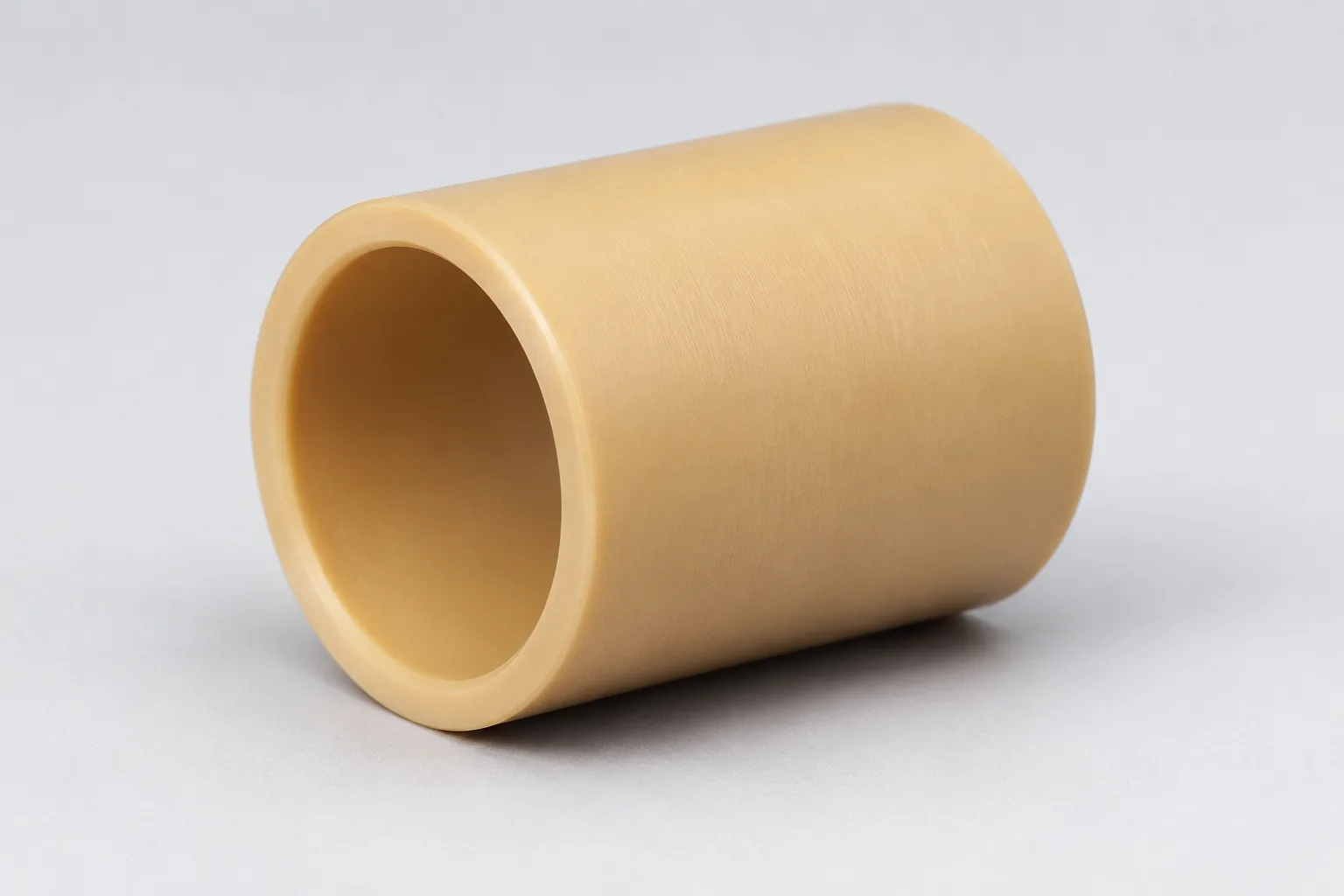
Not every sleeve bearing should receive external oil or grease. Dry-running polymer sleeve bearings use solid lubricant particles distributed through the material and normally do not require or recommend added grease.
Oil-impregnated bronze bearings store lubricant in the material’s pores. Load releases oil to the sliding surface, and reduced load allows the bearing to reabsorb it.
Some metal-polymer bearings with lubricant pockets are intended for grease or oil lubrication and are rated poor for dry running. Adding grease to a dry-running polymer bearing may attract contamination or interfere with the designed lubricant transfer.
One specific food-contact sintered bronze bearing is rated self-lubricating and complies with SAE 841 and ASTM B438 Grade 1 Type 2. It uses food-grade mineral oil and is listed to USDA-H1, FDA 21 CFR 172.878, RoHS, and REACH. Its temperature range is -10°F to 220°F (-23°C to 104°C), and its maximum PV (pressure-velocity product) is 50,000 lb-ft/in²-min. Those values apply to that product only, so use specific product data before applying food-grade, temperature, or PV limits to another bearing.
Common Problems and Field Checks
Check for oil-ring failure to lift oil, low oil level, wrong viscosity grade, overheated oil, grease starvation, and contamination. Verify the supply method, oil level, oil-ring action, operating temperature, and lubricant condition before concluding that the bearing itself has failed.
Typical symptoms include high metallic particle counts and darkened or blued metal surfaces. Likely causes include abrasive particles, insufficient lubricant volume, and overheated or unsuitable lubricant. Symptoms indicate a need for diagnosis; they do not prove one failed part.
Trend temperature and vibration, and perform oil analysis and ferrography where appropriate. Use OEM limits for clearance, flow, and allowable temperature; do not substitute generic values. Mechanical damage, misalignment, and shaft wear require separate inspection beyond lubrication checks. For DUHUI bearings, use the part-specific maintenance data for alarm thresholds.
Specification Checklist for a Lubrication Plan
Collect the following information before selecting a lubricant or setting a maintenance interval:
- Shaft speed and load.
- Bearing clearance and geometry.
- Duty cycle, including starts, stops, reversing, and low-speed operation.
- Startup and ambient temperature.
- Lubricant supply method and available flow.
- Operating viscosity at the bearing temperature.
- Sealing, contamination exposure, and washdown risk.
- Mounting orientation and maintenance access.
Confirm whether the bearing is oil-lubricated, grease-lubricated, marginally lubricated, or self-lubricating before specifying a lubricant. For a DUHUI bearing, obtain clearance, oil flow, sump capacity, and recommended viscosity or grade from the product data for the exact part. OEM instructions take precedence over a generic checklist.
Relevant Standards and References
- ISO 4378-3:2024 defines plain-bearing lubrication terms, definitions, classification, and symbols. It is the fourth edition, published in November 2024, with 17 pages.
- ISO 7902-1:2026 covers oil-lubricated hydrodynamic radial plain bearings with full-film separation and 360°, 180°, 150°, 120°, and 90° cylindrical bearings.
- ISO 3448:1992 classifies industrial lubricant viscosity and was reaffirmed in 2023. ASTM D445 is the capillary method for kinematic viscosity.
- ISO 19349:2019 covers liquid-lubrication supply arrangements and monitoring and was reaffirmed in 2024.
- ISO 6834:2022 provides thermo-hydrodynamic design charts for oil-lubricated, statically loaded, 360° cylindrical journal bearings with B/D (width-to-diameter ratio) 0.5-1.5.
- ISO 6281:2020 covers testing under hydrodynamic and mixed-lubrication conditions and was reaffirmed in 2025.
Use standards as reference points, not as a substitute for OEM bearing instructions. Hydrostatic journal-bearing standards are outside this article’s core scope.
Conclusion
Sleeve bearing lubrication is a system decision, not just an oil grade. Identify the lubrication regime, choose oil or grease for the duty, set viscosity by operating temperature, verify supply and oil level, protect startup and low-speed operation, and keep oil-film temperature within the OEM limit.
For maintenance, start with the break-in oil change, set oil analysis by duty, and check oil-ring or grease condition on a defined schedule. Before changing lubricant or intervals, confirm the bearing design, OEM viscosity, oil level, and temperature limit for the exact part. That approach keeps sleeve bearing lubrication decisions traceable and safe.
FAQs
Q1: What is the best lubricant for a sleeve bearing?
A: There is no universal best lubricant. Oil is normal for higher-speed hydrodynamic bearings, while grease suits slow, inaccessible, or frequent-start duties. Follow the OEM viscosity and supply method for the exact bearing.
Q2: What oil viscosity should I use in a sleeve bearing?
A: Choose viscosity at the bearing operating temperature, not room temperature alone. ISO VG grades are referenced at 40°C, so the OEM requirement and the actual oil temperature both matter. Overheating lowers viscosity and reduces film load capacity.
Q3: Can I use grease in a hydrodynamic sleeve bearing?
A: Only if the bearing is designed for grease. Higher-speed hydrodynamic bearings normally use oil. Grease is more common in slow-speed, hard-to-access, or frequent start-stop applications, so confirm the intended lubricant before changing the supply.
Q4: How often should sleeve bearing oil be changed?
A: For one common oil-ring design, change the oil after 2-3 weeks of break-in. Then analyze oil every 3 months for 24-hour-per-day duty or every 6 months for 8-hour-per-day duty; a static sump without filtration needs at least an annual change. Severe conditions override those intervals.
Q5: Where should the oil level be in a sleeve bearing?
A: For one common oil-ring pillow-block design, keep the oil level between the center and the top of the sight glass during operation. Confirm the oil ring is lifting oil after startup. Other designs may use different levels, so follow the OEM marking.
Q6: Why does a sleeve bearing fail at startup?
A: A full hydrodynamic film may not exist at startup, shutdown, or very low speed. Check pre-lube, oil temperature, oil-ring action, and oil level before load is applied. One common oil-ring design calls for a minimum startup oil temperature of 70°F (21°C).
Q7: What is the maximum oil-film temperature for a sleeve bearing?
A: Use the OEM limit for the exact bearing. For one common liner design, normal oil-film temperature should not exceed 180°F (82°C). Higher temperature lowers operating viscosity and can reduce load capacity.
Q8: Do self-lubricating sleeve bearings need oil or grease?
A: Not always. Dry-running polymer bearings use solid lubricants, and oil-impregnated bronze stores oil in its pores. Adding grease to a dry-running design can attract contamination or interfere with lubricant transfer, so confirm the bearing type first.