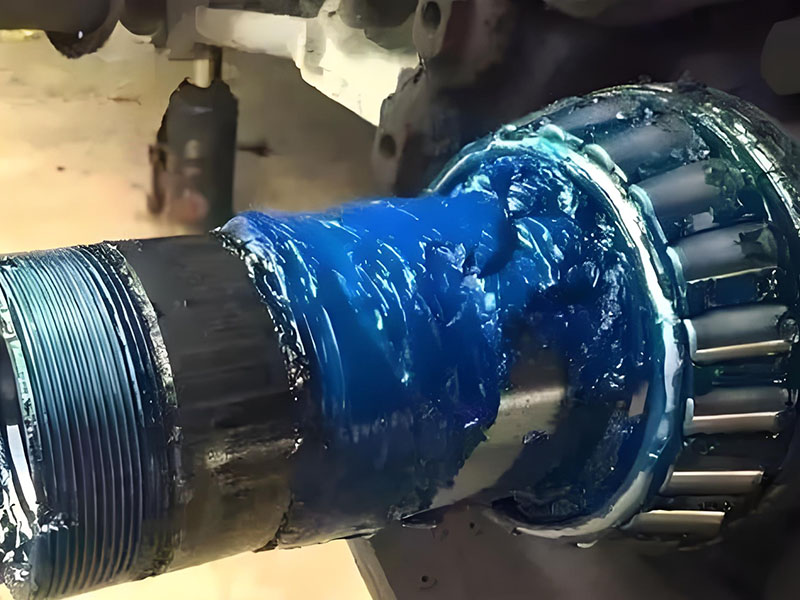
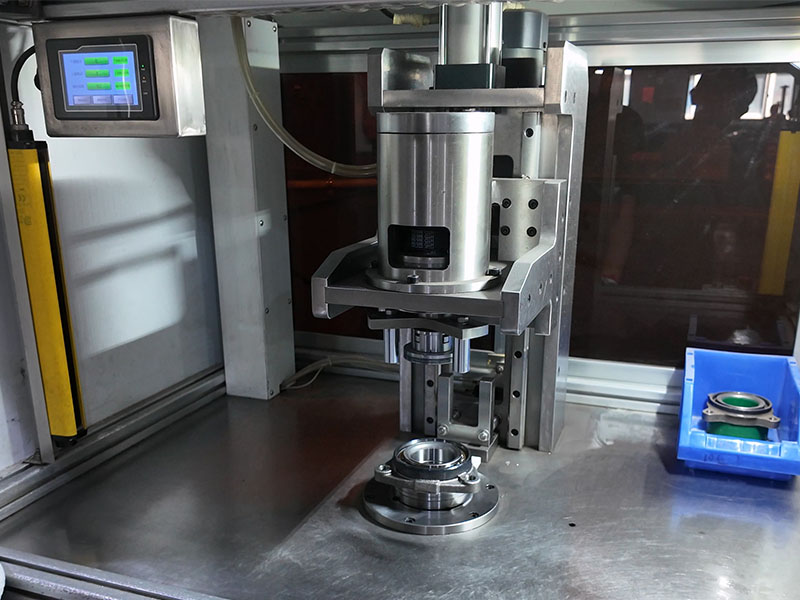
Regular greasing and oiling have long been necessary for metal bearings. However, in industries such as food processing, medical devices, and cleanroom automation, lubricants themselves become a problem — grease can contaminate products, and frequent maintenance stops production lines. What options exist when traditional lubrication is impractical or forbidden? Self‑lubricating polymer bearings provide a proven solution.
This guide explains what polymer bearings are, how they compare to other bearing types, their main benefits, where they are commonly used, and how to select the right product for an application. The information is intended for engineers and procurement specialists seeking reliable, maintenance‑free bearing alternatives.
What Are Polymer Bearings?
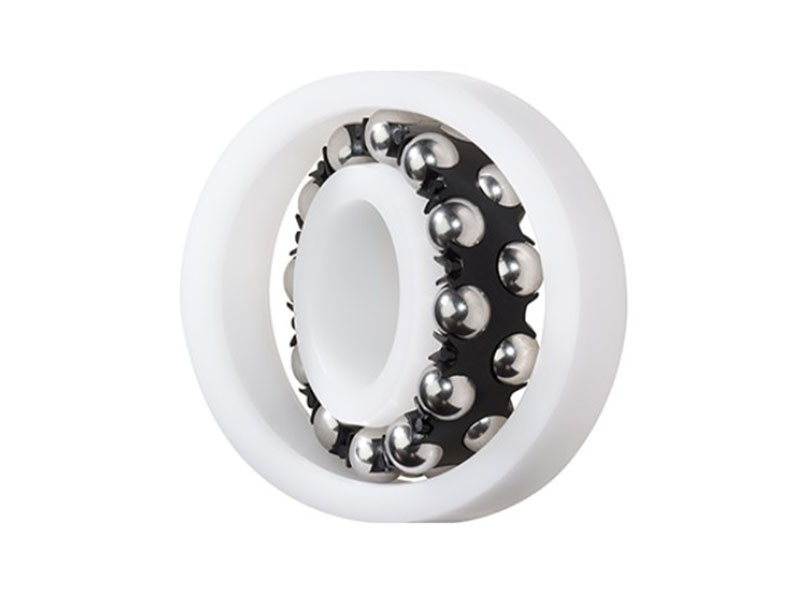
Definition and Material Structure
A polymer bearing is a plain bearing manufactured from engineering thermoplastics that operate without external lubricants. Instead of relying on oil or grease, these bearings contain solid lubricants integrated into the material itself.
A typical polymer bearing material consists of three functional components:
- Base polymer – Determines the bearing’s thermal and mechanical limits. Common choices include PTFE (polytetrafluoroethylene), PEEK (polyetheretherketone), PA (polyamide), and POM (polyoxymethylene).
- Reinforcing fibers – Glass, carbon, or aramid fibers increase mechanical strength, load capacity, and resistance to creep.
- Solid lubricants – Particles of graphite, molybdenum disulfide, or PTFE are distributed throughout the polymer matrix.
How Self‑Lubrication Works
When the shaft begins to rotate against the bearing surface, the solid lubricant particles are gradually released from the polymer matrix. These particles transfer onto the shaft, forming a thin, low‑friction film. This film reduces friction between the bearing and shaft without any external oil or grease. The lubricant is consumed slowly over the bearing’s service life, providing consistent performance from the first rotation to the final wear limit.
Manufacturing Process and Standard Forms
Injection molding is the primary production method for polymer bearings. It enables high‑volume manufacturing with consistent dimensions and low piece costs. For prototypes or small series, bearings can also be machined from stock shapes or produced using rapid tooling.
Polymer bearings are commonly supplied as:
- Cylindrical bushings
- Flanged bearings
- Thrust washers
- Custom injection‑molded geometries
Polymer Bearings vs Other Self‑Lubricating Types
Three main categories of self‑lubricating bearings are available. Each has distinct operating principles and suitable applications.
Oil‑Impregnated Sintered Bronze Bearings
These bearings are made from porous bronze that is vacuum‑impregnated with lubricating oil. During operation, friction‑induced heat causes the oil to expand and migrate to the bearing surface.
Key characteristics:
- A minimum shaft speed of approximately 200 ft/min (1 m/s) is required to maintain oil circulation.
- Maximum rotational speed up to about 1,200 sfm.
- High sensitivity to dirt and edge loading.
- Poor resistance to chemicals.
Main limitation: If the shaft stops or runs at very low speeds, the oil film breaks down. The surface oil dries, leading to increased friction and possible squeaking.
Metal‑Backed PTFE‑Based Bearings
This construction uses a steel backing bonded to a porous bronze sinter layer. The bronze pores are filled with a PTFE‑based compound, which also forms a thin overlay typically between 0.01 mm and 0.03 mm thick.
Key characteristics:
- Very high load capacity – static values up to 250 MPa (36,260 psi).
- Low coefficient of friction.
- Suitable for elevated temperatures.
Main limitation: The PTFE liner is very thin. Once this layer wears through, the bearing reaches the end of its useful life. Scratches or contaminants can damage the liner, potentially causing metal‑to‑metal contact. These bearings also remain sensitive to corrosion and edge loads.
Injection‑Molded Solid Polymer Bearings
These bearings are made entirely from fiber‑reinforced thermoplastics with embedded solid lubricants. Unlike metal‑backed alternatives, the lubricating properties extend throughout the full cross‑section of the material.
Key characteristics:
- Dry running – no external lubricants required.
- Inherently corrosion‑resistant and compatible with most chemicals.
- Low sensitivity to dirt and dust – contaminants do not adhere to the dry surface.
- Standard grades operate continuously up to approximately 100‑120°C (212‑250°F) depending on grade; high‑performance PTFE‑ or PEEK‑based composites can run up to about 250°C (482°F).
- Good vibration damping and quiet operation.
Main limitation: Load capacity is generally lower than that of metal‑backed PTFE bearings. However, fiber‑reinforced solid polymer bearings can handle surface pressures up to approximately 200 MPa (29,000 psi), which covers a wide range of industrial applications.
Application‑Oriented Selection Guide
| Application environment | Recommended bearing type |
|---|---|
| High chemical exposure, moderate loads, dirty conditions | Injection‑molded solid polymer |
| Very high loads, clean environments | Metal‑backed PTFE |
| Cost‑sensitive, moderate speeds, dry or lightly lubricated conditions | Sintered bronze |
Performance Comparison Table
| Parameter | Sintered Bronze | Metal‑Backed PTFE | Solid Polymer (Standard) | Solid Polymer (High‑Performance) |
|---|---|---|---|---|
| Maximum load (MPa / psi) | ~10 / ~1,450 | Up to 250 / 36,260 | ~135 / ~19,500 (typical) | Up to 200 / 29,000 (fiber‑reinforced) |
| Continuous temperature (°C / °F) | ~100 / ~212 (oil‑dependent) | ~204 / ~400 | ~120 / ~250 | ~250 / ~482 |
| Self‑lubricating mechanism | Oil impregnated | PTFE liner (0.01‑0.03 mm) | Solid lubricants throughout cross‑section | |
| Chemical resistance | Poor | Moderate | Excellent | |
| Dirt sensitivity | High | High | Low | |
| Maintenance required | Periodic oil refill | None (liner has finite life) | None | |
| Corrosion resistance | Poor | Moderate | Excellent | |
Advantages of Polymer Bearings
Maintenance‑Free Operation
After installation, solid polymer bearings need no periodic greasing, oiling, or cleaning. This eliminates scheduled maintenance tasks and reduces unplanned downtime. Their resistance to dirt, dust, and chemicals makes them a “fit‑and‑forget” component.
Lower Total Cost of Ownership
Although initial purchase prices vary, polymer bearings reduce lifetime costs by removing the need for lubricant purchases, lowering maintenance labor, extending replacement intervals, and minimizing machine downtime. Many users report overall cost reductions of up to 25% compared to traditional bearing solutions.
Clean, Lubricant‑Free Operation – FDA‑Compliant Options
Oil and grease attract dirt and debris, which can degrade performance or cause premature failure. In food processing and pharmaceutical applications, lubricants can contaminate products. Polymer bearings run completely dry, and certain grades are compliant with FDA requirements for equipment where lubricant contact is prohibited.
Consistent Low Friction Across a Wide Range of Conditions
Polymer bearings maintain a stable coefficient of friction over their entire service life. Unlike metal‑backed bearings, which may develop scratches that increase friction, properly selected polymer bearings provide predictable friction from installation through to replacement.
Corrosion and Chemical Resistance
Metal bearings require protective coatings or special alloys to withstand corrosive environments. Solid polymer bearings, by contrast, are naturally resistant to water, most industrial chemicals, and oxidizing agents. They can be used in wash‑down applications, saltwater environments, and chemical processing without performance loss. In many cases, water can even act as a lubricant for polymer bearings.
Applications of Polymer Bearings by Industry
Food and Beverage Equipment
In food processing lines, packaging machinery, and bottling plants, lubricants that may contact food products are not acceptable under FDA regulations. Polymer bearings eliminate this contamination risk. Common applications include conveyor rollers, indexing tables, filling machines, and thermoforming packaging equipment.
Medical Devices
The medical industry requires bearings that operate without lubricants to maintain sterile conditions. Polymer bearings are used in patient beds, medical robots, diagnostic instruments, surgical tools, and laboratory equipment. Many polymer materials also meet FDA requirements for medical‑grade applications.
Agricultural Machinery
Agricultural equipment operates in dusty, dirty environments where conventional oiled bearings quickly accumulate contaminants. Polymer bearings are unaffected by dust and dirt – particles do not stick to the dry running surface but simply deflect away. Applications include seeders, harvesters, sprayers, and material handling conveyors.
Automotive and Two‑Wheelers
In automotive and motorcycle applications, polymer bearings are found in pedal assemblies, seat adjustment mechanisms, door hinges, throttle bodies, and suspension bushings. Their self‑lubricating nature eliminates the need for regular greasing in hard‑to‑reach points, while corrosion resistance is particularly valuable for under‑vehicle components exposed to road salt and moisture.
Automation and Motion Systems
Industrial automation systems – including robotic arms, linear guides, pick‑and‑place units, and assembly line equipment – benefit from the predictable friction and long service life of polymer bearings. The absence of lubricants also simplifies cleanroom integration.
Packaging Machinery and Chemical Industry
Packaging machinery relies on polymer bearings for high‑cycle operations where lubrication would be impractical or unsanitary. Chemical processing benefits from the bearings’ resistance to corrosive substances, reducing replacement frequency and improving plant reliability.
How to Select the Right Polymer Bearing
Choosing a suitable polymer bearing requires evaluating several application parameters. The following five steps provide a structured approach.
Step 1: Determine Load (Static and Dynamic) and Speed
Identify the maximum static load (bearing at rest) and dynamic load (bearing during motion). Higher loads generally require fiber‑reinforced grades or metal‑backed PTFE bearings. Speed affects heat generation; for continuous high‑speed rotation, bearings with good thermal conductivity or low friction coefficients are preferred.
Step 2: Evaluate Operating Temperature Range
Check the minimum and maximum temperatures the bearing will encounter. Standard polymer grades (e.g., POM‑based) typically work from -40°C to +100‑120°C depending on grade. High‑performance grades (PEEK or PTFE composites) can operate from -50°C up to +250°C continuously, with short‑term peaks above 300°C.
Step 3: Identify Environmental Factors
Assess exposure to chemicals, moisture, dust, or wash‑down procedures. For corrosive environments (acids, alkalis, salt water), solid polymer bearings are the best choice because they require no additional coatings. For dry, dusty conditions, polymer bearings resist particle adhesion. For submerged or wet applications, verify that the specific polymer grade does not absorb water excessively (e.g., PA absorbs more than PEEK or POM).
Step 4: Specify Shaft Material and Surface Finish
The mating shaft should be harder than the bearing material. Hardened steel (≥55 HRC) or stainless steel is common. A surface finish between Ra 0.4 μm and Ra 0.8 μm (16‑32 microinches) is recommended. Too rough a finish accelerates wear; too smooth a finish may prevent proper transfer film formation.
Step 5: Choose Bearing Geometry and Fit
Select the appropriate form: cylindrical bushing for radial loads, flanged bearing for combined radial and axial loads, or thrust washer for pure axial loads. Determine the required clearance (typically 0.025‑0.075 mm for press‑fit housings). Consult manufacturer data sheets for recommended housing bore tolerances and shaft fits.
By following these steps, engineers can narrow down material families and product series that match their application requirements.
Conclusion
Polymer bearings are a mature, well‑understood technology for applications that demand maintenance‑free, self‑lubricating operation. Their fiber‑reinforced construction with embedded solid lubricants eliminates the need for external grease or oil, reducing both maintenance costs and contamination risks in sensitive environments such as food processing, medical devices, and cleanroom automation.
Compared to sintered bronze bearings and metal‑backed PTFE alternatives, solid polymer bearings offer clear advantages in chemical resistance, dirt tolerance, and corrosion protection. While load capacity is generally lower than metal‑backed PTFE bearings, their stable friction across temperature variations and ability to run completely dry make them the preferred choice for a wide range of industrial, agricultural, and automation applications.
When selecting a bearing for a specific application, consider the operating conditions – load, speed, temperature, and environmental factors – and whether the presence of lubricants is acceptable. For applications where contamination is a concern or maintenance access is limited, polymer bearings provide a reliable and cost‑effective solution.
Frequently Asked Questions About Polymer Bearings
Q1: What temperature range can polymer bearings withstand?
A1: Standard injection‑molded polymer bearings (e.g., POM‑based) operate continuously up to approximately 100‑120°C (212‑250°F) depending on grade. High‑performance PTFE‑ or PEEK‑based composites can run continuously up to approximately 250°C (482°F) and handle short‑term peaks above 300°C (572°F). Always consult material data sheets for your exact conditions.
Q2: Are polymer bearings suitable for high‑load applications?
A2: Yes. Fiber‑reinforced solid polymer bearings offer good load capacity, with injection‑molded composites handling surface pressures up to about 135 MPa (19,500 psi) and fiber‑reinforced composites up to approximately 200 MPa (29,000 psi). For extremely high loads in clean environments, metal‑backed PTFE bearings remain an option (up to 250 MPa / 36,260 psi). For moderate loads in corrosive or dirty conditions, solid polymer bearings are often the better choice.
Q3: How long do polymer bearings last?
A3: Polymer bearings do not fail catastrophically. Service life is determined by gradual wear until clearance reaches an acceptable limit (typically 0.25 mm for plain bearings). Even beyond this point, the bearing continues to function with increased clearance rather than failing suddenly. Life expectancy depends on load, speed, shaft material, and operating temperature – typically ranging from several thousand to tens of thousands of operating hours.
Q4: What shaft surface finish is recommended?
A4: A shaft surface finish between Ra 0.4 μm and Ra 0.8 μm (approximately 16 to 32 microinches) is generally recommended for polymer bearings. Too rough a finish accelerates wear like a file; too smooth a finish can reduce transfer film adhesion, leading to higher friction. For precision applications requiring lower friction, Ra ≤ 0.4 μm (superfinished) may be specified.
Q5: Can polymer bearings operate in wet or submerged conditions?
A5: Yes. Polymer bearings are highly resistant to water and many chemicals. Unlike sintered bronze bearings, which can have oil washed out of their pores, solid polymer bearings retain their lubricating properties even when fully submerged. However, check the water absorption rate of the specific polymer grade; PEEK and POM have very low absorption, while PA (nylon) absorbs more and may swell.
Q6: Are polymer bearings more expensive than metal bearings?
A6: Initial purchase prices vary by material and complexity. However, when total lifetime costs are considered – including lubricant purchases, maintenance labor, downtime, and replacement frequency – polymer bearings often deliver net savings. Many applications achieve cost reductions of up to 25% by switching from metal to polymer.
Q7: What shaft materials are compatible with polymer bearings?
A7: Hardened steel shafts with appropriate surface finishes are the most common pairing. Stainless steel shafts provide enhanced corrosion resistance. The key requirement is that the shaft surface be harder than the bearing material to prevent abrasive wear. Soft shafts (e.g., unhardened aluminum or low‑carbon steel) are generally not recommended.
Q8: Do polymer bearings produce debris or wear particles during operation?
A8: Polymer bearings do generate fine wear particles, but the amount is typically low. Unlike metal wear debris, polymer particles are softer and less likely to cause secondary damage to the bearing or shaft. For sensitive applications such as medical devices or food processing equipment, low‑wear grades are available that minimize particle generation.