Bearings are critical components in modern machinery — from automotive wheel hubs to industrial production lines, medical devices, food processing equipment, and robotics. Their smooth operation directly affects productivity and safety. Neglecting bearing maintenance is one of the fastest ways to incur unexpected downtime, costly repairs, and even catastrophic equipment failure. This guide covers universal bearing care principles, industry-specific best practices for automotive and industrial applications, and common failure modes. It includes practical data from DUHUI Bearing’s manufacturing experience to help you move from reactive repairs to proactive reliability.
Essential Bearing Maintenance Tips for General Industrial Applications
Before addressing industry-specific stresses, mastering the universal principles of bearing care is essential. These foundational practices apply to almost every rotating equipment scenario.
Regular Inspection: Detecting Early Signs of Wear
Visual and auditory inspections are the first line of defense. Train your team to listen for unusual grinding or clicking noises and look for discoloration (bluing) on races or rolling elements, which indicates overheating. Early detection of rust, pitting, or spalling can prevent a small issue from becoming a major breakdown.
For electric motors running continuously, perform a listening check every two weeks. For gearboxes and pumps, conduct a monthly vibration check by touch or with a basic stethoscope. Document all findings in a log to track degradation trends.
Proper Lubrication: Grease vs. Oil
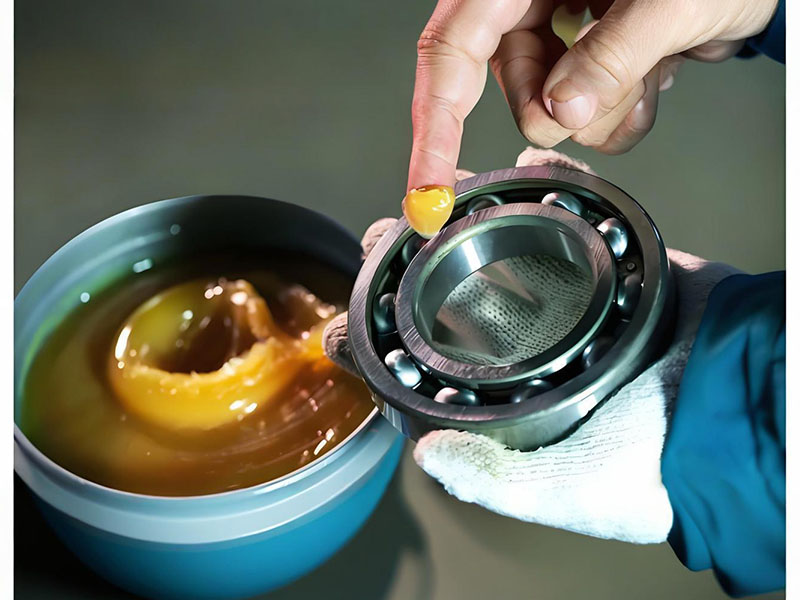
Lubrication reduces friction, dissipates heat, and protects against corrosion. Grease is ideal for applications where frequent relubrication is difficult, as it provides a sealed barrier against contaminants. Oil is superior for high-speed or high-temperature operations because it removes heat more effectively. Over-lubrication can be as damaging as under-lubrication, causing churning and overheating.
For a typical 6204 deep groove ball bearing used in industrial fans, DUHUI recommends an initial grease fill of 2.5 to 3.5 grams. Exceeding 5 grams can raise operating temperature by 15°C or more. For oil-lubricated bearings, maintain the oil level at the middle of the lowest rolling element. Change oil every 2,000 to 5,000 hours depending on operating temperature and contamination level.
Contamination Control: Keeping Dirt and Moisture Out
Industry studies show that contamination accounts for nearly half of all premature bearing failures. Even microscopic dust particles (down to 5 microns) act as grinding paste, wearing down precision surfaces. Always store bearings in their original packaging until the moment of installation, and ensure work areas are clean.
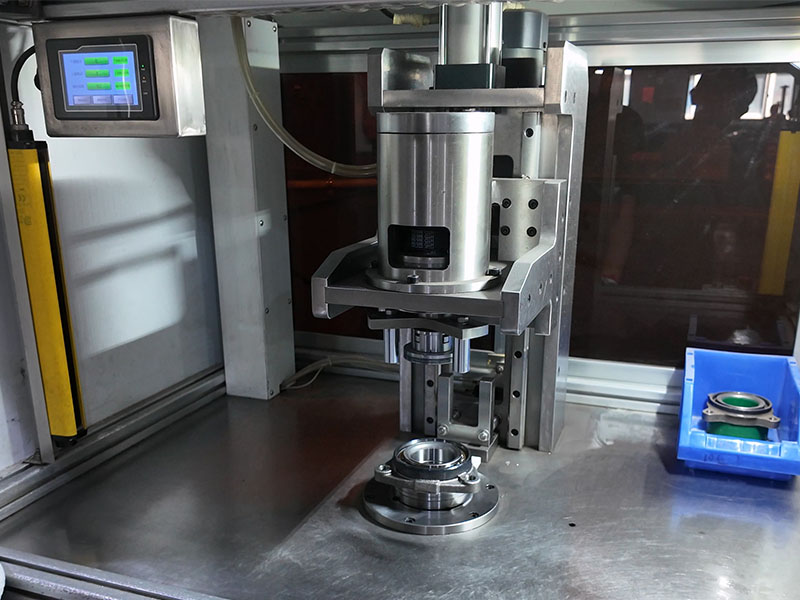
DUHUI’s production facility maintains ISO Class 7 cleanroom standards (less than 352,000 particles per cubic meter) for bearing assembly — a level we recommend for critical maintenance zones. Use appropriate seal types:
- ZZ (metal shield) – for clean indoor environments (protection against particles >100 µm).
- 2RS (contact rubber seal) – for dusty or wet conditions.
- 2RU (low-friction rubber seal) – for high-speed applications requiring liquid ingress protection.
Replace seals every time you disassemble a bearing housing.
Correct Handling and Storage Procedures
Bearings are precision components manufactured to tolerances of microns. Never strike them directly with a hammer, and avoid spinning uncleaned bearings with compressed air (this forces contaminants into the races). Store bearings horizontally in a cool, dry environment (humidity below 60%) to prevent warping and condensation.
Keep them in original packaging until installation. If you must handle a bearing without gloves, make sure your hands are clean and dry — fingerprints contain acids that can cause corrosion over time. Do not remove the factory-applied anti-corrosion oil until just before mounting.
Precision Mounting and Alignment Techniques
Misalignment is a leading cause of premature failure. Use induction heaters for heating inner rings (do not exceed 120°C for most bearing steels) or mechanical pullers — avoid torches or direct hammering. Ensure shafts and housings are within tolerance and aligned to distribute load evenly.
For most industrial applications, radial runout should not exceed 0.05 mm, and angular misalignment should be kept below 0.001 radian for ball bearings. DUHUI provides mounting instructions with every bearing shipment, including recommended fit tolerances for different shaft and housing materials.
For tapered roller bearings, proper end-play adjustment is critical: tighten the adjusting nut while rotating the bearing to seat the rollers, then back off to achieve 0.025–0.075 mm axial clearance. Use a dial indicator to measure.
Monitoring Temperature and Acoustic Signatures
A sudden spike in operating temperature is a red flag. Establish baseline temperature readings for your machinery. For rolling bearings, normal outer ring operating temperature typically ranges from 40°C to 70°C above ambient. Any temperature rise of 10-15°C above baseline warrants investigation.
Modern acoustic monitoring (using ultrasonic detectors or vibration analyzers) can detect changes in the frequency spectrum that indicate the onset of flaking or brinelling long before they are visible. For critical machinery, install online vibration sensors with alarm setpoints according to ISO 10816-3.
Leveraging Condition Monitoring Tools
For critical assets, move beyond manual checks. Vibration analysis is the gold standard for predictive maintenance. Accelerometers can detect imbalances, misalignments, and bearing defect frequencies (ball pass frequency, cage frequency, etc.).
In small to medium machines (motors, fans, pumps), velocity above 1.0 mm/s RMS (ISO 10816-3) often indicates developing defects. For bearing-specific analysis, look for peaks at defect frequencies: fundamental train frequency (FTF), ball spin frequency (BSF), ball pass frequency outer (BPFO), and ball pass frequency inner (BPFI). A rising noise floor in the high-frequency range (above 20 kHz) often indicates early-stage lubrication starvation or surface roughness.
Industry-Specific Bearing Maintenance Best Practices
Different environments impose unique stresses on bearings. Here is how to adapt your maintenance strategy for specific sectors where DUHUI has extensive experience.
Medical Industry: Sterilization and Biocompatibility
Reliability requirements
In medical devices like CT scanners, dental drills, surgical robots, and infusion pumps, failure can endanger lives. Bearings must withstand repeated autoclave cycles (135°C, pressurized steam for 15-30 minutes per cycle) without corroding or losing dimensional stability.
Material selection
DUHUI medical-grade bearings use either stainless steel (440C or 316) for moderate corrosion resistance or silicon nitride (Si3N4) hybrid bearings for the highest durability. Ceramic rolling elements are non-magnetic, lighter, and do not corrode, making them ideal for MRI-compatible devices.
Lubrication requirements
Standard industrial greases are unacceptable because they may outgas or cause tissue reactions. Use only FDA-approved (21 CFR 178.3570) or ISO 10993-compliant lubricants that are non-toxic, non-sensitizing, and biocompatible.
Manufacturing and maintenance
Manufacturing processes must eliminate all machining residues, oils, and dust to meet cleanroom standards (ISO Class 7 or Class 8). DUHUI provides medical bearings with full documentation of material certificates, lubricant safety data sheets, and particle count tests. For devices requiring low noise operation (such as surgical handpieces with speeds above 300,000 rpm), special low-viscosity oils and high-precision grade (P4 or P2) bearings are necessary. Recommended maintenance: visual inspection of seals and lubrication every 6 months or 500 sterilization cycles, whichever comes first.
Food and Beverage Industry: Hygiene and Corrosion Resistance
Washdown environment challenges
The washdown environment is the enemy of standard bearings. High-pressure hoses (up to 100 bar) and aggressive cleaning agents (chlorinated alkaline detergents, acid-based descalers) quickly strip away conventional grease and cause rust.
Material selection
AISI 440C provides moderate corrosion resistance with high hardness (58-60 HRC), suitable for dry processing areas like flour mills. AISI 316 offers superior resistance to chlorinated sanitizers and is preferred for wet processing zones — meat, dairy, seafood, and beverage filling lines. Hybrid bearings (ceramic balls with stainless steel rings) eliminate galvanic corrosion and extend relubrication intervals by up to 5x. For extreme environments, full ceramic bearings (zirconia or silicon nitride) are available.
Lubrication and sealing
NSF H1-registered lubricants are mandatory for areas where incidental food contact may occur — these greases are non-toxic and approved under FDA regulations. DUHUI supplies food processing bearings pre-lubricated with NSF H1 grease. Enhanced sealing is critical: contact seals (2RS) with stainless steel inserts provide the best protection against high-pressure spray; V-rings add an extra labyrinth seal.
Special applications and maintenance
In dairy applications, bearings must also resist lactic acid and frequent high-temperature sanitizing (CIP cycles at 85°C). Recommended maintenance: replace bearings every 6 to 12 months in high-washdown zones, or earlier if noise or roughness appears. Perform monthly moisture check by spinning the bearing by hand — any roughness indicates grease washout. For gearmotors supporting conveyor belts, use synthetic food-grade gear oil with bearing-appropriate viscosity (ISO VG 150 to 220). Keep lubrication records to correlate bearing life with production cycles.
Robotics and Automation: Precision and Preload Adjustment
Precision requirements
In robotic arms (six-axis, collaborative, SCARA), CNC machining centers, and pick-and-place systems, play in the bearing translates directly to inaccuracy: a clearance of 0.01 mm in a bearing can cause up to 0.1 mm error at the end of a 500 mm robotic arm.
Lubrication and preload
Robotics often require precise, metered doses of low-noise grease (noise level below 50 dB measured at 1 meter). For high-cycle applications, proper preload eliminates clearance, increasing rigidity and accuracy. For angular contact bearings, a preload of 0.01–0.02 mm axial compression improves rigidity. This is typically achieved by tightening a lock nut to a specified torque (e.g., 15-20 Nm for a 7008 series bearing) or by using matched bearing pairs with ground spacers.
DUHUI products and maintenance
DUHUI manufactures P5 and P4 precision class angular contact bearings and cross-roller bearings for robotic joints. Cross-roller bearings provide runout below 0.005 mm. For harmonic drive systems, thin-section ball bearings (cross-sections as low as 5 mm) require minimal preload (0.002-0.005 mm).
Monitoring and relubrication
Sudden changes in vibration or a rise in operating noise can indicate loss of preload or raceway wear. Use accelerometers with sampling rates above 20 kHz to catch early defects. Relubrication intervals for robotics range from 2,000 to 10,000 hours — use automatic lubrication systems with micro-dosing valves to inject 0.1-0.2 grams per point daily. Never over-grease: excess grease causes torque spikes and positional errors. For cleanroom robots, use low-outgassing, particle-reduced grease that meets ISO Class 3 or 4 cleanroom standards. Replace bearings as complete sets on each axis to maintain kinematic consistency.
Automotive and Heavy-Duty Vehicles: Thermal and Seal Management
Operating conditions
Wheel bearings and drivetrain bearings endure massive dynamic loads (up to 3,000 kg per wheel), temperature swings from -40°C to over 150°C near brakes, and constant exposure to road salt, water, and debris.
Diagnostic procedures
Infrared thermometers can quickly identify a dragging brake or a failing bearing — a difference of more than 10°C between left and right hubs after a 10-minute drive indicates a problem. During tire rotations (every 10,000-15,000 km) or brake jobs, spin the hub and listen for roughness or clicking. Feel for axial play: any perceptible movement (over 0.05 mm for passenger cars, 0.10 mm for heavy trucks) indicates wear.
Seal and lubrication management
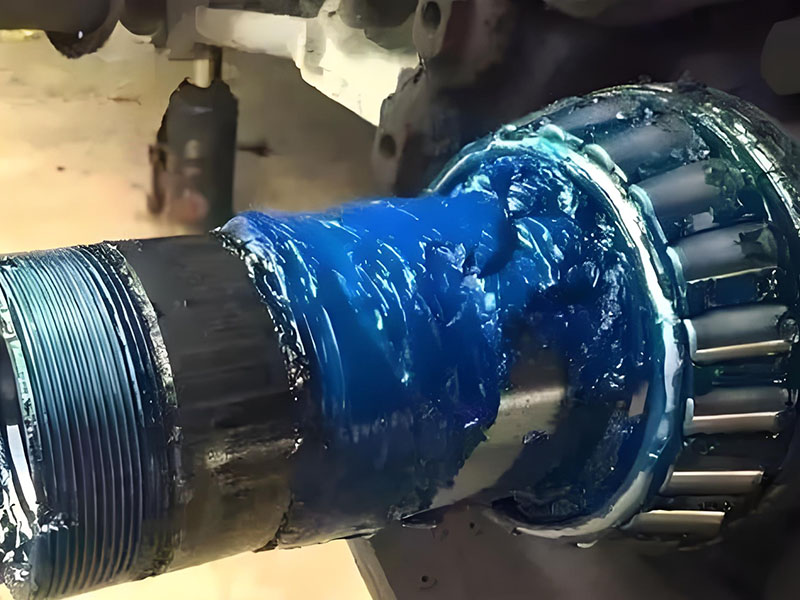
In harsh environments, a torn seal is a death sentence — water and grit destroy the bearing within hours. Regularly inspect rubber seals for cuts, hardening, or deformation. For serviceable tapered roller bearings, repack with NLGI Grade 2 lithium-complex grease every 80,000 km or annually. For sealed hub units (Gen 1, Gen 2, Gen 3 assemblies), never attempt to open or repack — they are lubricated for life.
Special considerations for hub assemblies
Gen 3 wheel hub assemblies with integrated ABS rings require care: do not strike the tone ring, as this damages the magnetic encoder and causes ABS fault codes. DUHUI manufactures Gen 1 wheel bearings (two angular contact ball bearings back-to-back), Gen 2 wheel hub assemblies (integrated outer flange), and Gen 3 wheel hub assemblies (including ABS encoder ring).
Heavy-duty trucks and installation
For heavy-duty trucks with oil-lubricated wheel ends, check hub oil level weekly and change every 100,000 km or annually. Milky oil indicates water ingress; metallic particles mean wear. When installing a new bearing, use a hydraulic press — never hammer the outer ring. Torque the axle nut precisely: under-torquing allows axial play, over-torquing over-preloads the bearing. Many vehicles require a new one-use torque-to-yield nut. Always replace the axle nut seal and any O-rings. Maintain records of bearing replacements per axle to identify recurring issues (e.g., repeated failures on one corner may indicate a bent spindle).
Common Bearing Failure Modes and How to Prevent Them
Understanding how a bearing fails helps you stop it from happening again.
- Fatigue (Flaking/Spalling): Natural end of life. Can be extended by proper lubrication and load management. Replace at recommended intervals based on L10 life calculations.
- Wear (Abrasion): Caused by dirty environments with particles entering the raceway. Prevent with better sealing (2RS) and clean handling.
- Corrosion (Rust): Moisture ingress from damaged seals, high humidity, or direct water jets. Switch to stainless steel bearings or improve seal maintenance.
- Brinelling (Indentations): Static overload or incorrect mounting. Use proper installation tools: press or induction heater. Do not strike bearing rings.
- Smearing: Slippage at high speeds due to insufficient load or inadequate lubrication. Ensure minimum load requirements are met (typically 2-5% of bearing dynamic capacity).
- Electrical fluting (on motor bearings): Stray currents pass through the bearing. Use insulated bearings (with ceramic coating) or shaft grounding brushes.
Conclusion
Implementing a robust bearing maintenance program — from basic cleaning and correct lubrication to advanced vibration monitoring — significantly reduces total cost of ownership, maximizes uptime, and ensures safety. This guide has covered universal principles with specific data, deep-dive industry best practices, and failure analysis. Manufacturers like DUHUI emphasize that maintenance plans should be tailored to actual operating conditions. Always refer to original equipment manufacturer specifications or consult a qualified bearing supplier for detailed technical documentation. With disciplined inspection and timely intervention, you can achieve bearing service life within 80-100% of L10 ratings.
Frequently Asked Questions (FAQs)
Q1. How often should I lubricate electric motor bearings?
A1. For continuous operation at normal temperature (below 70°C), relubricate once per year. For every 10°C rise above 70°C, halve the interval. Use the grease quantity formula: G = 0.005 × D × B (where D = bearing outer diameter in mm, B = width in mm). For a 6204 bearing (47 mm OD, 14 mm width), this yields about 3.3 grams.
Q2. What type of grease is best for food processing bearings?
A2. Use NSF H1-registered grease. DUHUI supplies stainless steel bearings pre-filled with NSF H1 grease. Common food-grade grease brands include Chevron SRI 2, Mobil FM, and Kluberfood. Ensure compatibility with seal material (NBR or FKM) and operating temperature range.
Q3. How do I check wheel bearing play without special tools?
A3. Jack up the wheel, grasp the tire at 12 and 6 o’clock, and rock the assembly firmly. Any perceptible movement (more than a slight thunk) suggests wear. Compare to the opposite wheel. For precise measurement, use a dial indicator. Acceptable axial play: 0.02–0.06 mm for most passenger cars; 0.05–0.10 mm for heavy trucks.
Q4. Can I reuse a bearing after removal?
A4. Generally no. Once a bearing is removed from an interference fit, the fit surfaces may be damaged. For critical applications (high speed, high load, safety-related), always install a new bearing. In non-critical, low-speed, low-load applications (e.g., hand carts), inspection by a qualified technician may allow reuse if no damage is found — but it is rarely worth the risk.
Q5. What is the most common cause of premature bearing failure?
A5. Contamination (dirt, moisture) is the leading cause, accounting for nearly half of premature failures. Improper lubrication and incorrect installation follow closely.
Q6. Are sealed bearings always maintenance-free?
A6. Sealed bearings (2RS, ZZ) are pre-greased and designed to operate without relubrication for their service life. However, they still require periodic inspection for noise, heat, or seal damage. They cannot be repacked — once they fail, replace them.
Q7. How should I store bearings before installation?
A7. Keep them in original packaging, horizontally, in a dry environment (humidity below 60%). Avoid temperature fluctuations that cause condensation. Do not remove protective oil or grease until just before mounting. Shelf life of lubricated bearings is typically 2-3 years; after that, the grease may separate or oxidize. For long-term storage, rotate bearings periodically to redistribute grease.
Q8. Does DUHUI provide technical documentation for bearing selection and maintenance?
A8. Yes. DUHUI supplies specification sheets, mounting instructions, lubrication recommendations, and failure analysis guides with every product. For custom applications, our engineering team provides fit tolerance calculations, grease compatibility charts, and installation torque values. Refer to product documentation or contact your supplier for technical support.