Quick Answer: Coated bearings can reduce electrical erosion, corrosion, friction, wear, fretting, and unplanned downtime, but the benefits depend on the coating type and the failure mode. Alumina ceramic coatings provide electrical insulation, nickel and chromium-based coatings resist corrosion, DLC and CrN hard coatings lower friction and wear, and PTFE or zinc-phosphate coatings protect bearing seats. Verify the coating, dimensions, and operating limits for the exact bearing before selection.
Coated bearings are not a single product category. A coating selected for electrical insulation will not necessarily solve a corrosion problem, and a hard low-friction film may be unnecessary where fretting is the main risk. The useful question is which benefit the coating is intended to deliver, and whether the coated bearing is specified for that duty. This article groups the main benefits by coating function so buyers and technicians can match the coating to the observed failure mode.
Why Coated Bearing Benefits Depend on the Coating Type
Coated bearings use a functional surface layer on a standard bearing-steel substrate. The coating changes the surface property that limits life in a given application. The main families are:
- Ceramic insulating coatings, usually alumina, applied to rings or raceways to block current.
- Metallic or conversion coatings, such as nickel, chromium, zinc, or zinc phosphate, used for corrosion or fretting protection.
- Hard low-friction coatings, such as DLC, CrN, and PVD or PACVD films, used to reduce wear and friction.
- PTFE-based coatings, used for low friction and anti-fretting protection on bearing seats.
A coating selected for electrical insulation is not automatically the best choice for corrosion, wear, or fretting. The benefit follows the coating function, the substrate, the surface preparation, and the operating conditions. Some nickel-coated bearing ranges, for example, combine stainless-steel rings, ceramic balls, fluororesin cages, and solid lubricants for corrosive special environments, while a hard carbon film is selected for a different problem entirely.
Benefit 1: Electrical Insulation and Protection Against Electrical Erosion
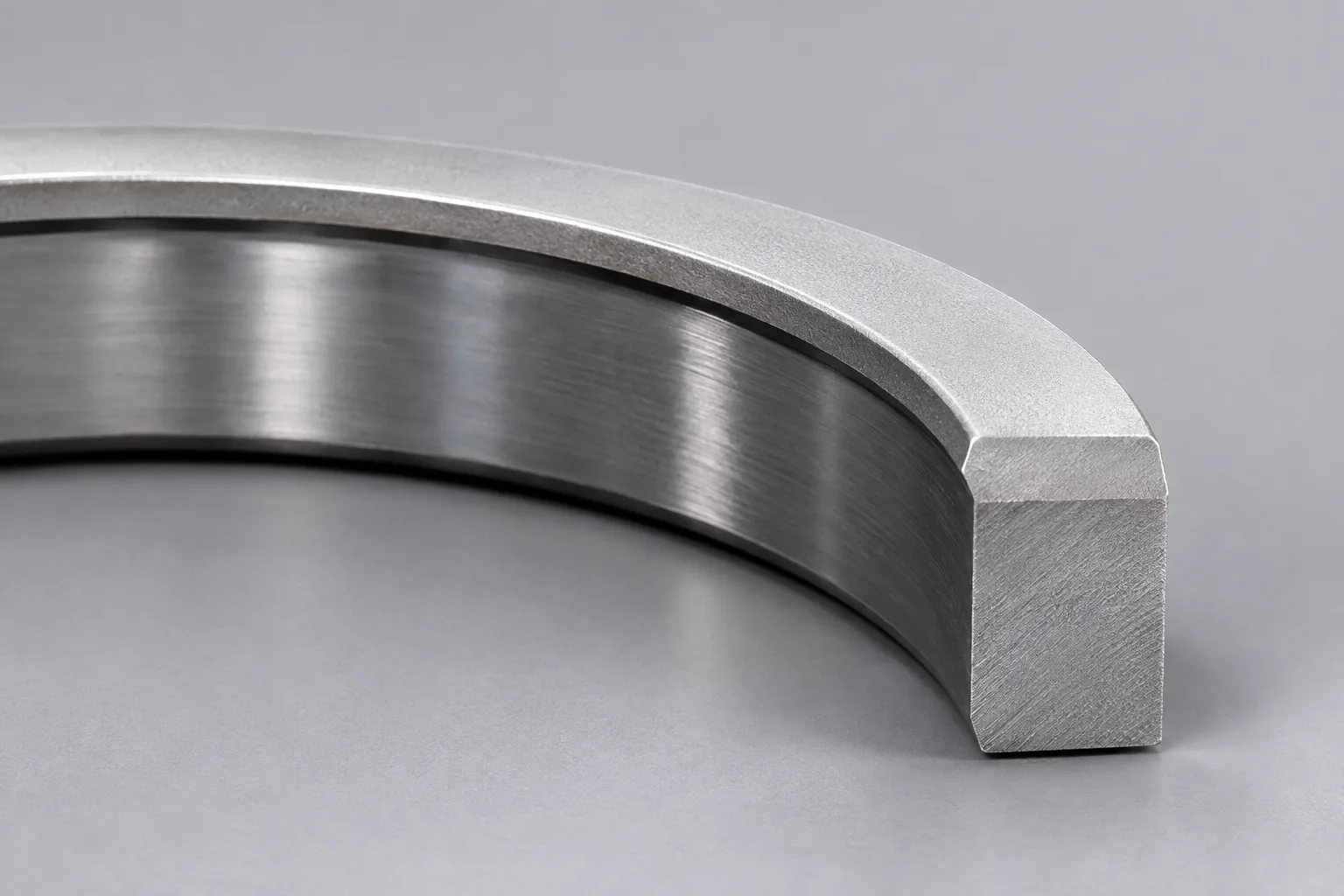
Electrical erosion occurs when current crosses the rolling contacts and discharges through the lubricant film. The discharge creates small craters, frosted raceways, and lubricant degradation, and can lead to premature motor-bearing failure. Ceramic-coated insulated bearings interrupt that current path. An alumina layer on the outer ring or raceway provides a dielectric barrier, so stray current is less likely to pass through the rolling contact.
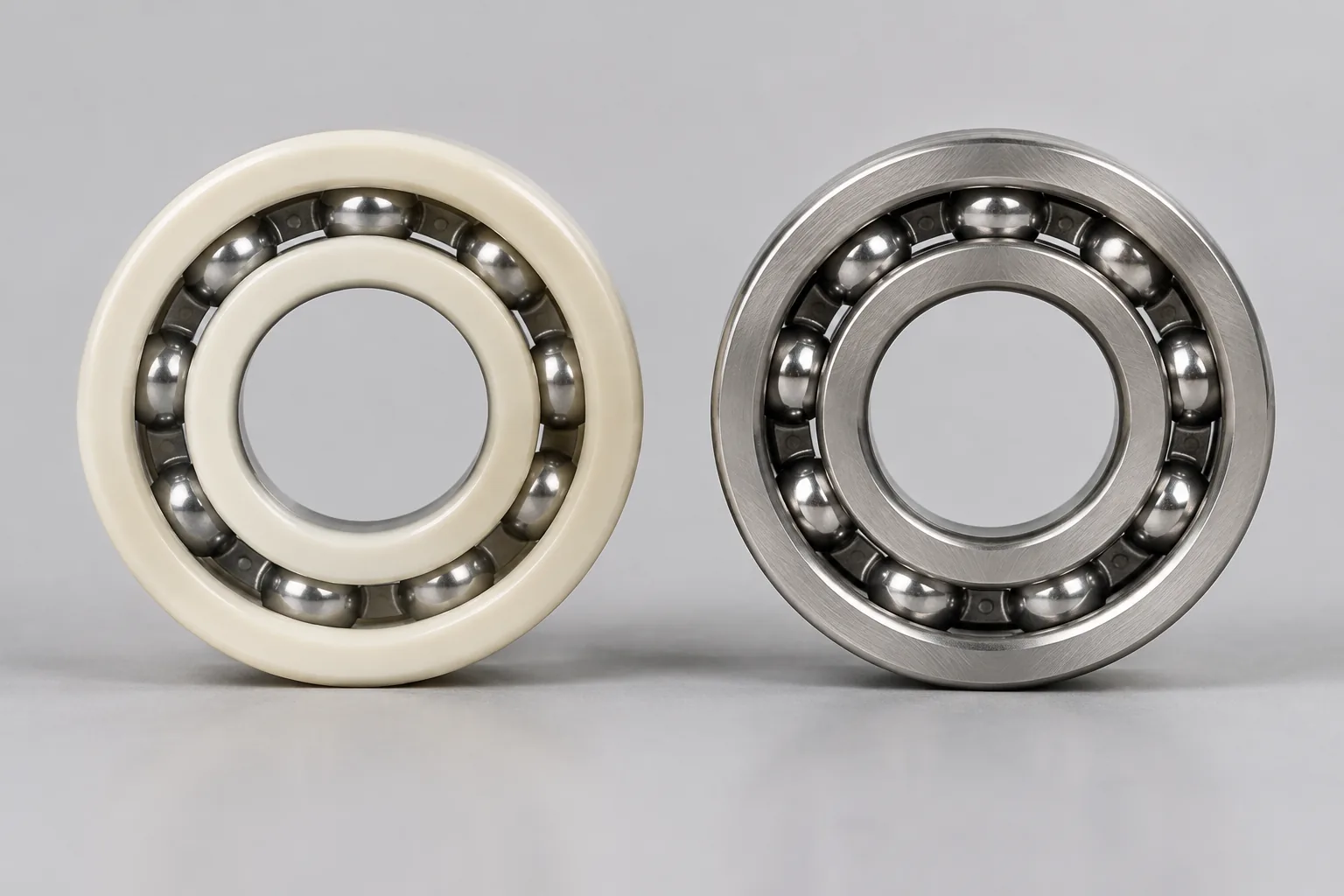
Reported benefits include reduced electrical pitting, less lubricant degradation from discharge, higher uptime, and lower maintenance cost. Typical alumina coatings are applied in thicknesses of roughly 100-300 μm, with breakdown voltages of at least 3,000 V DC and insulation resistance of at least 200 MΩ DC. Some ceramic-coated ranges are available for bore diameters around 50-160 mm, are rated for insulation capability up to 3,000 V DC, and list insulation resistance of at least 100 MΩ at a 500 V DC test voltage. These ratings are product-specific. Verify the required voltage, resistance, bore range, and motor operating conditions with the supplier.
This benefit applies to ceramic-insulated bearing variants, mainly for VFD motors, generators, and applications where shaft currents are a known risk. Metallic corrosion coatings and hard wear coatings are not electrical insulation solutions.
Benefit 2: Corrosion Resistance in Moisture and Process Environments
Corrosion-resistant coatings protect bearing rings from moisture, process water, disinfectants, and other aggressive media. Nickel, chromium, zinc, and related systems reduce rust-related noise, friction, contamination, and premature failure. The practical benefit is longer trouble-free operation in humid, washdown, or process-exposed equipment.
A nickel-coated corrosion-resistant bearing range may combine martensitic stainless-steel rings, silicon nitride ceramic balls, a fluororesin cage, and a fluorine-based solid lubricant. Such bearings are positioned for semiconductor cleaning and etching equipment, food machinery, and conveyor lines. Reported application ranges include normal atmosphere to 10^-6 Pa and a maximum temperature of 200°C for some nickel-coated designs. Other coating systems report salt-spray protection times: a zinc-based coating can provide up to 720 hours without red rust under DIN EN ISO 9227, while a Cr(VI)-free chromium coating of 1-3 μm or 1-6 μm thickness and 950-1,300 HV hardness can provide 24 hours of protection in an unloaded salt-spray test to the same standard.
Corrosion performance depends on the specific medium, concentration, temperature, exposure time, and coating system. Salt-spray results are comparative laboratory data, not a service-life guarantee. Do not assume universal corrosion resistance or food-grade approval unless the exact product is verified.
Benefit 3: Lower Friction, Wear, and Energy Loss
Hard low-friction coatings reduce adhesive wear, abrasive wear, and sliding damage, particularly during mixed friction, slippage, or lubricant starvation. DLC, CrN, and PVD or PACVD coatings are thin films, often a few micrometers thick, with hardness values that can exceed 1,000 HV. Their main value is protecting surfaces when the lubricant film is too thin to separate the components fully.
Reported data for one PVD or PACVD hard coating family lists thickness of approximately 0.5-4 μm and hardness above 1,000 HV; a metal-doped hydrogenated amorphous carbon variant is listed at 0.5-4 μm and at least about 1,200 HV. Under dry friction, a coated surface against steel can show up to 80% lower friction than steel against steel. CrN coatings are typically 1-6 μm thick and are described as providing high sliding and adhesive wear resistance, load capacity, abrasive wear resistance, and lower friction. DLC hardness is reported at approximately 18-30 GPa (1,800-3,000 HV), while one rolling-bearing coating is around 12 GPa (about 1,200 HV).
Lower friction can reduce energy loss and lubricant demand, but the benefit is strongest in mixed-friction, sliding, or starved-lubrication conditions. Coating performance depends on substrate, surface preparation, load, temperature, and the counter-surface. A coating does not eliminate the need for correct lubrication or bearing selection.
Benefit 4: Better Reliability Under Poor Lubrication or Slippage
Some coated bearings retain better surface performance when the lubricant film is thin or temporarily interrupted. Suitable mixed iron-oxide or hard carbon coatings can improve bearing performance under lubricant starvation, according to reported technical guidance. A mixed iron-oxide coating can improve running-in and help traction-motor deep-groove ball bearings tolerate inadequate lubrication. Low-friction coatings can protect contact surfaces at low lubricant-film parameters and under starvation while improving lubricant adhesion.
The practical benefit is reduced smearing, lower seizure risk, and less surface damage during difficult operating conditions. This is a reliability improvement for specific coated products and specific poor-lubrication conditions, not a substitute for correct lubrication. Verify coating suitability for the bearing type, load, speed, and lubricant.
Benefit 5: Reduced Fretting Corrosion and Mating-Surface Damage
Fretting corrosion occurs when vibration or micro-movement causes repeated slip between the bearing ring and its shaft or housing. The result can be seat damage, noise, friction, and difficult disassembly. Low-friction seat coatings and phosphate coatings address this failure mode.
PTFE coatings are typically 10-20 μm thick and provide very low friction with non-stick-slip characteristics. A PTFE coating on a bearing bore or outside diameter can provide long-term fretting-corrosion protection. A zinc-phosphate coating is used on railway axle-box bearings to reduce fretting corrosion on fitting surfaces and lower friction at sliding fits.
Coatings on seats must be evaluated together with fit, tolerance, and clamping conditions. A seat coating does not correct an incorrect interference fit or excessive vibration.
Benefit 6: Longer Bearing and Lubricant Life, Lower Maintenance Cost
Controlling electrical erosion, corrosion, friction, wear, and fretting can extend bearing life and reduce unplanned replacement intervals. Reported case studies show what is possible when the coating addresses the actual failure mode. In one dairy-powder fan motor, a standard bearing lasted about 2,000 hours, while an alumina-insulated bearing reached 20,000 hours, about ten times longer. In a paper-mill application, low-friction coated bearings achieved at least ten times longer life under inadequate lubrication. A coated spherical roller bearing in a calender application improved wear resistance and extended thermal-roll bearing life, saving the customer about EUR 50,000 over three years.
These results are specific to the described applications. Do not claim a tenfold life improvement for all coated bearings. Life improvement depends on matching the coating to the dominant failure mode, the operating conditions, and the condition of the mating surfaces. Longer bearing life can reduce maintenance cost and downtime, but the actual result must be verified in service.
Benefit 7: Easier Replacement and Lower Design Complexity
Many coated bearings retain standard boundary dimensions and can often replace standard bearings without changing shaft or housing geometry. Outside-coated insulated bearings can be used in common housings, and some ceramic-coated ranges conform to standard dimension and tolerance systems such as ISO 492, DIN 620, and JIS 1514. Integrated insulation or corrosion protection can eliminate separate insulating components or extra protection measures, simplifying equipment design and reducing part count.
Check coating location, bore and outside-diameter tolerances, and the mounting method before substitution. Some coatings or special bearing variants may require different fits or handling. Confirm dimensional and tolerance compatibility for the specific coated product with the supplier.
How to Choose the Right Coated Bearing
Match the coating to the failure mode. Use ceramic insulation for electrical erosion, nickel or chromium or zinc systems for corrosion, DLC or CrN hard coatings for friction and wear, and PTFE or zinc phosphate for fretting protection. Check electrical ratings, temperature limits, chemical exposure, load, speed, fit, and the available bearing size range.
Ask the supplier for product-specific coating data, interchangeability confirmation, and application references. Do not select a coating only from general benefit claims or from another application’s case study. The correct choice depends on verified product data and the actual operating conditions.
Conclusion
Coated bearings can provide meaningful benefits in electrical insulation, corrosion resistance, wear reduction, poor-lubrication reliability, fretting protection, life extension, and replacement simplicity. The value comes from matching the coating to the specific failure mode and confirming that the coated product is rated for the load, speed, temperature, and environment. Before specifying or replacing a bearing, confirm the coating type, dimensions, tolerances, and application limits for the exact part number. A coated bearing is a targeted solution, not a universal upgrade.
FAQs
Q1: Are all coated bearings electrically insulated?
A: No. Electrical insulation requires a ceramic or other dielectric coating designed for that purpose. Metallic corrosion coatings and hard wear coatings do not provide the same insulation. Verify breakdown voltage and insulation resistance for the specific product if shaft currents are the concern.
Q2: Can coated bearings replace standard bearings without changing the housing?
A: Many qualified coated bearings keep standard boundary dimensions, but interchangeability depends on coating location, bore and outside-diameter tolerances, and mounting method. Check the specific product data before substitution; some variants may require different fits or handling.
Q3: Do coated bearings remove the need for lubrication?
A: No. Some hard or low-friction coatings improve reliability when the lubricant film is thin or interrupted, but they do not replace correct lubrication, lubricant selection, or maintenance. Use the coating as additional protection for a defined failure mode.
Q4: How do I choose between a corrosion coating and a wear-resistant coating?
A: Identify the dominant failure mode first. Corrosion calls for nickel, chromium, zinc, or similar barrier coatings. Adhesive or abrasive wear calls for DLC, CrN, or other hard low-friction films. Electrical erosion calls for ceramic insulation. Fretting at the seat calls for PTFE or phosphate coatings.
Q5: Do reported life improvements apply to every application?
A: No. Case-study results such as tenfold life improvements are specific to the application, coating, and operating conditions. They show what is possible when the coating addresses the actual failure mode, not a guaranteed result for every bearing.