For rotating machinery—from conveyor systems and industrial fans to construction equipment and automotive axles—bearing performance depends on more than the bearing itself. The bearing housing provides the structural foundation that ensures proper shaft alignment, load distribution, and contamination protection. But with so many housing types, materials, and configurations available, how do you determine which one fits your application? What distinguishes a pillow block housing from a flange housing? And how do material choices like cast iron, steel, and stainless steel affect long-term reliability? This guide will answer these questions and provide a practical framework for selecting and maintaining bearing housings.
What Is a Bearing Housing?
A bearing housing (also known as a bearing shell or bearing support) is a mechanical component designed to securely hold a rolling or sliding bearing in place while protecting it from external contaminants such as dust, moisture, and debris. Beyond protection, it ensures precise alignment of the rotating shaft, supports radial and axial loads, and contributes to the overall stability and longevity of machinery.
Several design features distinguish well-engineered bearing housings:
- Compact structure. Housing designs minimize space requirements while maintaining adequate clearance for bearing operation and lubrication.
- Responsive rotation. Precision-machined bores and proper bearing seats allow smooth, low-friction shaft rotation with minimal resistance.
- Ease of installation. Modular designs and standardized dimensions simplify mounting and alignment procedures.
- Simplified maintenance. Split housings enable bearing inspection, lubrication, and replacement without dismantling the entire shaft assembly.
Types of Bearing Housings
Bearing housings are available in multiple configurations, each tailored to specific load conditions, environmental challenges, and spatial requirements.
Pillow block (plummer block) housings. The most common type, these housings feature a pedestal-like base with bolt holes for foundation mounting. They accommodate a wide range of bearings, seal options, and lubrication methods. Split pillow block designs allow installation and removal without disturbing the shaft or other components.
Flanged housings. These housings have a flange perpendicular to the shaft axis, making them ideal for applications where space constraints or adjacent structures make pillow block mounting impractical. Common configurations include two-bolt and four-bolt flanges.
Take-up units. Specifically developed for tensioner drum bearing arrangements in belt conveyor systems, these housings incorporate a yoke-shaped drawbar eye for attachment to the tensioning device, enabling proper belt tension adjustment and accommodating misalignment.
Split plummer block housings. The housing body is split into an upper and lower section, enabling significantly simpler mounting and maintenance. The two halves form a matched pair and must not be interchanged with parts from other housings.
Plain bearing housings. Designed for plain (sleeve) bearings rather than rolling-element bearings, these housings are typically used in applications requiring high load capacity, low speed, or specialized lubrication conditions.
Cylindrical, radial, and thrust housings. These specialized housings are designed to accommodate specific load directions—radial housings for radial loads, thrust housings for axial loads, and cylindrical housings for combined loading scenarios.
Insert bearing with housing. A pre-assembled unit combining a bearing insert (typically a single-row deep groove ball bearing with a convex-sphered outer diameter) and a housing, available in cast iron, stainless steel, or thermoplastic materials.
Key Benefits of Using Bearing Housings
Contamination protection. Housing designs shield bearings from dust, moisture, debris, and other environmental hazards. Optimized sealing options—including labyrinth seals, lip seals, and double seals—prevent ingress of contaminants while retaining lubricant.
Improved stability and load distribution. Robust housing construction ensures bearings can withstand heavy radial and axial loads without deformation. Proper housing alignment reduces uneven stress, minimizing premature bearing failure.
Simplified maintenance. Split housings allow faster bearing installation, inspection, and replacement, reducing downtime and lowering maintenance costs.
Customization for specific applications. Bearing housings can be tailored to unique operating requirements, including special sealing arrangements, lubrication ports, and mounting configurations.
Resistance to environmental factors. Materials and coatings can be selected to resist corrosion, extreme temperatures, chemical exposure, and washdown conditions.
Temperature management. Well-designed housings with adequate surface area and ventilation gaps help dissipate heat generated by high-speed bearings, reducing the risk of lubricant breakdown and premature bearing failure.
Materials Selection for Bearing Housings
The material selection for bearing housings directly affects their performance and service life. Below is a comparison of the most commonly used materials.
| Material | Key Features | Typical Applications |
|---|---|---|
| Cast Iron | Good wear resistance, excellent rigidity, superior vibration dampening, cost-effective. Grade 200/250 grey iron is the industrial standard. | General industrial machinery, conveyors, fans, pumps, agricultural equipment |
| Steel / Cast Steel | High strength and impact resistance, good ductility, higher durability than cast iron. Cast steel produces longer chips during cutting operations. | Heavy-load applications, high-speed machinery, mining equipment |
| Stainless Steel | High corrosion resistance, chemical stability, meets hygiene standards (FDA/EHEDG) for food and pharmaceutical processing. | Food processing, pharmaceutical production, marine environments, washdown applications |
Selection considerations. Cast iron offers the highest performance-to-price ratio for general industrial applications. Stainless steel, while 3–5 times more expensive, is essential for corrosive or hygienic environments where contamination cannot be tolerated. Steel provides superior impact resistance for heavy-duty applications but typically costs more than cast iron.
Applications Across Industries
Bearing housings are used across a wide range of industries, with each sector imposing distinct performance requirements.
| Industry | Applications | Key Design Considerations |
|---|---|---|
| Manufacturing | Machine tools, conveyor systems, gearboxes, compressors, packaging equipment | Continuous operation under high speeds and loads, precision alignment, thermal expansion compensation |
| Automotive | Axles, engines, wheel hub assemblies, transmission support bearings | Dynamic loads, high-speed rotation, compact packaging |
| Construction | Excavators, cranes, concrete mixers, bulldozers | Extreme shock loads, vibration, dust, water exposure; heavy-duty cast iron or ductile iron construction required |
| Agriculture | Tractors, combines, balers, irrigation systems | Dirt, mud, moisture exposure; sealed or dust-proof housings with corrosion-resistant coatings |
| Mining and Energy | Crushers, mills, conveyors, fans, turbines, pumps | Extreme loads, abrasive environments, continuous operation; spheroidal graphite cast iron for demanding applications |
In manufacturing, bearing housings are critical for conveyor systems—where take-up units maintain belt tension—and for gearboxes, where flanged housings provide compact support. Automotive applications rely on pillow block housings for axle supports and wheel hub assemblies, while construction machinery demands heavy-duty cast iron housings to withstand shock loads and vibration.
How to Choose the Right Bearing Housing
Understand application requirements. Clarify operating conditions including load type (radial, axial, or combined), speed range, temperature extremes, and environmental exposure. Determine whether the bearing will serve as a locating (fixed) or non-locating (floating) position.
Choose the appropriate material. Select based on working environment and load conditions. For general industrial use, cast iron provides the best value. For corrosive or washdown environments, stainless steel is necessary. For heavy shock loads, steel or ductile iron should be considered.
Consider installation and maintenance requirements. Ensure the housing design facilitates easy installation and subsequent maintenance. Split housings simplify bearing replacement but may have slightly lower rigidity than solid designs. Verify that lubrication ports are accessible and that seal types match the operating environment.
OEM vs. replacement selection. For original equipment manufacturing, custom housing designs can be developed to meet specific dimensional and performance requirements. For replacement applications, verify that the housing conforms to market-standard dimensions to ensure interchangeability with existing components.
How to Maintain Bearing Housings
Proper maintenance extends bearing service life, reduces failure rates, and lowers equipment downtime.
Regular inspection. Check housings for cracks, deformation, and cleanliness during scheduled maintenance. Monitor operating temperature (normal range: 40–60°C; above 70°C indicates potential lubrication or load issues) and listen for unusual noise or vibration.
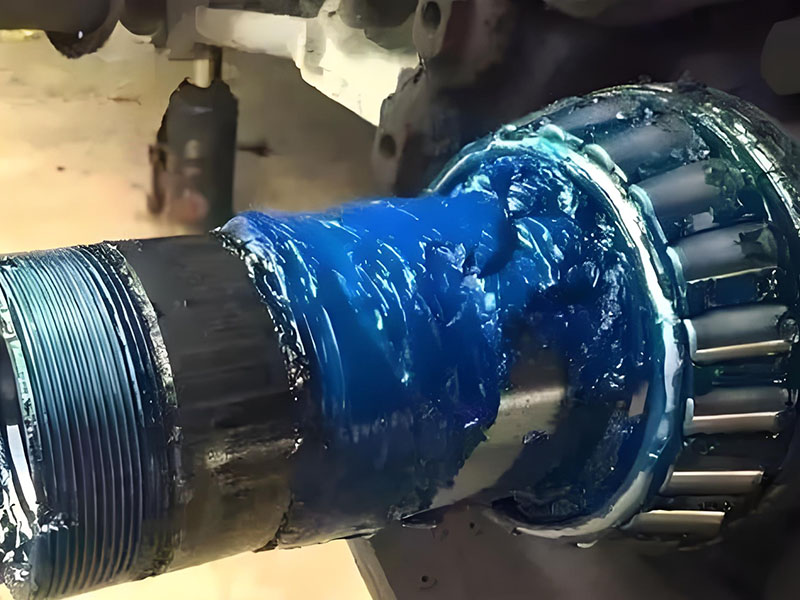
Proper lubrication. Select the appropriate lubricant based on operating conditions—lubrication for low-speed applications, oil lubrication for high-speed or high-temperature conditions. Grease should generally be replaced every 3–6 months, while oil should be replaced when discolored, thinned, or contaminated, typically every 3–12 months.
Cleaning and replacement. Remove old grease and clean bearing chambers using appropriate solvents (kerosene or specialized cleaners). Avoid compressed air blasting, which can force contaminants into bearing clearances. Repack with clean lubricant and inspect seals for damage before reassembly.
Frequently Asked Questions
Q1: What is the difference between a pillow block housing and a flange housing?
A1: A pillow block housing has a pedestal base with bolt holes for mounting to a foundation, while a flange housing has a perpendicular flange that mounts directly to an adjacent structure. Pillow blocks are preferred for general shaft support applications; flange housings are used where space constraints or machine design favors side mounting.
Q2: Split vs. solid bearing housing—which one should I choose?
A2: Split housings allow bearing installation and replacement without removing the shaft, making them ideal for applications where shaft removal is difficult or downtime is costly. Solid (unsplit) housings provide higher rigidity and are used where bearings are subjected to very high loads.
Q3: How do I choose the right material for a bearing housing?
A3: Cast iron suits general industrial applications requiring good rigidity and vibration dampening at moderate cost. Steel provides higher impact resistance for heavy loads. Stainless steel is necessary for corrosive environments, food processing, and pharmaceutical applications where contamination cannot be tolerated.
Q4: What are the benefits of using stainless steel bearing housings?
A4: Stainless steel housings are 100% rust-proof, resistant to most acids, alkalis, and cleaning agents, and meet FDA/EHEDG hygiene standards for food and pharmaceutical processing. They are essential for applications requiring frequent high-pressure washdowns.
Q5: How often should I inspect and maintain bearing housings?
A5: Inspection frequency depends on operating conditions. For continuous-operation equipment, monthly visual inspections are recommended. Lubricant replacement for grease-lubricated bearings should occur every 3–6 months; oil-lubricated systems should be checked every 3–12 months or when lubricant shows signs of contamination.
Conclusion
Bearing housings are a foundational component of reliable rotating machinery. By providing stable support, protecting bearings from contamination, and enabling efficient maintenance, they directly impact equipment uptime and operational costs. Understanding the various housing types, material options, and selection criteria enables engineers and procurement professionals to specify the right solution for each application. Whether for manufacturing lines, construction equipment, agricultural machinery, or mining operations, proper selection and maintenance of bearing housings contribute to longer bearing life and reduced system downtime.