Quick Answer: The L44649 is an imperial single-cone tapered roller bearing, not a complete assembly: it is normally supplied as a cone and matched with an L44610 cup to form one single-row bearing set. Its cone bore measures 1.0625 in (26.988 mm). Ratings, materials, and service intervals vary by manufacturer, so confirm the cone and cup numbers, measure the spindle journal and hub bore, and follow the equipment manufacturer’s manual before ordering or installing.
The L44649 comes up whenever a small inch-series wheel or shaft bearing needs replacing, and a common ordering mistake starts with one assumption: that the number on the box describes a complete bearing. It describes a cone. This guide covers what the part is, where it is used, what it can carry, and how to install and maintain it without guessing.
What the L44649 Bearing Is and How It Fits
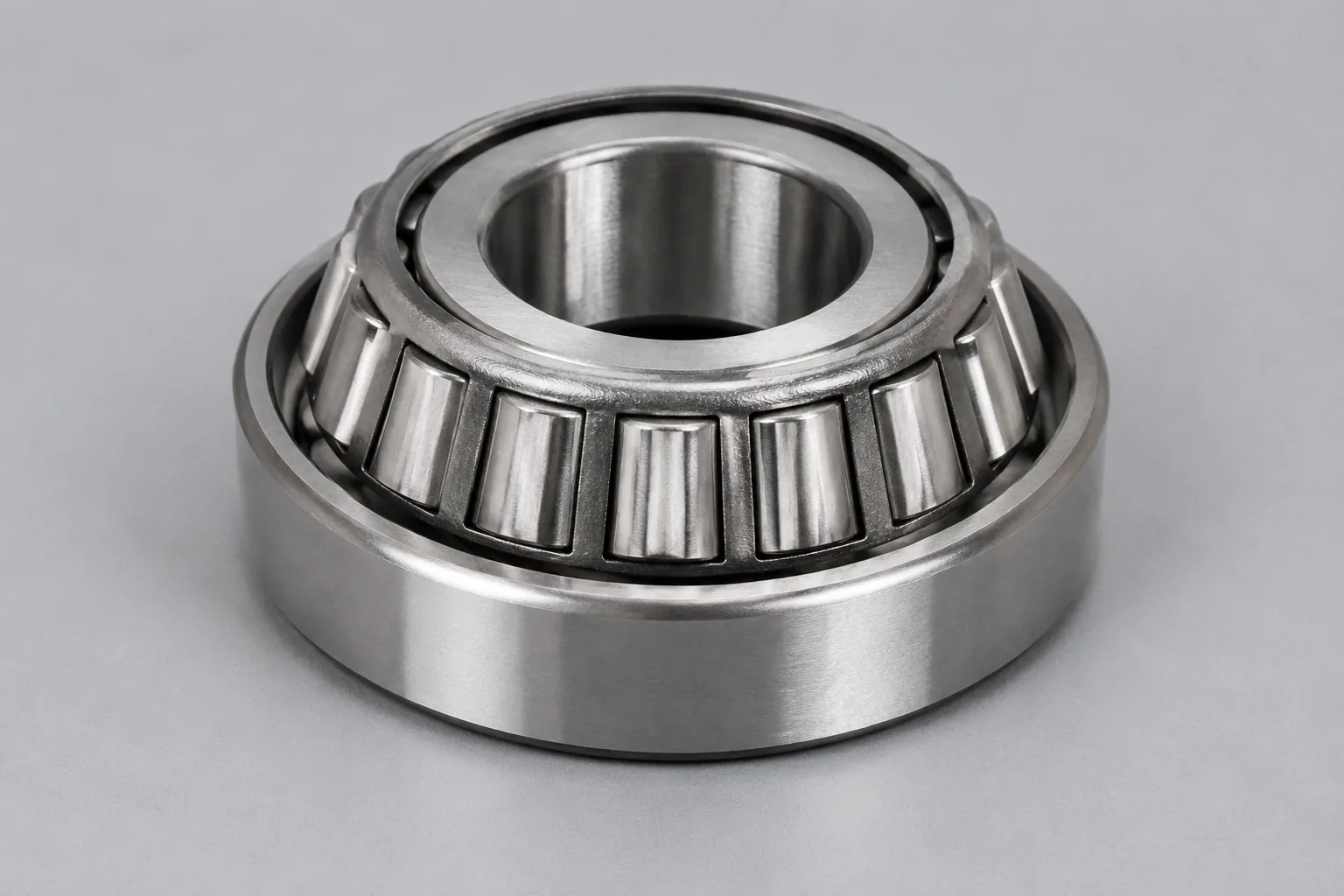
The L44649 is a single cone assembly: an inner ring with a tapered raceway, a set of tapered rollers, and a stamped steel cage. It carries no outer ring of its own. A separate cup completes the bearing, and the cone and cup are separable, so each half can be handled, installed, and inspected on its own. Single-row tapered roller bearings of this type are usually mounted in opposed pairs, because the two rows together control axial position.
The standard pairing is the L44649 cone with an L44610 cup, often written as L44649/L44610. Some catalog listings also show an L44613 cup with the same cone, so the cup number on the old part matters as much as the cone number. Do not order from a shorthand description such as 1-1/16 inch bearing: that phrase can describe more than one part, and it says nothing about the outer ring or the assembly width.
| Feature | Inch | Metric |
|---|---|---|
| L44649 cone bore (d) | 1.0625 in (1-1/16 in) | 26.988 mm |
| L44649 cone width (B) | 0.5800 in | 14.732 mm |
| L44610 cup outside diameter | 1.9800 in | 50.292 mm |
| L44610 cup width | 0.4200 in | 10.668 mm |
| Assembly width (T), cone plus cup | 0.5600 in | 14.224 mm |
| Nominal set weight | about 0.30 lb | 0.100 kg |
The cone belongs to the L44600 Series of inch tapered roller bearings, and the cage is stamped steel in manufacturer data. Construction details beyond that are brand-specific. One carburized-steel version of the L44649/L44610 set is cataloged as an open bearing with Class 2 precision and a stated operating range of -40 to 250°F (-40 to 120°C); those values describe that version only and should not be assumed for another supplier’s set.
Common Uses and Load Cases for L44649/L44610
The set suits positions that carry radial load, axial load, or both at once: wheel hubs, trailer axle hubs, and rotating shaft locations on small equipment. Tapered roller geometry is rated excellent for combined-load duty, moment-load duty, stiffness, and locating a shaft, which is why the same basic bearing appears across so many hub and spindle applications.
In trailer hubs the L44649 is often the outer bearing of a two-bearing hub. Do not select it from the trailer’s rated capacity. Confirm the position from four things:
- the numbers stamped on the old cone and on the old cup;
- the measured spindle journal diameter, which should match the 26.988 mm cone bore;
- the hub race bore, which should match the 50.292 mm cup outside diameter;
- the axle or equipment manufacturer’s parts list for that hub.
Two single-row bearings are normally mounted opposed, face-to-face or back-to-back, and adjusted by moving one ring axially. That adjustment sets clearance or preload, and the correct procedure belongs to the axle, not to the bearing catalog.
Published cross-reference lists connect the L44649/L44610 set to a long list of original-equipment numbers, including 1565443, 43210-01B00, 90368-26027, B002-33-047, MB515921, 09415132, 8-94201-309-0, MB001835, and MB002073. Treat every one of those numbers as a search starting point. A cross-reference entry shows that a catalog links two parts; it does not prove that the set fits every model or year that shares the number.
Benefits of the L44649/L44610 Tapered Roller Set
- Combined load capacity in one position. The tapered rollers take radial and thrust load together, which matches the mixed loads a hub sees during cornering, braking, and road impacts.
- Separable parts. Cone and cup install separately and can be inspected separately, so rollers, raceways, and cage can be checked without pressing the whole bearing out.
- Adjustable axial setting. An opposed pair reacts against axial force, and clearance or preload is set by axial adjustment rather than by part selection.
- Stiff locating performance. The design holds shaft position firmly under load, which keeps hub alignment stable.
Load figures are only comparable inside one manufacturer’s rating system. Published values for this cone include:
- C1 dynamic radial rating from one manufacturer: 8,010 lbf (35,600 N), based on 1 x 10^6 revolutions L10 life.
- C90 dynamic radial rating from the same manufacturer: 2,080 lbf (9,230 N), and Ca90 dynamic axial rating 1,330 lbf (5,910 N), both based on 90 x 10^6 revolutions L10.
- Static radial rating C0 from the same manufacturer: 7,400 lbf (32,900 N), with a K factor of 1.56.
- L44649/L44610 assembly rating from another manufacturer: 28.8 kN dynamic and 34.0 kN static.
The C1 and C90 figures use different life bases and must not be read as one scale. The assembly rating from a second manufacturer reflects different internal geometry, material, and calculation method, so one brand’s rating never transfers to another brand’s set. Inch-series tapered roller bearings are dimensioned to the ABMA standard, while metric series follow ISO 355 and JIS B 1512.
Installation and Fit Checks Before Replacing an L44649 Bearing
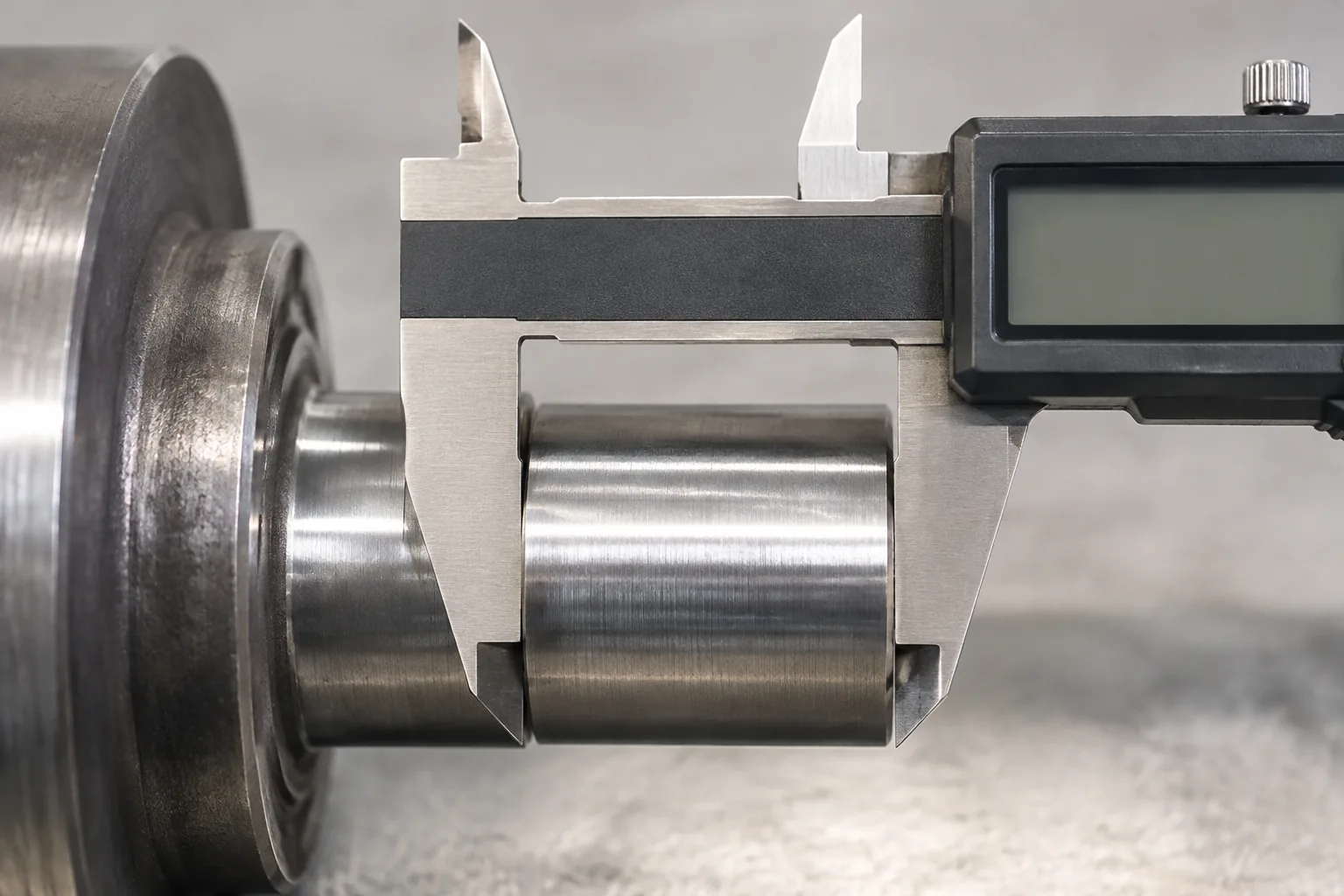
Measure before you order, and measure again before you press. The four checks that catch most wrong-part installations are the cone number, the cup number, the 26.988 mm spindle journal, and the 50.292 mm hub bore or race outside diameter.
- Inspect the old cup for pitting, spalling, scoring, heat discoloration, or uneven wear. If any is present, fit a new matching cup; a new cone should not run against a damaged raceway.
- Press the new cup fully to the hub retaining shoulder where the axle procedure requires it, and use only bearings listed for that hub in the manufacturer’s replacement chart.
- Lubricate the cage, the roller assembly, and the outer-ring raceway before assembly.
- Rotate the shaft several turns while adjusting, so the roller ends sit correctly against the guide flange. Incorrect contact produces a false clearance or preload reading and can cause early damage.
- Set end play, preload, and spindle-nut procedure to the axle, hub, or equipment manual. No universal torque or end-play value exists for this bearing, so none is given here.
Lubrication and Upkeep Schedule
For one common trailer-axle service schedule, the published interval is to clean, inspect, and repack the hub bearings every 12 months or 12,000 miles, whichever comes first. Severe duty, frequent water immersion, or a leaking seal justifies a shorter interval. That interval belongs to that axle guidance and is not a universal rule for every L44649 application.
The same guidance specifies a wheel-bearing grease with a lithium-complex thickener, NLGI No. 2 consistency, a minimum dropping point of 215°C (419°F), and EP, corrosion, and oxidation inhibitors. Where the equipment manufacturer specifies something different, that specification wins.
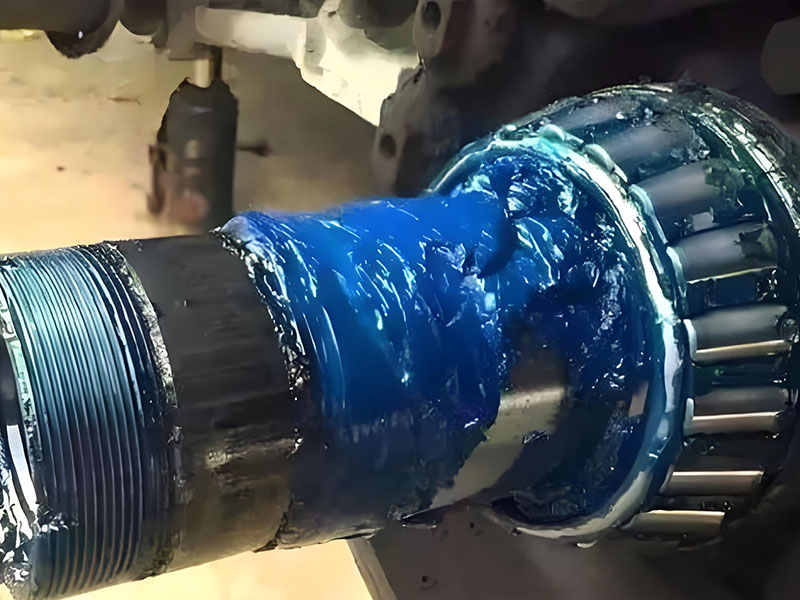
Hand packing starts at the wider end of the cone: work grease between the rollers in sections while rotating the assembly, until the cone is filled. Before reassembly, apply a thin film of grease to the cup raceway. Two lubrication errors cause avoidable heat: too little grease leaves the film too thin, and too much grease churns and raises temperature.
Do not mix grease types. Lithium, calcium, sodium, and barium complex greases are not interchangeable in a hub, and changing grease type means removing the old grease first. Oil-lubricated hubs are checked differently: verify the oil level and top up with a high-quality hypoid gear oil to the level shown by the transparent cap.
Inspection and Replacement Signs During Upkeep
At every service, examine the cone and cup for corrosion, pitting, spalling, scoring, heat discoloration, and roller or cage damage. Also check the hub and drum for abnormal wear, look for seal leakage, and replace the seal once it has been removed where the axle procedure calls for it.
Replace the cup whenever the mating cone is replaced, and treat heat discoloration, spalling, and scoring as retirement criteria: cleaning alone does not return a bearing with those signs to service. If wear is abnormal, review the whole assembly, including spindle condition, hub bore, seal condition, grease quality, and bearing adjustment, before fitting new parts.
How to Choose and Verify an L44649 Bearing Set
Order by numbers and measurements, not by description. A defensible order specifies the L44649 cone, the matching L44610 cup, and the measured journal and bore, and it checks that cone and cup arrive as a matched set from a traceable source.
- Use original-equipment references to widen a search, then confirm the part against the old markings and the axle parts list.
- Confirm material, precision class, temperature range, and load rating for the specific brand and version being quoted; those values do not transfer between suppliers.
- Confirm that the cup is included or available with the cone, because the cone alone cannot be installed.
- Keep fit decisions separate from price, stock status, and marketing copy.
For traceability, one published L44649/L44610 data sheet lists the manufacturer address as 4500 Mt. Pleasant St. NW, North Canton, Ohio 44720, USA. Manufacturer catalog data and axle service manuals are the documents to check when a value matters, alongside the L44649/L44610 bearing-finder data and the L44649/610 catalog data published by other manufacturers.
Conclusion
The L44649 bearing guide comes down to one distinction: the L44649 is a cone, and the L44610 cup is what turns it into a working bearing set. Get the pair right, match the 26.988 mm journal and the 50.292 mm bore, keep each load rating attached to the manufacturer and life basis that published it, and set preload by the axle procedure rather than by habit.
Upkeep decides how long the set lasts. Clean and repack at the interval your axle documentation states, use the specified grease, do not mix thickener types, and retire any cone or cup showing pitting, spalling, scoring, or heat discoloration. Before the next order, read the number on the old cup; it is the cheapest check available.
FAQs
Q1: Is L44649 a complete bearing or only a cone?
A: L44649 is only the cone assembly, meaning the inner ring, tapered rollers, and cage. It needs a separate cup to form a working bearing, so a complete replacement normally means the cone and cup together, as in L44649/L44610.
Q2: What cup matches the L44649 cone?
A: The L44610 cup is the standard pairing. Some catalog listings also show an L44613 cup with the same cone, so confirm the cup number from the markings on the old part and from the axle parts list instead of assuming one cup.
Q3: What are the L44649 dimensions?
A: The cone bore is 1.0625 in (1-1/16 in, 26.988 mm) and the cone width is 0.5800 in (14.732 mm). With the L44610 cup, the outside diameter is 1.9800 in (50.292 mm), the cup width is 0.4200 in (10.668 mm), and the assembly width is 0.5600 in (14.224 mm).
Q4: What is the L44649/L44610 bearing used for?
A: It is used where a small hub or shaft position must carry radial and axial load together. Trailer wheel hubs often use it as the outer bearing, and the same set appears in rotating shaft locations. Confirm the position from the old markings, the spindle journal diameter, and the hub race bore before ordering.
Q5: How often should L44649 trailer bearings be repacked?
A: For one common trailer-axle service schedule, the interval is 12 months or 12,000 miles, whichever comes first. Water immersion, heavy duty, or seal leakage shortens it, and an axle manual that states a different interval takes precedence.
Q6: What grease should be used for L44649 bearings?
A: Trailer axle guidance specifies a lithium-complex, NLGI No. 2 wheel-bearing grease with a minimum dropping point of 215°C (419°F) and EP, corrosion, and oxidation inhibitors. Do not mix lithium, calcium, sodium, or barium complex greases, and purge the old grease when changing types.
Q7: Can I reuse the old cup with a new L44649 cone?
A: Not if the cup shows pitting, spalling, scoring, heat discoloration, or uneven wear. Replace cone and cup as a matched pair, press the cup fully to the hub shoulder, and do not run a new cone against a worn raceway.
Q8: Do OEM reference numbers guarantee fitment?
A: No. A reference number is a cross-check starting point; it shows that catalogs link two parts, not that the set fits every model or year using that number. Verify by markings, measured journal and bore, and the axle parts list.
Q9: What are the signs of L44649 bearing failure?
A: Noise during rotation, wheel vibration, heat, and lubricant that is contaminated or caked are the usual warning signs. On inspection, look for corrosion, pitting, spalling, scoring, heat discoloration, and roller or cage damage; any of these means replacement rather than cleaning.