Quick Answer
To choose the right bearing, start with your load direction—radial, axial, or combined—then check your operating speed and available space. Ball bearings handle high-speed, light-to-medium loads. Roller bearings carry heavier loads. Plain bearings suit low-speed, high-impact conditions. For linear motion, use linear bearings; for rotating heavy structures, use slewing rings. Refer to the selection guides in each section below.
Selecting the right bearing can feel overwhelming. With so many types available—ball, roller, plain, linear, slewing ring, cam follower, mounted—how do you know which one fits your application? The answer depends on three core factors: the direction and magnitude of your load, the operating speed, and the installation space.
You might have asked: “Should I choose a ball bearing or a roller bearing?” “What is the difference between radial and axial loads?” “How do I know if a plain bearing is better than a rolling bearing for my equipment?” This guide answers those questions by breaking down each bearing category, comparing their strengths and limitations, and providing step-by-step selection guidance for each type.
Whether you are designing a new machine, replacing worn bearings, or optimizing an existing system, understanding the selection criteria will save you time, reduce costs, and avoid premature failures. Let us start with the fundamentals.
Fundamentals of Bearings
Bearings are mechanical components that support rotating shafts, reduce friction between moving parts, and maintain rotational accuracy. Without bearings, machinery would suffer from excessive wear, energy loss, and premature failure.
Bearings fall into two broad categories: rolling bearings (which use balls or rollers as rolling elements) and plain bearings (which rely on sliding contact between surfaces). Rolling bearings offer lower friction and higher speed capabilities. Plain bearings provide higher load capacity and better shock absorption in low-speed applications.
Before examining specific types, you need to understand several key terms:
- Radial load – force acting perpendicular to the shaft axis
- Axial load (thrust load) – force acting parallel to the shaft axis
- Combined load – both radial and axial forces acting simultaneously
- Speed rating – the maximum rotational speed a bearing can sustain under specified conditions
- Internal clearance – the gap between rolling elements and raceways (CN = normal, C3 = larger clearance for higher speeds or elevated temperatures)
- Contact angle – the angle between the load line and a plane perpendicular to the bearing axis. Common angles: 15°, 25°, and 40° for angular contact bearings. A smaller contact angle supports higher speeds; a larger contact angle increases axial load capacity.
- Precision grades – ISO 492 defines P0 (normal), P6, P5, P4, and P2 (ultra-precision), with tolerances tightening as the grade number decreases
A typical rolling bearing consists of an inner ring, outer ring, rolling elements (balls or rollers), a cage (which keeps rolling elements evenly spaced), and seals or shields (which keep contaminants out and lubricant in).
This section covers foundational concepts. For specific selection guidance, refer to each bearing category’s dedicated section below.
ALL about Ball Bearings: types, features and Selection Comparison
Ball bearings are the most common type of rolling bearing. They use spherical rolling elements to minimize friction and can handle radial loads, axial loads, or a combination of both. Their versatility, low cost, and high-speed capability make them a frequent choice across many industries.
Types of Ball Bearing
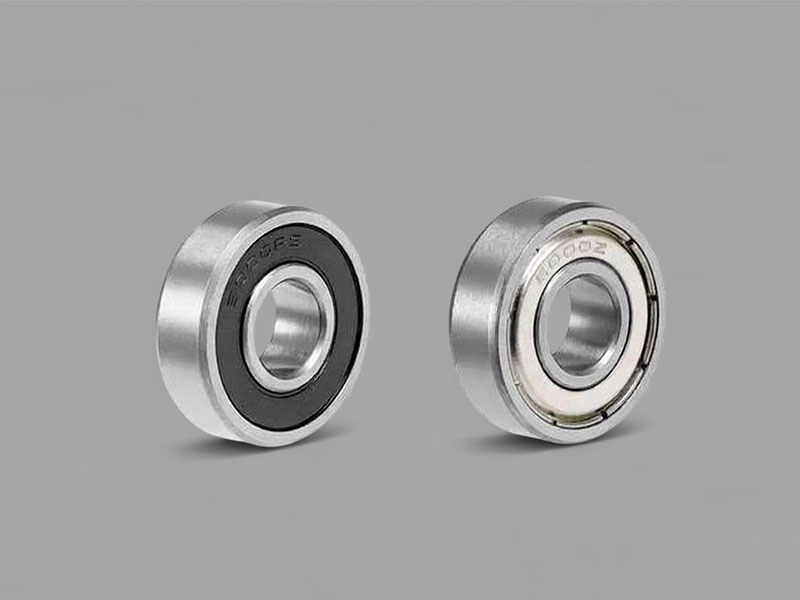
Deep Groove Ball Bearings – This is the most widely used bearing type, with deep continuous raceway grooves on both inner and outer rings. They handle radial loads efficiently and can accommodate bidirectional axial loads. Under combined loading conditions, axial load capacity typically reaches up to 25–35% of their static radial load rating (C0). Friction coefficient: 0.0010 to 0.0015. This type offers the simplest structure, lowest cost, broadest applicability, and easiest maintenance. Common applications include electric motors, automotive alternators, pumps, and household appliances.
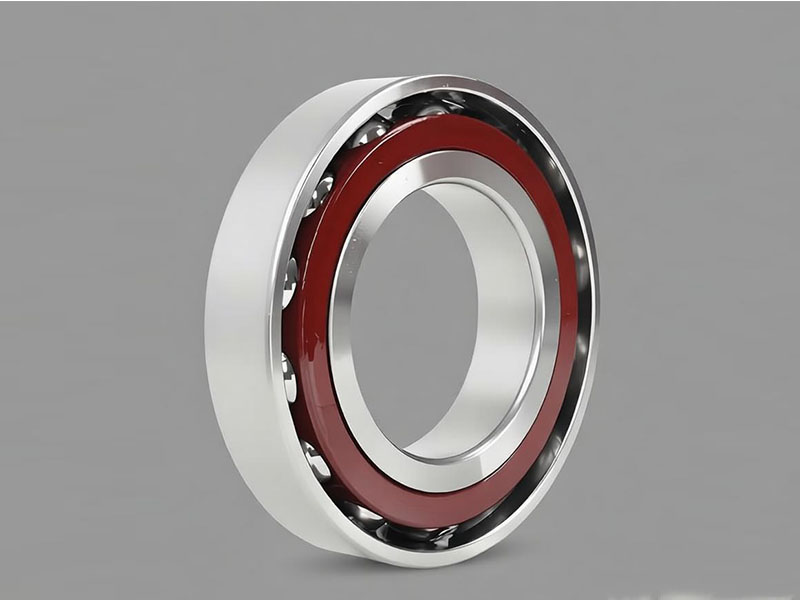
Angular Contact Ball Bearings – These bearings have raceways that create a contact angle (typically 15°, 25°, or 40°) relative to the bearing axis. They handle combined radial and unidirectional axial loads. Axial load capacity increases with larger contact angles. These bearings are typically mounted in pairs (back-to-back or face-to-face) to handle axial loads in both directions. Friction coefficient: 0.0012 to 0.0020. They offer good rigidity and high precision, making them suitable for machine tool spindles and precision gearboxes.
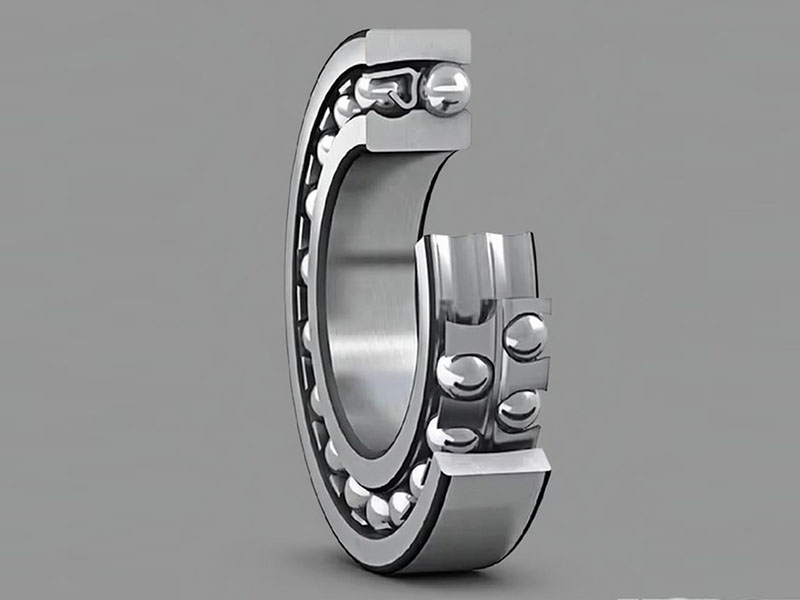
Self-Aligning Ball Bearings – These feature a spherical outer ring raceway that allows the inner ring to tilt relative to the outer ring. They compensate for shaft deflection and mounting errors up to 0.5° to 2° of misalignment. Friction coefficient: 0.0008 to 0.0012. Their primary advantage is accommodating installation inaccuracies and shaft bending without creating excessive internal stress.
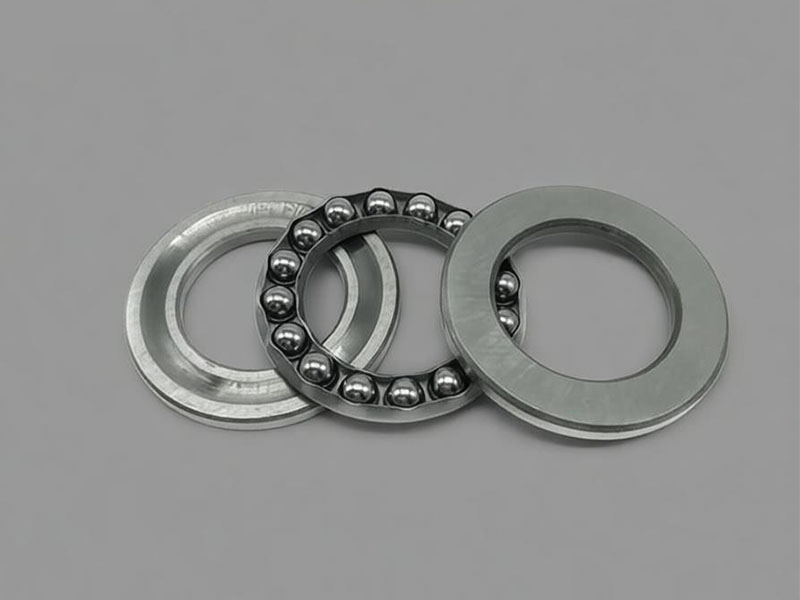
Thrust Ball Bearings – These are designed specifically for axial loads with grooved raceways. They cannot carry radial loads and have relatively low speed limits. Friction coefficient: 0.0010 to 0.0015. They offer high axial load capacity in a compact axial footprint. Common applications include automotive steering systems and vertical pump shafts.
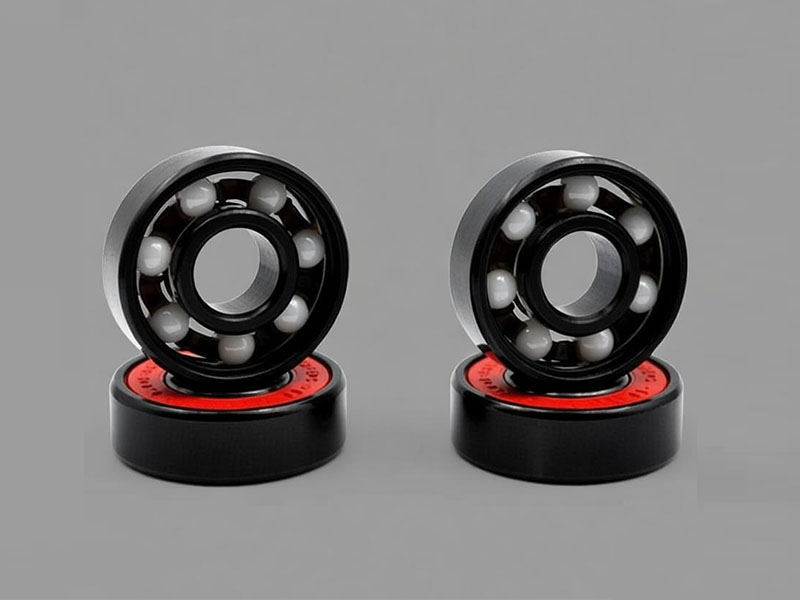
Ceramic Hybrid Ball Bearings – In this type, rolling elements are made of silicon nitride (ceramic) while the rings remain steel. Lower mass and reduced friction allow operation at higher speeds. They also provide electrical insulation, lower heat generation, and longer service life at high speeds. These bearings are suitable for ultra-high-speed spindles (above 30,000 rpm), electric motor applications, and environments requiring electrical insulation.
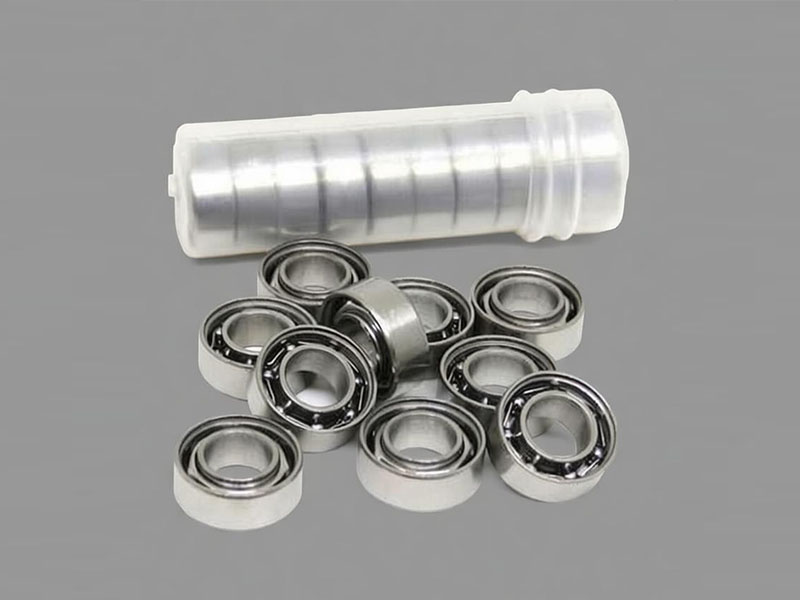
Miniature Ball Bearings – These are metric or inch-series bearings with outer diameter D ≤ 30 mm. They are manufactured to high precision with very low starting torque and high speed capability. Their main advantage is delivering ball bearing performance in compact spaces. Typical applications include precision instruments, small motors, drones, robotic joints, dental handpieces, and medical devices.
Comparison Table
| Type | Load Direction | Axial Capacity | Speed Capability | Space Requirement | Self-Aligning | Relative Cost |
|---|---|---|---|---|---|---|
| Deep Groove | Radial + bidirectional axial (light) | Moderate–low | Very high | Standard | No | Low |
| Angular Contact | Radial + unidirectional axial | High (increases with contact angle) | High | Standard | No | Medium–high |
| Self-Aligning | Radial + bidirectional axial (light) | Moderate–low | Medium–high | Standard | Yes (0.5°–2°) | Medium |
| Thrust Ball | Pure axial | Very high | Low | Axially compact | No | Medium |
| Ceramic Hybrid | Same as steel counterpart | Same as counterpart | Extremely high | Standard | Depends on type | Very high |
| Miniature | Radial + bidirectional axial (light) | Moderate–low | Extremely high | Miniature (D ≤ 30mm) | No | High |
How to select the Ball Bearing
- Step 1: Determine load direction. Pure axial load points to thrust ball bearings. Primarily radial with minimal axial load points to deep groove ball bearings. Combined radial and axial loads point to angular contact ball bearings—ensure the axial load direction matches the contact angle orientation.
- Step 2: Evaluate speed requirements. Ultra-high speed (above 30,000 rpm) calls for ceramic hybrid or precision-grade angular contact bearings. Medium-to-high speed general applications typically use deep groove ball bearings.
- Step 3: Assess space constraints. For extremely limited mounting diameters or miniaturized equipment, miniature ball bearings are the appropriate choice. Note metric vs. inch specifications when selecting.
- Step 4: Consider misalignment tolerance. Long shafts, low mounting accuracy, or risk of shaft deflection suggest self-aligning ball bearings.
- Step 5: Balance rigidity and cost. High-rigidity applications such as machine tool spindles benefit from angular contact ball bearings in paired configurations. Back-to-back mounting provides the highest rigidity. For applications without special requirements, deep groove ball bearings offer the most cost-effective solution.
From ball bearings, let us move to roller bearings, which are designed for heavier load conditions.
ALL about Roller Bearings: types, features and Selection Comparison
Roller bearings use cylindrical, tapered, spherical, or needle-shaped rolling elements instead of balls. The line contact between rollers and raceways distributes loads over a larger surface area, enabling significantly higher radial load capacity than ball bearings of comparable size.
Types of Roller Bearing
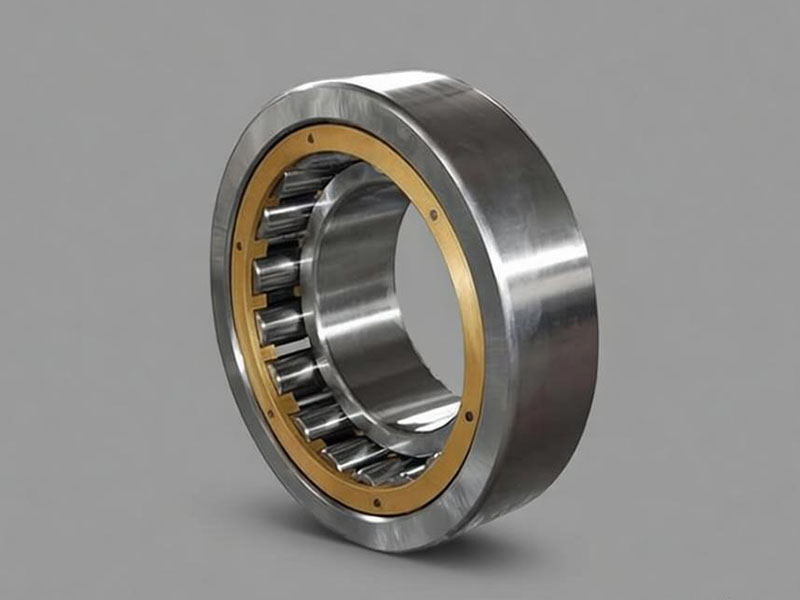
Cylindrical Roller Bearings – Rolling elements are cylindrical, creating line contact with raceways. They carry pure radial loads only and have no axial capacity. Inner and outer rings can be separated for easy assembly and disassembly. Load capacity is substantially higher than same-sized ball bearings, typically several times greater. Friction coefficient: 0.0008 to 0.0012. These bearings offer high rigidity and shock load resistance. Common applications include gearboxes, electric motors, and heavy machinery.
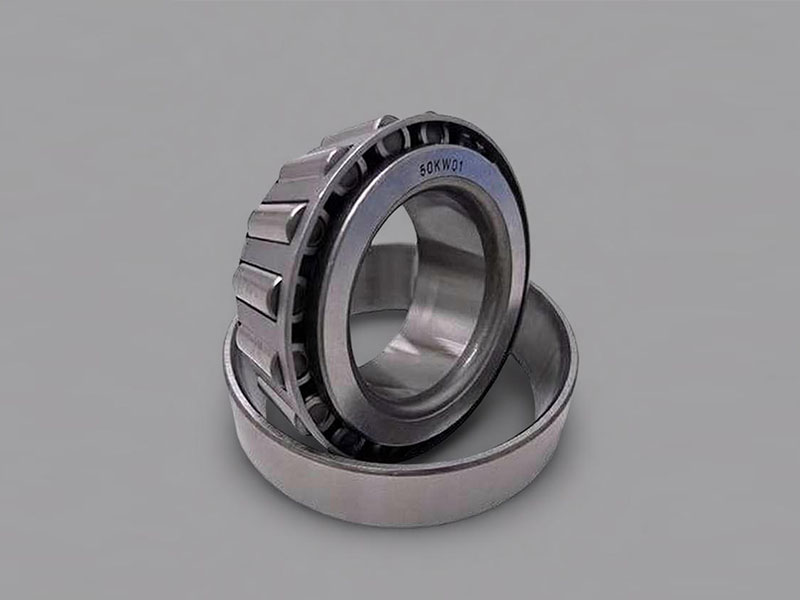
Tapered Roller Bearings – Rolling elements are frustum-shaped with conical raceways. They carry combined radial and unidirectional axial loads. Axial clearance can be precisely adjusted during installation. They are typically used in pairs. Friction coefficient: 0.0017 to 0.0025. These bearings provide good load capacity for heavy-duty applications with axial force. Found in automotive wheel hubs, transmissions, and differentials.
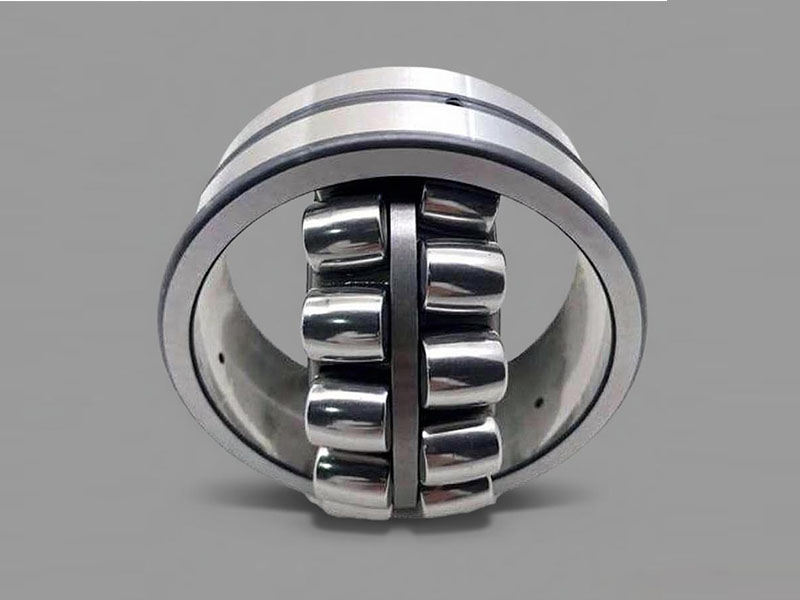
Spherical Roller Bearings – Barrel-shaped rollers with a spherical outer ring raceway. They carry very heavy radial loads and moderate bidirectional axial loads. Self-aligning capability reaches 2° to 3°. Friction coefficient: 0.0020 to 0.0025. These bearings are suitable for harsh conditions with heavy loads and shaft misalignment. Common applications include conveyors, mining equipment, and wind turbines.
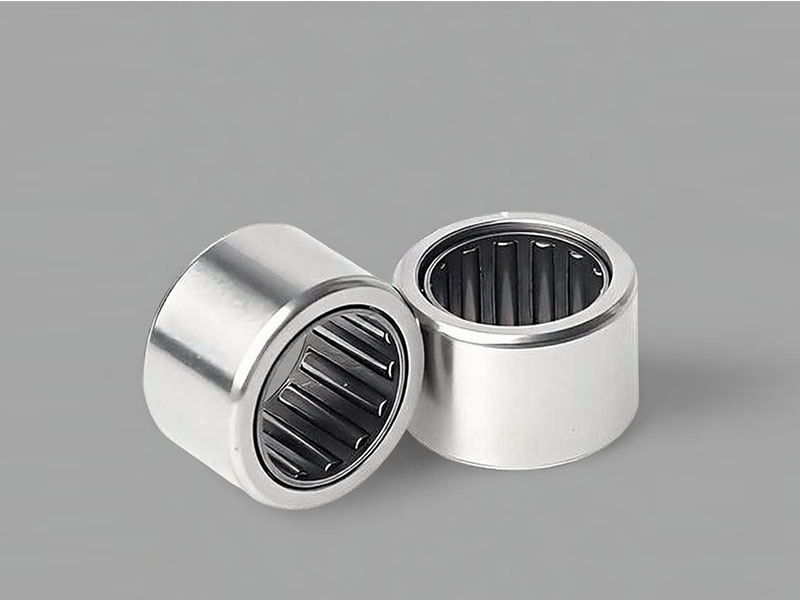
Needle Roller Bearings – Rollers are slender (length-to-diameter ratio ≥ 3:1) with a very small radial cross-section. They carry pure radial loads only and have no axial capacity. Speed limits are relatively low. Friction coefficient: 0.0025 to 0.0035 (full-complement type); 0.0020 to 0.0030 (with cage). These bearings are a practical choice when radial installation space is limited. Found in automotive transmissions, connecting rods, and compact gearboxes.
Crossed Roller Bearings – Cylindrical rollers arranged at 90° alternating directions in V-shaped grooves. They simultaneously handle radial, axial, and tilting moment loads. Their primary advantage is replacing multiple bearings with one unit, offering high rigidity and rotational precision. Used in robotic joints, rotary tables, and precision indexing equipment.
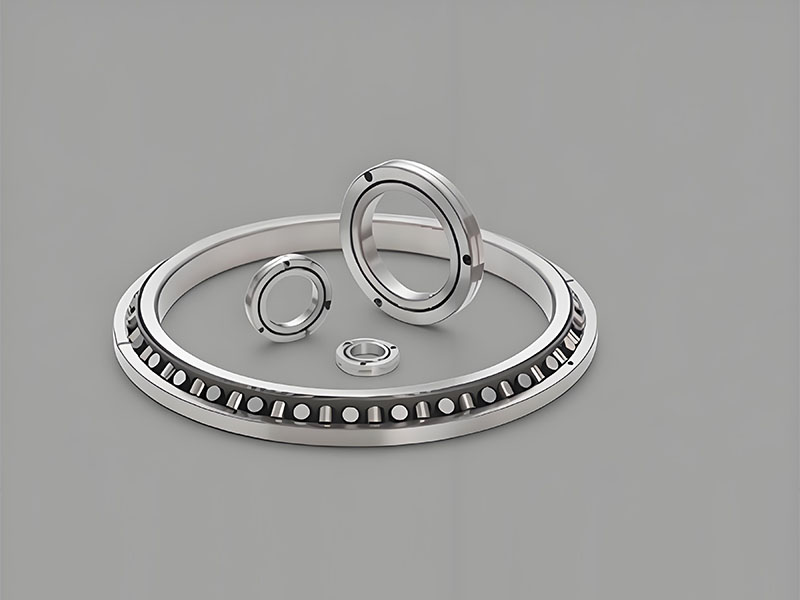
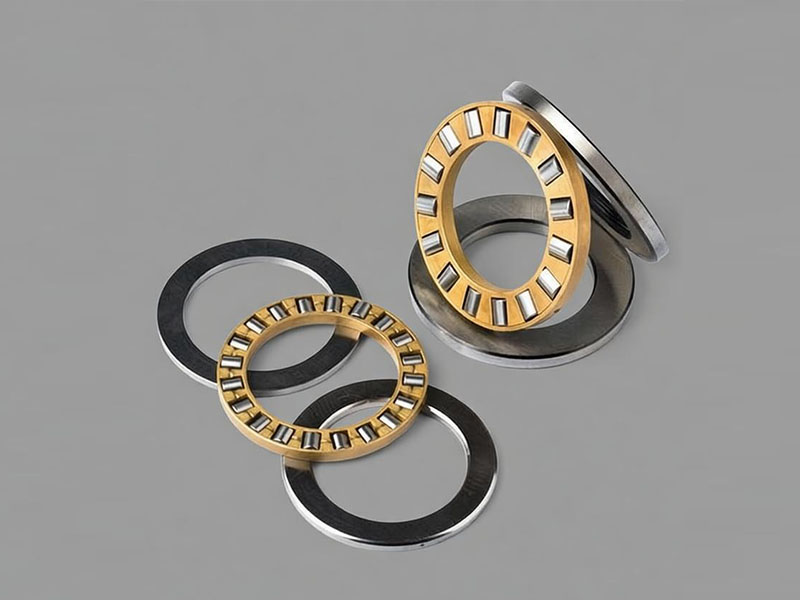
Thrust Roller Bearings – Rolling elements are cylindrical, tapered, or spherical rollers designed specifically for axial loads. Axial load capacity far exceeds that of thrust ball bearings. They can handle heavy and impact axial loads. Some thrust spherical roller bearings also offer self-aligning capability. Friction coefficient: 0.0020 to 0.0025. These bearings are a heavy-duty option for axial load applications. Used in heavy presses, ship propeller shafts, and oil drilling rotary tables.
Comparison Table
| Type | Load Direction | Axial Capacity | Radial Capacity | Speed Capability | Self-Aligning | Relative Cost |
|---|---|---|---|---|---|---|
| Cylindrical Roller | Pure radial | None | Very high | Medium–high | No | Medium |
| Tapered Roller | Radial + unidirectional axial | High | High | Medium | No (adjustable clearance) | Medium–high |
| Spherical Roller | Radial + bidirectional axial (light) | Moderate | Extremely high | Medium–low | Yes (2°–3°) | High |
| Needle Roller | Pure radial | None | Medium–high | Low | No | Medium |
| Crossed Roller | Radial + axial + tilting moment | High | High | Medium–low | No | Very high |
| Thrust Roller | Pure axial (or axial-dominant) | Extremely high | None (radial not allowed) | Medium–low | Some models | High |
How to select the Roller Bearing
- For extreme radial load with no axial force – cylindrical roller bearing.
- For heavy radial load with unidirectional axial force – tapered roller bearing. Ensure axial load direction aligns with taper orientation.
- For extremely heavy axial loads (such as heavy presses) – thrust roller bearings. If the shaft has slight misalignment, choose thrust spherical roller bearings.
- For heavy radial load with shaft misalignment (long shafts, cantilever designs) – spherical roller bearing.
- For limited radial mounting space – needle roller bearing.
- For tilting moment loads (robot joints, rotary tables) – crossed roller bearing.
While rolling bearings dominate many applications, plain bearings offer distinct advantages in specific conditions, which we will cover next.
ALL about Plain Bearings (Bushings): types, features and Selection Comparison
Plain bearings (also called bushings or sleeve bearings) operate through sliding contact between the shaft and bearing surface, with no rolling elements. They rely on low-friction materials and lubrication to reduce wear. While friction coefficient is higher than rolling bearings—typically 0.01 to 0.02 under normal conditions, and up to 0.1 to 0.2 in certain cases—plain bearings perform well in low-speed, high-load, and high-impact applications.
Types of Plain Bearing
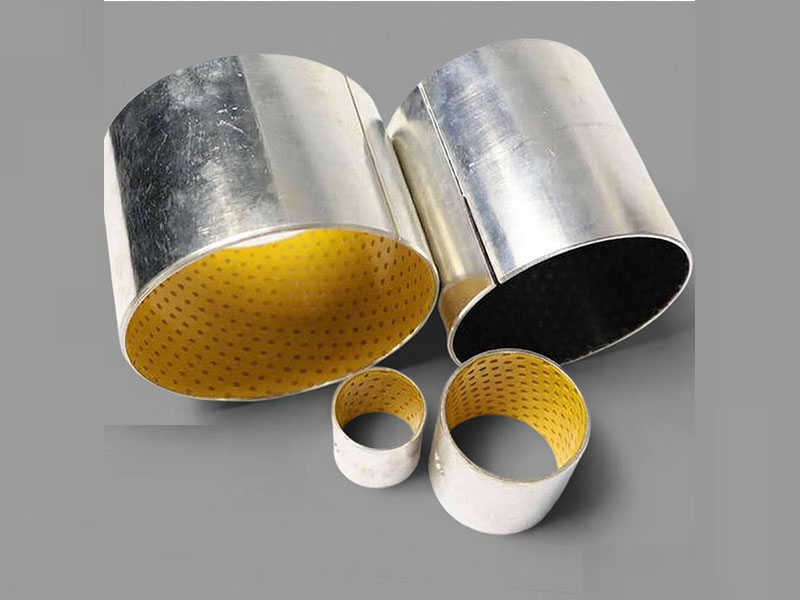
Sleeve Bearings (Bushings) – This is the simplest plain bearing design: a cylindrical sleeve through which the shaft rotates. Available in solid or split configurations. Advantages include simple structure, low cost, and minimal radial footprint. Used in agricultural equipment, conveyor rollers, and low-speed machinery.
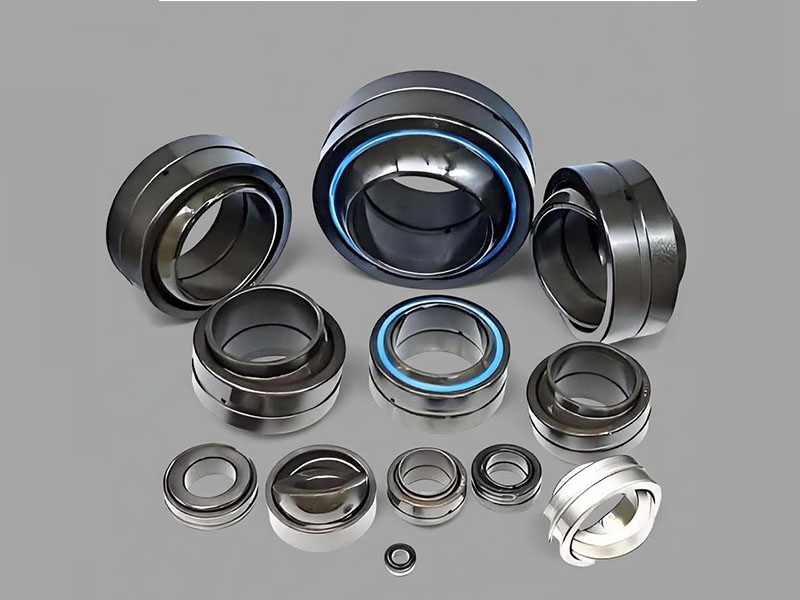
Spherical Plain Bearings – The inner ring has a spherical outer surface, and the outer ring has a concave spherical inner surface. They automatically self-align and can carry radial loads with some axial load capability. These bearings are suitable for low-speed oscillation or tilting motion. Found in hydraulic cylinders, steering linkages, and suspension systems.
Self-Lubricating Bearings – Bearing material contains embedded solid lubricants such as graphite or PTFE. They operate without external grease or oil, maintaining a stable friction coefficient over time. These bearings are maintenance-free and suitable for enclosed spaces, high temperatures, or locations difficult to lubricate.
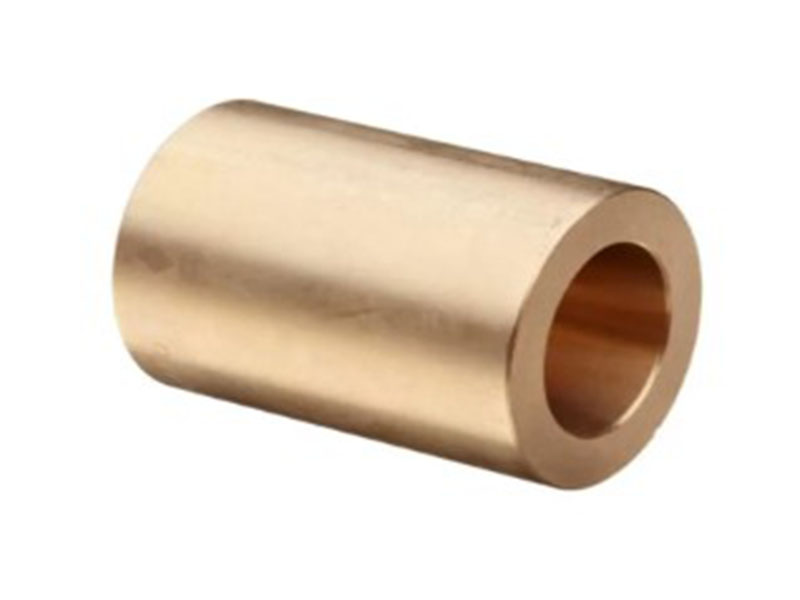
Fluid Film Bearings (Hydrodynamic / Hydrostatic) – These rely on a pressurized oil film to float the shaft, eliminating metal-to-metal contact. Hydrodynamic bearings generate film pressure through rotation; hydrostatic bearings use external pumps to supply pressurized oil. Advantages include high load capacity, good rotational precision, long service life, and no startup wear. Used in precision rotary tables, turbine generators, and heavy machinery.
Comparison Table
| Type | Load Direction | Friction Coefficient | Suitable Speed | Maintenance | Shock Resistance | Relative Cost |
|---|---|---|---|---|---|---|
| Sleeve Bearing | Radial (or axial thrust) | Medium (0.01–0.1) | Low | Requires periodic lubrication | Good | Low |
| Spherical Plain | Radial + axial | Medium | Very low / oscillating | Requires lubrication | Good | Medium |
| Self-Lubricating | Radial / axial | Medium–low | Low–medium | Maintenance-free | Moderate | Medium |
| Fluid Film | Radial + axial (all directions) | Very low (< 0.001) | High (hydrodynamic) | Requires oil supply system | Good (hydrostatic) | Very high |
How to select the Plain Bearing
- For very low speed (below 1 m/s) or reciprocating oscillation – plain bearings often outperform rolling bearings because there is no risk of rolling element skidding or premature wear.
- For strong shock or vibration – plain bearings provide better damping due to their larger contact surface.
- For enclosed environments, high temperature, vacuum, or underwater operation – self-lubricating bearings eliminate lubrication-related concerns.
- For precision rotational applications (precision rotary tables, astronomical instruments) – hydrostatic bearings are the appropriate choice, with cost being the primary consideration.
Beyond rotary motion, linear motion applications require a different category of bearings, which we will examine next.
ALL about Linear Bearings: types, features and Selection Comparison
Linear bearings guide motion along a straight path rather than rotation. They enable smooth, precise linear movement with low friction.
Types of Linear Bearing
Linear Ball Bearings – Steel balls circulate within a cage along a guide rail, providing rolling contact for linear motion. Friction is low—coefficient can be as low as 0.001. Motion is smooth and light. These bearings are suitable for high-speed, high-frequency, light-load reciprocating linear motion. Used in 3D printers, pick-and-place machines, and CNC routers.
Linear Plain Bearings – Sliding contact between the carriage and guide rail, typically using engineering plastic or bronze as the friction pair. These offer higher load capacity than ball-type bearings, simpler construction, and better resistance to contamination. They are suitable for heavy-load, low-speed, dusty environments. Found in woodworking machinery, mining equipment, and agricultural implements.
Mounted Linear Bearings – Linear ball or plain bearings pre-installed in standardized housings with flanges or bases. They are ready to install and reduce assembly time while offering high standardization.
Comparison Table
| Type | Friction Coefficient | Load Capacity | Max Speed | Contamination Resistance | Installation Ease | Relative Cost |
|---|---|---|---|---|---|---|
| Linear Ball | Very low (0.001–0.005) | Low–medium | Very high | Weak (dust-sensitive) | Medium | Medium |
| Linear Plain | Medium (0.05–0.15) | High | Low–medium | Good | Medium | Low |
| Mounted Linear | Depends on internal type | Depends on internal type | Depends on internal type | Depends on internal type | Very high | Medium–high |
How to select the Linear Bearing
- For high-speed, high-frequency, high-precision reciprocating motion (pick-and-place machines, 3D printers) – linear ball bearings.
- For heavy loads, low speeds, dusty environments (woodworking, mining) – linear plain bearings, which handle contamination better.
- For high-volume production where assembly efficiency is a priority – mounted linear bearings reduce bearing housing design time.
Linear bearings handle straight-line motion, but rotating equipment with large diameters requires a different solution, which we cover next.
ALL about Slewing Ring Bearings: types, features and Selection Comparison
Slewing ring bearings (also called turntable bearings) are large-diameter bearings designed to support heavy loads while enabling smooth rotation. They are essential components in equipment that requires rotational movement under significant load.
Types of Slewing Ring Bearing
Ball-Type Slewing Rings (single-row or double-row four-point contact) – Steel balls roll in arc-shaped raceways. They handle loads from all directions with low friction and smooth operation. Advantages include lower cost, high standardization, and suitability for light-to-medium loads and moderate speeds.
Roller-Type Slewing Rings (crossed roller or three-row roller) – Rollers replace balls, providing larger contact surfaces. Load capacity exceeds ball-type with better rigidity, but speed capability is lower. These bearings are designed for heavy equipment such as tower cranes and excavators.
Combined Slewing Rings – Different rolling elements are combined (e.g., balls and rollers together). They balance speed and load capacity with a more complex design. These are customized solutions for special operating conditions.
Comparison Table
| Type | Load Capacity | Rotation Smoothness | Speed Capability | Tilting Moment Resistance | Relative Cost |
|---|---|---|---|---|---|
| Ball-Type | Medium | Excellent | Medium–high | Medium | Medium |
| Roller-Type | Very high | Medium | Low | Very high | High |
| Combined | High | Medium | Medium | High | Very high |
How to select the Slewing Ring
- First check gear requirements: if active rotation is needed, select a slewing ring with internal or external gear teeth. For passive rotation only, choose a gearless type.
- Then assess load magnitude: light-duty robotic arms or solar trackers – ball-type. Heavy tower cranes, wind turbine yaw systems, and excavators – roller-type.
- Finally verify mounting bolts: slewing ring bolts carry shear loads. Verify bolt specifications and quantity during selection.
From large rotating structures, we move to cam followers, which serve a specialized role in motion control systems.
ALL about Cam Followers: types, features and Selection Comparison
Cam followers (also called track followers) are specialized bearings designed to follow cam lobe profiles or track surfaces, converting rotary motion into linear or oscillating motion.
Types of Cam Follower
Stud-Type Cam Followers – These feature an integrated threaded stud that screws directly into the mounting hole. Installation is simple with cantilever support through the stud. Advantages include easy assembly and disassembly, making them suitable for space-constrained cam mechanisms. Used in packaging machinery, automation equipment, and textile machines.
Yoke-Type Cam Followers – These have no threaded stud; the center is a through-hole for pin mounting. Double-sided support provides better rigidity and more uniform load distribution. These are suitable for heavier loads and higher-speed cam-following applications. Found in heavy-duty indexing drives and press feeds.
Comparison Table
| Type | Mounting Method | Rigidity | Load Capacity | Speed Capability | Ease of Installation |
|---|---|---|---|---|---|
| Stud-Type | Threaded in, single-side cantilever | Medium | Medium | Medium–high | Very easy |
| Yoke-Type | Pin-through, double-side support | Very high | High | Medium–low | More complex |
How to select the Cam Follower
- For installation convenience – stud-type (direct screw-in).
- For load magnitude – yoke-type (double-side support prevents stud bending).
- For outer ring profile – cam followers come with cylindrical or spherical outer rings. Spherical profiles compensate for slight misalignment between the cam surface and follower.
After covering specialized followers, we turn to mounted bearings, which simplify installation in many industrial applications.
ALL about Mounted Bearings: types, features and Selection Comparison
Mounted bearings are pre-assembled bearing units with housings, ready for direct installation onto equipment. They eliminate the need to design and machine separate bearing housings.
Types of Mounted Bearing (by housing type)
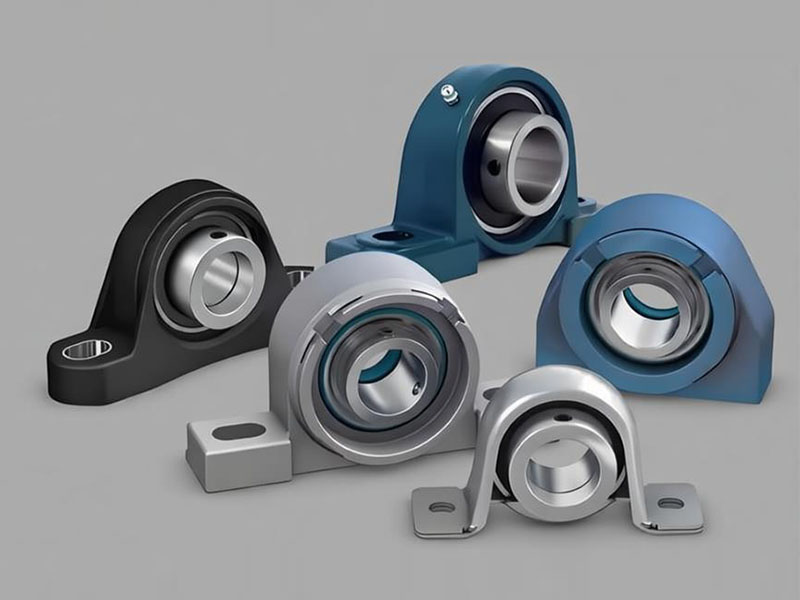
① Pillow Block Bearings – Codes: P / PA / PH
- P (Standard Pillow Block): Most common cast iron pillow block with a horizontal base. Supports shaft ends. Most versatile.
- PA (Pressed Steel Pillow Block): Stamped steel housing, lighter weight, lower cost. Suitable for light loads and non-critical applications.
- PH (High-Strength One-Piece Pillow Block): One-piece cast construction with reinforced walls. High rigidity. Suitable for heavy loads or shock applications.
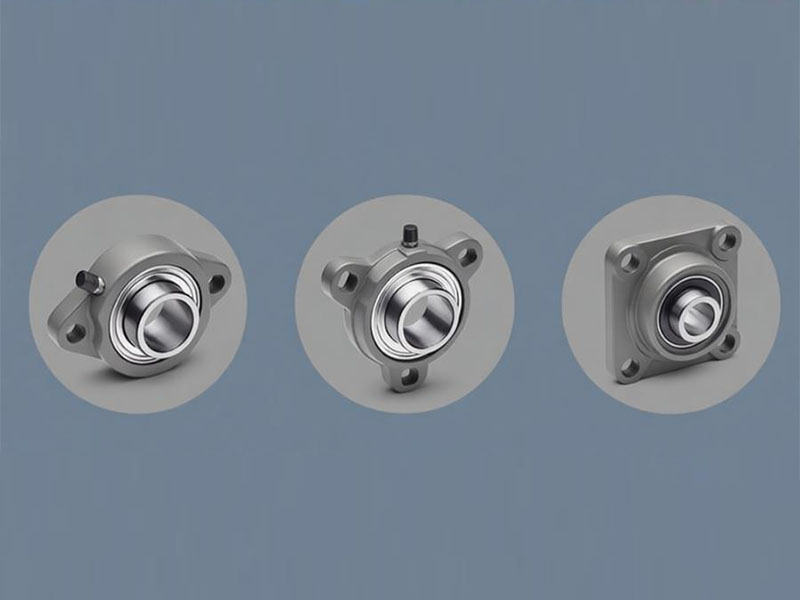
② Flange Mounted Bearings – Codes: F / FA / FB / FC / FL / FS
- F (Round Flange): Round flange plate with end-mount bolt pattern. Suitable for pipe-type or round frame ends.
- FA (Two-Bolt Flange / Diamond Flange): Diamond-shaped with two bolts. Suitable for tight spaces requiring only two mounting points.
- FB (Four-Bolt Flange / Square Flange): Square flange with four bolts. Most secure mounting. Suitable for heavy-load end support.
- FC (Round Flange with Adapter Sleeve): Round flange with internal adapter sleeve. Accommodates stepped shafts or axial positioning needs.
- FL (Light-Duty Round Flange): Round flange with reduced thickness and lighter construction. Suitable for light loads and compact designs.
- FS (Flange with Pillow Block): Hybrid design combining flange end-mounting with pillow block side-support features.
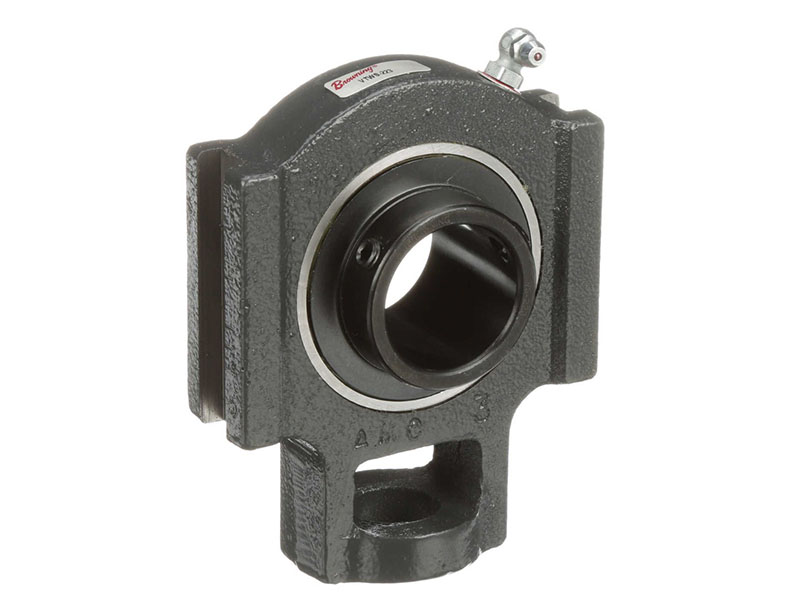
③ Take-up Bearings – Code: T
Sliding base units that adjust shaft center position along guide rails. Adjustment bolts move the bearing housing to tension belts or chains. These are useful for conveyors and agricultural machinery requiring periodic belt or chain tension adjustment.
④ Hanger Bearings – Code: HA
Bearing housings with top-mounted lugs or suspension mounts. Inverted mounting from overhead beams or ceiling structures, with the shaft hanging below. These are suitable for screw conveyors and long shaft mid-span support, effectively reducing shaft sag.
Comparison Table
| Category (Code) | Mounting Orientation | Shaft Center Adjustment | Rigidity Level | Typical Application | Relative Cost |
|---|---|---|---|---|---|
| P / PA / PH (Pillow Block) | Base horizontal, bolts downward | None (fixed height) | P (medium), PA (medium–low), PH (very high) | General horizontal shaft end support | Low–high |
| F/FA/FB/FC/FL/FS (Flange) | End-face vertical / side bolts | None (fixed) | Varies by type (FB highest) | End mounting with limited axial space | Low–medium |
| T (Take-up) | Base horizontal with slide channel | Yes (belt/chain tension adjustment) | Medium | Belt drive, chain conveyor driven shaft | Medium |
| HA (Hanger) | Overhead suspended | None | Medium–high | Screw conveyor, long shaft mid-span | Medium |
How to select the Mounted Bearing
- First check mounting surface orientation: equipment base support – pillow block (P/PA/PH). Equipment side panel or end-face support – flange mount (F/FA/FB/FC/FL/FS).
- Then determine tensioning requirement: belts or chains needing periodic adjustment – take-up bearing (T).
- Check if shaft is excessively long: long shafts needing mid-span support points with overhead beams available – hanger bearing (HA).
- Finally refine code selection:
Pillow block: heavy loads with shock – PH; light loads for cost reduction – PA; general use – P.
Flange: two-bolt space-limited – FA; four-bolt most stable – FB; stepped shaft needing axial positioning – FC; lightweight design – FL.
Quick Cross-Category Selection Guide
Use this as a reference to quickly locate the right category:
- Medium-high speed, light-to-medium loads, general applications – Section 2 (Ball Bearings)
- Heavy loads, low speed, impact resistance needed – Section 3 (Roller Bearings)
- Very low speed or oscillation, heavy shock, maintenance-free needed – Section 4 (Plain Bearings)
- Linear motion guidance needed – Section 5 (Linear Bearings)
- Large structure rotation needed (turntables, crane booms) – Section 6 (Slewing Ring Bearings)
- Cam mechanism follower – Section 7 (Cam Followers)
- Ready-to-install units that save design time – Section 8 (Mounted Bearings)
Conclusion
Choosing the right bearing does not have to be complicated. Start by defining your application’s load direction (radial, axial, or combined), operating speed, and available installation space. Once you have those three inputs, match them to the bearing category that fits best:
- Ball bearings – high-speed, light-to-medium loads
- Roller bearings – heavy loads
- Plain bearings – low-speed, high-impact conditions
- Specialized types – linear motion, large rotating structures, or cam-following applications
Always refer to the manufacturer’s specification sheets for load ratings, precision grades, and clearance recommendations. If your application involves extreme temperatures, contamination, or shock loads, pay extra attention to material selection and sealing options. When in doubt, consult a bearing engineer or supplier—they can help verify your calculations and suggest cost-effective alternatives.
Remember: a properly selected bearing lasts longer, runs smoother, and reduces maintenance costs. Take the time to evaluate your needs against the criteria outlined in each section, and you will avoid common pitfalls like premature wear, overheating, or unexpected downtime.
FAQs on Bearing Selection
Q1: For the same installation position, both ball bearings and roller bearings fit. How do I choose?
If loads are light to moderate and speed is a priority, ball bearings are a suitable choice. If loads are heavy and speed is secondary, roller bearings offer higher load capacity and rigidity.
Q2: Angular contact ball bearings come in 15°, 25°, and 40° contact angles. How do I decide?
Larger contact angles mean higher axial load capacity but lower speed capability. Use 15° for high-speed with light axial loads; 25° for balanced performance; 40° for heavy axial loads at moderate speeds.
Q3: Bearing precision grades P0, P6, P5, P4, P2 – how do I choose?
P0 (normal) for general industrial equipment. P6 for medium-speed, moderate-precision applications like automotive engines. P5 for high-speed and precision equipment like CNC machine tools. P4 for ultra-high-speed spindles and semiconductor manufacturing. P2 for extreme precision applications like aerospace and precision measurement. As a general reference, speeds above 10,000 rpm often call for P5 or higher.
Q4: Internal clearance (C2, CN, C3, C4) – how do I specify during selection?
CN (normal) for most applications. C3 (larger clearance) for higher speeds, higher operating temperatures, or press-fit mounting on solid shafts. C4 for extreme temperature differentials. Consulting the bearing manufacturer’s clearance recommendations for your specific operating conditions is advisable.
Q5: My equipment has both high-speed operation and heavy shock loads. Which priority should I sacrifice?
Prioritize load capacity over speed. Roller bearings with adequate load rating may be more appropriate even if speed is slightly compromised. Bearing failure from overload can be catastrophic; reduced speed may simply mean lower throughput.
Q6: Inner ring rotates vs. outer ring rotates – does it affect selection?
Yes. When the inner ring rotates (most common), the fit should be tighter on the shaft. When the outer ring rotates (e.g., in some pulley applications), the fit should be tighter in the housing.
Q7: Plain bearings and rolling bearings use different life calculation methods. How do I estimate service life?
Rolling bearing life is calculated using the L10 rating (basic dynamic load rating) per ISO 281 – the number of revolutions at which 90% of a group of identical bearings will still be operational. Plain bearing life is determined by wear rate and PV value (pressure × velocity). Consult the bearing material supplier for specific PV limits for your application.