Quick Answer: Choosing the right pillow block bearing requires matching shaft diameter (typically 20-200 mm, tolerance h6) with load type and magnitude, operating speed, and environmental conditions. Standard units handle 5-20 kN static loads, with ball types suitable for higher speeds and roller types for heavier loads. Cast iron housings suit general use; stainless steel resists corrosion. Proper alignment and lubrication every 3-6 months with NLGI Grade 2 grease are essential for maximum service life.
Selecting the correct pillow block bearing requires understanding how shaft diameter, load capacity, rotational speed, operating temperature, housing material, sealing, and locking mechanisms interact in your specific application. Each factor influences bearing life and equipment reliability.
At DUHUI Bearing, with over 20 years of experience in the bearing industry, we have seen how proper selection directly impacts equipment uptime and maintenance costs. Many engineers and maintenance professionals ask the same questions: How much load can a pillow block bearing handle? Can it take axial forces? What is the difference between split and solid housings? This guide answers these questions and walks you through the complete selection process.
What Is a Pillow Block Bearing?
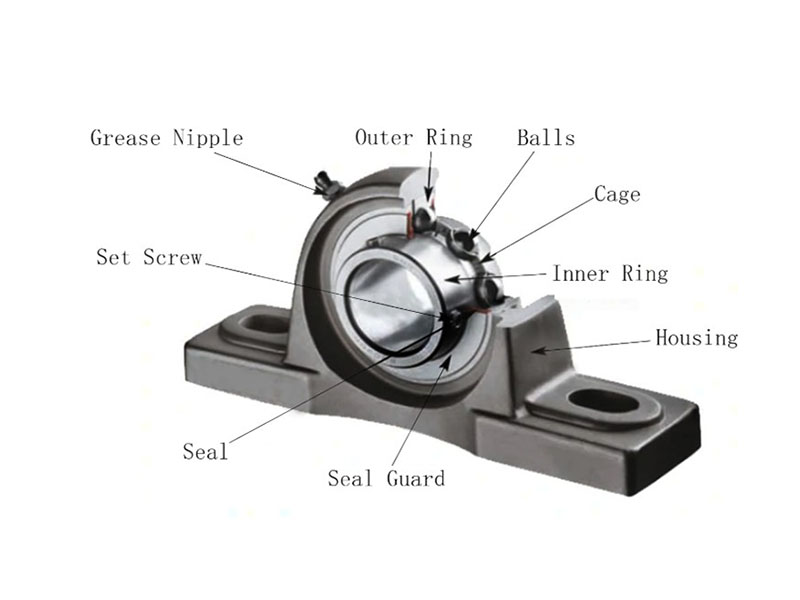
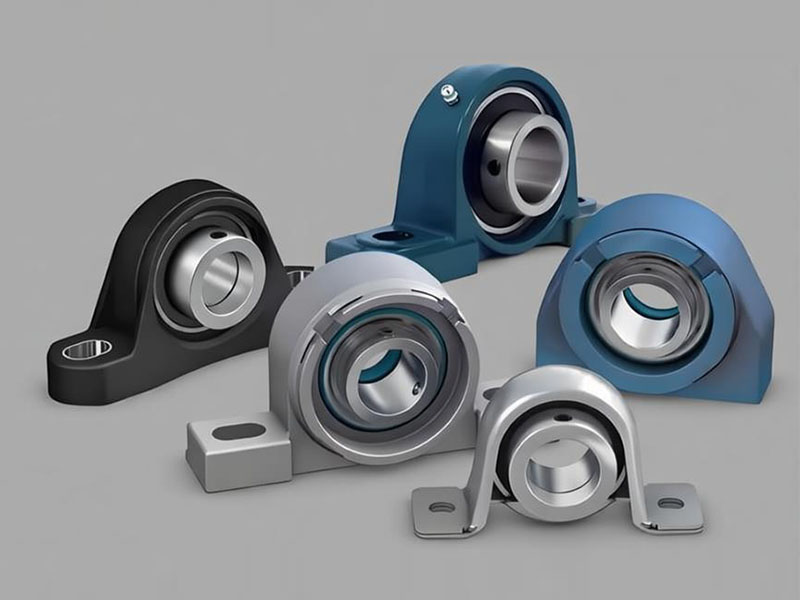
A pillow block bearing – also called a plummer block or mounted bearing unit – is a complete assembly consisting of a bearing insert enclosed in a housing that bolts directly to a support surface. The housing remains stationary; the internal bearing rotates with the shaft.
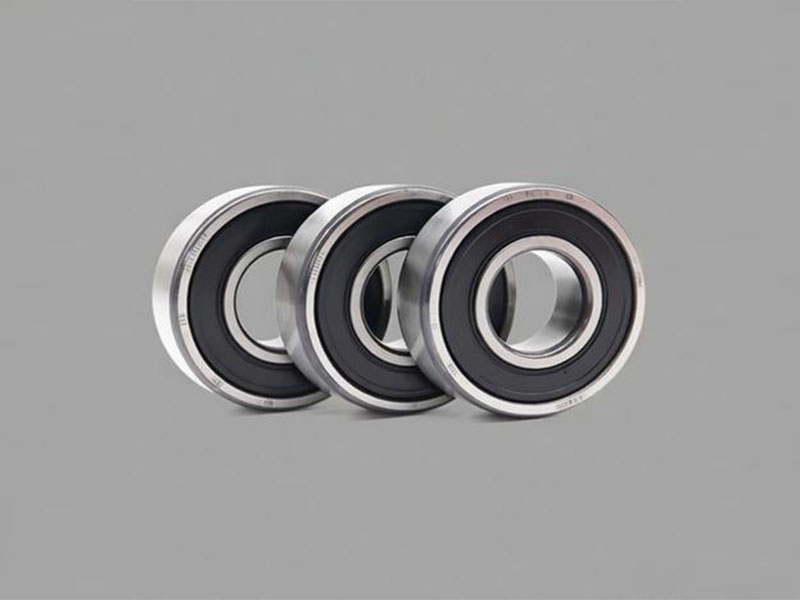
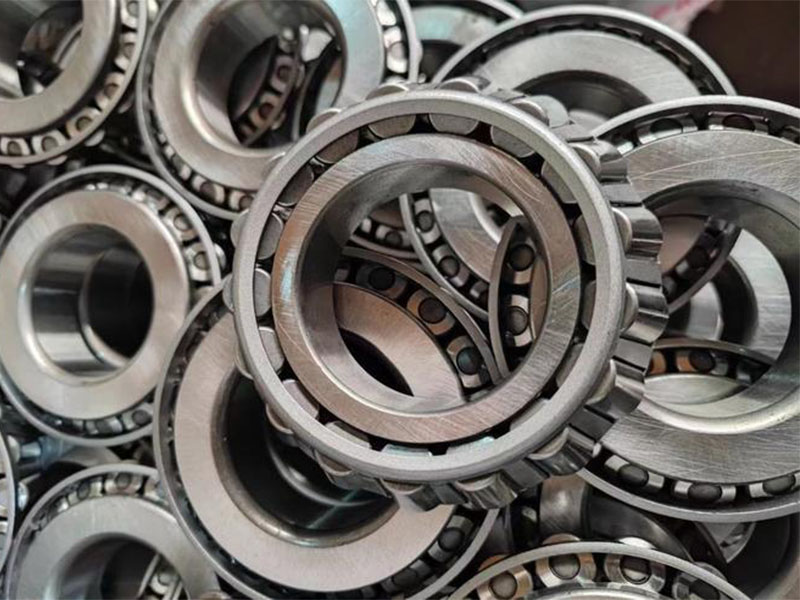
These units come pre-lubricated and pre-sealed, ready for installation right out of the box. Housings are manufactured from various materials including cast iron, ductile iron, steel, stainless steel, and engineered polymers. The insert bearing can be a ball bearing, spherical roller bearing, cylindrical roller bearing, or tapered roller bearing – each selected based on specific load and speed requirements.
The housing does not rotate. It is fixed to the mounting base. Only the inner ring of the bearing rotates with the shaft.
Why Use Pillow Block Bearings?
Pillow block bearings are essential components in construction equipment, agricultural machinery, manufacturing lines, conveyor systems, and material handling applications. Here are the key reasons they are widely adopted:
- Stable shaft support: Provide rigid support for rotating shafts while reducing friction and vibration that can damage connected equipment.
- Easy installation: Ready-to-mount units eliminate the need for pressing bearings into housings on-site, saving labor time and reducing installation errors.
- Low maintenance requirements: Pre-lubricated and sealed designs reduce ongoing maintenance frequency and simplify service routines.
- Misalignment compensation: Many pillow block bearings feature self-aligning designs that accommodate angular misalignment up to approximately 3 degrees in most standard configurations (with some heavy-duty designs allowing greater angles – always verify with manufacturer specifications), compensating for installation imperfections.
- Reduced downtime: Split housing designs allow bearing replacement without dismantling the entire shaft system, significantly cutting maintenance downtime.
What Are the Common Types of Pillow Block Bearings?
By Housing Construction
Split Housing
The housing divides into top and bottom halves. This design enables bearing replacement without removing the shaft or disassembling surrounding equipment – a major advantage for maintenance-heavy applications where downtime carries high costs.
Solid Housing
A single-piece housing design offering greater rigidity and higher load capacity than split designs of equivalent size. Solid housings are preferred for heavy-duty applications such as large conveyor systems, mining equipment, and steel mills where maximum structural strength is required.
By Mounting Function (Fixed vs. Floating)
Fixed (Non-Expansion) Type
The bearing locks in position on the shaft, providing precise shaft location. This configuration suits applications where dimensional accuracy is critical – precision machining, positioning systems, and equipment requiring tight tolerances.
Floating (Expansion) Type
The bearing permits axial shaft movement to accommodate thermal expansion. This is essential for long shafts or applications with significant temperature variations. The housing typically features elongated bolt holes or a specially designed bearing insert that permits axial displacement.
How to Choose the Right Pillow Block Bearing: A 7-Step Process
Determine the Shaft Diameter
The bearing inner diameter must precisely match the shaft outer diameter. Common shaft diameters range from 20 mm to 200 mm.
Key considerations:
- Measure the shaft diameter accurately using a caliper or micrometer.
- Standard shaft tolerance is typically h6.
- For adapter-mounted bearings, the adapter sleeve accommodates a range of shaft sizes.
Inaccurate shaft diameter measurement leads to loose fits (causing vibration and fretting corrosion) or interference fits (causing overheating and premature failure). We recommend always verifying shaft dimensions against manufacturer specifications before ordering.
Analyze the Load
Load analysis is the most critical factor in pillow block bearing selection. You must determine:
- Load direction: Radial (perpendicular to shaft), axial (parallel to shaft), or combined.
- Load magnitude: Calculate both dynamic load (during normal operation) and static load (at rest or during startup).
Key load ratings:
- Cr (Dynamic Load Rating): The load the bearing can withstand for 1 million revolutions.
- Cor (Static Load Rating): The maximum load the bearing can handle without permanent deformation.
Typical load capacity ranges (for reference; consult manufacturer data for specific models):
- Small units (e.g., UCP204): Cr ≈ 12.7 kN, Cor ≈ 6.7 kN
- Medium units (e.g., UCP311): Cr ≈ 71.6 kN, Cor ≈ 45.0 kN (per Timken catalog data)
- Heavy-duty spherical roller units: Cr can exceed 200 kN, Cor can exceed 200 kN
Selecting the bearing insert based on load characteristics:
| Load Type | Recommended Bearing Insert |
|---|---|
| Primarily radial load, low to medium speed | Ball bearing insert (most common, cost-effective) |
| Heavy radial load or shock loads | Cylindrical roller or spherical roller insert |
| Significant axial load | Tapered roller insert |
| Misalignment present | Self-aligning ball or spherical roller insert |
Axial load capability: Most standard pillow block bearings are designed primarily for radial loads. While they can accommodate some axial (thrust) load, the capacity varies significantly by bearing type. For applications with substantial axial forces, tapered roller bearing units or specialized thrust bearings should be specified rather than standard radial designs.
Evaluate Operating Speed
Speed directly affects bearing temperature, lubrication requirements, and service life.
Speed limits vary significantly by bearing size, design, lubrication type, and sealing method. Ball bearing units generally support higher speeds than roller types due to lower rolling friction. For high-speed applications, consult the manufacturer’s specification for the specific model’s limiting speed.
General guidelines:
- Spherical roller units: Typically 2,000-3,400 RPM (varies by size)
- Cylindrical roller units: Generally higher than spherical roller but lower than ball bearings
- Ball bearing units: Support the highest speeds among these types
Consider the Operating Environment
Environmental factors significantly affect bearing performance and service life:
| Factor | Consideration |
|---|---|
| Temperature | Standard bearings: -40°C to 120°C; High-temperature designs: up to 200°C |
| Moisture/Humidity | Requires stainless steel housing or special anti-corrosion coatings |
| Chemicals | Corrosive environments demand stainless steel or polymer housings |
| Dust/Debris | Requires effective sealing (contact seals or labyrinth seals) |
| Outdoor exposure | Consider UV resistance, weather sealing, and corrosion protection |
Standard cast iron housings suit clean, dry indoor environments. Stainless steel housings provide superior corrosion resistance for food processing, chemical plants, marine applications, and outdoor installations.
Select the Housing Material
Housing material determines structural strength, corrosion resistance, and cost:
| Material | Load Capacity | Corrosion Resistance | Best Applications |
|---|---|---|---|
| Cast Iron | Good | Poor | General industrial, dry environments, most economical |
| Ductile Iron | Better | Poor | Heavy loads, shock applications, higher strength requirement |
| Steel | Highest | Poor | Extreme heavy duty, mining, steel mills |
| Stainless Steel | Good | Excellent | Food processing, chemical, marine, wet environments |
| Cast Aluminum | Lower (~8 kN) | Moderate | Lightweight applications, low-load scenarios |
Cost perspective: Cost comparisons from industry sources suggest that cast iron pillow blocks typically cost 30-50% less than equivalent stainless steel units, making them the preferred choice for standard industrial applications where corrosion resistance is not a primary concern.
Choose the Sealing Method
Seals protect the bearing from contaminants and retain lubricant. Modern triple-lip seals can achieve over 99% contaminant exclusion efficiency when properly specified and installed.
Seal types:
- Contact seals (lip seals): Provide excellent contaminant protection but generate friction and heat. Suitable for dusty or dirty environments.
- Non-contact seals (labyrinth or gap seals): Lower friction, generate less heat, but offer less protection against fine contaminants.
- Double-sealed: Both sides sealed, common in pre-lubricated maintenance-free units.
Selection guidelines:
- Dusty/dirty environment → Contact seals or heavy-duty labyrinth designs
- Clean indoor environment → Standard contact seals are sufficient
- High-speed operation → Non-contact seals to reduce heat generation
- Food or pharmaceutical applications → FDA-compliant seal materials
Select the Locking Mechanism
The locking mechanism secures the bearing insert to the shaft:
| Mechanism | Description | Best Applications |
|---|---|---|
| Set Screw | Screws tightened against the shaft | Most common, cost-effective, easy installation |
| Eccentric Locking Collar | Collar rotated to lock onto shaft | Higher security, reduced shaft damage |
| Adapter Sleeve | Tapered sleeve pulled into bearing | Heavy loads, easy removal, accommodates wider shaft tolerances |
Set screw locking is the most widely used method due to simplicity and low cost. Adapter sleeves are preferred for heavy-duty applications where frequent bearing removal is anticipated.
How to Measure Pillow Block Bearing Size
Three critical measurements must be taken:
- Shaft diameter (d): Must match bearing bore. Standard tolerance is h6.
- Center height (h): Distance from housing base to shaft centerline. Critical for system alignment.
- Mounting hole spacing: Distance between bolt holes must align with your equipment’s mounting pattern.
Measurement errors lead to:
- Misalignment between connected components
- Excessive vibration during operation
- Premature wear and bearing failure
Always verify these dimensions against the manufacturer’s datasheet before ordering. We provide detailed dimensional drawings for every product to ensure accurate specification.
How to Install and Align Pillow Block Bearings
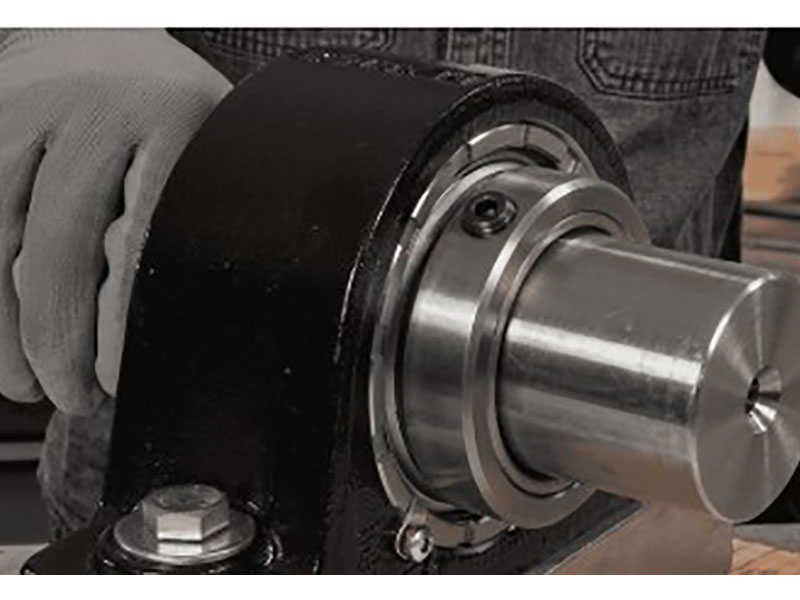
Correct installation practices directly influence whether a bearing achieves its calculated service life. Among various failure causes, misalignment resulting from improper mounting and positioning consistently ranks as a primary contributor to premature bearing degradation.
Installation Steps
- Inspect and clean the shaft – Remove rust, burrs, and debris. Verify shaft diameter tolerance (h6). Apply a thin coat of oil to facilitate installation.
- Slide the bearing onto the shaft – If tapping is required, use a soft-faced hammer and a hardwood block against the inner ring only. Never strike the housing or seals.
- Mount the housing loosely – Position the housing on the mounting surface and hand-tighten bolts. Do not fully tighten yet.
- Align the bearing – Use appropriate alignment tools (straightedge, dial indicator, or laser alignment system) to align the shaft centerline.
- Tighten housing bolts – Torque bolts evenly in a cross pattern to manufacturer-recommended specifications.
- Verify shaft axial movement – For floating units, confirm the shaft can move axially within the bearing.
- Tighten the locking mechanism – Alternate set screws or locking collar bolts to manufacturer-recommended torque values.
- For floating units – Lock the fixed bearing first, then center the floating bearing axially before locking.
Alignment Tolerances and Methods
| Method | Achievable Tolerance | Best Suited For |
|---|---|---|
| Straightedge | ±0.2 mm/m | Short shafts, low-speed applications, budget-conscious installations |
| Dial Indicator | Typically within 0.05 mm/m when properly used | Precision machines, general industrial applications |
| Laser Alignment | ±0.01 mm/m | Critical equipment, long shafts, high-speed applications |
Angular misalignment tolerance:
- Standard self-aligning bearings: Designed for angular misalignment up to approximately 3 degrees (confirm with manufacturer data for your specific model)
- Heavy-duty self-aligning designs: May allow greater angles – check the product specification sheet
Common alignment mistakes to avoid:
- Checking alignment only at room temperature (thermal expansion changes alignment during operation)
- Not rechecking after 24 hours of operation
- Ignoring foundation settling or structural deflection under load
How to Maintain Pillow Block Bearings
A systematic maintenance program is essential for maximizing bearing service life.
Lubrication
- Grease type: NLGI Grade 2 lithium-complex grease (industry standard)
- Fill quantity: Fill housing 30-50% with grease
- Standard interval: Every 3-6 months under normal operating conditions
- Harsh conditions (high heat, dust, moisture): Monthly greasing may be required
- Ideal conditions: Intervals can extend to 12 months
Lubrication procedure:
- Clean the grease fitting thoroughly.
- Use a grease gun to inject new grease slowly.
- Continue until old grease purges from the seal lip.
- Wipe away excess grease to prevent contamination.
Inspection and Monitoring
- Alignment check: Quarterly or after any significant equipment event.
- Vibration monitoring: Establish baseline readings and monitor for changes.
- Temperature monitoring: Sudden temperature rise often indicates lubrication issues or impending failure.
- Visual inspection: Look for signs of housing cracks, seal damage, or lubricant leakage.
Conclusion
Selecting the right pillow block bearing requires a systematic approach that considers shaft diameter, load characteristics, speed requirements, environmental conditions, housing material, sealing, and locking mechanisms. Start with accurate measurements, then match your application requirements to the appropriate bearing type and housing configuration.
Key takeaways:
- Cast iron housings offer the best value for general applications (cost comparisons suggest 30-50% less than stainless steel equivalents)
- Upgrade to ductile iron or steel for heavy loads
- Choose stainless steel for corrosive environments
- Match seals to contamination risk – contact seals for dirty conditions, non-contact for high speed
- Proper installation and regular maintenance (lubrication every 3-6 months) are essential for achieving calculated service life
At DUHUI Bearing, with over 20 years of experience in the bearing industry, we understand the importance of proper bearing selection for equipment reliability and maintenance cost control. For specific application questions, contact our technical team with your shaft diameter, load data, speed requirements, and environmental conditions for professional guidance.
FAQs
Q1: How much weight can a pillow block bearing hold?
Standard pillow block bearings handle static loads of 5-20 kN (500-2,000 kg) and dynamic loads of 3-15 kN. Heavy-duty spherical roller units can handle significantly higher loads – some exceeding 200 kN static capacity. The exact capacity depends on bearing size, type, and housing material – always verify against manufacturer specifications for your specific model.
Q2: Can pillow block bearings take axial loads?
Most standard pillow block bearings are designed primarily for radial loads. They can handle limited axial loads, but the capacity varies significantly by bearing type (ball vs. roller, internal design). For detailed guidance on axial load capacity and bearing insert selection, refer to Step 2 above.
Q3: What is the difference between pillow block and flange bearings?
Pillow block bearings mount on horizontal surfaces and support horizontal shafts. Flange bearings mount through a flange onto vertical surfaces or equipment panels, making them suitable for space-constrained applications or vertical/angled shaft arrangements.
Q4: What causes pillow block bearing failure?
Industry sources commonly identify contamination, lubrication issues, misalignment, and overloading as the primary causes of premature bearing failure. According to ISO 15243:2017, rolling bearing failures are classified into six categories: rolling contact fatigue, wear, corrosion, electrical erosion, plastic deformation, and cracking. Proper selection, installation, and maintenance can prevent the vast majority of these failures.
Q5: Do pillow block bearings need to be sealed?
Seals prevent dust, moisture, and debris from entering the bearing, significantly extending service life. Modern triple-lip seals can achieve over 99% contaminant exclusion. However, high-speed or high-temperature applications may use open designs for better heat dissipation – consult your bearing supplier for specific recommendations.
Q6: Does the housing rotate?
No. The housing is stationary and bolts to the support structure. Only the internal bearing insert’s inner ring rotates with the shaft.
Q7: Split housing vs. solid housing – which should I choose?
Choose split housing for quick bearing replacement without dismantling the shaft system – ideal for maintenance-heavy applications. Choose solid housing for maximum rigidity and load capacity – preferred for heavy-duty, continuous operation where maintenance access is less frequent.
Q8: How do I choose housing material?
Refer to Step 5 above for a detailed material comparison table covering cast iron, ductile iron, stainless steel, steel, and cast aluminum options.
Q9: What alignment tolerance should I aim for?
Parallel misalignment: Dial indicators typically achieve within 0.05 mm/m; straightedge achieves ±0.2 mm/m for less critical applications. Self-aligning bearings are typically designed for angular misalignment up to approximately 3 degrees – confirm with manufacturer data. Refer to the Installation section above for detailed alignment methods.
Q10: How often should I lubricate pillow block bearings?
Standard interval: Every 3-6 months under normal conditions. Harsh conditions (high heat, dust, moisture) may require monthly greasing. Ideal conditions can extend intervals to 12 months. Use NLGI Grade 2 lithium-complex grease at 30-50% housing fill.