How do tapered roller bearings handle both radial and axial loads simultaneously? This is a common question among engineers and maintenance professionals working with heavy-duty rotating equipment. This article examines the design principles, technical features, and industrial applications of tapered roller bearings.
What Are Tapered Roller Bearings?
A tapered roller bearing is a type of rolling-element bearing that uses conical rollers positioned between tapered inner and outer ring raceways. The geometry is designed so that the apexes of the conical surfaces converge at a common point along the bearing axis, enabling pure rolling motion during operation.
Structure components
A tapered roller bearing consists of four primary components:
- Inner ring (cone) — Mounts onto the shaft and features a tapered raceway. A flange (large rib) at the wider end guides the rollers.
- Outer ring (cup) — Fits into the housing with a tapered inner surface that mates with the rollers.
- Tapered rollers — Conical rolling elements that carry the applied loads.
- Cage — Maintains proper spacing and alignment between rollers.
Function
When radial and axial forces are applied, the angled contact surfaces distribute the loads across the roller-raceway interface. The tapered design converts applied forces into radial and axial components, allowing the bearing to manage combined loads efficiently.
Key Design Features of Tapered Roller Bearings
Tapered Geometry
The defining characteristic of a tapered roller bearing is its conical geometry. The inner and outer ring raceways, together with the tapered rollers, form sections of a larger cone. This geometric arrangement ensures that each roller maintains line contact with both raceways, eliminating sliding friction that generates heat and causes wear in other bearing types under combined loads.
Line Contact vs. Point Contact
Tapered roller bearings achieve line contact between rollers and raceways, distributing loads across a continuous line rather than a single point. This is a significant advantage over ball bearings, which rely on point contact and have lower load-carrying capacity per unit volume. The line contact design enables tapered roller bearings to support higher radial loads while maintaining dimensional stability.
Combined Radial and Axial Load Capacity
The angled contact between rollers and raceways enables tapered roller bearings to accommodate both radial forces (perpendicular to the shaft) and axial forces (parallel to the shaft) simultaneously. This dual-load capability makes them particularly suitable for applications where space constraints prevent using separate bearings for each load direction. Pairs of tapered roller bearings are commonly used in vehicle wheel bearings to cope with vertical and horizontal forces simultaneously.
Adjustable Contact Angle and Preload Setting
The contact angle of a tapered roller bearing can be adjusted by changing the axial position of the cone relative to the cup during installation. This adjustability allows engineers to set a specific preload or endplay based on operational requirements. Proper preload application is critical—it directly influences bearing stiffness, operational life, and rotational accuracy. Preload is typically applied by tightening a mounting nut while rotating the assembly, then backing off to achieve the specified clearance.
High Rigidity
Due to the line contact geometry and the ability to apply preload, tapered roller bearings exhibit high radial and axial rigidity. This stiffness is essential in applications that demand precise shaft positioning, such as machine tool spindles and automotive differentials, where even small deflections can affect performance.
Types of Tapered Roller Bearings
Single-Row Tapered Roller Bearings
Single-row designs represent the most widely used configuration. These bearings support radial loads and axial loads in one direction. For applications with axial loads that reverse direction, two single-row bearings are typically mounted in a back-to-back or face-to-face arrangement. Common applications include wheel hubs, pinion shafts, and machine tool spindles.
Double-Row Tapered Roller Bearings
Double-row bearings incorporate two rows of rollers within a single assembly, enabling them to handle axial loads in both directions without requiring a paired mounting arrangement. This design provides higher load-carrying capacity and simplifies installation. Double-row tapered roller bearings are primarily used in gearboxes, tunnel boring machines, and hoisting equipment.
Four-Row Tapered Roller Bearings
For extreme heavy-duty applications such as steel rolling mills, four-row tapered roller bearings offer maximum load capacity. These bearings can handle the massive radial and thrust loads encountered in metal forming operations while maintaining operational reliability under continuous high-stress conditions.
Applications Across Industries
Tapered roller bearings are trusted across diverse industries for their structural reliability and performance. The global tapered roller bearing market was valued at approximately $11.46 billion, with steady growth driven by automotive production and heavy machinery manufacturing.
Automotive Industry
In automotive applications, tapered roller bearings are integral to wheel hubs, transmissions, and differentials. Wheel hub bearings must simultaneously support vehicle weight (radial load) and cornering forces (axial load). The ability to maintain precise alignment under these combined loads is critical for vehicle safety and tire wear. The automotive segment accounts for approximately 47% of the tapered roller bearing market.
Power Generation Industry
Wind and hydro turbines rely on tapered roller bearings in main shafts and gearboxes. These applications demand high load capacity and reliability over extended operating periods, often in remote locations where maintenance access is limited. Recent advancements in bearing materials have improved performance under lean lubrication conditions, which is particularly relevant for wind turbine gearboxes.
Railway Industry
Railway axle boxes and gearboxes use tapered roller bearings to manage the substantial radial loads from vehicle weight and the axial loads generated during cornering. Double-row and four-row configurations are specified for locomotives and freight cars, where high load-carrying capacity and durability are essential.
Aerospace Industry
Aircraft landing gear and engine systems employ precision tapered roller bearings that must operate under extreme conditions, including high impact loads during touchdown and temperature variations from ground to flight altitude. The high rigidity and predictable performance of tapered roller bearings make them suitable for these safety-critical applications.
Construction Machinery
Excavators, cranes, and other heavy construction equipment operate in harsh environments with high shock loads and contamination risks. Tapered roller bearings in these applications must withstand extreme temperatures, heavy contamination, and intermittent lubrication conditions while maintaining operational uptime.
Gearboxes and Industrial Drives
Industrial gearboxes across manufacturing sectors use tapered roller bearings on input and output shafts. The ability to set precise preload ensures proper gear meshing and reduces noise, vibration, and harshness (NVH). In hydraulic pumps and motors, tapered roller bearings are commonly adjusted against each other to support the shaft and maintain alignment under varying loads.
Installation and Maintenance Considerations
Proper installation and maintenance directly affect tapered roller bearing service life. Field data indicates that improper lubrication accounts for approximately 37% of bearing failures, followed by contamination (28%), misalignment (19%), overloading (11%), and incorrect installation (5%).
Preload and endplay adjustment. Bearing setting—the amount of internal clearance or preload—must be specified based on operating conditions. Endplay accommodates thermal expansion and reduces heat generation, while preload improves stiffness and rotational accuracy. For high-speed applications, minimal preload is recommended to prevent excessive temperature rise.
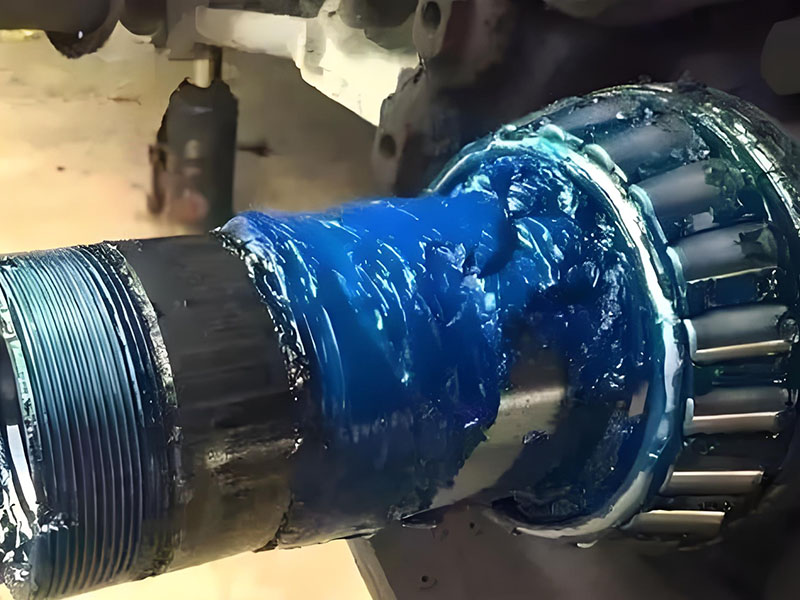
Lubrication requirements. Lubricant selection depends on speed, load, and operating temperature. Grease is suitable for many applications, but circulating oil systems are preferred for high-speed or high-temperature environments. In electric vehicle drivetrains, new bearing designs have dramatically improved seizure resistance under lean lubrication conditions, enabling smaller lubrication systems and more compact gearbox designs.
Contamination prevention. Foreign particles such as dirt, dust, and metal debris are among the primary causes of premature failure. Effective sealing solutions, including contact seals and labyrinth deflectors, are essential for maintaining bearing life in contaminated environments.
Conclusion
Tapered roller bearings are engineered to handle combined radial and axial loads through a tapered geometry that achieves line contact between rollers and raceways. Available in single-row, double-row, and multi-row configurations, these bearings serve critical functions across automotive, power generation, railway, aerospace, construction, and industrial gearbox applications. Proper selection of bearing type, preload setting, and lubrication strategy is essential for maximizing service life and operational reliability.
Frequently Asked Questions
Q1: What is the difference between tapered and cylindrical roller bearings?
A1: Tapered roller bearings are designed to handle combined radial and axial loads simultaneously, making them suitable for applications such as wheel hubs and gearboxes. Cylindrical roller bearings primarily support radial loads and have limited axial load capacity, but can accommodate higher speeds and thermal expansion more easily.
Q2: Can tapered roller bearings handle axial loads in both directions?
A2: A single-row tapered roller bearing supports axial loads in one direction only. For bidirectional axial loads, either two single-row bearings must be mounted in opposing directions, or a double-row tapered roller bearing should be selected.
Q3: How to select the right tapered roller bearing for an application?
A3: Selection requires evaluating load magnitude and direction, operating speed, temperature range, lubrication method, available space, and required service life. Dynamic and static load ratings provided by manufacturers, calculated according to ISO 281 standards, are the primary reference for selection.
Q4: What is the L10 life of a tapered roller bearing?
A4: L10 life is the number of revolutions (or hours at constant speed) that 90% of a sufficiently large group of bearings can complete before showing signs of fatigue. It is calculated using the dynamic equivalent radial load and the basic dynamic load rating per ISO 281.
Q5: How to prevent premature bearing failure?
A5: Preventive measures include using the correct lubricant type and quantity, maintaining a clean environment during installation and operation, inspecting bearings regularly for noise or temperature changes, following proper mounting procedures, and replacing bearings before the end of their calculated service life.
Q6: Can tapered roller bearings be used in high-speed applications?
A6: Yes, but with appropriate design considerations. High-speed applications require minimal preload, high-precision alignment, and adequate lubrication—typically oil circulation rather than grease. Optimized roller end designs and surface finishes that promote lubricant film formation are essential for high-speed operation.
Q7: What is the difference between single-row and double-row designs?
A7: Single-row bearings support radial loads and axial loads in one direction. Double-row bearings support axial loads in both directions and offer higher overall load capacity, but require more axial space. Double-row designs also simplify installation by eliminating the need to pair two separate bearings.
Q8: How does preload affect bearing performance?
A8: Preload increases bearing stiffness and rotational accuracy but also increases friction and heat generation. Excessive preload can cause premature failure, while insufficient preload may result in excessive endplay and reduced rigidity. The optimal preload depends on operating conditions such as speed, load, and thermal environment.