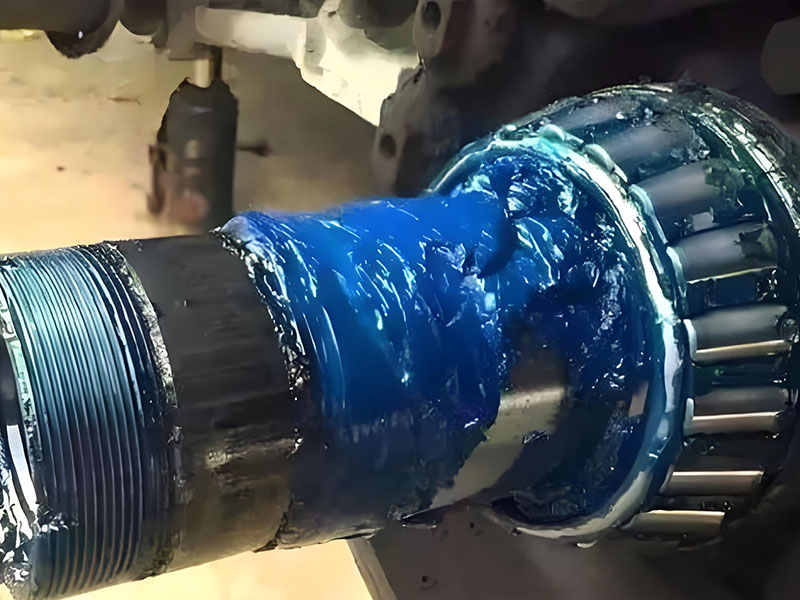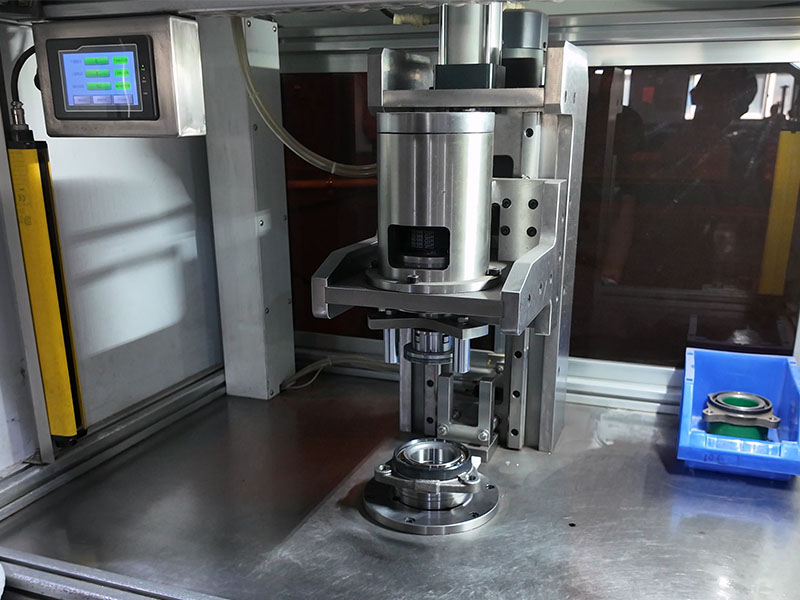
Quick Answer: Dental bearings are precision ball bearings that support the rotating spindle inside dental handpieces, especially high-speed air-turbine models. They must tolerate very high speed, vibration, water, cleaning chemicals, and repeated sterilization. Bearing choice depends on ball and cage material, clearance, lubrication, sealing, and exact handpiece dimensions. Standards and performance tests for complete handpieces do not certify an individual bearing. Understanding these limits prevents unsafe interchange assumptions.
Dental bearings are central to handpiece performance, yet the details that matter are often spread across bearing catalogs, handpiece standards, and supplier data. This dental bearings FAQ answers the practical questions buyers and service teams ask: what the bearings do, which materials and configurations are available, how corrosion and vibration affect life, and which standards apply to the complete handpiece rather than to the bearing alone.
Bearing-level facts and handpiece-level requirements are separated below so a specification is not mistaken for a certification or a universal interchange rule.
What Are Dental Bearings Used For?
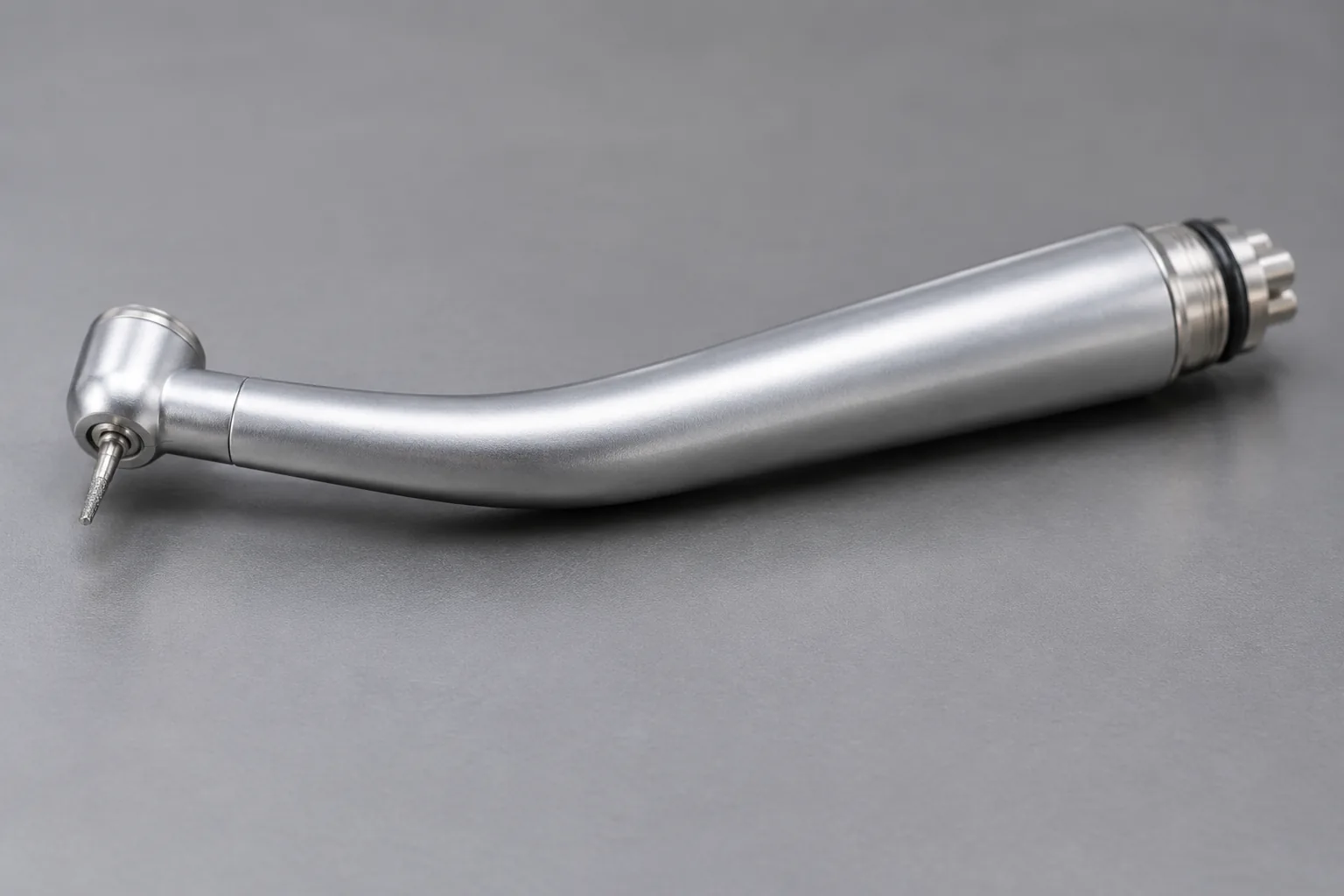
Dental bearings support the rotating components inside dental handpieces, especially high-speed air-turbine handpieces. The bearing locates the spindle and allows it to spin with low friction under the demanding conditions of dental use.
Speed is the defining requirement. NSK states that dental air-turbine bearings can operate at speeds reaching 400,000 rpm. At that speed, balance, cage guidance, lubrication, and fit all influence vibration and service life.
Dental bearings are not a universal fit across every handpiece. Dimensions, bearing arrangement, shield or seal configuration, and handpiece design must match before a bearing can be considered suitable. Similar bore and outside diameter alone do not prove interchangeability.
What Operating Conditions Must Dental Bearings Withstand?
Dental bearings work in a harsh combination of mechanical and chemical exposure. The main conditions are:
- Ultra-high rotational speed and vibration from air-turbine operation.
- Water and cleaning chemicals used during treatment and reprocessing.
- Repeated sterilization, including high temperature and pressure exposure.
NSK identifies corrosion resistance and durability under sterilization conditions as core requirements for dental air-turbine bearings. These conditions affect material selection, cage design, lubrication, and sealing, so a bearing that works in a dry high-speed application is not automatically suitable for a dental handpiece.
What Ball and Cage Materials Are Available?
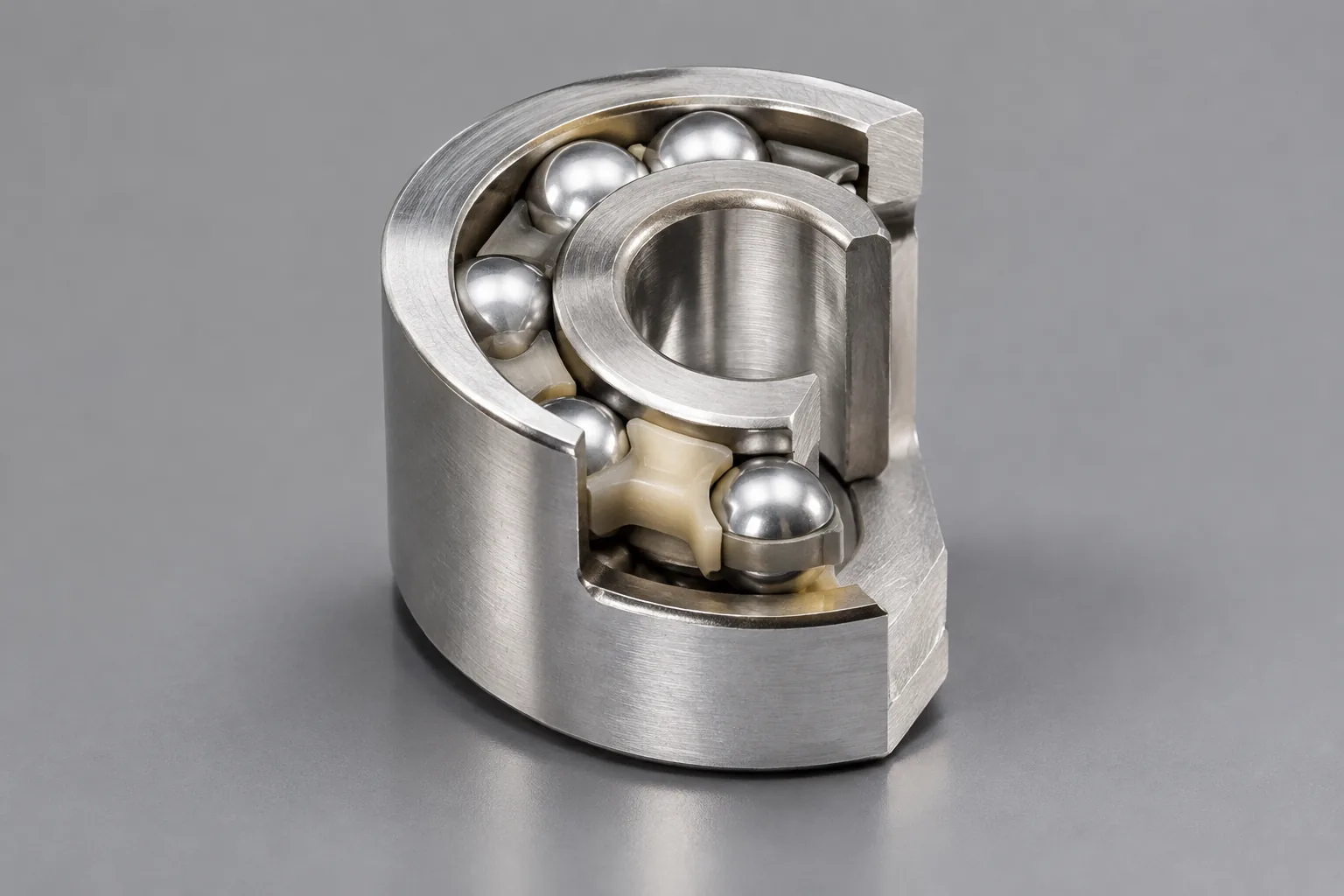
myonic specifies two ball materials for dental bearings: 440C corrosion-resistant steel and ceramic. The ball material affects corrosion behavior, weight, and running characteristics, but it must be considered together with the cage, lubrication, and handpiece requirements.
For cages, myonic identifies phenolic resin as its standard material. It also lists glass-fiber-reinforced PEEK, dry-lubricated PEEK, PAI, and PI for applications that need properties such as autoclave resistance or emergency-running capability.
Material combinations vary by bearing design. One documented example is the myonic EL 740 Z bearing, which uses steel balls, a steel cage, P25 radial clearance, oil lubrication, and one covered side. That example shows why buyers should verify the full configuration rather than only the ball material.
Which Material Choices Suit Autoclave and Emergency-Running Needs?
According to myonic, glass-fiber-reinforced PEEK is used when autoclave resistance is critical. PAI combines emergency-running properties with autoclave resistance. These are material-selection options, not a ranking that applies to every handpiece.
Both ceramic-ball and steel-ball dental bearing configurations are available. The right choice depends on the handpiece requirements, the sterilization exposure, and the running conditions, including whether the bearing must tolerate a period of operation after lubrication loss or another emergency condition.
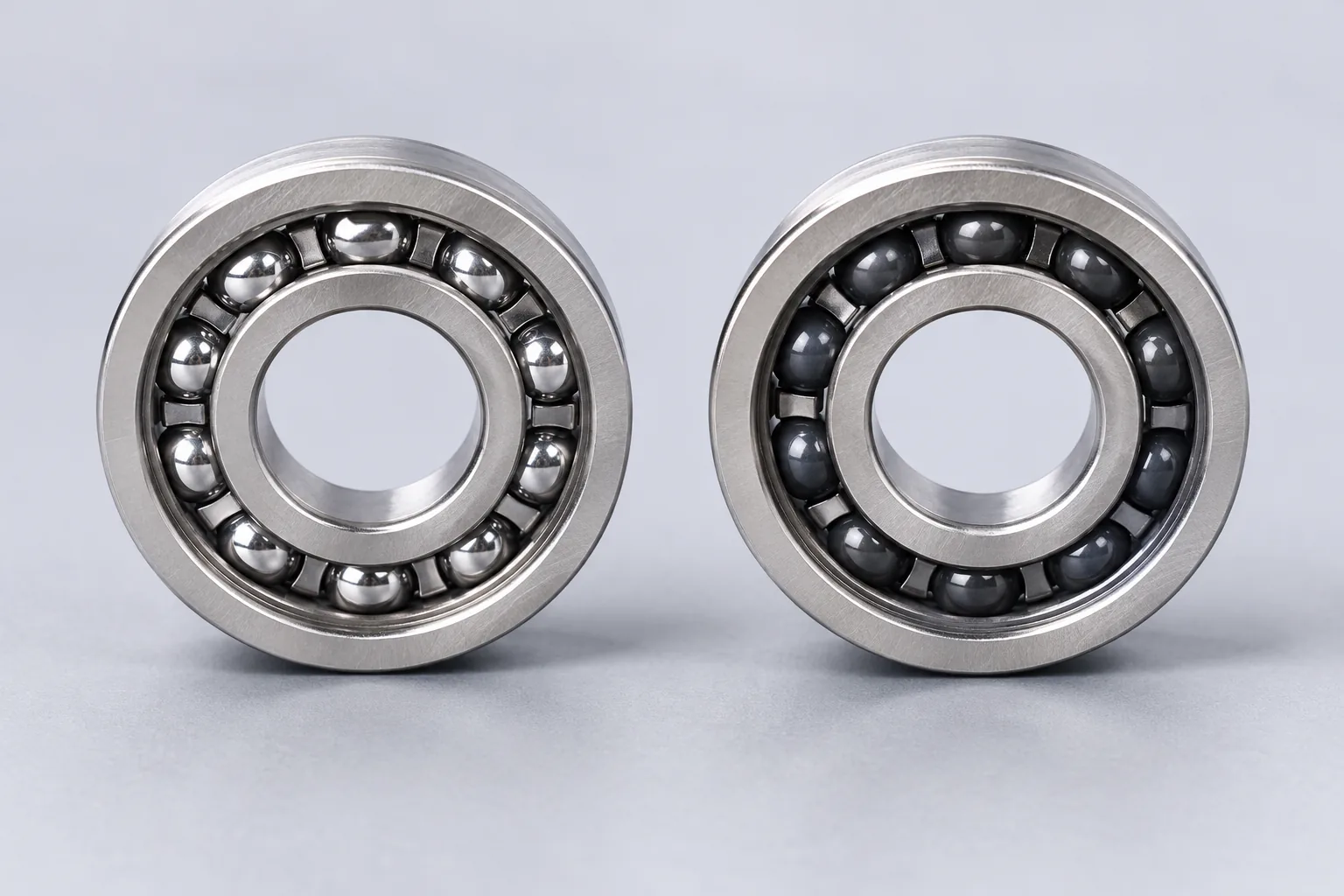
For a specific handpiece, confirm the allowed ball material, cage material, clearance, lubrication, and sealing arrangement with the handpiece specification and the bearing supplier’s data.
Why Is Corrosion Resistance Important?
Dental handpieces encounter water, aggressive cleaning media, and sterilization. Corrosion can change the running surfaces and cage condition, which may appear as vibration, abnormal noise, or reduced rotational smoothness.
NSK reported that its 2015 dental air-turbine bearing series achieved more than 10 times the corrosion resistance of commonly used bearing material by using a high-corrosion-resistant stainless steel. That figure belongs to the NSK series announced in 2015. It is not a general rating for all dental bearings and should not be transferred to another manufacturer’s product without equivalent evidence.
Can Bearing Design Reduce Vibration and Improve Service Life?
NSK reported that optimizing the cage and improving component machining accuracy reduced vibration to one-half of its previous product level and increased bearing life by 1.5 times. These results apply specifically to the NSK series announced on March 27, 2015.
The practical point is that cage guidance and machining quality can matter as much as the ball material. Uneven cage guidance can increase vibration, noise, and wear. However, the published figures are product-specific and should not be presented as universal dental-bearing specifications or as a guaranteed life improvement for every handpiece.
What Is NSK QuickStopBearing and How Does It Work?
NSK’s QuickStopBearing, announced in 2022, adds a rubber seal that opens during airflow and contacts the inner ring after airflow stops. NSK says this shortens inertial rotation and seals the bearing to prevent suck-back.
NSK specifies operation at up to 400,000 rpm, equivalent to the speed of conventional air-turbine handpiece bearings. NSK also states that the quick-stop and anti-suck-back functions can be added by replacing the bearing in an existing compatible handpiece.
Compatibility still depends on bearing dimensions and handpiece design. Replacing a bearing is not a universal upgrade, and a quick-stop design should not be selected without confirming the fit, sealing interface, and handpiece requirements.
Which Standards Apply to Dental Handpieces?
ISO 14457:2017, Dentistry – Handpieces and motors, specifies requirements and test methods for straight and angle handpieces, high-speed air-turbine handpieces, air motors, electric motors, and prophylaxis handpieces. It also addresses manufacturer information, marking, and packaging.
ISO states that the second edition was published in October 2017, reviewed and confirmed in 2023, and remains current, although its lifecycle status indicates that it is due to be revised.
ISO 14457 applies to complete dental handpieces and motors, not directly to an individual dental bearing. A bearing should not be described as ISO 14457 certified unless specific, independently verifiable conformity documentation supports that claim. Supplier quality certificates and management-system certificates also do not, by themselves, prove handpiece-specific bearing conformity.
What FDA Performance Criteria Matter for Handpieces and Motors?
FDA guidance gives system-level criteria for complete handpiece-and-motor systems or high-speed air-turbine handpieces. These are not standalone bearing ratings. The criteria include:
- Sound: A-weighted sound pressure generated by the complete handpiece-and-motor system or high-speed air-turbine handpiece should not exceed 80 dB.
- Speed: Free-running speed should be within ±10% of the value stated in the instructions for use.
- Eccentricity: Total dynamic eccentricity of a Type 4 test mandrel in an unloaded high-speed air-turbine handpiece should not exceed 0.03 mm; for specified straight and angle handpieces, the limit is 0.08 mm.
- Stall torque: The minimum for high-speed air-turbine handpieces is 0.0005 N·m.
- Reprocessing: Dental handpieces, motors, and relevant parts should withstand 250 reprocessing cycles without performance deterioration unless the manufacturer specifies and justifies a lower maximum.
- Coolant water: An applicable handpiece should deliver at least 50 mL/min at 200 kPa (2.0 bar); an applicable motor should supply at least 50 mL/min at 250 kPa (2.5 bar).
- Air supply: Air-powered handpieces and motors should have a flow rate below 80 NL/min at 300 ±100 kPa (3.0 ±1.0 bar).
These values describe the assembled device or system. They should not be converted into a bearing-only acceptance limit or used to claim that a bearing alone meets a handpiece performance requirement.
Who Manufactures and Supplies Dental Bearings?
Named manufacturers with directly documented dental-bearing products include myonic GmbH, part of the MinebeaMitsumi group, and NSK Ltd. NHBB lists authorized US and Canadian distributors specifically for myonic dental handpiece bearings.
The listed distributors include:
- National Precision Bearing Inc. in Preston, Washington.
- Premium Handpiece Parts in Spicewood, Texas.
- Quality Dental Service Corp. in Oxnard, California.
- Sable Industries Inc. in Kitchener, Ontario.
myonic GmbH lists its headquarters at Steinbeisstraße 4, 88299 Leutkirch, Germany. The headquarters has approximately 10,000 m² of space, including about 6,500 m² of Class 10,000 clean-room space and laminar-flow cabins up to Class 100.
myonic reports that its headquarters and other listed production locations are certified to ISO 9001:2015 and ISO 14001:2015. These are quality- and environmental-management certifications, not proof that every bearing is certified for a particular handpiece.
What Should Buyers Verify Before Selecting a Dental Bearing?
Before assuming interchangeability, verify dimensional compatibility and handpiece design. This is especially important for quick-stop or anti-suck-back bearing designs, where the sealing interface and inner-ring behavior are part of the function.
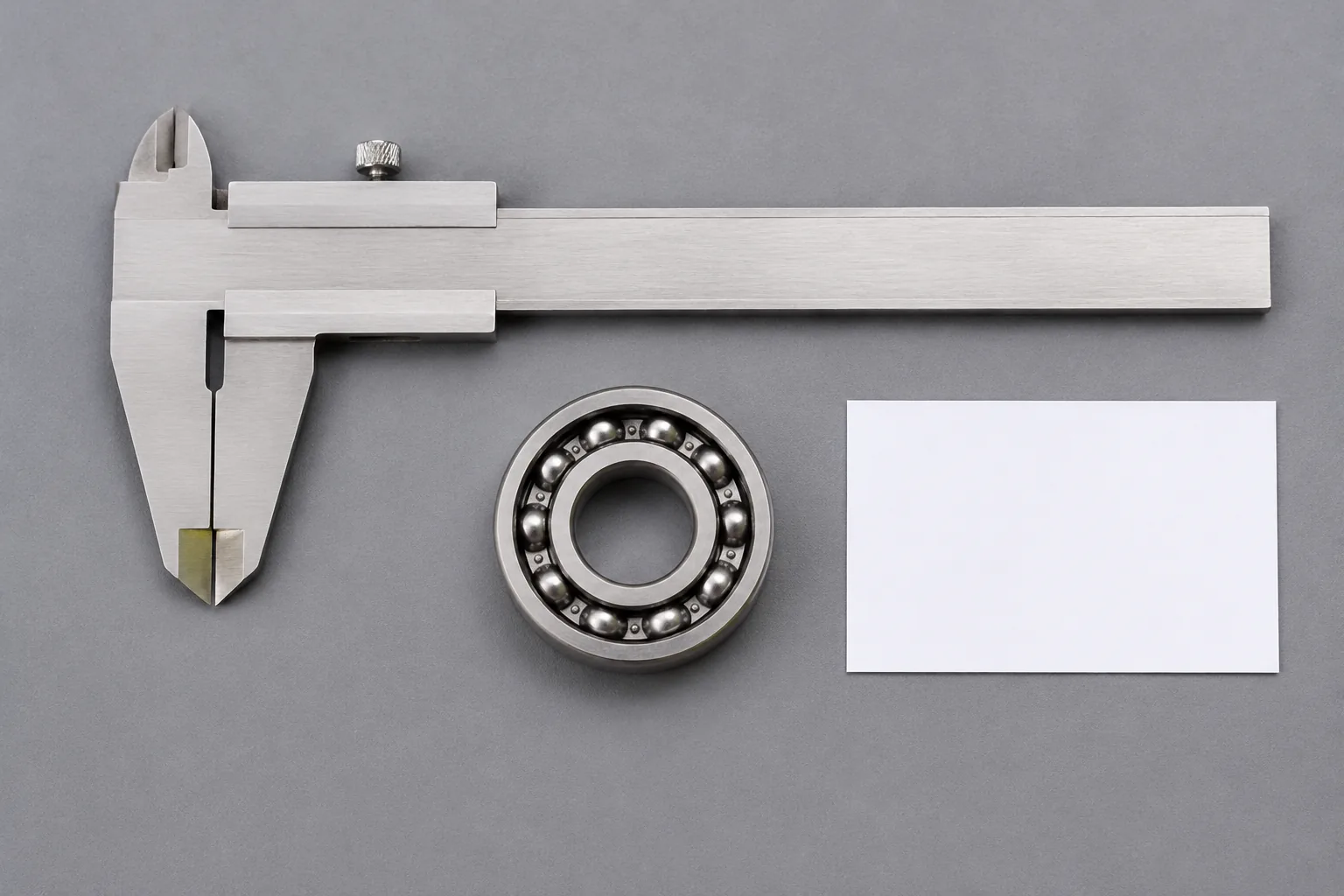
Confirm the full bearing configuration against the handpiece requirements:
- Ball material and cage material.
- Radial clearance.
- Lubrication type and quantity.
- Sealing or shielding arrangement.
- Allowed speed and operating conditions.
myonic states that its dental bearings may be supplied with lubricants carrying H1 approval, depending on requirements. H1 is a lubricant classification for incidental food contact. It should not be presented as a dental-device certification.
Ask for supplier documentation that matches the exact bearing model and any claimed performance. For installation torque, replacement intervals, and model-specific cross-references, follow the handpiece manufacturer’s service information for the exact model. Matching dimensions alone does not prove that a bearing is suitable for a given handpiece.
Conclusion
Dental bearings are small components with large consequences for handpiece speed, vibration, corrosion resistance, and service life. The safest selection process starts with the exact handpiece dimensions and design, then confirms ball material, cage material, clearance, lubrication, sealing, and operating limits. Manufacturer-specific performance figures, such as the NSK 2015 series results and QuickStopBearing data, should be kept attached to the product and year they describe.
Standards such as ISO 14457:2017 and FDA performance criteria apply to complete handpieces and systems, not to an individual bearing in isolation. Before ordering, verify the full configuration, request documentation for the exact model, and confirm any interchange or quick-stop function with the handpiece maker’s service information.
FAQs
Q1: Are dental bearings the same as standard miniature bearings?
A: No. Dental bearings are application-specific bearings for dental handpieces, especially high-speed air-turbine models. They must tolerate very high speed, water, cleaning chemicals, and repeated sterilization, and they must match the handpiece’s dimensions, clearance, lubrication, and sealing. A standard miniature bearing with similar dimensions may not be suitable.
Q2: Can a quick-stop or anti-suck-back bearing be fitted to any air-turbine handpiece?
A: No. NSK states that its QuickStopBearing can add quick-stop and anti-suck-back functions by replacing the bearing in an existing compatible handpiece, but compatibility depends on bearing dimensions and handpiece design. The sealing interface and inner-ring behavior must also be suitable for the handpiece. Confirm fit with the handpiece specification before replacement.
Q3: Does ISO 14457 certification apply to an individual dental bearing?
A: No, not directly. ISO 14457:2017 applies to complete dental handpieces and motors, including requirements and test methods for several handpiece types. An individual bearing should not be described as ISO 14457 certified unless specific, independently verifiable conformity documentation supports that claim.
Q4: What does H1 lubricant approval mean for a dental bearing?
A: H1 is a lubricant classification for incidental food contact. myonic states that its dental bearings may be supplied with H1-approved lubricants depending on requirements. H1 approval is not a dental-device certification and does not by itself establish suitability for a particular handpiece.
Q5: Are ceramic balls always better than steel balls in dental bearings?
A: No. Both ceramic-ball and steel-ball configurations are available. The right choice depends on the handpiece requirements, sterilization exposure, running conditions, cage material, lubrication, and clearance. A ceramic ball is not automatically superior for every dental application.
Q6: Why do dental bearings show vibration or noise?
A: Vibration and noise can come from corrosion, cage wear, lubrication loss, contamination, incorrect fit, or damage during mounting. Symptoms point to a need for diagnosis, not proof of one cause. Inspect the bearing, seal, and handpiece interface, and replace the bearing only after confirming the correct configuration and installation procedure.
Q7: How many reprocessing cycles should a dental handpiece withstand?
A: FDA guidance states that dental handpieces, motors, and relevant parts should withstand 250 reprocessing cycles without performance deterioration unless the manufacturer specifies and justifies a lower maximum. This is a complete-device requirement, not an isolated bearing test.