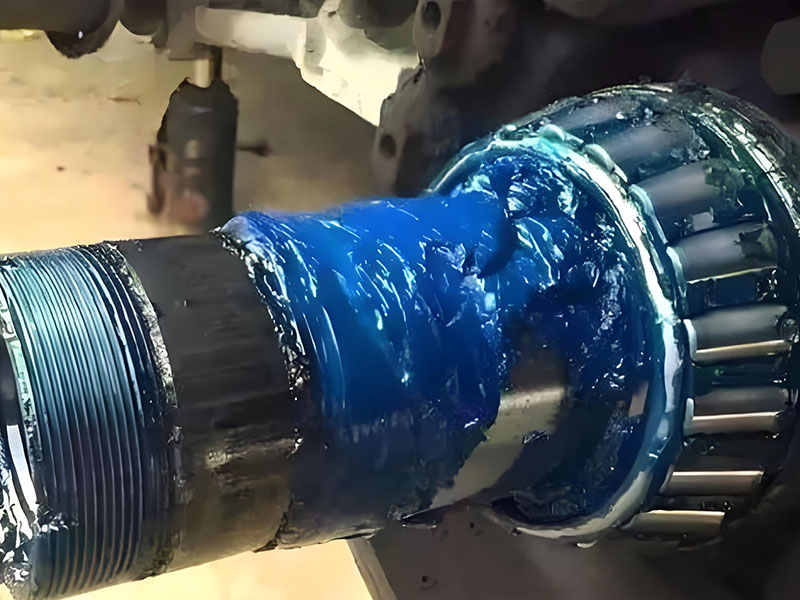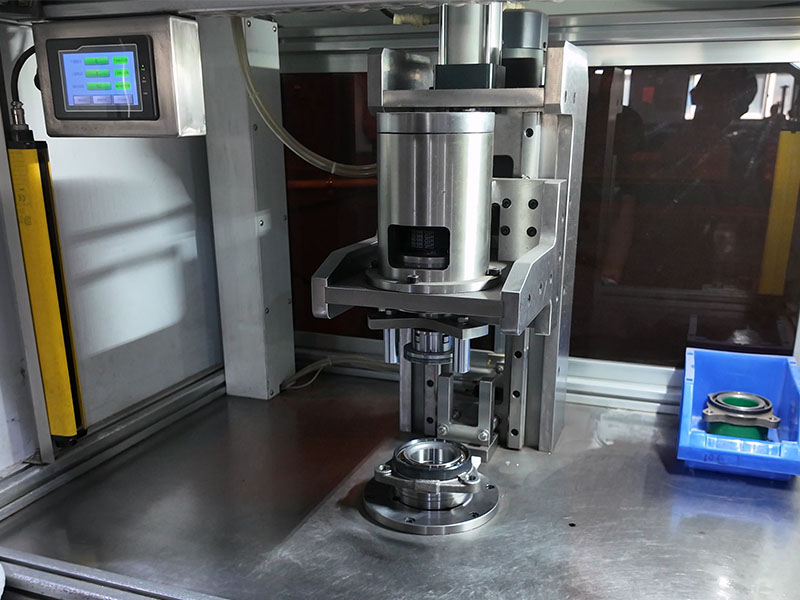
Quick Answer: Bearing preload is an internal load created between the rolling elements and raceways during mounting, not an external working load. Setting it correctly at installation delivers higher stiffness, better shaft guidance and controlled runout. Too much preload raises friction, heat and the risk of seizure or flaking; too little lets internal clearance return and allows skidding. The mounted value, not the preset figure, is what the bearing actually runs with.
A bearing that turns freely on the bench can still run hot, noisy or short-lived once it is installed, because the internal load it carries is decided by the parts around it. Bearing preload is set by the mounting arrangement, so the installation stage, rather than the specification sheet, fixes the load the bearing actually runs with.
What Bearing Preload Means in a Mounted Assembly
Preload is an internally generated load between the rolling elements and the bearing rings. It is not an external working load. Engineers also describe it as negative internal clearance: the small clearance built into the bearing is deliberately used up, so the rolling contacts stay elastically loaded even before the machine carries any working load.
Because the load comes from the mounting arrangement rather than from the application, preload is applied to bearings designed to accept it. The usual cases are paired angular contact ball bearings and tapered roller bearings, where the rings are displaced axially against each other during mounting.
- Preload is a deliberate installation setting, distinct from the internal clearance the bearing has as supplied.
- The preload present after mounting is the value the bearing runs with, and it can differ from the figure specified or preset before mounting.
- Not every bearing type suits preload. Spherical roller bearings and cylindrical roller bearings should generally not run preloaded, because excess heat or material fatigue can cause premature damage.
What Correct Preload Achieves in Service
A correct setting changes how the whole shaft behaves, not only the bearing. The effects below are the reason preload is specified in the first place; they only hold while the preload stays inside the intended range for that bearing arrangement and application, because beyond that range the same mechanisms that add stiffness add heat.
- Higher stiffness, better shaft guidance and improved running accuracy, with lower noise.
- Rolling elements kept in contact during rapid start-stop cycles or light-load running at high speed, which limits skidding.
- Controlled shaft runout and positioning accuracy, which is why machine tool spindles and measuring instruments use preloaded arrangements.
- More accurate gear meshing in automotive final drives, where higher bearing stiffness supports the gear contact.
- Stable rolling contact under high speed or fluctuating conditions, limiting sliding and smearing between rolling elements and raceways. This matters for high-speed angular contact ball bearings, thrust bearings, and equipment with rapid acceleration and deceleration.
The gain is measurable: under comparable axial loading, a correctly preloaded arrangement can be roughly two to three times as rigid as the same arrangement without preload.
Why Preload Must Be Correctly Set During Installation
The figure on a drawing is not automatically the figure the bearing runs with. Several installation effects move the setting, and in service they act at the same time.
- Preload set before mounting is not the preload after mounting. General-purpose or factory-matched sets can end up with a higher preload once they are installed.
- Interference fits consume internal clearance. On a solid steel shaft, about 80% of the inner ring interference reduces radial clearance; in a steel or cast iron housing, about 60% of the outer ring interference does the same. Ignore this during installation and existing clearance becomes unintended preload.
- Seat geometry errors raise preload unintentionally. Cylindricity, perpendicularity and concentricity deviations of the housing all shift the setting.
- Operating temperature changes the cold setting. Temperature differences between inner ring, outer ring and rolling elements, plus different thermal expansion of shaft, housing and bearing steel, can increase preload in service. A shaft-to-housing gradient of about 2-5 C (4-9 F) is typical, so the cold setting has to be chosen against the target operating temperature.
- Rotational speed adds preload. In arrangements where axial position is fixed, centrifugal force from shaft speed increases running preload, and at very high speeds the increase can be significant.
The clearance percentages above are engineering approximations for the stated material pairs and fit types, not universal constants. The size of the overall effect is not theoretical either. In a published calculation for a matched pair designated 71924 CD/P4ADBC, the preset preload before mounting was 1,160 N; applying the mounting correction factor gave an installation preload of about 1,590 N, an increase of roughly 37%.
Consequences of Incorrect Preload
Both directions of error cause damage, but they leave different signatures. Too much preload loads the rolling contact beyond the working load and shows up as heat and friction. Too little preload allows clearance back in and shows up as movement, noise and skidding. Symptoms such as heat, noise or vibration indicate that diagnosis is needed; they do not by themselves prove that preload is the root cause.
Excessive Preload
Excess preload adds load between the rolling elements and raceways on top of the external working load. The immediate results are higher friction torque and abnormal heat, and the fatigue life of the bearing falls.
At operating level, excessive preload can significantly reduce fatigue life and cause lubrication problems, so damage appears early through high heat generation. Documented outcomes include bearing seizure and raceway flaking; damage analysis shows localized flaking on a tapered roller bearing caused by excessive preload.
Insufficient Preload
Too little preload allows internal clearance to reappear under external load. Stiffness drops or the preload is lost altogether, so the intended shaft runout control and positioning accuracy are not achieved, and the arrangement no longer delivers the behaviour it was designed for.
Without an adequate minimum load, sliding and smearing between rolling elements and raceways becomes possible in high-speed, light-load or rapidly accelerating equipment.
Installation Methods Used to Set Preload
The method chosen fixes two things: how the preload is generated, and how tolerant the setting is to thermal movement. Before choosing a method, settle what the target value should be. For many tapered roller bearing systems the life-maximizing operating setting is near zero clearance to slight preload, not maximum preload, and for single-row tapered roller bearings a load zone of about 225 degrees typically corresponds to maximum life. The applicable setting must come from the equipment specification.
Position (Stand-Out) Preload
Position preload is applied by matched bearings with a defined stand-out, by precision spacers or shims, or by nuts and bolts that lock the rings axially.
- When the rings are locked with nuts or bolts, starting friction torque is usually measured to confirm the setting.
- For matched tapered roller bearings, rotate the outer ring at least 10 turns before measuring ring width and assembly width, so roller position is stable.
- Position preload gives higher rigidity at the same preload amount, but the preload changes as axial displacement from temperature difference or load occurs.
Constant-Pressure Preload
Constant-pressure preload is generated by helical springs or diaphragm springs instead of a fixed axial position, so the rings are pushed together by spring force rather than locked at a distance.
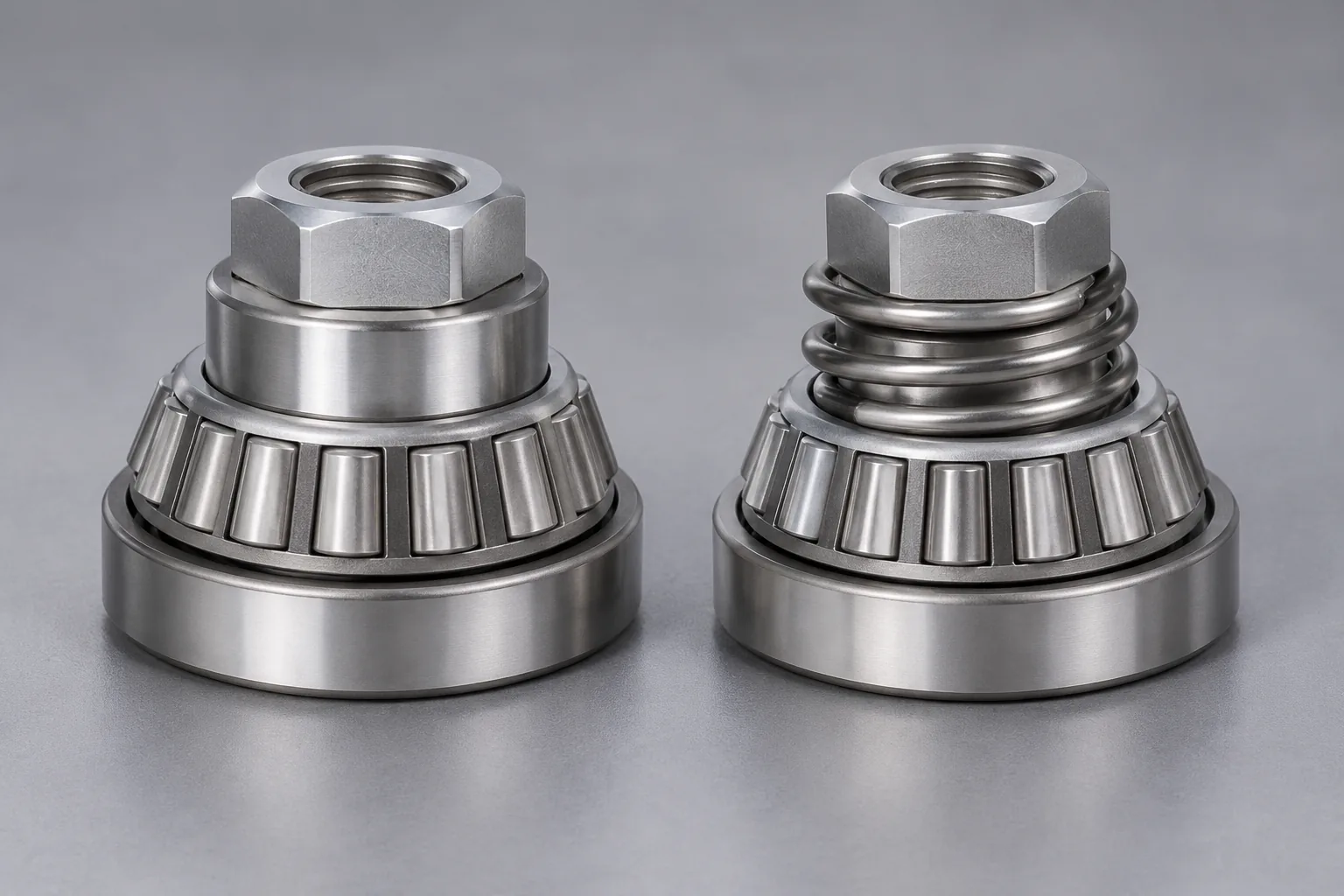
- It absorbs load changes and thermal expansion differences between shaft and housing.
- It holds a more stable preload when running heat or load changes the distance between the two bearings.
- It is generally better suited to high-speed applications.
The trade-off is rigidity: at the same preload amount, spring preload gives less rigidity than position preload.
Position Versus Constant-Pressure Preload: Quick Comparison
| Behavior | Position (stand-out) preload | Constant-pressure preload |
|---|---|---|
| How it is generated | Matched stand-out, precision spacers or shims, nuts or bolts locking the rings axially | Helical or diaphragm springs acting on the rings |
| Rigidity at equal preload | Higher | Lower |
| Response to thermal movement and load change | Setting shifts with axial displacement caused by temperature difference or load | Absorbs thermal expansion difference and load change; preload stays more stable |
| Speed suitability | Suited to arrangements where a fixed axial position is acceptable | Generally better suited to high-speed applications |
How to Verify Preload After Installation
Verification confirms the setting that actually exists after mounting, not the value written on the drawing.
Rotational torque is the practical installation check. Measure low-speed, steady shaft rotation torque; a spring scale reading force at a known radius gives bearing torque as force multiplied by radius.
Temperature behaviour reveals a setting that is wrong. Bearing temperature usually rises after start-up and then stabilizes, with a common stable rise of 10-40 C above ambient. A temperature that keeps climbing should prompt a stop and inspection.
- Compare torque and temperature against the value or range specified for that machine and bearing arrangement.
- A rising temperature trend can also come from poor installation, too little clearance, excessive load or lubrication problems, so it indicates inspection rather than a confirmed diagnosis.
Standards Behind Clearance, Tolerance and Failure Analysis
Published standards give the vocabulary and the reference values behind the points above.
- ISO 5753-1:2009 covers radial internal clearance for radial bearings. It remains a published standard, currently under revision, and it supports the basic point that clearance before mounting is the basis for the final operating clearance or preload.
- ISO 492:2023, published in August 2023, specifies dimensions, geometrical characteristics and tolerance values for radial rolling bearings. These tolerances affect mounting fits, and therefore the preload actually achieved.
- ISO 15243:2017 classifies damage and failure modes of rolling bearings in service, with appearance characteristics and possible root causes. It supplies the standard vocabulary for analysing damage related to incorrect preload; the 2017 version was confirmed as still valid in 2022.
Conclusion
Bearing preload is a deliberate internal load set during mounting, and the value the bearing actually runs with depends on fits, seat geometry, temperature and speed, not only on the preset figure. Interference fits can consume most of the available clearance, a matched pair can gain roughly a third more preload once installed, and a temperature gradient or a high shaft speed adds more.
Both error directions are damaging. Too much preload raises friction and heat and brings the arrangement closer to seizure and flaking; too little leaves clearance in place, loses stiffness and runout control, and allows skidding under light load or rapid acceleration. The safe sequence is to confirm the method and target value against the equipment or bearing specification, apply matched stand-out or spring preload as the arrangement requires, and then verify the result with rotational torque and running temperature. If temperature keeps climbing after start-up, stop the machine and inspect the setting before returning it to service.
FAQs
Q1: What happens if bearing preload is too high?
A: Friction torque and operating temperature rise, fatigue life falls, and the arrangement can reach lubrication failure, seizure or raceway flaking. Excessive preload adds load between the rolling elements and raceways on top of the external working load, so the damage develops even when the applied load itself has not changed.
Q2: Do all bearing types need preload?
A: No. Preload is normally used with arrangements such as paired angular contact ball bearings and tapered roller bearings. Spherical roller bearings and cylindrical roller bearings should generally not run preloaded, because excess heat or material fatigue can cause premature damage.
Q3: Does an interference fit change the preload I set?
A: Yes. On a solid steel shaft, about 80% of the inner ring interference reduces radial clearance, and about 60% of the outer ring interference in a steel or cast iron housing does the same. That clearance loss turns into preload if the installation plan does not account for it.
Q4: Should I use position preload or spring preload?
A: Position preload gives higher rigidity at the same preload amount, while constant-pressure spring preload absorbs thermal expansion differences between shaft and housing and holds a more stable setting when running heat changes the bearing spacing. Spring preload is generally better suited to high-speed applications.
Q5: Why is my matched bearing set running hotter than expected after mounting?
A: Mounting can raise preload above the preset value through interference fits, seat geometry errors, temperature gradients or speed effects; one published example moved from 1,160 N preset to about 1,590 N after mounting, a rise of roughly 37%. Investigate rather than assuming the bearing is faulty, and stop the machine for inspection if the temperature keeps rising.
Q6: How many turns should a matched bearing be rotated before measuring stand-out?
A: For matched tapered roller bearing installation, rotate the outer ring at least 10 turns before measuring ring width and assembly width, so the roller position is stable.