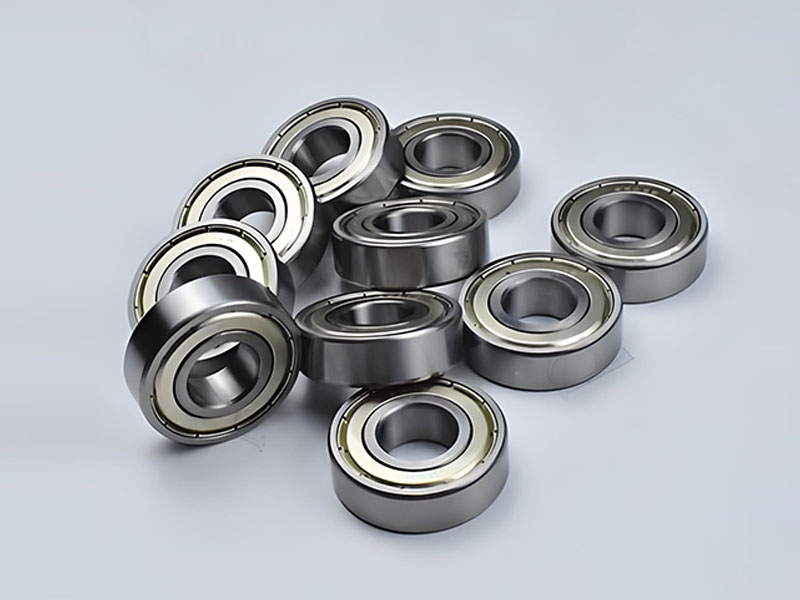
Quick Answer: For premium vs economy hubs, the hardware kit is a major cost and time factor. A premium wheel hub hardware kit pairs an OE-grade hub or bearing with application-specific fasteners and seals, which reduces parts chasing and bay downtime. Economy hubs can cost less up front, yet missing hardware, comebacks, liability exposure, and lost business can erase that saving. Compare total repair economics, confirm the exact application and kit contents, and follow the vehicle manufacturer’s torque and replacement requirements.
The part price on the invoice is only one input in a wheel-end repair. This premium vs economy hubs comparison treats the job as a total repair-cost problem: labor, bay time, parts sourcing, comeback exposure, and the risk of a second failure all matter. The sections below explain what a complete hardware kit contains, where economy hubs can create hidden costs, and how to compare a premium hub and hardware kit before buying.
What Is a Wheel Hub Hardware Kit?
A wheel hub hardware kit combines a premium OE-grade wheel hub assembly or bearing with the hardware needed for installation, depending on the application. The kit is not a universal fastener pack. Its content follows the hub design, axle arrangement, and sealing needs of a specific repair.
Depending on the application, a kit can include:
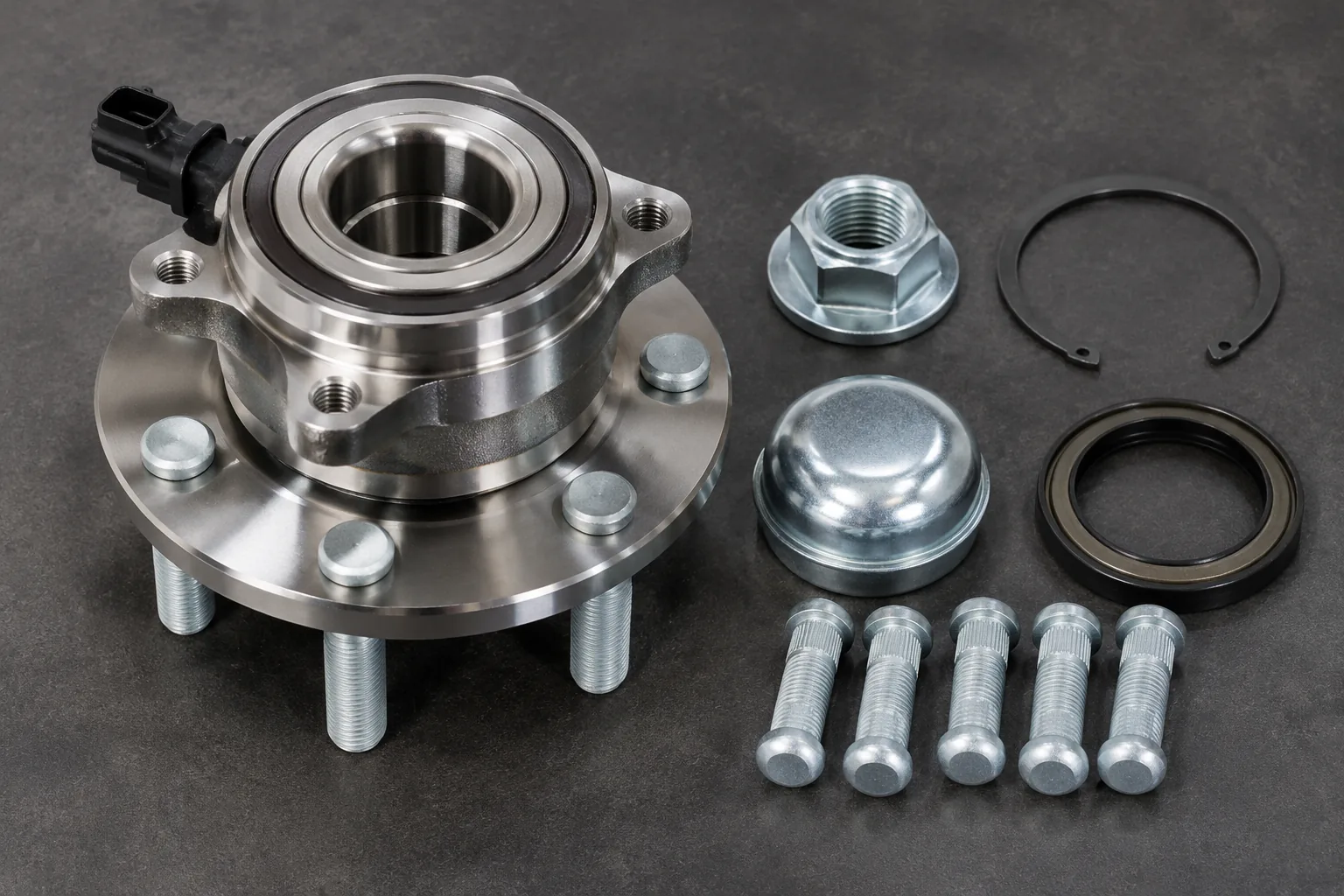
- Wheel mounting bolts or studs
- Axle or CV shaft nuts
- CV shaft bolts
- Washers
- Snap rings
- Bearing dust caps
- Seals
- O-rings
Published kit examples include WE60673HW, WE61817HW, WE60626HW, and WE61816HW. WE61816HW contains a bearing, snap ring, and nut. WE60626HW is shown with a hub assembly, mounting studs, and seals. One complete hub bearing kit range can include a hub flange, first-generation bearing, C-clip, axle nut, and required seals, with products reported as 100% tested to OE fit, form, and function specifications.
Kit contents vary by part number and vehicle application. Buyers must verify the application listing rather than assume every kit contains the same hardware. Some kits are bearing-and-fastener sets rather than full hub assemblies.
Hardware Content Varies by Application
The difference is practical, not cosmetic. WE61816HW is a bearing, snap ring, and nut set, while WE60626HW includes a hub assembly, mounting studs, and seals. Each kit should be matched to the specific hub design, axle arrangement, and sealing needs of the repair.
Do not treat one kit’s contents as universal for another vehicle or hub design. Verify exact kit contents before ordering or quoting a repair.
What Makes Premium Hubs Different from Economy Hubs?
Premium hubs are positioned as OE-grade assemblies with controlled materials, sealing, geometry, and testing. Economy hubs are lower-cost alternatives whose long-term repair consequences still need to be considered.
Premium hub literature describes seals with a reinforced shell, a textured rubber inner diameter, internal contaminant isolation, and a vent designed to reduce installation damage and support seal life. The same literature cites precision raceway profiles, consistent internal geometry, and enhanced surface treatment for load capacity and bearing life.
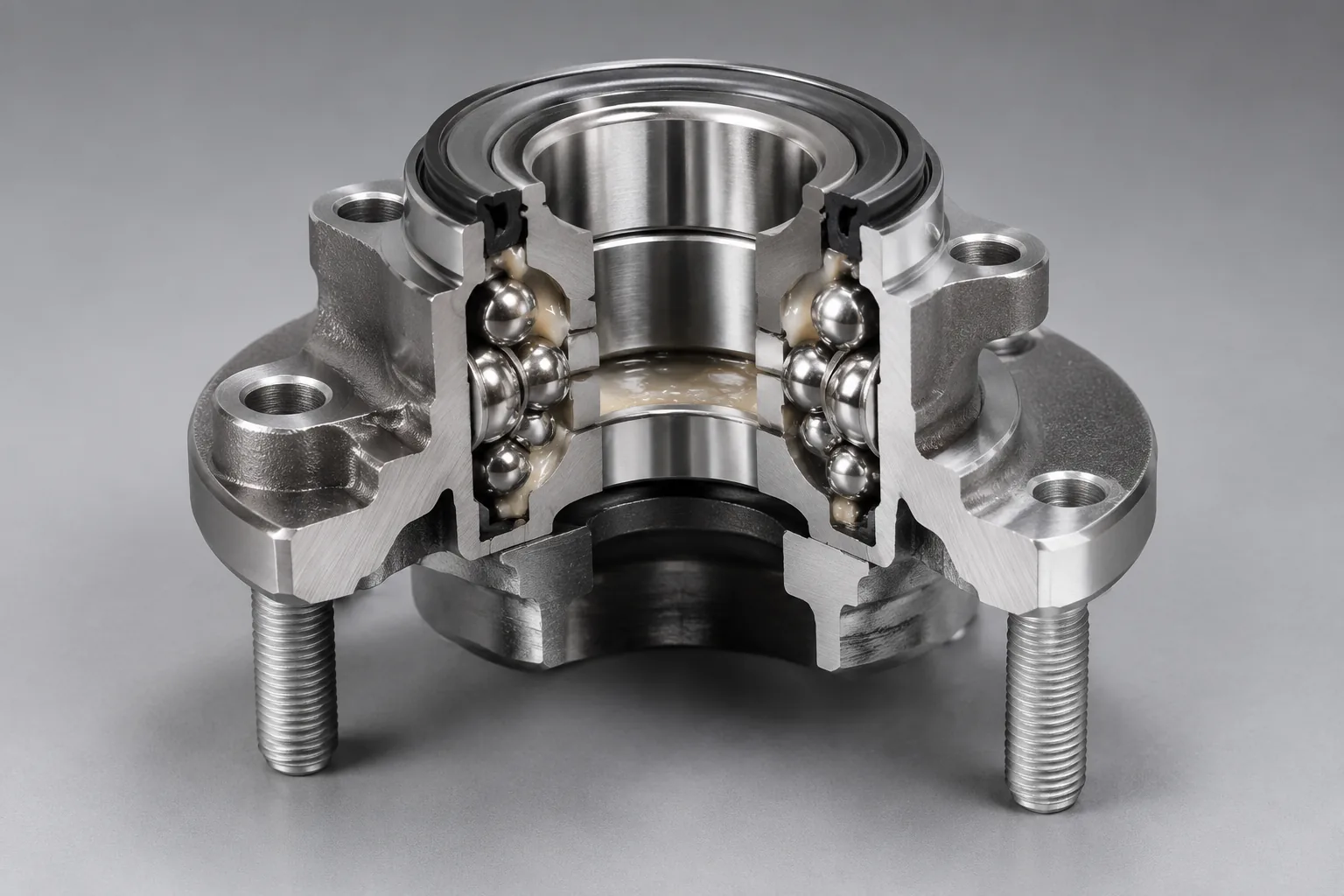
One hub maker states that its assemblies use high-grade steel, application-specific seals, premium grease, OE-designed ABS plugs and harnesses, and hardened steel or Grade 5 alloy steel wheel studs, and that its hubs must pass multiple laboratory tests. In one bearing maker’s laboratory testing, the maximum allowable non-metallic inclusion size in bearing steel is 50 μm, because inclusions can create fatigue weak points and allow crack growth. Another manufacturer reports that its complete hub bearing kits are 100% tested to OE fit, shape, and function.
These are manufacturer-specific claims, not proof that every premium-labeled hub is correct for every application. Verify the part number, the application, and the required hardware. The premium vs economy hubs decision is therefore not a simple price comparison.
Why Complete Hardware Kits Save Time
Ordering a missing installation part while a vehicle is already on the lift delays the current repair and can affect later bay scheduling. Recovering hardware from an old hub can add labor and may lead to premature failure. A hardware-complete kit reduces parts hunting, purchasing, and old-part removal time.
A complete kit helps the technician avoid three separate searches: the hub or bearing, the application-specific fasteners, and the seals or retaining parts. Pre-set, pre-lubricated, and pre-sealed hub assemblies are also described as maintenance-free units, which makes them easier and faster to install than assembling components piece by piece. One complete hub bearing kit range is reported to extend service life and save installation time.
Time savings depend on the kit actually matching the application and containing the required hardware. An incomplete or incorrect kit can create the same delay it was meant to prevent.
The Hidden Cost of Missing Hardware
A missing stud, nut, snap ring, seal, or O-ring can stop a repair after the vehicle is already disassembled. That is when the hidden cost begins:
- Parts sourcing and dealer ordering consume labor that is not captured by the lower part price of an economy hub.
- Old-hardware salvage adds labor and may compromise the repair.
- The bay remains occupied while the missing part is resolved, reducing capacity for other jobs.
The impact is highest when the vehicle is already on the lift and cannot be moved safely.
Case Example: WE60626HW on a Front Solid Axle Truck
In a front solid axle truck example, WE60626HW supplies the correct studs, O-ring, and a special snap ring used to retain the stub axle. The snap ring is made from a softer material than the axle to help prevent damage to the axle and bearing.
That snap ring is not ordinary universal hardware and may need to be ordered separately from a dealer if it is missing. The kit prevents the technician from separately sourcing three part types or reusing old hardware from the previous hub.
Where Economy Hubs Can Cost More Than They Save
Economy wheel hubs can reduce the initial parts cost, but the long-term business risks include:
- Comebacks
- Customer dissatisfaction
- Liability risk
- Lost business
All four affect repair profit and reputation. Some applications also use one-time self-locking or self-riveting axle nuts. These must be replaced, and reusing an old nut may allow it to loosen while the vehicle is driven.
Incorrect torque of hub and wheel fasteners is identified as a major cause of premature hub failure. Incorrect hub mounting torque can allow the hub to move and damage surrounding components. Incorrect wheel nut torque can warp a brake disc, break wheel studs, or lead to wheel detachment. Impact wrenches can damage nuts, threads, and other components, and can produce over- or under-torque.
The financial effect depends on shop labor rates, comeback policy, vehicle use, and the consequences of failure. No universal cost figure applies to every shop. An economy hub can still be a reasonable choice for some low-duty applications, but the decision should account for duty cycle, customer expectations, and comeback risk. Not every economy hub will fail, but the repair decision should include comeback and liability exposure rather than price alone.
Comebacks, Liability, and Lost Business
A repeat repair consumes labor and bay time that was not included in the original job. Customer dissatisfaction can affect repeat business and referrals. Liability exposure can arise when a wheel-end repair fails after installation.
These costs are easy to miss in a part-price comparison because they appear after the job is invoiced.
One-Time Nuts and Torque-Related Failure
One-time self-locking or self-riveting axle nuts must be replaced during the repair. The center axle nut torque establishes bearing preload, while mounting bolt torque helps seat the hub correctly to the knuckle. A hub installation technical tip, TT 08-018, revised in August 2018, addresses torque-related premature failure and the need to follow installation requirements.
Use the vehicle manufacturer’s specified torque and a calibrated torque wrench rather than impact-tool tightening. Torque values vary by application and must come from the vehicle manufacturer’s specification.
Which Hardware Items Are Commonly Missing or Reused?
Hardware that may be missing or reused includes wheel mounting bolts or studs, axle or CV shaft nuts, CV shaft bolts, washers, snap rings, dust caps, seals, and O-rings. The WE60626HW example specifically shows the value of correct studs, an O-ring, and a special retaining snap ring.
Some applications use one-time self-locking or self-riveting axle nuts that must be replaced rather than reused. Reusing old hardware can increase labor and may cause premature failure, especially when the original hardware is damaged, corroded, or designed for one-time use.
Not every fastener is one-time use. The vehicle manufacturer’s service information and the kit contents determine what must be replaced. Some hardware may be reusable only where the manufacturer explicitly permits it.
How to Compare a Premium Hub and Hardware Kit Before Buying
Check that the hub or bearing is listed for the exact application and that the kit includes the hardware required for that application. Look for OE fit, form, and function testing. Check material and sealing details such as high-grade steel, application-specific seals, premium grease, OE-designed ABS plugs and harnesses, and hardened or Grade 5 studs.
Check whether the kit includes one-time nuts, snap rings, seals, O-rings, and other application-specific retaining parts. Check the warranty terms. One automotive aftermarket hub and hub bearing line carries a one-year limited warranty under correct installation, maintenance, and use, starting from the end-user purchase date. Also confirm that the installation instructions specify new axle nuts and the vehicle manufacturer’s torque values.
A premium brand name alone is not sufficient. The exact part number, application, and kit contents must match the repair. A premium hub can still be the wrong choice if it does not match the application or required hardware.
A Practical Buyer Checklist
- Confirm the application and axle position.
- Confirm the kit includes the hub or bearing plus all required fasteners, seals, snap rings, and nuts.
- Confirm ABS plug and harness compatibility where applicable.
- Confirm the installation instructions call for new one-time nuts and specified torque values.
- Confirm warranty terms and return policy before quoting the job.
How Installation Practice Protects the Time and Profit Advantage
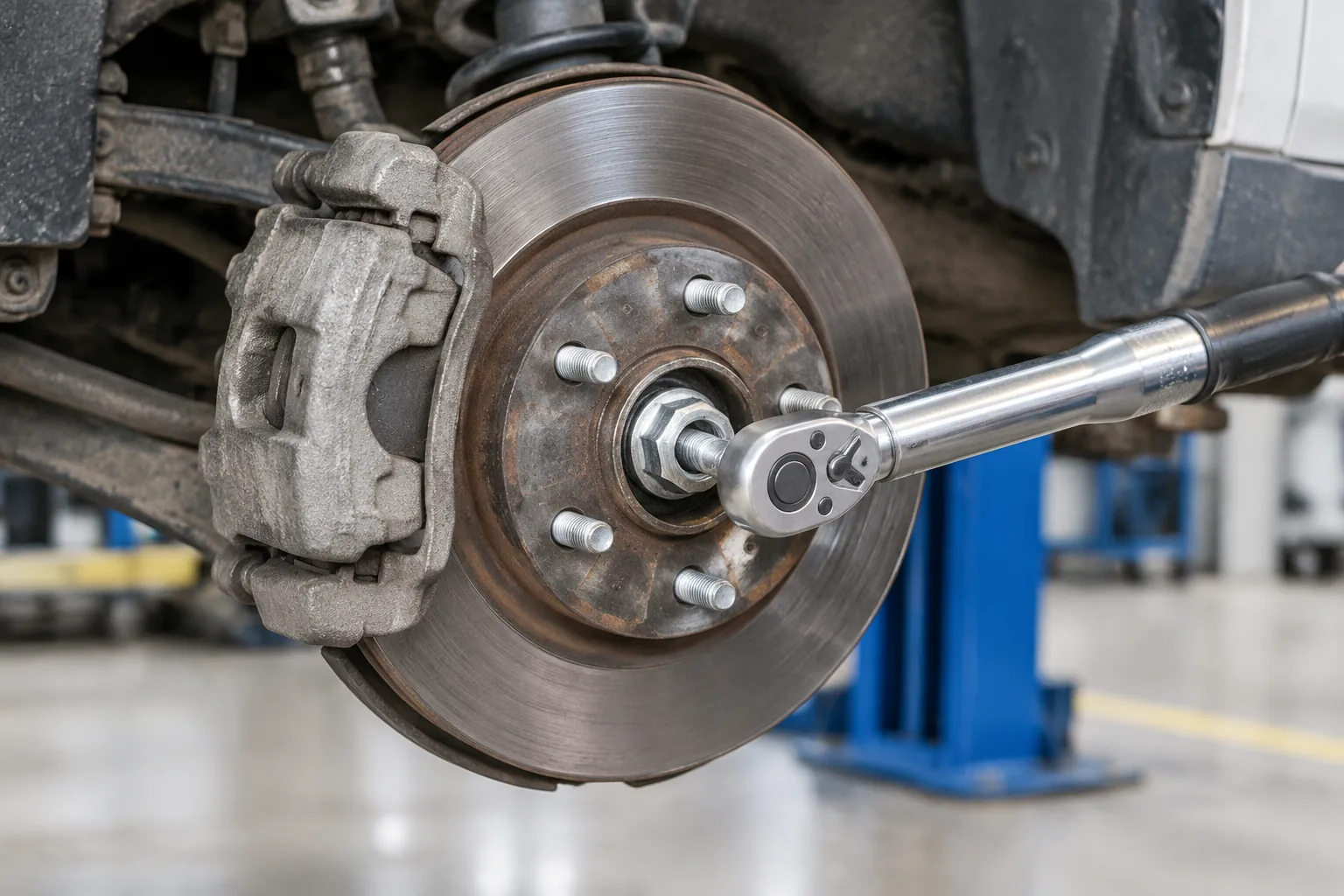
One installation guide requires replacement of the old axle nut with a new one and tightening with a torque wrench to the vehicle manufacturer’s specification. It does not recommend impact wrenches. The same guide lists a common axle nut socket range of 30-36 mm.
Pre-set, pre-lubricated, and pre-sealed hub assemblies should keep that condition during installation rather than requiring piece-by-piece setup. Use a certified and calibrated torque wrench. Impact wrenches may damage nuts, threads, or other components and can create incorrect torque.
Socket size and torque values vary by application. The vehicle manufacturer’s specification overrides general ranges, and the 30-36 mm range is not universal.
Torque and Fastener Discipline
- Replace one-time axle nuts before installation.
- Tighten the center axle nut to establish bearing preload only at the specified torque.
- Tighten hub mounting bolts so the hub seats correctly to the knuckle.
- Tighten wheel nuts to the specified torque to avoid brake disc distortion, stud failure, or wheel detachment.
All torque values must come from the vehicle manufacturer’s specification.
Handle Pre-Set Hub Assemblies Correctly
- Do not treat a pre-set, pre-lubricated, pre-sealed hub assembly as a component that needs additional setup unless the manufacturer instructs it.
- Avoid impact-tool installation that can damage threads or produce incorrect torque.
- Keep seals and ABS interfaces clean and undamaged during installation.
Follow the hub manufacturer’s installation instructions and the vehicle manufacturer’s service information.
How to Judge Profitability, Not Just Part Price
Compare the total job cost:
- Part price
- Labor time
- Bay occupancy
- Parts sourcing time
- Comeback risk
- Liability exposure
- Lost future business
A premium hub hardware kit can reduce multiple time-consuming steps by providing the hub or bearing and application-specific installation hardware together. An economy hub may have a lower purchase price but can create additional labor and business risk when hardware is missing or the part fails prematurely.
There is no universal profitability number. Shops should calculate using their own labor rate, comeback rate, and bay capacity where those figures are known. Profitability depends on shop-specific labor cost, scheduling, warranty policy, and vehicle use.
Conclusion
Premium vs economy hubs should be judged by total repair economics, not part price alone. A premium wheel hub hardware kit can save time by supplying application-specific fasteners, seals, snap rings, and nuts with the hub or bearing. Economy hub savings can be offset by parts chasing, bay downtime, comebacks, liability risk, and lost business.
The safe next step is to verify the exact application, confirm kit contents, replace one-time nuts, and tighten all fasteners to the vehicle manufacturer’s torque specification.
FAQs
Q1: Are premium wheel hub hardware kits worth the extra cost?
A: They can be worth it when missing hardware or premature failure would create bay downtime, rework, liability risk, or lost business. Compare the total job cost rather than the part price alone, and confirm the kit matches the exact application.
Q2: Can I reuse the old axle nut and mounting hardware?
A: Some applications use one-time self-locking or self-riveting axle nuts that must be replaced. Follow the vehicle manufacturer’s service information and the kit contents, and do not reuse hardware that is specified for one-time use.
Q3: What should be included in a wheel hub hardware kit?
A: Depending on the application, a kit may include mounting bolts or studs, axle or CV shaft nuts, CV shaft bolts, washers, snap rings, dust caps, seals, and O-rings. Contents vary by part number, so verify the application listing before ordering.
Q4: Do I need a torque wrench to install a hub assembly?
A: Yes. Manufacturer guidance calls for a calibrated torque wrench and warns against impact-tool tightening. Use the vehicle manufacturer’s torque specification for the axle nut, hub mounting bolts, and wheel nuts.
Q5: Why can a missing snap ring delay a hub repair?
A: The WE60626HW example includes a special snap ring made from a softer material than the axle to help prevent axle and bearing damage. That snap ring is not ordinary universal hardware and may need to be ordered separately if it is missing.
Q6: How can a shop compare premium and economy hubs fairly?
A: Check application fit, OE fit, form, and function testing, materials and sealing, included hardware, one-time nuts, warranty, and installation requirements. Do not rely on the premium or economy label alone.