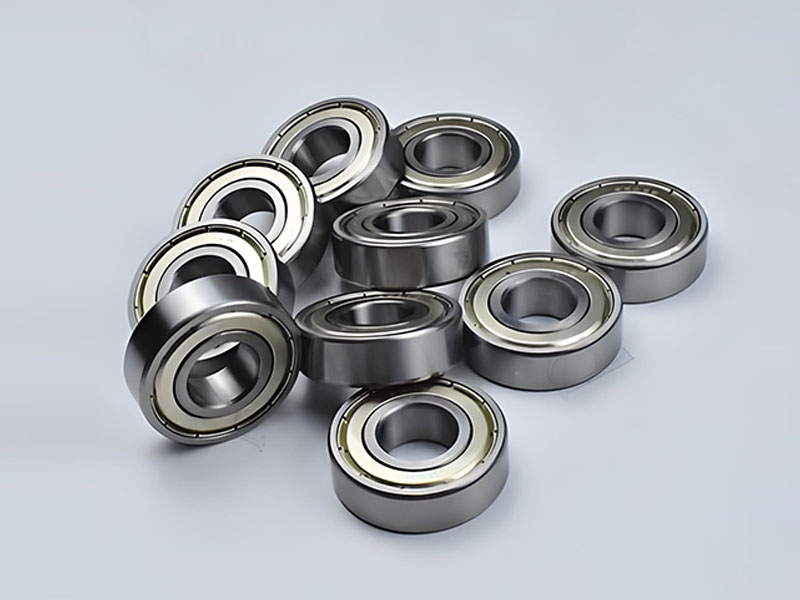
Quick Answer: A wheel bearing is the rotating support between the wheel hub and the steering knuckle or axle. It carries vehicle weight, cornering loads, and drive or braking forces while allowing the wheel to turn with low friction. Modern passenger cars often use double-row angular contact ball bearings or double-row tapered roller bearings. Sealed hub units are prelubricated, while traditional tapered bearings may remain serviceable.
Wheel bearings sit at the center of wheel-end reliability. They affect rolling smoothness, steering feel, and the signals used by ABS and stability systems. A practical understanding starts with the bearing’s function, its internal parts, the hub designs used on modern vehicles, and the service choices that follow.
What Does a Wheel Bearing Do?
A wheel bearing sits between the wheel hub and the steering knuckle or axle. Its job is to support the vehicle’s weight, resist cornering lateral forces, and carry drive or braking forces while keeping the wheel rotating with low friction. The bearing is a load path and a precision rotating interface at the same time.
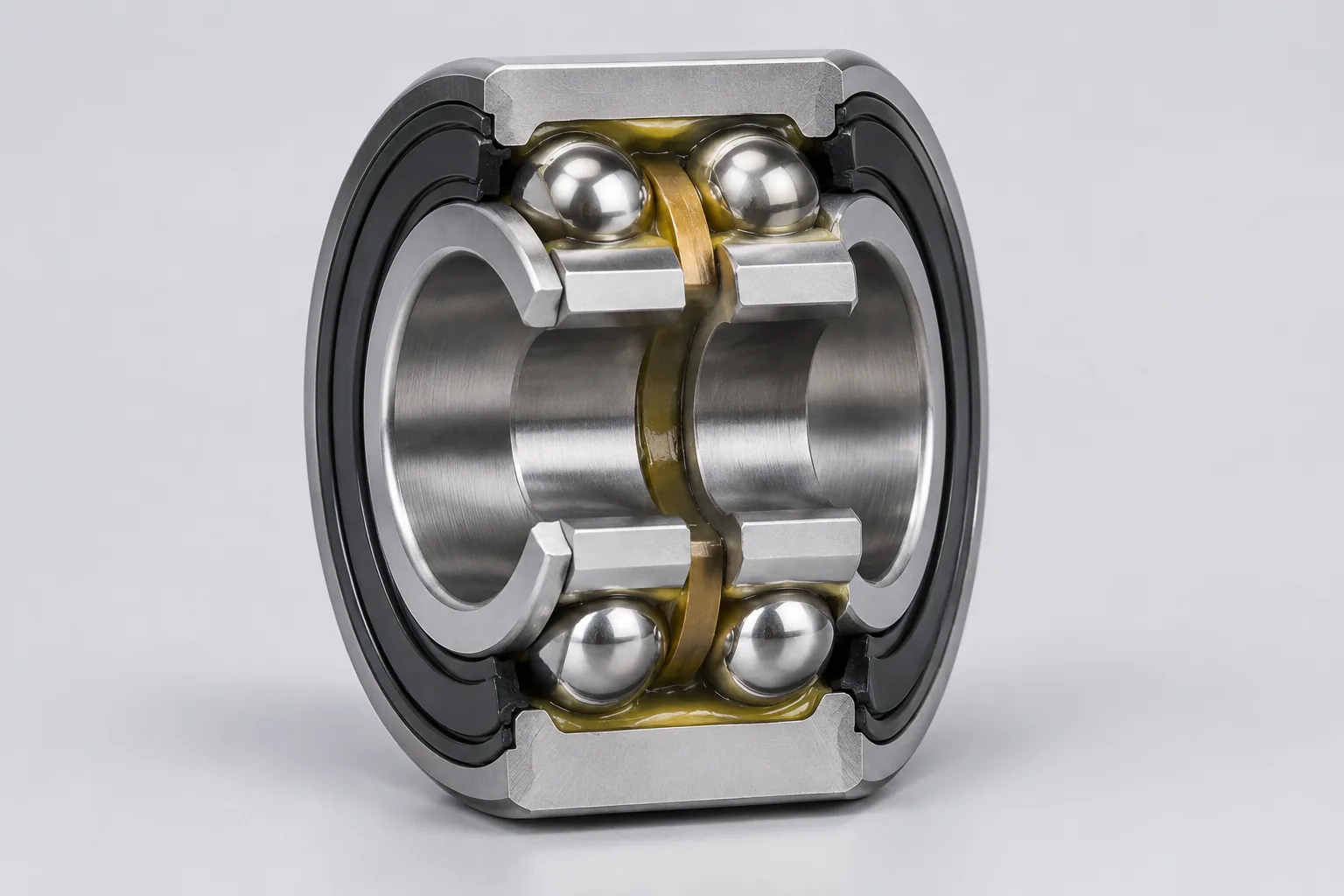
Modern passenger cars commonly use double-row angular contact ball bearings or double-row tapered roller bearings. The choice depends on load direction, package space, and the vehicle design. First-generation hub bearings are mainly based on double-row angular contact ball bearings designed for the overturning moment generated during cornering. Bearing design and load direction vary by vehicle and application, so the same outside diameter does not by itself define a suitable replacement.
What Parts Make Up a Wheel Bearing or Hub Unit?
A typical rolling bearing has six basic elements:
- Inner ring
- Outer ring
- Rolling elements
- Cage
- Lubricant
- Seals
A hub unit may add a wheel flange, a mounting flange, a wheel-speed encoder ring, or an ABS sensor. These additions change the installation and purchasing requirements, not just the bearing internals.
Angular contact ball bearings can carry combined radial and axial loads. Paired or double-row arrangements can carry axial force in both directions and the cornering moment. Tapered roller bearings use tapered raceways and tapered rollers to carry combined radial and axial loads. Traditional separable designs use a cup, which is the outer ring, and a cone assembly, which is the inner ring with rollers and cage.
What Are the Common Wheel Bearing Generations?
Generation names describe how much of the hub function is integrated into the bearing. Each generation adds a different level of integration. A higher generation is not automatically better for every application; the correct part is the one that matches the vehicle’s hub, brake, sensor, and suspension design.
Generation 1 and Generation 1T
Generation 1 is usually a double-row angular contact ball bearing without an integrated hub flange. Published hub-bearing literature describes the structure as one integral outer ring, two inner rings, and two rows of balls. It mounts into the vehicle’s existing steering knuckle and hub.
Generation 1T is a double-row tapered roller bearing with two rows arranged in opposite directions. Product literature lists it as suitable for high axial loads and common in light commercial vehicles.
Generation 2 and Generation 2 Special
Generation 2 integrates the bearing with one hub flange. It is usually a prelubricated and sealed double-row ball or roller bearing. The flange can locate the wheel or the brake disc. Generation 2 Special is described in published hub-bearing literature as a double-row angular contact ball bearing or tapered roller bearing mounted in a four-bolt housing. The housing may have an ABS sensor hole or a magnetic ABS encoder ring built into the bearing seal.
Generation 3 and Manufacturer Variants
Generation 3 has two flanges. One connects the wheel and brake disc, and the other fixes the hub unit to the suspension or steering knuckle. Some Generation 3 units also integrate an ABS encoder ring and sensor. Published product classifications include Generation 2.1 and 3.2 structures that may use an orbitally formed shoulder, circlip, multipole encoder, face spline, and low-friction seals.
How Does a Wheel Bearing Support ABS and Wheel-Speed Sensing?
Modern hub bearings can integrate a multipole magnetic encoder ring in the seal. A fixed wheel-speed sensor reads the alternating magnetic poles as the encoder rotates and produces the wheel-speed signal. The signal is used not only by ABS but also by traction control, electronic stability control, and other chassis systems. Hub-bearing literature lists pulse-ring or encoder and sensor-integrated speed detection.
Encoder-equipped bearings have an installation orientation requirement. Encoder-equipped bearing guidance requires a test card to identify the encoder side, specifies that the encoder side must not face downward, and says the bearing must be kept away from magnets. This applies to bearings or hub units fitted with an ABS encoder ring or sensor.
Are Wheel Bearings Lubricated for Life or Serviceable?
Modern sealed hub units are normally prelubricated, sealed, and set for internal clearance at the factory. Under normal use they do not require opening, cleaning, repacking, or readjustment. Generation 1 product literature lists prelubrication, maintenance-free operation, sealing, and preset bearing clearance.
Traditional serviceable tapered roller bearings are different. They require the correct grease fill, correct seal installation, and preload or axial clearance setting. A sealed truck hub unit example, part number 805092.07.H195, is useful: one outer ring, two inner rings, two rows of tapered rollers, supplied as a complete assembly with seals and lifetime lubricant. Its dimensions are 78 mm bore, 130 mm outer diameter, and 90 mm width.
Traditional separable tapered roller bearings remain serviceable and use a different maintenance method from sealed lifetime-lubricated hub units.
How Are Wheel Bearing Life and Load Ratings Calculated?
ISO 281:2007 is the standard for basic dynamic load ratings and basic rating life of rolling bearings. It was published in February 2007 and reaffirmed in 2021. Basic rating life corresponds to 90% reliability.
The basic rating life relationship is L10 = (C/P)^p, where C is the basic dynamic load rating and P is the equivalent dynamic load. For ball bearings, p = 3. For roller bearings, p = 10/3.
L10 is not a guaranteed mileage. It is a statistical life indicator: under stated conditions, 90% of a group of identical bearings are expected to reach or exceed that life without rolling-contact fatigue. Life calculation depends on the stated load and operating conditions, and L10 is not a warranty or guaranteed service mileage.
Published technical guidance states that real field failures are often linked to contamination, wear, misalignment, corrosion, lubrication failure, or seal failure rather than material fatigue alone. That is why installation, sealing, and contamination control matter alongside the load rating.
Which Standards Cover Wheel Bearing Dimensions and Tolerances?
Several ISO standards define the dimensional and performance framework for rolling bearings:
- ISO 15:2017 defines preferred boundary dimensions for radial rolling bearings and covers diameter series 7, 8, 9, 0, 1, 2, 3, and 4. It was published in July 2017 and reaffirmed in 2022.
- ISO 492:2023 defines dimensional and geometrical characteristics, limit deviations for nominal dimensions, and tolerance values for radial rolling bearings. The sixth edition was published in August 2023.
- ISO 355:2019 defines boundary dimensions and series designations for tapered roller bearings.
- ISO 76:2006 covers static load ratings for rolling bearings.
- ISO 15242-1:2015 covers basic methods for measuring rolling bearing vibration.
ISO/TC 4 is the ISO technical committee for rolling bearings. SC 4 covers terminology, boundary dimensions, and geometrical product specifications, while SC 8 covers load ratings and life. Standards define dimensions, tolerances, ratings, and test methods; they do not by themselves confirm vehicle fitment.
What Are the Signs of a Failing Wheel Bearing?
Common symptoms include:
- Humming, growling, or grinding noise that increases with road speed
- Noise that changes when turning
- Steering-wheel or body vibration
- Abnormal wheel-end play
- ABS or stability-control warning lights
Hub-bearing diagnostic material lists abnormal noise and an illuminated ABS warning lamp as inspection clues. When a wheel-speed sensor fault is found, the sensor-equipped hub unit should also be checked. Noise can travel through the body or suspension, so the side heard inside the vehicle is not necessarily the failed side. Symptoms indicate a need for diagnosis; they do not prove that one specific part has failed.
Severe lubricant leakage can lead to bearing seizure and even wheel separation. NHTSA recall 25E-005, issued on January 30, 2025, provides an example: a hub oil-plug machining defect could cause oil leakage, then bearing seizure or wheel separation. Warning signs may include oil leakage, noise, and vibration.
How Should a Wheel Bearing Be Installed or Replaced?
Pressing force should pass through the bearing ring that is forming the interference fit. Support the outer ring when pressing into a housing, and support the inner ring when pressing onto a shaft or hub. Installation force through the balls or rollers can leave indentations on the raceways.
Installation guidance includes suitable special tools, a clean work area, inspection of the bearing seat, tightening to the vehicle manufacturer’s specified torque, and following the installation instructions in the packaging. A dropped bearing may already have initial damage and should not be installed. Used wheel bearings are generally not to be reinstalled, except traditional tapered roller bearings that can be cleaned and relubricated.
Do not lower the vehicle onto its wheels or move it before the center nut or bolt is tightened to specification. There is no universal axle-nut torque value; it must be looked up by year, brand, model, and bearing design. A publicly released axle-nut torque specification lookup app on June 22, 2023 provides vehicle-specific torque data. Adjustable tapered roller bearings use a specific tighten, back off, and check end-play procedure. That procedure is not the same as installing a sealed hub unit.
How Do You Choose the Right Replacement Wheel Bearing?
Identify the vehicle by year, make, model, axle position, and bearing or hub design before ordering. Use a reputable catalog, EPC, VIN-based lookup, or vehicle specification to confirm the part number and application. Do not infer interchangeability from dimensions alone. Dimensions can match while the flange, sensor, seal, or load rating differs.
Confirm whether the vehicle uses a sealed hub unit or a serviceable tapered roller bearing. Confirm any ABS encoder or wheel-speed sensor requirement before installation. Final selection depends on confirmed vehicle application and bearing configuration.
Conclusion
Wheel Bearings 101 comes down to matching the bearing to its load path and its hub design. A wheel bearing carries vehicle weight, cornering forces, and drive or braking loads while maintaining low-friction rotation. Its internal rings, rolling elements, cage, lubricant, and seals must work with the flange, encoder, and sensor features of the hub unit.
Generation, lubrication, and installation are connected. Sealed hub units are prelubricated and normally need no repacking, while traditional serviceable tapered bearings require correct grease, seals, and preload or end-play setting. Life ratings and standards help with specification, but they do not confirm vehicle fitment. Symptoms such as noise, play, vibration, or an ABS warning call for diagnosis, not a guess.
The safe next step is to confirm the vehicle application and bearing type, then inspect or replace the bearing according to the vehicle manufacturer’s specification.
FAQs
Q1: How long do wheel bearings last?
A: There is no universal mileage answer. Bearing life depends on load, road conditions, installation, sealing, and contamination. The L10 rating is a statistical 90% reliability figure under stated conditions, not a guaranteed service mileage. Follow the vehicle manufacturer’s inspection guidance and address noise, play, or warning lights promptly.
Q2: Can I drive with a noisy wheel bearing?
A: It is not a safe long-term choice. A noisy bearing may be worn, and continued driving can increase play, heat, or damage. If you hear grinding, feel wheel play, see an ABS warning, or notice heat at the wheel, stop and arrange inspection or repair. Severe lubricant leakage can lead to seizure and wheel separation.
Q3: Are sealed wheel hub bearings greasable?
A: No. Sealed hub bearings are normally prelubricated at the factory and are not designed to be opened, cleaned, repacked, or readjusted. Replace a damaged sealed unit. Traditional serviceable tapered roller bearings are different and require the specified grease, seals, and preload or axial clearance setting.
Q4: What causes premature wheel bearing failure?
A: Common causes include incorrect torque or loss of retention, contamination or water ingress, impact damage, misalignment, lubrication failure, and seal failure. Installation force through the rolling elements can also damage the raceways. Because several causes can produce similar noise, diagnosis should check the wheel end and related systems before parts are replaced.
Q5: Do wheel bearings need preload adjustment?
A: Sealed hub units have preset internal clearance or preload and are not adjusted in service. Traditional adjustable tapered roller bearings do require a specified tighten, back off, and end-play check. There is no universal axle-nut torque; use the vehicle or axle manufacturer’s procedure for the exact application.
Q6: How do I identify the correct replacement wheel bearing?
A: Use year, make, model, axle position, and hub or bearing design to confirm the application. Check a reputable catalog, EPC, or VIN-based lookup, and verify whether the unit is sealed or serviceable and whether it includes an ABS encoder or sensor feature. Do not rely on dimensions alone, because flange, sensor, seal, and load rating can differ.