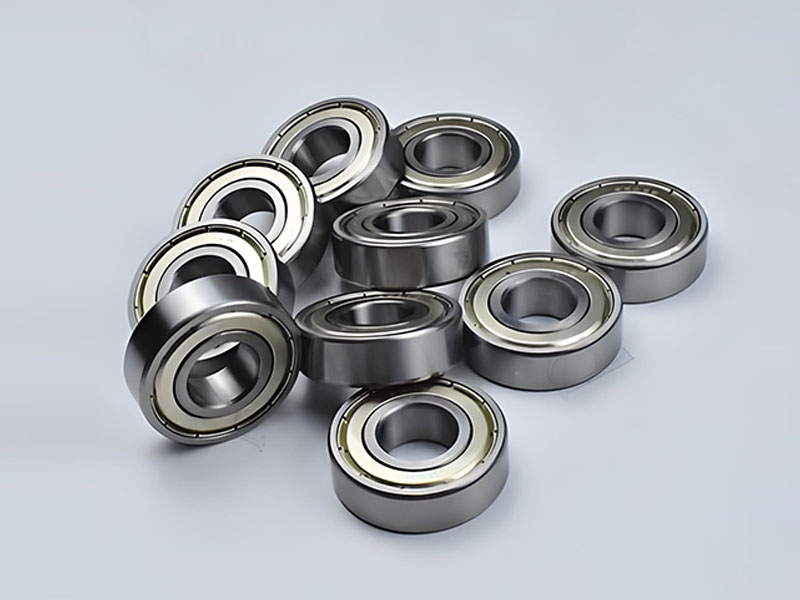
Quick Answer: Rear axle wheel bearing replacement means removing the failed bearing or hub assembly and installing a correctly matched part with the specified tools, seals, and fasteners. The job differs by bearing design and vehicle, so confirm the part and axle nut torque by year, make, model, drive type, and VIN. Final axle nut tightening requires a torque wrench, and some procedures require new seals and one-time fasteners.
Rear axle wheel bearing replacement can involve a hub unit bearing assembly, a press-in bearing, or a semi-floating axle bearing inside a solid axle tube. Because these designs use different parts, tools, and torque values, the same procedure does not apply to every vehicle. Confirming the design first prevents ordering the wrong part and using the wrong installation method.
What Rear Axle Wheel Bearing Replacement Involves
A rear axle wheel bearing is not one universal design. The three common repair objects are:
- A hub unit bearing assembly: a unitized wheel-end part that is replaced as an assembly.
- A press-in bearing: a bearing that is pressed into its housing with a press and support tooling.
- A semi-floating axle bearing: a bearing located inside a solid axle tube.
The parts, removal tools, installation tools, and torque must be confirmed by model year, make, model, drive type, and VIN. Timken light-vehicle technical resources separate hub assembly removal and installation, wheel bearing replacement, ball bearing installation, and hub damage analysis as distinct procedures. Do not assume a hub unit procedure applies to a press-in bearing or a semi-floating axle bearing.
Symptoms, Causes, and Diagnosis
Rear bearing noise is often described as a howl or low rumble that increases with vehicle speed. Noise alone does not prove which part has failed.
- Toyota TSB T-SB-0151-10 Rev2 records rear axle bearing howl or low rumble that increases with speed on some 2007-2010 Toyota Tundra vehicles and notes a revised rear axle bearing design.
- Stellantis TSB 17-001-24, dated January 5, 2024, covers right rear wheel bearing noise on specific 2024 Jeep Renegade, 2023-2024 Jeep Compass, and Jeep Commander vehicles. It confirms a bearing defect and specifies right rear bearing replacement with Mopar part number 68674110AA and 0.7 hour standard labor.
- Ford recall 21S17 / NHTSA 21V202 states that low rear axle lubricant can damage or seize a bearing and can lead to rear axle or driveshaft failure. For affected vehicles driven more than 5 miles (8 km), the repair includes rear axle wheel bearings, seals, and lubricant refill.
Compare bearing noise with tire, brake, and differential noise before authorizing replacement. Symptoms indicate the need for diagnosis; they do not by themselves prove one failed bearing. A wheel bearing defect may be covered by a TSB for a specific vehicle set, but that TSB does not apply to every model.
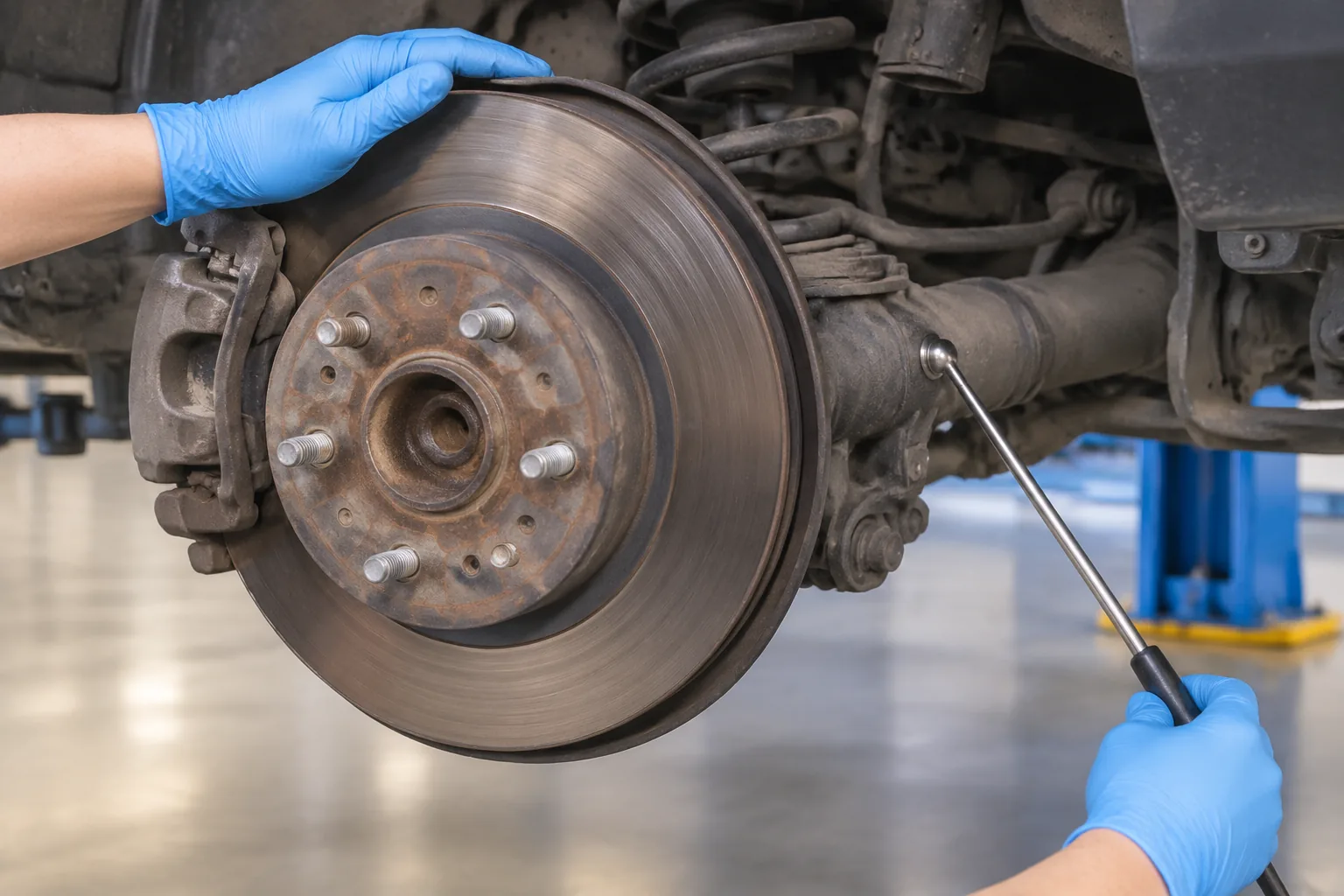
Choose the Correct Bearing, Seal, and Hardware
Match the replacement part to the confirmed bearing design: hub unit, press-in bearing, or semi-floating axle bearing.
- Mitsubishi TSB-13-27-001, dated September 2013, revised the 2014 Mitsubishi Mirage rear hub assembly procedure to clarify rear wheel bearing installation direction.
- NTN/BCA launched 27 Wheel Hub with Hardware Kit SKUs on August 28, 2024, covering more than 16.3 million vehicles in service. Different SKUs may include hub bolts, axle or CV nuts, washers, snap rings, dust caps, seals, or O-rings.
- Subaru technical bulletin 03-96-25, dated April 22, 2025, requires the applicable service manual to be checked when replacing a rear axle hub, including special tools, inspection criteria, and one-time parts.
- GM bulletin 16-NA-348 requires left and right rear wheel bearing dust deflectors, part numbers 23203995 and 23203996, to be ordered and installed with the bearing on specified vehicles. Warranty labor is 1.2 hours, or 1.7 hours with RPO GNB.
- Axle nuts may be standard, stamped, slotted, or double-nut designs, so the correct nut type and replacement rule must come from the vehicle or bearing manufacturer.
Use the VIN and the latest parts catalog to confirm the bearing, seal, nut, and any deflector or snap ring. A wheel hub kit does not always include the same fasteners, seals, or retainers; check the kit contents before installation.
Tools, Torque, and Installation Precautions
Axle nut torque is vehicle-specific. NTN Bearing Corporation of America, based in Mount Prospect, Illinois, released the BCA Axle Nut Torque Specification Lookup App on June 22, 2023, for year, make, and model lookup of axle nut torque for applicable BCA hubs and bearings.
An impact wrench can over-tighten the axle nut, produce abnormal hub bearing preload, and cause premature bearing wear, as MOOG notes in its installation guidance. Final tightening should use a torque wrench with the hub assembly unloaded, following the vehicle manufacturer specification.
MOOG recommends a CV axle-to-hub adapter or removal tool to press the CV axle out of the bearing instead of hammering the axle end, and requires a new axle nut. Common axle nut socket sizes run 30-36 mm, but the actual size remains vehicle-dependent.
Chrysler rear axle service procedures list Bearing Remover 6310, Foot 6310-9, Installer C-4198, and Handle C-4171. The bearing side with the part number faces the installer, and the bearing is pressed until the tool contacts the axle tube. The new seal lip should be coated with rear axle lubricant and installed with Installer C-4076-B and Handle C-4735.
Mitsubishi TSB-13-27-001 confirms that some press-in rear bearings have a specified installation direction.
Use the latest OEM service procedure for press, heat, torque, and one-time fastener requirements. Do not use a general torque value when the OEM specification is available; do not use an impact wrench for final axle nut tightening.
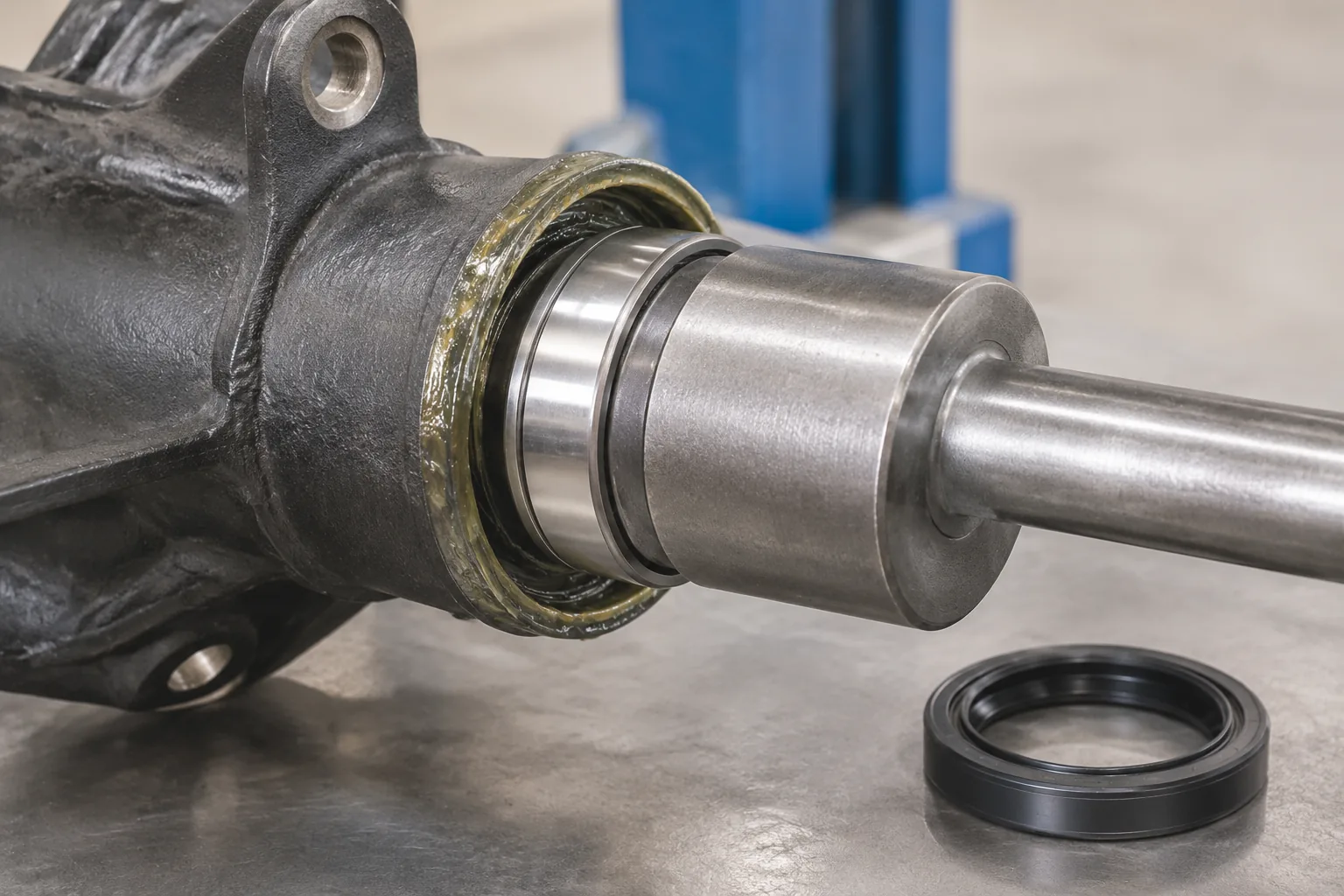
Replacement Workflow
Verify the diagnosis and obtain the OEM procedure, applicable TSB, and VIN-based parts list before lifting the vehicle. Independent rear suspension, solid axle, and press-in bearing procedures differ in tools and disassembly steps.
- Remove the wheel and the brake, ABS sensor, parking brake, or suspension components only as required by the service procedure, and support the vehicle and suspension safely.
- Remove the axle nut, press the CV axle or axle shaft from the bearing with the correct adapter or tool, and do not hammer the axle end.
- Remove the hub or bearing with the specified puller, press, or slide-hammer tool; clean and inspect the axle tube, spindle, and mounting surfaces.
- Install the new bearing or hub with the specified orientation, install a new seal and one-time fasteners where required, and torque the axle nut with the hub unloaded.
- Reassemble the brakes and wheel, check the ABS system, and road-test for noise, leaks, and warning lights.
- For a solid axle, check and refill rear axle lubricant after bearing or seal work; for a procedure that requires it, perform an alignment after rear hub and bearing replacement.
Porsche AC05 replaces both rear hubs and bearings and includes front and rear suspension alignment; do not treat alignment as universal unless the OEM procedure requires it.
Labor, Parts, and Both-Sides Decisions
Labor time is vehicle- and procedure-specific. The figures below are warranty figures from the listed procedures, not universal shop estimates.
| Procedure | Labor | Parts |
|---|---|---|
| 2007-2010 Toyota Tundra rear semi-floating axle bearing | 2.2 hours one side; plus 1.0 hour opposite side | 42450-0C010 right; 42460-0C010 left |
| Jeep right rear wheel bearing | 0.7 hour | Mopar 68674110AA |
| Rear wheel bearing and dust deflectors | 1.2 hours; 1.7 hours with RPO GNB | 23203995 and 23203996 |
| Both rear hubs and bearings plus alignment | 652 TU | 997.331.607.04 hub; 999.053.055.02 bearing; 999.084.641.01 M22 x 1.5 nut |
The BMW of North America rear axle bearing bulletin lists two rear wheel bearing assemblies, part number 31 20 8 882 498, and multiple one-time M12 and M16 bolts.
Some procedures replace one bearing, while others specify both sides. Follow the OEM or TSB instruction and inspect the opposite side.
Post-Replacement Checks and Preventing Repeat Failure
Confirm that the axle nut, caliper bolts, wheel bolts, and any suspension fasteners were tightened to the OEM specification with a torque wrench. Verify that all required one-time fasteners, seals, dust caps, deflectors, and snap rings were installed.
- For a solid axle, verify rear axle lubricant level and check for leaks after bearing and seal replacement.
- Road-test for bearing noise, ABS warnings, wheel-speed sensor faults, and lubricant leaks; recheck immediately if any appear.
- Avoid impact-wrench final tightening and hammering the axle end during later service to reduce the risk of over-tightening, abnormal preload, and bearing damage.
Use the vehicle manufacturer inspection criteria and scan tool checks when an ABS or wheel-speed sensor was disturbed. A repeat noise after replacement may come from the opposite bearing, tire, brake, or differential; diagnose before replacing another part.
Conclusion
Rear axle wheel bearing replacement starts with confirming the bearing design, diagnosing the noise or damage, and using VIN-specific parts. The axle nut torque, bearing orientation, seal installation, one-time fasteners, and both-sides decision must follow the OEM procedure or applicable TSB. Safe completion includes a torque-wrench final tighten, correct lubricant level for a solid axle, and a road test for noise, leaks, and ABS warnings.
FAQs
Q1: How long does a rear axle wheel bearing replacement take?
A: There is no universal labor time. A 2007-2010 Toyota Tundra rear semi-floating axle bearing is listed at 2.2 hours for one side and an additional 1.0 hour for the opposite side. A Jeep right rear bearing is listed at 0.7 hour. The GM rear bearing and dust deflector procedure is 1.2 hours, or 1.7 hours with RPO GNB. Porsche AC05 both rear hubs and bearings plus alignment is 652 TU.
Q2: Can I replace only one rear wheel bearing?
A: Sometimes. Some procedures specify both sides; Porsche AC05 replaces both rear hubs and bearings, and a BMW bulletin lists two bearing assemblies. GM 16-NA-348 requires dust deflectors on both sides to protect the new bearing and the opposite old bearing. Follow the OEM or TSB instruction and inspect the opposite side.
Q3: What happens if I drive with a bad rear axle wheel bearing?
A: Noise may increase with speed. Ford recall 21S17 / NHTSA 21V202 states that low rear axle lubricant can damage or seize a bearing and lead to rear axle or driveshaft failure. Have the vehicle inspected promptly; do not treat noise as proof of only one failed part.
Q4: Do I need a torque wrench for the axle nut?
A: Yes. An impact wrench can over-tighten the axle nut and cause abnormal hub bearing preload and premature wear. Use a torque wrench and the vehicle-specific axle nut torque. NTN/BCA provides a year, make, and model torque lookup app for applicable BCA hubs and bearings.
Q5: Why does rear wheel bearing orientation matter?
A: Mitsubishi TSB-13-27-001 revised the 2014 Mirage rear hub procedure to clarify bearing orientation. In the Chrysler procedure, the bearing side with the part number faces the installer and the bearing is pressed until the tool contacts the axle tube. Install the bearing in the direction specified by the OEM procedure.
Q6: Are new axle nuts and seals always required?
A: A new axle nut is required when the CV axle is removed from the hub, per MOOG guidance. Subaru bulletin 03-96-25 requires the service manual to be checked for one-time parts when replacing a rear axle hub. Hardware kit contents vary, so confirm whether the kit includes the axle nut, seal, snap ring, or other required parts.