Quick Answer: How to diagnose in 30 seconds
Drive at 40 mph. Gently weave left and right. If the noise changes pitch or gets louder when turning, it’s a wheel bearing. If the noise stays the same but gets louder on rough pavement, it’s tire noise. No tools needed – just a short test drive.
Hearing a humming, growling, or droning noise while driving can be confusing. Is it a symptom of a failing wheel bearing or simply tire noise? Misdiagnosing between wheel bearing noise vs tire noise is common among both DIYers and some repair shops, often leading to unnecessary part replacements and wasted labor hours. This guide provides a clear, step‑by‑step diagnostic approach to help you accurately identify the noise source, reduce rework, and make informed repair decisions.
A Step‑by‑Step Diagnostic Workflow
Before replacing any parts, perform the following four checks. This process saves time and avoids guesswork.
1. Road Test – Identify the General Location
Drive on a flat, quiet road at 30–45 mph (50–70 km/h). Note whether the noise seems to come from the front or rear of the vehicle. If possible, ask a passenger to sit in the back seat to help locate rear‑end noise.
2. Steering Load Test – The Key Differentiator
While maintaining a steady speed, gently steer left and right in a smooth “lane change” manner.
- If the noise gets louder or changes pitch when turning in one direction, the problem is almost certainly a wheel bearing.
- Right turn louder → left‑side bearing (front or rear) is likely faulty.
- Left turn louder → right‑side bearing is suspect.
3. Road Surface Comparison
Drive over two different road surfaces at the same speed – for example, new asphalt vs. rough concrete or an old patched road.
- Tire noise changes significantly between surfaces.
- Wheel bearing noise remains relatively constant regardless of the road texture.
4. Hoist Inspection
Lift the vehicle safely and rotate each wheel by hand while listening for grinding or roughness. Then, grab the tire at the 3‑ and 9‑o’clock positions and shake; repeat at 12‑ and 6‑o’clock. Excessive play indicates a worn bearing. Also, run your hand over the tread to feel for cupping, feathering, or flat spots.
Common Symptoms of a Failing Wheel Bearing
Common Sounds and Symptoms
A failing wheel bearing typically produces a low‑frequency growl, rumble, or drone that rises steadily with vehicle speed. In more advanced stages, you may hear a grinding noise – this suggests internal damage to the rollers or raceway. Less common symptoms include knocking/clicking (often at low speeds during turns) or a high‑pitched squeal.
Key Diagnostic Feature: Steering Load Test
The most reliable way to identify bearing noise is the steering load test described above. When you turn, the vehicle’s weight shifts to the opposite side, applying extra radial load to the bearings on that side. A worn bearing will amplify the noise under this extra load. This behavior does not occur with tire noise.
Associated Signs of Bearing Failure
When a wheel bearing begins to fail, other signs often appear alongside the noise:
- Loose or vague steering – the vehicle may feel less responsive.
- Vibration felt through the seat or steering wheel – usually in later stages.
- Vehicle pulls to one side while driving straight.
- Noticeable wheel play when the vehicle is lifted – check both 3‑9 and 12‑6 directions.
- ABS warning light – many modern bearings integrate a wheel speed sensor; excessive play can damage the sensor.
Note: A worn bearing can cause uneven tire wear because the wheel wobbles slightly, creating cupping or scalloped patterns on the tread. Conversely, badly worn tires with uneven tread can accelerate bearing wear. Always inspect both components when noise is present.
Typical Signs of Tire Noise
Common Sounds and Symptoms
Tire noise is often described as a hum, roar, or “wah‑wah” sound that may pulsate with each wheel revolution. You might also hear a thumping noise (possible tread separation) or a whine from irregular wear patterns such as feathering or cupping.
How Tire Noise Behaves
- Surface‑dependent – The same tire can be quiet on smooth asphalt but loud on grooved concrete. This is the strongest clue.
- Unchanged during turns – Unlike a bearing, tire noise does not alter when you steer left or right.
- Speed‑specific peaks – Some tire noises become most noticeable only within a narrow speed range (e.g., 35‑50 mph) and then fade.
- Rhythmic pattern – Because the noise is tied to the tread hitting the road, it often follows a regular, repeating beat.
Common Causes of Excessive Tire Noise
- Underinflation – wears the outer tread edges and increases noise.
- Overinflation – wears the center tread and creates a hard, noisy contact patch.
- Worn suspension components – ball joints, tie rods, or struts cause uneven tire wear (cupping or feathering).
- Misalignment – leads to feathering and a persistent whine.
- Flat spots – from long‑term parking or hard braking.
- Tire design – some tread patterns are inherently louder than others.
Visual Signs of Tire‑Related Noise
Inspecting the tire tread often reveals the root cause:
- Cupping / scalloping – Alternating high and low spots around the tread, usually caused by a worn shock absorber or strut.
- Feathering – The tread blocks have a sharp edge on one side and a smooth edge on the other, typical of misalignment.
- Flat spots – Visible flattened areas that produce a thumping sound.
- Vibration – Often from an out‑of‑balance tire or a separated belt.
If you rotate the tires and the noise moves to a different location (e.g., from rear to front), tire noise is confirmed.
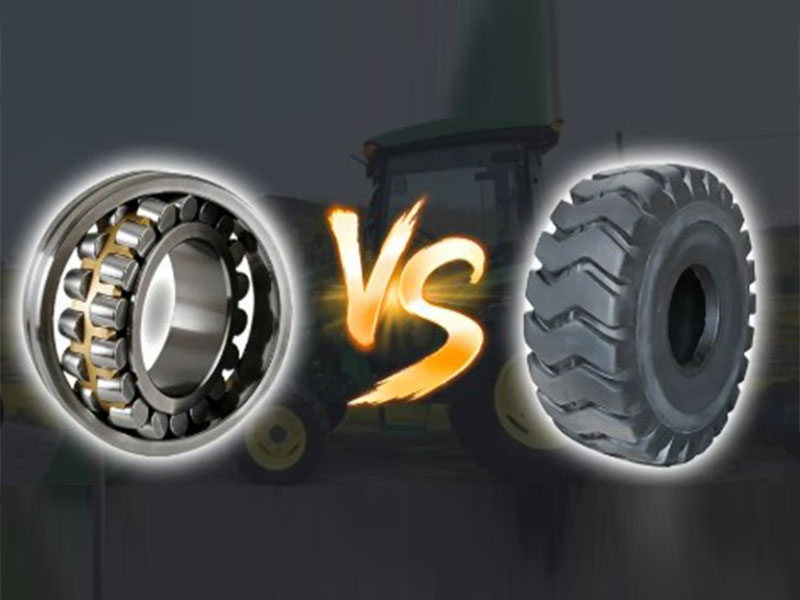
Comparison Table: Bearing Noise vs Tire Noise
| Feature | Wheel Bearing Noise | Tire Noise |
|---|---|---|
| Typical sound / symptom | Growl, rumble, drone, grinding | Hum, roar, wah‑wah, thumping |
| Changes with steering? | Yes – louder on loaded side | No – remains same |
| Changes with road surface? | No – consistent | Yes – very noticeable |
| Vibration | Late‑stage, seat/wheel | Common, often steering wheel |
| Speed behavior | Increases linearly with speed | May peak at certain speeds |
| Visual check for failure | Wheel play when lifted | Cupping, feathering, flat spots |
| Repair direction | Replace bearing (often in pairs) | Rotate, balance, align, or replace tires |
Repair Options and Cost Estimates
Wheel Bearing Replacement
- Parts cost – A single wheel bearing typically retails under $100; complete hub assemblies range higher depending on vehicle make.
- Replacement strategy – When one bearing fails, the opposite side often has similar mileage. Many professionals recommend replacing both on the same axle to prevent a second repair soon after.
- Labor – Requires mechanical skill and special tools (torque wrench, press or hub puller). Professional installation is strongly advised. Using a torque wrench to OEM specifications is critical – incorrect preload is a common cause of premature bearing failure.
Tire Noise Remedies
- Tire rotation – Every 5,000–8,000 miles helps maintain even wear and reduces noise.
- Balancing – Corrects vibration‑related noise.
- Alignment check – Eliminates feathering and related whining.
- Replacement – If tread is deeply cupped or separated, new tires are the only solution.
About DUHUI Bearing
DUHUI Bearing has been manufacturing high‑quality automotive wheel bearings and hub assemblies for over two decades. As a specialized Chinese bearing manufacturer, we supply OE‑standard products to customers worldwide. Our bearings are designed to meet strict dimensional and performance requirements, helping professional installers reduce comebacks and ensure long‑term reliability. When you choose DUHUI, you get consistent quality backed by rigorous testing.
Conclusion
Accurately distinguishing between wheel bearing noise vs tire noise requires a systematic approach. Use the steering load test to check for bearing‑related symptoms, and compare noise across different road surfaces to identify tire‑originated sounds. When both tests point to the same component, you can diagnose the issue with confidence. Regular tire rotation, proper inflation, and timely bearing replacement – using quality parts from manufacturers like DUHUI Bearing – will keep noise levels low and extend the life of your vehicle’s rolling assembly.
Frequently Asked Questions (FAQs)
Q1: What is the quickest way to tell bearing noise from tire noise during a test drive?
A: Perform the steering load test at around 40 mph (65 km/h). Gently steer left and right. If the noise changes noticeably (gets louder or changes pitch), it is almost certainly a wheel bearing. If the noise stays the same, suspect tire noise.
Q2: Can wheel bearing noise come and go depending on the day?
A: No. Once a bearing begins to fail, the symptom typically becomes progressively more noticeable. It may sound louder on some days due to temperature or humidity, but it rarely disappears completely. Inconsistent noise that appears randomly is more likely to be related to tire flat spots or debris stuck in the tread.
Q3: If I replace my tires and the noise goes away, does that mean the bearing is fine?
A: Not always. A loud tire noise can “mask” a mild bearing noise. After installing new, quieter tires, always perform another steering load test. If a faint growl or drone appears that wasn’t noticeable before, the bearing was already worn and the new tires simply reveal it.
Q4: Why does tire noise change so much on different road surfaces?
A: Tire noise is generated by tread blocks hitting the road and by air pumping through tread gaps. Asphalt has a relatively smooth surface, while concrete (especially grooved or textured) creates much higher‑frequency vibrations. Bearing noise comes from internal metal‑on‑metal contact and is unaffected by road texture.
Q5: How long can I drive with a bad wheel bearing?
A: Driving with a failed bearing is unsafe. The bearing can overheat, seize, or allow the wheel to separate. If you confirm bearing noise, plan for replacement as soon as possible – typically within a few hundred miles. In the meantime, avoid high speeds and heavy loads.
Q6: Can uneven tire wear cause bearing noise?
A: Indirectly, yes. Severely cupped or out‑of‑round tires can create vibrations that transmit through the hub and accelerate bearing wear over time. However, the noise you hear directly from a tire wear pattern is still tire noise, not bearing noise. Always correct the underlying suspension or alignment issue when replacing worn tires.
Q7: Does a bearing make noise when braking or only when coasting?
A: A bearing usually makes noise both when coasting and when applying light throttle. If the noise disappears completely when you lightly press the brake pedal, the problem is more likely brake‑related (e.g., a dragging pad or a bent dust shield). If the noise remains unchanged under braking, bearing or tire noise is still possible.
Q8: What maintenance steps help prevent bearing and tire noise?
A: Regular tire rotation and proper inflation extend tire life and reduce uneven wear. Inspect suspension components (ball joints, tie rods, struts) during routine services. When replacing a wheel bearing, always use a torque wrench on the axle nut – incorrect torque is a leading cause of early failure. Also, avoid driving through deep water or mud which can contaminate bearings.