Quick Answer: There is no single official list of DFARS compliant materials. Compliance is decided clause by clause: the contract clause sets the rule, the material composition sets the category, and the country of melt or origin sets the outcome. Specialty metals such as qualifying alloy steels, nickel alloys, cobalt alloys, titanium and zirconium alloys carry strict melt rules, while common metals, polymers and coatings fall under other clauses. Map each item to its clause before accepting a compliant label.
Searching for a full list of DFARS compliant materials usually returns supplier pages, each with its own short list and its own definition of compliant. The regulation does not work that way. DFARS is a supplement to the FAR, and each material restriction sits in a separate clause that applies only when the contract incorporates it. The same grade of steel can be acceptable on one purchase order and unacceptable on another, without the alloy changing at all.
This page is a screening guide, not legal advice. It shows how to build your own working list from the clause outward, material family by material family, and what evidence to demand before a line item is approved. Final applicability belongs with your contracting officer or compliance counsel.
What DFARS Compliant Materials Actually Means
DFARS stands for the Defense Federal Acquisition Regulation Supplement. It sits on top of the FAR and contains many separate restrictions, each with its own scope, thresholds and evidence expectations. There is no universal, government-issued register that lists compliant materials. A material is compliant only in relation to a specific clause and a specific article.
Two questions get confused constantly. The first is whether a raw material, such as a bar of alloy steel or a heat of nickel alloy, satisfies an origin or melt rule. The second is whether the assembled article containing that material satisfies the clause as written. A bearing, fastener or machined housing can hold fully compliant metal and still fail the article-level requirement, or the reverse.
Compliance is established by matching the material and the article to the applicable clause, then proving composition and origin with documents. Supplier marketing is not evidence. A page, or a line on a certificate of conformance, that says DFARS compliant tells you nothing until it names the clause, the material, the heat or lot, and the country where the metal was melted or produced. Treat an unqualified compliant label as an open question, not a conclusion.
Start With the Contract: Which DFARS Clauses Drive Material Compliance
Begin with the prime contract and the flow-down clauses in your subcontract or purchase order. The clause list, not a supplier brochure, defines what you must verify.
- Specialty metals. DFARS 225.7003 implements the statutory restriction at 10 U.S.C. 4863. Clause 252.225-7009 covers certain articles containing specialty metals. Clause 252.225-7008 applies when specialty metals are delivered as end items or as raw stock. Clause 252.225-7010 addresses the compliance certificate for a commercial derivative military article.
- Domestic commodity preferences. The Berry Amendment commodity rules, implemented through clauses such as 252.225-7012, can impose domestic-source requirements on specific commodities independently of the specialty-metal rules.
- Buy American. Clause 252.225-7001 and related provisions set domestic-preference rules for manufactured end products, and they can reach material families that sit outside specialty metals entirely.
Before labeling anything compliant, confirm the level at which the requirement applies: raw material, individual component, subassembly, or delivered end item. Then read the clause text for the version incorporated in your contract. Thresholds, commercial-item treatment and agency deviations change the answer, and the version in your contract governs, not a remembered summary.
The Core List: Material Families Commonly Reviewed Under DFARS
A workable screening list is organized by material family rather than by supplier or brand. Each family carries different clause exposure and needs different evidence.
- Specialty metals, the defined regulatory group with melt-origin rules.
- Common non-specialty metals such as aluminum, copper, brass and bronze.
- Polymers, ceramics, composites and seals.
- Coatings, platings and finishes.
- Assembled components, including bearings, that combine several of the above.
The sections below follow this framework. None of them is a blanket approval category.
Specialty Metals: The Materials Most Often Called DFARS-Compliant
Specialty metal is a legal term of art, not a compliment for expensive alloys. The regulatory group covers defined alloy steels that exceed specified alloy-content limits, together with nickel and iron-nickel alloys, cobalt alloys, titanium and titanium alloys, and zirconium and zirconium alloys. A part made from a high-performance grade outside those definitions is not a specialty metal, while a plain-looking alloy that meets the thresholds is. For alloy steel, the definition is triggered by manganese above 1.65 percent, silicon or copper above 0.60 percent, or more than 0.25 percent of aluminum, chromium, cobalt, molybdenum, nickel, niobium, titanium, tungsten, or vanadium. Nickel and iron-nickel alloys are covered when other alloying metals exceed 10 percent; cobalt alloys are covered when alloying metals other than cobalt and iron exceed 10 percent.
For this group, compliance usually turns on where the metal was melted or produced, not where it was machined or assembled. Compliant specialty metal means metal melted in the United States, its outlying areas, or a qualifying country. Qualifying melt in one heat does not transfer to the next heat from a different mill.
Do not accept the label until the exact alloy definition, the melt country and the applicable clause are all confirmed in writing.
Steel and Stainless Steel
Ordinary carbon steel, alloy steel and stainless steel do not share one answer. Alloy content is what decides whether a grade falls inside the specialty-metal definition, so chromium, nickel and other additions matter as much as the family name on the certificate.
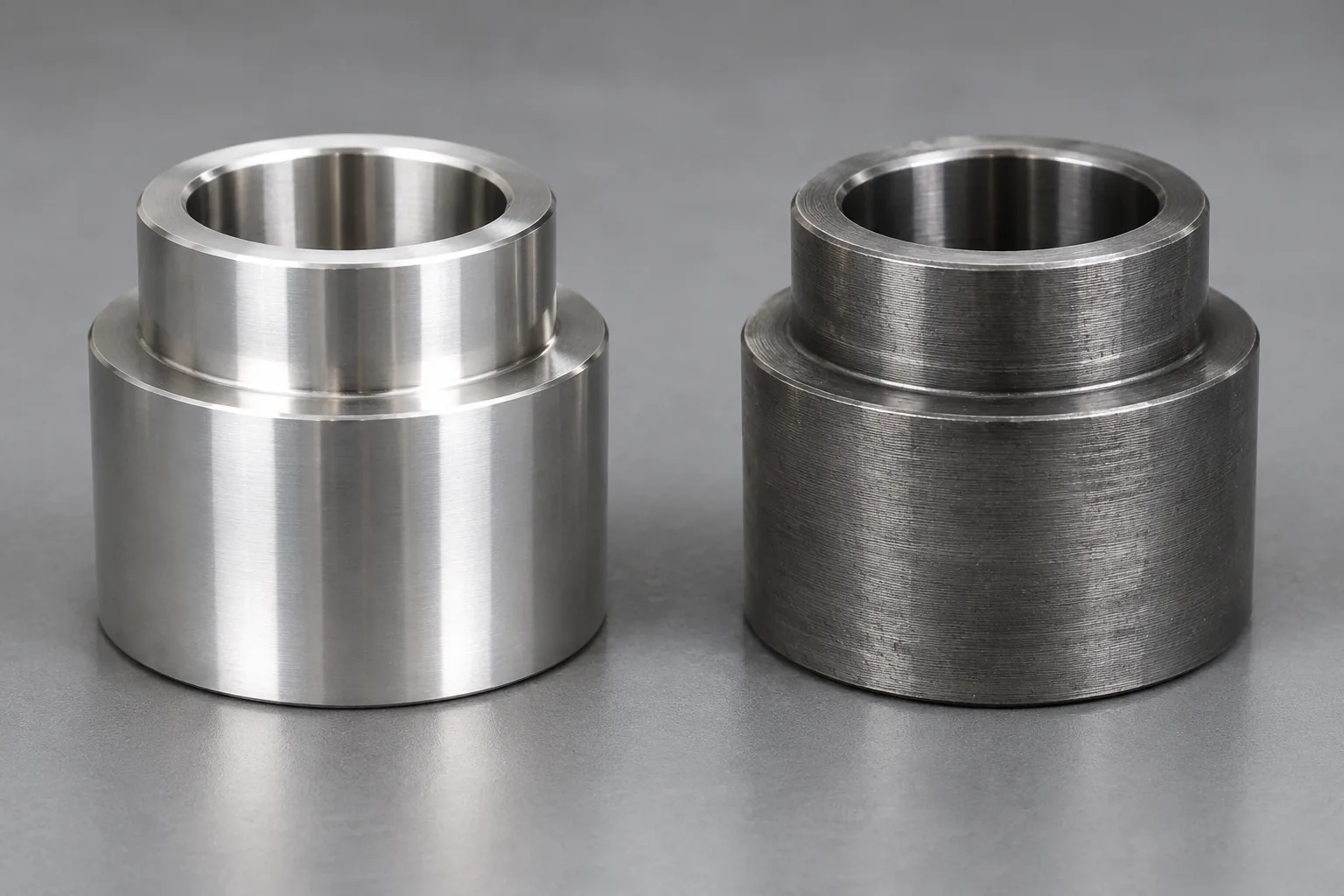
For bearing steels and corrosion-resistant grades, ask for a mill certificate showing grade, heat or lot number, composition and country of melt. Domestic machining, grinding or assembly does not convert imported or non-qualifying melt into compliant material. A standard steel that stays outside the specialty-metal definition can still be caught by Buy American or another domestic-preference clause.
Nickel, Cobalt, and Iron-Nickel Alloys
Nickel-base, cobalt-base and iron-nickel alloys are frequently reviewed as specialty metals because they appear in high-temperature, corrosion-resistant and aerospace-grade mechanical components. Require composition data, melt source and a supplier declaration for each heat or lot, not one declaration for an entire product line.
Cost and application prestige prove nothing. An expensive aerospace-grade alloy is not automatically compliant, and a modest alloy is not automatically excluded; composition against the clause definition and melt origin decide it.
Titanium, Zirconium, Beryllium, and Columbium
Titanium and zirconium alloys are specialty metals and attract close scrutiny of melt and origin documents. Beryllium and columbium parts need the same clause-by-clause check before they are treated as regulated or as automatically clear, because their status follows the contract clause rather than the family name. These families appear in fasteners, wear components, bearing elements and specialized mechanical assemblies, often from a small number of mills.
Verify country of melt and supplier traceability before accepting a certificate, and flag limited-source or imported claims for additional review. A certificate that names the alloy but not the melt country is incomplete for this group.
Aluminum, Copper, Brass, Bronze, and Common Non-Specialty Metals
These families generally sit outside the specialty-metal category, but that is not the same as being compliant everywhere. They can still be governed by Buy American, Berry Amendment commodity rules, country-of-origin requirements or other contract terms.
Where the applicable clause requires it, collect material certificates and country-of-origin declarations. Never present a material family as blanket compliant without naming the clause it satisfies, because the next contract may ask a different question of the same alloy.
Polymers, Ceramics, Composites, and Seals
Non-metallic materials are not specialty metals, yet they travel inside regulated articles. Bearing seals, cages, bushings and insulation parts still need a country-of-origin review and any contract-specific declarations the flow-down requires.
The assembly test matters more than the individual material. If a housing, ring or fastener in the same article contains specialty metal, the article may still need specialty-metal review even though the seal or cage does not.
Coatings, Platings, and Finishes
Coatings and platings are not a DFARS material category, so they should never appear on a compliant list as a standalone approval. Review two points: whether the finish contains a specialty metal, and whether it changes how the article is classified or sourced.
Confirm material content, supplier origin and process location where the clause requires it. Cadmium, nickel, chrome and other finishes are clause-specific review items, not automatic approvals.
Compliant vs Non-Compliant: What Evidence Makes a Material DFARS-Compliant
Compliance is an evidence chain with three links: clause mapping, material traceability and origin documentation. Break one link and the claim fails, however good the part is.
- Clause mapping. A written statement of which DFARS or FAR clause applies to which line item.
- Mill test report or material certificate. Grade, heat or lot, composition, and country of melt or production.
- Certificate of conformance or DFARS declaration. Signed by the supplier and naming the clause being satisfied, not merely the phrase DFARS compliant.
- Country-of-origin statement for the material and, where required, for the process location.
- Heat and lot traceability records linking the finished component back to the raw material source.
Flow-down is part of the evidence. If your supplier buys rings, balls or bar stock from a lower tier, that tier must receive the same clause requirements and return the same documents. Documentation expectations can differ for commercial items, COTS items and nonavailability determinations, so confirm the applicable path instead of assuming the standard one.
Country-of-Origin and Melt Rules
For specialty metals, the decisive question is usually where the metal was melted or produced. Several different countries can be involved in one part: the melt country of the raw stock, the country where it was rolled or forged, the country where the component was machined, and the country of the supplier who ships it.
Only the melt or production origin answers the specialty-metal question. A supplier address, a warehouse location or a made-in-USA label on the packaging is not proof of melt origin. Require the melt country on the certificate and, where the clause provides for it, the qualifying-country basis for that origin.
Manufacture, machining and melt are three separate facts. Keep them separate in your records, because a purchasing file that captures only country of manufacture cannot answer a specialty-metal review.
A Practical DFARS Materials Checklist for Bearings and Mechanical Components
Bearings are assemblies, so screen them component by component and then screen the whole.
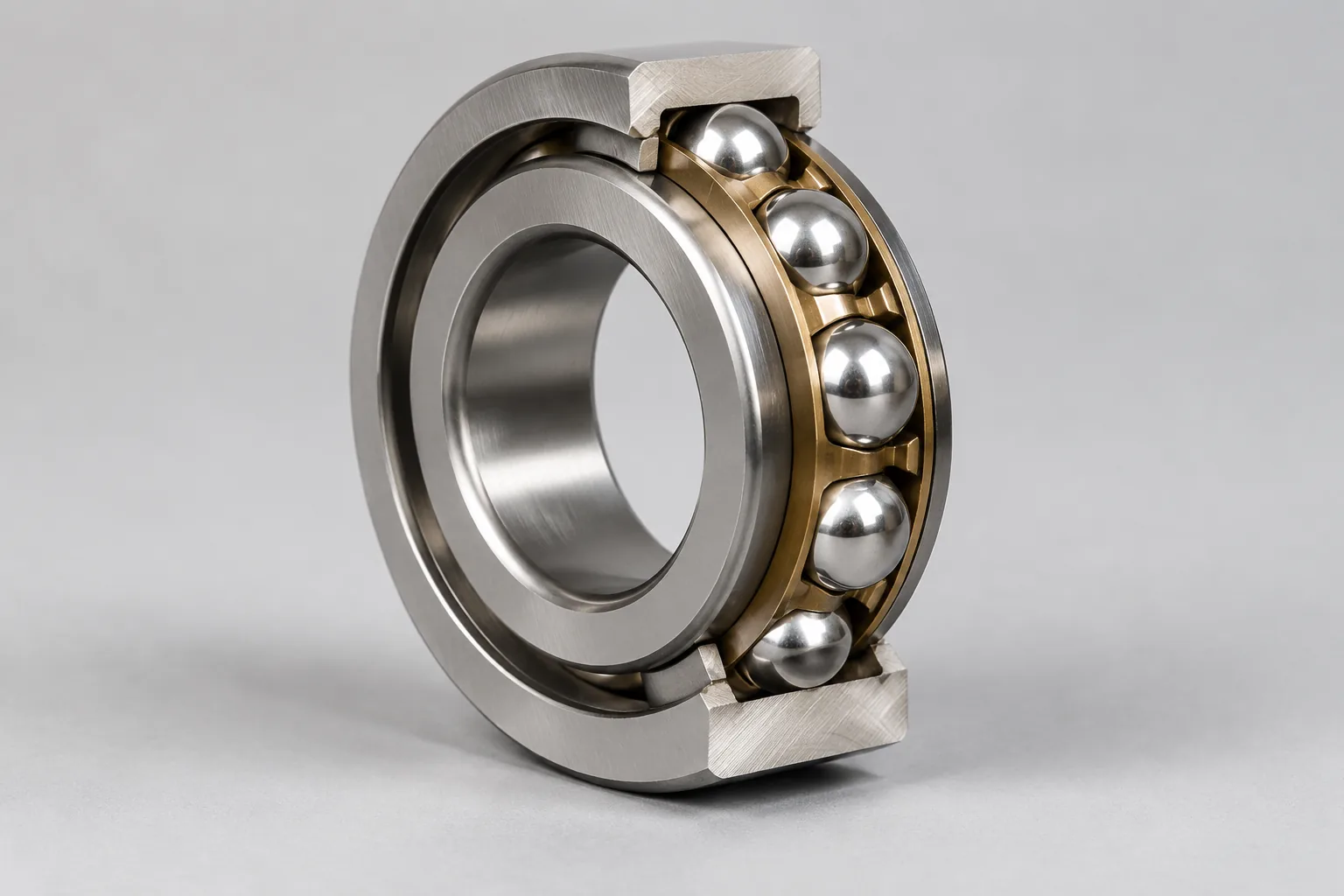
- Split the bill of materials: inner and outer rings, balls or rollers, cage, seals or shields, lubricant, and any sleeve or housing interface.
- Classify each line: specialty metal, common metal, non-metallic, coating or finish.
- Collect evidence for each specialty-metal line: grade, composition, melt country and a supplier declaration tied to the actual heat or lot.
- Review the article as delivered: confirm whether the applicable clause applies at component, subassembly or end-item level.
- Check non-metallic and finish lines against origin, material-content, and contract-specific requirements.
- Escalate conflicts: send unclear or contradictory supplier claims to the contracting officer or compliance team instead of resolving them internally.
A bearing with no specialty-metal content is not automatically clear of DFARS. It can still fall under Buy American or commodity-specific clauses, which is why the clause mapping step comes first.
Exceptions and Waivers: When a Non-Compliant Material May Be Acceptable
Non-compliance is not always a dead end, but it is never a decision the supplier or the buyer makes alone. Do not self-approve a non-compliant material on an internal reading of the clause.
Identify which path, if any, is available in your contract: an exception written into the clause itself, COTS or commercial-item treatment, a nonavailability determination, a qualifying-country source, an alternative for a commercial derivative military article, or an authorization from the contracting officer. Record the basis and keep it with the procurement record for that lot.
Treat every exception as contract-specific. An approval granted on one program does not become a permanent material approval, and it does not transfer to the next purchase order.
Common Mistakes to Avoid
- Assuming made in USA means DFARS compliant.
- Confusing country of manufacture with country of melt.
- Treating all stainless steel, or all high-performance alloys, as automatically compliant or automatically excluded.
- Relying on an outdated online materials list instead of the clause text incorporated in the contract.
- Failing to flow the requirement down to sub-tier material suppliers.
- Accepting a supplier declaration with no heat or lot traceability and no mill certification behind it.
Next Steps: Build a Clause-Based Materials Matrix
A matrix turns a vague compliance claim into a record you can audit. Build one row per material or component and capture the item and its specification, the applicable DFARS or FAR clause, the required melt or origin country, the required evidence, and the document reference for each heat or lot.
Attach certificates and traceability records to the matching row, then review the matrix with your contracting officer or compliance counsel before approving a new material source. Update it whenever contract clauses, supplier sources or material specifications change. The matrix supports a compliance decision; it does not replace a contracting officer determination or legal advice.
Conclusion
A usable list of DFARS compliant materials is built from clauses, not collected from a directory. Every item needs the same three answers: which clause applies, what the material is made of, and where the metal was melted or produced. Specialty metals carry the tightest melt rules; common metals, polymers and finishes usually answer to other clauses; and assemblies such as bearings must be reviewed as delivered, not only as a stack of materials.
The safe next step is procedural. Build a clause-based matrix, demand heat-level evidence for every specialty-metal line, keep manufacture, machining and melt as separate records, and send unclear or conflicting claims to the contracting officer before a purchase order is released. Confirm the exact clause text and any exception for your own contract, because that text, not this page, decides the outcome.
FAQs
Q1: Is there an official full list of DFARS compliant materials?
A: No. DFARS contains several separate material restrictions, each written into its own clause, so there is no single government register of approved grades. The practical list is the clause list in your contract, mapped to the materials and components you actually buy.
Q2: Is stainless steel DFARS compliant?
A: It depends on the grade and the melt origin, not on the word stainless. Some alloy steels with sufficient alloy content, including certain stainless grades, fall inside the specialty-metal definition and must be melted in the United States, its outlying areas, or a qualifying country; grades outside that definition can still be caught by domestic-preference clauses.
Q3: Are bearings covered by DFARS material restrictions?
A: They can be. A bearing is an assembly of rings, rolling elements, a cage, seals and lubricant, so each line needs its own screening and the finished article needs review at the level the clause specifies. A bearing with no specialty-metal content may still be subject to Buy American or commodity-specific requirements.
Q4: Is aluminum DFARS compliant?
A: Aluminum generally sits outside the specialty-metal category, but that does not make it compliant under every contract. Domestic-preference, country-of-origin or commodity rules can still apply, so name the clause being satisfied and support it with a certificate and an origin statement.
Q5: Does made in USA mean DFARS compliant?
A: No. For specialty metals the test is where the metal was melted or produced, not where the part was machined, assembled or packaged. A supplier address or a made-in-USA label does not establish melt origin; only documentation that names the melt country does.
Q6: How can I verify a supplier’s DFARS compliance claim?
A: Ask for clause-specific evidence rather than a general statement: the clause relied on, a mill certificate showing grade, heat or lot, composition and melt country, a certificate of conformance naming the clause, and traceability from the finished component back to the raw material source.
Q7: What happens if a material is not DFARS compliant?
A: It cannot be accepted under the default clause requirement unless a valid path applies to your contract, such as a clause exception, COTS or commercial-item treatment, a nonavailability determination, a qualifying-country source, or contracting-officer authorization. Document the basis for that lot, and do not treat it as a permanent approval.