Quick Answer: A roller chain size chart identifies a chain by its chain number and standard, then lists nominal dimensions such as pitch, roller diameter, inner width, pin diameter, pin length, plate height, tensile strength and weight per length. Read the chart by matching the chain number first, then confirm pitch, roller diameter and inner width. Use nominal values for new chain, and check the current standard or manufacturer table before ordering or matching a sprocket.
The roller chain size chart is a lookup tool, not a single universal table. ANSI/ASME and ISO 606 chains use different numbering systems, and double-pitch or attachment chains add further variants. The sections below show what each chart column means, how to measure an unknown chain, and how to avoid matching a chain to the wrong sprocket.
What a Roller Chain Size Chart Includes
Chain length alone does not identify the size. A roller chain size chart identifies a chain by chain number and standard, then gives the dimensions needed to confirm that the chain will fit the sprocket and the drive. The same chain number can appear in more than one standard series, so the standard is part of the identity.
For ANSI/ASME chains, the applicable table is the current B29.1 series; for ISO chains, use ISO 606. The edition matters because a chart from an older edition may not match the current row.
A useful chart normally shows these columns:
- Pitch: the center-to-center distance between adjacent pin centers.
- Roller diameter: the outside diameter of the roller.
- Inner link width: the clearance between the inner plates.
- Pin diameter and pin length: the fit and connection dimensions.
- Plate height: a reference for space and plate strength.
- Ultimate tensile strength: a reference value for load capacity.
- Weight per length: a reference for mass, usually given per meter or per foot.
Treat the listed dimensions as nominal values for new chain. A worn chain can measure differently, and a value copied from an old catalog may not match the current standard edition. Check the current standard or manufacturer table before ordering.
How to Read a Roller Chain Size Chart
The chain number is a size code, not a direct measurement in millimeters. In a given series, higher numbers generally indicate a larger chain, but the standard and the row values control the actual dimensions. Read the number, find the correct standard series, then read across the row.
Use the chart in this order:
- Identify the chain number and the standard family.
- Find the row for that number in the correct table.
- Read pitch, roller diameter and inner width first.
- Use pin diameter and plate height to confirm the choice.
- Check tensile strength and weight only after the fit dimensions agree.
Chain numbers are not millimeter pitch values, and the same number can mean different dimensions in different standards. Some manufacturers also add proprietary suffixes or attachment designations; those need separate verification.
Key Dimensions Explained
| Dimension | What it tells you |
|---|---|
| Pitch | Center-to-center distance between adjacent pin centers; the first check for chain size. |
| Roller diameter | Outside diameter of the roller; must match the sprocket tooth pocket. |
| Inner link width | Clearance between inner plates; must clear the sprocket tooth width. |
| Pin diameter | Pin fit and bearing area; a confirmation dimension. |
| Pin length | Overall pin length and connection space. |
| Plate height | Plate size and space reference. |
| Tensile strength | Reference load value for the chain series. |
| Weight per length | Mass reference for the drive. |
Symbols and units vary by standard and by publisher. Confirm whether the table uses inches or millimeters, and keep the original unit when ordering.
ANSI/ASME vs ISO Chain Number Cross-Reference
ANSI/ASME and ISO 606 chains often use similar-looking numbers, but a similar number is not proof of equivalence. Use a cross-reference as a starting point, then verify the dimensions in both tables. Pitch and roller diameter are the key compatibility checks; inner width and pin diameter confirm the match.
Common ANSI numbers to cross-reference include 25, 35, 41, 40, 50, 60, 80, 100, 120, 140, 160, 180, 200 and 240. For each one, compare the ANSI row with the ISO row rather than assuming a one-to-one mapping. Not every ANSI number has an exact ISO equivalent, and some numbers are used differently across standards.
Standard Roller Chain Size Chart
The table below groups common chain numbers by duty range so the chart is easier to navigate. It is a reading guide, not a replacement for the dimensional row. Read the actual values from the current standard or manufacturer table for the exact number and standard edition.
| Chart group | Chain numbers to look up | Main columns to compare |
|---|---|---|
| Miniature and light-duty | 25, 35, 41 | Pitch, roller diameter, inner width, pin diameter |
| Standard drive | 40, 50, 60, 80 | Pitch, roller diameter, inner width, pin diameter, tensile strength, weight per length |
| Heavy-duty and large-pitch | 100, 120, 140, 160, 180, 200, 240 | Pitch, roller diameter, inner width, pin diameter, plate height, tensile strength, weight per length |
Do not copy a value from a different series or from a worn chain. If the row is not clear, stop and confirm the standard before selecting a replacement.
Miniature and Light-Duty Chains
Smaller numbers such as 25, 35 and 41 are used in light-duty drives and compact equipment. In this group, compare pitch, roller diameter, inner width and pin diameter first. Tensile strength and weight are secondary for fit, but they still matter when the drive runs continuously or space is tight.
Standard Drive Chains
Numbers 40, 50, 60 and 80 cover many general drive applications. Check pitch, roller diameter, inner width and pin diameter for fit, then use tensile strength and weight per length when the table provides them to compare load capacity and mass.
Heavy-Duty and Large-Pitch Chains
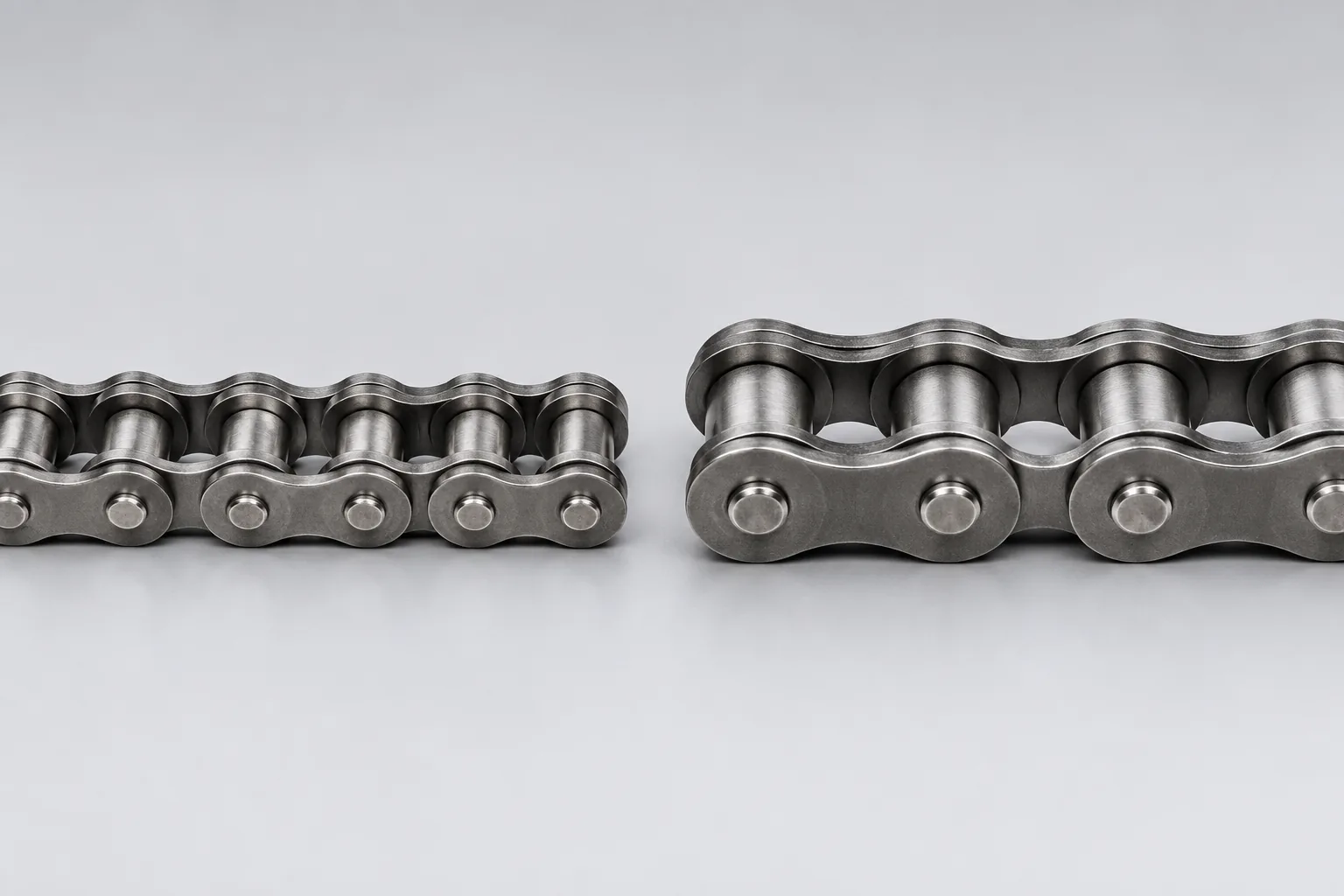
Numbers 100, 120, 140, 160, 180, 200 and 240 are used for heavier loads and larger sprockets. Dimensional tables can be less consistent across manufacturers, so confirm the standard and the exact row. Large chains may also have application-specific variants; confirm the manufacturer data for the specific drive.
How to Measure an Existing Roller Chain
When the chain number is unknown, measure the chain and compare the result with the chart. Clean the chain, tension a straight section that engages the sprocket, and measure more than one link. Use new or low-wear chain where possible.
- Clean the chain and remove loose dirt from the pins and rollers.
- Tension a straight section that engages the sprocket.
- Measure across several pitches, not one link.
- Measure roller diameter, inner width and pin diameter.
- Compare the results with the chart and the applicable tolerance.
A worn chain can measure longer than nominal pitch. Do not identify the chain number from a single worn link; note the elongation and use nominal replacement data for the new chain.
Measuring Pitch Accurately
Pitch is the center-to-center distance between adjacent pin centers. Measure the distance across several pitches with calipers or a pitch gauge, then divide the total distance by the number of pitches measured. Use enough links to reduce measurement error.
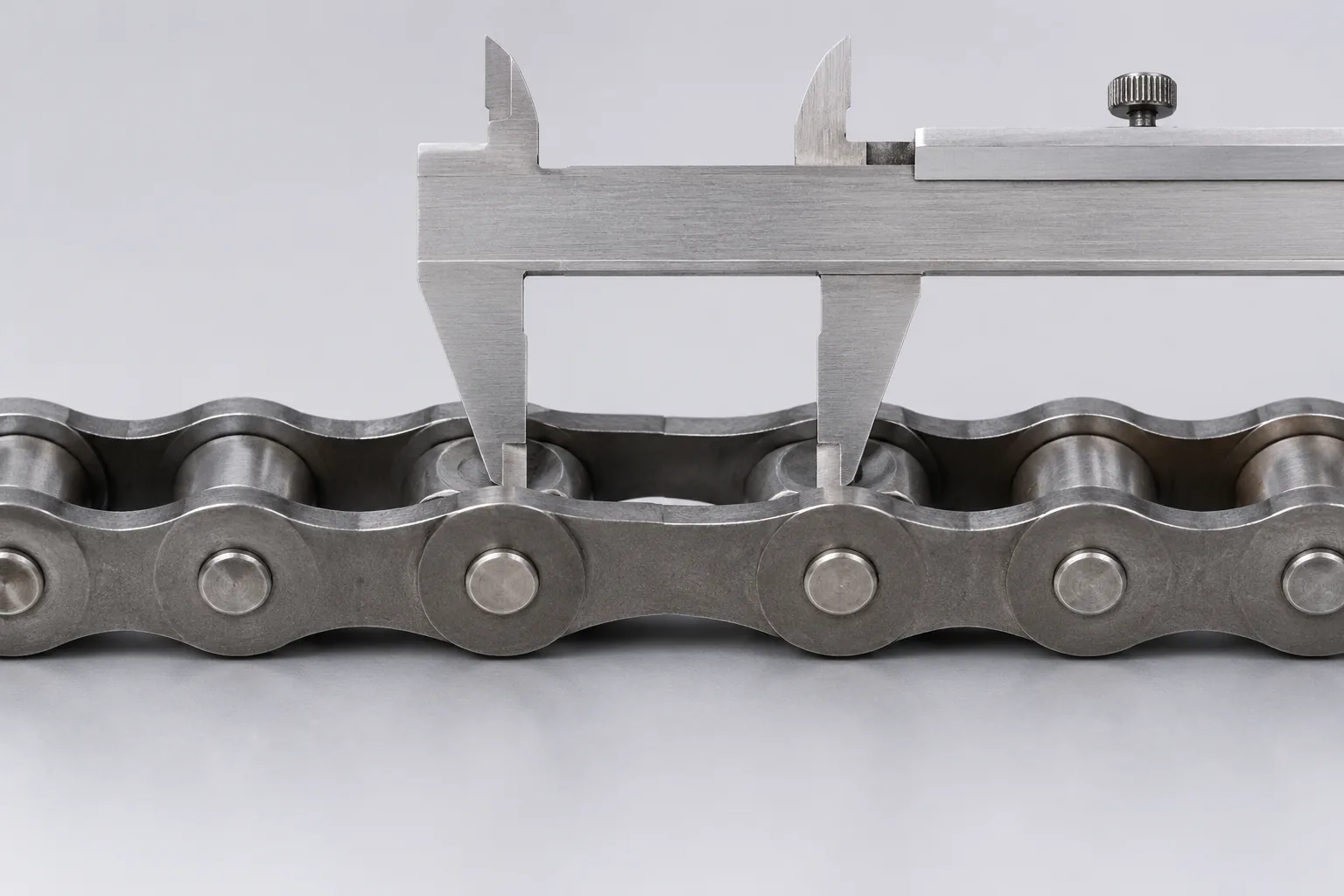
If the chain is worn, the result includes elongation. Record that condition and use the nominal pitch from the chart when selecting a replacement, not the worn measurement alone.
Checking Roller Diameter and Inner Width
Measure the roller outside diameter with calipers. Measure the inner width between the inner plates. Compare both values with the chart; either mismatch can indicate the wrong chain type, even when the pitch looks close.
Identifying Chain Number from Measurements
Match pitch first, then roller diameter and inner width. Use pin diameter and plate height to confirm the row. If the measurements fall between standard rows, check for double-pitch, metric or specialty chain. Metric or non-standard chains may not match ANSI chart rows.
Roller Chain Size vs Sprocket Compatibility
The chain number and the sprocket must match in pitch and roller diameter. Same pitch does not always mean interchangeable if roller diameter or inner width differs. Check the sprocket tooth count and tooth width as well as the chain row.
- Confirm the chain standard and the sprocket standard.
- Compare pitch and roller diameter before ordering.
- Check inner width and sprocket tooth width for clearance.
- Confirm tooth count for the required speed ratio.
- Verify special sprockets against the specific chain variant.
Special sprockets may be designed for specific chain variants. When the sprocket is not a standard stock item, confirm the chain and sprocket together rather than matching one dimension at a time.
Metric and Inch Conversions in Roller Chain Charts
Some charts show inches and others show millimeters. Use 1 inch = 25.4 mm as the exact conversion factor. Convert the chart value or the measurement, not both, and keep the same number of significant figures.
Do not round before comparing to the standard tolerance. A small rounding difference can hide a mismatch in roller diameter or inner width. When a table gives a nominal value in one unit, convert only for comparison and keep the original value for ordering.
Double-Pitch and Attachment Chain Size Charts
Double-pitch chain numbers and dimensions differ from standard roller chain. Numbers such as 2040, 2050, 2060 and 2080 need a separate table. Do not use a standard roller chain row for a double-pitch chain.
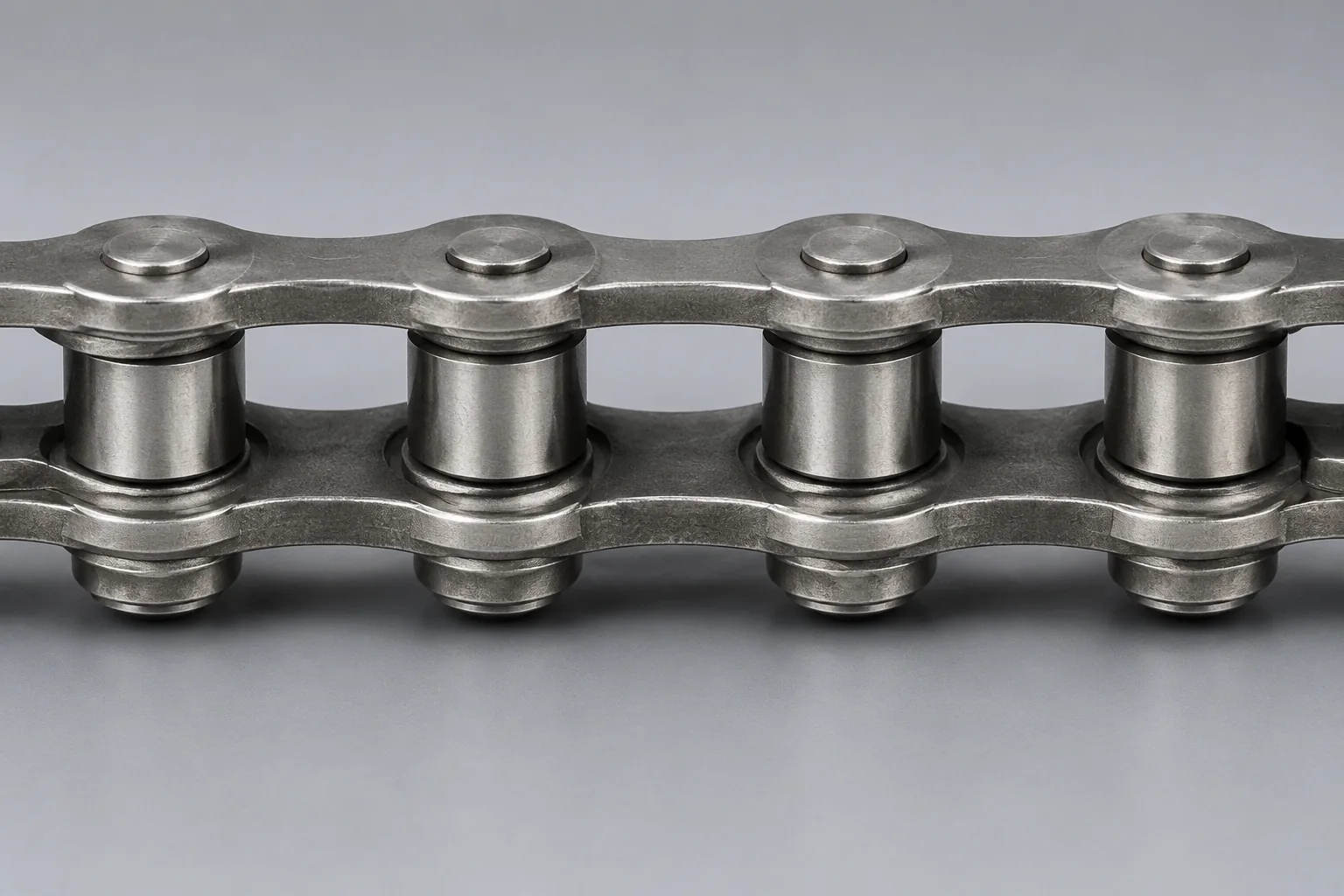
Attachment chains add special plates or pins that a basic roller chain size chart does not capture. Use the separate chart for the attachment style and confirm the pin and plate details. When the attachment is custom, verify the complete assembly with the manufacturer data.
Selection Checklist Before Using a Size Chart
Before using a roller chain size chart for a drive, confirm the application inputs:
- Load and speed requirements for the drive.
- Sprocket dimensions and tooth count.
- Space constraints and shaft center distance.
- Environment and the required standard.
- Safety factor and tensile strength.
This checklist supports selection; it is not a substitute for engineering review when the drive is safety-critical or the load is not well defined.
Common Mistakes When Using Roller Chain Size Charts
- Confusing the chain number with a pitch value in millimeters.
- Using a worn chain measurement as the nominal size.
- Mixing ANSI and ISO rows without a cross-check.
- Ignoring inner width or roller diameter when matching a sprocket.
- Assuming all same-pitch chains are interchangeable.
Conclusion
A roller chain size chart is most useful when it is treated as a verification tool. Start with the chain number and standard, confirm pitch, roller diameter and inner width, then check pin diameter, plate height, tensile strength and weight against the current table. If the measurements fall between rows, or the chain is worn, stop and verify the chain type before buying a replacement or matching a sprocket. The chart helps identify and select a chain; it does not replace the installation, alignment, tension and lubrication instructions for the drive.
FAQs
Q1: What do the numbers in a roller chain size chart mean?
A: The number is a size code within a chain standard, not a pitch value in millimeters. It points to a row in the chart; read pitch, roller diameter, inner width and pin diameter from that row, and confirm the standard edition before ordering.
Q2: How do I measure roller chain pitch?
A: Measure the center-to-center distance across several adjacent pitches with calipers or a pitch gauge, then divide the total by the number of pitches. Use a straight, tensioned section and enough links to reduce error; if the chain is worn, treat the result as elongation, not nominal pitch.
Q3: Is ANSI 40 the same as ISO 08A?
A: They are often cross-referenced, but the numbers alone do not prove interchangeability. Confirm pitch, roller diameter, inner width and pin diameter in the current ANSI and ISO tables before using one in place of the other.
Q4: Can I use a chain with the same pitch but different roller diameter?
A: Not safely. Pitch may match while roller diameter or inner width differs, and that can affect sprocket engagement and wear. Compare all three dimensions and confirm the chain and sprocket standard before replacement.
Q5: How do I identify a double-pitch chain?
A: Look for a double-pitch number and a separate dimensional row. Common double-pitch numbers include 2040, 2050, 2060 and 2080, but confirm the number, pitch and roller diameter in the applicable table; do not use a standard roller chain row for a double-pitch chain.