Choosing the right material for your bearings is a critical engineering decision that directly impacts performance, equipment lifespan, and your bottom line. For most applications, the debate comes down to two primary contenders: Chrome Steel and Stainless Steel.
While they may look similar to the untrained eye, their chemical composition and physical properties lead to vastly different behaviors under stress, in corrosive environments, and over time. DUHUI will provide a detailed, technical comparison of chrome steel and stainless steel bearings to help you make an informed choice for your next project.
Chrome Steel Bearings (AISI 52100)
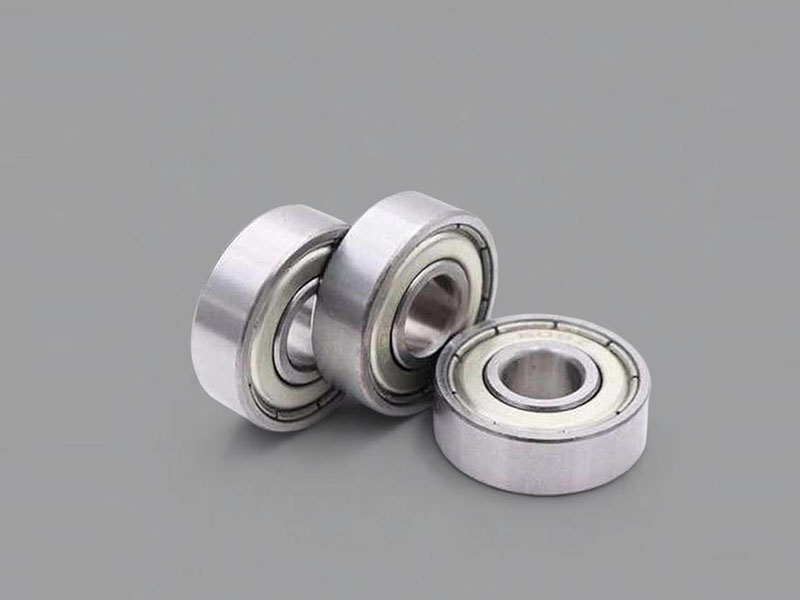
Chrome steel, most commonly referenced under the grade AISI 52100 (or 100Cr6 in Europe), is the standard material for the vast majority of ball and roller bearings used across industries.
Definition:
AISI 52100 is a high-carbon, chromium alloy steel. It is specifically formulated for applications requiring extreme hardness and wear resistance.
Key Properties:
- High Load Capacity: Due to its high hardness and compressive strength, chrome steel can handle very heavy radial and axial loads without deforming. This makes it the top choice for automotive, heavy machinery, and industrial gearboxes.
- Exceptional Hardness and Wear Resistance: Through specialized heat treatment, 52100 steel achieves a high Rockwell hardness (typically 60-67 HRC). This hardness allows it to withstand the continuous rolling contact fatigue inherent in bearing operation, ensuring a long service life.
- Excellent Fatigue Life: In clean, dry, and properly lubricated environments, chrome steel bearings offer the longest fatigue life of any standard bearing material.
Stainless Steel Bearings (AISI 440C)
When the operating environment introduces moisture or chemicals, standard chrome steel often fails due to corrosion. This is where stainless steel bearings, specifically grade AISI 440C, become the superior choice.
Definition:
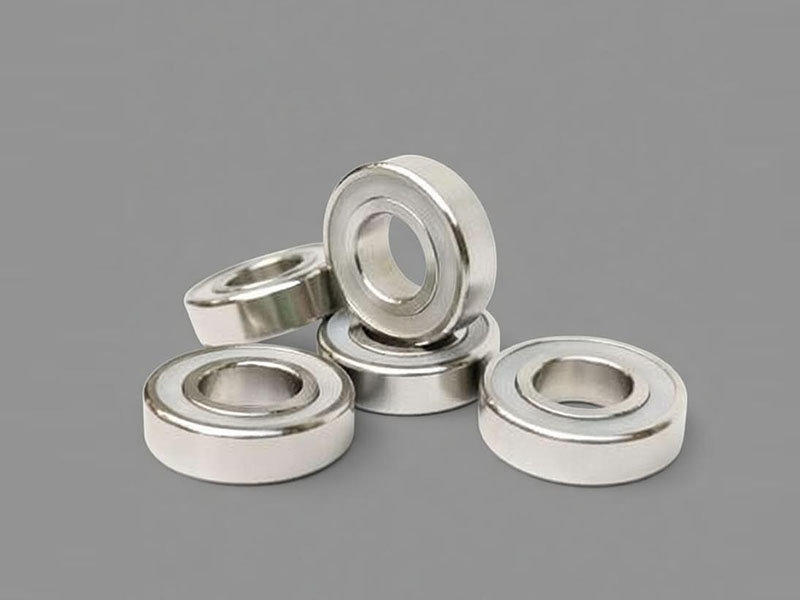
AISI 440C is a high-carbon martensitic stainless steel. Its high chromium content provides a “stainless” characteristic while maintaining enough hardness to function as a bearing material.
Composition:
- Chromium (16-18%): This is the key element that forms a passive layer of chromium oxide on the surface, protecting the steel from rust and corrosion.
- Carbon (0.95-1.20%): Provides the necessary hardness for bearing applications.
- Molybdenum: Often added to improve corrosion resistance and strength at high temperatures.
Key Properties:
- Superior Corrosion Resistance: The primary advantage. 440C bearings resist rust from water, humidity, steam, and many mild chemicals.
- Hygienic and Clean: Their non-porous surface does not harbor bacteria and can withstand frequent washdowns, making them ideal for food processing and medical equipment.
- High-Temperature Tolerance: Stainless steel retains its hardness and dimensional stability at higher temperatures better than standard chrome steel (up to approx. 300°C / 572°F).
- Low Maintenance: The inherent corrosion resistance significantly reduces the need for frequent lubrication and maintenance in challenging environments.
Head-to-Head Comparison: Chrome Steel vs. Stainless Steel
To understand which material fits your needs, we must compare them directly across critical engineering metrics.
Performance Comparison
| Property | Chrome Steel Bearings (52100) | Stainless Steel Bearings (440C) |
| Load Capacity | High | Moderate |
| Hardness (HRC) | 60-67 | 55-60 |
| Wear Resistance | Excellent | Good |
| Corrosion Resistance | Poor | Excellent |
| Max. Operating Temp | ~120°C (with standard lubrication) | ~300°C (with high-temp lubrication) |
Environmental Suitability
- Humidity & Corrosion: Chrome steel bearings will rust quickly if the protective lubricant film breaks down or if exposed to moisture. Stainless steel is specifically designed to thrive in these conditions.
- Extreme Temperatures: Chrome steel loses hardness at elevated temperatures. Stainless steel 440C maintains its integrity much longer in high-heat applications.
Cost Considerations
- Initial Cost: Stainless steel bearings are significantly more expensive to manufacture due to the cost of raw materials and more complex machining processes. Winner: Chrome Steel.
- Total Cost of Ownership (TCO): In corrosive environments, a chrome steel bearing may fail in weeks, requiring costly replacements and downtime. A stainless steel bearing, though pricier upfront, can last for years with minimal intervention. Winner: Stainless Steel.
When to Choose Chrome Steel Bearings
Select chrome steel bearings when your priority is maximum load capacity and speed in a controlled environment.
| Scenario | Why Chrome Steel is the Right Choice |
| High Load Requirements | Its superior hardness and compressive strength handle extreme forces without brinelling (surface damage). |
| High-Speed Applications | The material’s excellent dimensional stability and fatigue resistance make it ideal for high-RPM machinery like spindles and turbines. |
| Non-Corrosive Environments | In dry, indoor, or oil-bath environments, chrome steel offers the longest service life and is the most cost-effective solution. |
| Cost-Sensitive Projects | For standard applications with no corrosion risk, it provides premium performance at a standard price point. |
| Periodic Maintenance Possible | If the equipment is regularly greased and inspected, the risk of rust is mitigated, allowing chrome steel to perform optimally. |
When to Choose Stainless Steel Bearings
Select stainless steel bearings when the environment is your primary challenge, or when hygiene is critical.
| Scenario | Why Stainless Steel is the Right Choice |
| Corrosive Environments | Essential for marine equipment, chemical processing, or outdoor applications exposed to rain and salt. |
| Food and Beverage Industry | Meets strict hygiene standards by surviving high-pressure washdowns with steam and detergents without rusting. |
| Medical Applications | The non-corrosive and sterilizable nature of stainless steel is required for MRI machines, dental equipment, and surgical tools. |
| High and Low Temperature Extremes | Performs reliably where chrome steel would soften or become brittle. |
| Low Maintenance Requirements | Ideal for “fit and forget” applications in hard-to-reach places, such as in conveyor systems or packaging machinery. |
| Specialty Consumer Goods | As noted, skateboard bearings made from stainless steel are preferred by riders in humid climates or those who frequently skate near water, as they resist rust far better than standard chrome steel. |
Global Standards and Grades
When sourcing bearings, it’s crucial to understand the international equivalents to ensure you are getting the correct material.
| Country / Standard | Chrome Steel Grade | Stainless Steel Grade |
| USA (AISI/ASTM) | 52100 | 440C |
| Europe (EN) | 100Cr6 | X105CrMo17 (1.4125) |
| Japan (JIS) | SUJ2 | SUS440C |
Making the Right Choice for Your Application
The choice between chrome steel and stainless steel bearings is a classic engineering trade-off between ultimate mechanical performance and ultimate environmental resistance.
- Choose Chrome Steel (52100) if your application demands the highest load capacity, speed, and precision in a clean, well-lubricated environment.
- Choose Stainless Steel (440C) if your equipment faces moisture, chemicals, extreme temperatures, or requires absolute hygiene.
Selecting the wrong material can lead to premature failure, costly downtime, and safety risks. At DUHUI Bearing, we specialize in manufacturing both high-carbon chrome steel and durable stainless steel bearings tailored to the specific demands of our clients. Whether you need standard sizes or custom-engineered solutions for automotive, industrial, or specialized applications, our team is here to help.