Quick Answer
Roller bearing selection depends on load direction, space, speed, and alignment. Cylindrical handles heavy radial loads at high speeds with precise alignment. Tapered supports combined radial and axial loads (paired mounting required). Needle fits tight radial spaces with moderate speeds. Spherical tolerates misalignment (±1.5°–3.5°) and heavy loads at low-to-medium speeds. All use line contact, offering higher capacity than ball bearings of comparable size. Your application’s primary constraint—alignment, space, or load direction—typically points to the right choice.
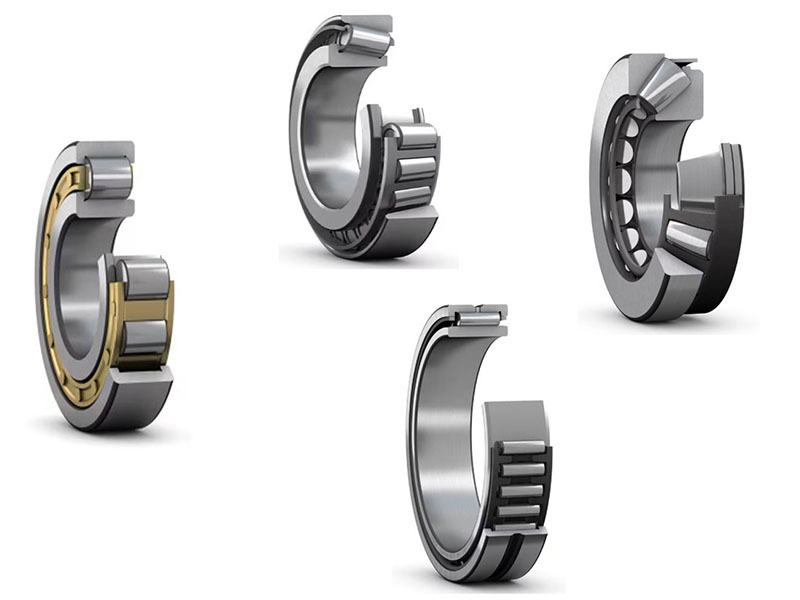
Not all roller bearings are built the same. Cylindrical, tapered, needle, and spherical roller bearings each handle loads differently, fit different spaces, and tolerate different operating conditions. Pick the wrong one, and you’ll face premature failure, unplanned downtime, or unnecessary cost.
What’s the real difference between these four? Which one handles the heaviest radial loads? Which one bends with your shafts? Which one fits in the tightest spot? This article walks you through each type, compares them head-to-head, and gives you a clear decision framework so you can choose with confidence.
Overview of Roller Bearing Types
All four roller bearing types share one fundamental trait: line contact. Instead of the point contact found in ball bearings, the rolling elements in roller bearings contact the raceways along a line. This simple geometric difference gives roller bearings substantially higher load-carrying capacity than ball bearings of the same envelope size. You get more load capacity per unit of space—but you trade some speed capability because line contact creates higher friction.
Each of the four types interprets this “line contact” concept differently, optimizing for specific load directions, space constraints, alignment conditions, and speed requirements. Here’s how they compare.
Cylindrical Roller Bearings
What Is a Cylindrical Roller Bearing?
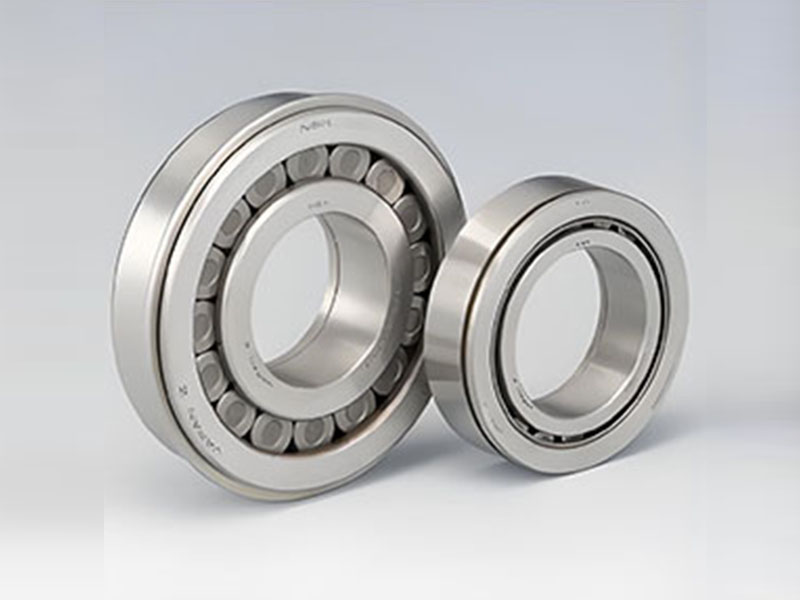
A cylindrical roller bearing uses straight cylindrical rollers as the rolling elements, arranged between an inner ring and an outer ring with a cage to keep them properly spaced. The rollers are relatively short and thick compared to needle rollers.
Core characteristics:
- Highest radial load capacity among roller bearings for a given cross-section
- Highest speed capability of any roller bearing type
- Highly sensitive to misalignment—even slight angular errors cause stress concentrations
- Fully separable—inner ring, outer ring, and roller/cage assembly mount independently
Typical applications: Gearboxes, electric motors, pumps, compressors, and machine tool spindles where shafts stay aligned and loads are predominantly radial.
Advantages of Cylindrical Roller Bearings
- Exceptional radial load handling: The line contact between rollers and raceways distributes heavy radial loads across a broad contact area. These bearings routinely handle radial loads that would overwhelm ball bearings of the same size.
- Top speed among roller bearings: Cylindrical roller bearings outperform all other roller types in speed capability. You’ll find them in high-speed gearboxes and electric motors where alignment is well controlled.
- High radial rigidity: Double-row configurations provide improved radial stiffness, making them suitable for precision machine tool applications where deflection must stay minimal.
- Separable rings simplify maintenance: The inner and outer rings mount separately, which is a major advantage in applications where access is tight or where you need to inspect components without fully disassembling the housing.
- Limited axial load capacity (ribbed designs): Some cylindrical roller bearings include ribs on the inner or outer rings that allow them to handle moderate axial loads. However, axial capacity remains limited compared to tapered or spherical designs.
Disadvantages of Cylindrical Roller Bearings
- No tolerance for misalignment: These bearings demand precise shaft-to-housing alignment—typically within 1 mrad (approximately 0.06°). Even small angular errors create stress concentrations that accelerate surface fatigue, increase vibration, and shorten service life.
- Limited axial load capacity: Standard cylindrical roller bearings are designed for pure radial loads. Ribbed designs can handle some axial thrust, but they’re not suitable for applications with significant or sustained axial forces.
- Requires precise installation: Thermal expansion, shaft deflection, and variable mounting tolerances all demand careful attention. Proper alignment and installation practices are non-negotiable.
Tapered Roller Bearings
What Is a Tapered Roller Bearing?
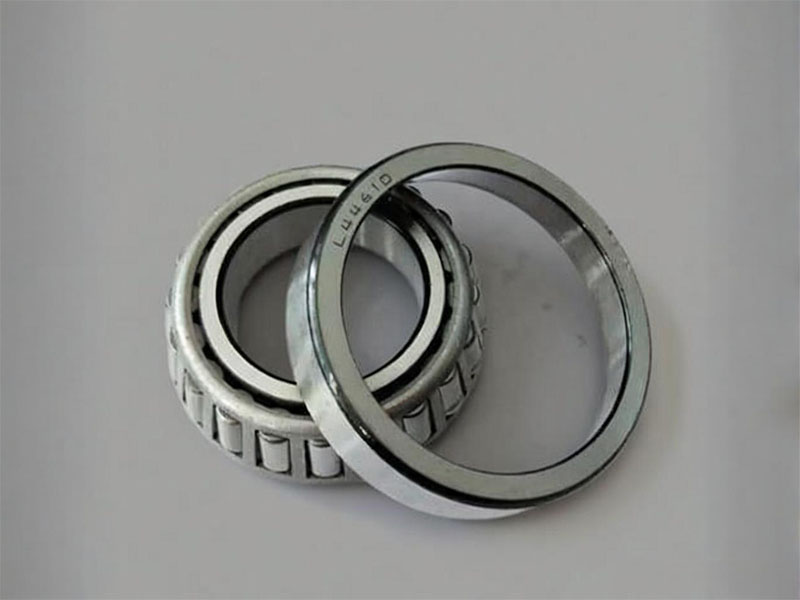
A tapered roller bearing consists of an inner ring (cone), an outer ring (cup), tapered rollers, and a cage. The tapered geometry means the raceways and roller surfaces converge toward a shared apex on the bearing centerline. This unique geometry allows the bearing to handle combined radial and axial loads in one direction simultaneously.
Core characteristics:
- Combined load capability—simultaneously supports radial and axial forces
- Adjustable clearance/preload—can be tuned for optimal performance
- Sensitive to setup—requires accurate alignment and proper preload
- Separable components—cone and cup mount independently
Typical applications: Automotive wheel hubs, heavy equipment axles, gearboxes, and construction equipment where loads combine radial and axial forces.
Advantages of Tapered Roller Bearings
- Combined radial and axial load capability: Tapered roller bearings are built for combined loads. The tapered geometry lets them handle thrust and radial forces simultaneously, with a higher axial-to-radial load ratio than spherical roller bearings or deep groove ball bearings can manage.
- Adjustable clearance and preload: You can preload tapered roller bearings to eliminate internal clearance and increase rigidity. Proper preload improves stiffness and precision, though too much increases friction and heat, and too little allows damaging shaft movement.
- High rigidity and load capacity: Line contact distributes loads over a broad area, giving tapered roller bearings excellent rigidity and load-carrying ability.
- Separable design simplifies servicing: The cone and cup mount independently, making installation and maintenance easier—especially in large equipment where handling complete assemblies is difficult.
- Space-efficient for combined loads: For applications with both radial and axial loads, tapered roller bearings provide a compact solution that eliminates the need for separate radial and thrust bearings.
Disadvantages of Tapered Roller Bearings
- Lower speed capability: Tapered roller bearings have lower speed limits than cylindrical roller bearings. Friction at the roller end/rib interface restricts their maximum rotational speed.
- Misalignment sensitivity: These bearings require accurate alignment and proper preload. Misalignment creates uneven load distribution and edge stresses that significantly reduce bearing life.
- Single-row handles axial load in one direction only: Single-row tapered roller bearings support thrust in one direction only. For bidirectional axial loads, you must mount them in pairs—adding complexity and cost.
- Installation demands precision: Proper setup requires careful adjustment to achieve the right preload or endplay. Too much preload or too much endplay both drastically shorten bearing life.
Needle Roller Bearings
What Is a Needle Roller Bearing?
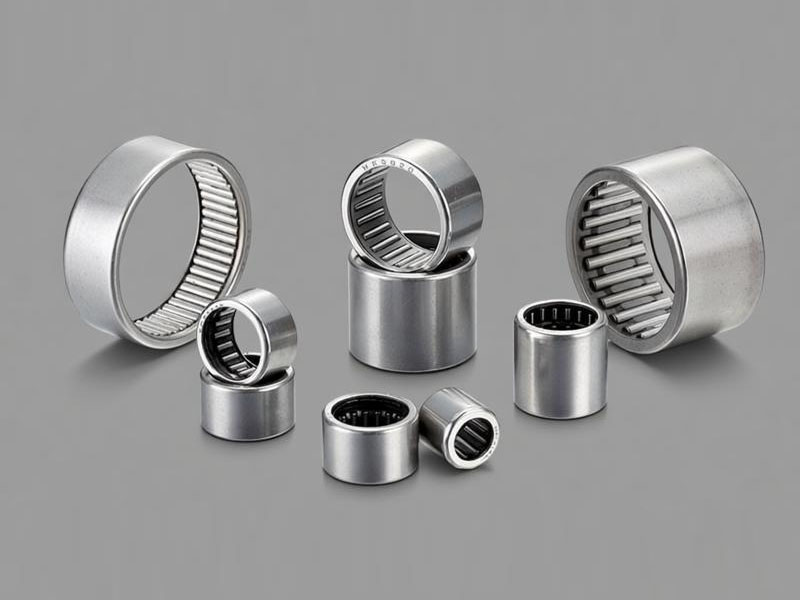
A needle roller bearing is a specialized cylindrical roller bearing where the rollers are long and slender with a length-to-diameter ratio of at least 4:1. The rolling elements are thin and packed closely together to maximize load-carrying surface in a minimal radial envelope.
Core characteristics:
- Smallest radial cross-section of any rolling bearing—unmatched compactness
- High radial load capacity in an extremely small radial space
- Can operate without inner or outer rings—rollers can ride directly on hardened shafts or housing bores
- Well-suited for oscillating motion and applications with limited rotation
Typical applications: Planetary gear trains, cardan joints, tight gearboxes, automotive transmissions, and compact machinery where every millimeter of radial space counts.
Advantages of Needle Roller Bearings
- High radial load capacity in tight spaces: Needle roller bearings pack impressive load capacity into an extremely small radial envelope. The thin cross-section and closely packed rollers deliver high capacity where space is at an absolute premium.
- Smallest radial cross-section of any rolling bearing: The ratio of outside diameter to roller circle diameter is exceptionally small. No other rolling bearing type gives you this much load capacity in this little space.
- High stiffness from dense roller packing: The large number of small-diameter rollers packed closely together provides excellent rigidity and load distribution.
- Suitable for oscillating and swinging motion: Needle roller bearings excel in applications with partial rotation or oscillation—cardan joints and planetary gear trains are classic examples.
- Low inertia: The small diameter and low mass of each needle roller reduce centrifugal forces, which means less heat generation and better speed capability for their size.
- Direct mounting on shafts: Needle roller bearings can operate without inner or outer rings, riding directly on the shaft or housing bore. This eliminates two components and minimizes radial space further.
Disadvantages of Needle Roller Bearings
- Very limited axial load capacity: Standard radial needle roller bearings are designed for radial loads only. They cannot handle significant axial thrust.
- Misalignment sensitivity: Needle roller bearings are sensitive to shaft misalignment. Uneven loading from misalignment leads to premature wear and failure.
- Higher friction than larger cylindrical roller bearings: Due to manufacturing tolerances and the large number of small rollers, needle bearings typically have greater frictional losses than larger cylindrical roller bearings.
- Full complement designs have low speed capability: Needle roller bearings without cages have significantly lower speed limits than caged versions. Roller-to-roller rubbing at high speeds generates excessive heat and friction.
Spherical Roller Bearings
What Is a Spherical Roller Bearing?
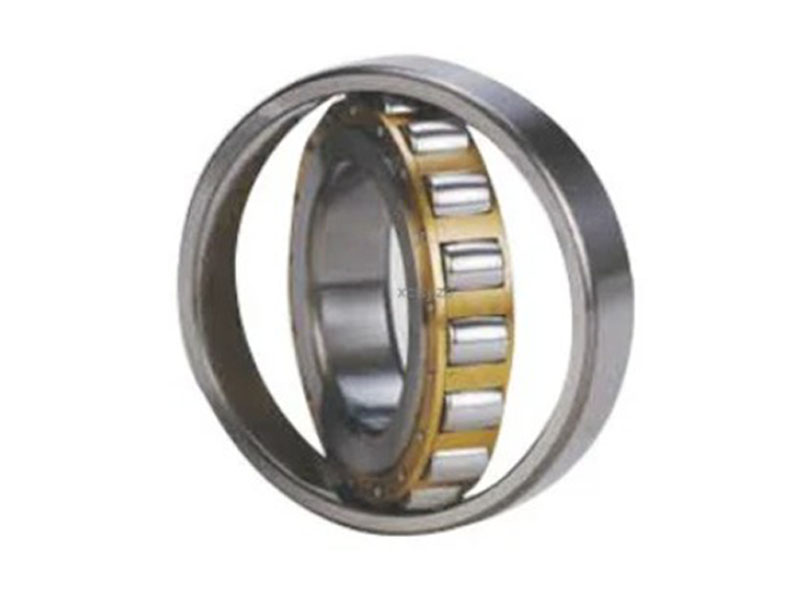
A spherical roller bearing is a double-row bearing that uses convex (barrel-shaped) rollers running on a spherical outer ring raceway. The spherical raceway acts as a built-in alignment mechanism—as the shaft deflects or the housing shifts, the bearing automatically adjusts to keep loads evenly distributed.
Core characteristics:
- Self-aligning capability—compensates for shaft deflection, housing shift, and installation error
- Handles both radial and bidirectional axial loads simultaneously
- Misalignment tolerance—±1.5° to ±3.5° depending on series (sealed: ±0.5°)
- Most sophisticated and robust of the roller bearing types
Typical applications: Mining equipment, steel mills, wind turbines, paper machines, and heavy industrial gearboxes where misalignment, shock loads, and heavy loads coexist.
Advantages of Spherical Roller Bearings
- Self-aligning capability: The defining advantage. Spherical roller bearings tolerate ±1.5° to ±3.5° of misalignment (sealed: ±0.5°). Shafts can bend, housings can shift, and alignment can be less than perfect—the bearing adjusts automatically.
- Extreme radial and axial load capacity: These bearings support both radial and axial loads simultaneously, reducing the need for complex bearing arrangements. They’re among the highest-capacity rolling bearings available.
- Outstanding shock and vibration resistance: Spherical roller bearings perform exceptionally well in demanding environments like cement mills, steel rolling mills, mining conveyors, and wind turbines where misalignment and heavy shock loads are normal.
- Forgiving in tough conditions: Each bearing type has its role, but spherical roller bearings often provide the most forgiving solution when operating conditions are less than ideal. Their robust design and self-aligning capability extend service life even with marginal lubrication or occasional overloads.
- Sealed options available: Sealed spherical roller bearings keep contaminants out and lubricant in, making them suitable for harsh environments where dust, moisture, or debris would otherwise shorten bearing life.
Disadvantages of Spherical Roller Bearings
- Limited speed capability: Spherical roller bearings have lower speed limits than cylindrical roller bearings. They’re designed for low-to-medium speed operation.
- Excessive misalignment causes edge loading: Self-aligning doesn’t mean unlimited alignment. Exceed the catalog limit and you’ll get edge loading—stress concentrations at the roller ends that lead to premature failure.
- Larger and heavier: For comparable load ratings, spherical roller bearings are physically larger and heavier than other roller types.
- Higher cost: As the most sophisticated roller bearing type, spherical roller bearings command a premium price.
- Non-separable—no disassembly: The outer ring, inner ring, and roller assembly form a single unit that cannot be taken apart. This makes inspection and component-level maintenance more challenging.
Comparison Table
| Feature | Cylindrical | Tapered | Needle | Spherical |
|---|---|---|---|---|
| Radial load capacity | Highest | High | High (compact) | Highest |
| Axial load capacity | Limited (ribbed) | High (one direction) | Very limited | High (both directions) |
| Misalignment tolerance | No (<0.06° / 1 mrad) | No (<0.06° / 1 mrad) | No (limited) | Yes (±1.5°–3.5°) |
| Speed capability | Highest (roller) | Moderate | Moderate | Low–moderate |
| Radial cross-section | Moderate | Moderate | Smallest | Large |
| Installation complexity | Simple (separable) | Complex (paired + preload) | Simple | Complex (clearance control) |
| Relative cost | Moderate | Moderate | Low–moderate | Highest |
| Typical applications | Gearboxes, motors, pumps | Wheel hubs, axles, gearboxes | Planetary gears, cardan joints | Mining, steel mills, wind |
How to Choose the Right Roller Bearing
Choosing the right roller bearing comes down to four questions. Work through them in order:
Step 1: How significant is the axial load?
- Significant axial load → Consider tapered (one direction, must be paired) or spherical (both directions, self-aligning)
- Minimal or no axial load → Proceed to Step 2
Step 2: Is misalignment unavoidable?
- Yes → Spherical roller bearings (±1.5°–3.5° tolerance)
- No → Proceed to Step 3
Step 3: Is radial space extremely tight?
- Yes → Needle roller bearings (smallest radial cross-section)
- No → Proceed to Step 4
Step 4: What are the speed requirements?
- High speed → Cylindrical roller bearings (highest speed among roller types)
- Low to medium speed → Tapered or spherical depending on load direction
Choose Cylindrical Roller Bearings when:
- Loads are primarily radial with minimal axial components
- High rotational speeds are required
- Alignment can be precisely controlled—shaft-to-housing tolerance within 1 mrad (0.06°)
- Applications: gearboxes, electric motors, pumps, compressors
Choose Tapered Roller Bearings when:
- Loads combine radial and significant axial components
- High rigidity and adjustable preload are needed
- You can accommodate paired mounting and precise adjustment
- Applications: automotive wheel hubs, heavy equipment axles, gearboxes
Choose Needle Roller Bearings when:
- Radial space is extremely limited—you need maximum capacity in minimum radial envelope
- High radial load capacity is required in a tight space
- Moderate speeds are acceptable
- Applications: planetary gear trains, cardan joints, tight gearboxes
Choose Spherical Roller Bearings when:
- Misalignment is unavoidable—shaft bending, housing shift, or variable tolerances
- Loads combine heavy radial and bidirectional axial components
- Shock and vibration are part of normal operation
- Low to medium speeds are acceptable
- Applications: mining equipment, steel mills, wind turbines, paper machines
Conclusion
There’s no universally “best” roller bearing type—only the right one for your specific application. The choice comes down to four factors: load direction, alignment conditions, space constraints, and speed requirements.
Cylindrical roller bearings dominate where alignment is precise and loads are primarily radial. They’re the speed champions and radial load specialists.
Tapered roller bearings excel at combined loads—radial and axial together—in a compact, adjustable package. They’re the combined load experts.
Needle roller bearings are the ultimate space savers. When radial space is measured in millimeters, needle bearings deliver the most load capacity in the smallest envelope.
Spherical roller bearings are the misalignment masters. When shafts bend, housings shift, and shock loads are daily events, spherical bearings keep running.
The trade-offs are clear: radial load capacity vs. speed, self-alignment vs. precision, compactness vs. load capacity, and cost vs. durability. Match these trade-offs to your application’s primary constraint, and you’ll make the right choice.
At DUHUI Bearing, we have been manufacturing automotive and industrial bearings since 2003, serving customers in over 60 countries. Our product range includes cylindrical, tapered, needle, and spherical roller bearings produced to international standards with precision grades up to P5 and above. Whether you need standard sizes or custom configurations, we are here to help you find the right bearing solution for your application.
Frequently Asked Questions (FAQs)
Q1: What are the main differences between the four roller bearing types?
The main differences are load direction, alignment tolerance, and space requirements. Cylindrical: high radial loads, high speeds, no misalignment tolerance (<0.06°). Tapered: combined radial and axial loads, must be paired for bidirectional loads. Needle: compact radial space, high radial loads, moderate speeds. Spherical: self-aligning (±1.5°–3.5°), handles radial and bidirectional axial loads, low-to-medium speeds.
Q2: Which roller bearing type has the highest speed capability?
Cylindrical roller bearings have the highest speed capability of any roller bearing type. They’re commonly used in high-speed gearboxes and electric motors. Spherical and tapered roller bearings are limited to low-to-medium speeds due to higher internal friction and roller end/rib contact.
Q3: Which roller bearing type can tolerate the most misalignment?
Spherical roller bearings tolerate the most misalignment—typically ±1.5° to ±3.5° depending on the series. Sealed versions are limited to ±0.5°. Cylindrical and tapered roller bearings require alignment within 1 mrad (0.06°).
Q4: What is the difference between needle roller bearings and cylindrical roller bearings?
Needle roller bearings are a subtype of cylindrical roller bearings with much thinner rollers—length-to-diameter ratio of at least 4:1. Needle bearings have thinner cross-sections and fit in much less radial space. Cylindrical roller bearings handle higher speeds and are better where space is less constrained.
Q5: What is the difference between tapered roller bearings and spherical roller bearings?
Tapered roller bearings handle combined radial and axial loads in one direction and require paired mounting for bidirectional loads. Spherical roller bearings handle combined radial and axial loads in both directions and are self-aligning (±1.5°–3.5°). Spherical bearings are more forgiving but cost more and have lower speed limits.
Q6: When should I choose spherical roller bearings over tapered roller bearings?
Choose spherical roller bearings when misalignment is unavoidable (shaft bending, housing shift) and you need bidirectional axial load capacity. Choose tapered roller bearings when you need adjustable preload, higher rigidity, and can accommodate paired mounting and precise alignment. Spherical bearings are more forgiving; tapered bearings offer more precise control.
Q7: Which roller bearing type is the most compact?
Needle roller bearings are the most compact—they have the smallest radial cross-section of any rolling bearing. Their thin cross-sections fit in spaces where other bearings cannot. They can also operate without inner or outer rings, riding directly on the shaft for maximum space savings.
Q8: What advantages do roller bearings have over ball bearings?
Roller bearings have higher load-carrying capacity than ball bearings of the same size because they use line contact instead of point contact. They’re more resistant to shock and impact loading. However, roller bearings have higher friction and lower speed capability than ball bearings—a fundamental trade-off.
Q9: How do I determine which roller bearing type I need?
Follow this decision framework: (1) Significant axial load? Yes → tapered or spherical; No → proceed. (2) Misalignment unavoidable? Yes → spherical; No → proceed. (3) Radial space extremely tight? Yes → needle; No → proceed. (4) High speed required? Yes → cylindrical; Low-to-medium → tapered or spherical based on load direction.