Quick Answer: The strongest roller bearing suppliers serving the American market fall into four groups: domestic broad-line manufacturers, global manufacturers with U.S. plants or warehouses, specialists in one bearing family or industry, and authorized distributors. There is no single ranking that fits every buyer. Compare candidates on product breadth, documented U.S. presence, quality documentation, engineering support, and written lead times, then verify each claim before you order.
Sourcing roller bearings in the United States means choosing between very different kinds of supplier: a plant that grinds its own raceways, an importer holding domestic stock, a shop that builds one bearing family to order, and a distributor carrying several lines. Each can be the right answer for a different purchase. This guide explains how those groups differ, what evidence actually supports a claim of American capability, and how to shortlist candidates for a specific application.
What This Guide Covers and Who It Is For
This guide is written for buyers, maintenance planners, distributor purchasing teams, and design engineers who need to shortlist roller bearing suppliers serving the U.S. market. It concentrates on supplier capability and selection: product breadth, documented U.S. manufacturing or stocking presence, quality documentation, engineering support, and delivery terms.
The bearing families discussed here are the ones buyers most often source in America:
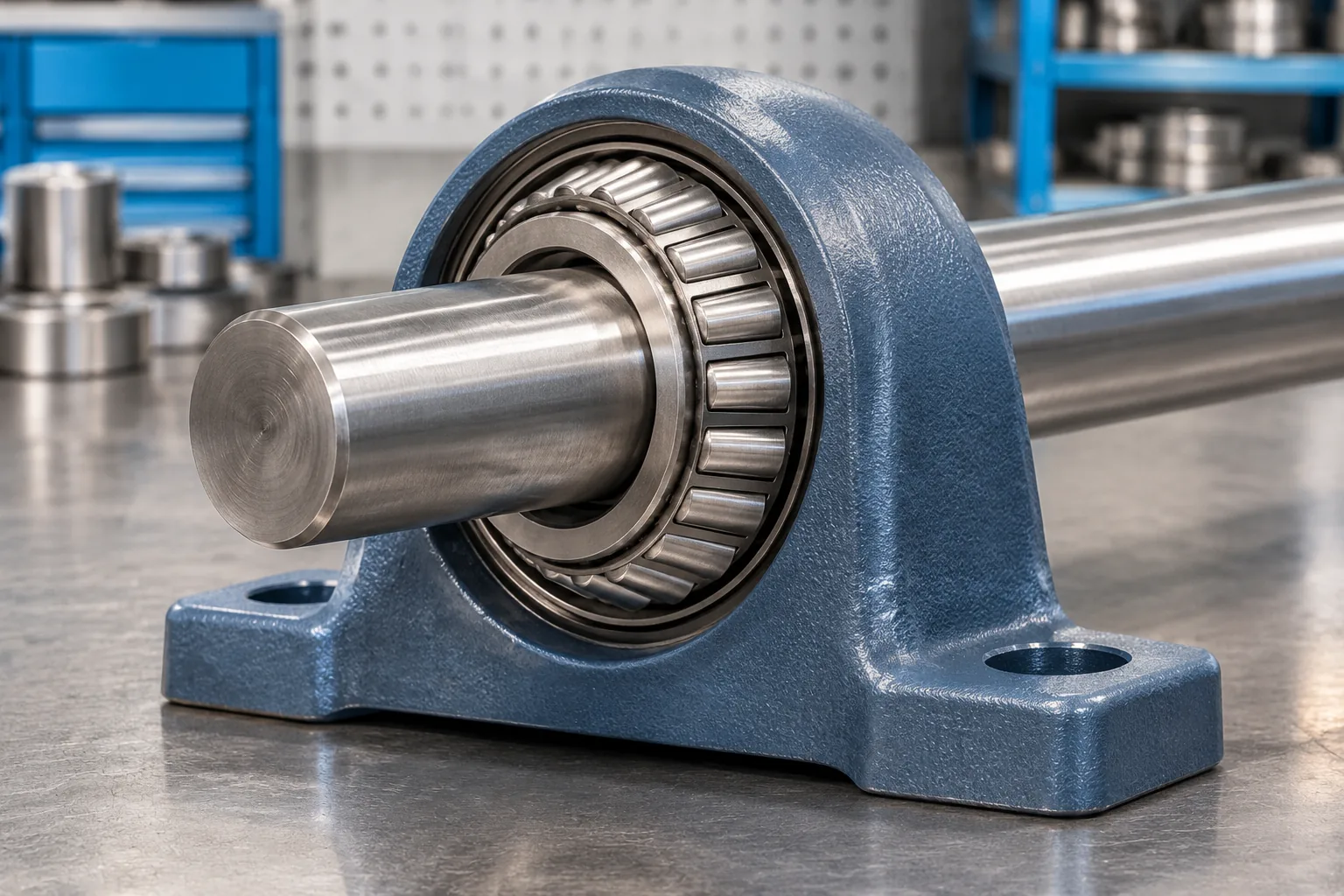
- Tapered roller bearings for combined radial and axial loads.
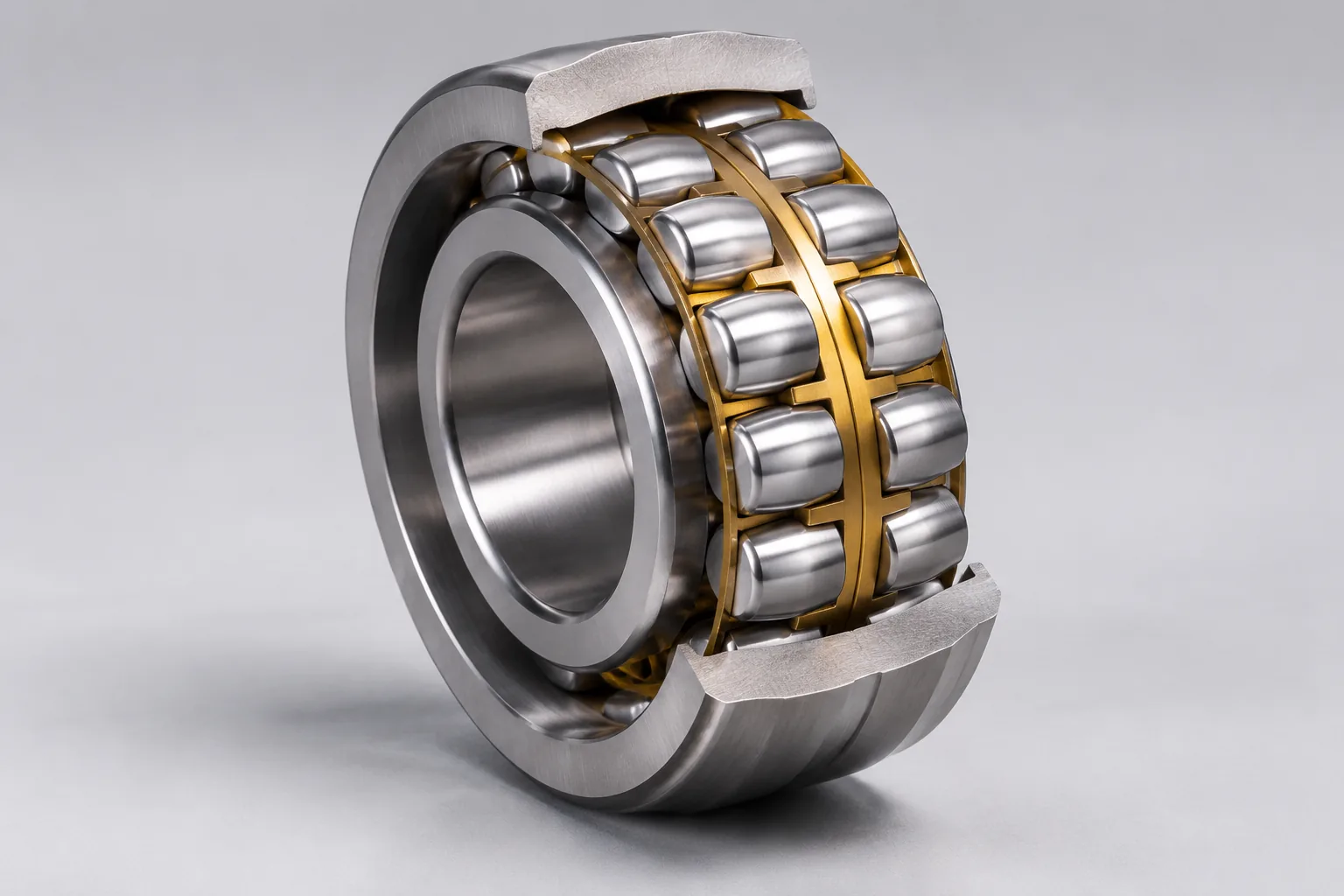
- Spherical roller bearings for heavy radial loads with shaft misalignment.
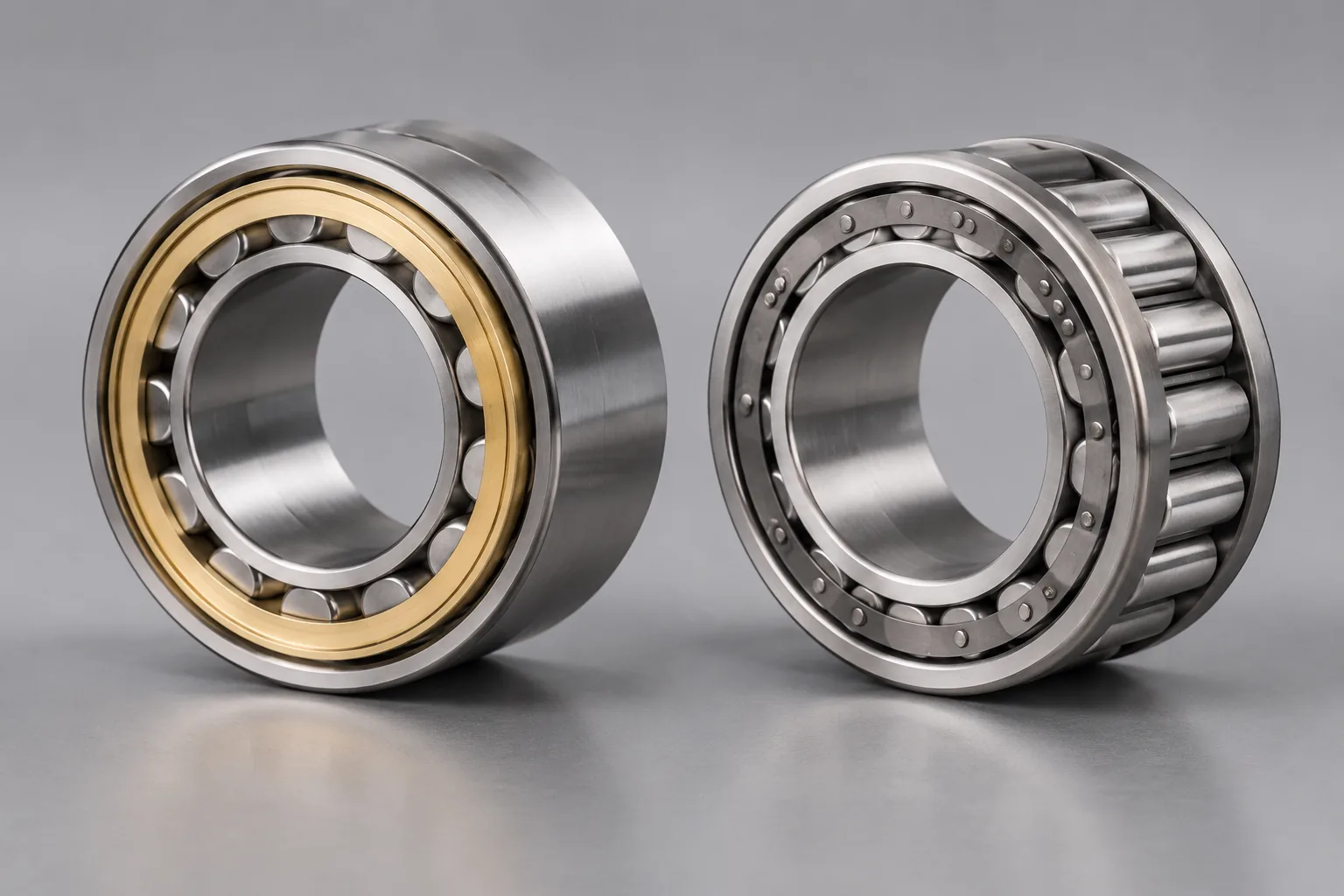
- Cylindrical roller bearings for high radial capacity with line contact.
- Needle roller bearings where radial space is tight.
- Thrust cylindrical roller bearings for axial loads in one direction.
Installation procedures, mounting practice, and failure analysis sit outside this scope. Those belong to equipment-specific service information and separate technical references. What follows is a purchasing and evaluation framework, not a fitting guide.
How We Define a “Top” Roller Bearing Company
“Top” is a claim that has to be earned by evidence, not by size of advertisement. This guide applies the same criteria to every candidate, and a company is described as strong in a category only where the supporting information can be reviewed.
- Product breadth within roller bearings, not just bearings in general.
- Documented U.S. presence: a manufacturing plant, a warehouse, or an authorized distribution agreement.
- Relevant operating history and evidence of service to your industry.
- Quality management documentation and material traceability.
- Application engineering support that can discuss load direction, misalignment, and lubrication.
- Lead times and minimum order quantities confirmed in writing.
- Inventory depth and replenishment capability for the sizes you use.
- Responsiveness on cross-referencing, warranty, and after-sales issues.
Evidence is checked against material a buyer can review: official company pages, product catalogs, facility and location listings, authorized distributor locators, and public filings where they exist. A capability that cannot be documented is not treated as a criterion met, and no weighting or scoring model is applied here, because any weighting would be arbitrary rather than verifiable.
Roller Bearing Types and Applications Covered
Suppliers are rarely equally strong across every roller family. Knowing which family your application needs narrows the shortlist faster than any general reputation.
| Bearing type | Load character | Common applications |
|---|---|---|
| Tapered roller | Combined radial and axial load; line contact between rollers and raceways | Wheel ends, trailer axles, gearboxes, machine tool spindles |
| Spherical roller | Heavy radial load with accommodation of shaft misalignment | Mining and aggregate plant, conveyors, fans, pulp and paper machinery |
| Cylindrical roller | High radial capacity; limited misalignment tolerance | Electric motors, gearboxes, rolling mill necks, crushers |
| Needle roller | Radial capacity in a compact cross section | Transmissions, small motors, pumps, universal joints |
| Thrust cylindrical roller | Axial load in one direction | Extruders, cranes, gearbox thrust positions |
Application fit matters because a supplier with deep tapered roller capacity may hold no tooling for spherical rollers, and a distributor with broad stock may have little engineering depth on custom clearances. Compare suppliers inside the bearing family you actually buy.
Market Context: Roller Bearing Supply in America
Supply in the U.S. market runs through four routes that behave differently when a line goes down:
- Domestic manufacturing. Bearings produced on U.S. soil, with shorter logistics and easier plant visits, but a narrower size range than a global catalog.
- Global manufacturers with U.S. operations. Plants, distribution centers, or technical centers inside the country, backed by an international size range.
- Importers and stocking distributors. Domestic inventory of standard sizes, with availability limited to what is on the shelf.
- Specialists and custom builders. Made-to-order capacity for unusual sizes, coatings, clearances, or split designs.
Replacement and maintenance demand dominates many industrial accounts, so stocking depth on the specific size matters more than the breadth of the master catalog. Import dependence also affects landed cost and timing through freight, customs clearance, and currency movement. Treat any market-size, growth, or import-volume figure as usable only when it comes from dated industry data; vendor pages are not a substitute for that.
Shortlisting Methodology and Sources
Candidates are identified by two filters applied together: relevance to roller bearings, and a presence in the United States or North America that the company itself documents. A company that sells into the region from abroad without local manufacturing, stocking, or authorized distribution does not qualify for a U.S.-focused shortlist.
- Official company pages describing facilities and product lines.
- Product catalogs covering the specific roller family.
- Facility, plant, and warehouse location listings.
- Authorized distributor locators published by the manufacturer.
- Public filings where the company discloses segment or facility information.
Company capability changes through expansion, consolidation, and product-line withdrawal. Re-verify facility status, product scope, and delivery terms at the time of your request for quotation rather than relying on a list assembled earlier.
Top Roller Bearing Companies in America: How the Shortlist Is Organized
Instead of a numerical rank, the shortlist is grouped by supply role. A distributor’s stocking depth and a manufacturer’s grinding capacity are not comparable quantities, and treating them as one ladder produces misleading conclusions. Each group below uses the same profile fields so you can compare like with like, then confirm current capability, lead times, and documentation before requesting quotes.
Domestic Manufacturers with Broad Roller Bearing Portfolios
These are companies that manufacture on U.S. soil and offer more than one roller family, usually with in-house application engineering. Profile fields to confirm: headquarters, plant locations, which families are actually produced domestically rather than imported and rebranded, industries served, quality documentation, and the distributor or service network behind the line.
Limits are real: a broad-line producer may not carry obsolete or very large sizes in domestic production, and a family shown in the catalog may be sourced from an overseas sister plant. Ask which specific plant would make your part.
Global Manufacturers with U.S. Manufacturing or Distribution
Global scale can matter in three practical ways: the depth of published cross-reference data, the availability of engineering support close to your time zone, and the chance that a hard-to-find size is held somewhere in the network. Confirm which form the U.S. presence takes. A sales office or a warehouse is not the same as a manufacturing plant, and the profile should say which one exists.
Check the country of origin recorded on the packing list, the location of the technical support you would actually reach, and whether the local warehouse stocks the size or merely orders it.
Specialist Roller Bearing Manufacturers
Specialists concentrate on one roller family, one industry, or custom designs. They become the better choice when the requirement is unusual: a non-standard clearance, a coated or split bearing, a low-volume size that broad-line makers have dropped, or a redesign where the bearing has to fit existing housing geometry.
Verify the production location, whether tooling is owned in-house, the process for samples and first-article approval, and the minimum quantity tied to a custom run. Custom capability is worth confirming with a drawing review before price negotiation, because feasibility decides the schedule more than price does.
Authorized Distributors and Service Networks
Authorized distributors carry local inventory, perform cross-referencing, and handle warranty and return processes inside the manufacturer’s channel. For a maintenance buyer, that local stock and same-day access often outweigh a lower headline price elsewhere.
Distinguish an authorized distributor from a general industrial reseller. An authorized agreement means a documented supply path and a warranty route; an unauthorized reseller may still supply genuine parts, but you carry the traceability risk. Ask for the authorization in writing, the lot or batch traceability on the box, the country of origin, and a written stock status rather than a verbal assurance.
Company Profile Fields Used in This Guide
Every candidate should be evaluated on the same fields. Using one scorecard for all suppliers prevents a strong website from substituting for a weak capability.
- Company name and ownership structure.
- Headquarters address.
- U.S. manufacturing, warehouse, or technical locations.
- Roller bearing types offered.
- Industries served.
- Quality documentation available and the scope it covers.
- Engineering support model.
- Lead time for stocked and made-to-order items.
- Minimum order quantity.
- Distribution model and channel.
- Commercial contact and escalation path.
In your own scorecard, leave a field blank when it cannot be confirmed and treat a blank as a question for the supplier, not as a neutral value. Missing documentation is information about the supplier, not a gap to be filled by assumption.
Comparison Framework: Shortlisted Company Types at a Glance
| Supplier type | U.S. presence to verify | Roller bearing scope | Main strength | Main limitation |
|---|---|---|---|---|
| Domestic broad-line manufacturer | Plant addresses and which families are made there | Several roller families | Engineering depth and short domestic logistics | Narrower size range; some families imported |
| Global manufacturer with U.S. operations | Plant, distribution center, or technical center | Wide international range | Cross-reference data and availability | Origin of a given size may be overseas |
| Specialist manufacturer | Production site and tooling ownership | One family or custom designs | Feasibility for unusual requirements | Longer lead time; higher minimum quantity |
| Authorized distributor | Authorization letter and stocking locations | Multiple lines carried | Local stock and warranty channel | Limited influence on manufacturing schedule |
No entry in this table claims a company is best or largest. Select the row that matches your purchase, then verify the individual supplier against the profile fields above.
How to Evaluate a Roller Bearing Supplier for Your Application
A workable evaluation covers six questions in order: what the application demands, whether the supplier’s quality system covers your commodity, how long delivery really takes, what quantity you must commit to, what engineering help exists, and what happens after a failure.
Application and Load Requirements
Match the bearing family and the supplier’s capability to load direction and magnitude, speed, misalignment, lubrication method, and the operating environment. Contamination, moisture, washdown chemicals, vibration, and temperature swings narrow the design choices before price enters the discussion.
A supplier worth shortlisting can hold that conversation. If the technical contact answers load and misalignment questions with generalities, the engineering support you were counting on does not exist. Confirm application data with the supplier’s engineering team in writing so the selection basis is documented.
Quality Certifications and Traceability
Certification and traceability carry different weight by industry. Automotive and aerospace programs audit them closely; heavy equipment and general industrial buyers still need them when a failure triggers a warranty claim or a safety review.
Documents to request:
- A quality management certificate with its issuing body, validity date, and scope.
- Confirmation that your commodity falls inside that scope.
- Material and heat-lot traceability for the delivered batch.
- Dimensional, clearance, and runout inspection reports.
- Country of origin stated on the commercial documents.
- Packaging and preservation specification for the shipment.
Ask which quality management standard the certificate is issued against and read the scope carefully. A certificate on file does not automatically cover the product you are buying.
Lead Times, MOQ, and Inventory
Lead time depends on bearing type, size, customization, and whether the item is on the shelf. A standard size in stock moves in days; a made-to-order spherical roller with a special clearance can take much longer, and the difference is usually in tooling and setup rather than assembly.
- Ask for a written lead time that separates stock items from production items.
- Date every inventory statement you receive, because stock changes weekly.
- Confirm the minimum order quantity per size, not per order.
- Ask about small-lot surcharges and packaging costs before comparing prices.
Engineering and After-Sales Support
Support services differ more than catalogs do. Application engineering, cross-referencing from an existing part number, mounting and lubrication guidance, and a defined warranty process all reduce the cost of a failure. Downtime usually costs more than the bearing, so response time on a technical question is a legitimate selection criterion, alongside price and lead time.
Red Flags and Exceptions
Several warning signs appear repeatedly when buyers compare roller bearing suppliers:
- Manufacturing claims with no plant address or document behind them.
- A domestic-origin claim without country-of-origin paperwork.
- Certificate copies with no scope, issuing body, or validity date.
- Dimensions that disagree between the catalog, the drawing, and the box.
- No lot or batch traceability on the delivered parts.
- Lead times described only as prompt or quick, with no date.
- Prices far below the rest of the market, with no explanation of the difference.
Low price alone is not evidence of poor quality, and it is not evidence of good value either. Treat it as a question that requires an explanation of material, process, and origin.
There are legitimate exceptions. Obsolete or hard-to-source sizes may require specialist manufacture, a surplus channel, or a redesign of the housing, and those routes can be the correct engineering answer even though they sit outside a standard shortlist. In those cases insist on inspection reports and clear origin documentation, because the reduced supply base removes the usual checks.
Trends Shaping Roller Bearing Suppliers in America
Several developments are verifiable from supplier behavior rather than forecast data, and each maps to a selection criterion.
- Supply-chain localization and dual sourcing. Buyers increasingly qualify a second source for critical sizes, which raises the value of suppliers who can document where each item is made.
- Automation in production and inspection. Greater use of automated gauging makes inspection reports more informative and makes documentation quality a fair comparison point.
- Predictive maintenance programs. Vibration and temperature monitoring push demand toward bearings with consistent, traceable specifications, since a monitored asset depends on predictable replacement parts.
- Freight and tariff sensitivity. Landed cost on imported bearings moves with logistics and trade policy, so total cost models are more useful than unit price alone.
- Distributor consolidation. Fewer, larger distributors make authorization status and local stock depth more important checks than the size of the reseller network.
Conclusion
Identifying the top roller bearing companies in America is less about finding one winner and more about matching supply role to purchase. Domestic broad-line manufacturers suit buyers who need engineering depth and domestic production; global manufacturers with U.S. operations suit buyers who need wide size coverage and cross-reference data; specialists suit unusual designs and hard-to-source sizes; authorized distributors suit maintenance buyers who need local stock and a warranty channel. Sort your candidates by role first, then by evidence: documented U.S. presence, quality documentation with a scope that covers your commodity, engineering support you can reach, and lead times issued in writing.
A practical next-step sequence:
- Define the application: load direction, speed, misalignment, environment, and annual quantity.
- Name the roller family and the exact size, clearance, and tolerance class required.
- Shortlist two or three suppliers per role rather than one overall.
- Request quotes with lead time, minimum order quantity, origin, and packaging stated.
- Request quality documentation and confirm the certified scope covers your item.
- Verify facility and authorization claims directly before placing the first order.
Company details, ownership, facility status, and product scope change over time. Confirm the current position with each supplier before you commit.
FAQs
Q1: What are the top roller bearing companies in America?
A: There is no single defensible ranking, because the right supplier depends on bearing family, volume, and delivery urgency. A buyer needing a stocked tapered roller this week, a buyer ordering a custom spherical roller for a crusher, and a buyer qualifying an aerospace program are each served by a different type of company. Shortlist by supply role, then compare candidates on documented U.S. presence, quality documentation, engineering support, and written lead times.
Q2: How were the companies in this guide selected?
A: Selection is criteria-based rather than paid placement. A candidate has to show roller bearing relevance and a documented U.S. or North American presence through a plant, warehouse, or authorized distribution agreement, supported by material a buyer can review. Companies that cannot document a capability are not described as strong in it, and no numerical ranking is issued because no transparent scoring method can be supported by public evidence alone.
Q3: Are U.S.-made roller bearings available?
A: Many standard sizes and several roller families are produced in the United States, but domestic production does not cover every size, clearance, or specialty design. The reliable test is the country of origin on the commercial documents for the specific lot you receive, not the general claim on a website. Ask for origin in writing with the quotation, and re-check it on the packing list when the shipment arrives.
Q4: What roller bearing types do American suppliers offer?
A: The common families are tapered, spherical, cylindrical, needle, and thrust cylindrical roller bearings, often alongside housed units and mounted bearing assemblies. Availability of any single type varies by size and by supplier role: broad-line manufacturers cover more families, while specialists concentrate on one. Confirm that the supplier holds the tooling or stock for your exact bore size, width, and clearance rather than for the family in general.
Q5: How do I verify a supplier’s certifications?
A: Request the certificate itself, not a logo on a web page, and read three things: the issuing body, the validity date, and the scope. The scope determines whether your commodity is covered, since a site certificate may exclude a particular product line or process. Then ask for the traceability and inspection records that sit under the certificate for your batch, and confirm origin on the commercial documents.
Q6: Should I buy from a manufacturer or an authorized distributor?
A: Buy from the manufacturer when the requirement involves custom design, special clearance, large annual volume, or deep application engineering. Buy from an authorized distributor when you need local stock, fast replenishment, and a warranty channel for standard sizes. Either route works if the channel is documented; the risk sits with unauthorized resellers that cannot show authorization or lot traceability.
Q7: What lead times should I expect for roller bearings?
A: No blanket figure is meaningful, because lead time depends on bearing type, size, customization, and current stock. Stocked standard sizes typically move fastest, while made-to-order items with special clearance, coating, or split designs involve setup and tooling time before production. Ask for a written lead time that separates stock from production, and date every inventory statement you receive.
Q8: Can suppliers provide custom or hard-to-find roller bearings?
A: Yes. Specialist manufacturers regularly quote non-standard sizes, altered clearances, coatings, split bearings, and designs that fit existing housing geometry after a broad-line size is discontinued. Expect to supply a drawing or the full dimensional and load data, and expect tooling cost, a first-article approval step, a minimum quantity, and a longer schedule than a catalog item. Confirm feasibility before negotiating price, since feasibility sets the timeline.