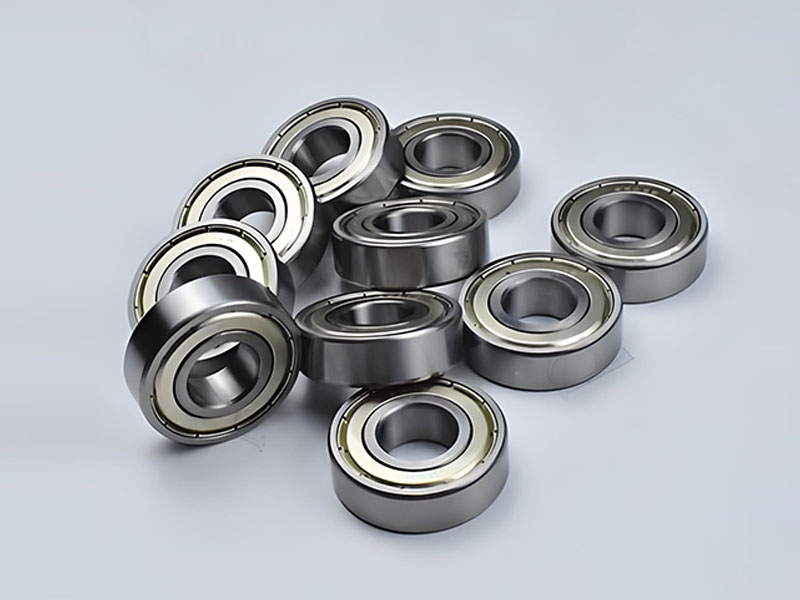
Quick Answer: Stainless steel bearing sealing lubrication solutions combine a corrosion-resistant bearing, an appropriate seal or shield, and a compatible lubricant so that water, cleaning chemicals, and particles stay out while grease stays in. The seal type, elastomer, lubricant registration, and relubrication method must be selected together for the washdown, temperature, speed, and food-contact zone of the application. It is not enough to specify stainless rings and balls alone.
Stainless steel bearing sealing lubrication solutions therefore have to be treated as one system. A stainless steel bearing can still fail early in a wet plant if its seal admits cleaning fluid or its grease is washed out. The bearing material addresses corrosion; the sealing and lubrication system addresses contamination, lubricant retention, and hygiene. This guide explains how those choices interact and how to compare contact seals, labyrinth seals, food-grade greases, solid lubricants, and relubrication options.
Why Sealing and Lubrication Must Be Designed Together
The seal protects the lubricant from water, cleaning agents, dust, and process debris. The lubricant, in turn, supports seal function by keeping the seal lip lubricated and by maintaining a film on the rolling contacts. If either side is chosen in isolation, the other can be compromised.
Seal-lip temperature can be the highest local temperature in the bearing. A contact seal running at high speed adds friction, and the lip may run hotter than the rings. That matters because the elastomer limit is often reached at the seal lip before the bearing itself reaches its thermal limit.
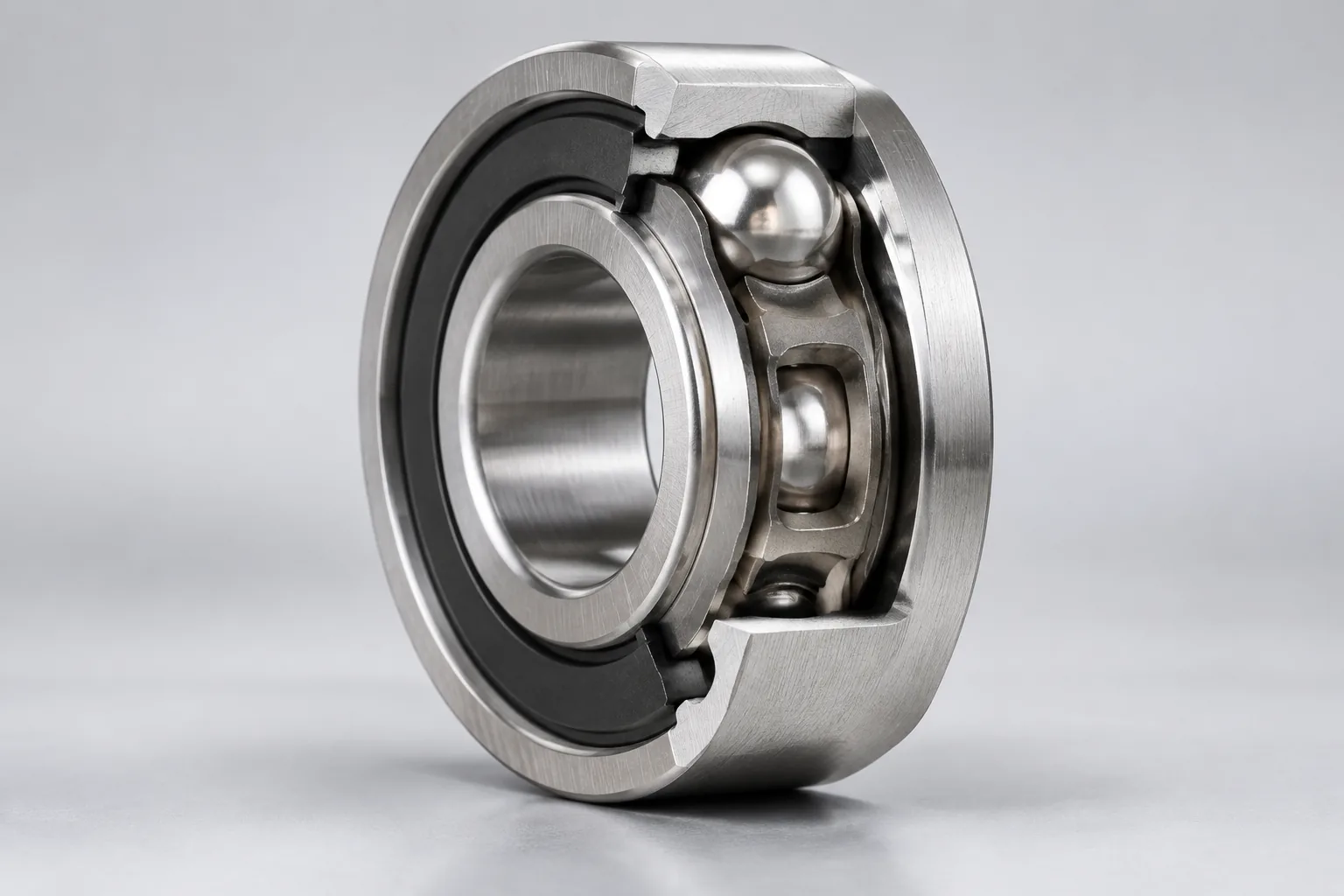
In hygienic applications, seal material, lubricant registration, and cleanability must be evaluated together. A food-grade grease does not compensate for a seal that traps product residue, and a hygienic seal does not make an unregistered lubricant acceptable for incidental food contact.
Open bearings may be acceptable only where lubrication access and contamination control are separately managed. In a washdown zone, an open bearing exposes the grease to direct impingement unless a housing seal or separate barrier is used.
Operating Conditions That Determine the Sealing and Lubrication Choice
Start with the actual cleaning and operating envelope, not with a catalog label. Record washdown pressure and frequency, cleaning chemicals and concentration, humidity, ambient and process temperature, speed, load, mounting orientation, and relubrication access. Also identify whether the bearing sits in a food-contact zone, a splash zone, or a non-contact machine area, because that changes the seal and lubricant requirements. Record minimum and maximum operating and cleaning temperatures at the seal location, not only at the housing surface.
| Condition or published example | Value | Selection meaning |
|---|---|---|
| Food-industry seal pressure test | 10 MPa (100 bar) | A specific stainless and galvanized bearing arrangement is reported as pressure-tested to this level; it is not a universal washdown rating. |
| NBR seal temperature | -40 to +100°C continuous, +120°C short-term | Standard nitrile limit for many general-purpose seals. |
| FKM seal temperature | -30 to +200°C continuous, +230°C short-term | Higher-temperature option when chemical compatibility allows. |
| Washdown mounted unit line | -20 to +90°C approved range | Example range for a stainless unit line intended for frequent washdown. |
| High-humidity standard line | 80°C upper limit | Upper limit for normal high-humidity service in one standard stainless series. |
Use these values as benchmarks, not as automatic approvals. A seal that survives a pressure test may still be unsuitable for a different chemical, temperature, or cleaning cycle. The safe approach is to compare the actual duty point with the seal and lubricant limits.
Sealing Options for Stainless Steel Bearings
Seal choice is a balance between exclusion and friction. The same bearing can be configured for low drag, heavy washdown, or a dual barrier, but the results are not interchangeable.
| Seal type | Main behavior | Typical fit | Check point |
|---|---|---|---|
| Non-contact | Low friction and higher speed capability | High-speed shafts with lower particle load | Particle ingress and grease loss |
| Contact | Rubbing barrier against liquid and dust | Washdown, dusty, or wet areas | Seal-lip temperature and friction |
| Labyrinth or dual barrier | Tortuous path, slinger, and packed grease | Frequent cleaning and water spray | Pressure, chemical compatibility, and drain path |
Contact vs Non-Contact Seals
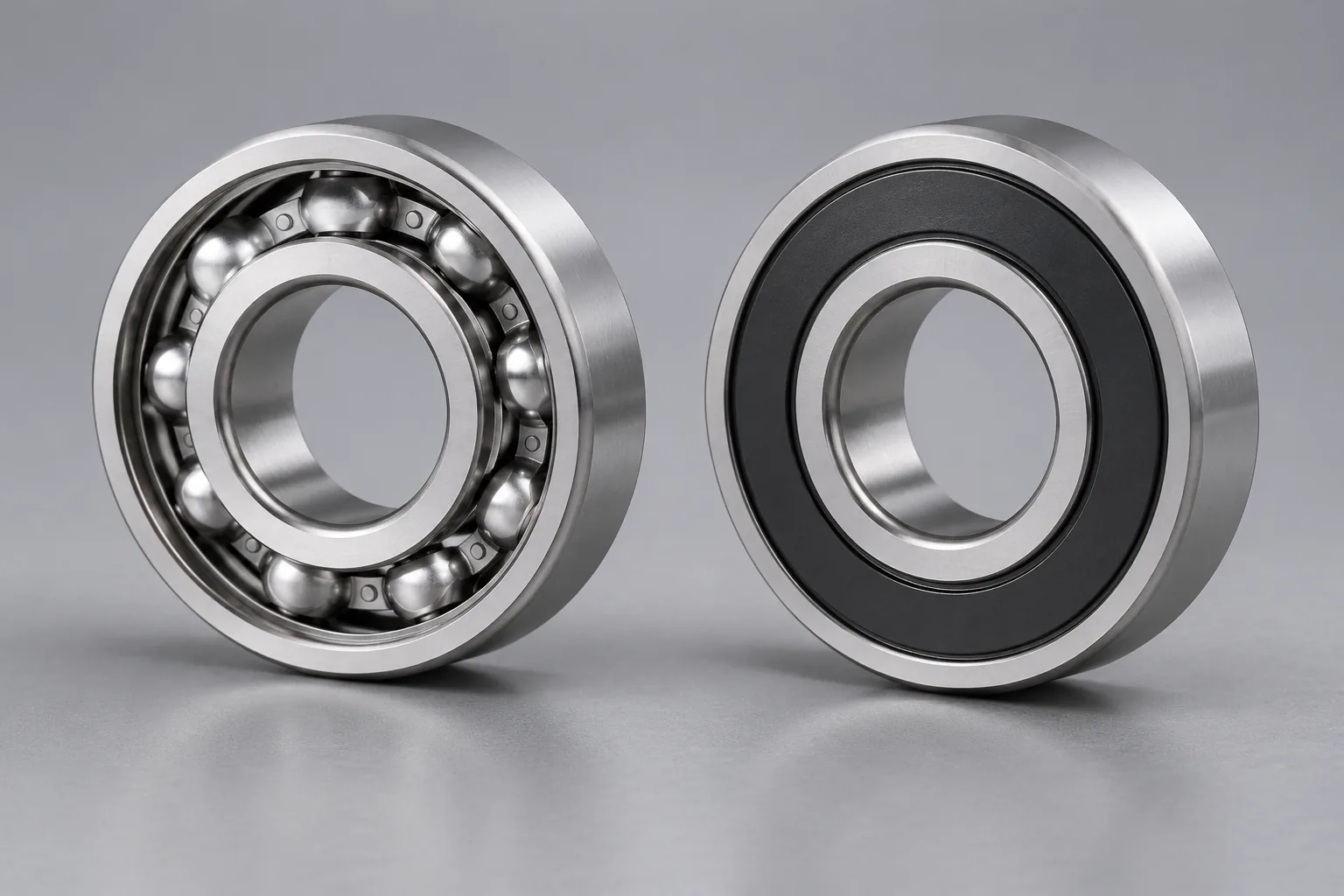
In one stainless bearing range, the LB designation indicates a non-contact seal for higher speed and lower friction, while LU indicates a contact seal for better exclusion of contaminants. Common deep-groove ball bearing protection suffixes distinguish Z shields, RZ low-friction seals, and RS1 contact seals.
Use non-contact seals where heat, friction, and speed dominate. Use contact seals where washdown and particle ingress dominate. High-speed contact-seal operation can increase seal-lip temperature, so check the elastomer limit at the actual speed.
Labyrinth and Dual-Barrier Washdown Seals
A food-industry Y-bearing seal system can combine a multi-lip labyrinth, a stainless steel support insert, a stainless steel slinger, and a food-compatible rubber backing seal. The slinger and axial contact lip form a dual barrier, and grease is packed between the seal insert and the slinger. That combination reduces water ingress while limiting friction compared with a simple contact seal. One such stainless and galvanized bearing arrangement is reported as pressure-tested to 10 MPa (100 bar).
Seal and Slinger Material Compatibility
A food and beverage stainless mounted unit series uses 440C stainless steel rings, balls, and inserts, a 302 stainless steel cage, 302 stainless steel slingers and seal supports, silicone rubber seals, and 304 stainless steel housings and guards. The inserts have integral seals, and housing options include PBT thermoplastic polyester or 304 stainless steel, with closed guards or open guards that carry a shaft seal.
A stainless line for corrosive environments uses martensitic stainless steel rings and balls, austenitic stainless steel shields, NBR seals, and a cage in polyamide resin or stainless steel. Open, shielded, and sealed versions are available. A washdown mounted unit line uses silicone rubber seals and stainless steel slingers, with an approved range of -20 to +90°C.
Generic NBR and FKM temperature data does not guarantee compatibility with every cleaning chemical. Chemical compatibility must be verified for the specific cleaning agent, concentration, and contact time.
Hygienic and Detectable Seal Features
Food-line stainless bearings can combine stainless steel rings, rolling elements, and cages with food-grade seals that have stainless steel support, plus food-grade grease or an oil-saturated polymer. Optically detectable food-grade seals help detect fragments in hygienic production areas. Detectability does not replace foreign-body controls or cleaning validation.
Lubrication Options for Stainless Steel Bearings
Compare four routes: food-grade grease, solid polymer lubricant, oil-saturated solid lubricant, and open or relubricated bearings. Check whether the bearing is pre-filled, relubricable, or lifetime-lubricated. Verify food-grade claims by registration and certification, not by the words food grade alone.
Food-Grade Grease and Certification
NSF H1 covers lubricants for incidental food contact; H2 lubricants must not contact food; H3 identifies soluble oils. ISO 21469:2006 is titled Safety of machinery – Lubricants with incidental product contact – Hygiene requirements. It was first published in February 2006 and addresses formulation, manufacture, use, and handling of lubricants that may come into incidental contact with food, food packaging, cosmetics, pharmaceuticals, tobacco, or animal feed.
NSF H1 registration mainly reviews product formulation and labeling. ISO 21469 product certification adds site formulation verification, factory audit, risk assessment, mandatory product testing, and additional traceability and label review. FDA 21 CFR 178.3570 is a common formulation basis for food-grade lubricants. For incidental contact, the limit for base oil in food is 10 ppm. A lubricant with H1 registration or ISO 21469 certification can be treated as food grade, but the application still has to match the temperature, load, and cleaning regime.
Examples show how registration is packaged. One food and beverage stainless mounted unit series ships all products pre-filled with NSF H1 grease; the FG1 suffix identifies an H1 solid polymer lubricant instead. One stainless line for corrosive environments pre-fills standard stock bearings with NS7 lithium grease and leaves open bearings unfilled. One washdown mounted unit line is factory-filled with USDA H1 wide-temperature grease and remains relubricable.
Solid Polymer, Molded-Oil, and Solid Oil Lubrication
Solid lubricants resist washout and contaminant ingress where grease would be displaced. An oil-saturated polymer matrix fills the bearing interior and encapsulates the cage and rolling elements; its oil content is 2 to 4 times that of a comparable sealed grease bearing. Such a bearing is lifetime-lubricated and cannot be relubricated.
An H1 solid polymer option is identified by the FG1 suffix in one stainless food and beverage line. A 100% stainless steel bearing unit uses an SCS13 austenitic stainless steel cast housing and molded-oil solid lubrication, positioned as extending lubrication life and reducing maintenance.
Use solid lubrication where washdown, chemical exposure, or inaccessible maintenance makes grease retention difficult. Do not specify it where relubrication is mandatory or where the calculated life exceeds the solid lubricant life.
Relubrication vs Lifetime Lubrication
Relubrication requires access, correct grease compatibility, and control of water and chemical ingress during service. Lifetime-lubricated designs trade serviceability for retention and contamination resistance. Specify a sealed-for-life unit only when calculated life and operating temperature are acceptable.
Choose relubrication where grease degradation, washout, or high load and speed require periodic replenishment. Solid-oil and some solid-polymer designs cannot be relubricated, so verify the maintenance plan before specifying them.
Matching Stainless Steel Bearing Sealing Lubrication Solutions to Application Environments
Use the application zone and cleaning regime to select the seal and lubricant combination.
Food and Beverage Washdown
Prioritize NSF H1-registered or ISO 21469-certified lubricants, hygienic seal materials, stainless steel slingers, and washdown-capable labyrinth or contact seals. Consider solid oil or solid polymer where frequent high-pressure cleaning can wash out grease. Use detectable food-grade seal options where the hygiene program requires foreign-body detection.
Published examples include a food-industry seal arrangement pressure-tested to 10 MPa (100 bar), a stainless mounted unit series filled with NSF H1 grease or FG1 H1 solid polymer, and a washdown unit line filled with USDA H1 grease. Washdown pressure, chemical concentration, and temperature must still be checked against seal and lubricant limits.
Pharmaceutical, Chemical, and High-Humidity Equipment
Use stainless steel rings and balls, stainless steel shields or slingers, and NBR or other compatible seals. Consider solid lubrication where lubricant washout or chemical attack is severe. Confirm cleaning-agent compatibility and temperature limits.
A stainless line for corrosive environments is positioned for food processing, cleaning, chemical, and fisheries equipment. Its standard high-humidity upper limit is 80°C.
High-Temperature Zones
Check continuous and short-term temperature at the seal lip. Select FKM where temperatures exceed NBR limits and chemical compatibility allows. Ensure the lubricant and any solid polymer also match the temperature.
NBR is rated -40 to +100°C with +120°C short-term; FKM is rated -30 to +200°C with +230°C short-term. FKM is not a universal chemical-compatibility solution, so verify it against the actual cleaning agents.
Selection Checklist and Decision Rules
- High speed and low contamination: choose a non-contact seal and a speed-compatible grease.
- Washdown and particle ingress: choose a contact or labyrinth and dual-barrier seal.
- Grease washout risk: choose an oil-saturated solid lubricant or a robust relubrication plan.
- Incidental food contact: choose an NSF H1-registered or ISO 21469-certified lubricant plus a hygienic seal design.
- High temperature: choose FKM or another higher-temperature elastomer and a temperature-rated lubricant.
These rules are starting points. Final selection requires speed, load, temperature, chemical exposure, mounting, and life calculation. Confirm the seal-lip temperature and the lubricant limit at the actual duty point, not only at the housing.
Installation, Maintenance, and Verification
- Verify food-grade lubricant status through the NSF H1 listing or the NSF ISO 21469 certified lubricants database; check the manufacturer, trade name, and production site where the database provides them.
- Store and handle food-grade lubricants to avoid cross-contamination with non-food-grade products; keep containers closed, use dedicated tools, and label transfer containers.
- Inspect seals and slingers during maintenance and replace damaged seals rather than regreasing over contamination.
- Confirm relubrication grease compatibility and avoid overfilling where seal displacement or heat is a risk.
These steps apply to both OEM assembly and end-user maintenance. Specific relubrication intervals and fill quantities require bearing size, speed, temperature, and application data.
Common Pitfalls
- Assuming all stainless steel bearings are food-safe or washdown-ready.
- Selecting H1 grease without a hygienic seal or cleanable housing.
- Using a contact seal in a high-speed application without checking seal-lip temperature.
- Specifying solid oil or solid polymer where relubrication is mandatory.
- Treating NSF H1 registration and ISO 21469 certification as identical.
- Mixing incompatible greases during maintenance.
Some pitfalls are application-specific; validate them against the OEM instructions and the actual cleaning procedure.
Conclusion
Stainless steel bearing sealing lubrication solutions are a system decision, not a material upgrade. The seal controls water, chemicals, and particles; the lubricant controls film formation, corrosion protection, and food-grade compliance; and the relubrication method determines whether that performance can be maintained. Match the seal type to speed and ingress, match the elastomer and lubricant to temperature and chemistry, and verify food-grade status before installation.
For a washdown or hygienic application, write the cleaning pressure, chemical, temperature, and contact zone into the specification, then confirm the seal, lubricant, and maintenance method against those values.
FAQs
Q1: What is the difference between NSF H1 and ISO 21469?
A: NSF H1 is a registration category for lubricants used in incidental food contact, while ISO 21469 is a product certification for hygiene requirements. H1 registration mainly reviews formulation and labeling; ISO 21469 certification adds site verification, factory audit, risk assessment, product testing, and traceability review. A lubricant can carry H1 registration, ISO 21469 certification, or both, so check which claim the supplier actually holds.
Q2: Can solid-oil or solid-polymer bearings be relubricated?
A: Usually no. An oil-saturated polymer matrix that fills the bearing interior is a lifetime-lubricated design and cannot be relubricated. Some solid-polymer options are also sealed for life. Verify the specific design before specifying it where a maintenance team expects to add grease.
Q3: Are all stainless steel bearings suitable for food contact?
A: No. Stainless rings and balls resist corrosion, but food-contact suitability also depends on the seal material, lubricant registration, housing cleanability, and the hygiene zone. A stainless bearing with an unregistered grease or a trap-prone seal may still be unsuitable for incidental food contact.
Q4: When should I use contact vs non-contact seals?
A: Use a non-contact seal where speed, friction, and heat dominate and contamination is moderate. Use a contact seal where washdown, dust, or particle ingress dominates, then check seal-lip temperature and friction at the operating speed. A labyrinth or dual-barrier design can be a better fit when both water exclusion and friction control matter.
Q5: Which seal material should I use for high-temperature washdown?
A: Start with FKM when the seal-lip temperature exceeds NBR limits and the cleaning chemicals are compatible. NBR is rated -40 to +100°C with +120°C short-term; FKM is rated -30 to +200°C with +230°C short-term. FKM is not universal against every cleaning agent, so verify chemical compatibility and the lubricant limit as well.
Q6: How can I verify a food-grade lubricant?
A: Check the NSF H1 listing or the NSF ISO 21469 certified lubricants database for the manufacturer, trade name, and production site. Confirm that the certificate or listing covers the exact product and facility, and keep the evidence with the maintenance records. A supplier statement alone is weaker than a current listing or certificate.